
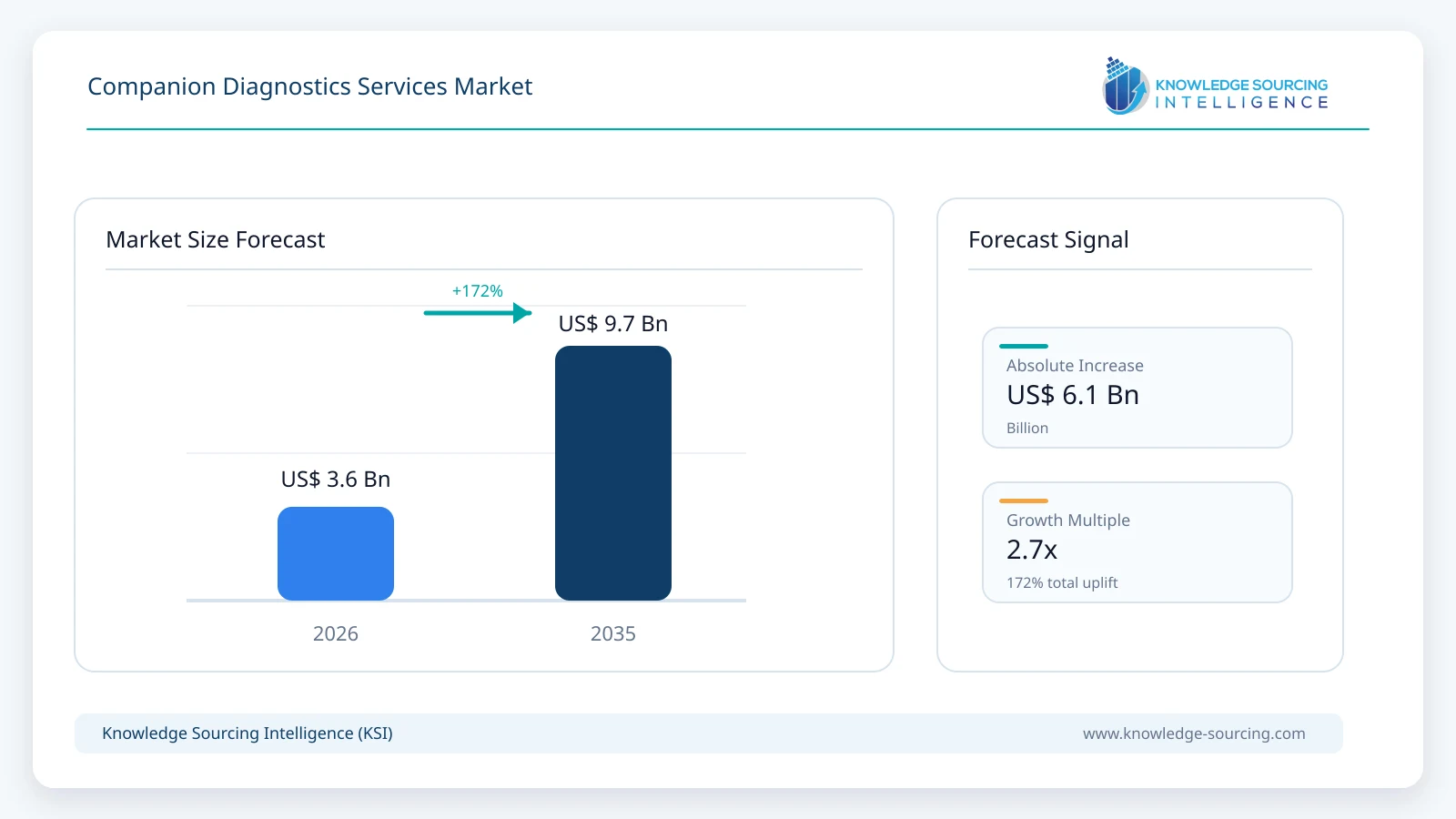
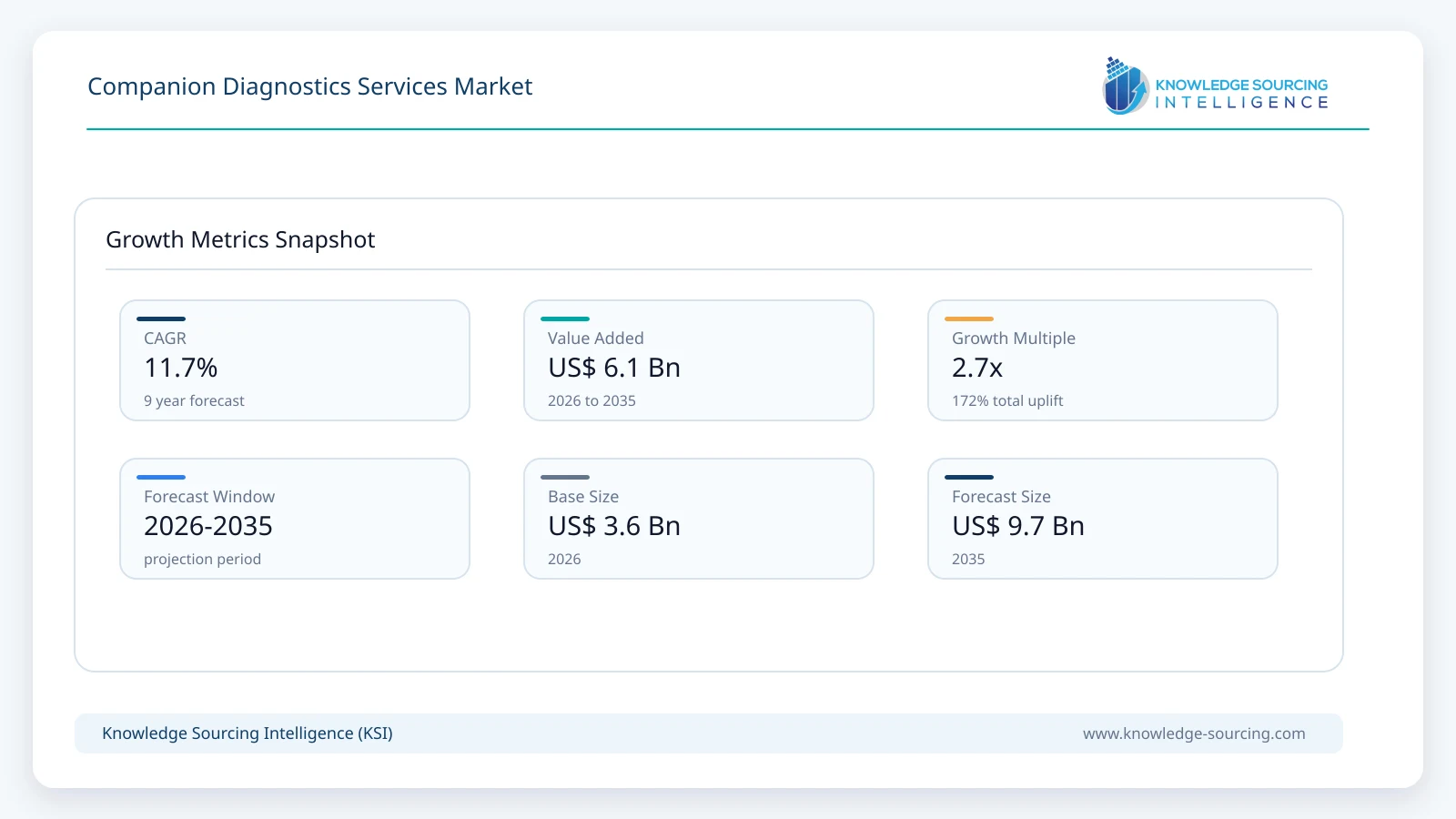
The Companion Diagnostics Services Market is anticipated to grow at a CAGR of 11.7% from USD 3.56 billion in 2026 to USD 9.67 billion in 2035.
Highlights:
- 1Expansion of precision medicine programs is increasing demand for companion diagnostics services because targeted therapies require validated biomarker strategies.
- 2Growth of biomarker-driven clinical trials is accelerating service utilization because pharmaceutical developers require specialized patient selection capabilities.
- 3Adoption of next-generation sequencing technologies is expanding service opportunities because comprehensive genomic profiling supports broader biomarker identification.
- 4Regulatory focus on personalized therapies is strengthening demand for assay validation and companion diagnostic development services.
Companion diagnostics services support precision medicine because targeted therapies require validated biomarkers that identify appropriate patient populations before treatment initiation. Pharmaceutical companies increasingly depend on specialized service providers because biomarker discovery and diagnostic development involve complex scientific, regulatory, and operational requirements. Traditional drug development approaches often produce heterogeneous treatment responses, creating pressure for more precise patient selection strategies. Service providers are expanding molecular testing platforms, genomic analysis capabilities, and regulatory expertise to support these evolving demands. This progression improves alignment between therapeutic development and diagnostic validation.
Regulatory expectations continue increasing because biomarker-driven therapies require strong clinical evidence linking molecular markers to therapeutic outcomes. Drug developers are incorporating companion diagnostics earlier in development programs as regulatory agencies emphasize personalized treatment approaches. Clinical trial sponsors increasingly require specialized testing services because patient stratification has become a critical component of study design and endpoint achievement. These changes strengthen demand for companion diagnostics services and reinforce their strategic importance within precision medicine.
Market Dynamics
Market Drivers
Expansion of Precision Medicine Programs: Precision medicine depends on biomarker-guided treatment selection because therapeutic effectiveness increasingly varies according to molecular characteristics. Healthcare systems are adopting personalized treatment approaches as targeted therapies demonstrate improved clinical outcomes. Conventional treatment models often provide limited patient stratification, creating demand for validated diagnostic strategies. Service providers are expanding companion diagnostic development capabilities to support pharmaceutical innovation. This trend strengthens demand for specialized companion diagnostics services.
Increasing Biomarker-Driven Clinical Trials: Clinical trials require precise patient selection because targeted therapies frequently depend on specific molecular alterations for efficacy. Pharmaceutical developers are increasing biomarker integration across clinical development programs as precision medicine strategies mature. Broader biomarker utilization creates operational challenges involving assay validation, patient recruitment, and testing standardization. Service providers are expanding clinical trial testing capabilities to address these requirements. This evolution supports sustained growth in companion diagnostics services.
Growing Adoption of Next-Generation Sequencing: Comprehensive genomic profiling improves biomarker identification because multiple actionable molecular alterations can be assessed simultaneously. Demand is shifting toward advanced sequencing technologies as therapeutic development becomes increasingly genomics-driven. Single-marker testing approaches often limit biomarker discovery and clinical utility. Service organizations are investing in sequencing infrastructure and bioinformatics capabilities to support broader genomic analysis. These developments expand opportunities across companion diagnostics services.
Rising Complexity of Regulatory Requirements: Regulatory agencies emphasize diagnostic validation because treatment decisions increasingly depend on biomarker identification. Drug developers are facing greater evidence requirements as companion diagnostics become more closely linked to therapeutic approvals. Regulatory complexity increases development risk when diagnostic and therapeutic pathways are not aligned. Service providers are strengthening regulatory support capabilities to facilitate compliance and approval processes. This trend reinforces demand for specialized development services.
Market Restraints
High costs associated with biomarker discovery, assay validation, and genomic testing can limit development activity among smaller biotechnology companies.
Variability in global regulatory requirements can complicate international companion diagnostic development and commercialization strategies.
Limited access to specialized genomic infrastructure can restrict service availability in certain emerging healthcare markets.
Market Opportunities
Expansion of Liquid Biopsy-Based Companion Diagnostics: Liquid biopsy technologies improve patient accessibility because molecular testing can be performed through minimally invasive sampling approaches. Demand is increasing as pharmaceutical developers seek scalable biomarker solutions that support repeated testing. Tissue collection constraints often limit patient participation and longitudinal monitoring. Service providers are expanding liquid biopsy capabilities to address these challenges. This trend creates substantial commercial opportunities.
Integration of Artificial Intelligence in Biomarker Discovery: Large-scale genomic datasets increase analytical complexity because meaningful biomarker signals can be difficult to identify through conventional approaches. Drug developers are adopting advanced computational tools to improve biomarker discovery efficiency. Manual analytical methods often constrain scalability and development timelines. Service providers are integrating artificial intelligence platforms that accelerate biomarker identification and validation. This development strengthens future growth potential.
Growth of Multi-Biomarker Companion Diagnostic Programs: Modern oncology increasingly depends on multiple biomarkers because treatment selection often requires comprehensive molecular characterization. Single-marker approaches frequently provide limited clinical insight when multiple actionable targets coexist. Service organizations are developing multiplex testing strategies that improve clinical utility and operational efficiency. Pharmaceutical developers are adopting these approaches to support precision medicine programs. This evolution expands service demand.
Expansion into Non-Oncology Applications: Companion diagnostics increasingly support therapeutic development beyond oncology because biomarker-driven treatment approaches are expanding into other disease areas. Drug developers are evaluating personalized medicine strategies across autoimmune, neurological, and infectious disease indications. Conventional development models often struggle to identify optimal patient populations in these complex conditions. Service providers are adapting companion diagnostic capabilities to support broader therapeutic applications. This trend creates new long-term growth opportunities.
Supply Chain Analysis
The companion diagnostics services supply chain begins with biomarker research institutions, genomic technology providers, reagent manufacturers, sequencing platform developers, software providers, and laboratory infrastructure suppliers that support diagnostic development activities. Precision medicine adoption continues to increase demand for specialized testing technologies because biomarker-driven therapies require reliable molecular characterization throughout development and commercialization stages.
Service providers integrate these resources into biomarker discovery, assay development, clinical trial testing, validation, and regulatory support workflows. Regulatory requirements increase operational complexity because diagnostic performance must demonstrate analytical validity, clinical utility, and reproducibility. Pharmaceutical companies increasingly depend on external service organizations because companion diagnostic development requires multidisciplinary expertise spanning molecular biology, clinical development, bioinformatics, and regulatory affairs. Technology providers are expanding collaborations with service organizations to improve testing capabilities and workflow efficiency. This interconnected ecosystem supports precision medicine expansion and reinforces demand for specialized companion diagnostics services.
Government Regulations
Region | Regulation / Authority | Relevance to Companion Diagnostics Services |
United States | FDA Companion Diagnostic Guidance | Establishes development and approval requirements for companion diagnostics associated with targeted therapies. |
United States | FDA Premarket Approval (PMA) Process | Governs approval pathways for high-risk diagnostic devices supporting therapeutic decision-making. |
European Union | In Vitro Diagnostic Regulation (IVDR) 2017/746 | Strengthens performance evaluation, clinical evidence, and post-market surveillance requirements. |
Japan | Pharmaceuticals and Medical Devices Agency (PMDA) | Regulates companion diagnostics associated with precision medicine programs. |
Market Segmentation
By Service Type
Biomarker discovery services form the foundation of companion diagnostic development because targeted therapies require identification of molecular markers that predict therapeutic response. Demand is increasing as pharmaceutical companies expand precision medicine programs across oncology and non-oncology indications. Drug development complexity creates pressure to identify clinically relevant biomarkers earlier because late-stage development failures increase costs and delay commercialization. Service providers are investing in genomic analysis, multi-omics platforms, and artificial intelligence-driven discovery tools to improve biomarker identification efficiency. This evolution strengthens the importance of biomarker discovery services within the companion diagnostics value chain.
Regional Analysis
North America
North America leads the companion diagnostics services market because precision medicine adoption remains deeply integrated into pharmaceutical development and clinical oncology practice. Demand is increasing as pharmaceutical companies continue expanding biomarker-driven therapeutic programs that require specialized diagnostic support. Growing investment in targeted therapies increases pressure on developers to identify responsive patient populations earlier because regulatory success increasingly depends on biomarker validation. Service providers are expanding genomic testing capabilities, clinical trial support infrastructure, and bioinformatics platforms to address these requirements. The United States remains the largest contributor because it combines strong pharmaceutical innovation, advanced diagnostic infrastructure, and favorable regulatory pathways for companion diagnostics. Academic medical centers and cancer research institutions continue strengthening biomarker research activity because precision medicine initiatives require multidisciplinary collaboration. Drug developers increasingly depend on external service providers because companion diagnostic development involves specialized scientific and regulatory expertise. This environment sustains strong demand for companion diagnostics services across the region.
Europe
Europe maintains a significant position because personalized medicine initiatives continue expanding across major healthcare systems. Demand is increasing as pharmaceutical developers seek validated biomarker strategies that support targeted treatment approvals and reimbursement discussions. The implementation of the In Vitro Diagnostic Regulation creates additional development requirements because companion diagnostics require stronger clinical evidence and performance validation. Service providers are enhancing regulatory support capabilities to help developers navigate evolving compliance expectations. Research collaborations between biotechnology companies, academic institutions, and healthcare organizations continue increasing because biomarker discovery remains central to precision medicine advancement. Countries including Germany, the United Kingdom, and France support substantial companion diagnostic development activity because strong research ecosystems encourage innovation. Pharmaceutical developers are expanding biomarker-focused clinical trials across Europe because molecularly targeted therapies continue entering development pipelines. This progression supports sustained demand for companion diagnostics services.
Asia Pacific
Asia Pacific is emerging as a major growth region because pharmaceutical development activity and genomic testing adoption continue accelerating. Demand is increasing as healthcare systems expand precision medicine capabilities and biotechnology investment rises across key markets. Large patient populations create opportunities for biomarker-driven clinical trials because targeted therapies require access to genetically diverse study populations. Service providers are expanding laboratory networks and molecular testing infrastructure to meet these evolving requirements. China and Japan remain important contributors because regulatory frameworks increasingly support precision medicine innovation and companion diagnostic development. South Korea and Australia continue strengthening genomic medicine initiatives because healthcare providers seek improved treatment personalization. Pharmaceutical companies are increasing clinical development activities across the region because operational efficiencies and patient access support trial expansion. This environment strengthens long-term growth prospects for companion diagnostics services.
Rest of the World
The Rest of the World region is experiencing gradual expansion because precision medicine awareness continues to increase across emerging healthcare markets. Demand is growing as healthcare systems seek improved treatment outcomes through biomarker-guided therapeutic strategies. Limited molecular diagnostic infrastructure creates barriers because companion diagnostics require specialized laboratory capabilities and technical expertise. Service providers are expanding partnerships and regional collaborations to improve testing accessibility and operational support. Countries in Latin America and the Middle East are increasing investment in genomic medicine because healthcare modernization initiatives prioritize advanced diagnostic technologies. Pharmaceutical developers are evaluating opportunities within these markets because targeted therapies require broader global access strategies. As healthcare infrastructure improves, companion diagnostics services gain greater relevance within regional treatment pathways. This progression supports incremental market expansion.
Regulatory Landscape
Companion diagnostics services operate within increasingly complex regulatory environments because targeted therapies depend on validated biomarker identification for safe and effective use. Regulatory agencies continue strengthening oversight as companion diagnostics become more integrated into therapeutic approval processes. Development programs require extensive analytical and clinical validation because regulators seek evidence demonstrating diagnostic reliability and clinical utility. Service providers are expanding regulatory expertise to address these evolving requirements. This trend increases the importance of specialized regulatory support services throughout diagnostic development lifecycles.
The U.S. Food and Drug Administration continues to emphasize co-development strategies because therapeutic approvals increasingly rely on companion diagnostics that identify appropriate patient populations. Drug developers are incorporating diagnostic planning earlier in development programs as regulatory expectations evolve. Independent development approaches often increase approval risk because diagnostic and therapeutic evidence must remain aligned. Service providers are strengthening collaboration with pharmaceutical sponsors to facilitate coordinated regulatory submissions. This evolution reinforces the strategic role of companion diagnostics services.
European regulatory frameworks continue evolving because the In Vitro Diagnostic Regulation introduces stricter requirements related to clinical evidence, performance evaluation, and post-market surveillance. Global development programs face increasing compliance complexity because requirements vary across jurisdictions. Service providers are expanding validation, documentation, and quality management capabilities to support multinational regulatory strategies. These developments strengthen demand for specialized regulatory services within companion diagnostics.
Pipeline Analysis
Companion diagnostic pipelines continue expanding because precision medicine increasingly drives pharmaceutical innovation. Demand is shifting toward biomarker-guided therapies as developers seek to improve treatment outcomes through patient stratification. Targeted therapies often require companion diagnostics before commercialization because biomarker identification determines treatment eligibility. Service providers are supporting assay development, biomarker validation, and clinical trial testing activities that facilitate these programs. This trend strengthens demand for comprehensive companion diagnostics services.
Oncology remains the dominant pipeline area because targeted therapies continue expanding across multiple tumor types and molecular pathways. Drug developers are incorporating companion diagnostics into earlier stages of development because regulatory agencies increasingly expect integrated therapeutic and diagnostic strategies. Growing numbers of molecularly targeted candidates create pressure for scalable testing solutions capable of supporting global clinical programs. Service providers are expanding next-generation sequencing, liquid biopsy, and multiplex testing capabilities to address these requirements. This evolution reinforces the importance of advanced diagnostic technologies.
Companion diagnostic opportunities are also expanding beyond oncology because biomarker-driven approaches increasingly influence autoimmune, neurological, and infectious disease drug development. Pharmaceutical companies are exploring molecular stratification strategies because treatment response variability continues to limit therapeutic effectiveness in several disease areas. Service providers are investing in broader biomarker discovery and validation capabilities to support these emerging applications. This diversification strengthens the long-term outlook for companion diagnostics services while expanding their role across precision medicine ecosystems.
Competitive Landscape
IQVIA Holdings Inc.
IQVIA remains strategically distinct because it combines clinical research capabilities, real-world evidence resources, regulatory expertise, and biomarker-focused development services within a single ecosystem. Demand for integrated companion diagnostic support is increasing as pharmaceutical companies seek to reduce development timelines while improving patient stratification accuracy. Fragmented development processes create operational complexity because biomarker discovery, clinical validation, and regulatory submissions often involve multiple stakeholders. IQVIA is expanding precision medicine services, decentralized clinical trial capabilities, and data-driven analytics platforms to address these challenges. Its extensive healthcare datasets strengthen biomarker identification and patient recruitment activities because sponsors require more targeted clinical trial enrollment strategies. The company also benefits from long-standing relationships with pharmaceutical and biotechnology developers because companion diagnostics increasingly form a critical component of targeted therapy programs. Its ability to integrate clinical, genomic, and commercial data supports end-to-end development services that improve decision-making throughout the product lifecycle. This positioning enables IQVIA to maintain a strong presence within the companion diagnostics services market.
Laboratory Corporation of America Holdings (Labcorp)
Labcorp differentiates itself through its broad diagnostic testing infrastructure and extensive clinical trial laboratory network. Demand is increasing for centralized testing services because companion diagnostics require consistent analytical performance across geographically dispersed clinical studies. Pharmaceutical sponsors face growing pressure to standardize biomarker testing because regulatory agencies require robust clinical evidence supporting diagnostic performance. Labcorp is expanding molecular diagnostics, genomic testing, and biomarker development capabilities to address these requirements. Its established laboratory footprint supports large-scale global studies because sponsors increasingly conduct multinational precision medicine trials. Integration between laboratory services and drug development operations enhances operational efficiency because testing and clinical development activities remain closely aligned. This capability strengthens Labcorp’s competitive position within companion diagnostics services.
Charles River Laboratories International, Inc.
Charles River Laboratories maintains a strategic advantage through its strong preclinical and translational research capabilities. Demand for biomarker-driven drug development is increasing because targeted therapies require earlier identification of predictive molecular markers. Drug developers face rising development costs because unsuccessful late-stage trials can significantly impact commercialization outcomes. Charles River is expanding translational science and biomarker discovery capabilities to improve early-stage decision-making. Its integrated research platform supports smoother transitions from discovery to clinical development because biomarker validation begins earlier in development programs. This approach strengthens the company’s role within companion diagnostic service ecosystems.
ICON plc
ICON distinguishes itself through its comprehensive clinical development and biomarker strategy services. Demand is increasing for companion diagnostics within clinical trials because targeted therapies increasingly depend on molecularly selected patient populations. Complex global studies create execution challenges because biomarker testing must remain standardized across multiple sites and jurisdictions. ICON is expanding precision medicine expertise and central laboratory partnerships to address these requirements. Its clinical trial management capabilities strengthen sponsor confidence because biomarker-driven studies require operational precision and regulatory compliance. This capability supports continued growth within companion diagnostic service offerings.
Q² Solutions
Q² Solutions maintains a strong position because it focuses heavily on laboratory-based biomarker testing and precision medicine support. Demand is increasing for specialized testing capabilities because targeted therapies require increasingly sophisticated molecular analyses. Growing assay complexity creates operational challenges because sponsors need reliable testing platforms capable of supporting regulatory-grade evidence generation. Q² Solutions is investing in genomic technologies, advanced bioinformatics, and biomarker validation programs to meet evolving market requirements. Its specialized expertise strengthens its role in companion diagnostic development activities.
NeoGenomics Laboratories, Inc.
NeoGenomics differentiates itself through its oncology-focused molecular testing portfolio and biomarker expertise. Demand for precision oncology testing is increasing because cancer therapies increasingly rely on molecular characterization to guide treatment decisions. Expanding oncology pipelines create pressure for comprehensive biomarker testing because multiple molecular targets must often be evaluated simultaneously. NeoGenomics is expanding next-generation sequencing and liquid biopsy capabilities to address these evolving requirements. Its focus on oncology strengthens its relevance within companion diagnostics services because oncology remains the largest application area for biomarker-guided therapies.
F. Hoffmann-La Roche Ltd.
Roche maintains a unique position because it combines pharmaceutical development and companion diagnostic capabilities within a vertically integrated model. Demand is increasing for coordinated therapeutic-diagnostic development because targeted treatments require validated patient selection strategies. Regulatory expectations create pressure for alignment between diagnostic and therapeutic evidence because approval success often depends on demonstrating clinical utility. Roche is expanding biomarker development and precision medicine initiatives to support its growing targeted therapy portfolio. The company’s diagnostic expertise strengthens co-development activities because companion diagnostics increasingly determine therapeutic eligibility. This integration supports Roche’s leadership across precision medicine ecosystems.
QIAGEN N.V.
QIAGEN remains strategically important because it provides sample technologies, molecular testing platforms, and companion diagnostic development expertise. Demand is increasing for molecular diagnostics because biomarker-driven therapies require highly sensitive and reproducible testing solutions. Increasing numbers of targeted therapies create development complexity because diagnostic platforms must support multiple biomarkers and regulatory requirements. QIAGEN is expanding companion diagnostic collaborations with pharmaceutical developers to strengthen precision medicine programs. Its expertise in molecular diagnostics and regulatory support reinforces its competitive position within the companion diagnostics services market.
Key Developments
In May 2026: Indica Labs, the global leader in AI-powered digital pathology solutions, announced a major expansion of its companion diagnostics (CDx) capabilities, positioning the company at the forefront of precision medicine innovation ahead of the 2026 American Society of Clinical Oncology (ASCO) Annual Meeting.
In May 2026: CellCarta, a leading global precision medicine laboratory services provider and Leica Biosystems, a Danaher company and a global leader in end-to-end anatomic and digital pathology solutions, announced a strategic partnership to bring a proven companion diagnostic (CDx) joint development model from China to biopharma sponsors globally.
Future Market Outlook
Companion diagnostics services are becoming increasingly central to pharmaceutical development because precision medicine strategies continue expanding across therapeutic categories. Demand is shifting toward integrated development models as pharmaceutical companies seek streamlined pathways connecting biomarker discovery, clinical validation, regulatory approval, and commercialization. This transition increases reliance on specialized service providers because diagnostic complexity continues growing alongside therapeutic innovation. Companies that combine scientific expertise, regulatory knowledge, and advanced testing capabilities are strengthening their competitive positions within the market.
Technology adoption is accelerating because next-generation sequencing, liquid biopsy, multi-omics analysis, and artificial intelligence are improving biomarker identification and validation processes. Growing molecular complexity creates demand for scalable bioinformatics and advanced data interpretation capabilities because precision medicine programs generate increasingly large datasets. Service providers are investing in digital infrastructure and automation to improve operational efficiency while maintaining analytical quality. This trend strengthens opportunities for organizations capable of delivering integrated and technology-enabled companion diagnostic services.
Regulatory expectations continue evolving because companion diagnostics increasingly influence therapeutic decision-making and patient outcomes. Drug developers are incorporating biomarker strategies earlier in development programs because coordinated diagnostic planning reduces approval risk and supports targeted patient selection. Service providers with strong validation and regulatory capabilities are expected to benefit because compliance requirements continue becoming more demanding across major healthcare markets. This environment supports continued expansion of companion diagnostics services throughout the forecast period.
The companion diagnostics services market continues evolving toward a highly specialized and integrated ecosystem where scientific expertise, advanced technologies, regulatory capabilities, and pharmaceutical partnerships collectively determine competitive success. As precision medicine becomes increasingly embedded within healthcare delivery, companion diagnostics services remain essential for enabling biomarker-driven therapeutic development and commercialization.
Companion Diagnostics Services Market Scope:
| Report Metric | Details |
|---|---|
| Total Market Size in 2026 | USD 3.56 billion |
| Total Market Size in 2035 | USD 9.67 billion |
| Forecast Unit | USD Billion |
| Growth Rate | 11.7% |
| Study Period | 2021 to 2035 |
| Historical Data | 2021 to 2024 |
| Base Year | 2025 |
| Forecast Period | 2026 – 2035 |
| Segmentation | Service Type, Technology Platform, End User, Geography |
| Companies |
|
Market Segmentation
Service Type
Technology Platform
End User
Geography
- North America
- South America
- Europe
- Middle East and Africa
- Asia Pacific
Table of Contents
1. EXECUTIVE SUMMARY
1.1 Market Snapshot
1.2 Key Findings
1.3 Analyst Insights
1.4 Strategic Recommendations
2. RESEARCH METHODOLOGY
2.1 Research Design
2.2 Data Collection Methodology
2.3 Market Size Estimation
2.4 Forecasting Model
2.5 Assumptions & Limitations
3. COMPANION DIAGNOSTICS SERVICES MARKET OVERVIEW, SIZE & FORECAST
3.1 Market Definition & Scope
3.2 Industry Overview
3.3 Industry Evolution
3.4 Key Market Trends
3.5 Historical Market Size Analysis (2021-2025)
3.6 Market Forecast Analysis (2026-2035)
3.7 Precision Medicine and Biomarker Development Overview
3.8 Companion Diagnostic Development Workflow Analysis
3.9 Clinical Trial Testing Volume Analysis
3.10 Companion Diagnostic Service Adoption Analysis
3.11 Drug–Diagnostic Co-Development Landscape
3.12 Patient Stratification and Treatment Selection Analysis
4. MARKET DYNAMICS
4.1 Market Drivers
4.2 Market Restraints
4.3 Market Opportunities
4.4 Market Challenges
5. INDUSTRY LANDSCAPE
5.1 Industry Value Chain Analysis
5.2 Pricing Analysis
5.3 Reimbursement Landscape
6. INNOVATION LANDSCAPE
6.1 Emerging Technologies in Companion Diagnostic Services
6.2 Product and Service Innovation Trends
6.3 Clinical Trial Analysis
6.4 Companion Diagnostic Pipeline Analysis
6.5 Biomarker Discovery and Validation Technologies
6.6 Next-Generation Sequencing Integration
6.7 AI Integration in Companion Diagnostic Development
6.8 Digital Pathology and Bioinformatics Advancements
6.9 Technology Roadmap
7. REGULATORY LANDSCAPE
7.1 Regulatory Framework
7.2 Approval Pathways
7.3 Compliance Requirements
8. COMPANION DIAGNOSTICS SERVICES MARKET LANDSCAPE ANALYSIS
8.1 Analysis by Service Type
8.2 Analysis by Technology Platform
8.3 Analysis by Therapeutic Area
8.4 Analysis by Development Stage
8.5 Analysis by Biomarker Type
8.6 Analysis by End User Environment
9. COMPANION DIAGNOSTICS SERVICES MARKET SEGMENT ANALYSIS (2021-2035)
9.1 By Service Type
9.1.1 Biomarker Discovery Services
9.1.2 Assay Development Services
9.1.3 Clinical Trial Testing Services
9.1.4 Regulatory and Validation Services
9.1.5 Commercialization Support Services
9.2 By Technology Platform
9.2.1 Next-Generation Sequencing (NGS)
9.2.2 Polymerase Chain Reaction (PCR)
9.2.3 Immunohistochemistry (IHC)
9.2.4 In Situ Hybridization (ISH)
9.2.5 Flow Cytometry
9.2.6 Other Technologies
9.3 By Therapeutic Area
9.3.1 Oncology
9.3.2 Hematologic Malignancies
9.3.3 Autoimmune Diseases
9.3.4 Neurological Disorders
9.3.5 Infectious Diseases
9.3.6 Other Therapeutic Areas
9.4 By End User
9.4.1 Pharmaceutical Companies
9.4.2 Biotechnology Companies
9.4.3 Contract Research Organizations (CROs)
9.4.4 Academic and Research Institutes
10. COMPANION DIAGNOSTICS SERVICES MARKET GEOGRAPHICAL ANALYSIS (2021-2035)
10.1 North America
10.2 Europe
10.3 Asia-Pacific
10.4 South America
10.5 Middle East & Africa
11. COMPANION DIAGNOSTICS SERVICES MARKET COUNTRY ANALYSIS (2021-2035)
11.1 United States
11.2 Canada
11.3 Germany
11.4 United Kingdom
11.5 France
11.6 Italy
11.7 Spain
11.8 Netherlands
11.9 Japan
11.10 China
11.11 South Korea
11.12 Australia
11.13 India
11.14 Singapore
11.15 Brazil
12. COMPETITIVE LANDSCAPE
12.1 Market Share Analysis
12.2 Strategic Developments
12.3 Mergers & Acquisitions, Partnerships & Collaborations
12.4 Product Launches
13. COMPANY PROFILES
13.1 IQVIA Holdings Inc.
13.2 Laboratory Corporation of America Holdings (Labcorp)
13.3 Charles River Laboratories International, Inc.
13.4 ICON plc
13.5 Q² Solutions
13.6 NeoGenomics Laboratories, Inc.
13.7 F. Hoffmann-La Roche Ltd.
13.8 QIAGEN N.V.
13.9 Thermo Fisher Scientific Inc.
13.10 Agilent Technologies, Inc.
13.11 Guardant Health, Inc.
13.12 Foundation Medicine, Inc.
13.13 Bio-Rad Laboratories, Inc.
13.14 Illumina, Inc.
13.15 Personalis, Inc.
14. COMPANION DIAGNOSTICS SERVICES MARKET COMMERCIAL FORECAST ANALYSIS
14.1 Biomarker Discovery Services
14.2 Assay Development Services
14.3 Clinical Trial Testing Services
14.4 Regulatory Support Services
14.5 NGS-Based Companion Diagnostic Services
14.6 Oncology Companion Diagnostic Services
14.7 Integrated Drug–Diagnostic Development Services
15. INVESTMENT & FUNDING ANALYSIS
15.1 Venture Capital Trends
15.2 Government Funding
15.3 R&D Investments
16. FUTURE OUTLOOK
16.1 Key Growth Opportunities
16.2 Future Industry Trends
Navigate
Trusted by the world's leading organizations











