
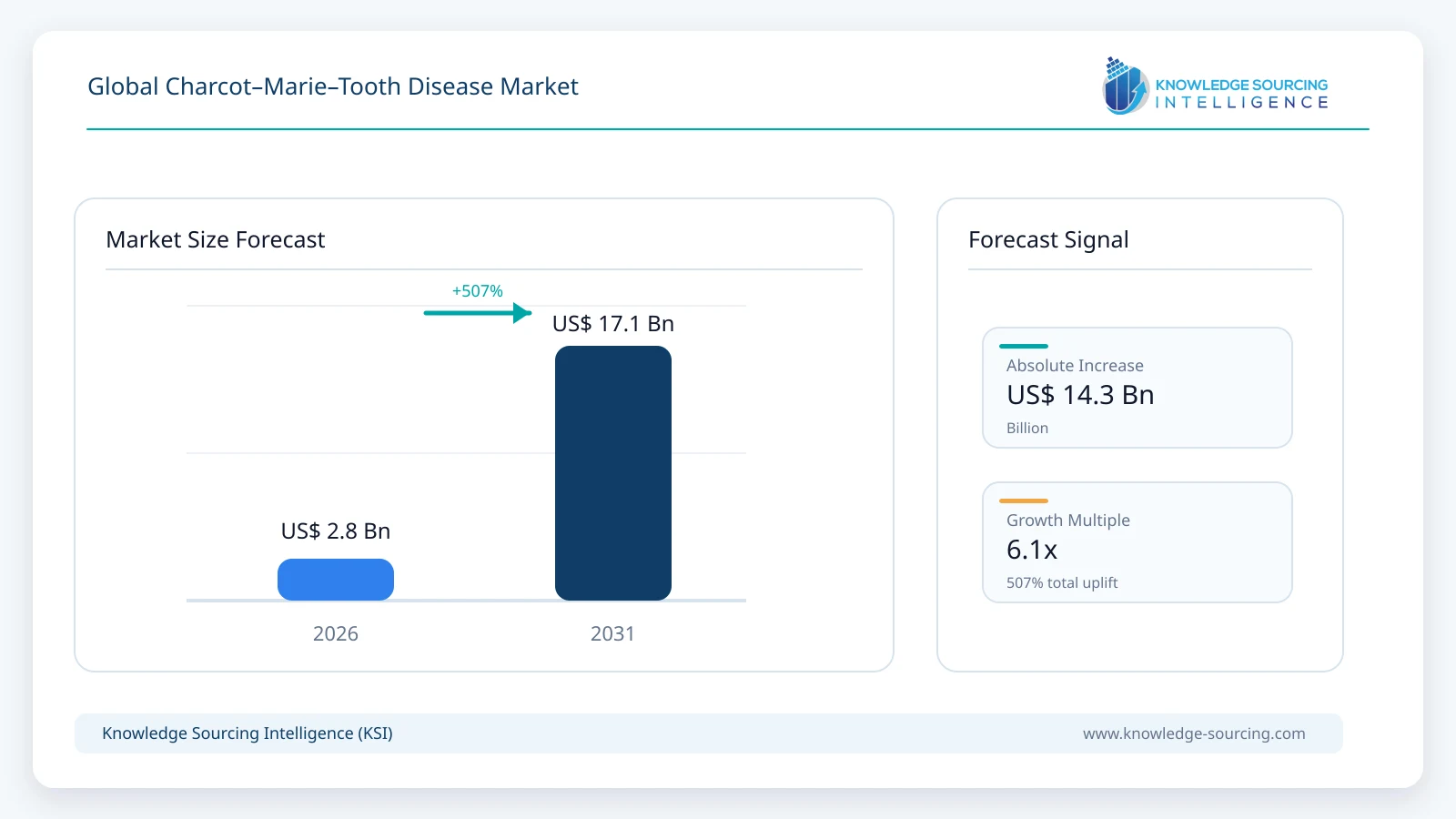
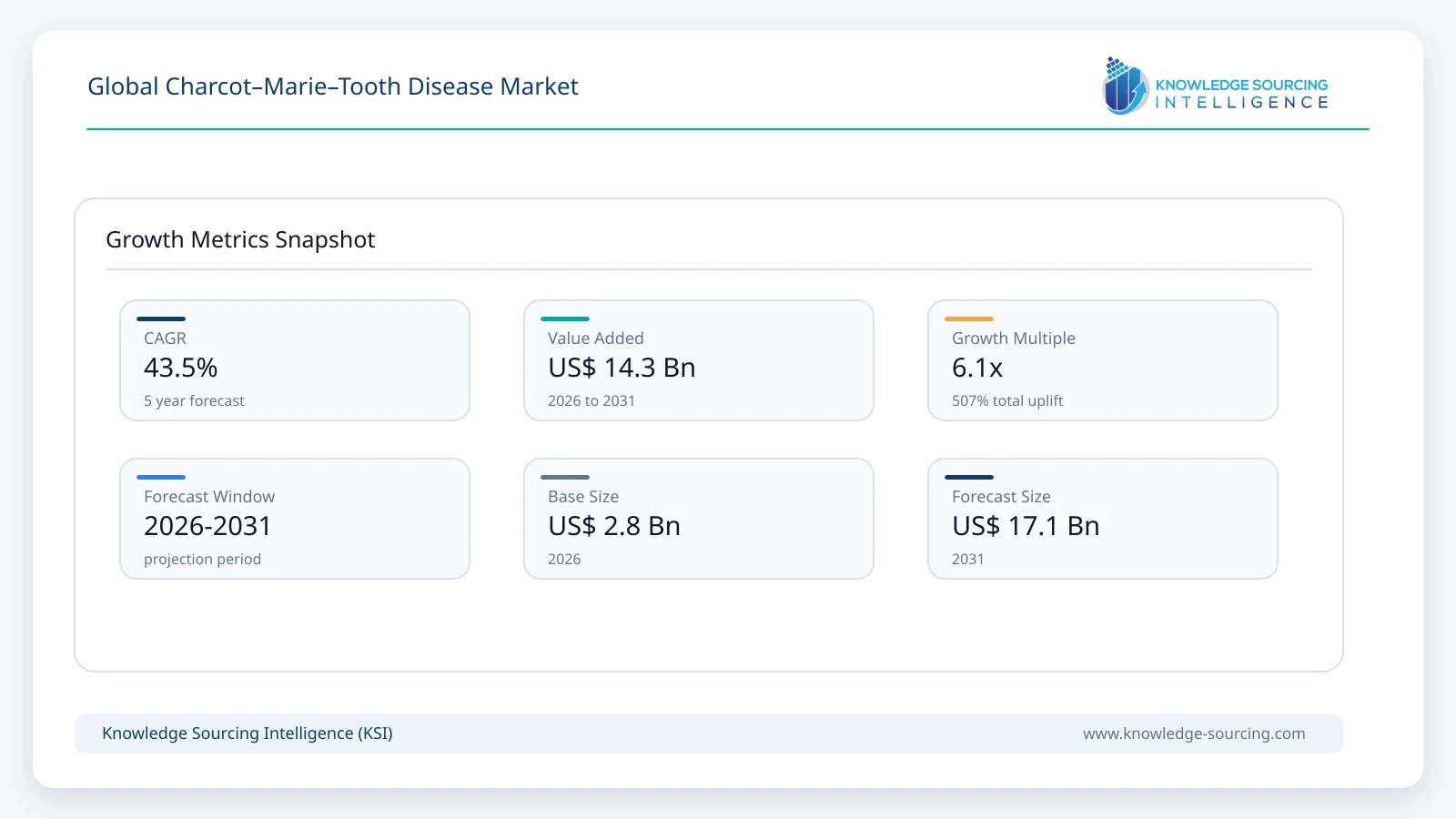
The Global Charcot–Marie–Tooth Disease Market is predicted to grow from USD 2.82 billion 2026 at a CAGR of 43.5% to USD 17.13 billion in 2035.
Highlights:
- 1Growing adoption of genetic testing is increasing diagnosed patient populations because molecular confirmation improves disease recognition and subtype classification.
- 2Expansion of rare disease research is strengthening therapeutic development because advances in genomics are enabling more targeted treatment strategies.
- 3Rising awareness among neurologists is improving referral patterns because inherited neuropathies are receiving greater clinical attention.
- 4Increasing registry participation is enhancing epidemiological visibility because long-term patient monitoring generates stronger disease burden evidence.
The Charcot–Marie–Tooth disease landscape depends heavily on diagnostic innovation because accurate genetic characterization determines disease classification, epidemiological assessment, and eligibility for emerging therapeutic programs. Demand for molecular testing is increasing as clinicians recognize the limitations of traditional clinical assessment alone. Diagnostic delays remain common because symptom presentation often overlaps with acquired neuropathies and other neuromuscular disorders. Healthcare systems are investing in genomic medicine infrastructure to improve diagnostic accuracy. This development strengthens patient identification and supports more effective long-term care planning.
Healthcare utilization patterns are evolving because patients increasingly require multidisciplinary management involving neurologists, rehabilitation specialists, genetic counselors, and orthopedic professionals. Long-term disability risks create sustained demand for supportive interventions that preserve mobility and functional independence. Clinical care models are expanding as healthcare providers seek integrated approaches to disease management. Treatment pathways continue emphasizing symptom control because approved disease-modifying therapies remain limited. This structure reinforces the importance of coordinated care and ongoing patient monitoring.
Regulatory interest in rare neurological diseases is increasing because unmet clinical needs remain substantial across inherited neuropathies. Research investment continues growing as advances in genomics create new opportunities for targeted intervention. Development complexity remains significant because rare disease studies require carefully characterized patient populations and specialized clinical expertise. Stakeholders are strengthening collaborative research frameworks to address these barriers. This trend supports continued innovation and future therapeutic development.
Market Dynamics
Market Drivers
Expanding Genetic Testing Adoption: Genetic testing serves as a critical driver because definitive diagnosis increasingly depends on molecular confirmation. Demand for comprehensive sequencing panels is increasing as healthcare providers seek greater diagnostic accuracy across diverse CMT subtypes. Diagnostic uncertainty remains a challenge because clinical manifestations vary considerably among patients. Healthcare institutions are integrating genomic technologies into routine neurology practice to address these limitations. This shift supports growth in diagnosed populations and improved disease characterization.
Growing Rare Disease Awareness: Rare disease awareness improves patient identification because clinicians are becoming more familiar with inherited neuropathy presentations. Diagnostic referrals are increasing as educational initiatives expand across neurology networks. Delayed diagnosis remains common because symptom progression often occurs gradually over many years. Healthcare organizations are strengthening specialist referral pathways to improve evaluation timelines. This development contributes to enhanced disease recognition and treatment planning.
Expansion of Precision Medicine Research: Precision medicine research drives healthcare interest because disease mechanisms are increasingly understood at the molecular level. Development programs are expanding as researchers identify genetic targets associated with disease progression. Clinical complexity remains substantial because numerous causative mutations contribute to heterogeneous patient populations. Research institutions are investing in subtype-specific studies to address these challenges. This trend supports continued innovation and future therapeutic opportunities.
Strengthening Patient Registry Infrastructure: Patient registries improve disease understanding because longitudinal data collection supports epidemiological and clinical research. Participation is increasing as stakeholders recognize the value of real-world evidence generation. Data gaps remain because many patients have historically remained outside organized tracking systems. Research networks are expanding registry coverage to improve disease surveillance. This effort strengthens forecasting accuracy and supports healthcare planning.
Market Restraints
Limited availability of approved disease-modifying therapies restricts treatment options and maintains dependence on supportive care approaches.
Significant diagnostic delays reduce early intervention opportunities because many patients remain undiagnosed for extended periods.
Uneven access to advanced genetic testing limits disease identification and creates disparities across healthcare systems.
Market Opportunities
Expansion of Molecular Diagnostic Services: Molecular diagnostics create significant opportunities because healthcare systems increasingly recognize the importance of precise disease classification. Demand for genetic confirmation is growing as therapeutic development becomes more genotype focused. Diagnostic capacity remains constrained in several regions because specialized infrastructure requires continued investment. Healthcare providers are expanding testing services to address unmet needs. This trend supports broader patient identification and improved clinical management.
Development of Targeted Therapeutics: Targeted therapies represent an emerging opportunity because advances in disease biology are revealing actionable molecular pathways. Research activity is increasing as biotechnology companies pursue precision medicine approaches. Clinical development challenges persist because rare diseases require specialized trial designs and patient recruitment strategies. Scientific collaboration is expanding to overcome these barriers. This environment supports continued therapeutic innovation.
Growth of Rare Disease Centers of Excellence: Specialized centers improve care quality because multidisciplinary expertise enhances diagnosis and disease management. Demand for integrated services is increasing as patient needs become more complex. Access limitations remain because specialist resources are concentrated within select healthcare institutions. Healthcare systems are developing dedicated rare disease programs to improve service availability. This expansion strengthens long-term patient outcomes.
Increased International Research Collaboration: Global collaboration enhances evidence generation because larger patient populations improve research feasibility. Cross-border initiatives are increasing as stakeholders seek more comprehensive epidemiological and clinical datasets. Variability in healthcare infrastructure remains a challenge because research capabilities differ across regions. International partnerships are improving data harmonization and knowledge sharing. This effort supports stronger disease understanding and future treatment development.
Disease & Epidemiology Analysis
Charcot–Marie–Tooth disease represents one of the most common inherited neuromuscular disorders because pathogenic genetic variants disrupt peripheral nerve structure and function. Diagnostic demand is increasing as healthcare providers expand the use of molecular testing to identify specific disease subtypes. Epidemiological assessment remains challenging because many affected individuals remain undiagnosed or misdiagnosed for extended periods. Research initiatives are strengthening patient identification through registries and natural history studies. This development improves prevalence estimation and supports healthcare planning.
Disease burden increases progressively because muscle weakness, sensory impairment, and functional limitations often worsen over time. Earlier diagnosis is becoming more common as awareness improves among neurologists and genetic specialists. Healthcare utilization remains significant because patients frequently require long-term rehabilitation, orthopedic support, and multidisciplinary management. Clinical programs are expanding to address these needs more effectively. This trend strengthens demand for specialized care services.
The diagnosed population continues growing because advancements in genomic technologies enable more accurate identification of inherited neuropathies. Diagnostic disparities persist because access to genetic testing remains uneven across healthcare systems. Rare disease initiatives are expanding to improve recognition and referral pathways. Improved awareness contributes to stronger epidemiological visibility and more reliable patient population forecasting.
Treatment Guidelines Landscape
Guideline Area | Current Recommendation |
Diagnostic Evaluation | Neurological examination, nerve conduction studies, and genetic testing |
Genetic Testing | Recommended to confirm subtype and support family counseling |
Rehabilitation | Ongoing physiotherapy and occupational therapy |
Orthopedic Management | Bracing, orthotics, and corrective interventions when indicated |
Market Segmentation
By Disease Type
CMT1 represents the largest diagnosed segment because demyelinating neuropathy patterns are more readily identified through electrophysiological testing. Genetic confirmation rates are increasing as PMP22 duplication testing becomes more routinely incorporated into diagnostic pathways. Disease heterogeneity remains a challenge because symptom severity varies substantially across affected individuals. Healthcare providers are expanding access to molecular diagnostics to improve subtype classification and support earlier intervention. This trend strengthens epidemiological visibility and contributes to growth in the diagnosed CMT1 population.
By Age Group
The pediatric and adolescent segment remains critical because symptom onset frequently occurs during early life. Earlier diagnosis is becoming more common as genetic testing gains broader acceptance within pediatric neurology practice. Delayed recognition remains a concern because mild symptoms may initially be attributed to developmental variation. Healthcare providers are strengthening referral pathways to facilitate timely specialist assessment. This trend improves early identification and supports more accurate estimation of disease prevalence among younger populations.
By Diagnosis Status
The diagnosed population continues expanding because advancements in molecular diagnostics are improving case confirmation rates. Increased physician awareness supports earlier recognition of inherited neuropathies. Geographic disparities remain significant because access to specialized services differs considerably across healthcare systems. Clinical networks are improving referral coordination to reduce delays. This development strengthens epidemiological accuracy and enhances patient monitoring capabilities.
Regional Analysis
North America
North America maintains a leading position in CMT patient identification because advanced healthcare infrastructure supports widespread access to neurological evaluation and genetic testing. Diagnostic rates are increasing as precision medicine programs continue expanding across major healthcare institutions. Regional disparities persist because access to specialized neuromuscular centers varies between urban and rural populations. Healthcare providers are strengthening referral pathways and rare disease networks to improve patient capture. This environment supports more comprehensive epidemiological reporting and a growing diagnosed population.
Europe
Europe benefits from strong rare disease policies because multiple countries have established national frameworks supporting diagnosis and patient monitoring. Genetic testing utilization is increasing as healthcare systems expand reimbursement coverage for molecular diagnostics. Variability remains evident because access and diagnostic practices differ across national healthcare systems. Collaborative research initiatives are improving data collection and registry development. These efforts strengthen prevalence estimation and support more consistent epidemiological assessment.
Asia Pacific
Asia Pacific represents a significant growth opportunity for patient identification because large populations remain underdiagnosed despite increasing healthcare investment. Awareness of inherited neuropathies is expanding as specialist neurology services continue developing across major markets. Access limitations remain a challenge because advanced genomic diagnostics are not uniformly available. Governments and healthcare institutions are strengthening rare disease initiatives to improve diagnosis and patient management. This trend supports future growth in diagnosed prevalence.
Rest of the World
The Rest of the World segment continues experiencing diagnostic challenges because rare disease infrastructure remains less developed in many regions. Recognition of inherited neurological disorders is improving as healthcare systems expand specialist training programs. Resource limitations continue restricting access to molecular confirmation. International collaborations are supporting knowledge transfer and capacity building to address these gaps. This progress contributes to gradual improvements in patient identification and disease surveillance.
Regulatory Landscape
Rare disease regulation plays a central role in the CMT landscape because policy frameworks influence access to diagnostics, specialist care, and therapeutic research. Regulatory attention is increasing as healthcare systems recognize the burden associated with inherited neurological disorders. Variability remains evident because countries differ substantially in their approaches to rare disease management. Policymakers are strengthening support mechanisms to improve diagnosis and patient monitoring. This trend enhances disease visibility and supports future innovation.
Genomic medicine regulation continues evolving because molecular diagnostics are becoming increasingly important for clinical decision-making. Adoption of advanced testing technologies is increasing as regulators establish standards for quality, safety, and clinical utility. Implementation challenges remain because healthcare systems must balance innovation with affordability. Regulatory agencies are improving oversight frameworks to facilitate responsible expansion of diagnostic services. This effort strengthens confidence in epidemiological data and patient classification.
International regulatory cooperation is increasing because rare disease research benefits from harmonized approaches to data collection and evidence generation. Collaborative initiatives are supporting alignment of diagnostic standards and registry methodologies. Differences in healthcare infrastructure remain a challenge because implementation capacity varies across regions. Regulatory partnerships are improving consistency and strengthening global understanding of disease burden. This development supports more reliable forecasting and healthcare planning.
Pipeline Analysis
Therapeutic development activity is increasing because advances in molecular genetics are revealing new opportunities for targeted intervention. Interest in disease-modifying approaches continues growing as stakeholders seek alternatives to supportive care. Development complexity remains significant because genetic diversity creates challenges for patient selection and clinical trial design. Research organizations are investing in precision medicine strategies to address these barriers. This trend strengthens demand for accurate patient characterization.
Clinical research increasingly depends on molecular diagnosis because eligibility criteria often require confirmation of specific genetic abnormalities. Genetic testing adoption is expanding as patients seek participation in emerging therapeutic studies. Recruitment challenges persist because many affected individuals remain undiagnosed or incompletely characterized. Research networks are strengthening patient registries to improve identification and enrollment processes. This effort enhances trial feasibility and supports epidemiological understanding.
Natural history studies continue gaining importance because therapeutic development requires detailed evidence regarding disease progression and outcome variability. Data collection efforts are expanding as stakeholders seek stronger foundations for clinical development. Evidence gaps remain because long-term patient monitoring remains inconsistent in some regions. Research collaborations are addressing these limitations through broader registry participation and standardized methodologies. This approach strengthens both pipeline advancement and population forecasting.
Reimbursement Landscape
Reimbursement policies significantly influence diagnostic access because genetic testing often determines whether patients receive definitive diagnosis and appropriate management. Coverage for molecular diagnostics is expanding as healthcare systems increasingly recognize their clinical value. Cost considerations remain a challenge because advanced testing technologies require substantial investment. Payers are evaluating evidence demonstrating the long-term benefits of earlier diagnosis. This process supports gradual expansion of testing accessibility.
Rare disease reimbursement frameworks continue evolving because healthcare systems are placing greater emphasis on precision medicine and personalized care. Support for diagnostic services is increasing as policymakers seek to reduce delays in patient identification. Regional disparities remain because reimbursement structures differ across healthcare markets. Stakeholders are generating stronger evidence regarding healthcare outcomes and resource utilization. This effort strengthens the case for broader diagnostic access.
Future reimbursement approaches are likely to become increasingly linked to molecular confirmation because emerging therapies may require precise genetic classification. Demand for comprehensive diagnostics is increasing as research and clinical development continue advancing. Healthcare systems remain focused on balancing affordability with innovation. Policy frameworks are adapting to accommodate the growing role of precision medicine. This evolution supports improved patient identification and more accurate disease burden assessment.
Competitive Landscape
Applied Therapeutics
Applied Therapeutics remains strategically distinct because it focuses on developing therapies for diseases driven by underlying metabolic and molecular dysfunction. Interest in genetically defined neurological disorders is increasing because healthcare providers are seeking more targeted approaches to disease management. Development complexity remains significant because inherited neuropathies require precise patient characterization and long-term outcome assessment. Research efforts are expanding as advances in genomics improve understanding of disease mechanisms. This environment supports broader opportunities for companies pursuing precision medicine strategies.
The company benefits from experience in rare disease development because orphan indications often require specialized scientific and regulatory expertise. Diagnostic demand is increasing as healthcare systems place greater emphasis on molecular confirmation and early disease identification. Patient recruitment challenges remain because many affected individuals remain undiagnosed or lack access to specialist care. Clinical research networks are expanding to address these limitations and improve study feasibility. This trend strengthens the foundation for future therapeutic innovation.
Pfizer Inc.
Pfizer remains strategically distinct because of its extensive global research infrastructure and established capabilities in rare disease development. Demand for innovative therapies is increasing because inherited neurological disorders continue creating substantial healthcare burdens. Clinical development remains resource intensive because rare diseases require specialized study designs and patient recruitment strategies. Research investment is expanding as precision medicine becomes increasingly important across multiple therapeutic areas. This approach supports continued exploration of genetically defined diseases.
The company leverages broad scientific resources to evaluate opportunities across emerging therapeutic platforms. Interest in genomic medicine is increasing because molecular diagnostics are improving disease classification and patient stratification. Regulatory expectations remain rigorous because stakeholders seek robust evidence regarding long-term clinical benefit. Development programs are becoming more sophisticated as healthcare systems emphasize evidence-based decision making. This environment supports continued participation in rare disease innovation.
Novartis AG
Novartis remains strategically distinct because it combines advanced research capabilities with substantial expertise in innovative therapies for complex diseases. Demand for precision healthcare solutions is increasing because genetic information increasingly guides treatment development and patient management. Scientific challenges remain because inherited neuropathies encompass multiple disease mechanisms and progression patterns. Research programs are expanding as advances in genomics improve target identification and therapeutic design. This trend supports ongoing innovation within rare neurological disorders.
The company benefits from extensive experience in translational research because successful development often requires integration of scientific discovery and clinical application. Diagnostic capabilities are improving as healthcare systems invest in molecular medicine infrastructure. Access disparities remain because specialized services are not uniformly available across all regions. Healthcare stakeholders are strengthening rare disease programs to improve patient identification and monitoring. This effort enhances opportunities for future therapeutic advancement.
F. Hoffmann-La Roche Ltd.
Roche remains strategically distinct because it combines therapeutic development expertise with leadership in diagnostics and personalized healthcare. The importance of molecular testing is increasing because accurate disease classification increasingly influences both clinical management and research participation. Diagnostic complexity remains substantial because Charcot–Marie–Tooth disease includes numerous genetic variants with overlapping symptoms. Precision medicine initiatives are expanding as healthcare systems seek more individualized approaches to care. This development strengthens the value of integrated diagnostic and therapeutic strategies.
The company benefits from its diagnostic capabilities because earlier and more accurate disease identification improves patient stratification. Healthcare providers are adopting broader genomic testing approaches as awareness of inherited neuropathies continues increasing. Regulatory frameworks are evolving to support innovation in both diagnostics and therapeutics. Evidence generation efforts are becoming more comprehensive as stakeholders seek stronger insights into disease progression and burden. This environment supports continued advancement in personalized healthcare.
Biogen Inc.
Biogen remains strategically distinct because of its longstanding focus on neurological disorders and its deep understanding of neurodegenerative and neuromuscular disease biology. Interest in inherited neuropathies is increasing because advances in molecular genetics are improving identification of disease-causing mechanisms. Development challenges remain substantial because clinical manifestations vary significantly across patient populations and genetic subtypes. Research programs are expanding as precision medicine technologies improve the ability to target specific pathways. This trend strengthens opportunities for innovation in rare neurological diseases.
The company benefits from extensive neurological research expertise because successful therapeutic development often depends on a detailed understanding of disease progression. Diagnostic demand is increasing as healthcare systems seek earlier identification of inherited disorders. Evidence gaps remain because long-term natural history data remain limited for certain patient populations. Research collaborations are strengthening patient registries and observational studies to address these limitations. This effort supports future therapeutic development and improved disease characterization.
Sarepta Therapeutics
Sarepta Therapeutics remains strategically distinct because of its leadership in genetic medicine and its focus on therapies targeting inherited neuromuscular disorders. Interest in gene-targeted approaches is increasing because many rare diseases arise from identifiable molecular abnormalities. Clinical development remains demanding because long-term efficacy and safety must be demonstrated through carefully designed studies. Scientific capabilities are advancing as genetic technologies continue improving precision and therapeutic potential. This environment supports growing interest in disease-modifying treatment strategies.
The company leverages experience in rare disease development because regulatory pathways often require specialized expertise and evidence generation approaches. Genetic testing utilization is increasing as patient identification becomes increasingly important for research participation. Healthcare providers are strengthening referral pathways to improve access to molecular diagnosis. Regulatory support continues expanding through orphan disease frameworks that encourage innovation. This trend enhances opportunities for future therapeutic advancement.
Ionis Pharmaceuticals
Ionis Pharmaceuticals remains strategically distinct because of its expertise in RNA-targeted therapeutics and its extensive experience developing treatments for genetically defined diseases. Demand for precision medicine solutions is increasing because molecular understanding of neurological disorders continues expanding. Development complexity remains significant because rare diseases require highly specific targeting strategies and rigorous clinical evaluation. Research investments are growing as RNA-based technologies demonstrate broader therapeutic potential. This trend supports continued exploration of inherited neurological conditions.
The company benefits from a platform-based approach because advances in genetic science increasingly support targeted intervention strategies. Diagnostic capabilities are improving as healthcare providers adopt broader sequencing technologies. Patient identification challenges remain because many inherited neuropathies continue to be underdiagnosed. Clinical research initiatives are expanding to improve understanding of disease burden and progression. This effort creates opportunities for future therapeutic innovation.
Wave Life Sciences
Wave Life Sciences remains strategically distinct because it focuses on precision genetic medicines designed to address diseases at the molecular level. Interest in targeted therapies is increasing because healthcare systems increasingly recognize the limitations of conventional symptom-focused management. Scientific uncertainty remains because inherited neurological disorders often involve complex biological pathways. Research programs are advancing as genomic technologies improve the ability to identify actionable targets. This environment supports long-term opportunities for precision medicine development.
The company benefits from expertise in genetic modulation because therapeutic success increasingly depends on addressing underlying disease mechanisms. Genetic testing adoption is increasing as molecular diagnosis becomes central to patient classification. Access limitations remain because specialized diagnostic resources are not universally available. Healthcare stakeholders are investing in genomic medicine infrastructure to improve patient identification and care. This development strengthens the foundation for future therapeutic progress.
Key Developments
February 2026, NMD Pharma A/S, a clinical-stage biotechnology company dedicated to developing novel therapies to restore skeletal muscle health, announced topline results from its Phase 2a SYNAPSE-CMT study evaluating ignaseclant (formerly known as NMD670), an investigational first-in-class small molecule inhibitor of the skeletal muscle-specific chloride ion channel 1 (CIC-1), in patients living with Charcot-Marie-Tooth disease (CMT) types 1 or 2.
Strategic Insights and Future Market Outlook
The future Charcot–Marie–Tooth disease landscape increasingly depends on molecular diagnostics because genetic confirmation remains essential for accurate disease classification and patient management. Diagnostic demand is growing as healthcare systems expand precision medicine initiatives and rare disease programs. Significant numbers of patients remain unidentified because historical access to advanced genomic technologies was limited. Healthcare providers are strengthening referral pathways and specialist services to address these gaps. This transition supports continued growth in diagnosed prevalence across major healthcare markets.
Research activity is increasing because advances in disease biology are creating opportunities for targeted therapeutic development. Interest in precision medicine continues expanding as stakeholders pursue interventions directed at specific molecular abnormalities. Development challenges remain because genetic heterogeneity complicates trial design and patient recruitment. Research organizations are strengthening registry programs and natural history studies to improve evidence generation. This effort supports more efficient therapeutic development and stronger epidemiological understanding.
Healthcare systems are increasingly recognizing the long-term burden associated with inherited neuropathies because progressive disability often requires sustained medical and rehabilitation support. Investment in rare disease infrastructure is expanding as policymakers seek to improve diagnosis and treatment access. Regional disparities remain because healthcare resources and genomic capabilities vary considerably across markets. International collaboration is improving knowledge sharing and strengthening research capacity. This development enhances opportunities for future innovation and patient care improvements.
Market Segmentation
Development Phase
Mechanism of Action
Modality
Geography
- North America
- South America
- Europe
- Middle East and Africa
- Asia Pacific
Table of Contents
1. EXECUTIVE SUMMARY
1.1 Report Scope and Objectives
1.1.1 Study Coverage
1.1.2 Key Research Questions
1.1.3 Forecast Framework and Assumptions
1.2 Key Findings
1.2.1 Pipeline Development Trends
1.2.2 Clinical Innovation Highlights
1.2.3 Competitive Landscape Overview
1.2.4 Market Forecast Outlook
1.3 Strategic Takeaways
1.3.1 Growth Drivers
1.3.2 Investment Priorities
1.3.3 Future Market Opportunities
2. PIPELINE OVERVIEW
2.1 Charcot–Marie–Tooth Disease Pipeline Snapshot
2.1.1 Total Pipeline Assets
2.1.2 Active vs Discontinued Programs
2.1.3 Historical Pipeline Evolution
2.2 Pipeline Distribution by Development Stage
2.2.1 Preclinical Assets
2.2.2 Phase I Assets
2.2.3 Phase II Assets
2.2.4 Phase III Assets
2.2.5 Filed / Under Regulatory Review Assets
2.3 Pipeline Distribution by Therapeutic Strategy
2.3.1 Disease-Modifying Therapies
2.3.2 Gene-Based Therapies
2.3.3 RNA-Based Therapies
2.3.4 Symptomatic Treatment Approaches
2.4 Historical Development Progression
2.4.1 Phase Advancement Trends
2.4.2 Pipeline Attrition Analysis
2.4.3 Development Success Benchmarks
3. DISEASE AND UNMET NEED ANALYSIS
3.1 Disease Overview
3.1.1 Disease Classification
3.1.2 Genetic Heterogeneity
3.1.3 Disease Progression Patterns
3.2 Epidemiology and Patient Burden
3.2.1 Prevalence Trends
3.2.2 Diagnosed Population Analysis
3.2.3 Undiagnosed Patient Burden
3.3 Current Standard of Care
3.3.1 Supportive Care Approaches
3.3.2 Rehabilitation Strategies
3.3.3 Surgical Interventions
3.4 Unmet Clinical Needs
3.4.1 Lack of Disease-Modifying Therapies
3.4.2 Diagnostic Challenges
3.4.3 Long-Term Functional Limitations
3.4.4 Quality-of-Life Impact
4. MECHANISM AND MODALITY LANDSCAPE
4.1 Mechanism of Action Landscape
4.1.1 Gene Silencing Approaches
4.1.2 Gene Replacement Strategies
4.1.3 Axonal Protection Mechanisms
4.1.4 Myelin Restoration Strategies
4.1.5 Neuromuscular Function Enhancement
4.2 Mechanism Clustering Analysis
4.2.1 Established Mechanisms
4.2.2 Emerging Mechanisms
4.2.3 Novel First-in-Class Approaches
4.2.4 Best-in-Class Differentiation
4.3 Modality Landscape
4.3.1 Small Molecules
4.3.2 Biologics
4.3.3 RNA Therapeutics
4.3.4 Gene Therapies
4.3.5 Advanced Genetic Platforms
4.4 Innovation Assessment
4.4.1 Breakthrough Science Trends
4.4.2 Platform Technology Analysis
4.4.3 Future Innovation Opportunities
5. CLINICAL DEVELOPMENT INTELLIGENCE
5.1 Clinical Trial Landscape
5.1.1 Active Clinical Trials
5.1.2 Completed Clinical Trials
5.1.3 Recruiting Studies
5.1.4 Terminated and Suspended Studies
5.2 Trial Design Benchmarking
5.2.1 Sample Size Analysis
5.2.2 Primary Endpoint Assessment
5.2.3 Secondary Endpoint Trends
5.2.4 Trial Duration Benchmarking
5.3 Recruitment Intelligence
5.3.1 Enrollment Performance
5.3.2 Recruitment Timelines
5.3.3 Geographic Enrollment Distribution
5.4 Development Success Analysis
5.4.1 Clinical Success Rates
5.4.2 Failure Analysis
5.4.3 Trial Dropout Trends
5.4.4 Key Development Risks
6. PIPELINE SEGMENTATION ANALYSIS
6.1 Pipeline by Development Phase
6.1.1 Preclinical Pipeline Assessment
6.1.2 Phase I Pipeline Assessment
6.1.3 Phase II Pipeline Assessment
6.1.4 Phase III Pipeline Assessment
6.1.5 Filed and Review-Stage Assessment
6.2 Pipeline by Mechanism of Action
6.2.1 Gene Regulation Mechanisms
6.2.2 Neuroprotection Mechanisms
6.2.3 Myelin Repair Mechanisms
6.2.4 Neuromuscular Restoration Mechanisms
6.3 Pipeline by Modality
6.3.1 Small Molecule Assets
6.3.2 Biologic Assets
6.3.3 RNA Therapeutic Assets
6.3.4 Gene Therapy Assets
6.4 Pipeline by Targeted Disease Subtype
6.4.1 CMT1 Programs
6.4.2 CMT2 Programs
6.4.3 CMT4 Programs
6.4.4 X-Linked CMT Programs
7. PROBABILITY OF SUCCESS AND RISK ANALYSIS
7.1 Clinical Transition Probability Modeling
7.1.1 Preclinical-to-Phase I Probability
7.1.2 Phase I-to-Phase II Probability
7.1.3 Phase II-to-Phase III Probability
7.1.4 Phase III-to-Approval Probability
7.2 Attrition Risk Assessment
7.2.1 Scientific Risk
7.2.2 Clinical Risk
7.2.3 Regulatory Risk
7.2.4 Commercial Risk
7.3 Risk-Adjusted Pipeline Valuation
7.3.1 Probability-Weighted Asset Analysis
7.3.2 Risk-Adjusted Market Opportunity
7.3.3 Scenario-Based Forecast Modeling
7.4 Portfolio Risk Benchmarking
7.4.1 Company-Level Risk Profiles
7.4.2 Asset Concentration Risk
7.4.3 Development Diversification Assessment
8. LAUNCH TIMELINE AND MARKET FORECAST
8.1 Expected Regulatory Milestones
8.1.1 Near-Term Milestones
8.1.2 Mid-Term Milestones
8.1.3 Long-Term Milestones
8.2 Launch Sequence Forecasting
8.2.1 First-Mover Opportunities
8.2.2 Follow-On Entrant Analysis
8.2.3 Competitive Launch Dynamics
8.3 Market Forecast Modeling
8.3.1 Eligible Patient Population Forecast
8.3.2 Treated Population Forecast
8.3.3 Therapy Adoption Scenarios
8.3.4 Market Penetration Forecast
8.4 Commercial Potential Assessment
8.4.1 Peak Sales Potential
8.4.2 Revenue Opportunity Modeling
8.4.3 Competitive Revenue Distribution
9. COMPETITIVE PIPELINE LANDSCAPE
9.1 Competitive Environment Overview
9.1.1 Market Leadership Assessment
9.1.2 Emerging Competitor Analysis
9.1.3 Innovation Leadership Mapping
9.2 Company-Wise Pipeline Strength Analysis
9.2.1 Clinical Asset Portfolio Assessment
9.2.2 Technology Platform Strength
9.2.3 Development Capabilities
9.3 Asset Concentration Analysis
9.3.1 Single-Asset Dependency
9.3.2 Multi-Asset Diversification
9.3.3 Competitive Sustainability
9.4 Strategic Positioning Analysis
9.4.1 Leaders
9.4.2 Challengers
9.4.3 Emerging Innovators
10. GEOGRAPHIC ANALYSIS
10.1 North America
10.1.1 Clinical Trial Activity
10.1.2 Regulatory Environment
10.1.3 Innovation Ecosystem
10.2 Europe
10.2.1 Clinical Trial Activity
10.2.2 Regulatory Environment
10.2.3 Innovation Ecosystem
10.3 Asia-Pacific
10.3.1 Clinical Trial Activity
10.3.2 Regulatory Environment
10.3.3 Innovation Ecosystem
10.4 Latin America
10.4.1 Clinical Trial Activity
10.4.2 Regulatory Environment
10.4.3 Innovation Ecosystem
10.5 Middle East and Africa
10.5.1 Clinical Trial Activity
10.5.2 Regulatory Environment
10.5.3 Innovation Ecosystem
11. KEY COUNTRIES ANALYSIS
11.1 United States
11.1.1 Clinical Trial Activity
11.1.2 Regulatory Timelines
11.1.3 Key Sponsors
11.2 Canada
11.3 Germany
11.4 United Kingdom
11.5 France
11.6 Italy
11.7 Spain
11.8 China
11.9 Japan
11.10 India
11.11 South Korea
11.12 Australia
11.13 Brazil
11.14 Mexico
11.15 Saudi Arabia
11.16 South Africa
12. DEALS AND INVESTMENT LANDSCAPE
12.1 Licensing Agreements
12.1.1 Technology Licensing Deals
12.1.2 Asset Licensing Transactions
12.1.3 Regional Licensing Partnerships
12.2 Co-Development Collaborations
12.2.1 Research Partnerships
12.2.2 Clinical Development Collaborations
12.2.3 Strategic Alliances
12.3 Mergers and Acquisitions
12.3.1 Asset Acquisitions
12.3.2 Platform Acquisitions
12.3.3 Competitive Impact Assessment
12.4 Funding and Investment Trends
12.4.1 Venture Capital Activity
12.4.2 Private Equity Investments
12.4.3 Public Financing Activity
12.4.4 Rare Disease Funding Trends
13. FUTURE OUTLOOK AND STRATEGIC INSIGHTS
13.1 Future Clinical Development Outlook
13.1.1 Emerging Scientific Directions
13.1.2 Next-Generation Therapies
13.1.3 Development Acceleration Factors
13.2 Competitive Evolution Forecast
13.2.1 Future Market Leaders
13.2.2 Pipeline Expansion Opportunities
13.2.3 Strategic Differentiation Trends
13.3 Market Forecast Scenarios
13.3.1 Conservative Scenario
13.3.2 Base Case Scenario
13.3.3 Optimistic Scenario
13.4 Strategic Recommendations
13.4.1 Developer Strategies
13.4.2 Investor Strategies
13.4.3 Partnership Strategies
14. METHODOLOGY AND DATA FRAMEWORK
14.1 Research Methodology
14.1.1 Data Collection Framework
14.1.2 Validation Methodology
14.1.3 Quality Assurance Procedures
14.2 Data Sources
14.2.1 Clinical Trial Registries
14.2.2 Regulatory Databases
14.2.3 Company Disclosures
14.2.4 Scientific Publications
14.3 Forecasting Methodology
14.3.1 Patient Population Modeling
14.3.2 Probability of Success Modeling
14.3.3 Revenue Forecast Methodology
14.3.4 Scenario Analysis Framework
14.4 Limitations and Assumptions
14.4.1 Data Availability Constraints
14.4.2 Forecast Assumptions
14.4.3 Risk Factors
Navigate
Trusted by the world's leading organizations











