
The Global Migraine Market is estimated to grow from USD 92.43 billion in 2026 at a CAGR of 12.0% to USD 256.34 billion in 2035.
Highlights:
- 1Increasing disease awareness is expanding diagnosis rates, which is driving higher demand for migraine consultations and treatment services.
- 2Growing adoption of preventive therapies is improving long-term disease management, which is increasing patient engagement with healthcare systems.
- 3Expanding telemedicine access is reducing geographical barriers, which is supporting greater treatment utilization among underserved populations.
- 4Rising recognition of chronic migraine burden is increasing demand for specialist-led management and preventive treatment approaches.
- 5Greater physician awareness of migraine classification is improving diagnostic accuracy, which is increasing the identified patient pool.
- 6Increasing use of targeted therapies is strengthening treatment personalization, which is improving long-term management outcomes.
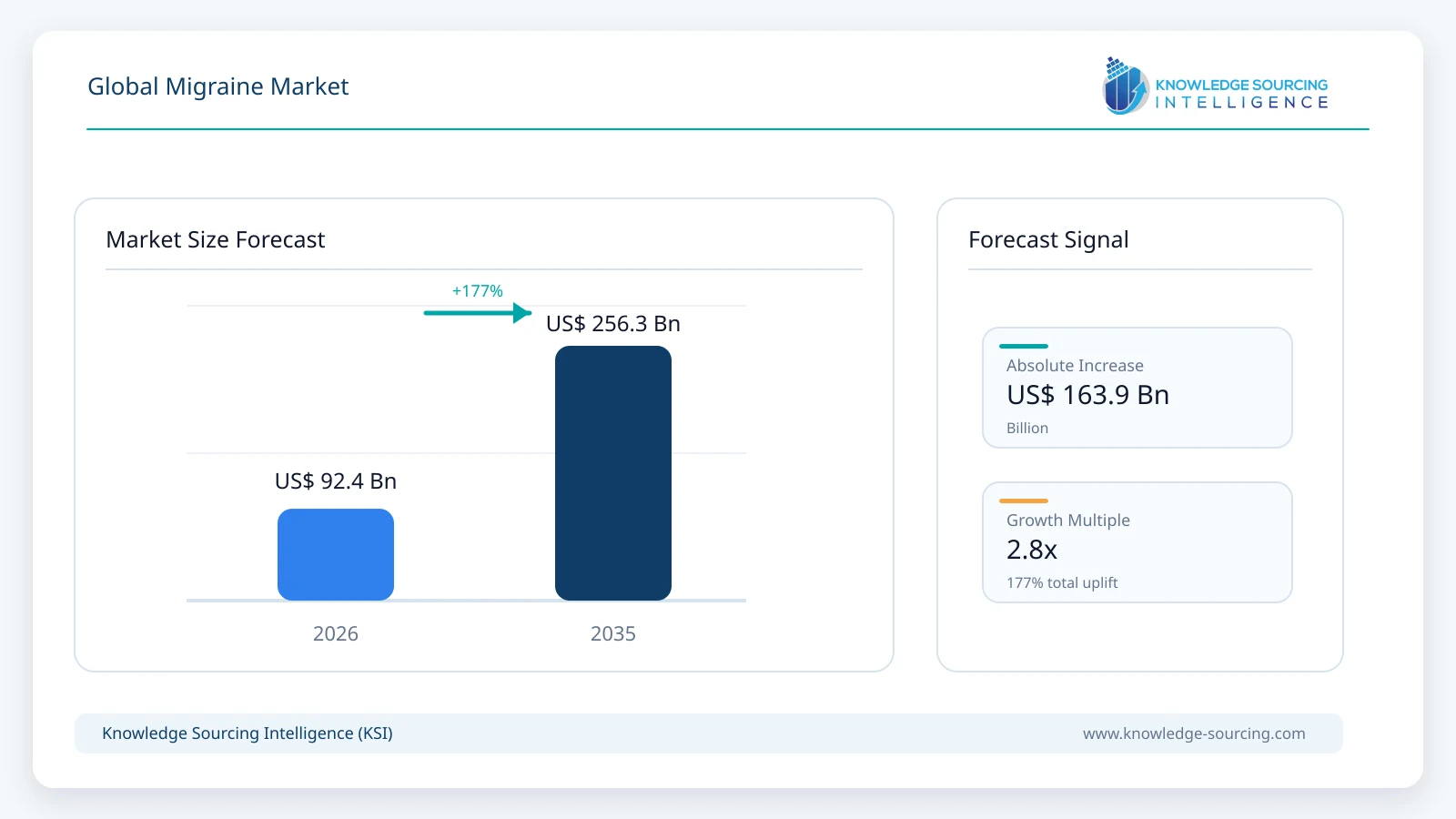
Migraine care demand reflects the interaction between disease burden, healthcare accessibility, and treatment innovation. Growing recognition of migraine as a neurological disorder is increasing demand for structured diagnosis and long-term management. Underdiagnosis remains a significant constraint because many patients continue treating symptoms without medical supervision. Healthcare organizations are strengthening awareness campaigns and professional education programs to improve disease recognition. Patient engagement therefore continues increasing across multiple healthcare settings.
Treatment utilization depends on healthcare access because specialist consultation frequently influences diagnosis and therapeutic decision-making. Neurological care demand is increasing as more patients seek effective solutions for recurring symptoms and productivity loss. Healthcare infrastructure limitations continue restricting access in several developing regions. Telehealth platforms are expanding specialist reach and improving continuity of care. Treatment accessibility consequently continues improving among previously underserved populations.
Public health authorities increasingly recognize migraine as a significant contributor to disability because recurrent attacks affect quality of life and workforce participation. Greater recognition is encouraging healthcare systems to allocate additional resources toward neurological disease management. Resource constraints remain a challenge because competing healthcare priorities influence funding allocation. Policymakers are supporting disease surveillance and awareness initiatives to strengthen long-term management strategies. Migraine therefore continues gaining importance within healthcare planning frameworks.
Market Dynamics
Market Drivers
Rising Disease Awareness and Diagnostic Recognition: Migraine diagnosis increasingly relies on standardized clinical criteria that improve consistency across healthcare settings. Public awareness campaigns are encouraging more patients to seek medical evaluation for recurrent headache symptoms. Historical underdiagnosis remains a constraint because many individuals continue managing symptoms without professional consultation. Healthcare providers are expanding educational initiatives to improve recognition of migraine subtypes. The diagnosed population therefore continues to increase across multiple healthcare systems.
Expansion of Neurology Care Access: Access to specialized neurological care remains an important determinant of migraine diagnosis and treatment. Telemedicine platforms are expanding consultation availability in regions facing neurologist shortages. Healthcare infrastructure limitations still restrict specialist access in several developing markets. Providers are integrating virtual care pathways to address geographic disparities. Earlier diagnosis consequently becomes more achievable for a larger patient population.
Increasing Burden Among Working-Age Adults: Migraine affects a substantial proportion of economically productive individuals and contributes to workforce impairment. Lifestyle pressures, sleep disturbances, and stress exposure are increasing among urban populations. Recurrent attacks create productivity losses that affect both individuals and employers. Healthcare systems are developing targeted disease management approaches to reduce disability burden. Migraine therefore remains a priority condition within neurological healthcare planning.
Growing Focus on Women's Health: Women account for a significant proportion of migraine cases due to hormonal influences and biological susceptibility. Healthcare organizations are increasing investment in female-specific neurological health initiatives. Variability in symptom presentation continues creating challenges for timely diagnosis. Clinical programs are improving awareness of gender-related disease patterns. Disease detection consequently improves among female populations.
Market Restraints
Limited access to neurologists in low-resource settings restricts timely diagnosis and specialist-led disease management.
Persistent underdiagnosis remains common because many patients self-manage symptoms without seeking medical care.
Variability in healthcare reimbursement policies reduces equitable access to migraine-related consultations and long-term management.
Market Opportunities
Expansion of Digital Migraine Management: Digital health adoption creates opportunities to improve symptom monitoring and long-term disease tracking. Patients are increasingly using mobile technologies to record attack patterns and treatment responses. Data consistency remains a challenge because patient engagement varies over time. Healthcare providers are integrating digital monitoring into routine clinical practice. Disease management therefore becomes increasingly data driven.
Early Intervention Programs: Earlier diagnosis creates opportunities to reduce disease progression and improve patient outcomes. Healthcare systems are expanding awareness initiatives that encourage consultation at earlier stages of disease development. Delayed healthcare engagement remains a barrier because symptoms are frequently normalized by patients. Public health organizations are strengthening educational outreach to high-risk populations. Early intervention consequently continues gaining importance.
Improved Access Through Telehealth: Virtual healthcare services create opportunities to extend specialist expertise into underserved communities. Demand for remote consultation is increasing because convenience and accessibility improve patient engagement. Regulatory and infrastructure challenges continue affecting implementation in certain regions. Healthcare providers are expanding digital care networks to overcome these limitations. Specialist access therefore continues broadening.
Personalized Disease Management: Migraine heterogeneity creates opportunities for individualized treatment strategies. Clinical understanding of disease biology is increasing, which supports more targeted therapeutic approaches. Variability in treatment response continues limiting universal effectiveness. Healthcare professionals are refining treatment selection based on patient-specific characteristics. Personalized management consequently continues becoming more prominent.
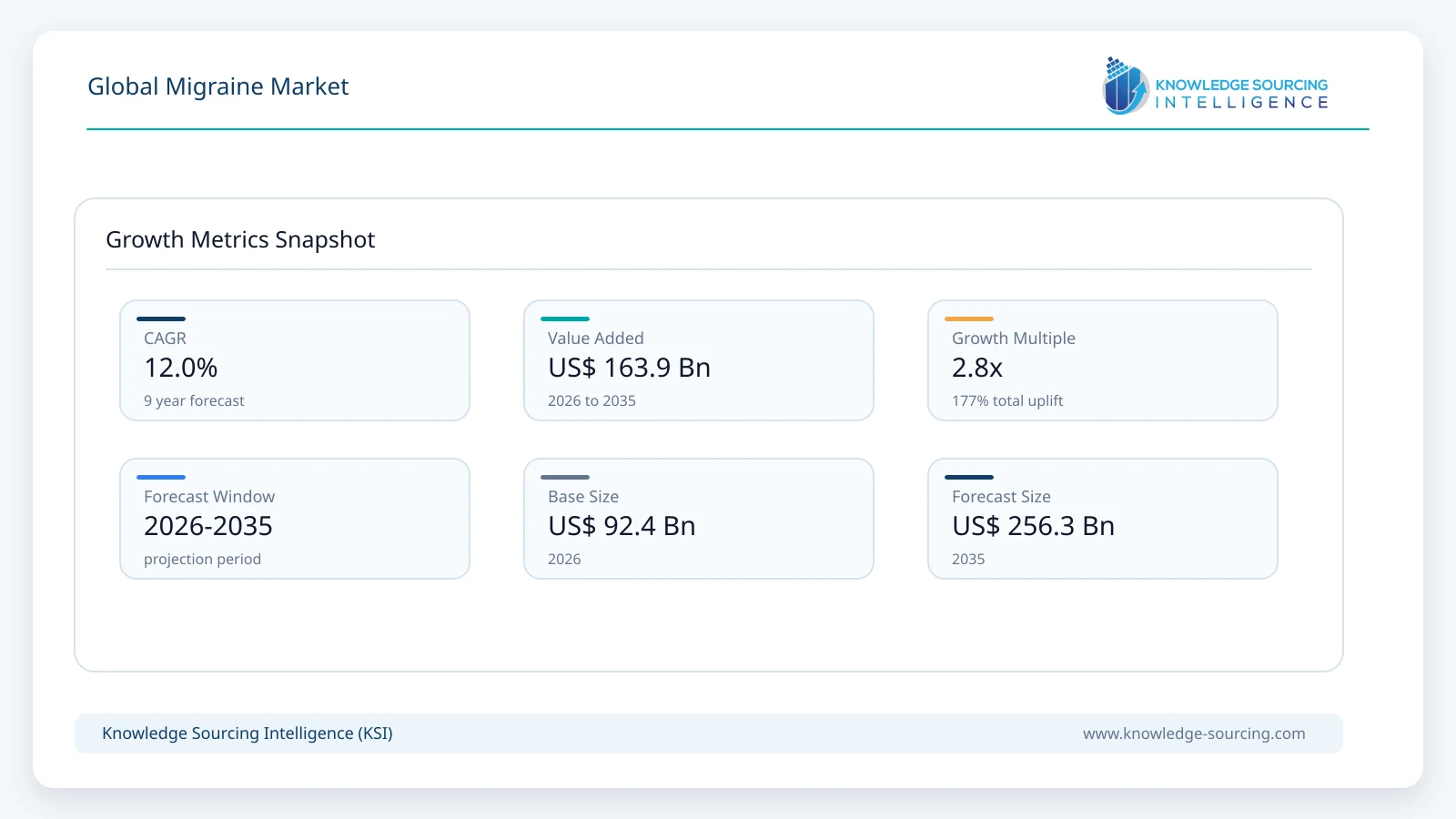
Disease & Epidemiology Analysis
Migraine remains one of the most prevalent neurological disorders worldwide because genetic susceptibility interacts with environmental and lifestyle triggers across populations. Healthcare awareness is increasing, which is bringing a larger proportion of affected individuals into formal diagnostic pathways. Underdiagnosis remains substantial because many patients continue relying on self-treatment and delayed consultation. Healthcare providers are strengthening education efforts to improve disease recognition. The diagnosed population therefore continues growing across major healthcare markets.
Disease burden remains concentrated among working-age adults because migraine prevalence peaks during years associated with high economic and social activity. Occupational stress and lifestyle-related factors are increasing exposure to triggers linked to migraine occurrence. Healthcare engagement remains inconsistent because symptom severity and healthcare access vary considerably among patients. Employers and healthcare systems are expanding support initiatives focused on neurological health. Productivity-related disease burden consequently continues driving demand for improved management strategies.
Women represent the largest affected population because hormonal factors influence disease susceptibility and progression. Awareness of gender-specific disease patterns is increasing, which is improving diagnostic recognition among female patients. Variability in symptom presentation continues creating diagnostic complexity. Healthcare professionals are incorporating gender-focused considerations into clinical evaluation and treatment planning. Female populations therefore remain central to migraine management strategies.
Chronic migraine generates a disproportionate healthcare burden because attack frequency significantly affects quality of life and healthcare utilization. Recognition of chronic disease patterns is increasing as physicians adopt standardized classification criteria. Treatment complexity remains elevated because patients often require long-term monitoring and preventive intervention. Healthcare systems are improving disease management pathways to address these challenges. Chronic migraine consequently remains a priority focus area within neurological care.
Treatment Guidelines Landscape
Organization | Focus Area | Key Guidance |
World Health Organization | Neurological health management | Early diagnosis and access to care |
International Headache Society | Migraine classification | Standardized diagnostic criteria through ICHD framework |
American Headache Society | Clinical management | Evidence-based acute and preventive treatment recommendations |
American Academy of Neurology | Neurology practice standards | Structured diagnosis and treatment pathways |
Market Segmentation
By Migraine Type
Episodic migraine represents the largest patient segment because most affected individuals experience attacks on fewer than fifteen days per month. Healthcare providers are improving recognition of episodic disease patterns, which is increasing diagnosis rates among patients previously managed outside specialist settings. Limited symptom reporting continues to delay clinical evaluation for some individuals. Awareness initiatives are encouraging earlier healthcare engagement, and these efforts support timely intervention. The outcome is growth in diagnosed episodic migraine populations requiring ongoing monitoring and treatment optimization.
By Treatment Type
Acute migraine treatment demand remains strong because patients seek rapid symptom relief that enables continuation of daily activities and work responsibilities. Earlier diagnosis is increasing the number of individuals entering structured treatment pathways and receiving physician-guided care. Variability in treatment response remains a challenge because symptom severity and attack characteristics differ substantially across patients. Healthcare providers are adopting more individualized treatment approaches to improve outcomes and patient satisfaction. Utilization of acute migraine therapies therefore continues expanding across diagnosed populations.
By End-User
Hospital and specialty clinic demand remains substantial because complex migraine cases frequently require specialist assessment and structured management. Growing diagnosis rates are increasing referrals to neurology-focused healthcare settings. Capacity limitations remain a challenge because specialist availability varies across healthcare systems. Providers are expanding multidisciplinary care models to improve efficiency and patient outcomes. Specialty care utilization therefore continues increasing among diagnosed migraine patients.
Regional Analysis
North America
North America maintains one of the most established migraine diagnosis ecosystems because healthcare infrastructure supports widespread neurological assessment and disease monitoring. Public awareness regarding migraine symptoms remains high, which encourages individuals to pursue professional evaluation rather than relying exclusively on self-management. Diagnostic disparities still exist among underserved populations because healthcare access and insurance coverage vary across demographic groups. Healthcare organizations are expanding telehealth-based neurological services to improve accessibility and reduce consultation barriers. The region consequently sustains high diagnosis rates and remains a major contributor to the global treated migraine population.
The burden of migraine remains significant among working-age adults because occupational stress, screen exposure, sleep disruption, and lifestyle-related factors continue influencing disease occurrence. Employers increasingly recognize productivity losses associated with migraine-related disability, which supports greater attention to disease management initiatives. Healthcare providers are integrating digital monitoring technologies into patient care pathways to improve longitudinal disease tracking. Earlier intervention therefore becomes more achievable, strengthening disease management outcomes across the region.
Research activity and epidemiological surveillance remain highly developed because academic institutions, healthcare systems, and public agencies continuously generate migraine-related data. Population-level monitoring improves understanding of disease trends and supports more targeted healthcare planning. Neurological health programs are expanding educational efforts focused on reducing diagnostic delays. North America consequently remains a leading region for migraine awareness, diagnosis, and treatment engagement.
Europe
Europe represents a substantial share of the global migraine burden because aging populations, extensive healthcare access, and strong disease surveillance systems support comprehensive epidemiological assessment. Universal healthcare frameworks in many countries facilitate physician consultations and improve opportunities for diagnosis. Variability in treatment access remains evident because reimbursement policies and specialist availability differ between healthcare systems. Public institutions are strengthening neurological health initiatives to improve patient outcomes. The diagnosed migraine population therefore continues increasing throughout the region.
Disease awareness remains high because professional medical societies actively promote evidence-based diagnostic practices. Improved recognition of chronic migraine is increasing identification of patients experiencing frequent and disabling attacks. Healthcare resource limitations continue affecting specialist access in some markets despite broad healthcare coverage. Telemedicine services are expanding to address capacity constraints and improve continuity of care. Healthcare engagement consequently continues rising among migraine patients.
Population-based studies provide extensive epidemiological insights because national registries and public health organizations maintain robust data collection systems. These resources improve visibility into disease prevalence patterns and support evidence-based healthcare planning. Research institutions are evaluating demographic and environmental factors associated with migraine occurrence. Europe therefore remains an important source of epidemiological intelligence and disease management innovation.
Asia Pacific
Asia Pacific contains the largest population base globally, which creates a substantial absolute burden of migraine despite variability in prevalence rates between countries. Urbanization, changing lifestyles, and increasing occupational pressures are contributing to greater recognition of neurological health concerns. Healthcare access disparities remain a significant challenge because infrastructure quality differs considerably across markets. Governments are investing in healthcare modernization programs to improve diagnosis and treatment capabilities. The diagnosed patient population consequently continues expanding across the region.
Healthcare awareness remains lower in several developing economies because many individuals continue attributing migraine symptoms to temporary lifestyle factors. Educational campaigns are increasing public understanding of headache disorders and encouraging physician consultation. Specialist shortages continue limiting access to comprehensive neurological evaluation in certain areas. Telehealth platforms are improving connectivity between patients and healthcare professionals. Disease recognition therefore continues strengthening across both urban and rural populations.
Economic development supports increasing healthcare utilization because rising incomes improve access to medical services. National health authorities are prioritizing noncommunicable disease management and strengthening healthcare delivery systems. Improved diagnostic capacity supports more accurate epidemiological reporting and enhances disease surveillance. Asia Pacific consequently represents one of the fastest-evolving regions in terms of migraine diagnosis and healthcare engagement.
Rest of the World
The Rest of the World region encompasses Latin America, the Middle East, and Africa, where migraine remains a significant yet often underrecognized neurological condition. Population growth and urban expansion are increasing the number of individuals exposed to environmental and lifestyle-related migraine triggers. Healthcare infrastructure limitations continue restricting access to specialized neurological services in many countries. Governments and healthcare organizations are implementing initiatives to strengthen disease awareness and improve access to care. Diagnosed populations consequently continue increasing from historically low levels.
Healthcare-seeking behavior varies substantially across countries because cultural perceptions and healthcare accessibility influence patient engagement. Delayed diagnosis remains common where specialist availability is limited or healthcare resources are constrained. Community health programs are expanding educational efforts focused on headache recognition and disease management. Improved awareness therefore supports gradual increases in diagnosis rates and treatment engagement.
Healthcare modernization efforts are improving disease surveillance capabilities because governments increasingly recognize the burden associated with neurological disorders. Data availability remains uneven across many countries, which limits comprehensive epidemiological assessment. Public health authorities are strengthening reporting systems and investing in healthcare capacity development. The region consequently presents substantial opportunities for improving migraine diagnosis and long-term disease monitoring.
Regulatory Landscape
Migraine treatment access depends heavily on regulatory frameworks that govern diagnosis standards, treatment approvals, and healthcare delivery practices. Healthcare authorities increasingly recognize migraine as a significant neurological condition, which is encouraging greater emphasis on structured disease management. Differences in healthcare systems remain a constraint because implementation of clinical guidance varies considerably across countries. Regulatory agencies are strengthening neurological health policies to improve consistency in patient care. Treatment pathways consequently continue becoming more standardized.
Diagnostic consistency relies on internationally recognized classification systems because standardized criteria improve disease identification and epidemiological tracking. Healthcare providers are increasingly adopting evidence-based diagnostic frameworks that support earlier recognition of migraine subtypes. Variability in clinical practice remains evident because awareness and training levels differ across healthcare settings. Professional organizations are expanding educational initiatives to improve adherence to guideline-based care. Diagnostic accuracy therefore continues improving across multiple regions.
Digital healthcare regulation is becoming increasingly important because telemedicine and remote disease management platforms are expanding within migraine care. Regulatory authorities are developing standards that balance patient safety, data protection, and healthcare accessibility. Implementation challenges remain because digital health adoption progresses at different rates across countries. Policymakers are updating healthcare regulations to support broader integration of technology-enabled care. Remote migraine management consequently continues gaining regulatory acceptance.
Healthcare reimbursement policies influence treatment accessibility because coverage decisions determine patient access to advanced therapies and specialist services. Growing recognition of migraine-related disability is increasing interest in evidence-based reimbursement frameworks. Budgetary constraints remain a challenge because healthcare systems must evaluate competing resource demands. Regulators and payers are strengthening health technology assessment processes to support informed decision-making. Treatment access therefore continues evolving alongside broader healthcare policy developments.
Reimbursement Landscape
Migraine reimbursement policies increasingly recognize the substantial disability burden associated with chronic and recurrent disease. Healthcare systems generally prioritize reimbursement for patients demonstrating inadequate response to conventional therapies because specialty migraine treatments often carry higher acquisition costs. Eligibility criteria continue influencing treatment access, particularly for biologics and CGRP-targeted therapies. Payers are evaluating real-world effectiveness data to support coverage decisions. Reimbursement frameworks therefore remain a significant determinant of treatment uptake.
European healthcare systems typically provide broader reimbursement pathways for eligible migraine patients because centralized assessment processes evaluate clinical benefit and disease burden. Budget constraints remain an ongoing consideration because increasing diagnosis rates expand the number of potentially eligible patients. Health technology assessment organizations are continuously reviewing evidence related to long-term outcomes and healthcare resource utilization. Access consequently continues improving for patients with severe or chronic disease manifestations.
The United States reimbursement environment remains more fragmented because coverage decisions vary among commercial insurers, government programs, and employer-sponsored plans. Prior authorization requirements frequently influence treatment initiation timelines. Healthcare providers are adapting documentation practices to satisfy payer requirements and support patient access. Reimbursement policies therefore continue shaping treatment utilization patterns across the migraine care continuum.
Competitive Landscape
AbbVie
AbbVie distinguishes itself through one of the most comprehensive migraine portfolios in the industry, spanning both acute and preventive treatment categories. The company benefits from ownership of ubrogepant and atogepant, which target the CGRP pathway through oral administration. Growing demand for convenient non-injectable therapies is increasing interest in oral treatment options. Competitive pressure remains significant because multiple CGRP-focused therapies are available across global markets. AbbVie is expanding lifecycle management initiatives to strengthen differentiation and broaden patient eligibility. The company therefore maintains a strategically important position within the migraine therapeutic ecosystem.
The company continues leveraging neuroscience expertise to expand its presence in migraine care. Physicians increasingly value therapies that offer both efficacy and ease of administration, which supports demand for oral CGRP antagonists. Long-term treatment adherence remains a challenge because chronic neurological conditions require sustained patient engagement. AbbVie is pursuing additional clinical investigations to expand treatment utility across migraine subpopulations. Its migraine franchise consequently remains a major contributor to its neuroscience strategy.
Pfizer Inc.
Pfizer's strategic distinction stems from its involvement in both oral and intranasal CGRP-targeted therapies through its relationship with Biohaven migraine assets. The company benefits from the commercial presence of rimegepant and zavegepant, which address different patient needs within acute and preventive treatment settings. Demand is increasing for therapies that provide rapid symptom relief and flexible administration options. Treatment accessibility remains influenced by reimbursement and physician adoption patterns. Pfizer is expanding its neurological portfolio through continued investment in migraine-related innovation. The company consequently holds a meaningful position in the evolving migraine treatment landscape.
The availability of an intranasal CGRP antagonist enhances Pfizer's differentiation because some patients experience nausea or limitations with oral therapies. Patient preference increasingly influences treatment selection as healthcare systems emphasize individualized care. Competitive intensity remains high because multiple targeted migraine therapies continue expanding globally. Pfizer is strengthening its presence through lifecycle management and evidence-generation initiatives. Its migraine portfolio therefore remains strategically relevant within its broader innovative medicines business.
Eli Lilly and Company
Eli Lilly differentiates itself through a strong focus on neuroscience and biologic innovation. The company's migraine presence is anchored by galcanezumab, a CGRP-targeted monoclonal antibody developed for preventive treatment. Demand for preventive therapies is increasing because healthcare providers seek to reduce attack frequency and disease-related disability. Long-term disease management requirements continue creating opportunities for therapies with established efficacy profiles. Lilly is supporting ongoing evidence generation to reinforce clinical confidence and patient utilization. The company consequently remains a leading participant within the preventive migraine segment.
The organization benefits from extensive expertise in specialty care and chronic disease management. Healthcare systems increasingly emphasize outcomes that improve quality of life and reduce healthcare utilization. Competition remains substantial because several CGRP-focused biologics target similar patient populations. Lilly continues strengthening its neurological portfolio through research and clinical engagement. Its strategic position therefore remains closely tied to the growth of preventive migraine management.
Amgen Inc.
Amgen's strategic distinction originates from its early leadership in CGRP-targeted migraine prevention through erenumab. The company helped establish targeted migraine therapy as a mainstream treatment approach, which strengthened physician familiarity with CGRP biology. Demand for preventive treatment continues increasing because chronic migraine imposes substantial disability and productivity losses. Competitive pressures remain significant as newer therapies enter the market and expand treatment options. Amgen is maintaining its position through continued clinical evidence generation and physician engagement initiatives. The company therefore remains a major competitor in migraine prevention.
The organization benefits from extensive biologics expertise and global commercial reach. Healthcare providers increasingly seek treatments that offer sustained reductions in migraine frequency while maintaining manageable safety profiles. Market expansion continues attracting additional investment and innovation from competitors. Amgen is leveraging its established presence to maintain relevance within evolving treatment paradigms. Its migraine franchise consequently continues contributing to the broader neuroscience and inflammation portfolio.
Lundbeck
Lundbeck differentiates itself through a focused neuroscience strategy that prioritizes neurological and psychiatric disorders requiring long-term management. The company’s migraine position is anchored by eptinezumab, an intravenously administered CGRP monoclonal antibody designed for preventive migraine treatment. Demand for preventive therapies is increasing because healthcare providers are seeking sustained reductions in attack frequency among patients with recurrent disease. Treatment persistence remains a challenge because migraine severity and patient expectations vary considerably across populations. Lundbeck is expanding physician education and real-world evidence initiatives to strengthen clinical adoption. The company therefore maintains a distinct position within the preventive migraine segment.
The organization benefits from deep expertise in neurological disorders, which supports integration of migraine management within broader neuroscience care pathways. Healthcare systems increasingly emphasize outcomes that reduce disability and improve quality of life. Competition remains intense because multiple CGRP-targeted therapies address similar patient populations. Lundbeck is reinforcing differentiation through evidence generation and patient-focused support programs. Its migraine portfolio consequently remains strategically important within its neuroscience business.
Teva Pharmaceutical Industries Ltd.
Teva distinguishes itself through its combination of innovative migraine therapies and broad global healthcare reach. The company’s migraine franchise is supported by fremanezumab, a CGRP-targeted monoclonal antibody developed for migraine prevention. Demand for preventive treatment continues increasing because healthcare providers are prioritizing reduction of attack frequency and long-term disability. Healthcare access disparities remain a constraint because reimbursement and specialist availability differ across regions. Teva is expanding educational initiatives and clinical evidence programs to improve treatment adoption. The company consequently remains a major participant in the global migraine landscape.
The organization benefits from established relationships across healthcare systems and extensive commercial infrastructure. Patient awareness regarding migraine prevention is increasing, which supports greater engagement with specialist-led treatment pathways. Competitive pressure continues intensifying as additional targeted therapies expand across international markets. Teva is strengthening lifecycle management strategies to sustain relevance within the evolving migraine ecosystem. Its migraine business therefore remains an important component of its innovative medicines portfolio.
Biohaven Ltd.
Biohaven established strategic significance through its pioneering work in CGRP receptor antagonist development. The company played a central role in advancing rimegepant, which expanded treatment flexibility by supporting both acute and preventive migraine management. Demand is increasing for therapies that combine convenience with clinically meaningful efficacy. Treatment adherence remains a challenge because migraine symptoms and patient experiences differ substantially. Biohaven is continuing research activities focused on neurological disorders and innovative therapeutic approaches. The company therefore remains influential within migraine innovation despite ongoing portfolio evolution.
The organization benefits from a research-driven culture that emphasizes targeted neurological interventions. Healthcare providers increasingly value treatment options that offer flexibility across multiple stages of disease management. Competitive intensity continues rising as pharmaceutical companies expand investments in migraine care. Biohaven is pursuing scientific advancement through continued development of novel neurological assets. Its legacy within CGRP-targeted innovation consequently continues shaping migraine treatment paradigms.
Strategic Insights and Future Market Outlook
Migraine management continues evolving because healthcare systems increasingly recognize the substantial disability burden associated with recurrent neurological disorders. Growing disease awareness is expanding the diagnosed patient population, which is increasing demand for both acute and preventive treatment approaches. Underdiagnosis remains a significant limitation because many individuals continue delaying professional evaluation despite recurring symptoms. Healthcare providers are strengthening screening initiatives and patient education efforts to address this gap. Treatment utilization therefore continues growing across multiple regions.
Demand is shifting toward preventive disease management because patients and healthcare providers increasingly prioritize long-term control rather than episodic symptom relief. Greater understanding of migraine biology is supporting adoption of targeted treatment approaches that align with individual patient needs. Treatment accessibility remains constrained by reimbursement requirements and specialist availability in several healthcare systems. Stakeholders are expanding evidence-generation activities and digital care solutions to improve access and demonstrate value. Personalized migraine management consequently continues gaining momentum.
Healthcare infrastructure modernization is improving treatment accessibility because telemedicine and digital monitoring tools are reducing geographical barriers to specialist care. Growing reliance on technology-enabled healthcare is increasing opportunities for earlier diagnosis and more consistent patient follow-up. Variability in digital health adoption remains a challenge because implementation differs across regions and healthcare systems. Governments and healthcare organizations are investing in technology-supported neurological care models to improve outcomes. Migraine management therefore continues moving toward more integrated and accessible care pathways.
Migraine Market Scope:
| Report Metric | Details |
|---|---|
| Total Market Size in 2026 | USD 92.43 Billion |
| Total Market Size in 2035 | USD 256.34 Billion |
| Forecast Unit | USD Billion |
| Growth Rate | 12.0% |
| Study Period | 2021 to 2035 |
| Historical Data | 2021 to 2024 |
| Base Year | 2025 |
| Forecast Period | 2026 – 2035 |
| Segmentation | Development Phase, Mechanism of Action, Modality, Geography |
| Companies |
|
Market Segmentation
Development Phase
Mechanism of Action
Modality
Geography
- North America
- South America
- Europe
- Middle East and Africa
- Asia Pacific
Table of Contents
1. EXECUTIVE SUMMARY
1.1 Pipeline Market Snapshot
1.1.1 Current Pipeline Landscape
1.1.2 Key Development Trends
1.1.3 Innovation Outlook
1.2 Strategic Findings
1.2.1 High-Value Pipeline Assets
1.2.2 Emerging Mechanisms of Action
1.2.3 Competitive Positioning Summary
1.3 Forecast Highlights
1.3.1 Expected Regulatory Approvals
1.3.2 Launch Timeline Outlook
1.3.3 Commercial Opportunity Assessment
2. PIPELINE OVERVIEW
2.1 Migraine Drug Development Landscape
2.1.1 Historical Evolution of Migraine Therapeutics
2.1.2 Current Clinical Development Environment
2.1.3 Pipeline Growth Trends
2.2 Pipeline Asset Distribution
2.2.1 Total Active Pipeline Assets
2.2.2 Assets by Development Phase
2.2.3 Assets by Molecule Type
2.2.4 Assets by Sponsor Type
2.3 Historical Pipeline Progression Analysis
2.3.1 Phase Advancement Trends
2.3.2 Approval Success Patterns
2.3.3 Development Discontinuation Trends
3. DISEASE AND UNMET NEED ANALYSIS
3.1 Migraine Disease Overview
3.1.1 Disease Burden
3.1.2 Epidemiological Trends
3.1.3 Healthcare Burden
3.2 Current Treatment Landscape
3.2.1 Acute Treatment Options
3.2.2 Preventive Treatment Options
3.2.3 CGRP-Based Therapeutics
3.3 Unmet Clinical Needs
3.3.1 Refractory Migraine Population
3.3.2 Chronic Migraine Management Challenges
3.3.3 Treatment Adherence Limitations
3.3.4 Long-Term Safety Considerations
3.4 Future Therapeutic Needs
3.4.1 Improved Preventive Therapies
3.4.2 Rapid-Onset Acute Therapies
3.4.3 Personalized Treatment Approaches
4. MECHANISM AND MODALITY LANDSCAPE
4.1 Mechanism of Action Clustering
4.1.1 CGRP Receptor Antagonists
4.1.2 CGRP Ligand Inhibitors
4.1.3 Serotonin (5-HT1F) Agonists
4.1.4 PACAP Pathway Modulators
4.1.5 Ion Channel Modulators
4.1.6 Neuromodulation-Related Therapeutics
4.1.7 Emerging Novel Targets
4.2 Innovation Classification
4.2.1 First-in-Class Candidates
4.2.2 Best-in-Class Candidates
4.2.3 Follow-On Innovations
4.3 Modality Assessment
4.3.1 Small Molecule Therapeutics
4.3.2 Monoclonal Antibodies
4.3.3 Peptide-Based Therapeutics
4.3.4 RNA-Based Therapeutics
4.3.5 Cell and Gene Therapy Assessment
4.4 Mechanism Evolution Analysis
4.4.1 Established vs Emerging Targets
4.4.2 Innovation Density by Mechanism
4.4.3 Mechanism Success Trends
5. CLINICAL DEVELOPMENT INTELLIGENCE
5.1 Clinical Trial Landscape
5.1.1 Active Trials Overview
5.1.2 Trial Distribution by Phase
5.1.3 Trial Distribution by Geography
5.2 Trial Design Benchmarking
5.2.1 Sample Size Analysis
5.2.2 Endpoint Benchmarking
5.2.3 Study Duration Assessment
5.2.4 Comparator Strategy Analysis
5.3 Development Performance Metrics
5.3.1 Clinical Success Rates
5.3.2 Failure Rate Analysis
5.3.3 Recruitment Performance
5.3.4 Patient Retention Trends
5.4 Regulatory Intelligence
5.4.1 Fast Track Designations
5.4.2 Breakthrough Therapy Designations
5.4.3 Orphan and Special Designation Assessment
6. PIPELINE SEGMENTATION ANALYSIS
6.1 Pipeline by Development Phase
6.1.1 Preclinical Pipeline Assets
6.1.1.1 Asset-Level Profiles
6.1.1.2 Developer Analysis
6.1.1.3 Mechanism Assessment
6.1.1.4 Probability of Advancement
6.1.2 Phase I Pipeline Assets
6.1.2.1 Asset-Level Profiles
6.1.2.2 Clinical Development Status
6.1.2.3 Competitive Benchmarking
6.1.2.4 Advancement Probability
6.1.3 Phase II Pipeline Assets
6.1.3.1 Asset-Level Profiles
6.1.3.2 Clinical Efficacy Assessment
6.1.3.3 Development Risk Analysis
6.1.3.4 Advancement Probability
6.1.4 Phase III Pipeline Assets
6.1.4.1 Asset-Level Profiles
6.1.4.2 Registration Readiness
6.1.4.3 Competitive Positioning
6.1.4.4 Approval Probability
6.1.5 Filed and Under Review Assets
6.1.5.1 Regulatory Status
6.1.5.2 Expected Decision Timelines
6.1.5.3 Commercial Launch Readiness
6.2 Pipeline by Mechanism of Action
6.2.1 CGRP Pathway Assets
6.2.2 PACAP Pathway Assets
6.2.3 Serotonin-Based Assets
6.2.4 Novel Mechanism Assets
6.3 Pipeline by Modality
6.3.1 Small Molecules
6.3.2 Biologics
6.3.3 RNA Therapies
6.3.4 Other Modalities
7. PROBABILITY OF SUCCESS AND RISK ANALYSIS
7.1 Phase Transition Modeling
7.1.1 Preclinical-to-Phase I Success Probability
7.1.2 Phase I-to-Phase II Success Probability
7.1.3 Phase II-to-Phase III Success Probability
7.1.4 Phase III-to-Approval Success Probability
7.2 Risk-Adjusted Pipeline Assessment
7.2.1 Asset-Level Risk Scores
7.2.2 Mechanism-Based Risk Analysis
7.2.3 Company-Level Risk Assessment
7.3 Attrition Analysis
7.3.1 Historical Attrition Trends
7.3.2 Phase-Specific Failure Drivers
7.3.3 Clinical Risk Factors
7.4 Probability-Weighted Commercial Potential
7.4.1 Risk-Adjusted Revenue Forecasts
7.4.2 Value Creation Potential
7.4.3 Peak Sales Probability Modeling
8. LAUNCH TIMELINE AND COMMERCIAL POTENTIAL
8.1 Regulatory Approval Forecast
8.1.1 Near-Term Approvals (2025–2027)
8.1.2 Mid-Term Approvals (2028–2031)
8.1.3 Long-Term Approvals (2032–2035)
8.2 Launch Sequencing Analysis
8.2.1 Expected Launch Order
8.2.2 Competitive Launch Overlap
8.2.3 Market Entry Timing
8.3 Commercial Opportunity Assessment
8.3.1 Peak Sales Potential
8.3.2 Market Penetration Expectations
8.3.3 Competitive Revenue Capture
8.4 Scenario Forecasting
8.4.1 Base Case Scenario
8.4.2 Optimistic Scenario
8.4.3 Conservative Scenario
9. COMPETITIVE PIPELINE LANDSCAPE
9.1 Company-Wise Pipeline Strength
9.1.1 AbbVie
9.1.2 Eli Lilly and Company
9.1.3 Pfizer
9.1.4 Lundbeck
9.1.5 Teva Pharmaceutical Industries
9.1.6 Biohaven
9.1.7 Amgen
9.1.8 Other Emerging Developers
9.2 Asset Concentration Analysis
9.2.1 Top Companies by Asset Count
9.2.2 Top Companies by Late-Stage Assets
9.2.3 Top Companies by Innovation Density
9.3 Competitive Positioning
9.3.1 Market Leaders
9.3.2 Challengers
9.3.3 Emerging Innovators
9.4 Partnership Ecosystem Analysis
9.4.1 Strategic Collaborations
9.4.2 Licensing Networks
9.4.3 Co-Development Structures
10. GEOGRAPHIC ANALYSIS
10.1 North America
10.1.1 Clinical Trial Activity
10.1.2 Regulatory Environment
10.1.3 Innovation Centers
10.2 Europe
10.2.1 Clinical Trial Activity
10.2.2 Regulatory Environment
10.2.3 Innovation Centers
10.3 Asia-Pacific
10.3.1 Clinical Trial Activity
10.3.2 Regulatory Environment
10.3.3 Innovation Centers
10.4 Latin America
10.4.1 Clinical Trial Activity
10.4.2 Regulatory Environment
10.4.3 Innovation Centers
10.5 Middle East & Africa
10.5.1 Clinical Trial Activity
10.5.2 Regulatory Environment
10.5.3 Innovation Centers
11. KEY COUNTRIES ANALYSIS
11.1 United States
11.2 Canada
11.3 Germany
11.4 United Kingdom
11.5 France
11.6 Italy
11.7 Spain
11.8 China
11.9 Japan
11.10 India
11.11 South Korea
11.12 Australia
11.13 Brazil
11.14 Mexico
11.15 Saudi Arabia
11.16 South Africa
12. DEALS AND INVESTMENT LANDSCAPE
12.1 Licensing Agreements
12.1.1 Regional Licensing Deals
12.1.2 Global Licensing Transactions
12.1.3 Asset-Specific Licensing Trends
12.2 Co-Development Partnerships
12.2.1 Strategic Collaborations
12.2.2 Joint Development Programs
12.2.3 Technology Partnerships
12.3 Mergers and Acquisitions
12.3.1 Asset Acquisition Transactions
12.3.2 Company Acquisition Trends
12.3.3 Strategic Consolidation Activity
12.4 Funding Landscape
12.4.1 Venture Capital Investments
12.4.2 Private Equity Participation
12.4.3 Public Market Financing Trends
13. FUTURE OUTLOOK AND STRATEGIC INSIGHTS
13.1 Future Innovation Trends
13.1.1 Next-Generation CGRP Therapies
13.1.2 Emerging Biological Targets
13.1.3 Precision Medicine Potential
13.2 Strategic Opportunities
13.2.1 White Space Opportunities
13.2.2 Underserved Patient Populations
13.2.3 Geographic Expansion Potential
13.3 Competitive Outlook
13.3.1 Expected Market Leaders
13.3.2 Future Challenger Companies
13.3.3 Pipeline Differentiation Trends
14. METHODOLOGY AND DATA FRAMEWORK
14.1 Data Sources
14.1.1 ClinicalTrials.gov
14.1.2 EU Clinical Trials Register
14.1.3 Company Pipeline Disclosures
14.1.4 Regulatory Filings
14.2 Pipeline Validation Methodology
14.2.1 Asset Verification Process
14.2.2 Phase Classification Framework
14.2.3 Developer Attribution Validation
14.3 Forecasting Methodology
14.3.1 Probability of Success Modeling
14.3.2 Revenue Forecast Methodology
14.3.3 Risk Adjustment Framework
14.4 Quality Assurance
14.4.1 Data Verification Standards
14.4.2 Update Frequency
14.4.3 Limitation Assessment
Navigate
Trusted by the world's leading organizations











