
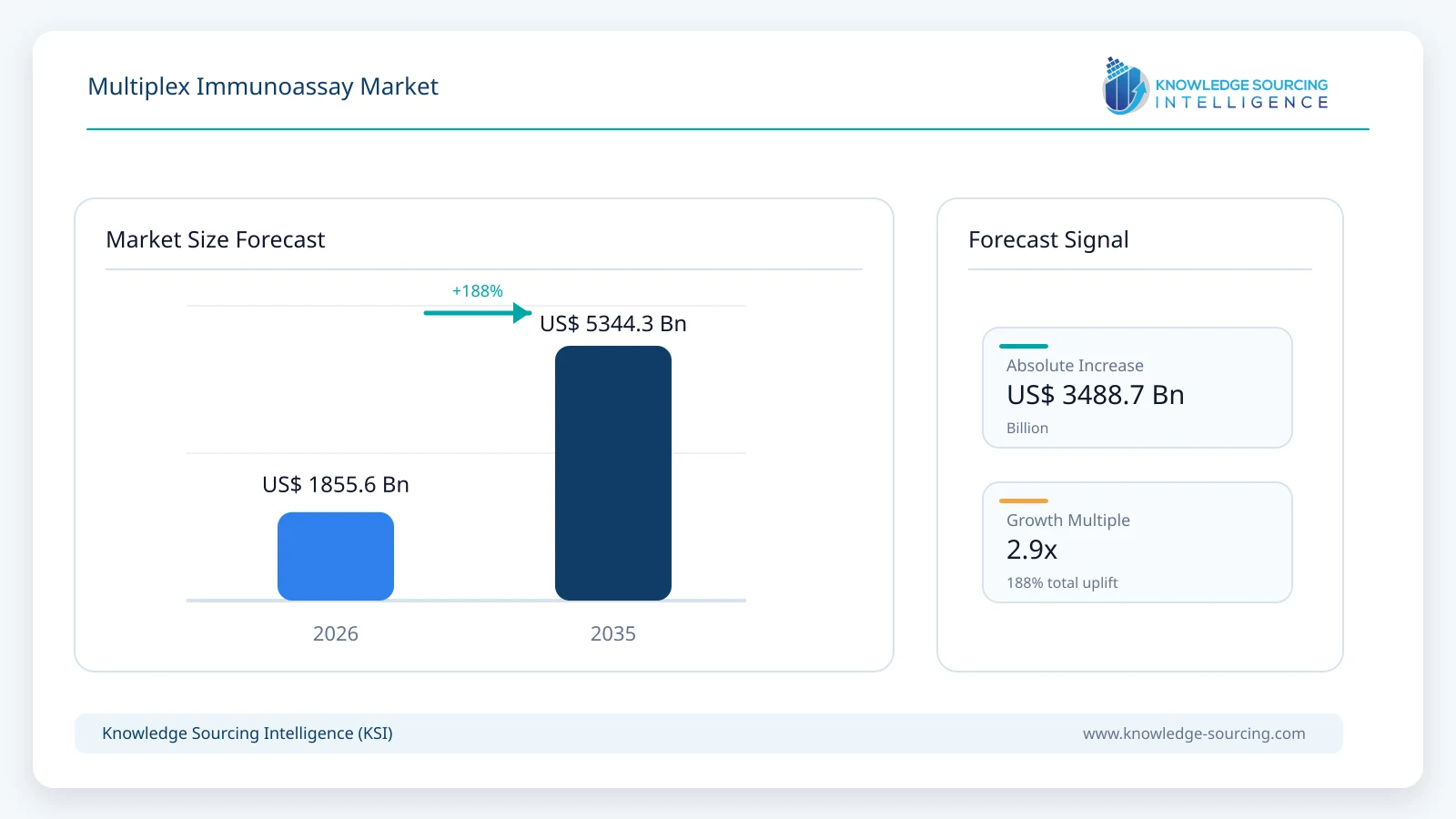
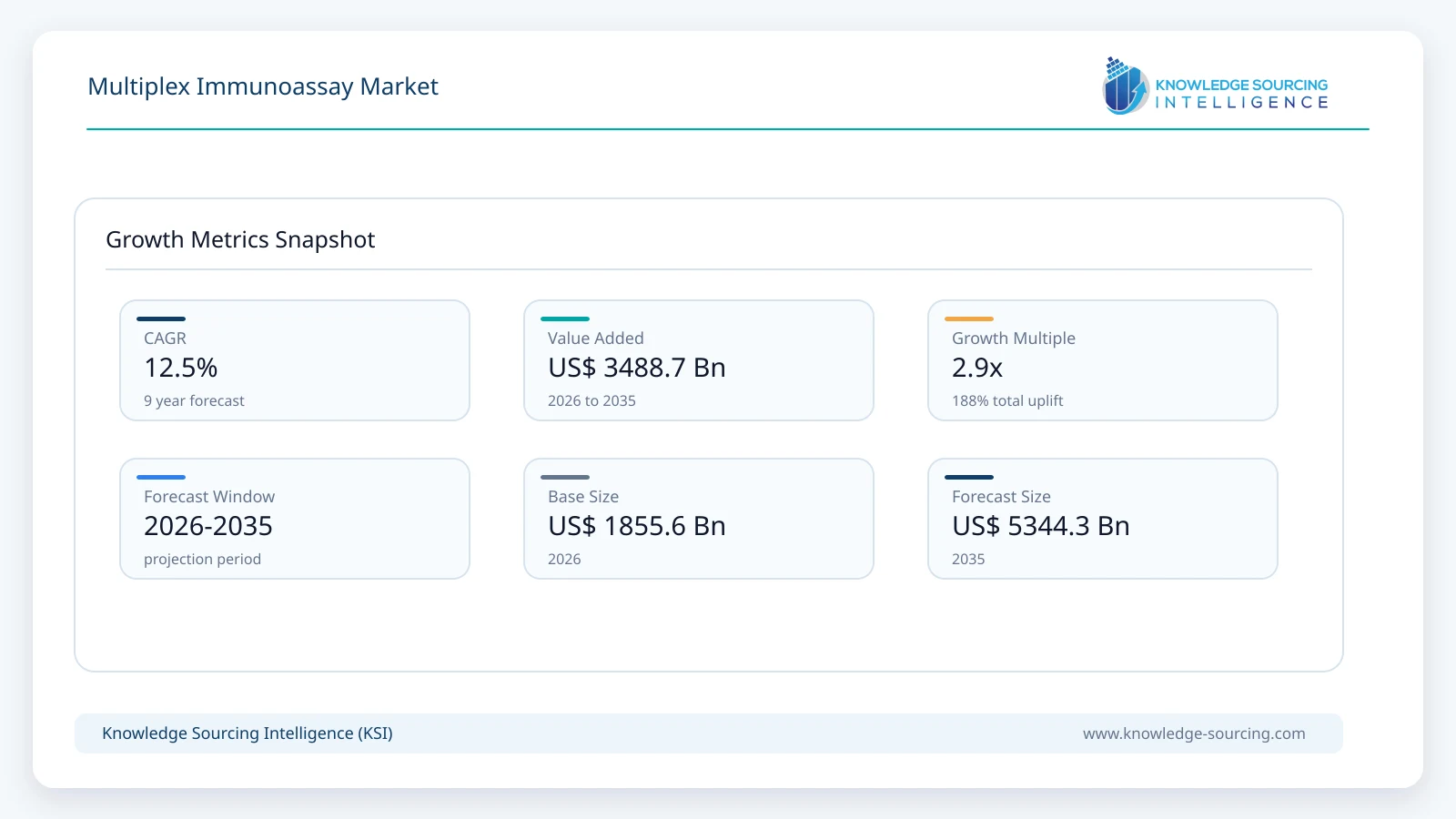
The Multiplex immunoassay Market is expected to grow at a CAGR of 12.5% from a market value of USD 1,855.62 million in 2026 to USD 5,344.29 million in 2035.
Highlights:
- 1Precision medicine programs are increasing biomarker utilization, creating stronger demand for multiplex immunoassays that simultaneously quantify multiple clinically relevant analytes.
- 2Pharmaceutical companies are expanding biomarker-guided clinical trials, increasing adoption of multiplex platforms that improve pharmacodynamic assessment and patient stratification.
- 3Laboratory automation is reducing analytical variability, encouraging healthcare providers to integrate multiplex testing into routine clinical workflows.
- 4Regulatory expectations for analytical validation are strengthening assay standardization, increasing investment in quality-controlled multiplex diagnostic platforms.
Multiplex immunoassay constitutes a critical component of modern biomarker analysis because healthcare decision-making increasingly relies on comprehensive molecular characterization rather than individual diagnostic indicators. Pharmaceutical development depends on multiplex technologies to evaluate pharmacodynamic responses, immune activation, safety biomarkers, and therapeutic efficacy throughout clinical development. Drug developers are expanding biomarker-driven clinical trial designs because targeted therapies require patient stratification based on measurable biological signatures. This dependence increases investment in multiplex assay development while encouraging integration with digital laboratory platforms that improve data management and interpretation. The technology supports translational research by connecting laboratory findings with clinical outcomes.
Healthcare systems are strengthening precision medicine initiatives because chronic diseases present heterogeneous biological mechanisms that require individualized treatment strategies. Clinical laboratories continue to adopt multiplex immunoassays as diagnostic complexity increases across oncology, autoimmune diseases, respiratory infections, and transplant monitoring. This transition creates operational pressure to standardize assay performance across laboratories while maintaining regulatory compliance and analytical reproducibility. Manufacturers are responding through automated instruments, validated reagent panels, and software platforms that simplify workflow integration. The market consequently occupies a strategic position within personalized healthcare because multiplex testing improves clinical efficiency while supporting evidence-based therapeutic decisions.
Government agencies and regulatory organizations continue promoting biomarker qualification frameworks because standardized analytical validation strengthens confidence in diagnostic decision-making. Academic institutions are collaborating with industry sponsors to accelerate biomarker translation from discovery into clinical practice, expanding opportunities for multiplex assay commercialization. These developments reinforce strategic investments in assay innovation, companion diagnostics, and laboratory automation that collectively improve long-term market sustainability.
Market Dynamics
Market Drivers
Expanding Precision Medicine Programs Increase Multiparametric Biomarker Demand: Precision medicine requires comprehensive biological characterization because treatment selection increasingly depends on multiple interacting biomarkers rather than isolated laboratory findings. Healthcare providers are incorporating broader biomarker panels into diagnostic pathways as targeted therapeutics continue expanding across oncology, autoimmune disorders, and rare diseases. This transition creates analytical limitations for conventional immunoassays that evaluate one analyte at a time while consuming larger sample volumes.
Biomarker-Driven Drug Development Strengthens Clinical Trial Adoption: Pharmaceutical innovation depends on biomarker evidence because modern drug development requires continuous evaluation of treatment response, immune modulation, and disease progression throughout clinical investigation. Clinical trial sponsors are integrating multiplex immunoassays into translational research programs as biologic therapies, cell therapies, and immunotherapies continue expanding. This evolution increases demand for standardized biomarker assessment while creating pressure to improve analytical consistency across multicenter studies.
Rising Burden of Chronic and Immune-Mediated Diseases Expands Diagnostic Complexity: Complex diseases require multidimensional laboratory evaluation because inflammatory pathways frequently involve interconnected cytokines, chemokines, and immune mediators that cannot be interpreted through isolated biomarkers. Healthcare systems are increasing diagnostic investigations as cancer, autoimmune diseases, metabolic disorders, and infectious diseases continue generating substantial clinical burden. This diagnostic complexity limits the efficiency of sequential testing while increasing laboratory operating costs.
Laboratory Automation and Digital Integration Improve Operational Efficiency: Modern diagnostic laboratories prioritize standardized workflows because increasing testing volumes require greater analytical consistency and reduced manual intervention. Laboratory operators are investing in automated immunoassay systems as workforce shortages and quality management requirements continue affecting diagnostic services. This operational pressure encourages integration of multiplex instruments with laboratory information management systems and advanced analytical software.
Market Restraints
High instrument acquisition costs and specialized laboratory infrastructure requirements limit adoption among small diagnostic laboratories and resource-constrained healthcare facilities.
Analytical standardization challenges across multiplex platforms reduce result comparability and increase validation requirements before routine clinical implementation.
Regulatory approval pathways for complex multiplex diagnostic panels remain demanding because analytical accuracy, reproducibility, and clinical utility require extensive validation.
Market Opportunities
Companion Diagnostics Continue Expanding Clinical Utility: Companion diagnostics improve therapeutic selection because targeted medicines increasingly depend on biomarker-defined patient populations. Pharmaceutical sponsors are incorporating multiplex biomarker panels into precision oncology and immunology programs as personalized treatment strategies continue expanding. This dependence encourages assay developers to strengthen analytical validation while aligning product development with regulatory expectations. Multiplex immunoassays gain broader commercial relevance across therapeutic development and routine diagnostics.
Emerging Infectious Disease Surveillance Creates New Testing Requirements: Public health preparedness depends on rapid biomarker characterization because emerging pathogens require simultaneous evaluation of host immune responses and pathogen-associated markers. Healthcare institutions are strengthening surveillance capabilities following recent infectious disease outbreaks that emphasized diagnostic scalability. Conventional testing approaches create workflow limitations when multiple biomarkers require concurrent evaluation. Manufacturers are expanding multiplex infectious disease panels that improve laboratory responsiveness while supporting epidemiological surveillance and clinical management.
Artificial Intelligence and Advanced Analytics Enhance Biomarker Interpretation: Clinical decision-making benefits from integrated data interpretation because multiplex assays generate increasingly complex biological datasets. Healthcare organizations are adopting digital pathology, machine learning, and predictive analytics as precision medicine programs continue evolving. This transition increases demand for software platforms capable of translating multidimensional biomarker profiles into clinically actionable insights.
Translational Research Collaborations Accelerate Commercial Innovation: Biomarker discovery supports therapeutic innovation because academic institutions, biotechnology companies, and pharmaceutical organizations collectively advance disease understanding. Research collaborations are expanding multidisciplinary biomarker programs that require scalable multiplex analytical technologies. These partnerships increase opportunities for assay validation, panel customization, and clinical translation while encouraging investment in next-generation immunoassay platforms.
Disease & Epidemiology Analysis
Multiplex immunoassays address diseases characterized by complex biological signaling because immune-mediated disorders involve multiple interacting biomarkers that collectively influence disease progression and therapeutic response. Oncology represents a major application area since tumor biology depends on dynamic interactions between cytokines, immune checkpoint pathways, inflammatory mediators, and circulating protein biomarkers. Cancer research programs are increasing biomarker profiling activities as immunotherapies and targeted therapies continue expanding across solid tumors and hematological malignancies. This evolution strengthens demand for multiplex assays capable of simultaneously evaluating treatment response, resistance mechanisms, and immune activation. The technology supports biomarker-driven precision oncology by improving translational interpretation throughout clinical development and routine patient management.
Autoimmune diseases, including rheumatoid arthritis, systemic lupus erythematosus, inflammatory bowel disease, and multiple sclerosis, require multidimensional immune profiling because disease activity reflects coordinated cytokine and chemokine networks rather than isolated inflammatory markers. Clinical researchers are expanding longitudinal biomarker studies to identify predictors of disease progression and therapeutic response. This requirement increases dependence on multiplex immunoassays that provide comprehensive immune signatures while conserving limited patient samples. The resulting analytical efficiency supports individualized disease monitoring and facilitates biologic therapy optimization.
Treatment Guidelines Landscape
Disease Area | Guideline Focus | Role of Multiplex Immunoassays | Supporting Organization |
Oncology | Biomarker-guided therapeutic selection | Supports multiplex biomarker profiling for patient stratification and treatment monitoring | National Comprehensive Cancer Network |
Rheumatoid Arthritis | Disease activity assessment and biologic therapy optimization | Measures multiple inflammatory cytokines associated with immune response | American College of Rheumatology |
Systemic Lupus Erythematosus | Autoantibody assessment and disease monitoring | Enables simultaneous evaluation of immune mediators supporting disease characterization | European Alliance of Associations for Rheumatology |
Sepsis | Early diagnosis and inflammatory biomarker monitoring | Supports multiplex cytokine assessment to evaluate immune dysregulation | Society of Critical Care Medicine |
Market Segmentation
By Product Type
Consumables represent the largest recurring demand component because every multiplex assay requires reagent kits, antibodies, calibration standards, detection beads, controls, and validation materials for each analytical cycle. Pharmaceutical companies are increasing biomarker screening programs as precision medicine strategies continue expanding across oncology, immunology, and rare diseases. This higher testing frequency increases reagent utilization while creating continuous purchasing cycles independent of instrument replacement schedules. Manufacturers are introducing disease-specific assay panels and standardized reagent formulations that improve analytical consistency across laboratories. The recurring nature of consumable purchases provides stable revenue generation while encouraging long-term customer relationships through proprietary assay ecosystems.
By Technology
Flow cytometry remains one of the most widely adopted multiplex technologies because it simultaneously analyzes multiple cellular and soluble biomarkers with high sensitivity and throughput. Clinical researchers are expanding immune cell characterization studies as immunotherapies continue transforming cancer treatment and autoimmune disease management. This research intensity increases demand for multiplex cytometric assays capable of evaluating complex immune interactions within heterogeneous patient populations. Technology providers are integrating automation, advanced optics, and computational analysis to improve analytical reproducibility while reducing operator-dependent variability. Flow cytometry maintains strategic importance across pharmaceutical development, translational research, and advanced clinical laboratories.
By Application
Clinical diagnostics represents the fastest-evolving application because healthcare providers increasingly require comprehensive biomarker information during a single patient encounter. Hospitals and reference laboratories are replacing sequential testing strategies as chronic diseases continue requiring multidimensional diagnostic assessment. This transition creates pressure to reduce laboratory turnaround times while maintaining high analytical accuracy under regulated environments. Manufacturers are expanding clinically validated multiplex panels that integrate seamlessly into automated laboratory workflows and electronic health information systems. The resulting improvement in operational efficiency strengthens physician confidence while supporting broader adoption across oncology, infectious diseases, autoimmune disorders, and transplant medicine.
Regional Analysis
North America Market Analysis
North America maintains the largest share of the multiplex immunoassay market because the region combines advanced healthcare infrastructure with extensive pharmaceutical research and strong academic collaboration. The healthcare ecosystem supports rapid biomarker translation since biotechnology companies, pharmaceutical manufacturers, contract research organizations, and research universities collectively drive continuous assay innovation. Precision medicine initiatives are expanding across major healthcare systems as clinicians increasingly incorporate biomarker-guided treatment selection into routine medical practice. This expansion increases demand for multiplex immunoassays that simultaneously evaluate numerous immune mediators while reducing specimen requirements and laboratory turnaround time. Healthcare providers therefore continue prioritizing technologies that improve diagnostic efficiency without compromising analytical quality.
Europe Market Analysis
Europe represents a mature but steadily evolving market because healthcare systems increasingly prioritize personalized medicine, early disease detection, and evidence-based therapeutic decision-making. National healthcare organizations support biomarker implementation through investments in translational medicine, precision oncology, and collaborative research programs that connect academic institutions with biotechnology companies. Clinical laboratories are expanding multiplex testing capabilities as physicians increasingly require comprehensive biomarker profiles to support individualized treatment planning. This transition increases demand for highly standardized multiplex platforms capable of delivering reproducible analytical performance across diverse healthcare settings. Diagnostic manufacturers continue adapting product portfolios to meet these evolving laboratory requirements.
Asia Pacific Market Analysis
Asia Pacific is emerging as the fastest-expanding regional market because healthcare expenditure, biomedical research investment, and molecular diagnostic capabilities are increasing across both developed and emerging economies. Countries such as China, Japan, India, South Korea, and Australia are strengthening national precision medicine initiatives that depend on advanced biomarker characterization. Public and private healthcare providers are expanding laboratory infrastructure as the burden of cancer, autoimmune disorders, infectious diseases, and metabolic conditions continues to increase. This expansion creates sustained demand for multiplex immunoassays that improve analytical efficiency while conserving valuable patient samples. The technology becomes increasingly important for healthcare systems seeking higher diagnostic capacity without proportionally increasing laboratory resources.
Rest of the World
The Rest of the World region, comprising Latin America, the Middle East, and Africa, demonstrates gradual market expansion because healthcare modernization and diagnostic capacity development are becoming national priorities. Governments are strengthening laboratory infrastructure to improve disease surveillance, cancer diagnosis, and infectious disease management. This investment increases demand for diagnostic technologies that maximize analytical output while minimizing sample volume and operational complexity. Multiplex immunoassays present an attractive solution for reference laboratories managing increasing testing requirements under resource constraints.
Regional healthcare systems continue facing financial and infrastructure limitations that influence technology adoption. Laboratories are prioritizing automated platforms capable of improving operational efficiency because skilled laboratory personnel and specialized diagnostic facilities remain unevenly distributed.
Regulatory Landscape
Multiplex immunoassays operate within a highly regulated diagnostic environment because analytical performance directly influences clinical decision-making and patient management. Regulatory agencies require manufacturers to demonstrate analytical validity, clinical performance, manufacturing quality, and post-market surveillance before commercializing diagnostic assays. These requirements establish confidence in multiplex technologies while encouraging manufacturers to invest in standardized assay development and quality management systems. Companies are increasingly designing products that satisfy evolving regulatory expectations for reproducibility, sensitivity, specificity, and software validation, particularly as multiplex assays transition from research use toward routine clinical diagnostics.
In the United States, the U.S. Food and Drug Administration regulates in vitro diagnostic devices through risk-based regulatory pathways, while laboratories performing clinical testing must comply with the Clinical Laboratory Improvement Amendments quality standards. In Europe, implementation of the In Vitro Diagnostic Regulation (IVDR) has strengthened evidence requirements for clinical performance, post-market monitoring, and quality documentation. These evolving regulatory expectations are increasing development timelines but simultaneously improving confidence in clinically validated multiplex assays.
Pipeline Analysis
The development pipeline for multiplex immunoassays increasingly reflects the transition from broad biomarker screening toward clinically actionable diagnostic panels. Manufacturers are expanding disease-specific assay portfolios because pharmaceutical developers require validated biomarkers that support patient selection, pharmacodynamic monitoring, and therapeutic response assessment. Oncology remains the largest area of pipeline activity, with developers focusing on cytokine profiling, immune checkpoint biomarkers, minimal residual disease monitoring, and circulating protein signatures that complement targeted therapies.
Autoimmune disorders, neurodegenerative diseases, cardiovascular conditions, and infectious diseases are also generating substantial pipeline activity as biomarker-guided treatment strategies continue expanding. Mechanistically, next-generation multiplex immunoassays are combining high-affinity antibody capture systems with fluorescence-, chemiluminescence-, bead-, and flow cytometry-based detection technologies to improve sensitivity and analytical throughput.
Several developers are integrating digital detection methods, advanced imaging, and artificial intelligence-assisted analytics because complex biomarker datasets require improved interpretation for clinical decision-making. These technological improvements are increasing assay multiplexing capacity while reducing cross-reactivity and improving reproducibility across laboratories. Integration with laboratory automation platforms further supports clinical scalability by minimizing manual intervention and standardizing workflow performance.
Reimbursement Landscape
Reimbursement remains an important determinant of clinical adoption because healthcare providers evaluate diagnostic technologies according to demonstrated clinical utility and economic value. Public and private payers generally support reimbursement for laboratory testing when sufficient evidence shows that biomarker assessment improves diagnostic accuracy, treatment selection, patient outcomes, or healthcare resource utilization. Multiplex immunoassays are increasingly generating clinical evidence that demonstrates these benefits, particularly in oncology, autoimmune diseases, and infectious disease management. As evidence continues expanding, laboratories are strengthening the economic justification for adopting multiplex technologies within routine clinical practice.
Coverage decisions continue to vary across healthcare systems because reimbursement policies depend on national health authorities, private insurers, coding frameworks, and available clinical evidence. Manufacturers are investing in health economics and outcomes research to demonstrate the value of multiplex testing compared with sequential single-analyte assays. These studies increasingly evaluate reductions in laboratory turnaround time, sample utilization, repeat testing, and overall diagnostic costs. The growing emphasis on value-based healthcare is therefore encouraging broader reimbursement discussions while supporting future integration of multiplex immunoassays into the standard diagnostic pathway.
Competitive Landscape
Thermo Fisher Scientific
Thermo Fisher Scientific remains strategically distinct because it operates one of the broadest integrated life science and clinical diagnostics portfolios spanning analytical instruments, laboratory automation, immunoassays, molecular biology, cell analysis, and digital laboratory solutions. The company continues expanding its multiplex immunoassay capabilities by aligning biomarker technologies with pharmaceutical research, translational medicine, and clinical diagnostics.
Merck KGaA
Merck KGaA differentiates itself through its extensive expertise in life science research, laboratory reagents, process solutions, and biotechnology manufacturing that collectively support biomarker discovery and translational medicine. The company continues integrating multiplex immunoassay solutions into broader research workflows because pharmaceutical developers increasingly require standardized biomarker characterization throughout therapeutic development.
PerkinElmer
PerkinElmer maintains strategic differentiation through its combination of analytical instrumentation, imaging technologies, diagnostic solutions, and laboratory automation platforms that collectively support translational research and clinical testing. The company continues strengthening multiplex immunoassay applications because biomedical research increasingly depends on comprehensive biomarker profiling across complex disease pathways.
Illumina
Illumina is strategically distinct because it has established a leading position in genomics while increasingly connecting sequencing technologies with multi-omics and biomarker-driven clinical research. The company recognizes that genomic information alone does not fully explain disease biology, creating growing demand for complementary protein and immune biomarker analysis.
Bio-Rad Laboratories
Bio-Rad Laboratories differentiates itself through its long-standing expertise in life science research, clinical diagnostics, quality control products, and digital biology technologies. The company continues expanding multiplex immunoassay capabilities because researchers increasingly require highly reproducible biomarker measurements that support translational medicine and pharmaceutical development.
Agilent Technologies
Agilent Technologies maintains strategic differentiation through its broad expertise in analytical instrumentation, laboratory informatics, diagnostics, and life science research solutions. The company continues aligning multiplex immunoassay technologies with precision medicine initiatives because pharmaceutical developers increasingly require comprehensive biomarker characterization during drug discovery and clinical development.
Key Developments
June 2026: Molecular Instruments announced the release of HCR Gold IF on the BOND RX research staining instrument from Leica Biosystems. Leica Biosystems is a Danaher company and a global leader in end-to-end anatomic and digital pathology solutions. HCR Gold IF enables flexible multiplex protein detection using off-the-shelf primary antibodies on the BOND RX stainer. The assay supports multiple primary antibodies from the same host species and isotype without stripping workflows.
Strategic Insights and Future Market Outlook
Multiplex immunoassays are becoming an essential component of precision medicine because healthcare providers increasingly require comprehensive biological information that supports individualized clinical decision-making. Pharmaceutical companies are expanding biomarker-guided therapeutic development as targeted therapies, immunotherapies, and advanced biologics continue reshaping treatment strategies across oncology, autoimmune diseases, infectious disorders, and neurological conditions. This transition strengthens demand for analytical platforms capable of simultaneously evaluating multiple biomarkers with high sensitivity and reproducibility.
Technology developers continue responding through improved assay chemistry, laboratory automation, digital analytics, and standardized validation protocols that reduce operational variability while supporting broader clinical implementation. The market continues shifting from research-focused adoption toward routine diagnostic integration supported by regulatory maturity and growing clinical evidence. Competitive differentiation increasingly depends on complete biomarker ecosystems rather than individual instruments.
Manufacturers are strengthening portfolios that combine proprietary consumables, automated platforms, laboratory informatics, and advanced data interpretation because customers increasingly prioritize workflow efficiency, regulatory compliance, and long-term operational value. Collaborative partnerships among diagnostic companies, pharmaceutical developers, healthcare institutions, and academic research organizations continue to accelerate biomarker discovery and clinical validation. These collaborations expand opportunities for companion diagnostics, translational medicine, and personalized therapeutic monitoring while strengthening recurring consumable demand.
Multiplex Immunoassay Market Scope:
| Report Metric | Details |
|---|---|
| Total Market Size in 2026 | USD 1,855.62 million |
| Total Market Size in 2035 | USD 5,344.29 million |
| Forecast Unit | USD Billion |
| Growth Rate | 12.5% |
| Study Period | 2021 to 2035 |
| Historical Data | 2021 to 2024 |
| Base Year | 2025 |
| Forecast Period | 2026 – 2035 |
| Segmentation | Product, Technology, End User, Geography |
| Companies |
|
Market Segmentation
Product
Technology
End User
Geography
- North America
- South America
- Europe
- Middle East and Africa
- Asia Pacific
Table of Contents
1. EXECUTIVE SUMMARY
1.1 Market Snapshot
1.2 Key Findings
1.3 Analyst Insights
1.4 Strategic Recommendations
2. RESEARCH METHODOLOGY
2.1 Research Design
2.2 Data Collection Methodology
2.3 Market Size Estimation
2.4 Forecasting Model
2.5 Assumptions & Limitations
3. GLOBAL MULTIPLEX IMMUNOASSAY MARKET OVERVIEW, SIZE & FORECAST
3.1 Market Definition & Scope
3.2 Overview of Multiplex Immunoassay Technologies
3.3 Industry Evolution
3.4 Key Market Trends
3.5 Historical Market Size Analysis (2021–2025)
3.6 Market Forecast (2026–2035)
3.7 Disease Burden and Clinical Need for Multiplex Testing
3.8 Testing Volume Analysis
3.9 Adoption Trends Across Clinical and Research Applications
3.10 Laboratory Workflow and Diagnostic Testing Landscape
4. MARKET DYNAMICS
4.1 Market Drivers
4.2 Market Restraints
4.3 Market Opportunities
4.4 Market Challenges
5. INDUSTRY LANDSCAPE
5.1 Industry Value Chain Analysis
5.2 Pricing Analysis
5.3 Reimbursement Landscape
6. INNOVATION LANDSCAPE
6.1 Emerging Multiplex Immunoassay Technologies
6.2 Product Innovation
6.3 Pipeline Analysis
6.4 Clinical Trial Analysis
6.5 AI Integration in Multiplex Data Analysis
6.6 Digital Health and Laboratory Information System Integration
6.7 Technology Roadmap
7. REGULATORY LANDSCAPE
7.1 Regulatory Framework
7.2 Approval Pathways
7.3 Compliance Requirements
8. GLOBAL MULTIPLEX IMMUNOASSAY MARKET LANDSCAPE ANALYSIS
8.1 Analysis by Product
8.2 Analysis by Technology
8.3 Analysis by Sample Type
8.4 Analysis by Application
8.5 Analysis by End User
9. GLOBAL MULTIPLEX IMMUNOASSAY MARKET SEGMENT ANALYSIS (2021–2035)
9.1 By Product
9.1.1 Instruments
9.1.2 Cosumables
9.1.3 Software & Services
9.2 By Technology
9.2.1 Flow Cytometry
9.2.2 Fluorescence Detection
9.2.3 Luminescence
9.2.4 Multiplex Real-time PCR
9.2.5 Other Technologies
9.3 By Sample Type
9.3.1 Blood
9.3.2 Serum & Plasma
9.3.3 Urine
9.3.4 Saliva
9.3.5 Cerebrospinal Fluid (CSF)
9.3.6 Other Biological Samples
9.4 By Application
9.4.1 Immune Response Studies
9.4.2 Drug and Vaccine Development
9.4.3 Clinical Diagnostics
9.4.4 Pharmacodynamics and Toxicology Studies
9.4.5 Others
9.5 By End User
9.5.1 Hospitals & Diagnostic Laboratories
9.5.2 Academic & Research Institutes
9.5.3 Pharmaceutical & Biotechnology Companies
9.5.4 Others
10. GLOBAL MULTIPLEX IMMUNOASSAY MARKET GEOGRAPHICAL ANALYSIS (2021–2035)
10.1 North America
10.2 Europe
10.3 Asia-Pacific
10.4 South America
10.5 Middle East & Africa
11. GLOBAL MULTIPLEX IMMUNOASSAY MARKET COUNTRY ANALYSIS (2021–2035)
11.1 United States
11.2 Canada
11.3 Germany
11.4 United Kingdom
11.5 France
11.6 Italy
11.7 Spain
11.8 Netherlands
11.9 Switzerland
11.10 Japan
11.11 China
11.12 India
11.13 South Korea
11.14 Australia
11.15 Brazil
12. COMPETITIVE LANDSCAPE
12.1 Market Share Analysis
12.2 Strategic Developments
12.3 Mergers & Acquisitions, Partnerships & Collaborations
12.4 Product Launches
13. COMPANY PROFILES
13.1 Thermo Fisher Scientific Inc.
13.1.1 Company Overview
13.1.2 Financials
13.1.3 Product Portfolio
13.1.4 Recent Developments
13.2 Merck KGaA
13.3 PerkinElmer, Inc.
13.4 Illumina, Inc.
13.5 Bio-Rad Laboratories, Inc.
13.6 DiaSorin S.p.A
13.7 Agilent Technologies Inc.
13.8 Becton, Dickinson and Company
13.9 Quanterix Corporation
13.10 Abbott Laboratories
14. GLOBAL MULTIPLEX IMMUNOASSAY MARKET COMMERCIAL FORECAST ANALYSIS
14.1 Multiplex Bead-Based Immunoassays
14.2 Multiplex Microarray Immunoassays
14.3 Electrochemiluminescence Multiplex Immunoassays
14.4 Clinical Multiplex Immunoassay Reagents & Kits
14.5 Research Multiplex Immunoassay Reagents & Kits
14.6 Multiplex Immunoassay Instruments
14.7 Data Analysis Software and Informatics Solutions
15. INVESTMENT & FUNDING ANALYSIS
15.1 Venture Capital Trends
15.2 Government Funding
15.3 R&D Investments
16. FUTURE OUTLOOK
16.1 Key Growth Opportunities
16.2 Future Industry Trends
Navigate
Trusted by the world's leading organizations











