
The Aquatic Herbicides Market is projected to register a strong CAGR during the forecast period (2026-2031).
Highlights:
- 1Largest End-UserAgricultural water bodies and irrigation districts constitute the largest end-user segment, as the demand for unobstructed water flow for crop production directly correlates with global food security requirements.
- 2Regulatory ImpactThe EPA’s 2024–2025 updates to Aquatic Life Benchmarks and the finalization of the herbicide Strategy have increased compliance costs, forcing a market shift toward specialized submersed-injection techniques that reduce chemical runoff.
- 3Regional LeaderNorth America remains the regional leader due to mature regulatory frameworks and extensive private and public investment in lake management and invasive species control programs.
- 4Technology TransitionThere is a rapid shift from manual and broad-scale foliar application to precision submersed dosing and drone-assisted targeting, driven by the need to minimize non-target impacts and optimize chemical utilization.
- 5Pricing SensitivityWhile high-value selective products are gaining share, the market remains sensitive to the pricing of bulk actives like glyphosate, which faced oversupply-driven price compression in the 2024–2025 period.
The aquatic herbicides market is characterized by structural demand drivers rooted in the intensifying global water crisis and the necessity of maintaining functional water infrastructure. Unlike seasonal agricultural demand, aquatic weed management is increasingly tied to the long-term maintenance of municipal reservoirs, industrial cooling systems, and large-scale irrigation networks. As climate change shifts thermal profiles of temperate water bodies, the proliferation of invasive species like hydrilla and water hyacinth has become a perennial challenge, necessitating year-round management protocols rather than reactive, short-term treatments.
Industry dependency factors are heavily weighted toward the utility and aquaculture sectors. Hydropower facilities and municipal water treatment plants cannot tolerate the mechanical risks posed by unchecked aquatic biomass, which can clog intakes and lead to significant operational downtime. This reliance has facilitated a technology evolution within the market, shifting focus from simple biomass reduction to systemic ecological restoration. This involves the integration of advanced molecular formulations with real-time monitoring data to optimize application rates and timing, thereby supporting the broader sustainability transition within the chemical sector.
Regulatory influence remains the primary arbiter of market composition. The strategic importance of aquatic herbicides is balanced against the risk of water contamination, leading to a bifurcated market where high-volume, low-margin generic products dominate in developing regions, while high-value, selective chemistries gain traction in regulated markets. This dynamic is forcing a strategic realignment among major players, who are increasingly investing in "reduced-risk" labeled chemistries to secure long-term approvals and meet the ESG (Environmental, Social, and Governance) requirements of public and private stakeholders.
Market Dynamics
Market Drivers
Expansion of Global Aquaculture Infrastructure: The intensified focus on protein security has led to the expansion of shrimp and finfish ponds, particularly in the Asia-Pacific. These systems require precise weed and algae control to maintain dissolved oxygen levels, driving demand for selective herbicides with short half-lives.
Maintenance of Hydropower and Irrigation Efficiency: Structural demand is fueled by the need to prevent "biofouling" of water intake systems and the clogging of irrigation canals, where uncontrolled vegetation can reduce flow capacity by over 50%, directly impacting energy output and agricultural yields.
Climate-Induced Invasive Species Migration: Rising water temperatures are allowing invasive tropical species to survive in previously temperate latitudes, creating new demand in regions that historically required minimal aquatic weed management.
Public Policy and Ecological Restoration: Government-funded "blue restoration" projects aimed at reclaiming biodiversity in degraded lakes and wetlands increasingly utilize selective herbicides as the primary tool for eradicating dominant invasive species before reintroducing native flora.
Market Restraints and Opportunities
Stringent Residue and Ecotoxicity Standards: Regulatory bodies are increasingly lowering the permissible thresholds for herbicide residues in potable water sources, which restrains the use of certain older, persistent chemistries and increases the cost of new product registration.
Development of Herbicide-Resistant Weed Biotypes: Repeated use of single-mode-of-action products has led to resistant strains of plants like hydrilla, creating a critical need and a market opportunity for multi-mechanism tank mixes and novel active ingredients.
Technological Integration of Satellite and Drone Monitoring: An emerging opportunity exists for herbicide manufacturers to bundle chemical sales with digital monitoring services that use remote sensing to detect early-stage infestations, allowing for lower-volume, higher-margin treatment programs.
Shift Toward Bio-Based and "Reduced-Risk" Formulations: Increasing public pressure on chemical use in recreational water bodies provides a significant growth opportunity for bio-herbicides and peptides that offer high selectivity with minimal environmental footprints.
Raw Material And Pricing Analysis
The pricing of aquatic herbicides is intrinsically linked to the supply chain dynamics of key active ingredient precursors and surfactants. For synthetic products like glyphosate and 2,4-D, production is concentrated in China and India, making the market sensitive to energy costs and environmental audits in these regions. In late 2024 and throughout 2025, the market experienced a period of price stabilization following the extreme volatility of the previous years; however, the cost of specialized co-formulants and surfactants, essential for ensuring herbicide adherence in aquatic environments, has seen a steady increase.
Pricing variations are also regional, dictated by local registration costs and the availability of generic alternatives. Margin management strategies among Tier-1 players have pivoted toward "value-added" formulations that include proprietary adjuvants designed to improve active ingredient uptake, thereby allowing for higher price points despite the downward pressure on technical-grade actives. Energy sensitivity remains a factor, as the synthesis of many aquatic herbicides is an energy-intensive process, particularly for phosphorus-based chemistries.
Supply Chain Analysis
The supply chain for aquatic herbicides is characterized by a high degree of production concentration for technical-grade actives, primarily in East Asia, which creates a regional risk exposure for global distributors. The transition from technical-grade chemicals to finished aquatic formulations often involves complex logistics, as many products are classified as hazardous materials, requiring specialized transportation and storage infrastructure to prevent accidental environmental release during transit.
Integrated manufacturing strategies are increasingly adopted by major players to mitigate supply chain disruptions. Companies like UPL and Corteva maintain significant backward integration, allowing them to control the synthesis of key intermediates. Furthermore, the final stage of the supply chain, the applicator, is becoming more specialized. The market is seeing a shift toward professional application service models where chemical manufacturers partner directly with certified lake management firms to ensure that products are applied according to increasingly complex "label instructions" mandated by environmental regulators.
Government Regulations
Jurisdiction | Key Regulation / Agency | Market Impact Analysis |
United States | EPA - Federal Insecticide, Fungicide, and Rodenticide Act (FIFRA) | Dictates the rigorous registration and periodic re-evaluation process for all aquatic herbicides, ensuring they do not cause "unreasonable adverse effects" on the environment. |
Europe | ECHA / EFSA - Regulation (EC) No 1107/2009 | Implements some of the world’s strictest safety thresholds, leading to the potential phase-out of certain broad-spectrum actives and driving demand for "reduced-risk" alternatives. |
Global | Stockholm Convention on Persistent Organic Pollutants (POPs) | Restricts the use of chemicals that exhibit high persistence and bioaccumulation, pushing the market toward molecules that degrade rapidly in water and sediment. |
Canada | Health Canada - Pest Management Regulatory Agency (PMRA) | Manages the approval of labels specifically for aquatic use, often requiring site-specific permits that limit the total volume of herbicide applied annually. |
Key Developments
August 2026: SePRO continued commercial promotion of ProcellaCOR through its aquatic management portfolio, highlighting targeted control of invasive milfoil and its use in professional aquatic vegetation-management programs.
July 2026: Nufarm highlighted its expanded aquatic-weed-control portfolio, including AquaNeat, Clipper SC, Diquat SPC 2L, Depth Charge, Polaris and Tradewind for aquatic vegetation management.
June 2026: SePRO’s ProcellaCOR EC was proposed for use against invasive variable-leaf watermilfoil in Maine lakes, prompting regulatory review concerning aquatic herbicide application and environmental considerations.
November 2025: SePRO Corporation announced a strategic alliance with Gowan Company for the marketing and sales of the Brake® herbicide portfolio. This development allows SePRO to focus its R&D resources on its core aquatic and specialty markets while expanding the commercial footprint of its resistance-management chemistries in the U.S.
Market Segmentation
By Type: Glyphosate
Glyphosate remains a foundational component of the aquatic herbicides market due to its broad-spectrum efficacy and relatively low cost. However, the demand for glyphosate in aquatic settings is undergoing a qualitative shift. While it remains the primary tool for "renovation" projects, where a water body is cleared of all vegetation before replanting native species, its use in maintenance programs is being challenged by more selective alternatives. The market for aquatic glyphosate is increasingly moving toward "specialty" formulations that are free of polyethoxylated tallow amine (POEA) surfactants, which are toxic to aquatic life, thereby ensuring compliance with modern environmental safety standards.
By Method: Submerged
The submerged application segment is experiencing the fastest growth within the market, driven by both efficacy and regulatory compliance. Submerged injection involves the direct delivery of herbicides into the water column, often at the site of the weed bed, which significantly reduces the risk of chemical drift and non-target exposure compared to surface spraying. This method is particularly effective for controlling invasive submersed species like Hydrilla verticillata and Eurasian watermilfoil. The demand for this method is bolstered by the EPA’s recent focus on runoff mitigation, as submerged applications keep the active ingredient contained within the targeted aquatic environment.
By Type: Triclopyr
Triclopyr is a key selective herbicide used for the control of woody and broadleaf aquatic plants such as purple loosestrife and alligator weed, without harming native grasses and sedges. Its operational advantage lies in its systemic nature, which allows the chemical to translocate into the root systems of hardy perennial weeds, ensuring long-term control rather than just surface-level suppression. This selectivity makes it a preferred tool for habitat restoration projects where maintaining the integrity of the native grass-based ecosystem is a primary objective.
Regional Analysis
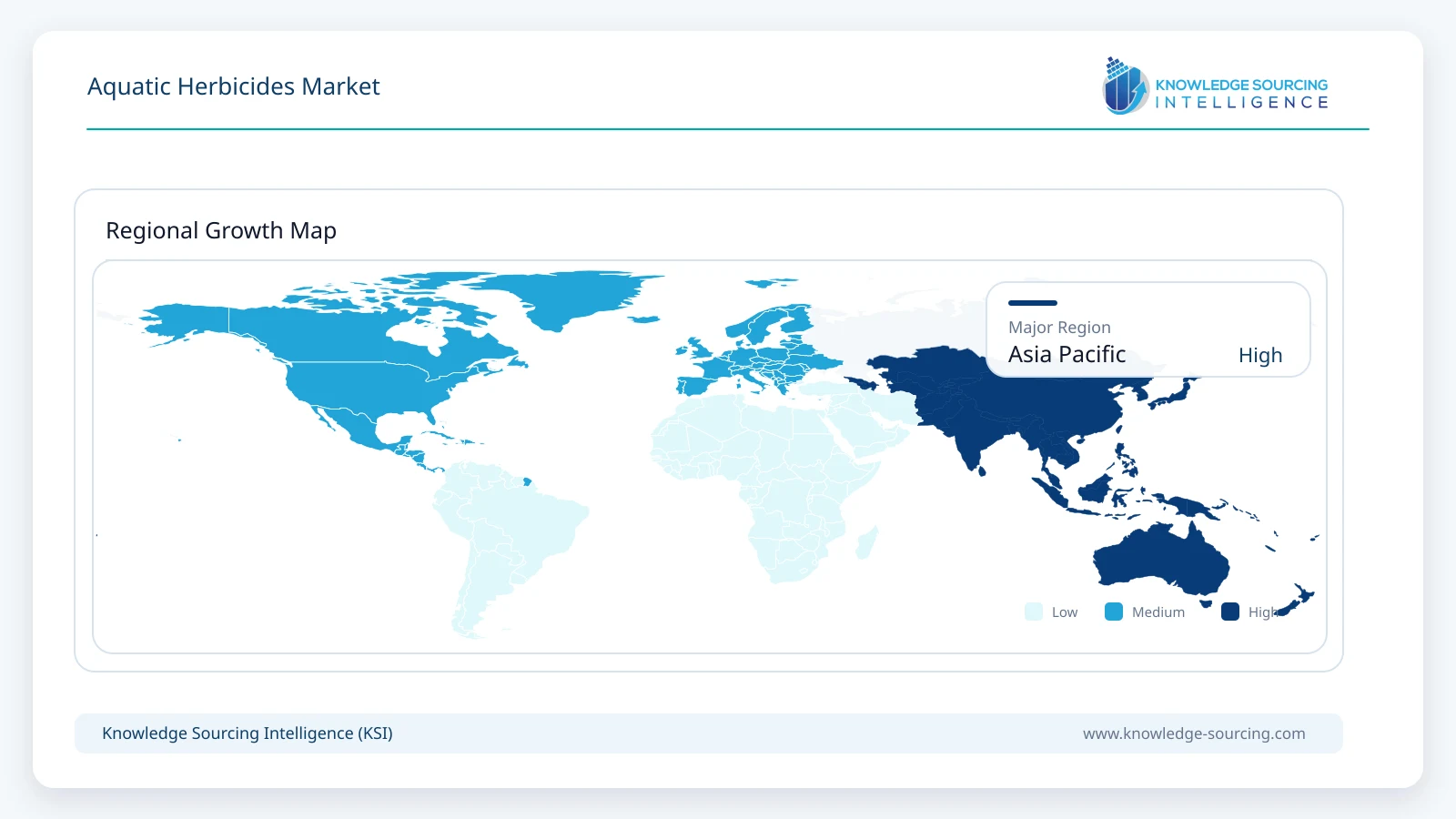
North America
The North American market is the most technologically advanced, characterized by a high density of professional lake management firms and a robust regulatory environment. Demand is driven by large-scale public-sector investments in the management of the Great Lakes and the Florida Everglades, alongside a significant private market for recreational water bodies. The region is a pioneer in adopting precision technologies, with a strong focus on integrated pest management (IPM) strategies that combine chemical and mechanical controls.
Europe
The European market is heavily influenced by the EU’s "Farm to Fork" strategy and the Water Framework Directive. These regulations have created a high barrier to entry for synthetic chemicals, leading to a market that prioritizes low-risk, bio-based solutions. While the total volume of herbicide use is under downward pressure, the value of the market is sustained by the high cost of specialized, compliant formulations. Significant demand exists in the management of irrigation networks in Southern Europe (Spain, Italy) and the protection of biodiversity in Northern European wetlands.
Asia-Pacific
Asia-Pacific is the fastest-growing region, propelled by the rapid expansion of the aquaculture industry in China, Vietnam, and India. The need to maintain high water quality in intensive fish and shrimp farming operations is a major demand driver. Additionally, large-scale infrastructure projects, including hydropower dams and expansive irrigation networks in the Mekong Delta and the Ganges basin, require consistent aquatic weed management to maintain operational efficiency.
South America
The market in South America is dominated by the agricultural sector, particularly in Brazil and Argentina, where massive irrigation systems support the production of soy, corn, and sugarcane. The demand is primarily for cost-effective, broad-spectrum herbicides to keep these canals clear. However, there is an emerging trend toward more sophisticated water management in the region's expanding forestry and hydroelectric sectors.
Middle East and Africa
In the Middle East, demand is concentrated in the management of desalination plant intakes and ornamental water features in urban centers. In Africa, the market is primarily driven by international aid and government projects aimed at controlling invasive water hyacinth in major river systems and lakes, such as Lake Victoria, to protect local fishing industries and maintain navigable waterways.
List of Companies
Alligare
SePRO Corporation
Albaugh LLC
UPL
Corteva Agriscience
Sanco Industries
Valent BioSciences LLC
Lonza
Platform Specialty Products
BASF SE
Nufarm
Syngenta
UPL
UPL operates as a global leader in the aquatic herbicides market through its "OpenAg" platform, which emphasizes collaborative innovation and sustainable chemistry. The company’s market position is built on a massive, vertically integrated manufacturing base that allows it to maintain cost competitiveness across its herbicide portfolio. UPL’s strategy in the aquatic sector focuses on providing holistic solutions that include both traditional post-patent products and innovative biosolutions, catering to the diverse needs of both large-scale agricultural irrigation districts and sensitive ecological zones. Its geographic strength is particularly notable in emerging markets, where its established distribution networks facilitate high volume throughput.
SePRO Corporation
SePRO Corporation is a highly specialized player focused almost exclusively on high-value niche markets, including aquatic plant management. Its competitive advantage is rooted in its intensive R&D efforts, which have produced some of the most advanced selective herbicides in the industry, such as ProcellaCOR®. SePRO’s strategy centers on "stewardship-based" solutions, where products are designed to provide maximum efficacy against target weeds with minimal impact on the surrounding aquatic ecosystem. This technology differentiation allows the company to command premium pricing and maintain a dominant position in the high-end U.S. lake management and restoration market.
Alligare
Alligare is a key player in the vegetation management industry, known for its extensive portfolio of over 40 algaecides and herbicides. The company’s integration model focuses on providing comprehensive "market-ready" solutions, backed by technical support and mixing guides that ensure applicator safety and product efficacy. Alligare’s geographic strength is concentrated in the North American market, where it serves a wide range of sectors including forestry, range, and aquatics. Its competitive advantage lies in its ability to offer a broad array of modes of action (MOA), enabling its customers to implement effective resistance-management programs.
Analyst View
Rising invasive weed infestations and global water infrastructure expansion drive structural demand. The market is shifting toward selective, low-residue chemistries and precision application. While regulatory compliance costs pose challenges, technological integration offers significant growth for specialized players.
Aquatic Herbicides Market Scope:
| Report Metric | Details |
|---|---|
| Forecast Unit | Billion |
| Study Period | 2021 to 2031 |
| Historical Data | 2021 to 2024 |
| Base Year | 2025 |
| Forecast Period | 2026 – 2031 |
| Segmentation | Type, Method, Geography |
| Companies |
|
Market Segmentation
By Type
- Diquat
- Glyphosate
- Triclopyr
- Imazapy
- Others
By Method
- Submerged
- Foliar
By Geography
- North America
- USA
- Canada
- Mexico
- South America
- Brazil
- Argentina
- Others
- Europe
- Germany
- France
- United Kingdom
- Spain
- Others
- Middle East and Africa
- Saudi Arabia
- Israel
- Others
- Asia Pacific
- China
- Japan
- South Korea
- India
- Others
Table of Contents
1. INTRODUCTION
1.1. Market Overview
1.2. Market Definition
1.3. Scope of the Study
1.4. Currency
1.5. Assumptions
1.6. Base and Forecast Years Timeline
2. RESEARCH METHODOLOGY
2.1. Research Design
2.2. Secondary Sources
3. EXECUTIVE SUMMARY
4. MARKET DYNAMICS
4.1. Market Segmentation
4.2. Market Drivers
4.3. Market Restraints
4.4. Market Opportunities
4.5. Porter’s Five Forces Analysis
4.5.1. Bargaining Power of Suppliers
4.5.2. Bargaining Power of Buyers
4.5.3. Threat of New Entrants
4.5.4. Threat of Substitutes
4.5.5. Competitive Rivalry in the Industry
4.6. Life Cycle Analysis - Regional Snapshot
4.7. Market Attractiveness
5. AQUATIC HERBICIDES MARKET BY TYPE
5.1. Diquat
5.2. Glyphosate
5.3. Triclopyr
5.5. Imazapy
5.6. Others
6. AQUATIC HERBICIDES MARKET BY METHOD
6.1. Submerged
6.2. Foliar
7. AQUATIC HERBICIDES MARKET BY GEOGRAPHY
7.1. North America
7.1.1. USA
7.1.2. Canada
7.1.3. Mexico
7.2. South America
7.2.1. Brazil
7.2.2. Argentina
7.2.3. Others
7.3. Europe
7.3.1. Germany
7.3.2. France
7.3.3. United Kingdom
7.3.4. Spain
7.3.5. Others
7.4. Middle East and Africa
7.4.1. Saudi Arabia
7.4.2. Israel
7.4.3. Others
7.5. Asia Pacific
7.5.1. China
7.5.2. Japan
7.5.3. South Korea
7.5.4. India
7.5.5. Others
8. COMPETITIVE INTELLIGENCE
8.1. Competitive Benchmarking and Analysis
8.2. Recent Investments and Deals
8.3. Strategies of Key Players
9. COMPANY PROFILES
9.1. Alligare
9.2. Sepro Corporaton
9.3. Albaugh LLC
9.4. UPL
9.5. Corteva Agriscience
9.6. Sanco Industries
9.7. Valent BioSciences LLC
9.8. Lonza
9.9. Platform Speciality Products
LIST OF FIGURES
LIST OF TABLES
Navigate
Trusted by the world's leading organizations











