
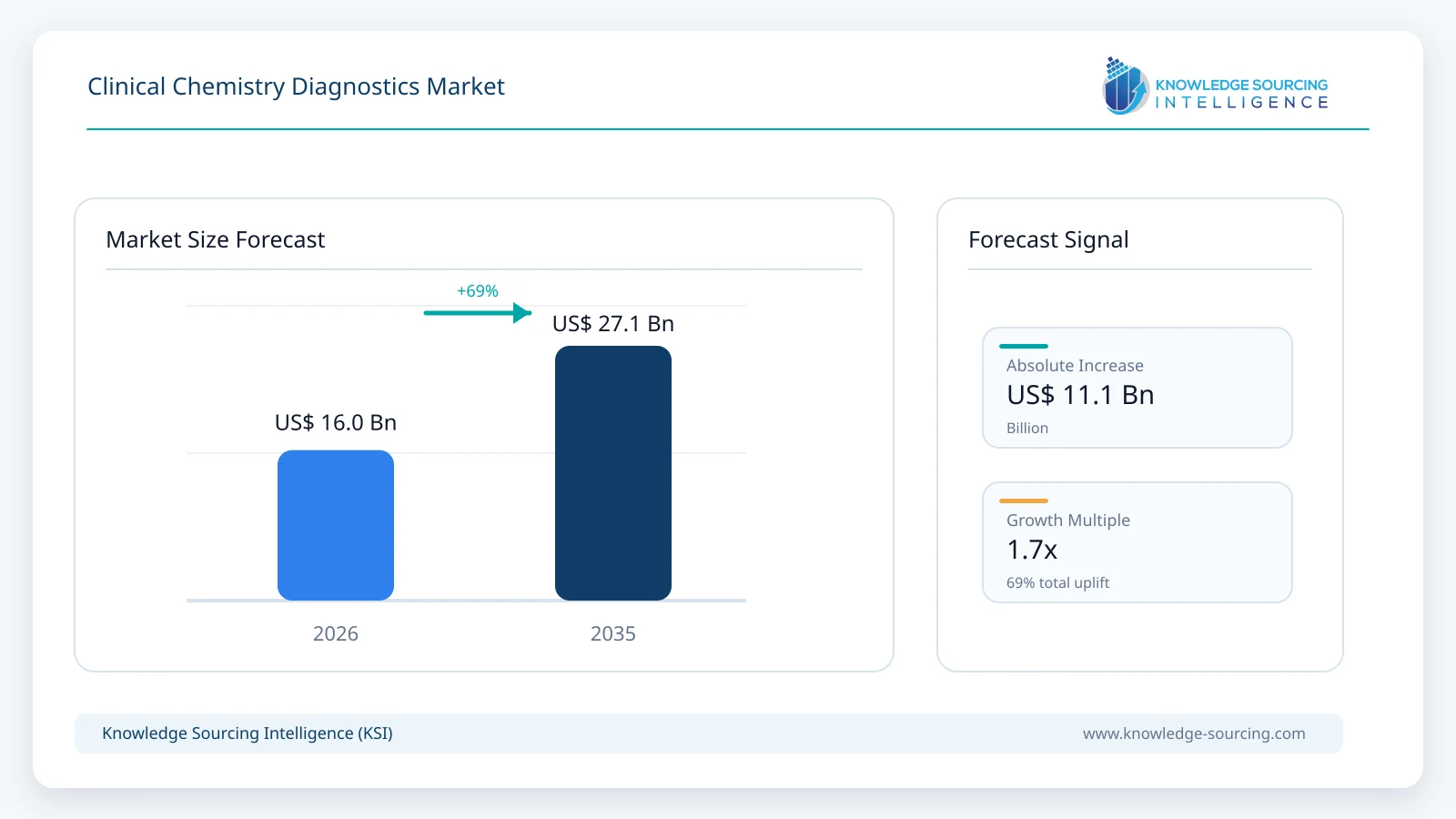
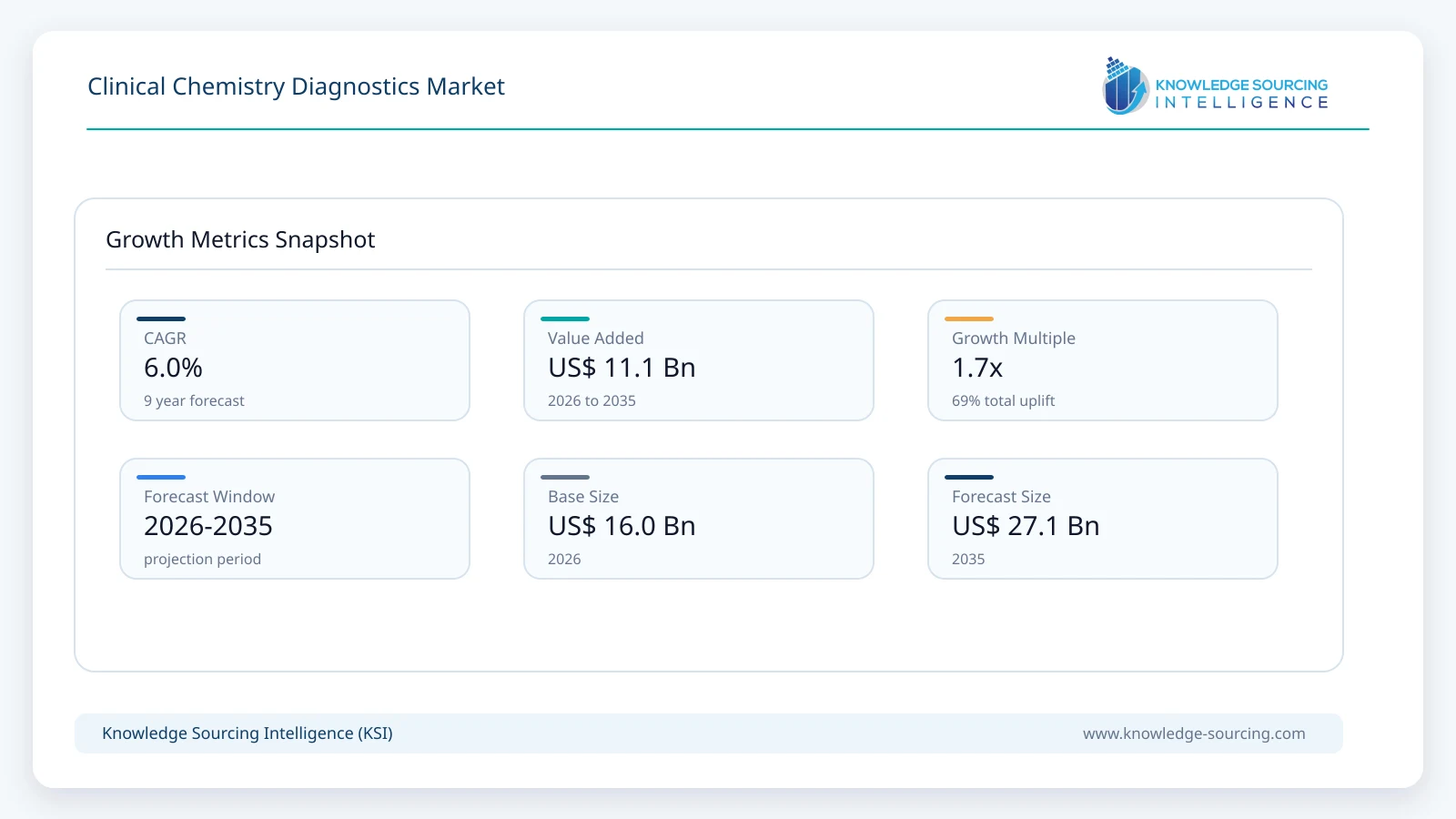
The Clinical Chemistry Diagnostics Market is expected to grow at a CAGR of 6.0% from a market value of USD 16.0 billion in 2026 to USD 27.1 billion in 2035.
Highlights:
- 1Rising chronic disease screening is increasing routine biochemical testing demand, encouraging laboratories to expand automation capacity.
- 2Greater laboratory consolidation is driving adoption of integrated chemistry platforms that improve workflow efficiency and reduce operational costs.
- 3Regulatory quality requirements are strengthening demand for standardized reagents, calibrators, and automated quality control systems.
- 4Digital laboratory transformation is accelerating investment in connected analyzers that improve data management and predictive maintenance.
Clinical chemistry diagnostics comprises laboratory technologies that measure biochemical constituents in biological samples to support disease detection, therapeutic monitoring, and preventive healthcare. The market serves hospitals, independent diagnostic laboratories, physician office laboratories, academic medical centers, and public health institutions where biochemical testing guides routine clinical decision-making.
Demand remains closely linked to the increasing prevalence of chronic diseases because biochemical markers provide objective evidence of metabolic abnormalities before many clinical symptoms become apparent. Healthcare providers are expanding preventive screening programs, which are increasing testing frequency for glucose, lipid profiles, liver enzymes, renal biomarkers, and electrolyte panels across broader patient populations.
Laboratory networks are simultaneously addressing workforce shortages and rising sample volumes, creating stronger demand for fully automated analyzers that reduce manual intervention while improving turnaround times. This operational pressure supports recurring purchases of reagents, calibrators, and quality control materials that ensure analytical consistency across high-volume laboratories.
Regulatory frameworks established by organizations such as the U.S. Food and Drug Administration, European Medicines Agency, and international laboratory accreditation bodies continue promoting standardized testing practices, strengthening confidence in automated chemistry systems. Manufacturers, therefore, compete by improving workflow efficiency, expanding assay menus, enhancing digital connectivity, and integrating artificial intelligence into laboratory information systems. These strategic priorities reinforce long-term adoption because laboratories increasingly evaluate total operational efficiency rather than instrument performance alone.
Market Dynamics
Market Drivers
Increasing Burden of Chronic Diseases Expands Routine Diagnostic Testing: Clinical chemistry testing remains central to diagnosing and monitoring diabetes, cardiovascular disease, kidney disorders, and liver disease because biochemical markers provide measurable indicators of disease progression. Healthcare providers are expanding preventive screening initiatives, increasing testing frequency across both inpatient and outpatient settings. Higher testing volumes create pressure on laboratories to improve throughput while maintaining analytical precision. Manufacturers are introducing automated analyzers with expanded assay menus and integrated workflow software that reduce operational complexity. These investments strengthen long-term demand for instruments and recurring reagent consumption because biochemical monitoring remains an essential component of chronic disease management.
Laboratory Automation Improves Operational Efficiency: Healthcare systems prioritize laboratory efficiency because diagnostic workloads continue increasing despite workforce shortages. Clinical laboratories are replacing semi-automated workflows with fully automated chemistry systems that minimize manual handling and reduce reporting delays. Greater automation also improves quality assurance by limiting analytical variability across high-volume testing environments. Equipment manufacturers are integrating robotics, artificial intelligence, and remote system monitoring into chemistry platforms that optimize instrument utilization and maintenance schedules. This transition increases demand for connected laboratory ecosystems rather than standalone analyzers.
Preventive Healthcare Programs Increase Testing Frequency: Preventive healthcare policies encourage earlier diagnosis of metabolic disorders because early intervention reduces long-term treatment costs. National screening initiatives are increasing demand for routine biochemical assessments that include glucose, lipid profiles, liver enzymes, renal biomarkers, and electrolyte measurements. Growing participation in preventive health programs creates sustained reagent consumption because repeat testing remains necessary throughout disease monitoring. Diagnostic companies are expanding assay availability and improving workflow flexibility to support diverse clinical settings. These developments reinforce stable long-term demand across hospitals, diagnostic laboratories, and community healthcare facilities.
Digital Laboratory Integration Enhances Diagnostic Decision-Making: Healthcare providers increasingly rely on integrated laboratory information systems because centralized data management improves clinical decision-making. Laboratories are connecting chemistry analyzers with digital platforms that enable automated result validation, predictive maintenance, and remote instrument monitoring. Greater interoperability reduces reporting delays while supporting standardized laboratory operations across multi-site healthcare networks. Manufacturers continue investing in software-enabled diagnostics that combine analytical performance with workflow optimization. This integration strengthens customer retention because laboratories prioritize comprehensive digital ecosystems over individual diagnostic instruments.
Market Restraints
High capital investment for fully automated chemistry analyzers limits adoption among smaller laboratories despite growing testing demand.
Variability in reimbursement policies across healthcare systems restricts investment in advanced diagnostic technologies within cost-sensitive markets.
Stringent regulatory validation and quality compliance requirements extend product commercialization timelines and increase development costs.
Market Opportunities
Expansion of Decentralized Diagnostic Services: Healthcare delivery increasingly emphasizes accessibility because patients seek faster diagnostic services outside centralized hospitals. Diagnostic providers are expanding community laboratories and outpatient testing facilities that require compact, automated chemistry analyzers. Manufacturers benefit by developing scalable platforms that deliver consistent analytical performance across decentralized healthcare environments.
Integration of Artificial Intelligence into Laboratory Operations: Laboratories increasingly manage large diagnostic datasets that require faster interpretation and operational optimization. Artificial intelligence is supporting predictive maintenance, automated quality control, and intelligent workflow management that reduce instrument downtime and improve laboratory productivity. These capabilities create opportunities for software-enabled clinical chemistry platforms that extend value beyond analytical testing.
Growth of Emerging Healthcare Markets: Healthcare infrastructure continues to develop across emerging economies, where governments are increasing investment in diagnostic capacity. Public health initiatives are expanding access to routine biochemical testing for chronic disease management and preventive healthcare. Diagnostic manufacturers are strengthening regional manufacturing, distribution, and service capabilities to support this expanding customer base.
Development of Multiparametric Testing Platforms: Healthcare providers increasingly prefer consolidated diagnostic workflows because integrated testing reduces operational complexity and laboratory costs. Manufacturers are expanding assay portfolios that combine multiple biochemical analyses within unified analytical systems. Broader testing capabilities improve laboratory efficiency while increasing recurring demand for proprietary reagent systems and consumables.
Disease & Epidemiology Analysis
Clinical chemistry diagnostics remains closely linked to the global rise in chronic and metabolic diseases because biochemical markers often provide the first measurable evidence of disease progression. Diabetes, cardiovascular disorders, chronic kidney disease, liver disease, and electrolyte imbalances continue to increase diagnostic workloads across hospitals and independent laboratories.
The International Diabetes Federation estimated that 589 million adults aged 20–79 years were living with diabetes in 2024, creating sustained demand for glucose testing, lipid profiling, renal function testing, and metabolic monitoring. Aging populations are simultaneously experiencing an increasing prevalence of cardiovascular and renal disorders, which require repeated biochemical assessments throughout treatment and follow-up. Healthcare systems are therefore expanding routine screening programs that rely heavily on clinical chemistry analyzers and recurring reagent consumption.
Treatment Guidelines Landscape
Disease Area | Guideline Focus |
Diabetes | Regular blood glucose and HbA1c monitoring for diagnosis and disease management. |
Cardiovascular Disease | Regular blood glucose and HbA1c monitoring for diagnosis and disease management. |
Chronic Kidney Disease | Serum creatinine, estimated GFR, and electrolyte testing for staging and monitoring. |
Liver Disease | Liver enzyme panels and bilirubin testing for diagnosis and treatment evaluation. |
Market Segmentation
By Product
Reagents and consumables represent the most recurring demand component because every biochemical test requires proprietary assay materials, calibrators, and quality control products. Growing screening volumes for diabetes, lipid disorders, and organ function testing are increasing utilization rates across hospital and reference laboratories. Manufacturers benefit from long-term customer relationships because installed analyzers typically operate with compatible reagent systems that generate continuous revenue streams.
By Application
Routine chemistry remains the largest application area because basic metabolic panels and comprehensive metabolic panels are widely used in preventive screening, emergency care, and chronic disease monitoring. Healthcare providers are increasing testing frequency for glucose, electrolytes, kidney function markers, and liver enzymes to support earlier diagnosis and treatment optimization. This broad clinical utility sustains demand across virtually all healthcare settings.
By Sample Type
Serum and plasma dominate sample utilization because most routine biochemical assays are standardized for these specimen types. Laboratories prefer these samples because they support high-throughput automated testing and consistent analytical performance across large patient populations. Rising chronic disease monitoring is therefore increasing demand for chemistry platforms optimized for serum and plasma workflows.
Regional Analysis
North America Market Analysis
North America represents a mature market for clinical chemistry diagnostics because the region has well-established laboratory infrastructure, widespread health insurance coverage, and high adoption of automated diagnostic technologies. The increasing prevalence of diabetes, cardiovascular disease, chronic kidney disease, obesity, and liver disorders continues to drive demand for routine biochemical testing across hospitals, physician office laboratories, and independent diagnostic laboratories. Healthcare providers are expanding preventive screening programs, which is increasing the utilization of comprehensive metabolic panels, lipid profiles, and electrolyte testing. Laboratory consolidation is encouraging healthcare systems to invest in integrated, high-throughput analyzers capable of supporting large testing volumes with improved operational efficiency.
Europe Market Analysis
Europe maintains a significant share of the clinical chemistry diagnostics market because healthcare systems emphasize early disease detection, standardized laboratory practices, and universal access to diagnostic services. The growing burden of chronic diseases, together with an aging population, is increasing demand for biochemical testing to support routine health assessments and long-term disease management. Public healthcare providers are modernizing laboratory operations by implementing automated chemistry analyzers that improve throughput while reducing operational costs. The implementation of the European Union's In Vitro Diagnostic Regulation (IVDR) is strengthening regulatory compliance requirements, encouraging manufacturers to invest in clinical validation, quality assurance, and post-market surveillance. Laboratory networks are increasingly adopting integrated diagnostic platforms that combine chemistry testing with digital laboratory management systems to improve efficiency and data traceability.
Asia Pacific Market Analysis
Asia-Pacific is expected to witness the fastest growth in demand for clinical chemistry diagnostics because expanding healthcare infrastructure, increasing healthcare expenditure, and improving diagnostic accessibility are supporting higher testing volumes across the region. Rapid urbanization, population growth, and lifestyle changes continue to increase the prevalence of diabetes, hypertension, cardiovascular disease, and kidney disorders, creating sustained demand for routine biochemical analysis. Governments are investing in hospital expansion, public health screening programs, and laboratory modernization to strengthen diagnostic capacity. Countries including China, India, Japan, South Korea, and Australia are increasing the adoption of automated chemistry analyzers to improve laboratory productivity and reduce turnaround times.
Rest of the World
The Rest of the World, comprising Latin America, the Middle East, and Africa, is experiencing steady growth as governments and private healthcare providers continue investing in diagnostic infrastructure. Rising awareness of chronic disease prevention is increasing demand for routine chemistry testing, particularly for diabetes, cardiovascular disorders, liver disease, and kidney function assessment. Healthcare systems are expanding access to diagnostic services through new hospitals, independent laboratories, and community healthcare centers, creating opportunities for compact and mid-throughput chemistry analyzers. International manufacturers are strengthening regional partnerships and distributor networks to improve product availability and technical support. Several countries are also investing in laboratory accreditation and quality improvement initiatives, encouraging the adoption of standardized testing platforms and automated workflow solutions.
Regulatory Landscape
Clinical chemistry diagnostics operates under stringent quality and performance regulations because laboratory results directly influence clinical decision-making. In the United States, the U.S. Food and Drug Administration oversees in vitro diagnostic devices, while laboratories must comply with Clinical Laboratory Improvement Amendments requirements. In Europe, the In Vitro Diagnostic Regulation has strengthened evidence and post-market surveillance requirements for diagnostic manufacturers.
These regulatory frameworks are increasing demand for validated analyzers, traceable calibrators, and robust quality management systems. Manufacturers are therefore investing more heavily in clinical validation, regulatory documentation, and post-market monitoring to maintain global market access.
Pipeline Analysis
Innovation in clinical chemistry diagnostics is increasingly focusing on automation, artificial intelligence, and expanded biomarker menus rather than entirely new testing principles. Companies are developing integrated platforms that combine chemistry testing with digital workflow management, predictive maintenance, and remote instrument monitoring. These capabilities improve laboratory efficiency while reducing operational downtime.
Manufacturers are also expanding assays for cardiovascular risk assessment, metabolic disease monitoring, and organ function evaluation because healthcare providers are seeking broader diagnostic insights from routine laboratory testing. The pipeline, therefore, reflects a shift toward connected, software-enabled laboratory ecosystems that enhance productivity and clinical decision support.
Reimbursement Landscape
Reimbursement for clinical chemistry testing varies across healthcare systems, but routine biochemical assays generally receive broader coverage than specialized diagnostics because they are considered essential components of standard medical care. Glucose testing, lipid profiles, electrolyte panels, and renal function tests are widely reimbursed in most developed healthcare markets.
Cost-containment pressures are nevertheless encouraging laboratories to improve operational efficiency and negotiate reagent pricing more aggressively. This environment favors manufacturers that offer integrated platforms capable of reducing total testing costs while maintaining analytical quality.
Competitive Landscape
F. Hoffmann-La Roche Ltd
Roche maintains a strong competitive position through its broad diagnostics portfolio, extensive global distribution network, and continuous investment in laboratory automation. The company focuses on integrated clinical chemistry solutions that improve laboratory productivity while expanding digital connectivity and data management capabilities. Its strategy emphasizes automation, standardized workflows, and recurring reagent sales to strengthen long-term customer relationships across hospitals and reference laboratories.
Abbott Diagnostics
Abbott Diagnostics differentiates itself through a diversified diagnostics portfolio covering clinical chemistry, immunoassays, molecular diagnostics, and point-of-care testing. The company continues expanding automated laboratory platforms that improve testing efficiency and workflow integration. Strategic investments in digital laboratory solutions and global healthcare partnerships support its growing presence in both developed and emerging markets.
Siemens AG
Siemens Healthineers combines advanced automation with digital laboratory management to deliver comprehensive clinical chemistry solutions. The company is expanding artificial intelligence-enabled workflow optimization and integrated laboratory information capabilities to improve operational efficiency. Continuous investment in assay development and scalable analyzer platforms strengthens its competitive position among large healthcare providers and centralized laboratory networks.
Danaher Corporation
Danaher leverages its diagnostics businesses to provide high-performance clinical chemistry technologies supported by strong research and development capabilities. The company emphasizes automation, workflow standardization, and operational excellence while continuously expanding analytical capabilities. Its acquisition-driven growth strategy strengthens product breadth and enhances access to advanced laboratory technologies worldwide.
QuidelOrtho Corporation
QuidelOrtho focuses on integrated diagnostic platforms that combine clinical chemistry with immunodiagnostics and transfusion medicine. The company continues enhancing laboratory efficiency through automated testing systems and expanded assay menus. Its strategy prioritizes customer support, workflow optimization, and portfolio diversification to address evolving diagnostic requirements across healthcare institutions.
Shenzhen Mindray Bio-Medical Electronics
Mindray has expanded rapidly by offering cost-effective clinical chemistry analyzers with automated workflow capabilities. The company continues strengthening its international distribution network while increasing investment in research, manufacturing, and digital laboratory technologies. Competitive pricing combined with expanding assay availability supports growing adoption across emerging healthcare markets.
Sysmex Corporation
Sysmex differentiates itself through integrated laboratory solutions that combine hematology, urinalysis, and clinical chemistry technologies. The company continues investing in automation, laboratory connectivity, and advanced quality management systems that improve diagnostic efficiency. Strategic collaborations and continuous product innovation support expansion across both mature and developing healthcare markets.
Key Developments
March 2026: Integrated DNA Technologies (IDT) launched its first in vitro diagnostic (IVD) next-generation sequencing (NGS) assays, Archer FUSIONPlex™-HT Dx and VARIANTPlex-HT Dx, marking its entry into the clinical diagnostics market with standardized, IVD-grade solutions for oncology workflows. This milestone marks IDT's strategic entry into the next-generation sequencing (NGS) IVD market, reinforcing its commitment to quality, regulatory compliance, and clinical impact.
November 2025: Fujifilm India launched the FW500 Clinical Chemistry Analyzer, an advanced wet chemistry technology platform that strengthens FUJIFILM India's In-vitro diagnostics portfolio by combining over four decades of dry chemistry expertise with Fujifilm's Wako globally trusted biochemistry reagents.
Strategic Insights and Future Market Outlook
Clinical chemistry diagnostics is evolving from standalone laboratory testing toward integrated diagnostic ecosystems that combine automation, digital connectivity, and data-driven workflow optimization. Healthcare providers are increasing investment in laboratory modernization because higher testing volumes and workforce constraints require greater operational efficiency. This transition continues supporting demand for high-throughput analyzers, recurring reagent consumption, and intelligent laboratory software.
Artificial intelligence, cloud-enabled laboratory management, and predictive maintenance are expected to become increasingly important competitive differentiators over the forecast period. Manufacturers that combine analytical performance with digital workflow solutions are likely to strengthen customer retention while expanding recurring revenue from reagents, software, and service contracts. Expansion of preventive healthcare programs, aging populations, and increasing chronic disease prevalence are expected to sustain demand for routine biochemical testing across both developed and emerging healthcare markets.
Clinical chemistry diagnostics, therefore, remains an essential component of modern healthcare because accurate biochemical testing supports disease prevention, early diagnosis, therapeutic monitoring, and long-term patient management. Continuous technological innovation, stronger regulatory standards, and expanding laboratory automation are expected to reinforce the market's strategic importance throughout the forecast period.
Clinical Chemistry Diagnostics Market Scope:
| Report Metric | Details |
|---|---|
| Total Market Size in 2026 | USD 16.0 billion |
| Total Market Size in 2035 | USD 27.1 billion |
| Forecast Unit | USD Billion |
| Growth Rate | 6.0% |
| Study Period | 2021 to 2035 |
| Historical Data | 2021 to 2024 |
| Base Year | 2025 |
| Forecast Period | 2026 – 2035 |
| Segmentation | Product Type, Automation Level, End User, Geography |
| Companies |
|
Market Segmentation
Product Type
Automation Level
End User
Geography
- North America
- South America
- Europe
- Middle East and Africa
- Asia Pacific
Table of Contents
1. EXECUTIVE SUMMARY
1.1 Market Snapshot
1.2 Key Findings
1.3 Analyst Insights
1.4 Strategic Recommendations
2. RESEARCH METHODOLOGY
2.1 Research Design
2.2 Data Collection Methodology
2.3 Market Size Estimation
2.4 Forecasting Model
2.5 Assumptions & Limitations
3. GLOBAL CLINICAL CHEMISTRY DIAGNOSTICS MARKET OVERVIEW, SIZE & FORECAST
3.1 Market Definition & Scope
3.2 Clinical Chemistry Diagnostics Industry Overview
3.3 Industry Evolution
3.4 Key Market Trends
3.5 Historical Market Size Analysis (2021–2025)
3.6 Market Forecast (2026–2035)
3.7 Disease Burden and Diagnostic Demand Analysis
3.8 Testing Volume Analysis
3.9 Installed Base Analysis
3.10 Laboratory Workflow and Automation Trends
3.11 Clinical Chemistry Testing Landscape
3.12 Point-of-Care versus Central Laboratory Testing Overview
4. MARKET DYNAMICS
4.1 Market Drivers
4.2 Market Restraints
4.3 Market Opportunities
4.4 Market Challenges
5. INDUSTRY LANDSCAPE
5.1 Industry Value Chain Analysis
5.2 Pricing Analysis
5.3 Reimbursement Landscape
6. INNOVATION LANDSCAPE
6.1 Emerging Technologies
6.2 Product Innovation
6.3 Clinical Trial Analysis
6.4 Pipeline Analysis
6.5 Laboratory Automation Roadmap
6.6 Artificial Intelligence Integration in Clinical Chemistry
6.7 Digital Laboratory and Connectivity Integration
7. REGULATORY LANDSCAPE
7.1 Regulatory Framework
7.2 Approval Pathways
7.3 Compliance Requirements
8. GLOBAL CLINICAL CHEMISTRY DIAGNOSTICS MARKET LANDSCAPE ANALYSIS
8.1 Analysis by Product Type
8.2 Analysis by Automation Level
8.3 Analysis by Application
8.4 Analysis by Sample Type
8.5 Analysis by End User
9. GLOBAL CLINICAL CHEMISTRY DIAGNOSTICS MARKET SEGMENT ANALYSIS (2021–2035)
9.1 By Product Type
9.1.1 Instruments
9.1.2 Reagents & Consumables
9.1.3 Calibrators
9.1.4 Others
9.2 By Automaton Level
9.2.1 Fully Automated
9.2.2 Semi-Automated
9.2.3 Point-of-Care Systems
9.3 By Application
9.3.1 Routine Chemistry
9.3.1.1 Basic Metabolic Panel (BMP)
9.3.1.2 Comprehensive Metabolic Panel (CMP)
9.3.2 Organ Function Testing
9.3.3 Electrolyte Testing
9.3.4 Lipid Testing
9.3.5 Diabetes Testing
9.3.6 Others
9.4 By Sample Type
9.4.1 Whole Blood
9.4.2 Serum & Plasma
9.4.3 Urine
9.4.4 Cerebrospinal Fluid (CSF)
9.4.5 Others
9.5 By End User
9.5.1 Hospital
9.5.2 Specialty Clinics
9.5.3 Diagnostic & Clinical Laboratories
9.5.4 Others
10. GLOBAL CLINICAL CHEMISTRY DIAGNOSTICS MARKET GEOGRAPHICAL ANALYSIS (2021–2035)
10.1 North America
10.2 Europe
10.3 Asia-Pacific
10.4 South America
10.5 Middle East & Africa
11. GLOBAL CLINICAL CHEMISTRY DIAGNOSTICS MARKET COUNTRY ANALYSIS (2021–2035)
11.1 United States
11.2 Canada
11.3 Germany
11.4 United Kingdom
11.5 France
11.6 Italy
11.7 Spain
11.8 Japan
11.9 China
11.10 India
11.11 South Korea
11.12 Australia
11.13 Brazil
11.14 Mexico
11.15 Saudi Arabia
11.16 South Africa
12. COMPETITIVE LANDSCAPE
12.1 Market Share Analysis
12.2 Strategic Developments
12.3 Mergers & Acquisitions, Partnerships & Collaborations
12.4 Product Launches
13. COMPANY PROFILES
13.1 F. Hoffmann-La Roche Ltd.
13.1.1 Company Overview
13.1.2 Financials
13.1.3 Product Portfolio
13.1.4 Recent Developments
13.2 Abbott Laboratories
13.3 Siemens Healthineers AG
13.4 Danaher Corporation
13.5 Thermo Fisher Scientific Inc.
13.6 HORIBA, Ltd.
13.7 Randox Laboratories Ltd.
13.8 Mindray Medical International Limited
13.9 Sysmex Corporation
13.10 QuidelOrtho Corporation
13.11 Revvity Inc.
14. GLOBAL CLINICAL CHEMISTRY DIAGNOSTICS MARKET COMMERCIAL FORECAST ANALYSIS
14.1 Clinical Chemistry Reagents
14.2 Clinical Chemistry Analyzers
14.3 Point-of-Care Clinical Chemistry Systems
14.4 Clinical Chemistry Quality Control Products
14.5 Clinical Chemistry Calibration Products
14.6 Laboratory Automation Solutions
15. INVESTMENT & FUNDING ANALYSIS
15.1 Venture Capital Trends
15.2 Government Funding
15.3 R&D Investments
16. FUTURE OUTLOOK
16.1 Key Growth Opportunities
16.2 Future Industry Trends
Navigate
Trusted by the world's leading organizations











