
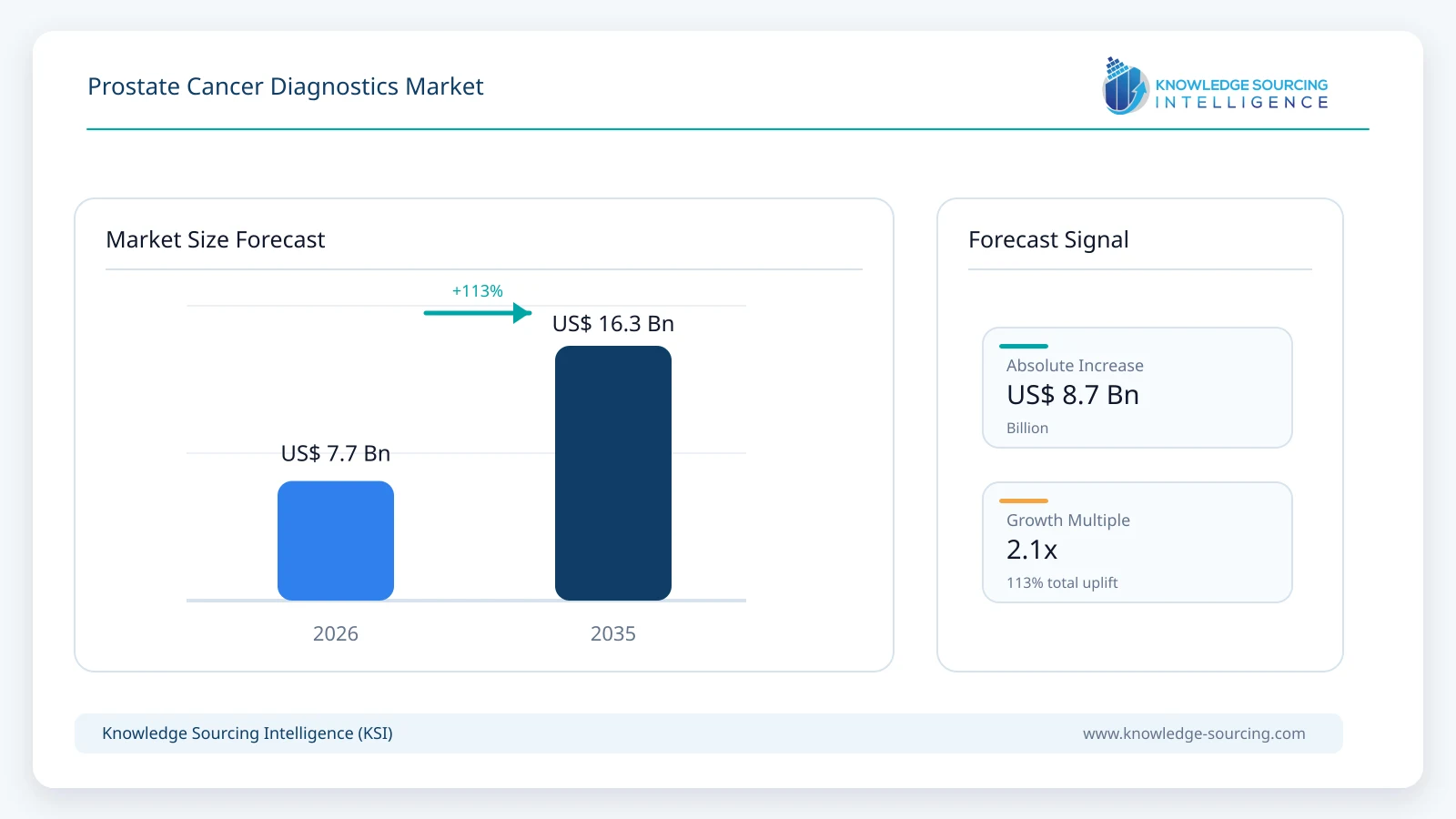
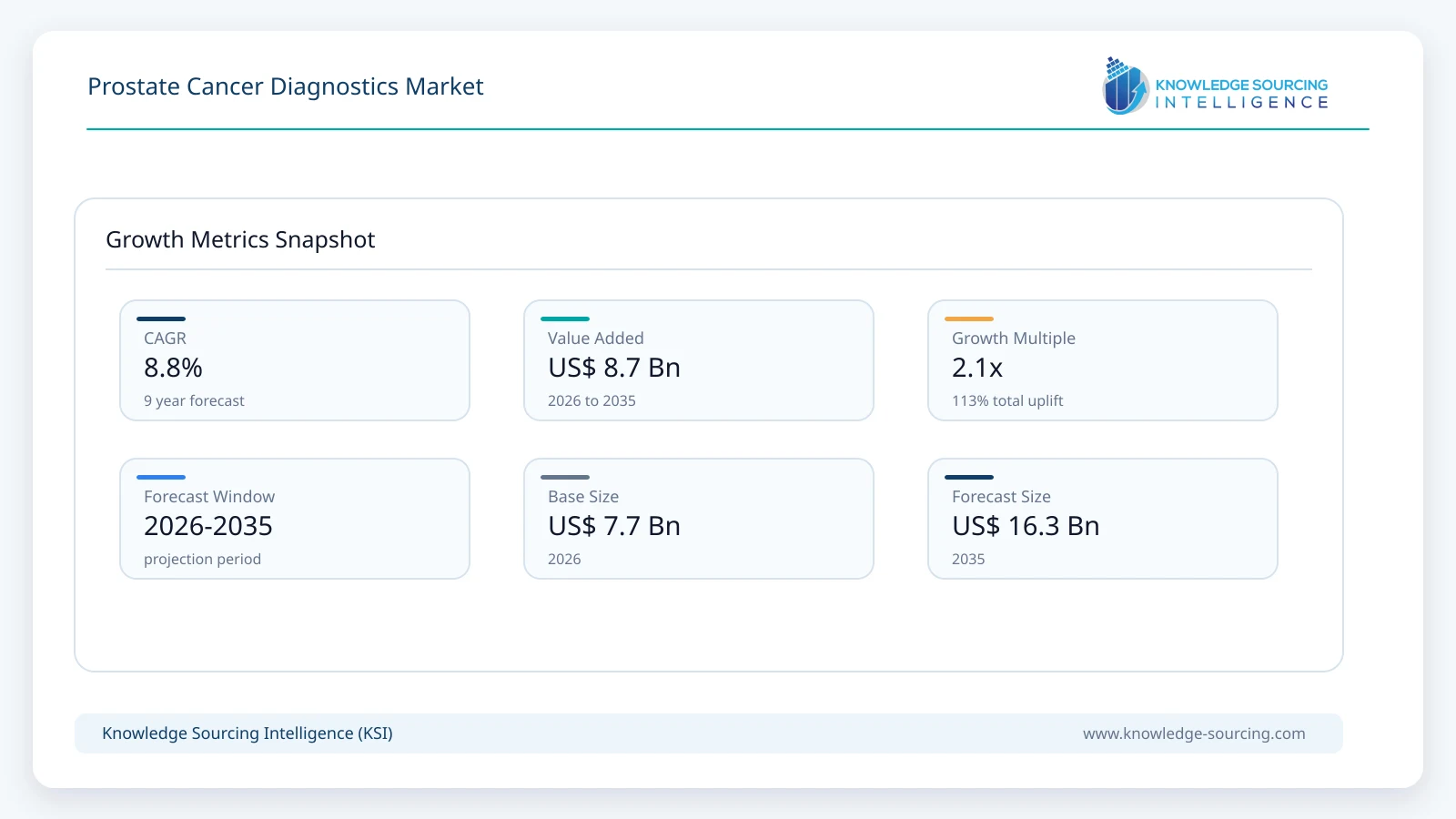
The prostate cancer diagnostics market is predicted to grow from USD 7.66 billion in 2026, growing at a CAGR of 8.8% to reach USD 16.32 billion in 2035.
Highlights:
- 1Growing use of precision oncology is increasing demand for genomic and molecular prostate cancer diagnostics because treatment selection increasingly depends on biomarker information.
- 2Expansion of aging male populations is increasing screening demand because prostate cancer incidence rises significantly with advancing age.
- 3Rising concerns regarding unnecessary biopsies are increasing demand for risk stratification technologies that improve diagnostic specificity.
- 4Adoption of multiparametric MRI is increasing because clinicians seek better visualization before invasive diagnostic procedures.
Prostate cancer diagnostics support clinical decision-making because disease progression varies substantially across patient populations. Healthcare providers require accurate identification of clinically significant cancers to optimize intervention timing. Demand is increasing for technologies that distinguish aggressive disease from indolent tumors. Diagnostic innovation therefore focuses on improving specificity rather than simply increasing detection rates. This evolution supports more targeted patient management.
Population aging expands diagnostic demand because prostate cancer incidence rises with age. Screening volumes are increasing as healthcare systems strengthen awareness programs and encourage earlier risk assessment. False-positive findings remain a concern because excessive intervention can increase healthcare costs and patient burden. Diagnostic manufacturers are developing advanced biomarker platforms to improve patient selection. This trend increases the value of molecular diagnostics within clinical workflows.
Regulatory agencies emphasize clinical validity because diagnostic outcomes directly influence treatment pathways. Evidence requirements are increasing as genomic technologies become more integrated into routine oncology practice. Diagnostic companies are conducting larger validation studies to support regulatory acceptance and reimbursement coverage. This environment strengthens the strategic importance of scientifically validated diagnostic platforms.
Market Dynamics
Market Drivers
Expansion of Precision Oncology: Precision oncology requires accurate molecular characterization because therapeutic response differs across patient populations. Demand is increasing for genomic assays that identify clinically actionable biomarkers. Conventional screening approaches provide limited biological insight because they primarily assess disease presence rather than disease behavior. Diagnostic laboratories are integrating molecular profiling into prostate cancer pathways to support treatment optimization. This shift strengthens demand for advanced diagnostic technologies.
Increasing Screening Activity Among Aging Populations: Prostate cancer risk increases with age because cumulative genetic and biological changes influence disease development. Screening demand is rising as demographic aging expands the eligible patient population. Healthcare systems face greater pressure to identify clinically significant disease before progression occurs. Diagnostic providers are expanding testing capabilities to support larger screening volumes. This demographic trend supports sustained market demand.
Adoption of Advanced Imaging Technologies: Clinical decision-making depends on accurate lesion localization because biopsy procedures require precise targeting. Demand is shifting toward multiparametric MRI as clinicians seek improved diagnostic confidence. Conventional diagnostic pathways create inefficiencies because unnecessary biopsies increase healthcare utilization. Healthcare providers are incorporating advanced imaging earlier in diagnostic workflows. This transition enhances demand for imaging-supported diagnostic strategies.
Growing Focus on Risk Stratification: Treatment intensity depends on disease aggressiveness because overtreatment can create avoidable clinical burden. Demand is increasing for tests that differentiate aggressive cancers from low-risk disease. Traditional screening methods provide incomplete risk assessment because biological variability remains significant. Diagnostic companies are developing biomarker-based stratification tools to improve clinical decision-making. This trend increases adoption of molecular diagnostics.
Market Restraints
Reimbursement inconsistency limits adoption of advanced molecular diagnostics because coverage policies vary across healthcare systems.
False-positive screening outcomes create clinical uncertainty because unnecessary follow-up procedures increase healthcare burden.
Limited access to specialized diagnostic infrastructure constrains adoption because advanced imaging and molecular testing require significant investment.
Market Opportunities
Growth of Liquid Biopsy-Based Diagnostics: Disease monitoring requires repeat testing because prostate cancer progression remains dynamic throughout treatment. Demand is increasing for minimally invasive diagnostic approaches that reduce patient burden. Tissue sampling creates procedural limitations because repeated biopsies are not always feasible. Diagnostic developers are advancing liquid biopsy technologies to improve monitoring efficiency. This transition creates substantial commercial opportunity.
Expansion of Companion Diagnostics: Targeted therapies require biomarker identification because treatment efficacy varies across molecular subgroups. Demand is increasing for diagnostic tools that support therapy selection. Pharmaceutical developers require validated biomarkers because precision medicine strategies depend on patient stratification. Diagnostic companies are expanding companion diagnostic capabilities to address this need. This evolution strengthens market growth potential.
Integration of Artificial Intelligence: Diagnostic complexity increases as imaging and molecular datasets become larger. Demand is growing for analytical tools that improve interpretation efficiency. Manual assessment creates workflow limitations because specialist availability remains constrained. Technology developers are integrating artificial intelligence into diagnostic platforms to improve consistency. This trend expands opportunities across imaging and molecular diagnostics.
Increasing Adoption in Emerging Healthcare Markets: Cancer awareness programs are expanding because governments seek earlier disease detection. Diagnostic demand is increasing as healthcare infrastructure improves across developing economies. Limited access historically constrained screening participation because specialized services remained concentrated in urban centers. Healthcare systems are investing in diagnostic capacity to broaden access. This investment supports future market expansion.
Government Regulations
Region | Regulatory Authority | Regulatory Focus |
United States | U.S. Food and Drug Administration (FDA) | Approval and oversight of prostate cancer diagnostic devices and assays |
United States | Centers for Medicare & Medicaid Services (CMS) | CLIA laboratory quality standards |
European Union | European Commission (IVDR) | Clinical performance and compliance requirements for in vitro diagnostics |
United Kingdom | Medicines and Healthcare products Regulatory Agency (MHRA) | Diagnostic device oversight |
Market Segmentation
By Product & Service
Diagnostic testing services represent the largest source of clinical demand because healthcare providers increasingly rely on specialized laboratories to deliver molecular interpretation and risk assessment. Demand is shifting toward integrated testing workflows that combine biomarker analysis, genomic profiling, and clinical reporting. Traditional laboratory models face pressure because physicians require faster turnaround times and more actionable results. Service providers are expanding automation and bioinformatics capabilities to improve scalability and interpretation quality. This transition increases the strategic value of comprehensive diagnostic service platforms.
By Diagnostic Technology
PSA testing remains the primary entry point for prostate cancer screening because it supports large-scale population assessment. Demand is gradually shifting toward multi-modal diagnostic pathways because PSA alone cannot consistently distinguish aggressive disease from indolent tumors. False-positive findings continue creating clinical challenges because unnecessary biopsies increase healthcare burden. Diagnostic providers are integrating molecular assays and imaging technologies to improve specificity. This transition is reshaping technology utilization patterns across the market.
Multiparametric MRI adoption is increasing because clinicians seek greater confidence before proceeding with invasive diagnostic procedures. Imaging demand continues expanding as healthcare providers attempt to reduce unnecessary biopsies. Infrastructure requirements create adoption barriers because advanced imaging capabilities require substantial investment. Healthcare systems are prioritizing imaging expansion where prostate cancer screening volumes justify investment. This strategy strengthens the role of imaging-supported diagnosis.
By Application
Hospitals and diagnostic laboratories increasingly represent the primary clinical adoption channel because physicians require actionable genomic information within routine care pathways. Sequencing volumes are expanding as precision oncology, rare disease diagnosis, and inherited disease testing gain broader acceptance. This growth places pressure on laboratories to improve workflow efficiency, interpretation quality, and regulatory compliance. Technology providers are introducing integrated solutions that simplify operational implementation. The outcome supports stronger clinical utilization of whole genome sequencing across healthcare systems.
Regional Analysis
North America
North America represents the most established demand center because prostate cancer screening awareness remains relatively high across healthcare systems. Screening participation is increasing as healthcare providers continue emphasizing early detection and risk-based intervention strategies. Diagnostic complexity continues rising because precision oncology adoption requires molecular characterization beyond conventional screening. Laboratories are expanding genomic testing capabilities to address this requirement. The resulting integration of molecular diagnostics strengthens utilization of advanced testing technologies.
Multiparametric MRI adoption continues expanding because clinicians increasingly rely on imaging before invasive procedures. Diagnostic workflows face pressure because screening programs generate large volumes of patients requiring follow-up assessment. Healthcare institutions are investing in imaging infrastructure and analytical software to improve efficiency. This investment supports broader utilization of advanced diagnostics. Demand therefore extends beyond traditional PSA testing into integrated diagnostic pathways.
Molecular testing demand continues increasing because treatment selection increasingly depends on biomarker information. Healthcare providers require more comprehensive disease characterization because therapeutic options continue diversifying. Companion diagnostics are becoming more relevant as targeted oncology therapies gain adoption. Diagnostic companies are strengthening clinical evidence to support reimbursement and physician adoption. This environment supports continued market expansion.
The United States remains the primary regional growth engine because advanced diagnostic technologies achieve earlier commercial adoption. Academic medical centers continue driving innovation because clinical research programs frequently evaluate emerging diagnostic approaches. Commercial laboratories are scaling testing infrastructure to support growing demand. This combination of innovation, reimbursement support, and healthcare spending reinforces regional leadership.
Europe
Europe maintains substantial diagnostic demand because organized healthcare systems continue prioritizing evidence-based cancer management. Screening activity is increasing as awareness initiatives encourage earlier risk assessment among aging populations. Healthcare providers require more accurate diagnostic tools because concerns regarding overtreatment remain significant. Molecular diagnostics are becoming more integrated into clinical pathways to improve patient selection. This transition supports growing utilization of advanced testing solutions.
Reimbursement frameworks influence adoption patterns because healthcare systems emphasize cost-effectiveness and clinical utility. Diagnostic companies face pressure to demonstrate outcome improvements because coverage decisions increasingly depend on evidence generation. Clinical validation studies are expanding to address these requirements. This environment encourages adoption of technologies with demonstrated value. Demand therefore concentrates around validated diagnostic solutions.
Imaging-supported diagnostics continue gaining traction because clinicians seek greater specificity before biopsy decisions. Multiparametric MRI utilization is increasing as healthcare providers refine diagnostic pathways. Infrastructure disparities create variation because access to advanced imaging remains inconsistent across regions. Healthcare investments are gradually addressing these gaps. This process supports broader adoption over time.
Precision oncology programs continue strengthening molecular testing demand because treatment selection increasingly depends on genomic information. Diagnostic laboratories are expanding biomarker testing capabilities to support evolving oncology care models. This trend reinforces long-term market growth across the region.
Asia Pacific
Asia Pacific is experiencing significant demand expansion because healthcare infrastructure investment continues accelerating. Screening activity is increasing as governments recognize the benefits of earlier cancer detection. Historically lower screening penetration created diagnostic gaps because awareness and access remained limited. Healthcare providers are expanding outreach initiatives to improve participation. This effort is increasing overall testing volumes.
Population aging contributes to market growth because prostate cancer incidence increases among older age groups. Demand is rising for scalable diagnostic solutions capable of serving large patient populations. Resource constraints remain relevant because advanced molecular testing infrastructure is not uniformly available. Diagnostic companies are introducing cost-effective technologies to improve accessibility. This strategy supports broader market penetration.
Advanced imaging adoption is increasing because tertiary care centers are strengthening oncology capabilities. Healthcare institutions require greater diagnostic precision because treatment decisions increasingly depend on accurate risk assessment. Investment in imaging infrastructure continues expanding in major urban healthcare systems. This expansion improves access to sophisticated diagnostic pathways. Demand therefore extends across both screening and confirmatory diagnostics.
Molecular testing utilization continues growing because precision medicine initiatives are becoming more prominent. Academic institutions and cancer centers are increasing participation in genomic research and clinical implementation programs. Diagnostic laboratories are strengthening technical capabilities to support these initiatives. This development positions the region for sustained long-term growth.
Rest of the World
The Rest of the World region demonstrates growing diagnostic demand because awareness of prostate cancer screening continues to improve. Healthcare systems increasingly recognize the economic value of earlier diagnosis because advanced disease treatment creates substantial costs. Screening initiatives are expanding where healthcare modernization programs support preventive care. This trend increases demand for accessible diagnostic technologies.
Infrastructure limitations continue influencing adoption because advanced imaging and molecular testing capabilities remain concentrated in selected healthcare facilities. Healthcare providers require scalable diagnostic pathways because resource availability varies considerably. Diagnostic manufacturers are introducing solutions that balance clinical performance with operational practicality. This approach improves accessibility in resource-constrained environments.
Government investment in healthcare infrastructure is increasing because cancer burden continues to rise. Screening capacity is expanding as policymakers prioritize earlier detection initiatives. Diagnostic laboratories are strengthening testing capabilities to support broader access. This process supports gradual market development.
Molecular diagnostics adoption remains at an earlier stage because reimbursement and infrastructure challenges persist. Clinical demand nevertheless continues increasing because healthcare providers seek more accurate risk assessment tools. Diagnostic companies are expanding regional partnerships to improve market access. This strategy strengthens future growth potential.
Regulatory Landscape
Regulatory agencies increasingly focus on clinical utility because prostate cancer management depends on accurate differentiation between aggressive and indolent disease. Evidence requirements are becoming more stringent as molecular diagnostics assume greater influence in treatment decision-making. Diagnostic manufacturers are conducting larger validation studies to support regulatory submissions. This environment strengthens demand for clinically validated technologies.
Healthcare regulators continue emphasizing laboratory quality because molecular testing complexity increases operational risk. Diagnostic laboratories are implementing standardized workflows to ensure analytical consistency. Compliance requirements remain important because treatment pathways rely on diagnostic accuracy. This emphasis supports broader adoption of quality-focused testing platforms.
Companion diagnostics are receiving greater regulatory attention because targeted therapies increasingly require biomarker confirmation. Pharmaceutical and diagnostic companies are expanding collaborative development programs to align treatment and testing strategies. Regulatory frameworks continue evolving to accommodate these integrated approaches. This evolution reinforces the strategic importance of advanced prostate cancer diagnostics.
Pipeline Analysis
The prostate cancer diagnostics pipeline increasingly focuses on liquid biopsy technologies because clinicians require minimally invasive approaches for monitoring disease progression. Development activity is expanding around circulating tumor DNA and other blood-based biomarkers because repeat tissue sampling creates procedural limitations. Diagnostic developers are validating these approaches across recurrence monitoring and treatment response applications. This effort supports future expansion of non-invasive diagnostics.
Genomic risk stratification remains a major innovation area because treatment intensity depends on disease aggressiveness. Pipeline programs are evaluating broader biomarker panels that improve prediction of clinically significant disease. Conventional screening approaches create uncertainty because biological variability influences disease progression. Developers are integrating multiple molecular markers to improve predictive accuracy. This strategy strengthens clinical utility.
Artificial intelligence development continues accelerating because diagnostic workflows generate increasingly complex imaging and molecular datasets. Companies are incorporating machine learning models into diagnostic platforms to improve interpretation efficiency. Specialist workforce limitations create operational challenges because demand for advanced diagnostics continues rising. Automated analytical capabilities are addressing these constraints. This trend positions AI-enabled diagnostics as a major future growth area.
Competitive Landscape
F. Hoffmann-La Roche Ltd
Roche remains strategically distinct because it combines oncology therapeutics with companion diagnostic capabilities, allowing it to participate across both treatment and diagnostic decision pathways. Demand for biomarker-guided therapy selection is increasing because prostate cancer treatment strategies increasingly depend on molecular characterization. This shift places greater emphasis on diagnostic platforms capable of identifying clinically actionable biomarkers. Roche is expanding precision oncology initiatives to strengthen integration between diagnostic testing and therapeutic intervention. The resulting alignment supports sustained relevance within prostate cancer diagnostics. The company benefits from extensive regulatory expertise because companion diagnostic development requires rigorous clinical validation. Healthcare providers increasingly seek integrated solutions that support both diagnosis and treatment selection. Roche therefore maintains a strong competitive position within the evolving precision medicine ecosystem.
Exact Sciences Corporation
Exact Sciences differentiates itself through its focus on cancer detection and molecular diagnostics. Demand is shifting toward earlier cancer identification because healthcare systems seek improved outcomes through timely intervention. This trend increases interest in advanced molecular testing approaches capable of identifying disease before progression. Exact Sciences is expanding its oncology diagnostics portfolio to address this requirement. The resulting product diversification strengthens its market position. Clinical adoption depends on strong evidence generation because physicians require confidence in test performance. The company continues investing in validation and commercialization activities to support adoption. This strategy enhances long-term competitive potential.
Myriad Genetics, Inc.
Myriad Genetics maintains strategic relevance because genomic risk assessment increasingly influences cancer management decisions. Demand is increasing for molecular insights that support personalized treatment planning. Traditional diagnostic methods provide limited information regarding underlying disease biology because they primarily focus on detection. Myriad is strengthening genomic testing capabilities to address this gap. The resulting expansion supports broader utilization of precision diagnostics. Clinical stakeholders continue emphasizing individualized care because treatment outcomes vary among patients. This environment reinforces demand for advanced genomic solutions.
OPKO Health, Inc.
OPKO Health occupies a differentiated position because the 4Kscore test addresses the growing need for improved risk stratification. Demand is increasing for tools that reduce unnecessary biopsies because clinicians seek greater specificity before invasive procedures. Conventional screening pathways continue generating uncertainty because elevated PSA levels do not always indicate clinically significant disease. OPKO is expanding awareness and utilization of risk-based assessment approaches to improve patient selection. This strategy supports continued market relevance. Healthcare providers increasingly value diagnostic efficiency because reducing avoidable procedures improves both patient experience and resource utilization.
MDxHealth SA
MDxHealth focuses on molecular diagnostics designed to refine clinical decision-making throughout the prostate cancer pathway. Demand is shifting toward biomarker-informed risk assessment because physicians seek to distinguish aggressive disease from low-risk tumors. Diagnostic uncertainty remains a challenge because treatment decisions depend heavily on disease characterization. MDxHealth is expanding molecular testing adoption to improve diagnostic confidence. This effort strengthens its position within precision diagnostics. Healthcare systems increasingly emphasize evidence-based intervention because overtreatment remains a persistent concern. The company therefore benefits from growing demand for risk stratification technologies.
Thermo Fisher Scientific Inc.
Thermo Fisher Scientific remains influential because molecular diagnostics increasingly rely on advanced genomic testing infrastructure. Demand for next-generation sequencing and biomarker analysis is increasing because precision oncology continues expanding. Diagnostic laboratories require scalable platforms because testing complexity and volume are rising simultaneously. Thermo Fisher is enhancing integrated workflow solutions to support these requirements. This investment strengthens its role across the diagnostic value chain. Healthcare providers increasingly depend on comprehensive molecular analysis because treatment pathways require deeper biological understanding. The company therefore remains strategically positioned within evolving diagnostic ecosystems.
QIAGEN N.V.
QIAGEN differentiates itself through its expertise in molecular testing and biomarker analysis. Demand is increasing for actionable molecular information because clinicians require more precise treatment guidance. Conventional diagnostic approaches create limitations because they provide limited genomic insight. QIAGEN is expanding testing capabilities that support precision medicine applications. This expansion strengthens adoption across oncology settings. Healthcare systems increasingly prioritize biomarker-driven care because treatment efficacy varies according to molecular characteristics. The company benefits directly from this transition toward personalized medicine.
Abbott Laboratories
Abbott maintains a strong market position because diagnostic accessibility remains a critical determinant of screening adoption. Demand is increasing for reliable testing solutions that can operate at large scale. Healthcare providers face operational pressure because screening programs continue expanding. Abbott is strengthening diagnostic capabilities that support broad clinical utilization. This strategy reinforces its relevance across diverse healthcare environments. Diagnostic consistency remains important because clinical decisions depend on test reliability. The company therefore benefits from sustained demand for established diagnostic technologies.
Key Developments
In May 2026, Illumina, Inc. announced a new complete solution for molecular residual disease (MRD) research based on whole-genome sequencing (WGS).
Strategic Insights and Future Market Outlook
The prostate cancer diagnostics market is transitioning toward precision-driven clinical pathways because healthcare providers increasingly seek to balance early detection with avoidance of unnecessary intervention. Demand is shifting away from reliance on single-marker screening approaches because disease heterogeneity limits clinical specificity. Molecular diagnostics and advanced imaging technologies are becoming more integrated into decision-making frameworks. This transition strengthens demand for multi-modal diagnostic strategies.
Liquid biopsy development continues accelerating because clinicians require less invasive methods for monitoring disease progression and treatment response. Adoption is increasing as validation data continue expanding across oncology applications. Traditional monitoring approaches face practical limitations because repeated tissue sampling increases patient burden. Diagnostic developers are responding with blood-based alternatives that improve accessibility. This evolution creates a substantial opportunity for innovation-focused companies.
Artificial intelligence is becoming increasingly important because imaging and molecular datasets continue growing in complexity. Healthcare systems require efficient interpretation tools because specialist resources remain constrained. Diagnostic platforms are incorporating machine learning capabilities to improve analytical consistency and workflow efficiency. This integration supports broader adoption of advanced diagnostic technologies.
Precision oncology remains the primary structural driver because treatment pathways increasingly depend on biomarker-informed decision-making. Diagnostic providers continue investing in genomic profiling, liquid biopsy platforms, and companion diagnostics to align with evolving therapeutic strategies. Healthcare systems are expanding emphasis on personalized care because outcome optimization depends on accurate disease characterization. This environment supports sustained demand for advanced prostate cancer diagnostics throughout the forecast period.
Prostate Cancer Diagnostics Market Scope:
| Report Metric | Details |
|---|---|
| Total Market Size in 2026 | USD 7.66 billion |
| Total Market Size in 2035 | USD 16.32 billion |
| Forecast Unit | USD Billion |
| Growth Rate | 8.8% |
| Study Period | 2021 to 2035 |
| Historical Data | 2021 to 2024 |
| Base Year | 2025 |
| Forecast Period | 2026 – 2035 |
| Segmentation | Product & Service, Diagnostic Technology, Application, Geography |
| Companies |
|
Market Segmentation
Product & Service
Diagnostic Technology
Application
Geography
- North America
- South America
- Europe
- Middle East and Africa
- Asia Pacific
Table of Contents
1. EXECUTIVE SUMMARY
1.1 Market Snapshot
1.2 Key Findings
1.3 Analyst Insights
1.4 Strategic Recommendations
2. RESEARCH METHODOLOGY
2.1 Research Design
2.2 Data Collection Methodology
2.3 Market Size Estimation
2.4 Forecasting Model
2.5 Assumptions & Limitations
3. PROSTATE CANCER DIAGNOSTICS MARKET OVERVIEW, SIZE & FORECAST
3.1 Market Definition & Scope
3.2 Disease Overview
3.3 Industry Evolution
3.4 Key Market Trends
3.5 Historical Market Size Analysis (2021–2025)
3.6 Market Forecast Analysis (2026–2035)
3.7 Disease Burden and Unmet Diagnostic Needs
3.8 Epidemiology and Prevalence Analysis
3.9 Diagnosed Patient Population Analysis
3.10 Screening and Testing Volume Analysis
3.11 Patient Journey Analysis
3.12 Prostate Cancer Screening Landscape
3.13 Precision Oncology Diagnostics Overview
4. MARKET DYNAMICS
4.1 Market Drivers
4.2 Market Restraints
4.3 Market Opportunities
4.4 Market Challenges
5. INDUSTRY LANDSCAPE
5.1 Industry Value Chain Analysis
5.2 Pricing Analysis
5.3 Reimbursement Landscape
6. INNOVATION LANDSCAPE
6.1 Emerging Technologies in Prostate Cancer Diagnostics
6.2 Product Innovation Analysis
6.3 Liquid Biopsy Advancements
6.4 Molecular and Genomic Biomarker Developments
6.5 Multiparametric Imaging Innovations
6.6 Clinical Trial Analysis
6.7 Pipeline Analysis
6.8 AI Integration in Prostate Cancer Detection and Risk Stratification
6.9 Digital Pathology and Diagnostic Workflow Integration
6.10 Technology Roadmap
7. REGULATORY LANDSCAPE
7.1 Regulatory Framework
7.2 Approval Pathways
7.3 Compliance Requirements
8. PROSTATE CANCER DIAGNOSTICS MARKET LANDSCAPE ANALYSIS
8.1 Analysis by Technology Platform
8.2 Analysis by Biomarker Type
8.3 Analysis by Sample Type
8.4 Analysis by Clinical Application
8.5 Analysis by Testing Methodology
8.6 Analysis by Screening versus Diagnostic Testing
8.7 Analysis by End User
9. PROSTATE CANCER DIAGNOSTICS MARKET SEGMENT ANALYSIS (2021–2035)
9.1 By Product & Service
9.1.1 Instruments
9.1.2 Reagents & Consumables
9.1.3 Software & Diagnostic Analytics Solutions
9.1.4 Diagnostic Testing Services
9.2 By Diagnostic Technology
9.2.1 Prostate-Specific Antigen (PSA) Testing
9.2.2 Free PSA and PSA Derivative Testing
9.2.3 Prostate Health Index (PHI) Testing
9.2.4 PCA3 Testing
9.2.5 Genomic and Molecular Diagnostics
9.2.6 Liquid Biopsy Testing
9.2.7 Multiparametric MRI (mpMRI)
9.2.8 Tissue Biopsy-Based Diagnostics
9.3 By Application
9.3.1 Screening and Early Detection
9.3.2 Disease Diagnosis and Confirmation
9.3.3 Risk Stratification
9.3.4 Treatment Selection and Companion Diagnostics
9.3.5 Disease Monitoring and Recurrence Detection
9.4 By End User
9.4.1 Hospitals
9.4.2 Diagnostic Laboratories
9.4.3 Cancer Centers
9.4.4 Academic & Research Institutes
9.4.5 Other End Users
10. PROSTATE CANCER DIAGNOSTICS MARKET GEOGRAPHICAL ANALYSIS (2021–2035)
10.1 North America
10.2 Europe
10.3 Asia-Pacific
10.4 South America
10.5 Middle East & Africa
11. PROSTATE CANCER DIAGNOSTICS MARKET COUNTRY ANALYSIS (2021–2035)
11.1 United States
11.2 Canada
11.3 Germany
11.4 United Kingdom
11.5 France
11.6 Italy
11.7 Spain
11.8 Netherlands
11.9 China
11.10 Japan
11.11 South Korea
11.12 Australia
11.13 India
11.14 Brazil
11.15 Saudi Arabia
12. COMPETITIVE LANDSCAPE
12.1 Market Share Analysis
12.2 Strategic Developments
12.3 Mergers & Acquisitions, Partnerships & Collaborations
12.4 Product Launches
13. COMPANY PROFILES
13.1 F. Hoffmann-La Roche Ltd
13.2 Exact Sciences Corporation
13.3 Myriad Genetics, Inc.
13.4 Bio-Techne Corporation
13.5 OPKO Health, Inc.
13.6 MDxHealth SA
13.7 Thermo Fisher Scientific Inc.
13.8 QIAGEN N.V.
13.9 Danaher Corporation
13.10 Abbott Laboratories
13.11 Siemens Healthineers AG
13.12 Bio-Rad Laboratories, Inc.
13.13 Veracyte, Inc.
13.14 Genomic Health, Inc.
13.15 Natera, Inc.
14. PROSTATE CANCER DIAGNOSTICS MARKET COMMERCIAL FORECAST ANALYSIS
14.1 Forecast by Instruments
14.2 Forecast by Reagents & Consumables
14.3 Forecast by Software & Diagnostic Analytics Solutions
14.4 Forecast by Diagnostic Testing Services
14.5 Forecast by PSA-Based Testing
14.6 Forecast by Genomic and Molecular Diagnostics
14.7 Forecast by Multiparametric MRI Diagnostics
14.8 Forecast by Liquid Biopsy Testing
15. INVESTMENT & FUNDING ANALYSIS
15.1 Venture Capital Trends
15.2 Government Funding
15.3 R&D Investments
16. FUTURE OUTLOOK
16.1 Key Growth Opportunities
16.2 Future Industry Trends
Navigate
Trusted by the world's leading organizations











