
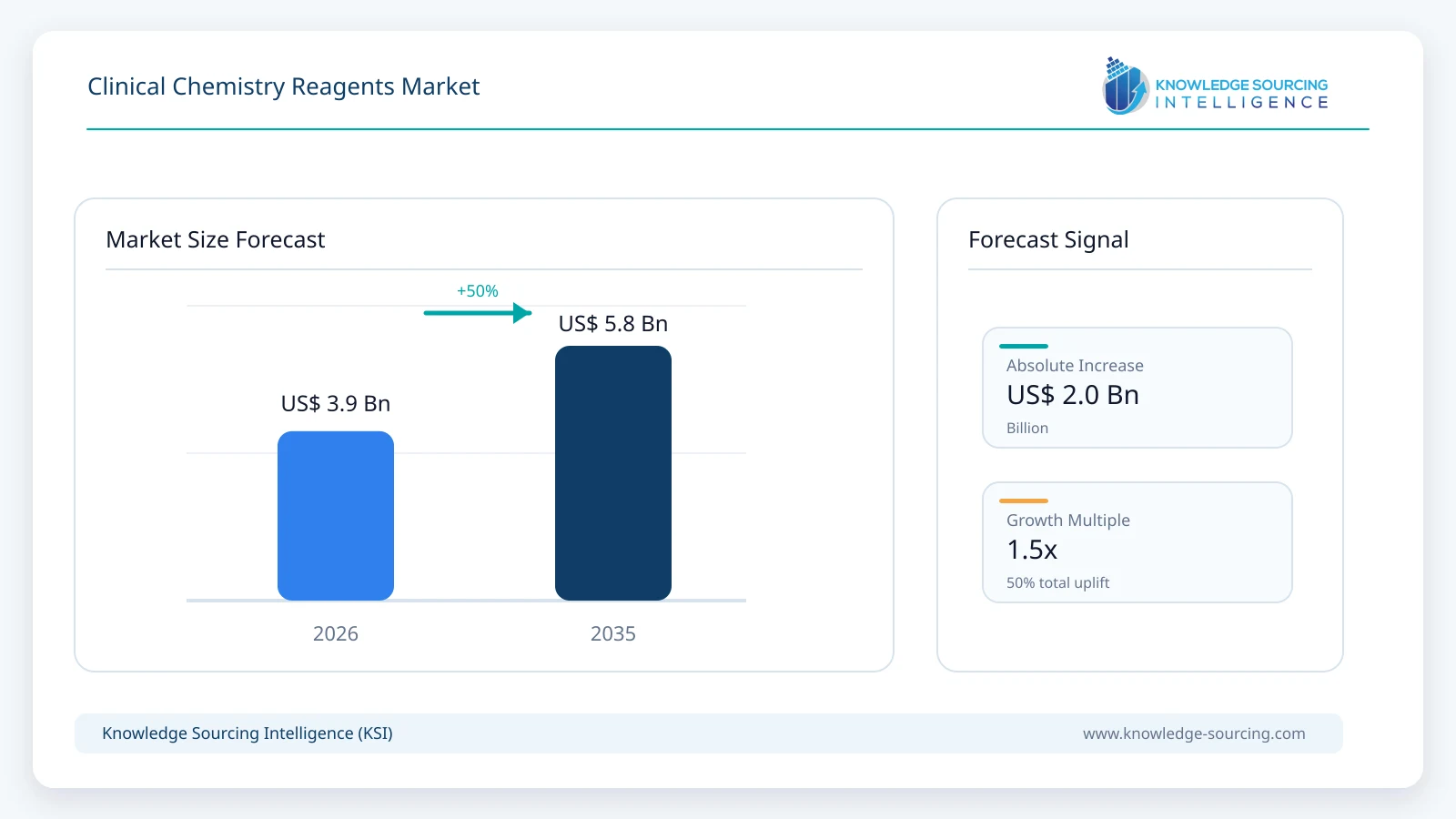
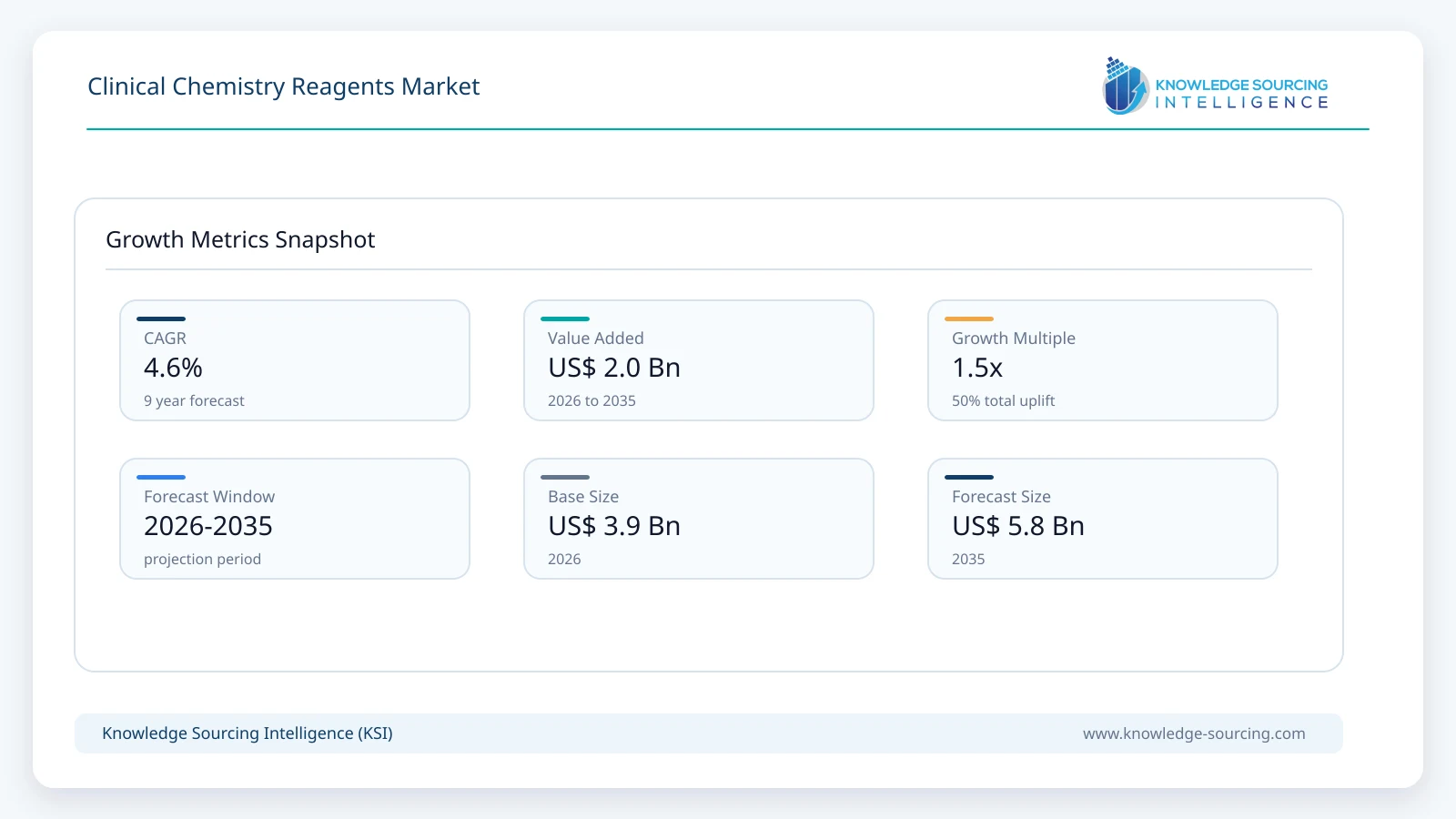
The Clinical Chemistry Reagents Market is expected to grow at a CAGR of 4.6% from a market value of USD 3.89 billion in 2026 to USD 5.85 billion in 2035.
Highlights:
- 1Rising chronic disease prevalence is increasing demand for routine biochemical monitoring, resulting in higher utilization of clinical chemistry reagents across hospitals and diagnostic laboratories.
- 2Laboratory automation is expanding testing throughput, increasing preference for standardized reagent systems with extended stability and automated quality control compatibility.
- 3Regulatory agencies are strengthening quality and performance requirements, encouraging healthcare providers to prioritize validated reagent manufacturers with proven analytical reliability.
- 4Preventive healthcare initiatives are increasing routine health screening, supporting recurring demand for lipid, liver, renal, and metabolic chemistry reagents.
Clinical chemistry reagents enable quantitative and qualitative biochemical analysis of blood, urine, cerebrospinal fluid, and other biological specimens for disease diagnosis and therapeutic monitoring. Their demand originates from routine healthcare delivery because physicians rely on biochemical markers to evaluate organ function, electrolyte balance, lipid metabolism, endocrine disorders, and cardiovascular risk.
Healthcare delivery models are increasingly emphasizing preventive screening and chronic disease surveillance as aging populations and lifestyle-associated illnesses continue expanding worldwide. This transition increases testing frequency across primary care, tertiary hospitals, and independent laboratories because repeated biochemical measurements improve treatment optimization. Testing demand also becomes less cyclical since chronic disease monitoring requires continuous laboratory support. Manufacturers are expanding automated reagent portfolios that support uninterrupted high-volume laboratory operations. The result is a structurally resilient demand environment driven by recurring diagnostic utilization.
Regulatory agencies influence market development by establishing analytical performance requirements, manufacturing standards, and quality management expectations. Laboratories increasingly require reagents that demonstrate validated precision, traceability, and lot-to-lot consistency because accreditation frameworks emphasize standardized testing performance. Manufacturers consequently invest in quality systems, reference materials, and post-market monitoring to strengthen regulatory compliance. This environment supports long-term adoption of validated reagent systems while raising competitive barriers for new entrants.
Clinical chemistry reagents also occupy a strategically important position within integrated diagnostic ecosystems. Analyzer manufacturers increasingly are designing proprietary reagent platforms because optimized compatibility improves workflow efficiency and analytical reproducibility. Healthcare providers frequently select complete diagnostic solutions rather than individual reagent products. This purchasing behavior strengthens recurring reagent demand while encouraging suppliers to expand long-term service agreements, laboratory informatics integration, and application support.
Market Dynamics
Market Drivers
Growing Burden of Chronic and Lifestyle Diseases: Clinical chemistry testing forms the foundation of chronic disease diagnosis because biochemical markers provide measurable evidence of organ function and metabolic health. Healthcare systems are increasing screening and long-term monitoring programs for diabetes, cardiovascular disorders, chronic kidney disease, and liver diseases as they continue affecting larger patient populations. Higher testing frequency increases recurring reagent consumption because chronic disease management requires repeated laboratory evaluation throughout treatment. Diagnostic manufacturers are expanding disease-focused reagent menus that support comprehensive metabolic assessment across automated laboratory platforms. The market therefore benefits from sustained diagnostic demand rather than episodic testing cycles.
Expansion of Laboratory Automation: Clinical laboratories prioritize operational efficiency because increasing sample volumes creates pressure on workforce availability and turnaround times. Healthcare providers are expanding automated chemistry laboratories while centralized diagnostic networks continue processing larger testing volumes. Manual reagent preparation becomes less practical because automation requires standardized formulations with predictable analytical performance. Manufacturers are developing ready-to-use reagent systems that integrate directly with automated analyzers while minimizing calibration variability. This transition strengthens long-term demand for premium reagent portfolios that support continuous laboratory operation.
Preventive Healthcare and Routine Health Screening: Preventive diagnostics reduce disease progression because early biochemical abnormalities frequently appear before clinical symptoms develop. Governments and healthcare providers are increasing routine wellness screening initiatives while employers and insurers continue encouraging preventive health assessments. Broader screening programs increase utilization of liver function, renal function, lipid profile, electrolyte, and glucose testing because these biomarkers support early intervention strategies. Reagent manufacturers are expanding high-throughput assay offerings that improve laboratory efficiency without compromising analytical quality. Preventive healthcare reinforces stable reagent consumption across diverse patient populations.
Standardization and Accreditation of Diagnostic Laboratories: Accredited laboratories require consistent analytical performance because clinical decisions depend on reproducible laboratory results. National accreditation programs and international quality standards are increasingly emphasizing assay validation, internal quality control, and external proficiency testing. Laboratories prioritize suppliers with demonstrated regulatory compliance and robust manufacturing quality systems. Diagnostic companies are strengthening traceability programs and quality assurance infrastructure that support accreditation requirements across global healthcare markets. These developments increase confidence in standardized reagent platforms and reinforce supplier differentiation through quality rather than pricing.
Market Restraints
High regulatory validation requirements increase development costs and extend commercialization timelines for new clinical chemistry reagents.
Proprietary analyzer-reagent compatibility limits purchasing flexibility for laboratories operating closed diagnostic platforms.
Pricing pressure from centralized procurement programs reduces operating margins for manufacturers competing in cost-sensitive healthcare systems.
Market Opportunities
Expansion of Personalized Medicine: Personalized healthcare depends on biochemical monitoring because individualized treatment strategies require continuous assessment of therapeutic response. Precision medicine programs are increasing biomarker utilization while clinicians continue integrating laboratory evidence into treatment optimization. Manufacturers are developing specialized chemistry assays that support individualized disease management across oncology, endocrinology, and metabolic disorders. This evolution expands opportunities for premium reagent portfolios with higher clinical value.
Growth of Diagnostic Infrastructure in Emerging Economies: Healthcare infrastructure investment increases laboratory accessibility because expanding hospital networks require reliable diagnostic capabilities. Public and private healthcare providers are establishing regional diagnostic facilities while laboratory chains continue expanding outside metropolitan areas. Broader diagnostic availability increases routine biochemical testing across previously underserved populations. Manufacturers are strengthening regional distribution, localized production, and technical support capabilities that improve long-term market penetration. Emerging economies represent a sustained source of reagent demand expansion.
Increasing Adoption of Digital Laboratory Management: Clinical laboratories require workflow optimization because rising testing volumes increase operational complexity. Laboratory information systems are integrating automated quality monitoring, inventory management, and analyzer connectivity while healthcare providers continue modernizing diagnostic operations. Reagent suppliers are developing digitally compatible products that improve traceability and inventory efficiency across laboratory networks. This technological integration strengthens customer retention and supports long-term reagent utilization.
Development of Multiparameter Chemistry Assays: Healthcare providers seek faster diagnostic workflows because comprehensive clinical evaluation requires multiple biochemical measurements. Multiparameter reagent systems are reducing analytical complexity while automated analyzers continue supporting simultaneous testing across numerous biomarkers. Manufacturers are investing in expanded assay menus that improve laboratory productivity and reduce operational costs. These innovations strengthen demand for advanced reagent systems capable of supporting integrated clinical decision-making.
Disease & Epidemiology Analysis
Clinical chemistry reagents remain essential for diagnosing and monitoring diseases that require continuous biochemical assessment rather than isolated laboratory measurements. Their utilization directly reflects disease prevalence because physicians repeatedly evaluate biochemical markers throughout disease progression and therapeutic management.
Metabolic and endocrine disorders generate the highest recurring reagent demand because diabetes mellitus, dyslipidemia, thyroid dysfunction, and obesity require routine glucose, lipid, electrolyte, and enzyme testing. Healthcare systems are increasing preventive metabolic screening while clinicians continue monitoring treatment response through serial biochemical measurements. This pattern establishes continuous reagent consumption across primary care and specialized endocrine services.
Cardiovascular diseases also represent a major application area because lipid profiles, renal biomarkers, electrolyte analysis, and cardiac risk assessment influence long-term disease management. Clinical guidelines recommend periodic biochemical evaluation for patients with hypertension, dyslipidemia, and established cardiovascular disease. Laboratories experience sustained testing demand that supports recurring reagent utilization instead of episodic purchasing.
Treatment Guidelines Landscape
Disease Area | Primary Clinical Chemistry Tests | Guideline Focus |
Liver Diseases | ALT, AST, ALP, Bilirubin, Albumin | Diagnosis, disease staging, treatment monitoring |
Kidney (Renal) Diseases | Creatinine, Blood Urea Nitrogen (BUN), Electrolytes, eGFR | CKD diagnosis, disease staging, dialysis monitoring |
Metabolic & Endocrine Disorders | Glucose, HbA1c, Lipid Profile, Electrolytes | Diabetes diagnosis and metabolic monitoring |
Cardiovascular Diseases | Total Cholesterol, HDL, LDL, Triglycerides, Electrolytes | Cardiovascular risk assessment and treatment monitoring |
Market Segmentation
By Reagent Type
Enzyme reagents represent one of the largest categories within clinical chemistry because they support liver function testing, cardiac assessment, pancreatic evaluation, and metabolic disease diagnosis. Healthcare providers are increasing biochemical monitoring as chronic diseases continue requiring repeated laboratory evaluation throughout treatment. This demand places pressure on laboratories to maintain analytical precision despite rising testing volumes. Manufacturers are expanding stable reagent formulations that improve compatibility with automated chemistry analyzers while reducing calibration variability. Enzyme reagents remain central to routine diagnostic workflows because they enable rapid, reproducible biochemical analysis across diverse disease indications.
By End User
Diagnostic and clinical laboratories account for a significant share of reagent utilization because centralized testing facilities process large daily sample volumes from hospitals, physician offices, and preventive screening programs. Laboratory consolidation is increasing operational efficiency while simultaneously raising demand for standardized reagent systems capable of uninterrupted analyzer performance. High-throughput testing environments require consistent reagent quality because analytical variability directly affects clinical decision-making. Manufacturers are strengthening long-term supply agreements, digital inventory management, and quality assurance services that improve laboratory productivity. Diagnostic laboratories remain the primary drivers of recurring reagent procurement.
By Application
Metabolic and endocrine disorders generate continuous reagent demand because diabetes, obesity, thyroid disorders, and dyslipidemia require lifelong biochemical monitoring. Healthcare systems are expanding preventive screening initiatives while physicians continue emphasizing early metabolic risk identification. Higher testing frequency increases laboratory workload because treatment optimization depends on serial biochemical measurements rather than isolated diagnostic episodes. Reagent manufacturers are developing comprehensive metabolic assay portfolios that support automated high-volume testing and standardized analytical performance. These conditions consequently create recurring reagent consumption across hospitals and independent diagnostic laboratories.
Regional Analysis
North America Market Analysis
North America maintains a mature clinical chemistry diagnostics ecosystem because healthcare systems routinely integrate biochemical testing into preventive care, chronic disease management, and hospital-based clinical decision-making. Chronic diseases remain highly prevalent, creating sustained demand for liver, renal, metabolic, lipid, and electrolyte testing throughout patient management pathways. Healthcare providers are expanding preventive health assessments, while integrated delivery networks continue centralizing laboratory services to improve efficiency. This operational transition increases dependence on automated chemistry analyzers that require standardized reagent systems with validated analytical performance. Manufacturers continue strengthening proprietary analyzer-reagent platforms that reduce workflow variation and support continuous laboratory operations.
Europe Market Analysis
Europe demonstrates consistent demand for clinical chemistry reagents because universal healthcare systems emphasize early disease detection, chronic disease monitoring, and standardized laboratory quality. Aging populations continue increasing biochemical testing requirements while healthcare providers expand preventive screening for metabolic, cardiovascular, renal, and hepatic disorders. Laboratories are strengthening automation capabilities because workforce shortages and increasing diagnostic volumes require greater operational efficiency. This transition encourages widespread adoption of integrated reagent-analyzer solutions capable of maintaining analytical consistency across regional laboratory networks.
Asia Pacific Market Analysis
Asia Pacific represents the fastest-expanding demand environment because healthcare infrastructure investment continues to increase diagnostic accessibility across both developed and emerging economies. Urbanization, lifestyle changes, and population aging are increasing chronic disease prevalence while governments continue strengthening national disease screening programs. Healthcare providers are expanding laboratory capacity to accommodate growing testing demand, creating sustained opportunities for automated clinical chemistry platforms and associated reagent consumption. Private diagnostic chains are simultaneously expanding into secondary cities, improving patient access to routine biochemical testing. Cost efficiency remains an important purchasing consideration because healthcare expenditure varies considerably across regional markets.
Rest of the World
The Rest of the World encompasses diverse healthcare systems that are expanding laboratory diagnostics to improve disease surveillance, chronic disease management, and preventive healthcare delivery. Countries across Latin America, the Middle East, and Africa continue investing in hospital infrastructure because reliable laboratory services support broader healthcare modernization initiatives. Testing demand is increasing as governments strengthen screening programs for diabetes, cardiovascular disease, renal disorders, and infectious diseases requiring biochemical monitoring. Clinical chemistry reagents remain fundamental components of healthcare capacity expansion. Resource limitations continue influencing procurement decisions because many healthcare systems balance diagnostic quality with constrained public healthcare budgets.
Regulatory Landscape
Clinical chemistry reagents operate within highly regulated diagnostic frameworks because inaccurate biochemical measurements directly influence medical decision-making. Regulatory authorities require manufacturers to demonstrate analytical validity, manufacturing consistency, and clinical performance before commercialization. These requirements are becoming increasingly comprehensive as healthcare systems prioritize patient safety and diagnostic reliability across expanding laboratory networks. Manufacturers are investing in quality management systems, post-market surveillance programs, and analytical validation studies that support regulatory compliance while strengthening customer confidence in reagent performance.
The U.S. Food and Drug Administration (FDA) regulates in vitro diagnostic products through risk-based pathways that evaluate safety, effectiveness, labeling, and manufacturing quality. Manufacturers supplying the U.S. market must comply with Quality System Regulation requirements while maintaining documentation supporting product performance and post-market monitoring. This regulatory environment encourages continuous product improvement because evolving clinical needs frequently require assay expansion and analytical optimization.
Pipeline Analysis
Clinical chemistry reagents differ from pharmaceutical products because innovation is primarily driven by assay development, analytical performance, automation compatibility, and regulatory expansion rather than traditional drug discovery pipelines. Manufacturers are continuously expanding clinical chemistry menus as healthcare providers seek broader biomarker coverage for chronic disease management, preventive screening, and precision medicine. Development efforts, therefore, focus on improving reagent stability, reducing calibration frequency, enhancing analytical sensitivity, and integrating assays with fully automated chemistry analyzers. These advances increase laboratory productivity because high-throughput facilities require standardized reagents that maintain performance across extended operational cycles.
Pipeline activity is increasingly targeting specialized biomarkers that complement conventional liver, renal, lipid, and metabolic testing. Companies are developing new enzymatic assays, cardiac risk biomarkers, inflammatory markers, and metabolic panels that improve disease stratification without substantially increasing laboratory complexity. Artificial intelligence-supported laboratory software is also being integrated with reagent systems because automated interpretation and quality monitoring reduce analytical variation across multiple testing sites. Manufacturers continue validating these assays through analytical and clinical performance studies before seeking regulatory approvals in major markets. This development strategy strengthens comprehensive diagnostic portfolios while increasing recurring reagent utilization across integrated healthcare systems.
Reimbursement Landscape
Clinical chemistry testing benefits from established reimbursement frameworks because routine biochemical analysis represents a fundamental component of evidence-based medical practice. Public and private healthcare payers generally reimburse clinically indicated chemistry tests when physicians order them for disease diagnosis, treatment monitoring, or preventive screening. Coverage, therefore, remains closely aligned with national clinical practice guidelines and recognized standards of care rather than individual reagent brands. Laboratories consequently prioritize reagent systems that deliver reliable analytical performance while supporting operational efficiency under fixed reimbursement models.
Reimbursement policies are increasingly encouraging value-based healthcare because payers seek earlier disease detection that reduces long-term treatment costs. Preventive screening programs continue expanding coverage for lipid profiles, renal function tests, glucose monitoring, and liver chemistry panels, increasing testing frequency across primary healthcare settings. At the same time, reimbursement rates in several mature markets remain under cost pressure, requiring laboratories to optimize productivity through automation and standardized reagent utilization. Manufacturers are responding by offering integrated analyzer-reagent-service packages that improve laboratory economics while maintaining analytical quality.
Competitive Landscape
Roche Holding AG
Roche Holding AG remains strategically distinct because it combines one of the industry's broadest clinical chemistry reagent portfolios with proprietary Cobas analyzer platforms, allowing the company to generate recurring reagent demand through an integrated diagnostics ecosystem. Healthcare providers are increasingly adopting standardized laboratory workflows, encouraging Roche to expand assay menus, automation capabilities, and digital laboratory connectivity.
Abbott Diagnostic
Abbott Diagnostics differentiates itself through the Alinity integrated diagnostics platform, which combines clinical chemistry, immunoassay, hematology, and informatics solutions within a unified laboratory ecosystem. Clinical laboratories are increasing automation investments as testing volumes continue expanding, leading Abbott to strengthen analyzer efficiency and reagent standardization.
Siemens AG
Siemens Healthineers, a business of Siemens AG, maintains a strong competitive position through its Atellica clinical chemistry platforms, which integrate automation, sample management, and digital laboratory solutions. Healthcare providers are consolidating laboratory operations, prompting Siemens to expand scalable automation technologies that improve productivity across centralized diagnostic facilities.
Danaher Corporation
Danaher Corporation competes through its Beckman Coulter Diagnostics business, which provides comprehensive clinical chemistry systems supported by an extensive reagent portfolio. Laboratories are increasingly seeking integrated diagnostic solutions, encouraging the company to combine automation, informatics, and laboratory workflow optimization into its clinical chemistry offerings.
Bio-Rad Laboratories, Inc.
Bio-Rad Laboratories distinguishes itself through expertise in quality control, calibration materials, and specialty diagnostic products that complement routine clinical chemistry testing. Laboratory accreditation requirements are becoming increasingly rigorous, leading Bio-Rad to expand quality assurance solutions that improve analytical reproducibility and regulatory compliance.
Erba Mannheim
Erba Mannheim differentiates itself by providing cost-effective clinical chemistry reagents and analyzers tailored to both developed and emerging healthcare markets. Diagnostic laboratories are expanding beyond major metropolitan areas, encouraging the company to strengthen localized manufacturing, regional distribution, and technical support capabilities.
Key Developments
July 2026: Essange Reagents and Gentian Diagnostics announced a collaboration agreement to advance diagnostic solutions in the clinical market. This partnership aims to combine Essange's reagent expertise with Gentian's diagnostic technology capabilities. The collaboration represents strategic growth in the diagnostic industry through combined industry strengths.
November 2025: Diatron launched the P780, its flagship clinical chemistry system designed for high-volume diagnostic laboratories. The P780 combines advanced automation with streamlined workflow capabilities to deliver precise and efficient test results. This launch strengthens Diatron's position in the clinical diagnostics market with a cutting-edge chemistry platform.
October 2025: FUJIFILM India launched the FW500 Clinical Chemistry Analyzer, an advanced wet chemistry technology platform. The FW500 has been engineered to deliver accuracy, speed, and ease of use, with the ability to process up to 200 tests per hour. With features like continuous sample loading and temperature-controlled reagents, the analyzer offers efficiency in a compact design for today's diagnostic laboratories.
Strategic Insights and Future Market Outlook
Clinical chemistry reagent demand remains structurally linked to the increasing prevalence of chronic diseases because routine biochemical testing supports diagnosis, therapeutic monitoring, and preventive healthcare throughout the patient journey. Healthcare systems are expanding laboratory automation while centralized diagnostic networks continue processing larger testing volumes, increasing dependence on standardized reagent systems that ensure analytical consistency. This evolution encourages manufacturers to prioritize integrated analyzer-reagent ecosystems, digital laboratory connectivity, and workflow optimization over isolated product innovation. Suppliers capable of combining analytical precision with operational efficiency are expected to strengthen long-term customer retention.
Regulatory expectations continue to increase across major healthcare markets because patient safety and laboratory standardization require stronger analytical validation and post-market surveillance. Manufacturers are investing in clinical evidence generation, quality management systems, and global regulatory capabilities that support sustained commercialization across multiple jurisdictions. These investments raise barriers for smaller competitors while reinforcing the market positions of established diagnostic companies with diversified product portfolios and international compliance infrastructure. Competition is therefore expected to shift further toward technological differentiation rather than price-based procurement alone.
Emerging healthcare economies continue expanding diagnostic infrastructure because governments increasingly recognize laboratory medicine as a foundation of chronic disease management and preventive care. Private diagnostic providers are simultaneously increasing investments in automation, laboratory networking, and digital workflow management, broadening access to routine biochemical testing across underserved regions.
Clinical Chemistry Reagents Market Scope:
| Report Metric | Details |
|---|---|
| Total Market Size in 2026 | USD 3.89 billion |
| Total Market Size in 2035 | USD 5.85 billion |
| Forecast Unit | USD Billion |
| Growth Rate | 4.6% |
| Study Period | 2021 to 2035 |
| Historical Data | 2021 to 2024 |
| Base Year | 2025 |
| Forecast Period | 2026 – 2035 |
| Segmentation | Reagent Type, Sample Type, Application, Geography |
| Companies |
|
Market Segmentation
Reagent Type
Sample Type
Application
Geography
- North America
- South America
- Europe
- Middle East and Africa
- Asia Pacific
Table of Contents
1. EXECUTIVE SUMMARY
1.1 Market Snapshot
1.2 Key Findings
1.3 Analyst Insights
1.4 Strategic Recommendations
2. RESEARCH METHODOLOGY
2.1 Research Design
2.2 Data Collection Methodology
2.3 Market Size Estimation
2.4 Forecasting Model
2.5 Assumptions & Limitations
3. CLINICAL CHEMISTRY REAGENTS MARKET OVERVIEW, SIZE & FORECAST
3.1 Market Definition & Scope
3.2 Clinical Chemistry Industry Overview
3.3 Industry Evolution
3.4 Key Market Trends
3.5 Historical Market Size Analysis (2021–2025)
3.6 Market Forecast (2026–2035)
3.7 Clinical Chemistry Testing Volume Analysis
3.8 Installed Base Analysis of Clinical Chemistry Analyzers
3.9 Laboratory Workflow and Testing Landscape
3.10 Role of Automation in Clinical Chemistry Laboratories
4. MARKET DYNAMICS
4.1 Market Drivers
4.2 Market Restraints
4.3 Market Opportunities
4.4 Market Challenges
5. INDUSTRY LANDSCAPE
5.1 Industry Value Chain Analysis
5.2 Pricing Analysis
5.3 Reimbursement Landscape
6. INNOVATION LANDSCAPE
6.1 Emerging Reagent Technologies
6.2 Product Innovation
6.3 Diagnostic Assay Development Pipeline Analysis
6.4 Automation and High-Throughput Laboratory Solutions
6.5 AI Integration in Clinical Chemistry Diagnostics
6.6 Digital Laboratory Integration and Connectivity
7. REGULATORY LANDSCAPE
7.1 Regulatory Framework
7.2 Approval Pathways
7.3 Compliance Requirements
8. CLINICAL CHEMISTRY REAGENTS MARKET LANDSCAPE ANALYSIS
8.1 Analysis by Reagent Type
8.2 Analysis by Sample Type
8.3 Analysis by Clinical Application
8.4 Analysis by End User
9. CLINICAL CHEMISTRY REAGENTS MARKET SEGMENT ANALYSIS (2021–2035)
9.1 By Reagent Type
9.1.1 Electrolyte Reagents
9.1.2 Lipid Profile Reagents
9.1.3 Substrate Reagents
9.1.4 Enzyme Reagents
9.1.5 Others
9.2 By Sample Type
9.2.1 Blood & Serum
9.2.2 Plasma
9.2.3 Urine
9.2.4 Cerebrospinal Fluid (CSF)
9.2.5 Others
9.3 By Application
9.3.1 Liver Function Assessment
9.3.2 Renal Function Assessment
9.3.3 Metabolic & Endocrine Disorders Assessment
9.3.4 Cardiovascular Diseases (CVD)
9.3.5 Others
9.4 By End User
9.4.1 Hospital & Clinics
9.4.2 Diagnostic Laboratories
9.4.3 Others
10. CLINICAL CHEMISTRY REAGENTS MARKET GEOGRAPHICAL ANALYSIS (2021–2035)
10.1 North America
10.2 Europe
10.3 Asia-Pacific
10.4 South America
10.5 Middle East & Africa
11. CLINICAL CHEMISTRY REAGENTS MARKET COUNTRY ANALYSIS (2021–2035)
11.1 United States
11.2 Canada
11.3 Germany
11.4 United Kingdom
11.5 France
11.6 Italy
11.7 Spain
11.8 Netherlands
11.9 China
11.10 Japan
11.11 India
11.12 South Korea
11.13 Australia
11.14 Brazil
11.15 Mexico
11.16 Saudi Arabia
11.17 South Africa
12. COMPETITIVE LANDSCAPE
12.1 Market Share Analysis
12.2 Strategic Developments
12.3 Mergers & Acquisitions, Partnerships & Collaborations
12.4 Product Launches
13. COMPANY PROFILES
13.1 F. Hoffmann-La Roche Ltd.
13.1.1 Company Overview
13.1.2 Financials
13.1.3 Product Portfolio
13.1.4 Recent Developments
13.2 Siemens Healthineers AG
13.3 Abbott Laboratories
13.4 Danaher Corporation
13.5 Bio-Rad Laboratories, Inc.
13.6 Erba Mannheim
13.7 Randox Holdings
13.8 Bioline Diagnostics
13.9 Loba Chemie
13.10 Mindray Bio-Medical Electronics Co., Ltd.
14. CLINICAL CHEMISTRY REAGENTS MARKET COMMERCIAL FORECAST ANALYSIS
14.1 Electrolyte Reagents
14.2 Liver Function Test Reagents
14.3 Kidney Function Test Reagents
14.4 Lipid Profile Reagents
14.5 Cardiac Marker Reagents
14.6 Glucose & HbA1c Reagents
14.7 Protein & Albumin Reagents
14.8 Therapeutic Drug Monitoring Reagents
14.9 Specialty Chemistry Reagents
15. INVESTMENT & FUNDING ANALYSIS
15.1 Venture Capital Trends
15.2 Government Funding
15.3 R&D Investments
16. FUTURE OUTLOOK
16.1 Key Growth Opportunities
16.2 Future Industry Trends
Navigate
Trusted by the world's leading organizations











