
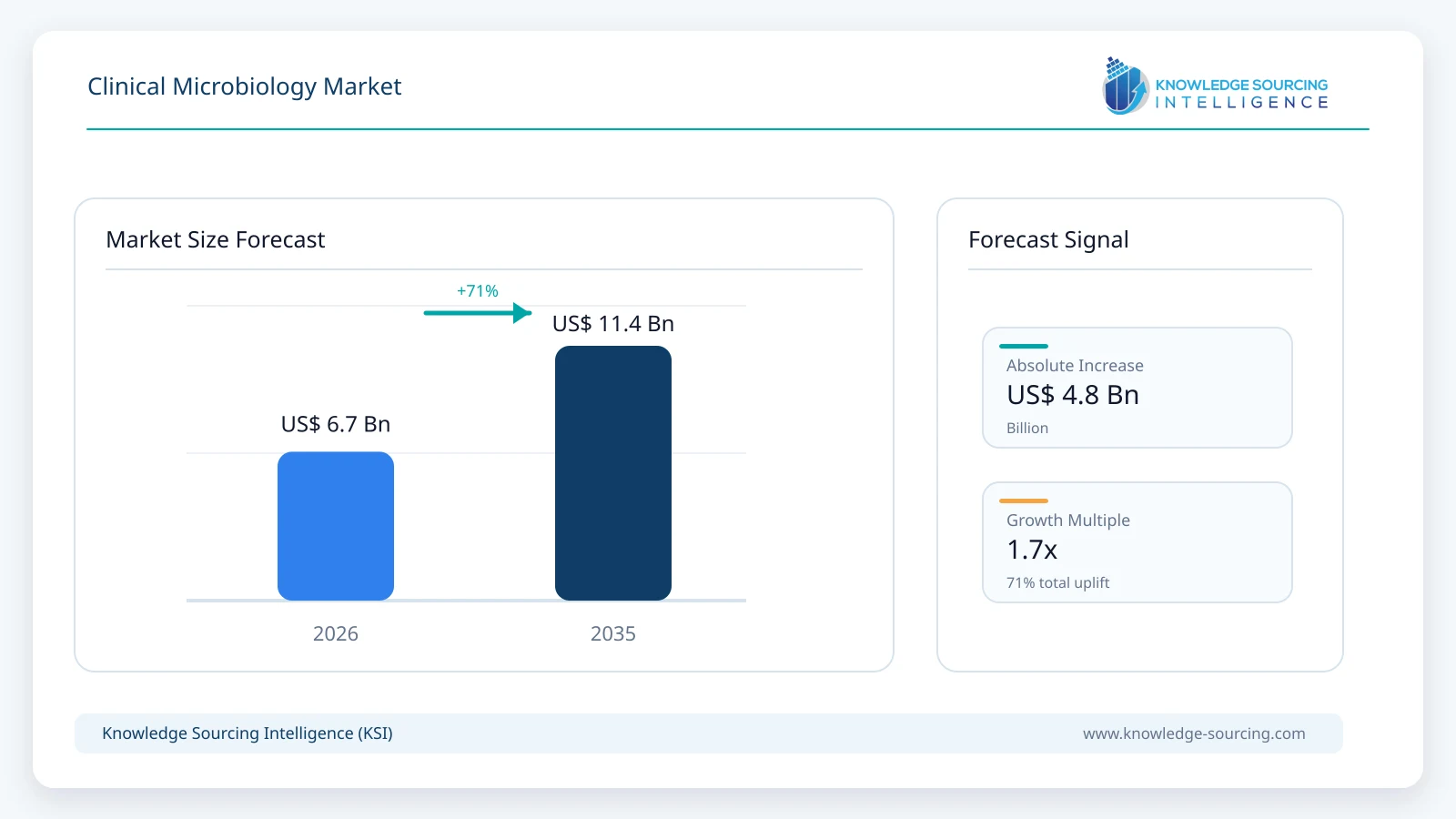
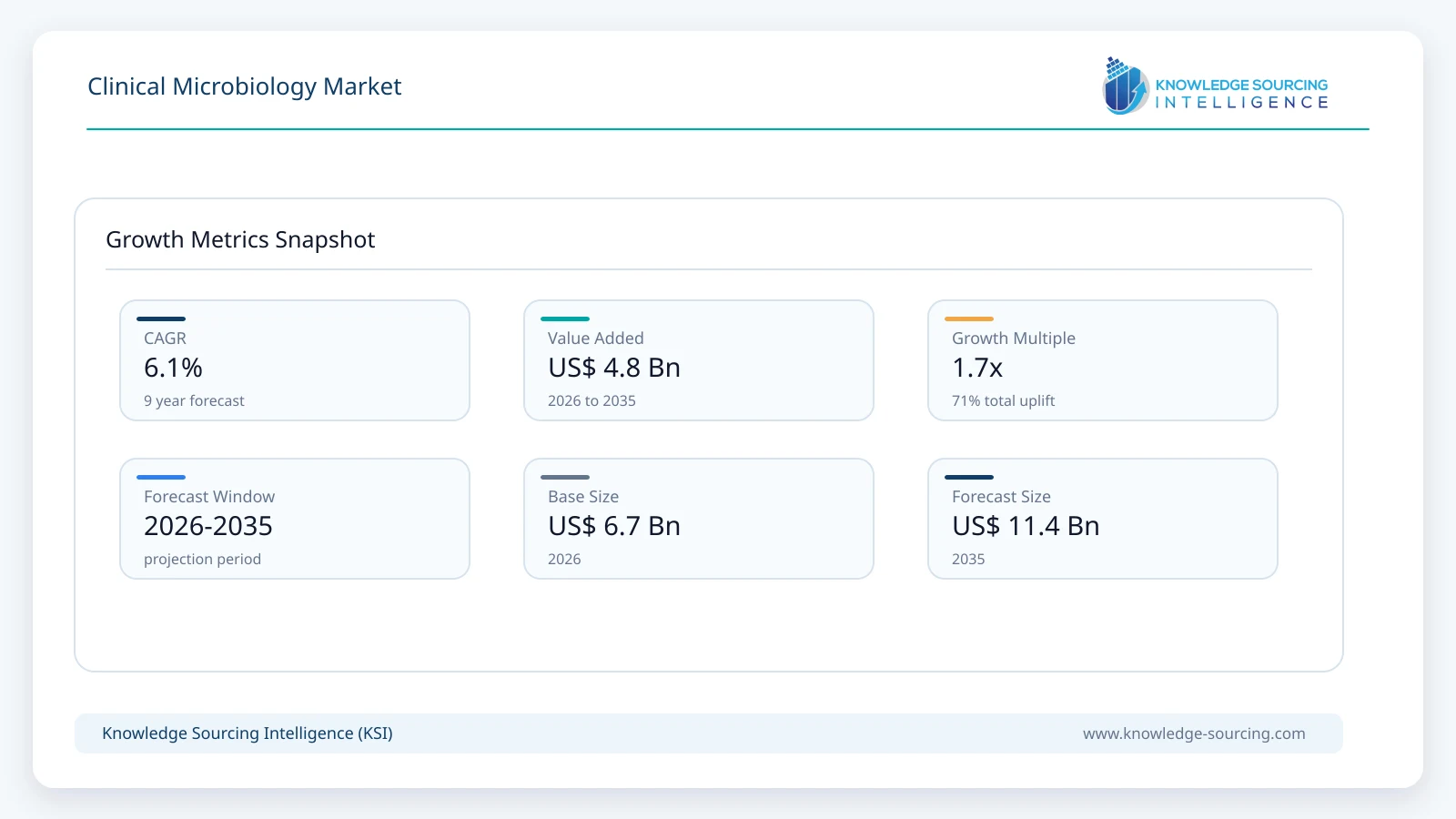
The Clinical Microbiology Market is expected to grow at a CAGR of 6.1% from a market value of USD 6.69 billion in 2026 to USD 11.45 billion in 2035.
Highlights:
- 1Rising antimicrobial resistance is increasing demand for rapid pathogen identification because clinicians require earlier targeted antimicrobial therapy.
- 2Hospital laboratory automation is expanding because specimen volumes continue increasing while trained microbiology professionals remain limited.
- 3Molecular diagnostic platforms are replacing selected conventional workflows because healthcare providers seek faster clinical decision-making.
- 4Regulatory quality requirements are encouraging the adoption of validated diagnostic systems, increasing demand for standardized laboratory technologies.
Clinical microbiology forms the foundation of infectious disease diagnosis because it determines the presence, identity, and characteristics of bacterial, viral, fungal, and parasitic pathogens. Healthcare systems increasingly depend on laboratory-confirmed diagnoses since empirical treatment strategies contribute to antimicrobial resistance and unnecessary healthcare expenditure. Demand is shifting toward rapid diagnostic technologies because clinicians require microbiological evidence before initiating targeted therapies.
The growing burden of respiratory infections, bloodstream infections, sexually transmitted diseases, urinary tract infections, and healthcare-associated infections continues to increase testing volumes across hospitals and reference laboratories. Traditional culture-based diagnostics remain essential because they provide organism isolation and antimicrobial susceptibility information. Molecular diagnostics are expanding across routine clinical workflows since healthcare providers require faster turnaround without compromising analytical performance.
Regulatory oversight continues to influence diagnostic innovation because manufacturers must demonstrate analytical validity, clinical performance, and manufacturing quality before commercialization. International quality standards also shape laboratory operations by encouraging standardized testing procedures and quality assurance systems. These requirements increase confidence in diagnostic results while supporting broader adoption of advanced microbiological technologies.
Market Dynamics
Market Drivers
Rising Antimicrobial Resistance Is Increasing Dependence on Rapid Diagnostics: Antimicrobial resistance remains one of the strongest structural drivers because delayed pathogen identification reduces treatment effectiveness and increases inappropriate antibiotic use. Healthcare providers are expanding rapid diagnostic adoption as antimicrobial stewardship programs become integrated into routine hospital practice. Conventional empirical treatment approaches create clinical uncertainty because resistant organisms frequently require targeted therapies.
Expansion of Molecular Diagnostics Across Clinical Laboratories: Clinical laboratories require diagnostic methods that balance analytical accuracy with operational efficiency. Molecular diagnostics are gaining preference because they detect pathogens directly from clinical specimens while reducing diagnostic turnaround times. Conventional culture techniques remain indispensable for susceptibility testing because organism isolation supports comprehensive clinical evaluation. Manufacturers are expanding multiplex molecular assays to improve laboratory productivity without increasing workflow complexity.
Healthcare-Associated Infection Surveillance Is Expanding Laboratory Testing: Healthcare-associated infections remain a significant burden because hospitalized patients often require continuous microbiological monitoring. Infection prevention programs are increasing microbiological surveillance activities as hospitals strengthen patient safety initiatives. Diagnostic laboratories support these programs by providing rapid organism identification and outbreak detection. Manufacturers are introducing automated microbiology systems that improve surveillance efficiency across high-volume laboratories.
Laboratory Automation Is Addressing Workforce Constraints: Clinical microbiology laboratories require skilled personnel to perform increasingly complex diagnostic procedures. Workforce shortages continue to limit laboratory capacity because experienced microbiologists are difficult to recruit. Healthcare institutions are investing in automated specimen processing, digital imaging, and intelligent laboratory software as testing volumes continue increasing. Automation reduces manual intervention while improving workflow consistency across routine microbiology operations.
Market Restraints
High capital investment requirements limit the adoption of advanced automated microbiology platforms among smaller laboratories despite increasing diagnostic demand.
Regulatory approval requirements extend commercialization timelines because manufacturers must demonstrate analytical performance, clinical validity, and manufacturing compliance.
Conventional culture methods remain necessary for antimicrobial susceptibility confirmation, reducing the complete replacement of legacy laboratory workflows.
Market Opportunities
Artificial Intelligence Is Transforming Digital Microbiology: Clinical microbiology increasingly generates digital laboratory images that require expert interpretation. Artificial intelligence is supporting automated colony recognition because laboratories seek greater consistency and faster reporting. Diagnostic manufacturers are integrating image analytics into laboratory automation platforms while expanding digital workflow capabilities. These developments strengthen demand for intelligent microbiology ecosystems.
Rapid Syndromic Testing Is Expanding Clinical Adoption: Clinicians increasingly encounter patients with overlapping infectious disease symptoms that complicate diagnosis. Syndromic testing panels are enabling simultaneous detection of multiple pathogens because treatment decisions require comprehensive diagnostic information. Healthcare providers are integrating multiplex testing into emergency departments and intensive care units as rapid diagnosis improves clinical management.
Pharmaceutical Innovation Continues Increasing Specialized Testing Requirements: Drug developers require detailed microbiological characterization throughout antimicrobial and vaccine development programs. Pharmaceutical companies are expanding microbiological testing partnerships because precision pathogen analysis supports clinical trial success. Diagnostic manufacturers continue developing research-oriented assay portfolios that address evolving pharmaceutical requirements.
Public Health Surveillance Is Strengthening National Laboratory Networks: Governments continue investing in infectious disease preparedness because emerging pathogens require coordinated laboratory surveillance. National laboratory networks are expanding molecular testing capabilities while improving microbiological reporting systems. Diagnostic companies are supporting these initiatives through scalable laboratory platforms and standardized testing solutions.
Disease & Epidemiology Analysis
Infectious diseases remain a major contributor to global morbidity because bacterial, viral, fungal, and parasitic pathogens continue evolving under changing demographic and environmental conditions. Demand for clinical microbiology testing is increasing as healthcare providers require laboratory confirmation before initiating targeted antimicrobial therapy. Syndromic diagnosis alone limits treatment precision because many infectious diseases present with overlapping clinical manifestations. Laboratories are expanding pathogen-specific testing capabilities to improve diagnostic accuracy across both community and hospital settings. This transition strengthens the role of microbiology in supporting antimicrobial stewardship and patient management.
Respiratory diseases represent one of the largest testing categories because seasonal respiratory viruses, bacterial pneumonia, tuberculosis, and emerging respiratory pathogens continue generating substantial healthcare utilization. Hospitals are increasing multiplex respiratory testing as rapid differentiation between viral and bacterial infections improves treatment selection and infection control measures. Conventional microbiological methods remain essential because culture and antimicrobial susceptibility testing guide therapy for bacterial respiratory pathogens. This balanced diagnostic approach supports both rapid intervention and definitive clinical management.
Bloodstream infections (BSIs) require urgent microbiological confirmation because delayed pathogen identification significantly increases mortality risk. Healthcare facilities are adopting rapid blood culture identification technologies as intensive care units demand earlier therapeutic intervention. Blood culture remains the diagnostic reference standard because antimicrobial susceptibility testing determines appropriate targeted treatment. Molecular identification technologies are reducing reporting times while maintaining compatibility with conventional microbiological workflows.
Treatment Guidelines Landscape
Disease Area | Primary Diagnostic Recommendation | Preferred Microbiology Method | Guideline Organization |
Respiratory Diseases | Laboratory confirmation before targeted therapy, where appropriate | PCR, culture, antigen testing | World Health Organization (WHO) |
Bloodstream Infections | Obtain blood cultures before antimicrobial therapy whenever feasible | Blood culture followed by identification and AST | Infectious Diseases Society of America (IDSA) |
Urinary Tract Infections | Urine culture for complicated or recurrent infections | Culture with antimicrobial susceptibility testing | European Association of Urology (EAU) |
Gastrointestinal Diseases | Pathogen-directed laboratory testing based on clinical presentation | Multiplex PCR, culture, and immunoassays | American College of Gastroenterology (ACG) |
Market Segmentation
By Disease Type
Respiratory diseases account for a significant share of clinical microbiology testing because healthcare systems require rapid differentiation between viral and bacterial infections. Diagnostic demand is increasing as seasonal outbreaks, hospital-acquired pneumonia, tuberculosis, and emerging respiratory pathogens continue to challenge healthcare providers. Conventional culture methods remain clinically relevant because antimicrobial susceptibility testing supports definitive therapeutic decisions. Laboratories are expanding multiplex molecular respiratory panels while integrating automated sample processing to shorten turnaround times. This combination strengthens the adoption of comprehensive respiratory diagnostic platforms across hospitals and reference laboratories.
By Method Type
Molecular diagnostics represent the fastest-evolving technology category because healthcare providers increasingly prioritize rapid pathogen identification over prolonged culture-based workflows. Clinical laboratories are incorporating multiplex PCR and nucleic acid amplification technologies as infectious disease management becomes increasingly time-sensitive. Conventional microbiology remains necessary for organism isolation and resistance profiling because molecular methods cannot replace every clinical application. Manufacturers continue expanding assay menus while improving automation and laboratory integration. These developments position molecular diagnostics as a central growth area within modern clinical microbiology.
By Application
Clinical research depends on accurate microbiological characterization because infectious disease studies require reliable pathogen identification throughout drug and vaccine development. Research institutions are increasing the adoption of advanced molecular assays as precision medicine expands across infectious disease therapeutics. Standardized microbiological testing remains fundamental because reproducible laboratory evidence supports regulatory submissions and clinical trial quality. Diagnostic companies continue introducing research-grade platforms that improve analytical consistency while supporting multicenter clinical studies. These capabilities strengthen long-term demand for advanced clinical microbiology technologies across pharmaceutical and academic research.
Regional Analysis
North America Market Analysis
North America represents one of the most mature clinical microbiology markets because healthcare systems place strong emphasis on evidence-based infectious disease management. Demand is increasing for rapid molecular diagnostics as hospitals strengthen antimicrobial stewardship programs and seek earlier pathogen identification. Conventional culture-based testing remains essential because antimicrobial susceptibility data continue to guide definitive treatment decisions. Healthcare providers are investing in laboratory automation while integrating digital microbiology platforms to address workforce shortages and rising specimen volumes. This combination supports sustained adoption of high-value diagnostic technologies across hospital laboratories, independent reference laboratories, and public health institutions.
Europe Market Analysis
Europe maintains a strong position in clinical microbiology because coordinated antimicrobial resistance surveillance and harmonized regulatory frameworks support standardized diagnostic practices. Clinical laboratories are expanding multiplex molecular testing as healthcare systems prioritize earlier intervention for infectious diseases. Regulatory requirements continue to encourage the adoption of validated in vitro diagnostic solutions because diagnostic reliability directly influences patient safety. Manufacturers are strengthening collaborations with healthcare providers and research institutions while expanding automation capabilities. These developments reinforce demand for integrated microbiology workflows across the region.
Asia Pacific Market Analysis
Asia Pacific demonstrates significant growth potential because expanding healthcare infrastructure and increasing infectious disease awareness continue driving laboratory modernization. Hospitals are adopting automated microbiology systems as testing volumes increase across urban healthcare centers. Government initiatives support laboratory capacity expansion because early infectious disease detection remains central to public health preparedness. Manufacturers are increasing regional investments through localized production, strategic partnerships, and expanded distribution networks. This evolving healthcare environment strengthens long-term demand for advanced microbiology technologies.
Rest of the World
The Rest of the World is experiencing gradual expansion because healthcare systems are improving infectious disease surveillance and laboratory capabilities. Diagnostic demand is increasing as governments strengthen outbreak preparedness and expand access to microbiological testing. Resource limitations continue influencing technology adoption because laboratory infrastructure varies substantially across countries. International organizations and diagnostic manufacturers are supporting laboratory capacity-building initiatives while improving access to standardized testing platforms. These efforts continue to strengthen clinical microbiology adoption across emerging healthcare markets.
Regulatory Landscape
Clinical microbiology operates within one of the most highly regulated segments of the in vitro diagnostics industry because diagnostic accuracy directly influences clinical decision-making and patient safety. Regulatory agencies require manufacturers to demonstrate analytical validity, clinical performance, manufacturing quality, and post-market surveillance before diagnostic products reach healthcare providers. These requirements strengthen confidence in microbiological testing while increasing development complexity for diagnostic manufacturers. Companies are expanding clinical validation activities because evolving regulatory expectations require broader evidence supporting assay performance across diverse patient populations.
The regulatory environment is also changing as governments strengthen oversight of diagnostic quality and laboratory operations. The U.S. Food and Drug Administration (FDA) continues regulating in vitro diagnostic devices through risk-based pathways, while the European Union In Vitro Diagnostic Regulation (EU IVDR 2017/746) has significantly increased clinical evidence and post-market surveillance requirements for diagnostic manufacturers. International quality standards such as ISO 13485 for medical device quality management systems and ISO 15189 for medical laboratories continue shaping laboratory accreditation and operational practices.
Regulatory agencies are increasingly encouraging innovation that addresses public health priorities, particularly antimicrobial resistance and emerging infectious diseases. Emergency authorization pathways demonstrated during the COVID-19 pandemic have influenced regulatory preparedness for future outbreaks, although routine approval standards remain rigorous. Manufacturers are strengthening regulatory affairs capabilities while integrating compliance earlier in product development to reduce commercialization risks. This evolving regulatory landscape continues to favor companies capable of maintaining strong quality systems, comprehensive clinical evidence, and global regulatory expertise.
Pipeline Analysis
The clinical microbiology pipeline is expanding beyond traditional pathogen identification because healthcare providers increasingly require comprehensive diagnostic information that supports precision infectious disease management. Manufacturers are developing next-generation molecular diagnostics, automated antimicrobial susceptibility testing systems, syndromic testing panels, and digital microbiology platforms that improve laboratory efficiency while reducing reporting times. Research activities increasingly emphasize integrated diagnostic ecosystems rather than standalone instruments because laboratories seek complete workflow optimization.
Several companies are advancing molecular assays capable of simultaneously detecting multiple bacterial, viral, and fungal pathogens from a single clinical specimen. Diagnostic developers are incorporating artificial intelligence into colony recognition, digital image interpretation, and laboratory workflow management as specimen volumes continue increasing. Automated antimicrobial susceptibility testing remains a major development focus because earlier identification of resistant organisms directly supports antimicrobial stewardship initiatives. Manufacturers are also integrating cloud-enabled laboratory informatics to improve data management and epidemiological surveillance across healthcare networks.
Strategic collaborations between diagnostic manufacturers, academic institutions, and pharmaceutical companies continue accelerating innovation. Companies are expanding companion diagnostic capabilities because antimicrobial and vaccine development increasingly require precise microbiological characterization. Public health agencies also encourage the development of rapid diagnostics targeting emerging infectious diseases and multidrug-resistant organisms through research funding and collaborative programs. These activities indicate that future pipeline expansion will emphasize speed, automation, multiplex testing, digital integration, and clinically actionable microbiological information rather than incremental improvements in conventional laboratory methods.
Reimbursement Landscape
Reimbursement plays a significant role in clinical microbiology adoption because healthcare providers balance diagnostic value against laboratory operating costs. Coverage policies generally recognize microbiological testing as an essential component of infectious disease management, although reimbursement levels vary according to healthcare systems, diagnostic complexity, and clinical indication. Hospitals are increasingly demonstrating the economic value of rapid diagnostics because earlier pathogen identification reduces unnecessary antimicrobial use, shortens hospital stays, and supports improved patient outcomes. This evidence strengthens payer acceptance of advanced microbiological technologies.
Public and private healthcare payers continue evaluating reimbursement based on demonstrated clinical utility and cost effectiveness rather than analytical performance alone. Molecular diagnostics and multiplex infectious disease panels are receiving greater attention as health technology assessments increasingly consider downstream healthcare savings associated with faster diagnosis and targeted treatment. Manufacturers are generating additional health economic evidence while engaging with healthcare providers to support favorable reimbursement decisions. As value-based healthcare models continue expanding, reimbursement is expected to increasingly reward diagnostic solutions that improve antimicrobial stewardship, reduce healthcare-associated infections, and enhance overall healthcare efficiency.
Competitive Landscape
Thermo Fisher Scientific Inc.
Thermo Fisher Scientific distinguishes itself through one of the industry's broadest clinical microbiology portfolios, integrating molecular diagnostics, microbiology media, laboratory automation, sequencing technologies, and analytical instruments within a single ecosystem. The company continues strengthening its infectious disease portfolio because laboratories increasingly require end-to-end workflow solutions instead of isolated diagnostic products.
F. Hoffmann-La Roche Ltd.
Roche remains strategically differentiated through its leadership in molecular diagnostics and its strong integration between diagnostic testing and personalized healthcare. The company continues investing in rapid molecular infectious disease testing because healthcare providers increasingly prioritize shorter diagnostic turnaround times for critically ill patients.
Danaher Corporation
Danaher differentiates its microbiology business through a diversified diagnostics portfolio supported by multiple operating companies specializing in molecular diagnostics, life sciences, and laboratory technologies. Continuous operational improvement remains central to its strategy because healthcare providers demand efficient, scalable laboratory workflows.
QIAGEN N.V.
QIAGEN maintains a strong competitive position through its expertise in molecular sample preparation and nucleic acid-based infectious disease diagnostics. The company focuses on enabling rapid and highly sensitive pathogen detection because molecular testing increasingly influences clinical decision-making across healthcare settings.
Becton, Dickinson and Company
Becton, Dickinson and Company (BD) remains strategically important because of its comprehensive microbiology portfolio spanning specimen collection, blood culture systems, automated identification, antimicrobial susceptibility testing, and laboratory automation.
Bio-Rad Laboratories, Inc.
Bio-Rad Laboratories differentiates itself through expertise in quality control, molecular diagnostics, PCR technologies, and life science research tools that support both clinical and research microbiology applications. The company continues investing in highly accurate molecular detection technologies because laboratories increasingly prioritize analytical precision alongside operational efficiency.
Key Developments
April 2026: Bruker launched MyGenius PRO, a high-throughput sample-to-answer molecular diagnostics system, at ESCMID 2026. The system delivers rapid, automated pathogen identification and antimicrobial resistance testing from directly processed samples, enabling comprehensive microbiology testing with minimal hands-on time. This launch expands Bruker's molecular diagnostics portfolio with advanced throughput capabilities for large clinical laboratories.
April 2026: ASM launched the Mechanism Discovery Scientific Unit to advance research into microbial pathogenesis and drug resistance mechanisms. This new unit focuses on understanding fundamental biological processes driving infectious disease, supporting the development of novel therapeutic approaches and diagnostic tools for challenging microbial infections.
April 2026: Waters Corporation announced CE mark for the next-generation fully automated BD BACTEC FXi Culture System for bloodstream infection diagnosis. The system offers automated blood culture testing with enhanced capabilities for detecting bloodstream infections, supporting rapid pathogen identification and antimicrobial susceptibility testing.
November 2025: Zynnon launched a diagnostic platform for rapid detection of bloodstream infections. The platform provides fast, accurate identification of bloodborne pathogens, enabling clinicians to diagnose bloodstream infections quickly and initiate appropriate treatment. This advancement addresses the critical need for rapid bloodstream infection diagnostics in emergency and intensive care settings.
July 2025: SHEBA launched a medical experiment into space, representing innovative research in space-based medicine and diagnostics. This initiative explores how medical testing and diagnostic procedures can be adapted for space environments, potentially advancing understanding of human health in extreme conditions.
Strategic Insights and Future Market Outlook
Clinical microbiology is transitioning from isolated laboratory testing toward integrated infectious disease management because healthcare providers increasingly depend on rapid, actionable diagnostic information. Demand is shifting toward automated molecular diagnostics, multiplex pathogen detection, and intelligent laboratory workflows as hospitals seek to reduce diagnostic turnaround times while strengthening antimicrobial stewardship. Conventional culture techniques continue to support definitive diagnosis because antimicrobial susceptibility testing remains fundamental for evidence-based treatment decisions. This complementary technology environment encourages manufacturers to develop solutions that combine molecular speed with microbiological depth.
Competitive strategies increasingly emphasize platform expansion rather than individual product launches because laboratories prefer unified diagnostic ecosystems that simplify workflow management. Companies are strengthening partnerships with healthcare providers, pharmaceutical organizations, and public health institutions while investing in artificial intelligence, digital microbiology, laboratory automation, and cloud-enabled informatics. These investments improve laboratory productivity and support infectious disease surveillance across increasingly interconnected healthcare systems. Regulatory compliance, clinical evidence generation, and post-market quality assurance remain essential competitive differentiators as global diagnostic standards continue evolving.
Innovation is expected to focus on rapid antimicrobial susceptibility testing, syndromic molecular diagnostics, next-generation sequencing, and artificial intelligence-assisted laboratory interpretation. Growing public health emphasis on antimicrobial resistance, emerging infectious diseases, and pandemic preparedness is likely to sustain long-term investment in advanced microbiology infrastructure. Manufacturers capable of integrating automation, molecular diagnostics, digital connectivity, and scalable laboratory workflows are expected to strengthen their competitive positions as healthcare systems continue to modernize infectious disease diagnostics.
Clinical Microbiology Market Scope:
| Report Metric | Details |
|---|---|
| Total Market Size in 2026 | USD 6.69 billion |
| Total Market Size in 2035 | USD 11.45 billion |
| Forecast Unit | USD Billion |
| Growth Rate | 6.1% |
| Study Period | 2021 to 2035 |
| Historical Data | 2021 to 2024 |
| Base Year | 2025 |
| Forecast Period | 2026 – 2035 |
| Segmentation | Product Type, Disease Type, End User, Geography |
| Companies |
|
Market Segmentation
Product Type
Disease Type
End User
Geography
- North America
- South America
- Europe
- Middle East and Africa
- Asia Pacific
Table of Contents
1. EXECUTIVE SUMMARY
1.1 Market Snapshot
1.2 Key Findings
1.3 Analyst Insights
1.4 Strategic Recommendations
2. RESEARCH METHODOLOGY
2.1 Research Design
2.2 Data Collection Methodology
2.3 Market Size Estimation
2.4 Forecasting Model
2.5 Assumptions & Limitations
3. GLOBAL CLINICAL MICROBIOLOGY MARKET OVERVIEW, SIZE & FORECAST
3.1 Market Definition & Scope
3.2 Clinical Microbiology Industry Overview
3.3 Industry Evolution
3.4 Key Market Trends
3.5 Historical Market Size Analysis (2021–2025)
3.6 Market Forecast (2026–2035)
3.7 Infectious Disease Burden and Diagnostic Needs
3.8 Testing Volume Analysis
3.9 Laboratory Workflow and Diagnostic Pathway Analysis
3.10 Transition from Conventional to Automated and Molecular Microbiology
3.11 Impact of Antimicrobial Resistance (AMR) on Clinical Microbiology Testing
4. MARKET DYNAMICS
4.1 Market Drivers
4.2 Market Restraints
4.3 Market Opportunities
4.4 Market Challenges
5. INDUSTRY LANDSCAPE
5.1 Industry Value Chain Analysis
5.2 Pricing Analysis
5.3 Reimbursement Landscape
6. INNOVATION LANDSCAPE
6.1 Emerging Technologies
6.2 Product Innovation
6.3 Clinical Trial Analysis
6.4 Pipeline Analysis
6.5 Automation and Laboratory Informatics Integration
6.6 Artificial Intelligence in Clinical Microbiology
6.7 Next-Generation Sequencing and Metagenomic Diagnostics
6.8 Technology Roadmap
7. REGULATORY LANDSCAPE
7.1 Regulatory Framework
7.2 Approval Pathways
7.3 Compliance Requirements
8. GLOBAL CLINICAL MICROBIOLOGY MARKET LANDSCAPE ANALYSIS
8.1 Analysis by Product Type
8.2 Analysis by Disease Type
8.3 Analysis by Method Type
8.4 Analysis by Application
8.5 Analysis by End User
9. GLOBAL CLINICAL MICROBIOLOGY MARKET SEGMENT ANALYSIS (2021–2035)
9.1 By Product Type
9.1.1 Instruments
9.1.2 Consumables & Reagents
9.1.3 Software & Services
9.2 By Disease Type
9.2.1 Respiratory Diseases
9.2.2 Bloodstream Infections (BSI)
9.2.3 Gastrointestinal Diseases
9.2.4 Sexually Transmitted Diseases (STDs)
9.2.5 Urinary Tract Infections (UTIs)
9.2.6 Other Diseases
9.3 By Method Type
9.3.1 Culture-Based Techniques
9.3.2 Molecular Diagnostics
9.3.3 Immunoassays
9.3.4 Mass Spectrometry
9.3.5 Others
9.4 By Application
9.4.1 Clinical Research
9.4.2 Pharmaceutical Research
9.4.3 Food Testing
9.4.4 Environmental Monitoring
9.4.5 Other Applications
9.5 By End User
9.5.1 Hospitals
9.5.2 Diagnostic Laboratories
9.5.3 Academic & Research Institutes
9.5.4 Others
10. GLOBAL CLINICAL MICROBIOLOGY MARKET GEOGRAPHICAL ANALYSIS (2021–2035)
10.1 North America
10.2 Europe
10.3 Asia-Pacific
10.4 South America
10.5 Middle East & Africa
11. GLOBAL CLINICAL MICROBIOLOGY MARKET COUNTRY ANALYSIS (2021–2035)
11.1 United States
11.2 Canada
11.3 Germany
11.4 United Kingdom
11.5 France
11.6 Italy
11.7 Spain
11.8 Japan
11.9 China
11.10 India
11.11 South Korea
11.12 Australia
11.13 Brazil
11.14 Mexico
11.15 Saudi Arabia
11.16 South Africa
12. COMPETITIVE LANDSCAPE
12.1 Market Share Analysis
12.2 Strategic Developments
12.3 Mergers & Acquisitions, Partnerships & Collaborations
12.4 Product Launches
13. COMPANY PROFILES
13.1 Thermo Fisher Scientific Inc.
13.1.1 Company Overview
13.1.2 Financials
13.1.3 Product Portfolio
13.1.4 Recent Developments
13.2 Merck Group
13.3 Institut Mérieux
13.4 Bio-Rad Laboratories, Inc.
13.5 Neogen Corporation
13.6 F. Hoffmann-La Roche Ltd.
13.7 Hardy Diagnostics
13.8 Danaher Corporation
13.9 QIAGEN N.V.
13.10 Becton, Dickinson and Company
14. GLOBAL CLINICAL MICROBIOLOGY MARKET COMMERCIAL FORECAST ANALYSIS
14.1 Automated Microbiology Systems
14.2 Molecular Microbiology Testing
14.3 MALDI-TOF Mass Spectrometry Systems
14.4 Antimicrobial Susceptibility Testing Systems
14.5 Culture Media
14.6 Microbiology Reagents & Diagnostic Kits
14.7 Microbiology Consumables
14.8 Next-Generation Sequencing-Based Clinical Microbiology Solutions
15. INVESTMENT & FUNDING ANALYSIS
15.1 Venture Capital Trends
15.2 Government Funding
15.3 R&D Investments
16. FUTURE OUTLOOK
16.1 Key Growth Opportunities
16.2 Future Industry Trends
Navigate
Trusted by the world's leading organizations











