
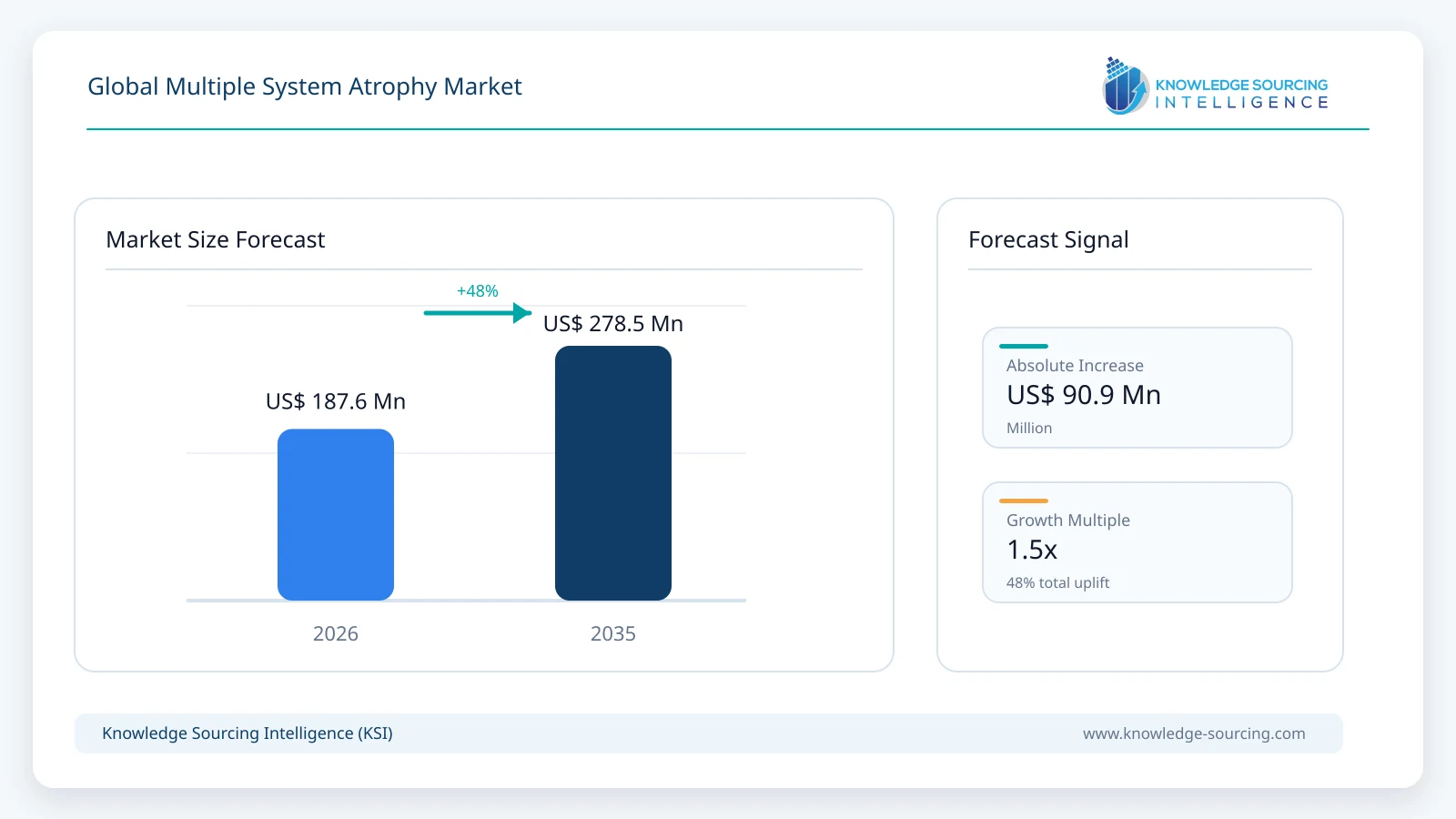
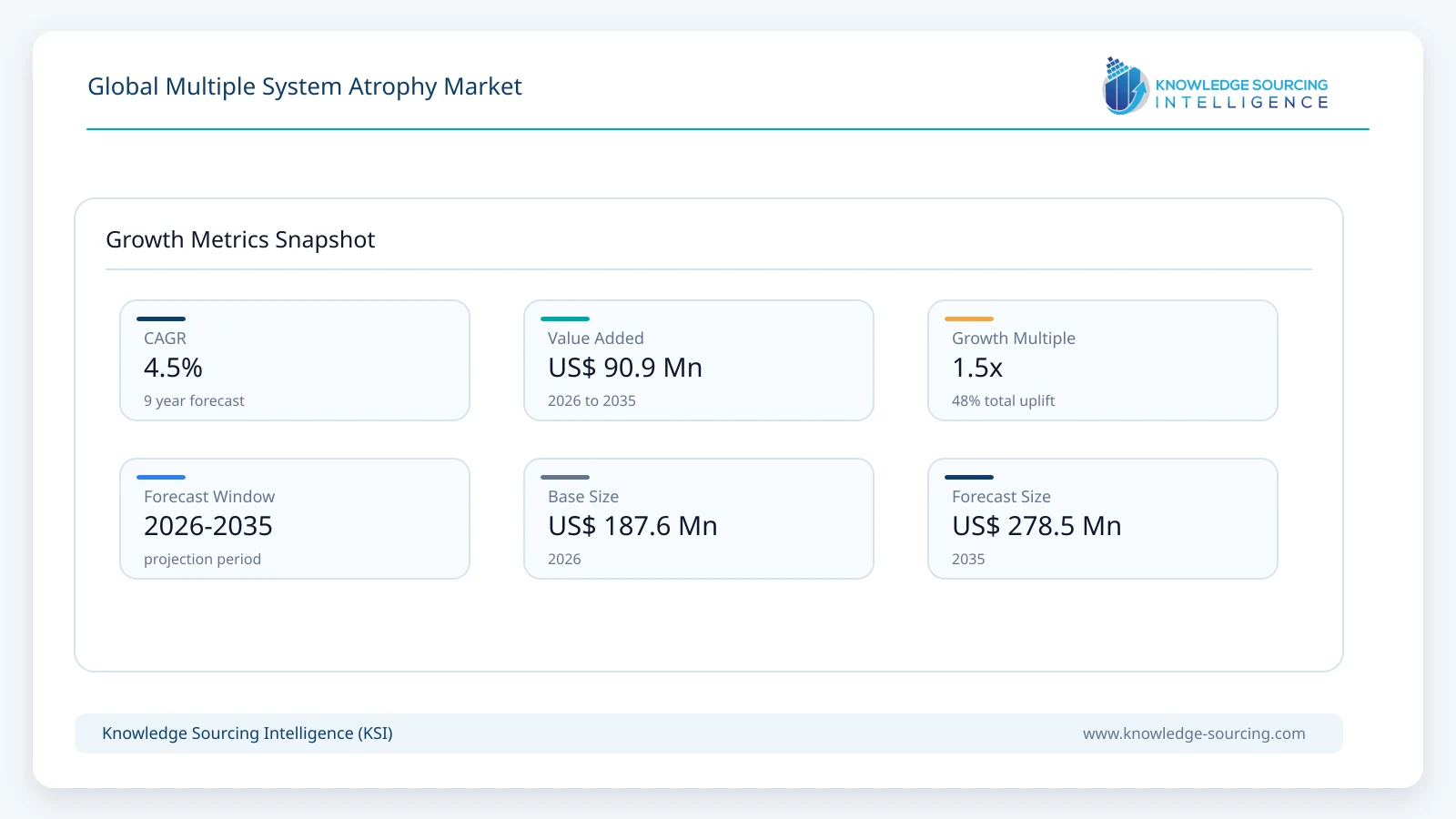
The Global Multiple System Atrophy Market is set to reach USD 278.5 million in 2035, growing at a CAGR of 4.5% from USD 187.6 million in 2026.
Highlights:
- 1June 2026Alterity Therapeutics announced agreement with the FDA on key elements of the ATH434 Phase 3 program for MSA, strengthening the regulatory pathway toward pivotal clinical development.
- 2March 2026Lundbeck announced that the last patient was randomized ahead of schedule in its Phase 3 MASCOT trial evaluating amlenetug (Lu AF82422) for MSA, with headline results anticipated in Q3 2027 and launch expected in Q1 2029.
- 3March 2026Alterity Therapeutics reported positive FDA feedback following a Type C meeting, confirming alignment on clinical pharmacology and non-clinical elements supporting the planned Phase 3 ATH434 program in MSA.
Key Highlights
• Increasing disease recognition is expanding diagnosed and treated patient populations.
• Growing investment in disease-modifying therapies is transforming future treatment expectations.
• Advances in alpha-synuclein research are accelerating therapeutic innovation.
• Expanding multidisciplinary care models are increasing demand for supportive and rehabilitation services.
The MSA market remains highly specialized because the disease affects a relatively small patient population compared with other neurodegenerative disorders. Treatment demand is driven by progressive neurological deterioration requiring long-term management of autonomic dysfunction, parkinsonian symptoms, cerebellar impairment, and associated complications. Healthcare systems are increasingly emphasizing multidisciplinary care models that integrate pharmacological treatment, rehabilitation, supportive services, and long-term monitoring.
Therapeutic development is increasingly focusing on disease-modifying approaches because current treatments primarily address symptoms rather than underlying disease progression. Advances in neuroscience research are improving understanding of disease mechanisms and expanding opportunities for innovative intervention strategies. This shift is attracting increased industry participation and strengthening pipeline activity across multiple therapeutic categories.
Market Dynamics
Market Drivers
Rising Diagnosis Rates
Improved physician awareness and expanding access to specialist neurological care are increasing diagnosis rates globally. Earlier recognition of disease symptoms is supporting growth in treated patient populations and strengthening demand for therapeutic interventions.
Expanding Therapeutic Innovation
Scientific advances are increasing the development of therapies targeting underlying disease mechanisms. Growing research activity across the biotechnology and pharmaceutical sectors is strengthening the future treatment pipeline and creating opportunities for market expansion.
Increasing Rare Disease Support
Governments and healthcare organisations are expanding support for rare neurological disorders through research funding, regulatory incentives, and patient advocacy initiatives. These efforts are encouraging therapeutic development and improving patient access to care.
Growth of Multidisciplinary Care
Comprehensive disease management increasingly requires rehabilitation services, supportive care, and specialist interventions. This trend is broadening treatment demand beyond pharmacological therapies and supporting overall market development.
Market Restraints
• Limited patient populations create challenges for clinical trial recruitment and therapeutic commercialization.
• Diagnostic complexity continues contributing to delayed diagnosis and underrecognition.
• Absence of approved disease-modifying therapies restricts current treatment options.
Market Opportunities
Alpha-Synuclein Targeting Therapies
Growing understanding of alpha-synuclein pathology is creating opportunities for therapies designed to modify disease progression. Successful development could fundamentally transform treatment approaches.
Biomarker-Driven Diagnosis
Advances in biomarker technologies may improve diagnostic accuracy and facilitate earlier intervention. Improved patient identification could expand treatment utilisation and support the future adoption of therapies.
Expansion of Precision Medicine
Personalised treatment strategies are becoming increasingly feasible as scientific understanding of disease heterogeneity improves. Precision medicine approaches may enhance treatment effectiveness and support market growth.
Emerging Disease-Modifying Therapies
Novel therapies capable of slowing disease progression represent the largest long-term opportunity within the MSA market. Successful clinical development could significantly alter treatment paradigms and healthcare demand.
Disease & Epidemiology Analysis
Multiple System Atrophy remains a rare, rapidly progressive neurodegenerative disorder characterized by autonomic failure, parkinsonism, cerebellar dysfunction, and widespread neurological deterioration. Disease burden continues increasing because improvements in diagnostic awareness are enabling identification of patients who were previously misclassified as having Parkinson’s disease or other atypical movement disorders. This improved recognition is expanding diagnosed patient populations and increasing demand for specialized treatment services. As a result, healthcare systems are devoting greater attention to rare neurodegenerative disease management.
The disease predominantly affects individuals between 50 and 70 years of age because neurodegenerative processes associated with MSA typically emerge during later adulthood. Aging populations are increasing the number of individuals entering higher-risk demographic groups, creating greater demand for neurological evaluation and long-term disease management. This demographic trend is placing additional pressure on healthcare infrastructure and specialist care resources. Consequently, early diagnosis and coordinated treatment strategies are becoming increasingly important.
Multiple System Atrophy–Parkinsonian Type (MSA-P) represents the dominant clinical subtype in many Western countries because parkinsonian symptoms frequently constitute the initial manifestation of disease. Multiple System Atrophy–Cerebellar Type (MSA-C) remains more prevalent in certain Asian populations where cerebellar dysfunction is more commonly observed. These regional differences influence treatment approaches, clinical research priorities, and healthcare resource allocation. Understanding subtype distribution therefore remains important for effective disease management planning.
Treatment Guidelines Landscape
Treatment Category | Primary Objective | Clinical Role in MSA Management |
Pharmacological Therapies | Symptom management | Used to address motor symptoms, orthostatic hypotension, urinary dysfunction, and sleep disturbances |
Non-Pharmacological Therapies | Functional preservation | Includes physical therapy, occupational therapy, speech therapy, and rehabilitation services |
Combination Therapies | Multi-symptom control | Integrates pharmacological and supportive interventions to address complex disease manifestations |
Supportive Care Therapies | Quality-of-life improvement | Focuses on nutritional support, respiratory care, mobility assistance, and caregiver support |
Orthostatic Hypotension Management | Blood pressure stabilization | Critical for reducing dizziness, falls, and cardiovascular complications |
Mobility Rehabilitation | Functional independence | Helps maintain balance, gait stability, and physical activity levels |
Speech and Swallowing Therapy | Communication and nutrition support | Addresses dysarthria and dysphagia associated with disease progression |
Nutritional Management | Prevention of complications | Supports adequate nutrition and reduces aspiration risks |
Respiratory Support | Management of breathing complications | Increasingly important during advanced disease stages |
Multidisciplinary Care Programs | Comprehensive disease management | Coordinates treatment across multiple healthcare specialties |
Market Segmentation
By Disease Type
Disease type segmentation plays a critical role in shaping treatment demand because clinical manifestations, progression patterns, and healthcare requirements vary significantly across patient populations. MSA-P accounts for the largest share of diagnosed patients in many regions, while MSA-C demonstrates higher prevalence in selected Asian populations. Mixed phenotypes are receiving increasing clinical recognition as disease progression frequently results in overlapping neurological features. Growing diagnostic accuracy is improving subtype classification and supporting more targeted patient management approaches. Demand for innovative therapies continues increasing across all disease categories as healthcare providers seek interventions capable of slowing disease progression and improving long-term functional outcomes.
By Treatment Type
Treatment type segmentation reflects the multidisciplinary nature of MSA management because patients require a combination of pharmacological intervention, symptomatic management, rehabilitation services, and supportive care throughout disease progression. Pharmacological therapies remain the foundation of treatment utilization, while supportive and rehabilitation services are becoming increasingly important as disability advances. Healthcare systems are expanding integrated care models that combine multiple therapeutic approaches to address complex neurological and autonomic manifestations. Demand continues shifting toward comprehensive management strategies because symptom burden increases over time. Future therapeutic innovation is expected to further diversify treatment utilization patterns and healthcare resource allocation.
By Drug Class
Drug class segmentation is evolving as scientific understanding of MSA pathology expands beyond traditional symptomatic management approaches. Dopaminergic agents and autonomic dysfunction treatments currently dominate therapeutic utilization because they address the most common clinical manifestations. However, research investment is increasingly focusing on neuroprotective therapies, alpha-synuclein targeting interventions, and emerging disease-modifying treatments designed to influence underlying disease mechanisms. These innovative therapeutic categories are attracting growing industry attention due to their potential to alter disease progression. As pipeline programs advance through clinical development, demand is expected to gradually shift toward therapies offering broader neurological preservation and long-term clinical benefit.
Regional Analysis
North America
North America represents one of the leading markets for Multiple System Atrophy management because advanced healthcare infrastructure supports early diagnosis, specialist referral, and comprehensive patient care. Growing awareness among neurologists and movement disorder specialists is increasing diagnosis rates and expanding treated patient populations. Research institutions and biotechnology companies are actively advancing disease-modifying therapies, strengthening regional innovation activity. Access to rehabilitation services, supportive care programs, and rare disease initiatives further supports treatment utilisation. As clinical development programs mature and novel therapies approach commercialisation, North America is expected to remain a key centre for therapeutic adoption and market expansion.
Europe
Europe maintains a strong position within the MSA landscape because universal healthcare systems facilitate access to neurological services, diagnostic evaluations, and long-term disease management. Increasing recognition of rare neurodegenerative disorders is supporting earlier diagnosis and improved patient identification. Research collaborations among academic institutions, biotechnology firms, and pharmaceutical companies are accelerating therapeutic development. Growing emphasis on value-based healthcare and rare disease policy frameworks is encouraging investment in innovative treatment approaches. Continued expansion of patient registries and specialist care networks is expected to strengthen treatment access and support future market growth.
Asia Pacific
Asia Pacific is emerging as an increasingly important region because healthcare modernization, demographic aging, and neurological disease awareness are expanding rapidly. Countries such as Japan, China, South Korea, and Australia are strengthening specialist care infrastructure and improving access to advanced diagnostic technologies. The region demonstrates significant research interest in neurodegenerative disorders, supporting greater understanding of disease epidemiology and treatment needs. Expanding healthcare expenditure and growing adoption of multidisciplinary care models are increasing treatment utilization. These factors are expected to drive substantial regional growth throughout the forecast period.
Rest of the World
The Rest of the World region is gradually improving its position within the MSA treatment landscape because healthcare infrastructure development is enhancing access to neurological care. Increasing physician awareness and rare disease advocacy activities are improving disease recognition and patient identification. Although specialist availability remains limited in several markets, ongoing healthcare investments are supporting broader access to diagnosis and treatment services. Expanding participation in international clinical research initiatives is also improving regional visibility within the global MSA ecosystem. These developments are expected to contribute to gradual long-term market expansion.
Regulatory Landscape
Multiple System Atrophy development benefits from regulatory frameworks designed to encourage innovation in rare diseases because limited patient populations often create substantial commercial and scientific challenges. Regulatory agencies including the U.S. Food and Drug Administration and the European Medicines Agency provide orphan drug designation programs that support therapeutic development through fee reductions, regulatory assistance, and market exclusivity incentives. These mechanisms are increasing sponsor willingness to invest in high-risk neurological programs and are strengthening the overall MSA pipeline.
Regulatory authorities are increasingly encouraging the incorporation of biomarkers, natural history studies, and patient-focused outcome measures because traditional clinical endpoints remain difficult to evaluate in rapidly progressive neurodegenerative diseases. Sponsors are working closely with regulators to establish development pathways that adequately capture therapeutic benefit while addressing challenges associated with small patient populations. This evolving regulatory approach is improving development efficiency and supporting more flexible clinical trial designs.
Pipeline Analysis
The MSA pipeline remains heavily concentrated in early-stage development because scientific understanding of disease mechanisms continues evolving. Alpha-synuclein pathology represents the dominant therapeutic target across multiple development programs due to growing evidence linking protein aggregation with disease progression. Companies are increasingly pursuing approaches designed to reduce alpha-synuclein accumulation, enhance protein clearance, or inhibit pathological spreading throughout the nervous system. These strategies are supporting a transition from symptomatic treatment toward disease modification.
Small molecules continue to represent a substantial portion of pipeline candidates because they offer established development pathways and scalable manufacturing capabilities. At the same time, biologics, monoclonal antibodies, and antisense oligonucleotides are expanding rapidly as developers seek more targeted interventions. Gene therapy programs are attracting growing investment because advances in vector technology are improving delivery efficiency and therapeutic durability. Cell-based approaches are also emerging as potential regenerative treatment strategies.
Clinical development remains challenging because patient recruitment is constrained by disease rarity and diagnostic complexity. Biomarker development is therefore becoming increasingly important, as reliable measures of disease progression improve patient stratification and therapeutic evaluation. Continued collaboration among industry participants, academic institutions, and patient organisations is strengthening the overall pipeline ecosystem and supporting the advancement of innovative treatment candidates.
Reimbursement Landscape
The reimbursement environment for Multiple System Atrophy remains challenging because healthcare systems generally require strong evidence of clinical benefit before supporting broad coverage of novel therapies. Current management primarily relies on symptomatic treatments and supportive care interventions, which are often reimbursed through established neurological care pathways. Demand for reimbursement innovation is increasing because emerging disease-modifying therapies may introduce substantially different clinical and economic value propositions.
Payers are increasingly evaluating real-world evidence, quality-of-life outcomes, and long-term healthcare utilization impacts when assessing therapies for rare neurological diseases. This trend is encouraging developers to incorporate health economics and outcomes research into clinical development strategies. Companies are generating broader evidence packages to demonstrate therapeutic value beyond traditional clinical endpoints. As disease-modifying therapies advance through development, reimbursement frameworks are likely to evolve toward value-based assessment models that account for reductions in disability progression, healthcare resource utilization, and caregiver burden.
Competitive Landscape
Alterity Therapeutics Limited
Alterity Therapeutics is strategically distinguished by its exclusive focus on neurodegenerative diseases associated with pathological protein accumulation. The company is advancing a targeted approach to Multiple System Atrophy through therapies designed to reduce iron-mediated neurodegeneration and alpha-synuclein pathology. Its lead candidate, ATH434, represents one of the most advanced disease-modifying programs specifically developed for MSA and has generated significant interest within the rare neurodegenerative disease community.
The company continues concentrating resources on clinical validation of ATH434 because current treatment options fail to alter disease progression. Biomarker integration remains a central element of its development strategy, enabling more precise assessment of therapeutic activity and disease modification potential. Ongoing clinical studies are evaluating safety, tolerability, and efficacy indicators across MSA patient populations. Alterity is increasingly collaborating with academic institutions and neurological research organisations to strengthen scientific understanding of disease mechanisms and support clinical development. Its focused strategy positions the company as one of the most specialised developers within the MSA therapeutic landscape.
Biohaven Ltd.
Biohaven differentiates itself through its expertise in neuroscience innovation and development of therapies targeting complex neurological disorders. The company is leveraging its scientific capabilities to explore mechanisms relevant to neurodegeneration, protein aggregation, and neuronal preservation. This approach supports potential expansion into rare neurodegenerative diseases, including Multiple System Atrophy.
Research activities continue to emphasise disease-modifying opportunities because symptomatic therapies provide limited long-term benefit for patients experiencing progressive neurological decline. Biohaven is expanding its neurological research portfolio through investment in novel molecular targets and advanced therapeutic platforms. Strategic collaborations are strengthening access to specialised scientific expertise and translational research capabilities. The company’s growing focus on neurodegenerative disease biology supports future participation in emerging MSA treatment opportunities. Its diversified neuroscience platform provides flexibility for pursuing multiple therapeutic pathways while maintaining a strong emphasis on innovation.
Lundbeck A/S
Lundbeck is strategically distinguished by its longstanding commitment to neuroscience and central nervous system disorders. The company possesses extensive experience in neurological disease development, creating a strong foundation for participation in rare neurodegenerative disease research. Its scientific expertise spans multiple therapeutic mechanisms relevant to movement disorders and neurodegeneration.
The company continues investing in neurological innovation because increasing understanding of disease biology is creating opportunities for targeted intervention. Research efforts are expanding toward mechanisms associated with protein aggregation, neuroprotection, and neuronal survival. Lundbeck is strengthening collaborations with academic institutions and biotechnology innovators to access emerging scientific discoveries and therapeutic technologies. This collaborative approach supports the identification of promising opportunities within the evolving MSA landscape. Its established neuroscience infrastructure and global development capabilities position the company as an important participant in future neurodegenerative disease innovation.
Neurocrine Biosciences, Inc.
Neurocrine Biosciences differentiates itself through deep expertise in neurological and movement disorders. The company has established a strong presence within neuroscience by developing therapies addressing unmet needs across multiple neurological conditions. This experience provides valuable capabilities applicable to rare neurodegenerative disease development.
Growing scientific interest in disease-modifying approaches is encouraging Neurocrine to expand research activities targeting neurodegenerative mechanisms. The company is evaluating opportunities involving neuronal protection, synaptic function, and disease progression pathways. Strategic partnerships and research collaborations continue to enhance access to innovative technologies and emerging scientific insights. Neurocrine’s development expertise supports efficient advancement of neurological therapies through clinical evaluation. Its established focus on movement disorders creates meaningful synergies for future participation in MSA therapeutic development.
AbbVie Inc.
AbbVie is strategically distinguished by its substantial neuroscience portfolio and global development infrastructure. The company maintains extensive expertise in neurological disease research and possesses significant resources for advancing innovative therapies through clinical development and regulatory review. These capabilities support exploration of opportunities within rare neurodegenerative disorders such as MSA.
Research efforts continue focusing on mechanisms associated with neurodegeneration because the unmet clinical need remains substantial across movement disorders. AbbVie is increasingly investing in collaborations and licensing opportunities that provide access to emerging therapeutic technologies. Its scientific strategy emphasizes identification of novel disease-modifying approaches capable of addressing underlying pathological processes. Global clinical development capabilities enable efficient execution of multinational research programs. This combination of scientific expertise, financial resources, and operational scale positions AbbVie as a significant participant within the evolving MSA pipeline landscape.
UCB S.A.
UCB differentiates itself through a strong commitment to neurological disease innovation and precision medicine approaches. The company has developed substantial expertise in neuroscience research and continues expanding its focus on diseases characterised by significant unmet medical needs. This strategic direction supports increasing involvement in neurodegenerative disease research.
Scientific advances are encouraging UCB to investigate therapeutic approaches targeting disease progression rather than symptom management alone. Research collaborations continue to strengthen access to emerging technologies and specialised expertise in neurodegeneration. The company is expanding its understanding of molecular disease mechanisms through partnerships with academic institutions and biotechnology innovators. These activities support the identification of new opportunities relevant to MSA and related synucleinopathies. UCB’s combination of scientific depth and development capabilities strengthens its position within the competitive neuroscience landscape.
Key Developments
Strategic Insights and Future Market Outlook
The Multiple System Atrophy clinical trials landscape is transitioning from exploratory symptomatic research toward mechanism-driven therapeutic development because growing understanding of alpha-synuclein pathology is redefining treatment priorities. Sponsors are increasingly focusing on interventions capable of slowing disease progression, reducing protein aggregation, and preserving neuronal function. This shift is expanding investment across biologics, small molecules, antisense technologies, gene therapies, and regenerative medicine platforms. As a result, the clinical development ecosystem is becoming more diversified and scientifically sophisticated.
Biotechnology companies continue driving much of the innovation because specialized expertise enables rapid advancement of novel therapeutic concepts. Pharmaceutical manufacturers are increasingly entering the field through collaborations, licensing agreements, and strategic investments in neuroscience research. These partnerships are strengthening development capabilities and improving access to financial resources, regulatory expertise, and global clinical infrastructure. The resulting integration of scientific innovation and commercial development capacity is accelerating pipeline maturation and increasing competitive intensity.
Market Segmentation
Disease Type
Treatment Type
Drug Class
Route of Administration
Table of Contents
1. EXECUTIVE SUMMARY
1.1 Report Scope and Objectives
1.2 Market Overview
1.3 Key Findings
1.4 Market Forecast Highlights (2026–2035)
1.5 Key Growth Drivers
1.6 Key Challenges and Risks
1.7 Strategic Opportunities
1.8 Future Outlook
2. MULTIPLE SYSTEM ATROPHY DISEASE OVERVIEW
2.1 Introduction to Multiple System Atrophy
2.2 Disease Classification
2.2.1 Multiple System Atrophy–Parkinsonian Type (MSA-P)
2.2.2 Multiple System Atrophy–Cerebellar Type (MSA-C)
2.3 Disease Pathophysiology
2.4 Clinical Manifestations
2.5 Diagnostic Pathway Analysis
2.6 Treatment Pathway Analysis
2.7 Disease Burden Assessment
2.8 Unmet Medical Needs
2.9 Future Treatment Paradigm Evolution
3. MARKET DYNAMICS
3.1 Market Drivers
3.1.1 Increasing Disease Awareness
3.1.2 Improvements in Diagnostic Capabilities
3.1.3 Expansion of Clinical Research Activities
3.1.4 Growing Rare Disease Investments
3.1.5 Emerging Disease-Modifying Therapies
3.2 Market Restraints
3.2.1 Limited Approved Treatment Options
3.2.2 Diagnostic Challenges
3.2.3 Small Patient Population
3.2.4 High Development Costs
3.2.5 Reimbursement Challenges
3.3 Market Opportunities
3.3.1 Novel Therapeutic Development
3.3.2 Precision Medicine Approaches
3.3.3 Biomarker-Based Diagnosis
3.3.4 Emerging Market Expansion
3.3.5 Strategic Collaborations
3.4 Market Challenges
3.4.1 Clinical Trial Recruitment Challenges
3.4.2 Regulatory Complexity
3.4.3 Commercialization Risks
3.4.4 Long Development Timelines
4. MARKET FORECAST METHODOLOGY
4.1 Forecast Assumptions
4.2 Epidemiology-Based Forecasting Framework
4.3 Patient Pool Assessment
4.4 Diagnosed Population Assessment
4.5 Treated Population Assessment
4.6 Therapy Adoption Modeling
4.7 Pricing Assumptions
4.8 Revenue Forecast Methodology
4.9 Scenario Analysis Framework
4.10 Data Validation and Triangulation
5. MARKET SIZE AND FORECAST ANALYSIS (2021–2035)
5.1 Historical Market Analysis (2021–2025)
5.2 Global Market Forecast (2026–2035)
5.3 Market Revenue Forecast
5.4 Treated Patient Forecast
5.5 Diagnosed Patient Forecast
5.6 Therapy Utilization Forecast
5.7 CAGR Analysis
5.8 Base Case Scenario
5.9 Optimistic Scenario
5.10 Conservative Scenario
6. MARKET SEGMENTATION ANALYSIS
6.1 By Disease Type
6.1.1 Multiple System Atrophy–Parkinsonian Type (MSA-P)
6.1.2 Multiple System Atrophy–Cerebellar Type (MSA-C)
6.1.3 Mixed Phenotypes
6.2 By Treatment Type
6.2.1 Pharmacological Therapies
6.2.2 Symptomatic Therapies
6.2.3 Supportive Care Therapies
6.2.4 Rehabilitation Therapies
6.3 By Drug Class
6.3.1 Dopaminergic Agents
6.3.2 Autonomic Dysfunction Treatments
6.3.3 Neuroprotective Therapies
6.3.4 Alpha-Synuclein Targeting Therapies
6.3.5 Emerging Disease-Modifying Therapies
6.4 By Route of Administration
6.4.1 Oral
6.4.2 Injectable
6.4.3 Intravenous
6.4.4 Intrathecal
6.4.5 Other Routes
6.5 By Distribution Channel
6.5.1 Hospital Pharmacies
6.5.2 Retail Pharmacies
6.5.3 Specialty Pharmacies
6.5.4 Online Pharmacies
6.6 By End User
6.6.1 Hospitals
6.6.2 Specialty Neurology Centers
6.6.3 Rehabilitation Centers
6.6.4 Home Care Settings
7. EPIDEMIOLOGY AND PATIENT POOL ANALYSIS
7.1 Global Patient Population Overview
7.2 Prevalence Analysis
7.3 Incidence Analysis
7.4 Diagnosed Patient Population
7.5 Treated Patient Population
7.6 Disease Type Distribution
7.7 Age-Specific Analysis
7.8 Gender-Specific Analysis
7.9 Forecast Patient Pool Analysis (2026–2035)
8. TREATMENT LANDSCAPE ANALYSIS
8.1 Current Treatment Paradigm
8.2 Standard of Care Analysis
8.3 Symptomatic Treatment Assessment
8.4 Unmet Clinical Needs Assessment
8.5 Emerging Treatment Trends
8.6 Future Treatment Paradigm Shift
8.7 Market Impact of Emerging Therapies
9. PIPELINE AND EMERGING THERAPY ANALYSIS
9.1 Pipeline Overview
9.2 Pipeline by Development Stage
9.3 Pipeline by Mechanism of Action
9.4 Pipeline by Molecule Type
9.5 Late-Stage Pipeline Analysis
9.6 Emerging Drug Candidate Assessment
9.7 Probability of Success Analysis
9.8 Expected Launch Timeline Analysis
9.9 Market Impact Forecast of Pipeline Therapies
10. PRICING AND REIMBURSEMENT ANALYSIS
10.1 Current Pricing Landscape
10.2 Reimbursement Environment Overview
10.3 Public Payer Coverage Analysis
10.4 Private Payer Coverage Analysis
10.5 Rare Disease Reimbursement Policies
10.6 Market Access Challenges
10.7 Future Pricing Trends
10.8 Future Reimbursement Trends
11. COMPETITIVE LANDSCAPE
11.1 Market Share Analysis
11.2 Competitive Benchmarking
11.3 Pipeline Strength Assessment
11.4 Strategic Positioning Analysis
11.5 Innovation Landscape Assessment
11.6 Recent Strategic Developments
11.7 Mergers and Acquisitions Analysis
11.8 Licensing and Collaboration Analysis
11.9 Competitive Outlook
12. GEOGRAPHICAL ANALYSIS
12.1 North America
12.1.1 Market Size and Forecast
12.1.2 Patient Population Trends
12.1.3 Treatment Adoption Trends
12.1.4 Pricing and Reimbursement Environment
12.1.5 Growth Drivers
12.1.6 Growth Opportunities
12.2 Europe
12.2.1 Market Size and Forecast
12.2.2 Patient Population Trends
12.2.3 Treatment Adoption Trends
12.2.4 Pricing and Reimbursement Environment
12.2.5 Growth Drivers
12.2.6 Growth Opportunities
12.3 Asia-Pacific
12.3.1 Market Size and Forecast
12.3.2 Patient Population Trends
12.3.3 Treatment Adoption Trends
12.3.4 Pricing and Reimbursement Environment
12.3.5 Growth Drivers
12.3.6 Growth Opportunities
12.4 Latin America
12.4.1 Market Size and Forecast
12.4.2 Patient Population Trends
12.4.3 Treatment Adoption Trends
12.4.4 Pricing and Reimbursement Environment
12.4.5 Growth Drivers
12.4.6 Growth Opportunities
12.5 Middle East & Africa
12.5.1 Market Size and Forecast
12.5.2 Patient Population Trends
12.5.3 Treatment Adoption Trends
12.5.4 Pricing and Reimbursement Environment
12.5.5 Growth Drivers
12.5.6 Growth Opportunities
13. KEY COUNTRIES ANALYSIS
13.1 United States
13.1.1 Market Size and Forecast
13.1.2 Patient Population Analysis
13.1.3 Treatment Adoption Trends
13.1.4 Pricing Environment
13.1.5 Reimbursement Landscape
13.1.6 Growth Opportunities
13.2 Canada
13.2.1 Market Size and Forecast
13.2.2 Patient Population Analysis
13.2.3 Treatment Adoption Trends
13.2.4 Pricing Environment
13.2.5 Reimbursement Landscape
13.2.6 Growth Opportunities
13.3 Germany
13.3.1 Market Size and Forecast
13.3.2 Patient Population Analysis
13.3.3 Treatment Adoption Trends
13.3.4 Pricing Environment
13.3.5 Reimbursement Landscape
13.3.6 Growth Opportunities
13.4 United Kingdom
13.4.1 Market Size and Forecast
13.4.2 Patient Population Analysis
13.4.3 Treatment Adoption Trends
13.4.4 Pricing Environment
13.4.5 Reimbursement Landscape
13.4.6 Growth Opportunities
13.5 France
13.5.1 Market Size and Forecast
13.5.2 Patient Population Analysis
13.5.3 Treatment Adoption Trends
13.5.4 Pricing Environment
13.5.5 Reimbursement Landscape
13.5.6 Growth Opportunities
13.6 Italy
13.6.1 Market Size and Forecast
13.6.2 Patient Population Analysis
13.6.3 Treatment Adoption Trends
13.6.4 Pricing Environment
13.6.5 Reimbursement Landscape
13.6.6 Growth Opportunities
13.7 Spain
13.7.1 Market Size and Forecast
13.7.2 Patient Population Analysis
13.7.3 Treatment Adoption Trends
13.7.4 Pricing Environment
13.7.5 Reimbursement Landscape
13.7.6 Growth Opportunities
13.8 China
13.8.1 Market Size and Forecast
13.8.2 Patient Population Analysis
13.8.3 Treatment Adoption Trends
13.8.4 Pricing Environment
13.8.5 Reimbursement Landscape
13.8.6 Growth Opportunities
13.9 Japan
13.9.1 Market Size and Forecast
13.9.2 Patient Population Analysis
13.9.3 Treatment Adoption Trends
13.9.4 Pricing Environment
13.9.5 Reimbursement Landscape
13.9.6 Growth Opportunities
13.10 India
13.10.1 Market Size and Forecast
13.10.2 Patient Population Analysis
13.10.3 Treatment Adoption Trends
13.10.4 Pricing Environment
13.10.5 Reimbursement Landscape
13.10.6 Growth Opportunities
13.11 South Korea
13.11.1 Market Size and Forecast
13.11.2 Patient Population Analysis
13.11.3 Treatment Adoption Trends
13.11.4 Pricing Environment
13.11.5 Reimbursement Landscape
13.11.6 Growth Opportunities
13.12 Australia
13.12.1 Market Size and Forecast
13.12.2 Patient Population Analysis
13.12.3 Treatment Adoption Trends
13.12.4 Pricing Environment
13.12.5 Reimbursement Landscape
13.12.6 Growth Opportunities
14. COMPANY PROFILES
14.1 AbbVie Inc.
14.1.1 Overview
14.1.2 Financials
14.1.3 MSA Portfolio Overview
14.1.4 Commercial Strategy
14.1.5 Clinical Development Strategy
14.1.6 Key Drug Candidates
14.1.7 Market Positioning
14.1.8 Recent Developments
14.2 Lundbeck A/S
14.2.1 Overview
14.2.2 Financials
14.2.3 MSA Portfolio Overview
14.2.4 Commercial Strategy
14.2.5 Clinical Development Strategy
14.2.6 Key Drug Candidates
14.2.7 Market Positioning
14.2.8 Recent Developments
14.3 Alterity Therapeutics Limited
14.3.1 Overview
14.3.2 Financials
14.3.3 MSA Portfolio Overview
14.3.4 Commercialization Strategy
14.3.5 Clinical Development Strategy
14.3.6 Key Drug Candidates
14.3.7 Market Potential Assessment
14.3.8 Recent Developments
14.4 Biohaven Ltd.
14.4.1 Overview
14.4.2 Financials
14.4.3 MSA Portfolio Overview
14.4.4 Commercialization Strategy
14.4.5 Clinical Development Strategy
14.4.6 Key Drug Candidates
14.4.7 Market Potential Assessment
14.4.8 Recent Developments
14.5 Neurocrine Biosciences, Inc.
14.5.1 Overview
14.5.2 Financials
14.5.3 MSA Portfolio Overview
14.5.4 Commercialization Strategy
14.5.5 Clinical Development Strategy
14.5.6 Key Drug Candidates
14.5.7 Market Potential Assessment
14.5.8 Recent Developments
14.6 UCB S.A.
14.6.1 Overview
14.6.2 Financials
14.6.3 MSA Portfolio Overview
14.6.4 Commercial Strategy
14.6.5 Clinical Development Strategy
14.6.6 Key Drug Candidates
14.6.7 Market Positioning
14.6.8 Recent Developments
14.7 Ionis Pharmaceuticals, Inc.
14.7.1 Overview
14.7.2 Financials
14.7.3 MSA Portfolio Overview
14.7.4 Commercialization Strategy
14.7.5 Clinical Development Strategy
14.7.6 Key Drug Candidates
14.7.7 Market Potential Assessment
14.7.8 Recent Developments
14.8 Prothena Corporation plc
14.8.1 Overview
14.8.2 Financials
14.8.3 MSA Portfolio Overview
14.8.4 Commercialization Strategy
14.8.5 Clinical Development Strategy
14.8.6 Key Drug Candidates
14.8.7 Market Potential Assessment
14.8.8 Recent Developments
14.9 Takeda Pharmaceutical Company Limited
14.9.1 Overview
14.9.2 Financials
14.9.3 MSA Portfolio Overview
14.9.4 Commercial Strategy
14.9.5 Clinical Development Strategy
14.9.6 Key Drug Candidates
14.9.7 Market Positioning
14.9.8 Recent Developments
14.10 Biogen Inc.
14.10.1 Overview
14.10.2 Financials
14.10.3 MSA Portfolio Overview
14.10.4 Commercial Strategy
14.10.5 Clinical Development Strategy
14.10.6 Key Drug Candidates
14.10.7 Market Positioning
14.10.8 Recent Developments
15. FUTURE OUTLOOK AND STRATEGIC RECOMMENDATIONS
15.1 Future Market Evolution
15.2 Emerging Therapy Impact Assessment
15.3 Disease-Modifying Therapy Outlook
15.4 Commercial Opportunity Assessment
15.5 Investment Opportunity Analysis
15.6 Strategic Recommendations for Industry Participants
15.7 Long-Term Market Outlook (2026–2035)
16. RESEARCH METHODOLOGY
16.1 Primary Research
16.2 Secondary Research
16.3 Market Modeling Framework
16.4 Forecasting Methodology
16.5 Data Validation and Triangulation
16.6 Assumptions and Limitations
17. APPENDIX
17.1 Abbreviations
17.2 Glossary of Terms
17.3 References
17.4 List of Tables
17.5 List of Figures
17.6 Company Sources
17.7 Regulatory Sources
17.8 Epidemiology Sources
Navigate
Trusted by the world's leading organizations











