
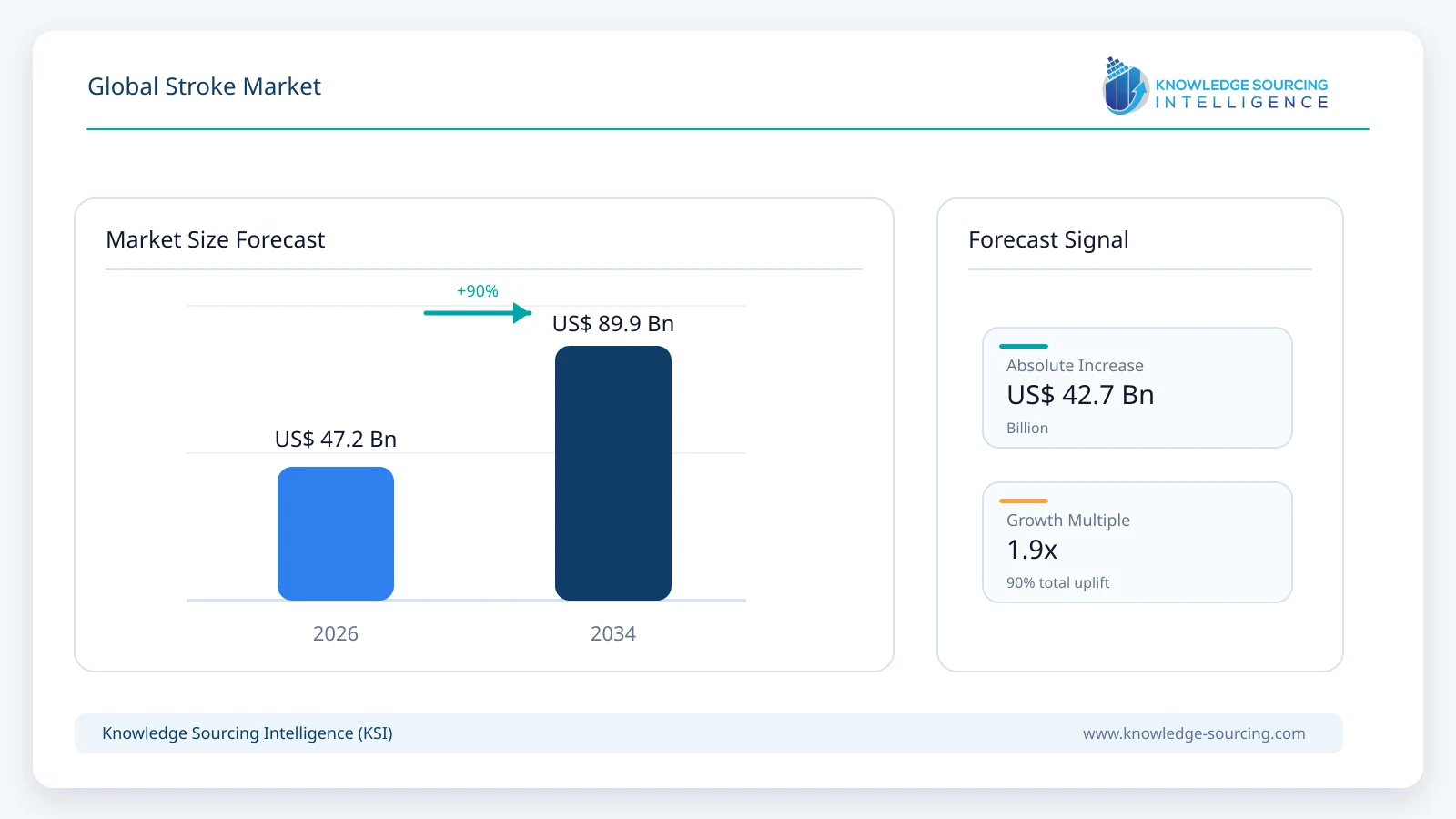
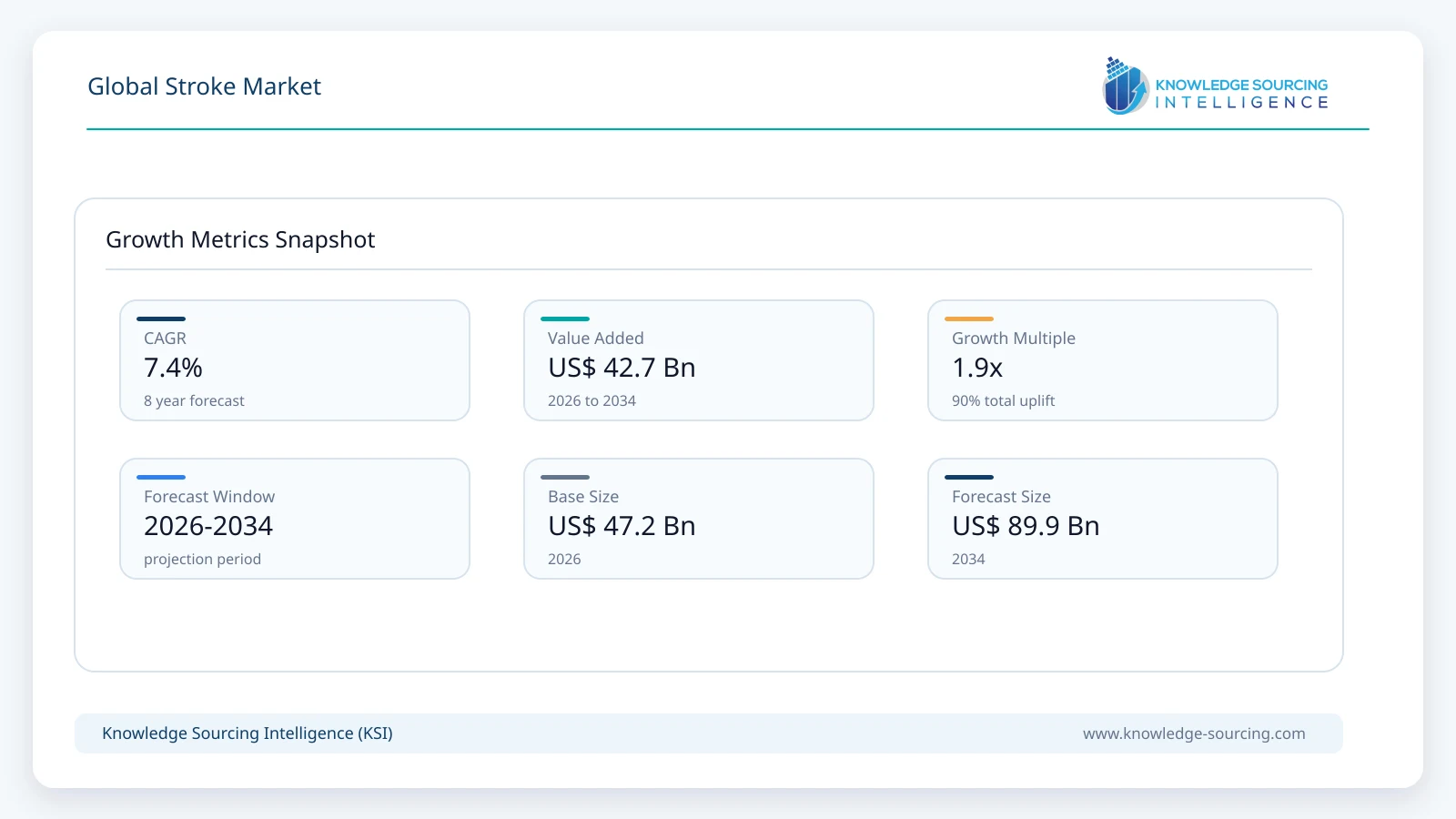
The Global Stroke Market is expected to grow at a CAGR of 7.4% from a market value of USD 47.2 billion in 2026 to USD 89.9 billion in 2035.
Highlights:
- 1Expansion of comprehensive stroke centers is increasing demand for advanced reperfusion therapies because faster diagnosis improves eligibility for time-sensitive interventions.
- 2Ongoing development of neuroprotective therapies is broadening pharmaceutical investment because current thrombolytic treatments address only a fraction of eligible patients.
- 3Growing utilization of mechanical thrombectomy is strengthening demand for integrated acute stroke pathways because clinical evidence continues supporting improved functional recovery in appropriately selected patients.
- 4Precision imaging is improving patient selection because advanced perfusion imaging identifies salvageable brain tissue beyond traditional treatment windows.
Stroke remains one of the leading causes of mortality and long-term disability worldwide because interrupted cerebral blood flow rapidly produces irreversible neuronal injury without timely intervention. Demand increasingly centers on therapies that shorten treatment delays, improve reperfusion efficiency, and preserve neurological function because healthcare systems are recognizing the economic burden associated with lifelong disability and institutional care.
Acute ischemic stroke continues to represent the largest therapeutic focus because reperfusion therapies demonstrate the greatest clinical benefit when administered within carefully defined treatment windows. Demand is simultaneously expanding toward neuroprotective interventions since many patients either arrive outside eligible thrombolysis windows or present with contraindications for existing therapies. This treatment gap continues driving research into mechanisms that reduce excitotoxicity, oxidative stress, neuroinflammation, and neuronal apoptosis following cerebral ischemia.
Regulatory authorities are emphasizing evidence demonstrating functional independence rather than solely vascular recanalization because long-term patient outcomes increasingly define clinical value. Sponsors are therefore designing adaptive clinical trials incorporating imaging biomarkers, disability scales, and patient-centered endpoints to strengthen regulatory submissions while improving payer acceptance.
Healthcare infrastructure also remains a defining determinant of treatment adoption because rapid diagnosis, stroke-certified hospitals, advanced neuroimaging, and endovascular capability directly influence therapeutic utilization. Investment in comprehensive stroke centers therefore continues strengthening demand for innovative pharmacological and interventional solutions while expanding opportunities for companies developing therapies compatible with evolving standards of care.
Market Dynamics
Market Drivers
Expansion of Mechanical Thrombectomy Is Increasing Demand for Comprehensive Stroke Care: Mechanical thrombectomy remains a cornerstone of acute ischemic stroke management because randomized clinical evidence consistently demonstrates improved neurological recovery in patients with large vessel occlusion. Healthcare providers are expanding thrombectomy capability through dedicated neurointerventional centers because treatment success depends on rapid access to specialized expertise and imaging infrastructure. Capacity constraints still limit equitable access across many regions because neurointerventional specialists and advanced angiography suites remain concentrated within major referral hospitals. Governments and healthcare systems are therefore investing in regional stroke networks that improve referral efficiency and treatment availability. This structural expansion strengthens long-term demand for adjunctive pharmacological therapies, imaging technologies, and integrated stroke management solutions.
Pipeline Diversification Beyond Thrombolysis Is Expanding Therapeutic Opportunities: Current reperfusion therapies address only selected patient populations because strict eligibility criteria restrict treatment utilization. Pharmaceutical companies are increasingly advancing neuroprotective molecules, anti-inflammatory agents, stem cell therapies, and regenerative approaches because broader therapeutic coverage remains clinically necessary. High biological complexity continues to challenge late-stage development because translating neuroprotection from preclinical success into clinical benefit has historically proven difficult. Sponsors are responding by incorporating biomarker-guided patient selection, adaptive trial designs, and combination treatment strategies that improve clinical differentiation. These evolving development strategies are expanding future commercial opportunities across acute intervention and neurological recovery.
Aging Populations Are Increasing the Burden of Stroke: Population aging substantially influences stroke incidence because advanced age remains among the strongest risk factors for cerebrovascular disease. Healthcare systems are experiencing increasing demand for emergency stroke services because larger elderly populations frequently present with multiple cardiovascular comorbidities requiring specialized management. Resource limitations continue affecting treatment accessibility because rehabilitation capacity, specialized personnel, and long-term care infrastructure often lag behind demographic changes. Public health authorities are expanding prevention initiatives targeting hypertension, diabetes, atrial fibrillation, and obesity to reduce future disease burden. The resulting emphasis on prevention and early intervention reinforces sustained demand across diagnostic, therapeutic, and rehabilitation segments.
Artificial Intelligence Is Improving Treatment Decision-Making: Artificial intelligence increasingly supports stroke diagnosis because automated imaging analysis rapidly identifies intracranial hemorrhage, large vessel occlusion, and salvageable brain tissue. Hospitals are integrating AI-assisted workflows into emergency departments because reducing diagnostic delays directly improves treatment eligibility. Variability in digital infrastructure continues to limit widespread implementation because interoperability challenges and reimbursement uncertainty remain unresolved in several healthcare systems. Technology developers are collaborating with healthcare providers to validate clinical performance across diverse patient populations.
Market Restraints
Narrow therapeutic time windows continue limiting utilization of acute reperfusion therapies because delayed hospital presentation excludes many patients from evidence-based treatment.
High costs associated with comprehensive stroke centers, neurointerventional infrastructure, and specialized workforce constrain adoption in lower-resource healthcare systems.
Clinical development risk remains substantial because neuroprotective and regenerative therapies continue facing high late-stage attrition rates despite encouraging preclinical evidence.
Market Opportunities
Regenerative Medicine Is Creating New Therapeutic Pathways: Neurological recovery remains an important unmet need because existing acute therapies cannot reverse established neuronal injury. Biotechnology companies are expanding research into stem cell therapies, extracellular vesicles, and regenerative biologics because restoring neurological function may significantly improve long-term independence. Manufacturing complexity continues influencing commercialization because cell-based therapies require highly controlled production and distribution systems. Sponsors are refining manufacturing platforms alongside clinical development to improve future scalability. Successful translation could reshape post-stroke treatment paradigms beyond acute reperfusion.
Precision Medicine Is Improving Patient Selection: Stroke encompasses biologically heterogeneous disease mechanisms that influence therapeutic response. Clinical researchers are increasingly incorporating genetic biomarkers, advanced neuroimaging, and circulating biomarkers because individualized treatment strategies may improve efficacy while reducing unnecessary intervention. Validation challenges continue to affect biomarker adoption because standardized clinical evidence remains under development. Collaborative research programs are generating higher-quality datasets that strengthen the implementation of precision medicine in the future. This evolution supports differentiated therapies capable of demonstrating superior clinical outcomes.
Digital Rehabilitation Is Expanding Long-Term Care: Functional recovery extends well beyond hospital discharge because neurological rehabilitation often requires prolonged multidisciplinary intervention. Healthcare providers are integrating tele-rehabilitation platforms, wearable monitoring devices, and digital therapeutic solutions because remote care improves treatment continuity while reducing access barriers. Variability in reimbursement policies continues to influence implementation because payment frameworks differ considerably across healthcare systems. Technology providers are producing evidence demonstrating clinical effectiveness and healthcare resource optimization. Broader reimbursement acceptance would strengthen demand for digitally enabled rehabilitation ecosystems.
Combination Therapy Development Is Strengthening Future Clinical Strategies: Acute stroke involves multiple interconnected pathological mechanisms that limit the effectiveness of single-target interventions. Clinical developers are evaluating combination approaches integrating thrombolysis, thrombectomy, neuroprotection, and anti-inflammatory therapies because complementary mechanisms may improve neurological preservation. Trial complexity continues increasing because combination regimens require careful evaluation of safety and treatment sequencing. Sponsors are adopting collaborative development models that combine pharmaceutical innovation with advanced medical technologies. This integrated strategy broadens opportunities for differentiated products capable of improving functional outcomes across diverse patient populations.
Disease & Epidemiology Analysis
Stroke represents a heterogeneous cerebrovascular disorder in which interrupted cerebral blood flow causes rapid neuronal injury and long-term neurological impairment. Disease burden remains closely associated with aging populations, hypertension, diabetes mellitus, atrial fibrillation, dyslipidemia, obesity, tobacco use, and sedentary lifestyles because these factors collectively accelerate vascular dysfunction. Healthcare systems are experiencing increasing pressure as demographic transitions continue enlarging populations at elevated cardiovascular risk. Prevention programs therefore are expanding beyond hospital settings into primary care and community screening initiatives that identify high-risk individuals before acute cerebrovascular events occur. This integrated approach strengthens demand for both preventive pharmacotherapy and acute stroke interventions.
Ischemic stroke accounts for the majority of global stroke cases because arterial occlusion caused by thrombotic or embolic events interrupts cerebral perfusion. Demand is increasingly concentrating on rapid diagnosis through advanced neuroimaging because treatment eligibility depends on accurate differentiation between ischemic and hemorrhagic stroke. Delayed presentation continues limiting access to intravenous thrombolysis despite improvements in emergency medical services because many patients still arrive beyond recommended therapeutic windows. Healthcare providers are therefore implementing regional stroke networks, mobile stroke units, and artificial intelligence-supported imaging workflows that shorten door-to-needle and door-to-puncture times. These system-level improvements reinforce demand for reperfusion therapies while supporting broader adoption of mechanical thrombectomy.
Treatment Guidelines Landscape
Guideline Area | Current Clinical Recommendation | Demand Impact |
Initial Assessment | Immediate neurological assessment using standardized stroke scales and urgent brain imaging before treatment initiation | Accelerates utilization of diagnostic imaging and emergency stroke pathways |
IV Thrombolysis | Eligible ischemic stroke patients should receive intravenous thrombolytic therapy within the recommended treatment windows following imaging confirmation. | Sustains demand for rapid emergency response systems and thrombolytic agents |
Mechanical Thrombectomy | Recommended for selected patients with large vessel occlusion following vascular imaging and clinical evaluation | Expands demand for neurointerventional centers and advanced imaging technologies |
Blood Pressure Management | Individualized blood pressure control before and after reperfusion therapy according to established clinical guidelines | Supports demand for critical care monitoring and cardiovascular therapeutics |
Market Segmentation
By Stroke Type
Ischemic stroke constitutes the largest segment because arterial occlusion remains the predominant mechanism underlying acute cerebrovascular events. Demand is increasingly concentrating on earlier diagnosis and rapid reperfusion because clinical outcomes deteriorate with every minute of delayed treatment. Strict treatment eligibility continues to limit utilization of thrombolytic therapy because presentation timing remains highly variable across healthcare systems. Hospitals are expanding advanced imaging capability and thrombectomy services to increase the proportion of patients receiving definitive intervention. This segment therefore continues driving investment across pharmaceuticals, neurointerventional devices, emergency care infrastructure, and companion diagnostic technologies.
By Treatment Type
Endovascular therapy represents one of the fastest-evolving treatment segments because randomized clinical evidence consistently supports mechanical thrombectomy in appropriately selected patients with large vessel occlusion. Healthcare providers are increasing investment in comprehensive stroke centers because advanced neurointerventional capability improves functional outcomes while reducing long-term disability. Workforce shortages continue to constrain procedure availability because trained neurointerventional specialists remain unevenly distributed geographically. Governments and hospital networks are expanding regional referral pathways and specialist training programs to improve treatment accessibility. These structural developments strengthen sustained demand for thrombectomy devices, imaging systems, and adjunctive pharmacological therapies.
By Severity Type
Severe stroke generates substantial healthcare expenditure because these patients frequently require intensive care, complex interventions, prolonged hospitalization, and extended rehabilitation. Clinical management is increasingly incorporating multidisciplinary treatment pathways because neurological complications often involve multiple organ systems and long-term functional impairment. Resource constraints continue to challenge healthcare providers because rehabilitation capacity and specialized neurological services remain limited in many regions. Hospitals are strengthening coordinated stroke programs integrating emergency medicine, neurology, neurosurgery, rehabilitation, and digital monitoring technologies. This integrated care model reinforces demand for innovative therapeutics capable of reducing disability and improving long-term patient independence.
Regional Analysis
North America Market Analysis
North America represents one of the most advanced stroke treatment markets because comprehensive stroke center networks, high adoption of mechanical thrombectomy, and well-established emergency medical systems support rapid intervention. Demand is increasingly shifting toward earlier diagnosis and precision treatment because healthcare providers are integrating artificial intelligence-enabled imaging, mobile stroke units, and tele-stroke services into acute care pathways. Geographic disparities continue to limit equitable access because rural communities often remain distant from comprehensive neurointerventional centers. Healthcare systems are expanding regional hub-and-spoke stroke networks that enable rapid transfer of eligible patients for advanced intervention. This coordinated approach strengthens utilization of intravenous thrombolytics, endovascular therapies, and advanced neuroimaging while improving treatment efficiency.
The United States continues driving regional innovation because regulatory agencies support novel neurological therapies through expedited development programs where appropriate.
Europe Market Analysis
Europe maintains a mature stroke treatment landscape because standardized clinical guidelines and universal healthcare systems promote timely diagnosis and evidence-based intervention. Demand is increasingly moving toward personalized treatment pathways because advanced neuroimaging enables more accurate identification of patients who benefit from reperfusion therapies beyond conventional treatment windows. Variability in healthcare infrastructure continues to influence treatment access because thrombectomy capability differs across member states. National governments are investing in certified stroke centers and emergency referral systems that improve procedural availability. These initiatives support sustained demand for innovative pharmaceuticals and neurointerventional technologies.
Asia Pacific Market Analysis
Asia Pacific represents the fastest-evolving regional market because rapid population aging, urbanization, and increasing prevalence of cardiovascular risk factors are expanding the number of patients requiring stroke management. Demand is shifting toward earlier diagnosis and specialized intervention because governments increasingly recognize stroke as a major public health priority. Healthcare disparities continue to affect treatment consistency because advanced neurointerventional services remain concentrated within metropolitan hospitals. National health authorities are investing in regional stroke centers and emergency referral systems that improve access to specialized care. These developments are expanding the utilization of thrombolytic therapy, mechanical thrombectomy, and advanced imaging technologies.
Countries including China, Japan, South Korea, Australia, and India continue strengthening stroke research because regional disease burden creates substantial demand for innovative therapies.
Rest of the World
The Rest of the World encompasses diverse healthcare systems where stroke burden continues increasing because demographic changes and rising cardiovascular risk factors are expanding susceptible populations. Demand is increasingly focusing on improving access to essential stroke services because delayed diagnosis remains a major contributor to mortality and disability. Infrastructure limitations continue to restrict the availability of advanced interventions because comprehensive stroke centers remain concentrated within major urban hospitals. Governments and international healthcare organizations are strengthening emergency care networks that improve referral pathways and treatment accessibility. These initiatives gradually increase the utilization of evidence-based stroke therapies.
Countries in Latin America are expanding national stroke awareness campaigns because early recognition substantially improves eligibility for acute intervention. Healthcare providers are implementing standardized stroke protocols that reduce treatment variability across emergency departments.
Regulatory Landscape
Stroke therapeutics are regulated under rigorous clinical and manufacturing standards because treatment decisions directly influence mortality, disability, and long-term neurological outcomes. Regulatory agencies are increasingly emphasizing functional recovery endpoints such as the Modified Rankin Scale (mRS) in addition to traditional measures of vascular recanalization because sustained independence better reflects clinical value. Sponsors are incorporating adaptive trial designs, imaging biomarkers, and patient-reported outcomes into development programs that strengthen regulatory evidence while supporting payer acceptance. This evolution encourages therapies capable of demonstrating meaningful improvements across diverse patient populations.
The U.S. Food and Drug Administration, European Medicines Agency, Pharmaceuticals and Medical Devices Agency, and National Medical Products Administration continue encouraging innovation through expedited review pathways for products addressing significant unmet medical needs. Developers are pursuing Breakthrough Therapy, Fast Track, Priority Review, and equivalent regional designations because these mechanisms may accelerate development where supporting evidence demonstrates substantial clinical benefit. High evidentiary expectations continue governing approval decisions because neurological outcomes must demonstrate both statistical significance and meaningful functional improvement. Consequently, regulatory strategy increasingly becomes a competitive differentiator alongside scientific innovation.
Pipeline Analysis
The stroke therapeutic pipeline is evolving beyond rapid vessel recanalization because a substantial proportion of patients either present outside established reperfusion windows or fail to achieve complete neurological recovery despite successful restoration of cerebral blood flow. Sponsors are increasingly prioritizing therapies that target multiple pathological pathways—including excitotoxicity, oxidative stress, neuroinflammation, blood-brain barrier disruption, and post-ischemic neuronal apoptosis—because stroke progression continues after vascular occlusion has been resolved. Scientific complexity remains a significant development challenge because promising preclinical neuroprotective agents have historically demonstrated inconsistent efficacy in late-stage clinical trials.
Developers are refining patient selection through advanced imaging biomarkers, adaptive study designs, and combination treatment strategies that better align therapeutic mechanisms with disease biology. This transition is expanding the pipeline from acute intervention toward comprehensive neurological recovery.
Pipeline activity is increasingly concentrating on four strategic areas: next-generation thrombolytics, neuroprotective therapies, regenerative medicine, and adjunctive therapies used alongside mechanical thrombectomy. Intravenous tenecteplase, supported by expanding clinical evidence, is strengthening its position as an alternative thrombolytic because its single-bolus administration simplifies emergency treatment logistics compared with alteplase.
Reimbursement Landscape
Reimbursement policies play a decisive role in stroke treatment adoption because advanced interventions frequently require significant upfront healthcare expenditure while generating long-term economic benefits through reduced disability. Public and private payers are increasingly supporting evidence-based acute stroke therapies because successful intervention lowers subsequent costs associated with rehabilitation, institutional care, and recurrent hospitalization.
High procedural costs continue influencing utilization in lower-resource healthcare systems because reimbursement frameworks do not uniformly cover advanced neurointerventional procedures. Policymakers are expanding value-based reimbursement models that recognize long-term improvements in patient independence rather than short-term treatment costs alone. This evolution strengthens the adoption of therapies supported by robust clinical evidence and health economic analyses.
Coverage for intravenous thrombolysis and mechanical thrombectomy is becoming more consistent across developed healthcare systems because multiple clinical guidelines recommend these interventions for appropriately selected patients. Reimbursement for emerging neuroprotective therapies and regenerative medicines remains uncertain because long-term comparative evidence is still developing.
Competitive Landscape
F. Hoffmann-La Roche Ltd
Roche differentiates itself through its integrated pharmaceutical and diagnostics business, enabling a precision medicine approach to stroke management. The company is leveraging advanced imaging, biomarker research, and its neuroscience portfolio to support improved patient stratification and clinical decision-making. Strategic collaborations with academic institutions and healthcare providers strengthen its long-term position in neurological disease management and future stroke-related innovation.
Novartis AG
Novartis maintains a strategic presence in stroke through its cardiovascular and neuroscience expertise. The company focuses on reducing cerebrovascular risk by advancing therapies addressing hypertension, heart failure, dyslipidemia, and vascular inflammation. Its investment in precision medicine, digital health, and translational research supports future opportunities in secondary stroke prevention and neurological recovery.
Bayer AG
Bayer remains an important participant in stroke prevention because of its leadership in cardiovascular medicine, particularly anticoagulation. The company continues expanding clinical evidence supporting the prevention of stroke associated with atrial fibrillation while investing in digital health and real-world evidence programs. Its broad cardiovascular portfolio strengthens its competitive position across the continuum of stroke prevention and long-term disease management.
Johnson & Johnson
Johnson & Johnson combines pharmaceutical innovation with a strong medical technology portfolio, providing a differentiated position in stroke care. The company supports advancements in neurovascular intervention, digital surgery, and healthcare innovation while leveraging global clinical development capabilities. Its diversified healthcare business enables participation across diagnosis, intervention, and long-term patient management.
Genentech
Genentech remains strategically distinct because it has established one of the strongest positions in thrombolytic therapy through the development and commercialization of recombinant tissue plasminogen activator technologies. The company is continuing to expand evidence supporting tenecteplase in acute ischemic stroke because simplified single-bolus administration may improve emergency treatment efficiency compared with conventional infusion-based thrombolytics.
Boehringer Ingelheim
Boehringer Ingelheim remains an influential participant in cerebrovascular medicine because of its longstanding expertise in thrombolytic and cardiovascular therapies. The company is supporting continued clinical evaluation of tenecteplase and broader evidence generation through collaborations with international stroke investigators because evolving clinical guidelines increasingly recognize simplified thrombolytic administration.
Key Developments
February 2026: Bayer's asundexian demonstrated a substantial 26% reduction in recurrent ischemic stroke risk in patients after a non-cardioembolic ischemic stroke or high-risk transient ischemic attack (TIA). Asundexian significantly reduced ischemic stroke by 26% (csHR 0.74; 95% CI 0.65–0.84; p<.0001) in patients after a non-cardioembolic ischemic stroke.
June 2026: Penumbra received FDA clearance for THUNDERBOLT, the first computer-assisted vacuum thrombectomy (CAVT) platform to deliver modulated aspiration for acute ischemic stroke. This enables faster and more complete clot removal. Following Boston Scientific's $14.5 billion acquisition of Penumbra, announced in January 2026, Thunderbolt expands the company's CAVT lineup beyond Lightning Bolt (2023) and Lightning Flash (2024) systems.
Strategic Insights and Future Market Outlook
Stroke treatment is moving toward integrated care models because restoring blood flow alone does not consistently deliver optimal neurological recovery. Pharmaceutical companies are expanding investment beyond thrombolysis into neuroprotection, inflammation modulation, regenerative medicine, and precision diagnostics because a significant unmet clinical need persists after successful reperfusion. Scientific complexity continues influencing development timelines because neurological disorders require a robust demonstration of durable functional improvement. Sponsors are adopting adaptive clinical trial designs, biomarker-guided enrollment, and artificial intelligence-assisted patient selection that improve development efficiency. These structural changes are expected to diversify future treatment options while strengthening clinical outcomes.
Healthcare systems are increasingly emphasizing value-based care because long-term disability represents the largest contributor to stroke-related economic burden. Governments are expanding stroke center networks, tele-stroke infrastructure, and rehabilitation services because coordinated care improves treatment accessibility and patient independence. Regional disparities continue affecting equitable access to advanced interventions because specialized expertise remains concentrated within high-resource healthcare systems. Public and private stakeholders are investing in workforce development, emergency response systems, and digital health technologies that improve continuity of care. These initiatives are expected to sustain demand for innovative pharmaceuticals, neurointerventional technologies, and rehabilitation solutions throughout the forecast period.
Market Scope:
| Report Metric | Details |
|---|---|
| Total Market Size in 2026 | USD 47.2 billion |
| Total Market Size in 2034 | USD 89.9 billion |
| Forecast Unit | USD Billion |
| Growth Rate | 7.4% |
| Study Period | 2021 to 2034 |
| Historical Data | 2021 to 2024 |
| Base Year | 2025 |
| Forecast Period | 2026 – 2034 |
| Segmentation | Stroke Type, Drug Type, Treatment Type, Geography |
| Companies |
|
Market Segmentation
By Geography
Key Countries Analysis
Regulatory & Policy Landscape
Table of Contents
1. EXECUTIVE SUMMARY
1.1 Market Overview
1.2 Key Findings
1.3 Stroke Market Snapshot
1.4 Key Epidemiology Insights
1.5 Key Commercialized Therapies Overview
1.6 Pipeline Development Highlights
1.7 Market Size and Forecast Summary (2025–2035)
1.8 Key Growth Opportunities
1.9 Strategic Recommendations
2. DISEASE & EPIDEMIOLOGY ANALYSIS
2.1 Introduction to Stroke
2.1.1 Definition and Clinical Overview
2.1.2 Disease Burden and Public Health Impact
2.1.3 Stroke Classification
2.2 Stroke Pathophysiology
2.2.1 Ischemic Stroke
2.2.2 Hemorrhagic Stroke
2.2.3 Transient Ischemic Attack (TIA)
2.3 Risk Factors and Disease Etiology
2.3.1 Hypertension
2.3.2 Atrial Fibrillation
2.3.3 Diabetes Mellitus
2.3.4 Dyslipidemia
2.3.5 Obesity
2.3.6 Smoking and Alcohol Consumption
2.3.7 Aging Population
2.4 Epidemiology Analysis
2.4.1 Global Prevalence
2.4.2 Global Incidence
2.4.3 Mortality Analysis
2.4.4 Disability Burden Analysis
2.4.5 Recurrent Stroke Population
2.5 Epidemiology by Stroke Type
2.5.1 Ischemic Stroke
2.5.2 Intracerebral Hemorrhage
2.5.3 Subarachnoid Hemorrhage
2.5.4 Transient Ischemic Attack
2.6 Epidemiology by Demographics
2.6.1 Age-Based Analysis
2.6.2 Gender-Based Analysis
2.6.3 High-Risk Population Analysis
2.7 Epidemiology Forecast (2025–2035)
3. MARKET DYNAMICS
3.1 Market Drivers
3.1.1 Rising Global Stroke Burden
3.1.2 Growing Aging Population
3.1.3 Increasing Awareness and Early Diagnosis
3.1.4 Expanding Access to Acute Stroke Care
3.1.5 Advancements in Reperfusion Therapies
3.1.6 Increasing Secondary Prevention Adoption
3.2 Market Restraints
3.2.1 Narrow Therapeutic Time Windows
3.2.2 Treatment Accessibility Challenges
3.2.3 High Healthcare Costs
3.2.4 Limited Neuroprotective Treatment Options
3.3 Market Opportunities
3.3.1 Neuroprotective Drug Development
3.3.2 Regenerative Medicine Approaches
3.3.3 AI-Enabled Stroke Management
3.3.4 Emerging Market Expansion
3.4 Market Challenges
3.4.1 Delayed Patient Presentation
3.4.2 Post-Stroke Disability Burden
3.4.3 Reimbursement Constraints
3.4.4 Clinical Trial Complexity
3.5 Porter’s Five Forces Analysis
3.6 PESTLE Analysis
3.7 Value Chain Analysis
3.8 Unmet Needs Assessment
4. COMMERCIAL & MARKET ACCESS
4.1 Market Access Overview
4.2 Reimbursement Landscape
4.3 Health Technology Assessment Trends
4.4 Pricing Analysis
4.5 Patient Access Programs
4.6 Payer Perspectives
4.7 Market Access Challenges
4.8 Market Access Opportunities
5. INNOVATION & PIPELINE LANDSCAPE
5.1 Pipeline Overview
5.2 Pipeline Analysis by Development Stage
5.2.1 Discovery and Preclinical
5.2.2 Phase I
5.2.3 Phase II
5.2.4 Phase III
5.3 Pipeline Analysis by Modality
5.3.1 Small Molecules
5.3.2 Biologics
5.3.3 Cell Therapies
5.3.4 Gene Therapies
5.3.5 Combination Therapies
5.4 Pipeline Analysis by Mechanism of Action
5.4.1 Neuroprotection
5.4.2 Thrombolysis Enhancement
5.4.3 Anti-Inflammatory Mechanisms
5.4.4 Neuroregeneration
5.4.5 Stem Cell-Based Approaches
5.5 Clinical Trial Landscape
5.5.1 Ongoing Phase I Trials
5.5.2 Ongoing Phase II Trials
5.5.3 Ongoing Phase III Trials
5.5.4 Trial Distribution by Geography
5.5.5 Trial Distribution by Sponsor Type
5.6 Emerging Technologies
5.6.1 Biomarker-Based Patient Selection
5.6.2 AI-Driven Stroke Management
5.6.3 Digital Therapeutics
5.6.4 Precision Medicine Approaches
5.7 Licensing, Collaboration, and Partnership Activity
5.8 Mergers and Acquisitions Analysis
6. TREATMENT LANDSCAPE
6.1 Current Treatment Paradigm
6.2 Acute Stroke Management
6.2.1 Intravenous Thrombolysis
6.2.2 Mechanical Thrombectomy
6.2.3 Neurocritical Care
6.3 Secondary Stroke Prevention
6.3.1 Antiplatelet Therapy
6.3.2 Anticoagulant Therapy
6.3.3 Lipid-Lowering Therapy
6.3.4 Blood Pressure Management
6.4 Commercialized Drug Landscape
6.4.1 Alteplase (Activase)
6.4.2 Tenecteplase
6.4.3 Aspirin
6.4.4 Clopidogrel
6.4.5 Ticagrelor (Brilinta)
6.4.6 Rivaroxaban (Xarelto)
6.4.7 Apixaban (Eliquis)
6.4.8 Dabigatran (Pradaxa)
6.4.9 Edoxaban (Lixiana/Savaysa)
6.5 Stroke Rehabilitation Landscape
6.5.1 Physical Rehabilitation
6.5.2 Occupational Therapy
6.5.3 Speech Therapy
6.5.4 Digital Rehabilitation Solutions
6.6 Treatment Algorithm by Stroke Type
7. GLOBAL STROKE MARKET FORECAST REPORT SIZE & FORECAST (2025–2035)
7.1 Global Market Overview
7.2 Historical Market Analysis (2020–2024)
7.3 Forecast Assumptions
7.4 Global Market Forecast (2025–2035)
7.5 Market Forecast by Treatment Type
7.6 Market Forecast by Indication
7.7 Market Forecast by Route of Administration
7.8 Market Forecast by End User
7.9 Opportunity Assessment
8. GLOBAL STROKE MARKET FORECAST REPORT SEGMENTATION
8.1 By Stroke Type
8.1.1 Ischemic Stroke
8.1.1.1. Thrombotic
8.1.1.2. Embolic
8.1.2 Hemorrhagic Stroke
8.1.3 Transient Ischemic Attack
8.1.4 Others
8.2 By Drug Type
8.2.1 Thrombolytics
8.2.2 Antiplatelets
8.2.3 Anticoagulants
8.2.4 Others
8.3 By Treatment Type
8.3.1 IV Medication
8.3.2 Endovascular Therapy
8.3.3 Surgical Procedures
8.3.3.1 Mechanical Thrombectomy
8.3.3.2 Carotid Endarterectomy (CEA)
8.3.3.3 Others
8.4 By Severity Type
8.4.1 Mild
8.4.2 Moderate
8.4.3 Severe
8.5 By Age-Group
8.5.1 Below 20 Years
8.5.2 20 to 50 Years
8.5.3 50 to 70 Years
8.5.4 Older than 70 Years
8.6 By End User
8.6.1 Hospitals
8.6.2 Specialty Clinics
8.6.3 Rehabilitation Centers
8.6.4 Others
9. GEOGRAPHICAL ANALYSIS (REGIONAL LEVEL)
9.1 North America
9.1.1 Market Size and Forecast
9.1.2 Demand Drivers
9.1.3 Regional Regulatory Overview
9.1.4 Competitive Intensity
9.2 Europe
9.2.1 Market Size and Forecast
9.2.2 Demand Drivers
9.2.3 Regional Regulatory Overview
9.2.4 Competitive Intensity
9.3 Asia-Pacific
9.3.1 Market Size and Forecast
9.3.2 Demand Drivers
9.3.3 Regional Regulatory Overview
9.3.4 Competitive Intensity
9.4 Latin America
9.4.1 Market Size and Forecast
9.4.2 Demand Drivers
9.4.3 Regional Regulatory Overview
9.4.4 Competitive Intensity
9.5 Middle East & Africa
9.5.1 Market Size and Forecast
9.5.2 Demand Drivers
9.5.3 Regional Regulatory Overview
9.5.4 Competitive Intensity
10. KEY COUNTRIES ANALYSIS
10.1 United States
10.1.1 Market Size
10.1.2 Stroke Epidemiology
10.1.3 Regulatory Framework
10.1.4 Reimbursement Landscape
10.1.5 Key Companies and Products Presence
10.2 Canada
10.3 Germany
10.4 United Kingdom
10.5 France
10.6 Italy
10.7 Spain
10.8 China
10.9 Japan
10.10 India
10.11 South Korea
10.12 Australia
10.13 Brazil
10.14 Mexico
10.15 Saudi Arabia
10.16 South Africa
11. REGULATORY & POLICY LANDSCAPE
11.1 Global Regulatory Overview
11.2 United States FDA Framework
11.2.1 Drug Approval Pathways
11.2.2 Expedited Programs
11.3 European Medicines Agency (EMA)
11.3.1 Centralized Approval Process
11.3.2 Market Access Considerations
11.4 Japan PMDA Framework
11.5 India CDSCO Framework
11.6 China NMPA Framework
11.7 Orphan and Special Designation Programs
11.8 Pharmacovigilance Requirements
11.9 Regulatory Trends Impacting Stroke Therapeutics
12. COMPETITIVE LANDSCAPE
12.1 Market Share Analysis
12.2 Competitive Benchmarking
12.3 Product Portfolio Assessment
12.4 Pipeline Competitiveness Assessment
12.5 Strategic Initiatives
12.5.1 Collaborations
12.5.2 Licensing Agreements
12.5.3 Acquisitions
12.5.4 Geographic Expansion Strategies
12.6 SWOT Analysis
12.7 Competitive Positioning Matrix
13. COMPANY PROFILES
13.1 Genentech
13.1.1 Company Overview
13.1.2 Approved Stroke-Related Products
13.1.3 Key Indications
13.1.4 Pipeline and Clinical Development Activities
13.1.5 Strategic Outlook
13.2 Boehringer Ingelheim
13.2.1 Company Overview
13.2.2 Approved Stroke-Related Products
13.2.3 Key Indications
13.2.4 Verified Pipeline Programs
13.2.5 Strategic Outlook
13.3 F. Hoffmann-La Roche Ltd
13.3.1 Company Overview
13.3.2 Approved Products Relevant to Stroke Management
13.3.3 Key Indications
13.3.4 Pipeline Activities
13.3.5 Strategic Outlook
13.4 Novartis AG
13.4.1 Company Overview
13.4.2 Approved Products Relevant to Stroke Prevention
13.4.3 Key Indications
13.4.4 Pipeline Activities
13.4.5 Strategic Outlook
13.5 Bayer AG
13.5.1 Company Overview
13.5.2 Approved Stroke-Related Products
13.5.3 Key Indications
13.5.4 Pipeline Activities
13.5.5 Strategic Outlook
13.6 Johnson & Johnson
13.6.1 Company Overview
13.6.2 Approved Stroke-Related Products
13.6.3 Key Indications
13.6.4 Pipeline Activities
13.6.5 Strategic Outlook
13.7 Daiichi Sankyo
13.7.1 Company Overview
13.7.2 Approved Stroke-Related Products
13.7.3 Key Indications
13.7.4 Pipeline Activities
13.7.5 Strategic Outlook
13.8 Sanofi
13.8.1 Company Overview
13.8.2 Cardiovascular and Stroke Prevention Portfolio
13.8.3 Key Indications
13.8.4 Pipeline Activities
13.8.5 Strategic Outlook
13.9 Novo Nordisk
13.9.1 Company Overview
13.9.2 Cardiometabolic Portfolio Relevant to Stroke Risk Reduction
13.9.3 Key Indications
13.9.4 Pipeline Activities
13.9.5 Strategic Outlook
13.10 AstraZeneca PLC
13.10.1 Company Overview
13.10.2 Approved Stroke-Related Products
13.10.3 Key Indications
13.10.4 Pipeline Activities
13.10.5 Strategic Outlook
13.11 Merck & Co., Inc.
13.11.1 Company Overview
13.11.2 Cardiovascular Portfolio Assessment
13.11.3 Key Indications
13.11.4 Pipeline Activities
13.11.5 Strategic Outlook
13.12 GlaxoSmithKline plc
13.12.1 Company Overview
13.12.2 Cardiovascular Portfolio Assessment
13.12.3 Key Indications
13.12.4 Pipeline Activities
13.12.5 Strategic Outlook
13.13 Eli Lilly and Company
13.13.1 Company Overview
13.13.2 Cardiometabolic Portfolio Relevant to Stroke Risk Reduction
13.13.3 Key Indications
13.13.4 Pipeline Activities
13.13.5 Strategic Outlook
13.14 AbbVie Inc.
13.14.1 Company Overview
13.14.2 Neuroscience Portfolio Assessment
13.14.3 Key Indications
13.14.4 Pipeline Activities
13.14.5 Strategic Outlook
14. FUTURE OUTLOOK
14.1 Market Evolution Through 2035
14.2 Emerging Treatment Paradigms
14.3 Future Commercial Opportunities
14.4 Pipeline Launch Impact Assessment
14.5 Precision Medicine Outlook
14.6 AI and Digital Health Integration
14.7 Analyst Recommendations
15. METHODOLOGY
15.1 Research Scope and Objectives
15.2 Market Definition
15.3 Data Collection Methodology
15.3.1 Primary Research
15.3.2 Secondary Research
15.4 Market Estimation Methodology
15.4.1 Top-Down Approach
15.4.2 Bottom-Up Approach
15.4.3 Data Triangulation
15.5 Forecasting Methodology
15.6 Epidemiology Modeling Framework
15.7 Pipeline Assessment Framework
15.8 Competitive Intelligence Framework
15.9 Assumptions and Limitations
15.10 Abbreviations and Definitions
Navigate
Trusted by the world's leading organizations











