
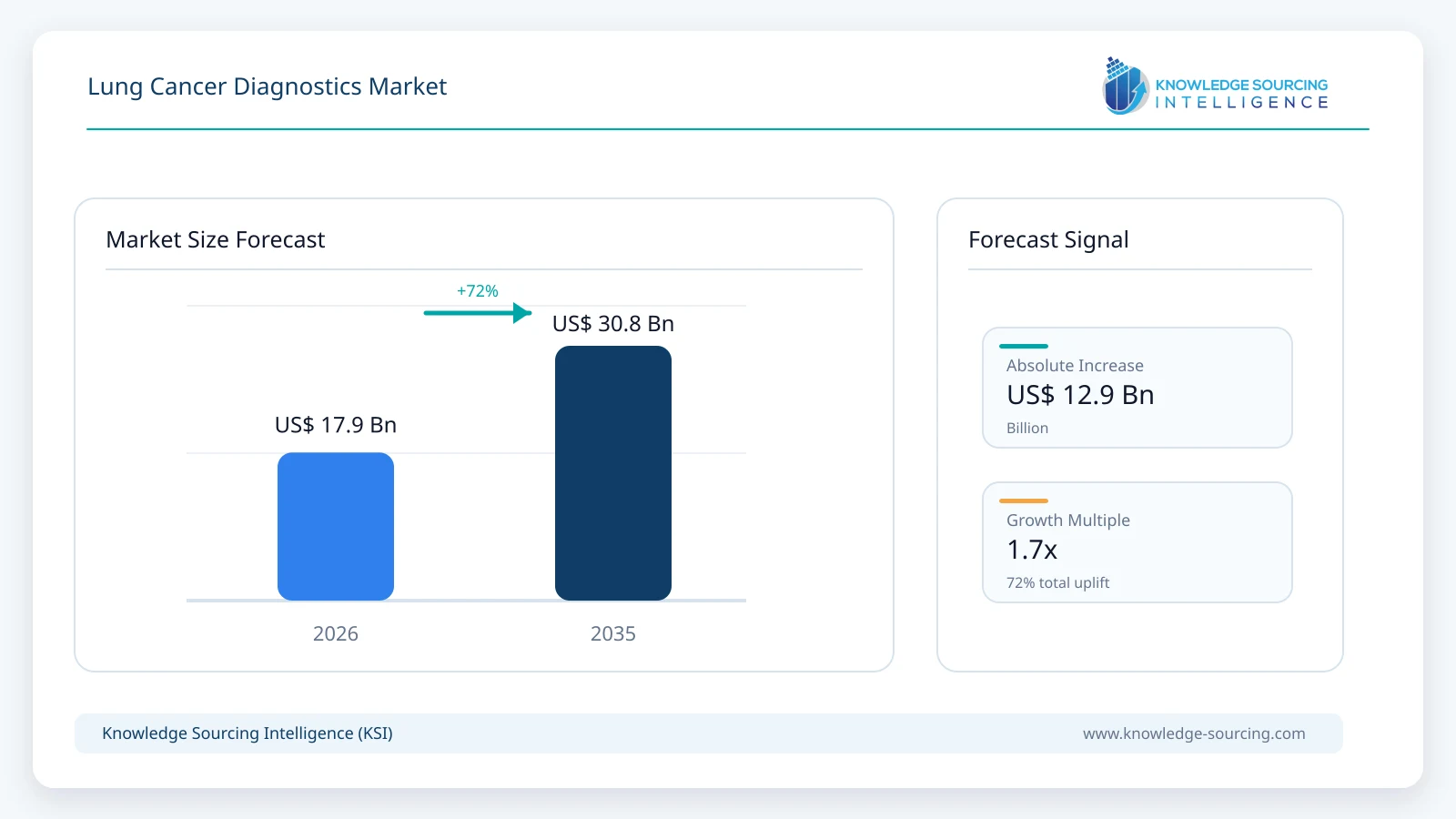
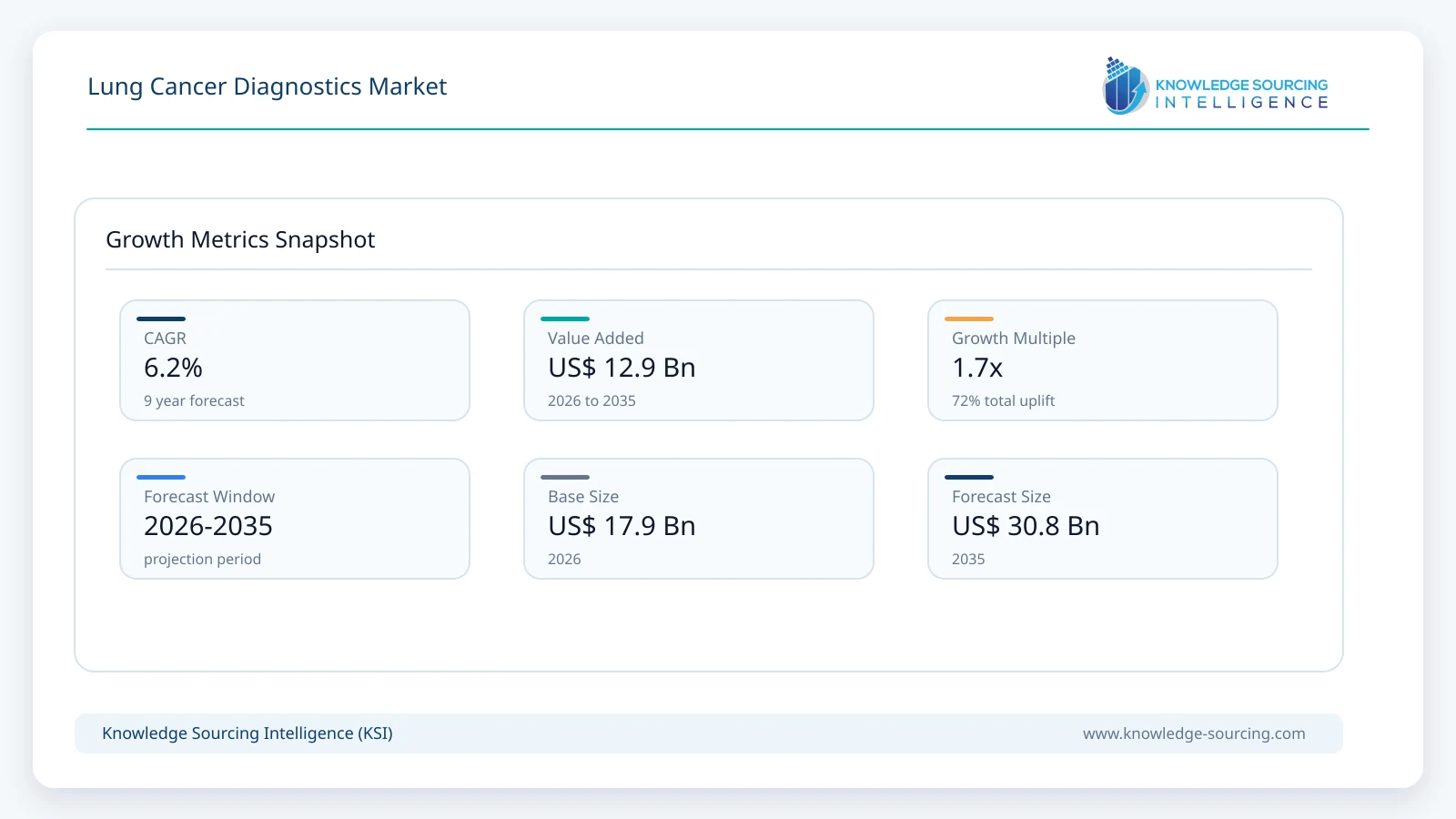
The Lung Cancer Diagnostics Market is expected to grow at a CAGR of 6.2% from a market value of USD 17.9 billion in 2026 to USD 30.8 billion in 2035.
Highlights:
- 1Growing availability of biomarker-directed therapies is increasing demand for comprehensive genomic profiling because treatment eligibility increasingly depends on actionable molecular alterations.
- 2Adoption of next-generation sequencing is reducing sequential biomarker testing and is improving diagnostic efficiency through simultaneous multi-gene analysis.
- 3Liquid biopsy technologies are expanding clinical utilization because they provide a minimally invasive genomic assessment when tissue availability limits conventional testing.
- 4Companion diagnostic development is accelerating as pharmaceutical companies continue aligning therapeutic approvals with validated biomarker assays.
The lung cancer diagnostics market encompasses technologies and services used to detect, classify, stage, and molecularly characterize lung malignancies throughout the patient care pathway. The market includes imaging modalities, tissue-based pathology, molecular diagnostic assays, and emerging liquid biopsy platforms that support diagnosis, prognosis, treatment selection, and disease monitoring.
Clinical practice increasingly depends on molecular characterization because targeted therapies demonstrate efficacy only in genetically defined patient populations. This dependency is shifting laboratory investment toward comprehensive genomic profiling instead of sequential single-gene testing. Healthcare providers are therefore expanding access to multiplex diagnostic technologies that identify multiple actionable biomarkers in a single assay, reducing diagnostic delays and supporting timely therapeutic intervention.
Growing adoption of precision oncology is strengthening integration between diagnostic developers and pharmaceutical companies. Companion diagnostics are becoming essential components of drug development programs because regulatory approvals frequently require validated biomarker identification before therapy initiation. This relationship is accelerating co-development strategies in which therapeutic innovation directly influences diagnostic demand.
National cancer control initiatives are supporting broader access to advanced diagnostics through investments in genomic medicine, laboratory modernization, and standardized testing guidelines. Academic medical centers, cancer institutes, and reference laboratories are increasing the implementation of high-throughput sequencing technologies as evidence continues supporting their clinical utility across diverse lung cancer subtypes. These structural changes are reinforcing diagnostics as a critical determinant of treatment outcomes rather than solely a disease detection tool.
Market Dynamics
Market Drivers
Expanding Precision Oncology is Increasing Comprehensive Biomarker Testing: Precision oncology defines modern lung cancer management because therapeutic selection depends on identifying specific genomic alterations rather than relying exclusively on histopathological diagnosis. Clinical practice is increasingly requiring broad molecular testing before treatment initiation as targeted therapies continue receiving regulatory approvals across multiple biomarker-defined populations. Limited tissue availability remains a major clinical constraint, encouraging laboratories to adopt multiplex sequencing technologies that maximize genomic information from small biopsy specimens.
Liquid Biopsy is Transforming Non-Invasive Cancer Characterization: Traditional tissue biopsy remains the diagnostic standard, yet procedural limitations frequently delay molecular testing or prevent repeat sampling during disease progression. Plasma-based testing is expanding clinical adoption because circulating tumor DNA enables genomic characterization through minimally invasive blood collection. Analytical sensitivity continues improving through advances in sequencing chemistry and bioinformatics, increasing physician confidence in liquid biopsy applications for therapy selection and resistance monitoring.
Regulatory Expansion of Companion Diagnostics is Strengthening Market Adoption: Companion diagnostics establish the clinical pathway between molecular testing and targeted treatment because regulatory approvals increasingly specify biomarker confirmation before therapy administration. Drug developers are integrating diagnostic development earlier within clinical programs as biomarker-defined trials improve patient selection and therapeutic outcomes. Regulatory agencies continue approving additional companion diagnostic indications, increasing laboratory demand for validated testing platforms. Diagnostic companies are investing in assay standardization, automation, and quality assurance systems that support regulatory compliance across global healthcare markets.
Artificial Intelligence is Improving Imaging-Based Detection: Medical imaging remains fundamental for lung cancer detection because screening programs rely heavily on computed tomography to identify suspicious pulmonary nodules. Radiology departments are incorporating artificial intelligence into image interpretation workflows as increasing screening volumes create reporting challenges. AI-assisted algorithms improve workflow efficiency by prioritizing abnormal findings while supporting consistency in pulmonary nodule assessment. Technology providers are integrating software analytics with imaging platforms to enhance clinical decision support without replacing radiologist expertise.
Market Restraints
High costs associated with comprehensive genomic profiling and next-generation sequencing continue limiting adoption across resource-constrained healthcare systems.
Variability in reimbursement policies for advanced molecular diagnostics reduces testing accessibility and delays implementation of precision oncology programs.
Limited availability of specialized molecular pathology expertise and accredited genomic laboratories restricts testing capacity in several emerging healthcare markets.
Market Opportunities
Multi-Cancer Early Detection Technologies are Expanding Diagnostic Research: Early-stage diagnosis significantly improves treatment outcomes because curative interventions remain more effective before metastatic progression occurs. Blood-based multi-cancer detection technologies are advancing clinical development as researchers seek broader population screening approaches. Diagnostic companies are expanding investments in biomarker discovery and assay sensitivity to improve early detection performance. These initiatives strengthen future opportunities for integrating lung cancer diagnostics into population-level cancer screening strategies.
Companion Diagnostic Partnerships are Increasing Commercial Value: Targeted oncology pipelines continue expanding because pharmaceutical innovation remains focused on genetically defined patient populations. Diagnostic manufacturers are establishing strategic partnerships with drug developers to co-develop companion diagnostics throughout clinical development. Regulatory alignment supports simultaneous therapeutic and diagnostic approvals, reducing commercialization timelines.
Digital Pathology is Modernizing Laboratory Operations: Histopathological evaluation remains indispensable for lung cancer diagnosis because tissue morphology continues guiding clinical classification. Laboratories are digitizing pathology workflows as slide imaging technologies improve remote consultation and computational analysis. Artificial intelligence applications support standardized interpretation, while integrated laboratory information systems improve workflow efficiency.
Emerging Healthcare Systems are Expanding Molecular Testing Capacity: Cancer incidence continues to increase across many developing healthcare markets where precision oncology infrastructure remains underdeveloped. Governments are investing in laboratory modernization and national cancer programs that improve access to molecular diagnostics. International collaborations are supporting workforce development and technology transfer to strengthen genomic testing capabilities. This structural expansion creates substantial long-term opportunities for global diagnostic manufacturers.
Disease & Epidemiology Analysis
Lung cancer represents one of the highest-burden malignancies worldwide because tobacco exposure, environmental risk factors, occupational carcinogens, and population aging continue contributing to disease incidence. Disease management increasingly depends on identifying tumors at earlier stages, as survival outcomes decline substantially following metastatic progression. Healthcare systems are therefore expanding screening initiatives and molecular testing programs that enable earlier diagnosis and personalized therapeutic intervention. These developments reinforce the importance of advanced diagnostic technologies across the entire patient care continuum.
The high mortality burden reflects the large proportion of patients who are diagnosed with advanced disease, where treatment options become more complex, and prognosis remains poor. Healthcare providers are consequently emphasizing risk-based screening, timely diagnostic evaluation, and biomarker-driven treatment selection to improve clinical outcomes. Non-Small Cell Lung Cancer (NSCLC) constitutes the majority of diagnosed lung cancer cases and demonstrates significant molecular heterogeneity. National screening initiatives are supporting earlier disease detection among high-risk populations. Low-dose computed tomography (LDCT) screening is becoming more widely implemented because randomized clinical studies have demonstrated reductions in lung cancer mortality among eligible individuals with significant smoking histories. Expanding screening programs are increasing the number of detected pulmonary nodules, which in turn is strengthening demand for advanced imaging interpretation, molecular characterization, tissue biopsy, and multidisciplinary diagnostic evaluation.
Treatment Guidelines Landscape
Organization | Guideline Focus | Diagnostic Recommendations | Clinical Significance |
National Comprehensive Cancer Network (NCCN) | Non-Small Cell Lung Cancer | Recommends comprehensive molecular profiling for advanced/metastatic NSCLC, including EGFR, ALK, ROS1, BRAF, KRAS, MET, RET, NTRK, HER2, and PD-L1 testing where appropriate. | Supports precision therapy selection before first-line treatment. |
American Society of Clinical Oncology (ASCO) | Advanced NSCLC | Recommends broad molecular biomarker testing using validated methods, including NGS where feasible. | Reduces sequential testing and improves treatment selection efficiency. |
International Association for the Study of Lung Cancer (IASLC), and the Association for Molecular Pathology (AMP) | Molecular Testing Guidelines | Establishes standards for biomarker testing and laboratory quality for actionable genomic alterations. | Standardizes molecular diagnostic practices across laboratories. |
European Society for Medical Oncology (ESMO) | Metastatic Lung Cancer | Supports comprehensive genomic profiling for patients eligible for targeted therapies and immunotherapy. | Encourages harmonized biomarker testing across European oncology practice. |
Market Segmentation
By Cancer Type
Non-Small Cell Lung Cancer represents the largest diagnostic segment because it encompasses numerous molecularly distinct disease subtypes that require individualized therapeutic selection. Clinical practice is increasingly incorporating comprehensive genomic profiling before treatment initiation as targeted therapies continue expanding across biomarker-defined populations. Limited biopsy tissue remains a diagnostic challenge, encouraging laboratories to adopt multiplex next-generation sequencing and liquid biopsy technologies that maximize genomic information from small clinical specimens. These developments position molecular diagnostics as a routine component of NSCLC management while increasing demand for companion diagnostic assays and integrated precision oncology workflows.
By Test Type
Molecular diagnostics constitute the fastest-evolving testing segment because precision oncology depends on identifying actionable genomic alterations before treatment selection. Healthcare providers are increasingly replacing sequential single-gene assays with comprehensive genomic profiling that evaluates multiple biomarkers simultaneously. Laboratory automation, improved sequencing chemistry, and advanced bioinformatics continue enhancing analytical performance while reducing turnaround times. These improvements strengthen adoption across academic hospitals, reference laboratories, and specialized cancer centers as biomarker-directed therapies continue expanding.
By End User
Hospitals account for a substantial share of diagnostic utilization because multidisciplinary oncology teams coordinate imaging, pathology, molecular testing, surgery, and systemic treatment within integrated clinical pathways. Hospital laboratories are expanding genomic testing capabilities as precision medicine becomes standard practice for advanced lung cancer management. Investments in digital pathology, laboratory automation, and next-generation sequencing continue improving diagnostic efficiency while supporting faster clinical decision-making. These developments reinforce hospitals as primary centers for comprehensive lung cancer diagnosis.
Regional Analysis
North America Market Analysis
North America represents the most mature market for lung cancer diagnostics because precision oncology is firmly integrated into routine clinical practice. Broad access to advanced imaging, molecular pathology, and next-generation sequencing enables comprehensive diagnostic evaluation across academic hospitals, cancer centers, and reference laboratories. Demand is continuing to shift from single-gene assays toward comprehensive genomic profiling as an increasing number of targeted therapies require biomarker confirmation before treatment initiation. This transition places pressure on laboratories to improve turnaround time, analytical sensitivity, and reporting standardization. Diagnostic manufacturers are expanding companion diagnostic portfolios, liquid biopsy offerings, and automated sequencing workflows to address these evolving clinical requirements. Regulatory approvals from the U.S. Food and Drug Administration (FDA) continue supporting the adoption of companion diagnostics linked to targeted oncology therapies, reinforcing integration between pharmaceutical and diagnostic development.
Europe Market Analysis
Europe maintains a strong position in lung cancer diagnostics because coordinated cancer strategies, established pathology networks, and expanding genomic medicine programs support precision oncology implementation. Healthcare systems increasingly recognize comprehensive biomarker testing as an essential component of advanced NSCLC management, encouraging laboratories to modernize sequencing capabilities and digital pathology infrastructure. Differences in reimbursement policies and laboratory capacity continue to create variability between countries, placing pressure on health authorities to harmonize access to molecular diagnostics. Governments and healthcare institutions are expanding investments in national cancer plans, genomic medicine initiatives, and digital health infrastructure to reduce diagnostic disparities. The European Medicines Agency (EMA) continues approving targeted therapies alongside companion diagnostic requirements, strengthening demand for validated molecular assays across member states.
Asia Pacific Market Analysis
Asia Pacific demonstrates significant growth potential because lung cancer incidence remains high while healthcare systems continue expanding oncology infrastructure and molecular diagnostic capacity. Population aging, environmental pollution, smoking prevalence in several countries, and improving cancer awareness sustain demand for earlier diagnosis and precision treatment selection. Healthcare providers are increasingly adopting next-generation sequencing and companion diagnostics as targeted therapies become more widely available across the region. Uneven laboratory capabilities remain a structural constraint, encouraging governments to invest in specialized oncology centers, genomic medicine programs, and workforce development. Diagnostic manufacturers are expanding local partnerships, laboratory collaborations, and technology transfer initiatives to improve testing accessibility. Countries including Japan, South Korea, China, Australia, and Singapore continue strengthening precision oncology through national genomic initiatives and updated clinical guidelines supporting biomarker-driven treatment.
Rest of the World
The Rest of the World region is gradually strengthening diagnostic capabilities as governments increase investments in oncology services and national cancer control programs. Access to advanced molecular diagnostics remains concentrated within major urban hospitals and specialized cancer centers because sequencing infrastructure and trained molecular pathologists are still developing in many healthcare systems. Growing awareness of precision medicine is increasing physician demand for comprehensive biomarker testing, particularly where targeted therapies are becoming available through public or private healthcare providers. Healthcare organizations are collaborating with international diagnostic companies to improve laboratory quality, technology adoption, and clinical training.
Regulatory Landscape
The regulatory framework for lung cancer diagnostics increasingly aligns with precision oncology because therapeutic approvals now depend on validated biomarker identification. Regulatory agencies require companion diagnostic assays to demonstrate analytical validity, clinical validity, and clinical utility before receiving market authorization. This approach strengthens confidence in molecular testing while ensuring patients receive therapies that match their genomic profiles. Diagnostic developers are therefore integrating regulatory planning into early assay development to support simultaneous approval with targeted oncology drugs.
The U.S. Food and Drug Administration (FDA) continues expanding approvals for companion diagnostics linked to targeted therapies for EGFR, ALK, ROS1, MET, RET, KRAS, and additional actionable biomarkers. The European Medicines Agency (EMA) similarly supports biomarker-driven treatment strategies by approving therapeutics with corresponding diagnostic requirements. These evolving regulatory pathways are encouraging pharmaceutical and diagnostic companies to pursue coordinated clinical development programs that accelerate commercialization while maintaining clinical evidence standards.
Pipeline Analysis
The lung cancer diagnostics pipeline increasingly focuses on expanding precision medicine beyond single biomarker detection toward comprehensive genomic characterization and longitudinal disease monitoring. Diagnostic developers are investigating multi-analyte assays that combine DNA mutations, RNA alterations, methylation signatures, circulating tumor DNA (ctDNA), protein biomarkers, and artificial intelligence-driven interpretation to improve diagnostic sensitivity across different stages of disease. These innovations are responding to growing clinical demand for earlier diagnosis, therapy selection, and real-time assessment of treatment response.
Liquid biopsy remains one of the most active areas of pipeline development because minimally invasive blood-based testing offers opportunities for serial genomic monitoring throughout disease progression. Companies including Guardant Health, Roche, Thermo Fisher Scientific, Illumina, and QIAGEN continue supporting research programs that evaluate expanded biomarker panels, resistance mutation detection, measurable residual disease (MRD), and recurrence monitoring. Several clinical studies are validating ctDNA technologies alongside tissue biopsy to improve testing accessibility when conventional biopsy samples remain limited or unavailable.
Reimbursement Landscape
Reimbursement remains one of the principal determinants of advanced diagnostic adoption because comprehensive molecular testing frequently involves higher procedural costs than conventional pathology or single-gene assays. Coverage policies increasingly recognize the clinical value of next-generation sequencing when results directly influence treatment selection, yet reimbursement pathways continue to vary across healthcare systems. Differences in payer requirements often affect physician ordering practices, laboratory utilization, and patient access to precision oncology services.
Public and private healthcare payers are gradually expanding reimbursement for validated companion diagnostics because biomarker-directed therapies depend on accurate genomic characterization before treatment initiation. National health technology assessment agencies are increasingly evaluating evidence demonstrating improved clinical outcomes, reduced ineffective treatment exposure, and optimized healthcare resource utilization through precision diagnostics. As additional targeted therapies receive regulatory approval, reimbursement frameworks are expected to continue evolving toward broader coverage of comprehensive genomic profiling and liquid biopsy testing, particularly for advanced non-small cell lung cancer.
Competitive Landscape
Roche Holding AG
Roche maintains a leading position through its integrated oncology diagnostics portfolio, including the VENTANA tissue diagnostics platform, cobas® molecular diagnostics, and multiple FDA-approved companion diagnostics. The company continues to expand its pharmaceutical-diagnostic co-development strategies, strengthening its role in biomarker-driven lung cancer management.
Thermo Fisher Scientific Inc.
Thermo Fisher Scientific differentiates itself through the Oncomine™ portfolio, which supports comprehensive genomic profiling and multiple companion diagnostic applications. The company continues investing in next-generation sequencing workflows, automation, and bioinformatics to improve laboratory efficiency and precision oncology adoption.
Illumina, Inc.
Illumina remains a global leader in sequencing technology through its TruSight™ Oncology portfolio and high-throughput NGS platforms for comprehensive cancer genomic profiling. The company continues expanding collaborations with pharmaceutical and clinical laboratories to accelerate precision oncology implementation.
QIAGEN N.V.
QIAGEN focuses on companion diagnostics, PCR-based molecular testing, and next-generation sequencing sample preparation solutions that support biomarker identification in lung cancer. Strategic collaborations with pharmaceutical companies continue to strengthen its precision diagnostics portfolio.
Agilent Technologies, Inc.
Agilent provides pathology, immunohistochemistry, in situ hybridization, and genomic analysis solutions that support integrated lung cancer diagnostics. The company continues expanding digital pathology and molecular pathology capabilities to improve laboratory workflow and diagnostic accuracy.
Guardant Health, Inc.
Guardant Health specializes in liquid biopsy and comprehensive genomic profiling through the Guardant360® platform, supporting therapy selection and genomic monitoring in advanced lung cancer. Continued clinical validation and regulatory approvals reinforce its leadership in minimally invasive precision diagnostics.
Key Developments
June 2026: Optellum announced it has surpassed 250 clinical sites and analyzed more than 3 million cases to date, helping one patient every 14 seconds. Optellum's Virtual Nodule Clinic (VNC) solution supports guideline-aligned decisions and has been shown to improve clinicians' efficiency while reducing time to recommended treatment.
January 2026: NHS launched a single end-to-end lung cancer diagnostic pathway initiative combining Optellum's AI-driven lung cancer risk stratification with robotic-assisted bronchoscopy, spearheaded by Guy's and St Thomas' NHS Foundation Trust. This is the first NHS programme to combine Optellum's AI-based lung nodule risk stratification with robotic-assisted bronchoscopy, streamlining the pathway from CT imaging to biopsy for patients with suspected lung cancer.
April 2025: Roche received FDA Breakthrough Device Designation for its first AI-powered diagnostic for lung cancer, the VENTANA TROP2 (EPR20043) RxDx Device, an immunohistochemistry assay combined with a digital pathology algorithm to determine patient treatment.
Strategic Insights and Future Market Outlook
The lung cancer diagnostics market is evolving from conventional disease detection toward comprehensive precision oncology because treatment decisions increasingly depend on molecular characterization rather than histological diagnosis alone. Comprehensive genomic profiling, liquid biopsy, digital pathology, and artificial intelligence-assisted imaging are becoming integrated components of routine clinical workflows as healthcare providers seek faster, more accurate, and less invasive diagnostic solutions. This transition is strengthening demand for platforms capable of combining imaging, pathology, and genomic information within unified clinical decision-support systems.
Companion diagnostics are expected to remain the primary driver of innovation because pharmaceutical pipelines continue expanding targeted therapies for biomarker-defined patient populations. Diagnostic companies are increasing strategic collaborations with drug developers to ensure simultaneous development and regulatory approval of therapeutics and associated diagnostic assays. Growing adoption of multiplex testing, broader reimbursement for validated molecular diagnostics, and continued regulatory support for precision medicine are likely to accelerate implementation across hospitals, diagnostic laboratories, and cancer centers.
The competitive environment is therefore expected to favor companies that combine validated companion diagnostics, scalable sequencing platforms, advanced bioinformatics, and strong pharmaceutical partnerships. Organizations capable of delivering integrated precision oncology ecosystems rather than individual diagnostic products are likely to strengthen their long-term market position as biomarker-driven lung cancer management continues to become the global standard of care.
Lung cancer diagnostics remain a foundational component of precision oncology because accurate molecular characterization directly influences therapeutic selection and clinical outcomes. Ongoing advances in sequencing technologies, liquid biopsy, artificial intelligence, and companion diagnostics are improving the speed, accuracy, and accessibility of personalized cancer care. As regulatory agencies continue approving biomarker-directed therapies and healthcare systems expand access to comprehensive genomic testing, demand for advanced diagnostic solutions is expected to remain structurally aligned with the continued evolution of precision medicine.
Lung Cancer Diagnostics Market Scope:
| Report Metric | Details |
|---|---|
| Total Market Size in 2026 | USD 17.9 billion |
| Total Market Size in 2035 | USD 30.8 billion |
| Forecast Unit | USD Billion |
| Growth Rate | 6.2% |
| Study Period | 2021 to 2035 |
| Historical Data | 2021 to 2024 |
| Base Year | 2025 |
| Forecast Period | 2026 – 2035 |
| Segmentation | Product Type, Biomarker, End User, Geography |
| Companies |
|
Market Segmentation
Product Type
Biomarker
End User
Geography
- North America
- South America
- Europe
- Middle East and Africa
- Asia Pacific
Table of Contents
1. EXECUTIVE SUMMARY
1.1 Market Snapshot
1.2 Key Findings
1.3 Analyst Insights
1.4 Strategic Recommendations
2. RESEARCH METHODOLOGY
2.1 Research Design
2.2 Data Collection Methodology
2.3 Market Size Estimation
2.4 Forecasting Model
2.5 Assumptions & Limitations
3. GLOBAL LUNG CANCER DIAGNOSTICS MARKET OVERVIEW, SIZE & FORECAST
3.1 Market Definition & Scope
3.2 Lung Cancer Overview
3.3 Disease Classification
3.4 Disease Burden & Unmet Clinical Needs
3.5 Epidemiology and Prevalence Analysis
3.5.1 Disease Prevalence
3.5.2 Diagnosed Patient Population
3.6 Patient Journey Analysis
3.7 Diagnostic Pathway and Standard of Care
3.8 Industry Evolution
3.9 Key Market Trends
3.10 Historical Market Size Analysis (2021–2025)
3.11 Market Forecast (2026–2035)
4. MARKET DYNAMICS
4.1 Market Drivers
4.2 Market Restraints
4.3 Market Opportunities
4.4 Market Challenges
5. INDUSTRY LANDSCAPE
5.1 Industry Value Chain Analysis
5.2 Pricing Analysis
5.3 Reimbursement Landscape
6. INNOVATION LANDSCAPE
6.1 Emerging Diagnostic Technologies
6.2 Product Innovation
6.3 Clinical Trial Analysis
6.4 Pipeline Analysis
6.5 Artificial Intelligence Integration in Lung Cancer Diagnostics
6.6 Digital Pathology and Integrated Diagnostics
7. REGULATORY LANDSCAPE
7.1 Regulatory Framework
7.2 Approval Pathways
7.3 Compliance Requirements
8. GLOBAL LUNG CANCER DIAGNOSTICS MARKET LANDSCAPE ANALYSIS
8.1 Analysis by Technology Platform
8.2 Analysis by Biomarker
8.3 Analysis by Sample Type
8.4 Analysis by Clinical Application
8.5 Analysis by Testing Methodology
9. GLOBAL LUNG CANCER DIAGNOSTICS MARKET SEGMENT ANALYSIS (2021–2035)
9.1 By Product Type
9.1.1 Instruments
9.1.2 Reagents & Kits
9.1.3 Software & Services
9.2 By Biomarker
9.2.1 Molecular & Genetic Biomarkers
9.2.2 Protein Biomarkers
9.2.3 Emerging Biomarkers
9.3 By Sample Type
9.3.1 Tissue Biopsy
9.3.2 Liquid Biopsy
9.3.3 Other Sample Types
9.4 By Cancer Type
9.4.1 Non-Small Cell Lung Cancer (NSCLC)
9.4.2 Small Cell Lung Cancer (SCLC)
9.5 By Test Type
9.5.1 Imaging Tests
9.5.2 Molecular Diagnostics
9.5.3 Tissue-Based Diagnostics
9.5.4 Others
9.6 By End User
9.6.1 Hospitals
9.6.2 Diagnostic Laboratories
9.6.3 Cancer Centers
9.6.4 Others
10. GLOBAL LUNG CANCER DIAGNOSTICS MARKET GEOGRAPHICAL ANALYSIS (2021–2035)
10.1 North America
10.2 Europe
10.3 Asia-Pacific
10.4 South America
10.5 Middle East & Africa
11. GLOBAL LUNG CANCER DIAGNOSTICS MARKET COUNTRY ANALYSIS (2021–2035)
11.1 United States
11.2 Canada
11.3 Germany
11.4 United Kingdom
11.5 France
11.6 Italy
11.7 Spain
11.8 Netherlands
11.9 Japan
11.10 China
11.11 India
11.12 South Korea
11.13 Australia
11.14 Brazil
11.15 Mexico
11.16 Saudi Arabia
11.17 South Africa
12. COMPETITIVE LANDSCAPE
12.1 Market Share Analysis
12.2 Strategic Developments
12.3 Mergers & Acquisitions, Partnerships & Collaborations
12.4 Product Launches
13. COMPANY PROFILES
13.1 Roche Holding AG
13.1.1 Company Overview
13.1.2 Financials
13.1.3 Product Portfolio
13.1.4 Recent Developments
13.2 Thermo Fisher Scientific Inc.
13.3 Illumina, Inc.
13.4 QIAGEN N.V.
13.5 Agilent Technologies, Inc.
13.6 Abbott Laboratories
13.7 Koninklijke Philips N.V.
13.8 Bio-Rad Laboratories, Inc.
13.9 Guardant Health, Inc.
13.10 Exact Sciences Corporation
14. GLOBAL LUNG CANCER DIAGNOSTICS MARKET COMMERCIAL FORECAST ANALYSIS
14.1 Companion Diagnostics
14.2 Liquid Biopsy Diagnostics
14.3 Tissue-Based Molecular Diagnostics
14.4 Immunohistochemistry-Based Diagnostics
14.5 Next-Generation Sequencing Panels
14.6 AI-Enabled Diagnostic Solutions
15. INVESTMENT & FUNDING ANALYSIS
15.1 Venture Capital Trends
15.2 Government Funding
15.3 R&D Investments
16. FUTURE OUTLOOK
16.1 Key Growth Opportunities
16.2 Future Industry Trends
Navigate
Trusted by the world's leading organizations











