
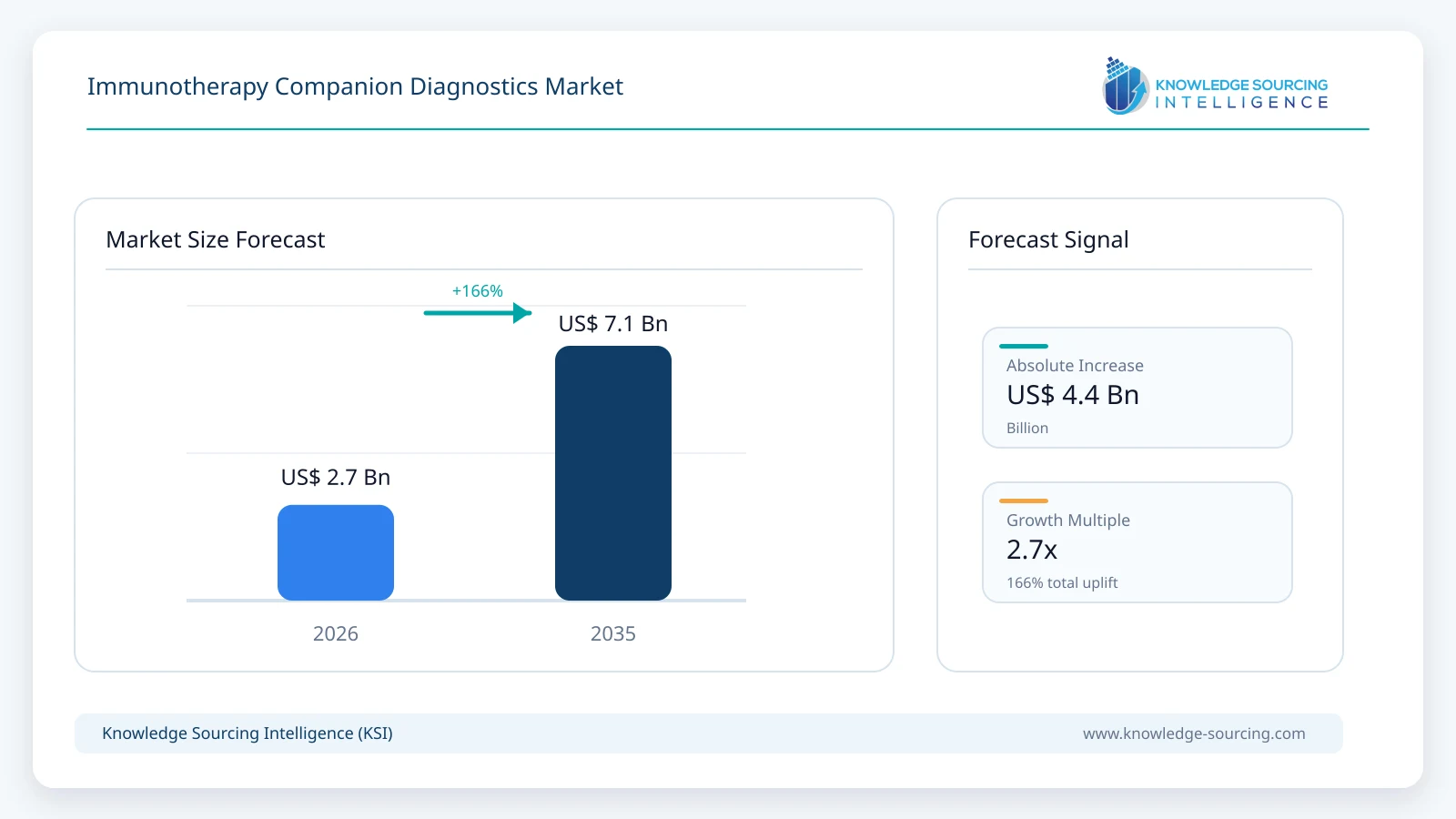
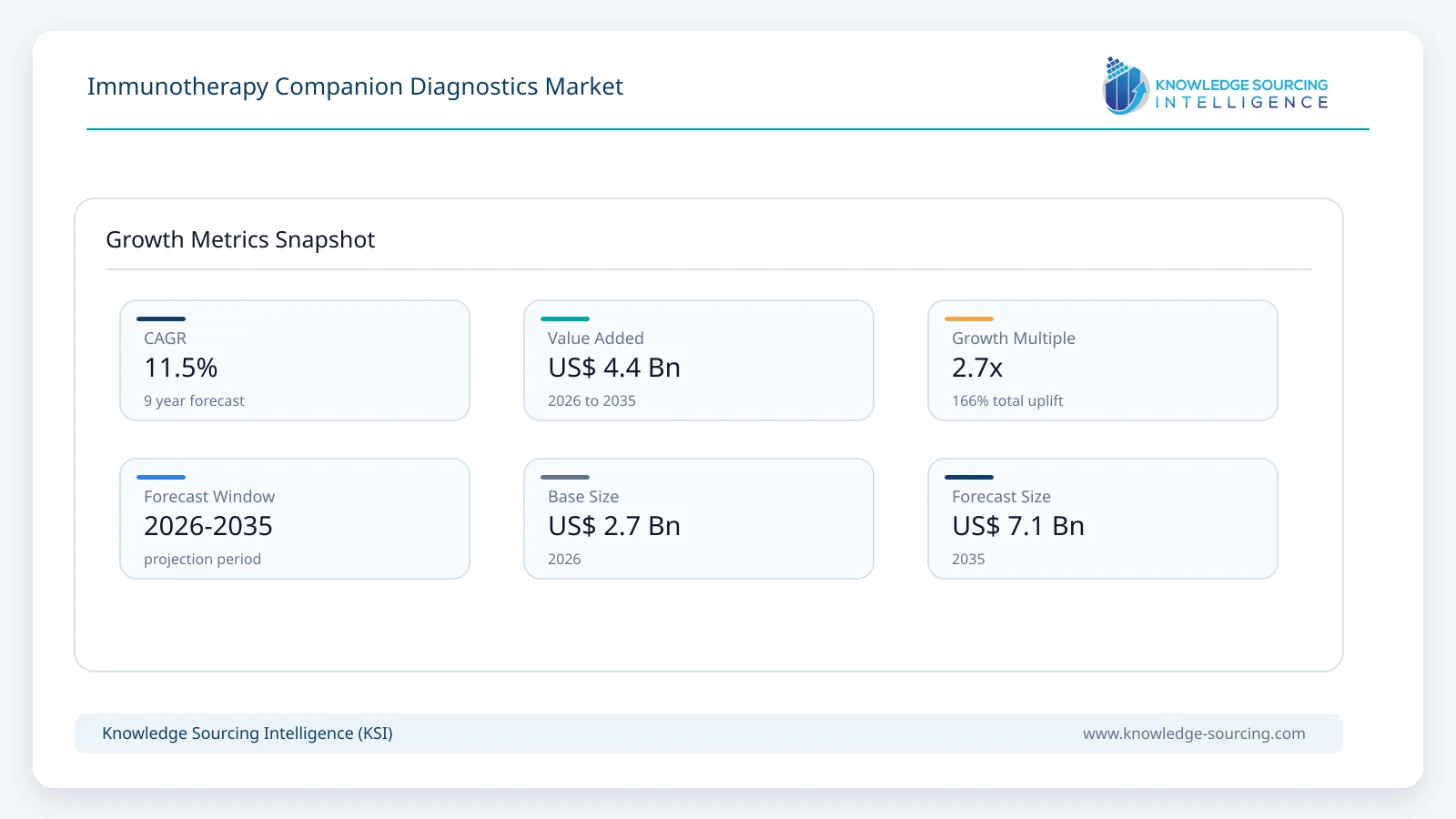
The Immunotherapy Companion Diagnostics Market is expected to grow at a CAGR of 11.5% from a market value of USD 2.66 billion in 2026 to USD 7.08 billion in 2035.
Highlights:
- 1Growing regulatory approval of biomarker-selected immunotherapies is increasing demand for validated companion diagnostics because treatment eligibility depends upon standardized molecular testing.
- 2Expanding immune checkpoint inhibitor indications are accelerating biomarker testing volumes as clinicians require diagnostic confirmation before initiating immunotherapy.
- 3Pharmaceutical companies are strengthening diagnostic partnerships because synchronized therapeutic and diagnostic development improves regulatory success and commercial adoption.
- 4Next-generation sequencing platforms are gaining clinical acceptance because multiplex biomarker assessment supports increasingly personalized immunotherapy selection.
The immunotherapy companion diagnostics market comprises diagnostic assays that determine patient eligibility for immunotherapies through validated predictive biomarkers. These diagnostics primarily support immune checkpoint inhibitors targeting programmed death receptor pathways, although their application is expanding toward emerging immunotherapies, including cellular therapies, bispecific antibodies, and personalized cancer vaccines. Biomarker-guided treatment selection reduces unnecessary toxicity while improving clinical outcomes, making companion diagnostics an essential element of precision medicine.
The increasing complexity of cancer biology is driving demand for comprehensive biomarker characterization rather than reliance on individual molecular markers. Tumor mutational burden, microsatellite instability, PD-L1 expression, and emerging immune-related biomarkers collectively provide clinicians with broader insight into treatment responsiveness. Pharmaceutical developers are incorporating companion diagnostic strategies earlier in drug development because regulatory approval frequently depends upon demonstrating biomarker-specific efficacy within defined patient populations.
Healthcare systems continue emphasizing value-based oncology care, which increases demand for diagnostics capable of optimizing treatment allocation. Accurate biomarker testing supports reimbursement decisions by improving therapeutic efficiency and minimizing ineffective interventions. Consequently, hospitals, reference laboratories, and comprehensive cancer centers are investing in advanced molecular diagnostic infrastructure that supports increasingly sophisticated immunotherapy programs.
Regulatory agencies continue refining companion diagnostic approval pathways to encourage simultaneous development of therapeutics and diagnostics. This coordinated regulatory approach strengthens clinical confidence while promoting standardized testing methodologies across global healthcare systems. The market remains strategically linked to ongoing advances in oncology drug development, molecular diagnostics, and personalized medicine.
Market Dynamics
Market Drivers
Expansion of Immune Checkpoint Inhibitor Indications: Immune checkpoint inhibitors represent one of the fastest-growing therapeutic classes within oncology because they provide durable responses across multiple malignancies. Their expanding clinical indications are increasing demand for companion diagnostic testing before treatment initiation. Regulatory agencies require validated biomarker evidence for several approved immunotherapies, which strengthens dependence on standardized diagnostic assays. Diagnostic manufacturers are expanding assay portfolios to support additional therapeutic labels, allowing healthcare providers to deliver increasingly personalized treatment strategies.
Increasing Adoption of Precision Oncology: Precision oncology integrates genomic, proteomic, and molecular information into individualized treatment decisions. Clinical practice increasingly recognizes that tumor heterogeneity limits the predictive value of conventional pathology alone. Healthcare providers are therefore incorporating molecular diagnostics into routine oncology workflows. Diagnostic companies are introducing comprehensive biomarker panels that simultaneously evaluate multiple predictive markers, improving clinical efficiency while supporting personalized therapeutic decisions.
Growth in Comprehensive Genomic Profiling: Cancer treatment increasingly depends upon simultaneous evaluation of numerous biomarkers because multiple genomic alterations influence immunotherapy response. Comprehensive genomic profiling enables clinicians to identify established biomarkers alongside emerging predictive signatures within a single analysis. Clinical laboratories are expanding sequencing capabilities to accommodate rising testing volumes. This technological transition supports broader adoption of integrated companion diagnostic solutions across academic and community oncology settings.
Collaborative Drug-Diagnostic Development: Companion diagnostics increasingly accompany therapeutic development throughout clinical trials because synchronized evidence generation strengthens regulatory submissions. Pharmaceutical companies establish strategic partnerships with diagnostic developers to validate predictive biomarkers before pivotal studies begin. Diagnostic platforms are evolving alongside investigational immunotherapies, allowing clinical trials to enroll biomarker-selected patient populations more efficiently. This integrated development model improves commercialization opportunities while accelerating precision medicine adoption.
Market Restraints
Clinical variability in biomarker expression limits standardized interpretation across laboratories, reducing testing consistency.
High implementation costs associated with advanced molecular technologies constrain adoption in resource-limited healthcare systems.
Regulatory requirements for simultaneous therapeutic and diagnostic approval extend development timelines and increase commercialization complexity.
Market Opportunities
Expansion of Emerging Biomarker Discovery: Cancer immunology continues to identify novel biomarkers beyond PD-L1, MSI, and tumor mutational burden. Translational research increasingly investigates immune gene signatures, tumor microenvironment characteristics, circulating biomarkers, and spatial immune profiling. Diagnostic developers are investing in multiplex technologies that accommodate these expanding biomarker portfolios. The resulting innovation supports broader patient stratification while enabling future immunotherapy combinations.
Integration of Artificial Intelligence into Digital Pathology: Digital pathology platforms enhance biomarker assessment by standardizing image interpretation across laboratories. Artificial intelligence algorithms increasingly quantify biomarker expression with greater reproducibility than manual evaluation. Healthcare providers are integrating computational pathology into routine workflows because improved analytical consistency supports clinical confidence. Diagnostic companies continue refining AI-enabled software solutions that complement conventional companion diagnostic assays.
Increasing Utilization of Liquid Biopsy: Liquid biopsy enables minimally invasive biomarker assessment through circulating tumor DNA and other blood-based analytes. Clinicians increasingly recognize its value when tissue availability is limited or when repeat biopsies are impractical. Diagnostic manufacturers are developing liquid biopsy companion diagnostics capable of supporting immunotherapy decision-making throughout disease progression. These technologies improve longitudinal patient monitoring while expanding testing accessibility.
Growth of Combination Immunotherapy Development: Combination immunotherapy strategies require increasingly sophisticated biomarker characterization because treatment response depends upon multiple biological pathways. Pharmaceutical companies are investigating combinations involving checkpoint inhibitors, targeted therapies, vaccines, and cellular therapies. Companion diagnostic developers are expanding multiplex testing capabilities to address these evolving therapeutic strategies. The resulting diagnostic complexity creates significant opportunities for integrated biomarker platforms.
Disease & Epidemiology Analysis
Cancer remains one of the leading causes of mortality worldwide and continues driving demand for precision diagnostic technologies. The incidence of solid tumors, including non-small cell lung cancer, melanoma, urothelial carcinoma, gastric cancer, cervical cancer, and colorectal cancer, supports sustained utilization of immunotherapy companion diagnostics because these malignancies increasingly receive biomarker-guided immunotherapy. Rising cancer prevalence expands the eligible testing population while encouraging healthcare systems to strengthen molecular diagnostic capacity.
The clinical effectiveness of immune checkpoint inhibitors varies substantially across patients because tumor immune biology differs between individuals. Predictive biomarkers play a central role in identifying patients who are most likely to benefit from treatment. PD-L1 expression, microsatellite instability, and tumor mutational burden currently represent the most widely established biomarkers supporting regulatory-approved immunotherapies. Research organizations are investigating additional immune signatures that improve response prediction beyond existing biomarkers, allowing precision oncology to evolve toward increasingly individualized treatment approaches.
Treatment Guidelines Landscape
Organization | Guideline Focus | Relevance to Immunotherapy Companion Diagnostics |
National Comprehensive Cancer Network (NCCN) | Biomarker-directed cancer treatment | Recommends biomarker testing, including PD-L1, MSI, and molecular profiling, before selected immunotherapies. |
American Society of Clinical Oncology (ASCO) | Precision oncology recommendations | Supports evidence-based biomarker testing for immunotherapy selection, where clinically validated. |
European Society for Medical Oncology (ESMO) | Molecular diagnostics in oncology | Recommends standardized biomarker assessment to guide personalized immunotherapy decisions. |
Market Segmentation
By Biomarker Type
PD-L1 represents the most established biomarker within immunotherapy companion diagnostics because multiple immune checkpoint inhibitors depend upon standardized PD-L1 assessment for treatment selection. Clinical demand is increasing as regulatory approvals continue expanding across additional tumor types. Variability in testing methodologies creates pressure for assay standardization, encouraging diagnostic manufacturers to improve analytical consistency. Pharmaceutical developers are validating companion diagnostics alongside new therapeutic indications, allowing PD-L1 testing to remain a foundational component of precision immuno-oncology despite growing interest in multiplex biomarker strategies.
By Technology
Next-generation sequencing enables the simultaneous evaluation of numerous genomic biomarkers within a single workflow. Healthcare providers are increasingly adopting NGS because comprehensive molecular profiling supports increasingly complex immunotherapy decisions. Laboratory implementation requires significant infrastructure investment, creating operational challenges for smaller institutions. Diagnostic companies are improving sequencing efficiency while integrating bioinformatics platforms that simplify clinical interpretation. Comprehensive genomic profiling strengthens the transition from single-marker diagnostics toward multidimensional biomarker assessment.
By Product Type
Assays, kits, and reagents constitute the core consumable segment because every companion diagnostic test depends upon validated analytical components. Testing volumes are increasing alongside expanding immunotherapy utilization, generating recurring demand for standardized assay products. Regulatory compliance requires rigorous quality assurance, encouraging manufacturers to continuously optimize assay performance and reproducibility. Pharmaceutical partnerships are expanding co-development activities that align assay commercialization with therapeutic approvals, reinforcing long-term demand for companion diagnostic consumables.
Regional Analysis
North America Market Analysis
North America represents the most mature market for immunotherapy companion diagnostics because the region combines advanced oncology infrastructure with early adoption of precision medicine. Demand is increasing as the number of biomarker-directed immunotherapies continues expanding across lung cancer, melanoma, urothelial carcinoma, colorectal cancer, breast cancer, and several hematologic malignancies. Academic cancer centers and integrated health systems routinely incorporate molecular testing into treatment algorithms, making companion diagnostics a standard component of clinical decision-making rather than an optional assessment. The expanding pipeline of immune checkpoint inhibitors and combination immunotherapies is increasing the need for multiplex biomarker testing because clinicians require comprehensive molecular information before initiating treatment.
Europe Market Analysis
Europe maintains a strong position in the immunotherapy companion diagnostics market because precision oncology is increasingly integrated into national cancer strategies and clinical practice guidelines. Demand is growing as comprehensive cancer centers expand molecular testing capacity to support biomarker-guided immunotherapy selection. The region emphasizes standardized diagnostic quality, making laboratory accreditation and harmonized testing protocols central to clinical implementation. Healthcare systems are expanding genomic medicine programs because personalized oncology supports improved treatment efficiency and long-term healthcare sustainability.
Asia Pacific Market Analysis
Asia Pacific is emerging as one of the fastest-evolving regions for immunotherapy companion diagnostics because cancer incidence continues increasing alongside investments in precision medicine infrastructure. Healthcare providers are expanding molecular diagnostic capabilities to support growing utilization of immunotherapies across major oncology centers. Governments recognize genomic medicine as a strategic healthcare priority, encouraging investments in sequencing technologies, laboratory modernization, and translational cancer research. Clinical demand is increasing because pharmaceutical companies are conducting larger numbers of oncology clinical trials throughout the region.
Rest of the World
The Rest of the World market is expanding gradually because healthcare systems are increasing investments in oncology infrastructure while recognizing the value of biomarker-guided treatment. Countries in Latin America, the Middle East, and parts of Africa are strengthening cancer control programs that incorporate molecular diagnostics into specialized oncology services. Comprehensive cancer centers are introducing advanced testing capabilities, although adoption remains concentrated within major urban healthcare institutions. The growing availability of immunotherapy is increasing demand for standardized biomarker assessment because clinicians require reliable diagnostic evidence before initiating treatment. International pharmaceutical companies are expanding clinical development activities across emerging markets, encouraging local laboratories to improve molecular diagnostic capabilities.
Regulatory Landscape
Companion diagnostics operate within one of the most highly regulated segments of in vitro diagnostics because treatment eligibility depends directly on analytical and clinical accuracy. Regulatory agencies require evidence demonstrating that a companion diagnostic reliably identifies patients who are likely to benefit from a corresponding therapeutic product. These requirements align diagnostic performance with therapeutic efficacy, reducing uncertainty in clinical decision-making while improving patient safety.
The U.S. Food and Drug Administration continues promoting parallel development of therapeutics and companion diagnostics through coordinated regulatory pathways. Pharmaceutical sponsors increasingly include biomarker-selected patient populations in pivotal clinical trials because synchronized evidence generation facilitates simultaneous product approvals. This approach reduces post-approval uncertainty while strengthening confidence in precision oncology treatment strategies.
The European Union is implementing the In Vitro Diagnostic Regulation (IVDR), which increases requirements for clinical evidence, analytical performance, post-market surveillance, and quality management. Diagnostic manufacturers are strengthening validation programs because compliance now requires more comprehensive documentation than previous regulatory frameworks. These evolving expectations increase development complexity but improve long-term reliability and transparency across the diagnostic market.
Asian regulatory agencies are also strengthening oversight of molecular diagnostics as precision medicine expands. Japan's Pharmaceuticals and Medical Devices Agency (PMDA), China's National Medical Products Administration (NMPA), and other regional authorities increasingly recognize companion diagnostics as essential components of personalized oncology. Regulatory convergence remains gradual, although international harmonization efforts continue encouraging broader adoption of globally accepted quality standards.
Pipeline Analysis
The immunotherapy companion diagnostics pipeline increasingly reflects the evolution of precision oncology from single-biomarker assessment toward multidimensional immune profiling. Pharmaceutical companies are evaluating novel immune checkpoint inhibitors, bispecific antibodies, tumor-infiltrating lymphocyte therapies, cancer vaccines, and cell therapies that require increasingly sophisticated biomarker strategies. Companion diagnostics are therefore expanding beyond PD-L1 expression to incorporate comprehensive molecular and immunological signatures capable of predicting treatment response more accurately.
Clinical development programs increasingly investigate combinations of established biomarkers such as PD-L1, microsatellite instability (MSI), and tumor mutational burden (TMB) with emerging genomic, transcriptomic, and immune microenvironment biomarkers. Diagnostic developers are validating multiplex assays because complex therapeutic combinations require broader biological characterization than conventional single-marker tests. Artificial intelligence-assisted pathology and spatial biology technologies are supporting this transition by enabling quantitative assessment of immune cell interactions within tumor tissue.
Several sponsors are integrating liquid biopsy into immunotherapy development programs because circulating tumor DNA enables minimally invasive biomarker assessment throughout treatment. Blood-based monitoring supports longitudinal evaluation of therapeutic response and resistance mechanisms, reducing dependence on repeated tissue biopsies. Clinical trials increasingly incorporate serial biomarker assessment to optimize treatment sequencing and identify patients who may benefit from combination immunotherapies or subsequent therapeutic interventions.
Reimbursement Landscape
Reimbursement remains a critical determinant of companion diagnostic adoption because advanced molecular testing requires significant laboratory resources and specialized expertise. Public and private healthcare payers increasingly recognize that validated biomarker testing improves treatment efficiency by identifying patients who are most likely to benefit from expensive immunotherapies. This value-based approach supports broader reimbursement for clinically validated companion diagnostics while encouraging evidence-based treatment selection.
Coverage policies continue evolving because new biomarkers and diagnostic technologies enter clinical practice at an accelerating pace. Health technology assessment organizations increasingly evaluate companion diagnostics alongside associated therapeutics rather than as independent laboratory tests. Pharmaceutical sponsors are generating health economic evidence during clinical development because demonstrating both clinical utility and cost-effectiveness strengthens reimbursement negotiations after regulatory approval.
Liquid biopsy reimbursement is expanding gradually as clinical evidence supporting blood-based genomic profiling continues to mature. Healthcare systems remain cautious regarding emerging biomarkers that lack standardized clinical validation, encouraging diagnostic developers to invest in prospective clinical studies demonstrating improved patient outcomes. The reimbursement environment increasingly favors companion diagnostics supported by robust analytical validation, clinical utility, and pharmacoeconomic evidence.
Competitive Landscape
F. Hoffmann-La Roche Ltd.
Roche is a global leader in companion diagnostics, leveraging its integrated pharmaceutical and diagnostics businesses to support precision immuno-oncology. Its Ventana platform and extensive collaborations with oncology drug developers strengthen its leadership in biomarker-guided immunotherapy.
Agilent Technologies, Inc.
Agilent provides pathology solutions, molecular diagnostics, and immunohistochemistry technologies that support companion diagnostic development. The company is expanding partnerships with pharmaceutical sponsors to deliver standardized biomarker testing across oncology laboratories.
QIAGEN N.V.
QIAGEN develops PCR- and NGS-based companion diagnostic solutions through strategic collaborations with leading pharmaceutical companies. Its broad molecular diagnostics portfolio supports regulatory-approved oncology therapies and emerging immunotherapy programs.
Thermo Fisher Scientific Inc.
Thermo Fisher offers comprehensive genomic profiling, sequencing platforms, and molecular diagnostic solutions for precision oncology. The company continues strengthening its companion diagnostic capabilities through advanced NGS technologies and global laboratory partnerships.
Illumina, Inc.
Illumina provides high-throughput sequencing platforms that enable comprehensive biomarker profiling for immunotherapy selection. Its sequencing ecosystem supports pharmaceutical research, clinical laboratories, and companion diagnostic assay development.
Guardant Health, Inc.
Guardant Health specializes in liquid biopsy and blood-based comprehensive genomic profiling for precision oncology. The company is expanding clinical adoption of minimally invasive companion diagnostic solutions supporting immunotherapy decision-making.
Caris Life Sciences
Caris Life Sciences offers comprehensive molecular profiling integrating genomics, transcriptomics, and AI-driven analytics for personalized cancer treatment. Its precision oncology platform supports biomarker discovery and companion diagnostic development across multiple tumor types.
Adaptive Biotechnologies
Adaptive Biotechnologies develops immune repertoire sequencing technologies that characterize adaptive immune responses for oncology applications. The company is advancing immune profiling capabilities to identify novel biomarkers for future immunotherapy strategies.
Abbott Laboratories
Abbott develops molecular diagnostic technologies and automated laboratory platforms supporting precision medicine applications. Its global diagnostics infrastructure enables scalable biomarker testing across clinical laboratories worldwide.
Exact Sciences
Exact Sciences focuses on advanced molecular diagnostics and genomic testing to improve personalized cancer care. The company continues expanding its oncology portfolio through biomarker-driven diagnostic innovations and strategic collaborations.
Key Developments
May 2026: The FDA approved Signatera CDx as a companion diagnostic for use with adjuvant atezolizumab (Tecentriq) immunotherapy in muscle-invasive bladder cancer, marking the first FDA-approved use of molecular residual disease testing in this setting, enabling physicians to monitor patients after bladder-removal surgery to identify people who may benefit from Tecentriq, with trial evidence showing Signatera can reliably identify patients likely or unlikely to benefit from the treatment.
March 2026: GenDx, specialized in molecular diagnostics for transplant, announced a partnership with clinical-stage Treos Bio to develop an HLA-based companion diagnostic for the cancer immunotherapy PolypepI1018, a generation of effective, off-the-shelf peptide immunotherapies against cancer.
Strategic Insights and Future Market Outlook
The immunotherapy companion diagnostics market is moving toward integrated multi-biomarker testing as precision oncology becomes increasingly dependent on comprehensive molecular characterization rather than single-marker assessment. Diagnostic developers are strengthening collaborations with pharmaceutical companies to enable simultaneous therapeutic and companion diagnostic development, improving regulatory efficiency and accelerating clinical adoption.
Next-generation sequencing, liquid biopsy, artificial intelligence, and digital pathology are transforming biomarker assessment by improving analytical accuracy, workflow efficiency, and patient accessibility. Continued investment in emerging immune biomarkers and multiplex diagnostic platforms is expected to expand the addressable patient population for immunotherapies while supporting the development of novel combination treatment strategies.
The market is expected to remain strategically linked with advances in immuno-oncology drug development, regulatory harmonization, and precision medicine initiatives. Organizations that combine innovative biomarker discovery with robust clinical validation and global commercialization capabilities are likely to strengthen their competitive position throughout the forecast period.
Precision oncology is increasingly redefining cancer treatment through biomarker-guided therapeutic decisions, making companion diagnostics an indispensable component of modern immunotherapy. As regulatory requirements, clinical evidence, and pharmaceutical collaborations continue evolving, companion diagnostics will remain central to improving patient selection, optimizing treatment outcomes, and supporting the global expansion of personalized cancer care.
Immunotherapy Companion Diagnostics Market Scope:
| Report Metric | Details |
|---|---|
| Total Market Size in 2026 | USD 2.66 billion |
| Total Market Size in 2035 | USD 7.08 billion |
| Forecast Unit | USD Billion |
| Growth Rate | 11.5% |
| Study Period | 2021 to 2035 |
| Historical Data | 2021 to 2024 |
| Base Year | 2025 |
| Forecast Period | 2026 – 2035 |
| Segmentation | Biomarker, Technology, End User, Geography |
| Companies |
|
Market Segmentation
Biomarker
Technology
End User
Geography
- North America
- South America
- Europe
- Middle East and Africa
- Asia Pacific
Table of Contents
1. EXECUTIVE SUMMARY
1.1 Market Snapshot
1.2 Key Findings
1.3 Analyst Insights
1.4 Strategic Recommendations
2. RESEARCH METHODOLOGY
2.1 Research Design
2.2 Data Collection Methodology
2.3 Market Size Estimation
2.4 Forecasting Model
2.5 Assumptions & Limitations
3. GLOBAL IMMUNOTHERAPY COMPANION DIAGNOSTICS MARKET OVERVIEW, SIZE & FORECAST
3.1 Market Definition & Scope
3.2 Overview of Immunotherapy Companion Diagnostics
3.3 Evolution of Immunotherapy Companion Diagnostics
3.4 Key Market Trends
3.5 Historical Market Size Analysis (2021–2025)
3.6 Market Forecast (2026–2035)
3.7 Cancer Burden and Unmet Clinical Needs
3.8 Disease Prevalence Analysis by Major Cancer Types
3.9 Diagnosed Patient Population Analysis
3.10 Biomarker Testing Volume Analysis
3.11 Precision Oncology Treatment Landscape
3.12 Patient Journey Analysis for Biomarker-Guided Immunotherapy
4. MARKET DYNAMICS
4.1 Market Drivers
4.2 Market Restraints
4.3 Market Opportunities
4.4 Market Challenges
5. INDUSTRY LANDSCAPE
5.1 Industry Value Chain Analysis
5.2 Pricing Analysis
5.3 Reimbursement Landscape
6. INNOVATION LANDSCAPE
6.1 Emerging Diagnostic Technologies
6.2 Companion Diagnostic Product Innovation
6.3 Clinical Trial Analysis
6.4 Companion Diagnostics Pipeline Analysis
6.5 AI Integration in Companion Diagnostics
6.6 Digital Pathology and Digital Health Integration
7. REGULATORY LANDSCAPE
7.1 Regulatory Framework
7.2 Approval Pathways
7.3 Compliance Requirements
8. GLOBAL IMMUNOTHERAPY COMPANION DIAGNOSTICS MARKET LANDSCAPE ANALYSIS
8.1 Analysis by Technology Platform
8.2 Analysis by Biomarker
8.3 Analysis by Sample Type
8.4 Analysis by Clinical Application
8.5 Analysis by Testing Methodology
9. GLOBAL IMMUNOTHERAPY COMPANION DIAGNOSTICS MARKET SEGMENT ANALYSIS (2021–2035)
9.1 By Biomarker
9.1.1 PD-L1
9.1.2 Microsatellite Instability (MSI)
9.1.3 Tumor Mutational Burden (TMB)
9.1.4 Other Emerging Immunotherapy Biomarkers
9.2 By Technology
9.2.1 Immunohistochemistry (IHC)
9.2.2 Polymerase Chain Reaction (PCR)
9.2.3 Next-Generation Sequencing (NGS)
9.2.4 Other Molecular Technologies
9.3 By Sample Type
9.3.1 Tissue Biopsy
9.3.2 Liquid Biopsy
9.4 By Product
9.4.1 Assays, Kits & Reagents
9.4.2 Instruments & Analytical Systems
9.4.3 Software & Services
9.5 By End User
9.5.1 Hospitals
9.5.2 Diagnostic Laboratories
9.5.3 Cancer Research Institutes and Academic Centers
10. GLOBAL IMMUNOTHERAPY COMPANION DIAGNOSTICS MARKET GEOGRAPHICAL ANALYSIS (2021–2035)
10.1 North America
10.2 Europe
10.3 Asia-Pacific
10.4 South America
10.5 Middle East & Africa
11. GLOBAL IMMUNOTHERAPY COMPANION DIAGNOSTICS MARKET COUNTRY ANALYSIS (2021–2035)
11.1 United States
11.2 Canada
11.3 Germany
11.4 United Kingdom
11.5 France
11.6 Italy
11.7 Spain
11.8 Japan
11.9 China
11.10 South Korea
11.11 India
11.12 Australia
11.13 Brazil
11.14 Mexico
11.15 Saudi Arabia
11.16 South Africa
12. COMPETITIVE LANDSCAPE
12.1 Market Share Analysis
12.2 Strategic Developments
12.3 Mergers & Acquisitions, Partnerships & Collaborations
12.4 Product Launches
13. COMPANY PROFILES
13.1 F. Hoffmann-La Roche Ltd.
13.1.1 Company Overview
13.1.2 Financials
13.1.3 Product Portfolio
13.1.4 Recent Developments
13.2 Agilent Technologies, Inc.
13.3 QIAGEN N.V.
13.4 Thermo Fisher Scientific Inc.
13.5 Illumina, Inc.
13.6 Guardant Health, Inc.
13.7 Caris Life Sciences
13.8 Adaptive Biotechnologies
13.9 Abbott Laboratories
13.10 Exact Sciences
14. GLOBAL IMMUNOTHERAPY COMPANION DIAGNOSTICS MARKET COMMERCIAL FORECAST ANALYSIS
14.1 PD-L1 Companion Diagnostics
14.2 MSI/dMMR Companion Diagnostics
14.3 Tumor Mutational Burden (TMB) Companion Diagnostics
14.4 NGS-Based Immunotherapy Companion Diagnostics
14.5 Liquid Biopsy-Based Immunotherapy Companion Diagnostics
15. INVESTMENT & FUNDING ANALYSIS
15.1 Venture Capital Trends
15.2 Government Funding
15.3 R&D Investments
16. FUTURE OUTLOOK
16.1 Key Growth Opportunities
16.2 Future Industry Trends
Navigate
Trusted by the world's leading organizations











