
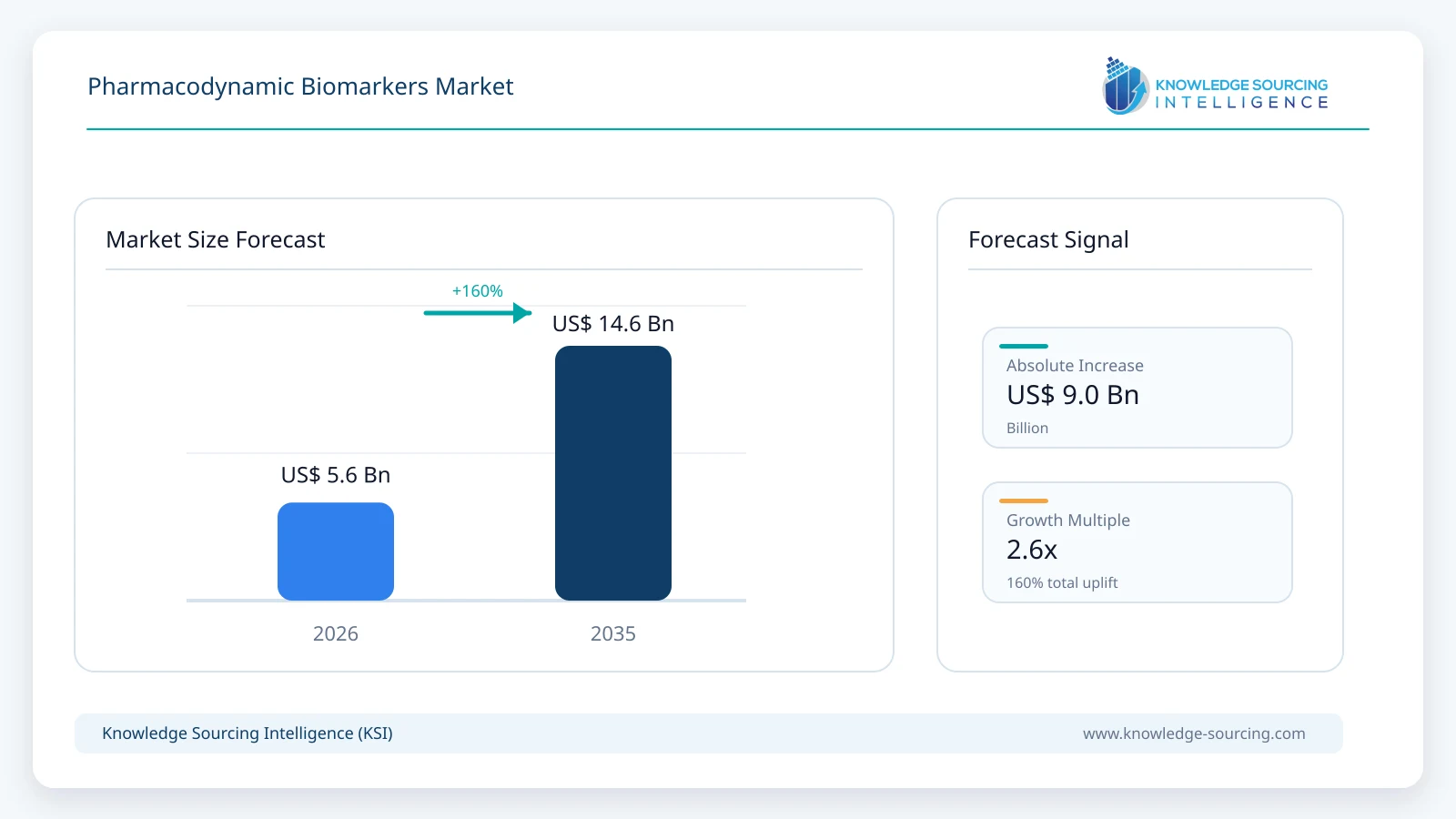
The Pharmacodynamic Biomarkers Market is anticipated to grow at a CAGR of 11.2% from USD 5.63 billion in 2026 to USD 14.63 billion in 2035.
Highlights:
- 1Expansion of targeted therapeutics is increasing demand for pharmacodynamic biomarkers because treatment effectiveness increasingly depends on biological pathway modulation.
- 2Growth in precision medicine programs is driving biomarker adoption because patient stratification requires objective measures of treatment response.
- 3Pharmaceutical developers are increasing biomarker integration in clinical trials because early biological evidence improves decision-making efficiency.
- 4Advances in multi-omics technologies are strengthening biomarker development because complex biological responses require deeper molecular characterization.
Pharmacodynamic biomarkers provide measurable indicators of biological responses associated with therapeutic intervention. Demand for these biomarkers is increasing because healthcare and pharmaceutical stakeholders seek objective evidence demonstrating treatment activity and mechanism engagement. This requirement creates dependence on technologies capable of detecting meaningful biological changes throughout the treatment pathway. Industry participants are expanding analytical capabilities to improve biomarker sensitivity and clinical utility. The result is broader integration of pharmacodynamic biomarkers into research and development activities.
Precision medicine continues driving market expansion because targeted therapies require biomarkers capable of identifying treatment responses and optimizing patient selection. Demand for pharmacodynamic biomarkers is rising as therapeutic strategies increasingly focus on specific molecular pathways and disease mechanisms. This shift exposes limitations in conventional development models that rely heavily on clinical observations alone. Pharmaceutical developers are incorporating biomarker-based approaches to improve treatment evaluation and development efficiency. The outcome is stronger adoption of biomarker-guided clinical development frameworks.
Regulatory expectations continue strengthening because biomarker-supported evidence increasingly contributes to therapeutic approval pathways and clinical decision-making. Demand for validated biomarkers is increasing as developers seek reliable tools capable of supporting dose selection, patient monitoring, and efficacy assessment. This environment raises the importance of analytical validation and regulatory readiness. Organizations are investing in translational research and biomarker qualification initiatives to address these requirements. The result is a more structured and scientifically rigorous biomarker development landscape.
Market Dynamics
Market Drivers
Expansion of Precision Medicine Initiatives: Precision medicine relies on biological information capable of guiding individualized therapeutic strategies. Demand for pharmacodynamic biomarkers is increasing because treatment effectiveness increasingly depends on understanding biological responses at the patient level. This requirement creates pressure on developers to generate objective evidence supporting treatment optimization. Pharmaceutical companies are expanding biomarker programs to improve patient selection and therapeutic outcomes. The outcome is stronger integration of biomarkers across clinical development and personalized healthcare.
Increasing Adoption of Targeted Therapies: Targeted therapies require confirmation that therapeutic interventions affect intended biological pathways. Demand for pharmacodynamic biomarkers is rising because developers seek objective methods for evaluating target engagement and biological activity. This dependency limits reliance on traditional efficacy assessments alone. Industry participants are strengthening biomarker development efforts to improve treatment evaluation and reduce development uncertainty. The result is broader adoption of biomarker-supported therapeutic development strategies.
Growing Utilization in Clinical Trials: Clinical trials increasingly require biological evidence capable of supporting treatment evaluation and patient stratification. Demand for pharmacodynamic biomarkers is increasing because sponsors seek more efficient approaches for measuring therapeutic effects. This challenge creates pressure on researchers to develop biomarkers that accurately reflect biological responses. Organizations are integrating biomarkers into study designs to improve decision-making and resource allocation. The outcome is greater utilization of biomarker-supported clinical development models.
Advancements in Multi-omics Technologies: Modern biomarker discovery depends on technologies capable of evaluating complex biological systems. Demand for advanced analytical platforms is rising because therapeutic development increasingly requires comprehensive characterization of molecular responses. This requirement increases reliance on genomics, transcriptomics, proteomics, and metabolomics technologies. Industry participants are expanding investments in multi-omics research to improve biomarker identification and validation. The result is accelerated innovation across pharmacodynamic biomarker development programs.
Market Restraints
Biomarker validation remains complex because biological responses vary across patient populations and disease states.
Standardization challenges persist because analytical methodologies and testing platforms differ across laboratories and clinical development programs.
Regulatory uncertainty continues affecting adoption because qualification requirements vary across biomarker applications and therapeutic areas.
Market Opportunities
Expansion of Biomarkers in Oncology Drug Development: Oncology development increasingly depends on biomarkers that support treatment monitoring and biological response assessment. Demand for pharmacodynamic biomarkers is rising because cancer therapies target specific molecular pathways that require objective evaluation. This trend creates opportunities for technologies capable of measuring treatment activity throughout the clinical development process. Industry participants are expanding oncology-focused biomarker programs to improve therapeutic outcomes. The outcome is a growing commercial opportunity linked to precision oncology innovation.
Growth of Biomarker-Guided Dose Optimization: Dose optimization depends on understanding biological responses across different treatment levels. Demand for pharmacodynamic biomarkers is increasing because sponsors seek more accurate methods for selecting therapeutic doses. This objective highlights limitations associated with traditional dose-finding approaches that rely heavily on clinical observations. Developers are integrating biomarkers into dose optimization strategies to improve treatment effectiveness and safety. The result is broader utilization of biomarker-guided development frameworks.
Expansion of Cell and Gene Therapy Development: Advanced therapies require objective assessment of biological activity following treatment administration. Demand for pharmacodynamic biomarkers is rising because cell and gene therapy developers seek evidence demonstrating therapeutic engagement and durability. This need creates opportunities for technologies capable of monitoring complex biological responses over time. Industry stakeholders are strengthening biomarker development programs to support advanced therapeutic modalities. The outcome is increased demand for innovative biomarker solutions.
Integration of Artificial Intelligence in Biomarker Discovery: Biomarker development increasingly generates large and multidimensional datasets that require sophisticated analytical methods. Demand for computational solutions is increasing because traditional analytical approaches face limitations when evaluating complex biological interactions. This challenge creates opportunities for artificial intelligence-enabled biomarker discovery and validation platforms. Organizations are incorporating machine learning technologies to improve biomarker identification and predictive performance. The result is enhanced efficiency across biomarker development workflows.
Government Regulations
Region/Country | Regulatory Authority | Regulatory Relevance for Pharmacodynamic Biomarkers |
United States | U.S. Food and Drug Administration (FDA) | Oversees biomarker qualification, clinical development applications, and biomarker-supported regulatory submissions |
European Union | European Medicines Agency (EMA) | Supports biomarker qualification procedures and clinical development frameworks |
Japan | Pharmaceuticals and Medical Devices Agency (PMDA) | Evaluates biomarker-supported development strategies and diagnostic technologies |
China | National Medical Products Administration (NMPA) | Regulates biomarker applications associated with therapeutic development and diagnostics |
Market Segmentation
By Biomarker Type
Biomarker type determines how biological responses to therapy are measured and interpreted throughout drug development. Demand is shifting toward protein and genetic biomarkers because targeted therapies increasingly require direct assessment of pathway activity and treatment response. This requirement creates pressure on developers to generate highly sensitive and reproducible biological measurements. Organizations are expanding metabolomic, cellular, and transcriptomic biomarker programs to improve characterization of treatment effects across diverse disease settings. The outcome is a broader biomarker ecosystem capable of supporting precision medicine and therapeutic optimization.
By Therapeutic Area
Therapeutic area influences biomarker utilization because treatment mechanisms and clinical development requirements differ across diseases. Demand is increasing most rapidly within oncology because targeted therapies and immunotherapies require objective measures of biological activity and response. This trend creates opportunities for biomarkers that support patient stratification, treatment monitoring, and dose optimization. Pharmaceutical developers are expanding biomarker integration across immunology, neurology, cardiovascular diseases, infectious diseases, and metabolic disorders. The outcome is wider adoption of pharmacodynamic biomarkers throughout therapeutic development programs.
By Technology Platform
Technology platforms determine the analytical sensitivity, scalability, and clinical applicability of pharmacodynamic biomarker testing. Demand for immunoassays, sequencing technologies, and flow cytometry is increasing because drug developers require precise evaluation of biological responses during treatment. This expectation increases reliance on advanced analytical systems capable of generating reproducible data across clinical studies. Industry participants are strengthening mass spectrometry and molecular analysis capabilities to improve biomarker discovery and validation. The result is a diverse analytical landscape supporting biomarker-driven therapeutic development.
Regional Analysis
North America
North America maintains the largest position within the pharmacodynamic biomarkers market because pharmaceutical innovation, biotechnology development, and translational research activities remain highly concentrated throughout the region. Demand for pharmacodynamic biomarkers is increasing as drug developers seek objective methods for evaluating treatment activity and biological response. This requirement strengthens the role of biomarker-supported clinical development across therapeutic pipelines. Industry participants are expanding investments in precision medicine, multi-omics research, and biomarker qualification programs to address these evolving needs. The outcome is strong integration of biomarkers into drug development frameworks.
The United States serves as the primary growth engine because pharmaceutical and biotechnology companies increasingly prioritize biomarker-guided development strategies. Demand for pharmacodynamic biomarkers is rising as targeted therapies and immunotherapies require biological evidence demonstrating mechanism engagement and treatment effectiveness. This dependency increases reliance on advanced analytical technologies and translational research capabilities. Organizations are expanding collaborations among diagnostics providers, contract research organizations, and pharmaceutical sponsors to improve development efficiency. The result is continued market leadership supported by innovation and regulatory engagement.
Academic research institutions and government-supported biomedical initiatives continue strengthening regional development because biomarker discovery increasingly depends on multidisciplinary scientific collaboration. Demand for validated biomarkers is increasing as therapeutic pipelines become more biologically complex and development costs continue rising. This environment encourages investment in biomarker validation and clinical implementation. Stakeholders are strengthening translational research programs to improve commercialization outcomes. The outcome is a highly developed ecosystem supporting long-term market growth.
Canada contributes through expanding precision medicine initiatives and increasing participation in biomarker-supported clinical research. Demand for objective biological endpoints is rising because healthcare and research organizations seek improved methods for evaluating treatment effectiveness. This trend encourages broader adoption of biomarker-enabled development models. Industry participants are strengthening research infrastructure and collaborative networks to support innovation. The result is continued market expansion across the region.
Europe
Europe represents a major market because healthcare systems, regulatory agencies, and pharmaceutical companies increasingly support biomarker-driven therapeutic development. Demand for pharmacodynamic biomarkers is increasing as treatment strategies become more targeted and dependent on biological evidence. This shift raises the importance of technologies capable of generating reproducible and clinically meaningful measurements. Healthcare and research organizations are expanding biomarker adoption to improve therapeutic evaluation and patient stratification. The outcome is stronger integration of biomarkers within European drug development programs.
Regulatory initiatives continue supporting market growth because structured qualification pathways improve confidence in biomarker-supported development strategies. Demand for validated biomarkers is rising as pharmaceutical sponsors seek regulatory acceptance of biological endpoints and treatment response indicators. This expectation increases emphasis on analytical rigor and evidence generation. Industry participants are strengthening validation efforts to improve development efficiency and regulatory readiness. The result is a more mature and clinically focused biomarker environment.
Germany, the United Kingdom, France, and Switzerland remain important contributors because pharmaceutical innovation and translational research continue driving biomarker utilization. Demand for precision medicine tools is increasing as healthcare systems seek improved approaches for evaluating therapeutic effectiveness. This trend creates opportunities for biomarker technologies capable of supporting personalized treatment strategies. Organizations are strengthening collaborations among research institutions and industry stakeholders to accelerate implementation. The outcome is sustained market development across major European healthcare economies.
European biotechnology companies also contribute significantly because emerging therapeutic platforms increasingly depend on biomarker-supported development frameworks. Demand for pharmacodynamic endpoints is increasing as developers seek earlier evidence of treatment activity and biological response. This environment encourages investment in analytical technologies and biomarker discovery programs. Industry stakeholders are strengthening research capabilities to support future growth. The result is expanding biomarker adoption across European therapeutic development ecosystems.
Asia Pacific
Asia Pacific is emerging as a high-growth market because pharmaceutical development, biotechnology innovation, and clinical research activities continue expanding throughout the region. Demand for pharmacodynamic biomarkers is increasing as healthcare systems and therapeutic developers seek more efficient approaches for evaluating treatment responses. This objective creates opportunities for biomarker technologies capable of supporting modern drug development programs. Industry participants are strengthening research infrastructure and precision medicine capabilities to address these needs. The outcome is accelerating biomarker adoption across regional markets.
China represents a key growth market because pharmaceutical innovation increasingly focuses on targeted therapies and advanced biologics. Demand for pharmacodynamic biomarkers is rising as developers seek objective evidence supporting clinical development and regulatory submissions. This requirement increases investment in analytical technologies and translational research initiatives. Organizations are strengthening biomarker discovery and validation capabilities to support therapeutic innovation. The result is significant market expansion opportunities.
Japan continues maintaining a strong position because advanced pharmaceutical research and regulatory engagement support biomarker utilization. Demand for biomarker-supported development strategies is increasing as therapeutic pipelines become more specialized and biologically driven. This shift creates opportunities for technologies capable of measuring treatment activity with high precision. Industry participants are expanding collaborations among pharmaceutical companies and diagnostics developers to improve clinical outcomes. The outcome is continued market growth supported by scientific innovation.
South Korea, India, and Australia contribute through increasing investment in biotechnology research and precision medicine initiatives. Demand for biomarker technologies is rising as clinical development programs seek more objective methods for evaluating therapeutic effectiveness. This trend encourages broader adoption of advanced analytical platforms and translational research frameworks. Stakeholders are strengthening development capabilities to support long-term innovation. The result is growing regional participation in pharmacodynamic biomarker development.
Rest of the World
The Rest of the World region is gradually expanding because healthcare systems increasingly recognize the value of biomarker-supported therapeutic development. Demand for pharmacodynamic biomarkers is increasing as pharmaceutical research and clinical development activities expand across emerging healthcare markets. This transition creates opportunities for organizations capable of providing scalable analytical and validation solutions. Governments and healthcare institutions are strengthening biomedical research capabilities to support innovation. The outcome is progressive market development across emerging regions.
Latin America demonstrates growing interest in biomarker technologies because pharmaceutical development increasingly emphasizes precision medicine and targeted therapies. Demand for objective biological endpoints is rising as sponsors seek improved approaches for evaluating treatment effectiveness. This need creates opportunities for biomarker service providers and diagnostics developers. Industry participants are supporting regional research initiatives through collaborative development programs. The result is strengthening market demand across key Latin American economies.
The Middle East continues investing in biomedical innovation because healthcare transformation initiatives increasingly prioritize advanced research capabilities and precision healthcare. Demand for pharmacodynamic biomarkers is increasing as healthcare organizations seek improved methods for supporting therapeutic development and personalized medicine. This objective encourages adoption of advanced analytical technologies and research partnerships. Stakeholders are strengthening infrastructure capabilities to support future growth. The outcome is increasing commercial potential throughout the region.
Africa remains at an earlier stage of development because research infrastructure and specialized biomarker capabilities remain limited across many healthcare systems. Demand for advanced development tools is increasing within selected markets because healthcare organizations seek greater participation in global clinical research activities. This trend creates opportunities for technology providers and biomarker service organizations. Industry stakeholders are supporting capacity-building initiatives to improve research capabilities. The result is gradual market expansion and increasing biomarker awareness.
Regulatory Landscape
Regulatory agencies increasingly recognize pharmacodynamic biomarkers as essential tools supporting therapeutic development and precision medicine initiatives. Demand for biomarker-supported evidence is increasing as drug developers seek objective measures capable of demonstrating biological activity and treatment response. This expectation raises the importance of analytical validation, standardization, and clinical utility. Regulatory authorities are strengthening qualification frameworks to improve confidence in biomarker-supported development programs. The outcome is a more structured pathway for biomarker adoption.
The FDA continues supporting biomarker qualification because modern therapeutic development increasingly depends on biological indicators that improve clinical decision-making. Demand for validated pharmacodynamic biomarkers is rising as pharmaceutical companies seek more efficient methods for evaluating therapeutic mechanisms and treatment effects. This environment encourages investment in translational research and biomarker validation activities. Industry participants are strengthening development programs to align with evolving regulatory expectations. The result is broader integration of biomarkers throughout drug development pipelines.
European and international regulatory frameworks increasingly emphasize evidence-based qualification because biomarker-supported strategies require reproducible and clinically meaningful outcomes. Demand for regulatory-grade biomarker data is increasing as developers seek global acceptance of biomarker-driven development models. This requirement encourages greater standardization and cross-industry collaboration. Organizations are strengthening validation infrastructure to support commercialization and regulatory readiness. The outcome is improved alignment between innovation and regulatory oversight.
Pipeline Analysis
The pharmacodynamic biomarker pipeline continues expanding because therapeutic development increasingly depends on objective biological evidence capable of demonstrating treatment activity. Demand for novel biomarkers is increasing as targeted therapies, biologics, and advanced therapeutic modalities require more precise methods for evaluating mechanism engagement. This challenge highlights limitations associated with traditional efficacy measurements that often provide delayed insights into treatment effectiveness. Research organizations are expanding discovery programs focused on identifying clinically actionable pharmacodynamic indicators. The outcome is a growing pipeline of biomarker candidates across multiple therapeutic areas.
Oncology remains the most active area of biomarker development because targeted therapies and immunotherapies require continuous assessment of biological responses. Demand for pharmacodynamic biomarkers is rising as developers seek objective indicators capable of supporting dose optimization, patient stratification, and treatment monitoring. This requirement encourages investment in protein, genetic, cellular, and transcriptomic biomarker platforms. Industry participants are expanding biomarker integration across oncology development programs to improve clinical outcomes. The result is continued pipeline growth within precision oncology.
Immunology, neurology, and advanced therapy development are generating increasing biomarker activity because therapeutic mechanisms continue becoming more complex and individualized. Demand for biomarkers capable of measuring biological responses is increasing as developers seek earlier evidence of treatment success and long-term therapeutic durability. This trend creates opportunities for multi-omics technologies and artificial intelligence-enabled biomarker discovery platforms. Organizations are strengthening collaborations among pharmaceutical companies, diagnostics providers, and research institutions to accelerate validation. The outcome is a more diversified biomarker pipeline supporting the future of precision medicine.
Competitive Landscape
Thermo Fisher Scientific Inc.
Thermo Fisher Scientific maintains a strategically distinct position because the company combines analytical instrumentation, molecular biology technologies, proteomics platforms, and clinical research solutions within a single ecosystem. Demand for pharmacodynamic biomarkers is increasing as pharmaceutical developers seek comprehensive workflows capable of supporting biomarker discovery, validation, and commercialization. This requirement strengthens the importance of integrated technology portfolios that reduce complexity across development programs. The company is expanding investments in multi-omics technologies, mass spectrometry, sequencing solutions, and translational research infrastructure to address these needs. Pharmaceutical and biotechnology organizations increasingly require scalable analytical capabilities because biomarker-supported drug development continues becoming more sophisticated. Thermo Fisher is strengthening partnerships across research institutions, pharmaceutical companies, and contract development organizations to improve adoption of biomarker-enabled workflows. The outcome is a highly diversified market position supported by broad technological capabilities and global commercial reach.
F. Hoffmann-La Roche Ltd
Roche occupies a leading position because the company integrates pharmaceutical development with advanced diagnostics capabilities. Demand for pharmacodynamic biomarkers is increasing as targeted therapies require objective evidence demonstrating biological response and mechanism engagement. This dependency increases the value of Roche’s ability to align biomarker development with therapeutic innovation. The company is expanding precision medicine programs and biomarker-driven development initiatives across oncology, immunology, and neurology. Healthcare providers and pharmaceutical developers increasingly seek clinically validated biomarkers because treatment decisions require reliable biological information. Roche is strengthening translational research collaborations and diagnostics investments to support these evolving requirements. The outcome is a strong competitive position built on integration between therapeutics and diagnostics.
Danaher Corporation
Danaher maintains competitive strength because its life sciences businesses support multiple stages of pharmacodynamic biomarker development. Demand for biomarker technologies is increasing as pharmaceutical development programs require highly sensitive analytical platforms and reproducible biological measurements. This challenge creates opportunities for organizations capable of supporting research, validation, and commercialization activities. The company is expanding analytical technologies and laboratory solutions to improve biomarker discovery and translational research outcomes. Drug developers increasingly seek scalable infrastructure because biomarker integration continues expanding across therapeutic pipelines. The outcome is a diversified position supported by broad scientific capabilities and innovation-focused operations.
QIAGEN N.V.
QIAGEN differentiates itself through molecular diagnostics expertise and biomarker-focused technologies that support precision medicine initiatives. Demand for pharmacodynamic biomarkers is increasing because targeted therapies require molecular insights capable of guiding treatment evaluation. This requirement raises the importance of technologies that generate reliable and clinically actionable biological information. The company is strengthening molecular analysis capabilities and expanding biomarker applications across drug development programs. Pharmaceutical sponsors increasingly seek standardized analytical workflows because biomarker-driven development depends on reproducibility and consistency. The outcome is a strong market presence within molecular diagnostics and translational medicine.
Agilent Technologies, Inc.
Agilent occupies an important position because pharmacodynamic biomarker development increasingly depends on advanced analytical technologies capable of characterizing biological responses. Demand for comprehensive biomarker analysis is rising as therapeutic pipelines become more targeted and biologically complex. This trend increases reliance on instrumentation supporting genomics, proteomics, and metabolomics applications. The company is expanding analytical solutions that improve biomarker discovery, validation, and implementation activities. Research organizations increasingly require integrated workflows because modern biomarker programs generate complex biological datasets. The outcome is a competitive position supported by analytical expertise and technological innovation.
Bio-Rad Laboratories, Inc.
Bio-Rad maintains relevance because biomarker-driven therapeutic development increasingly requires quantitative molecular analysis and precise biological measurement. Demand for pharmacodynamic biomarkers is increasing as researchers seek objective methods for evaluating treatment responses and biological activity. This need creates opportunities for technologies capable of delivering high analytical accuracy and reproducibility. The company is expanding molecular diagnostics and life science research capabilities to support biomarker applications. Pharmaceutical and academic institutions increasingly prioritize quantitative biological data because clinical development depends on evidence-based decision-making. The outcome is a strong position within the biomarker research ecosystem.
Revvity, Inc.
Revvity occupies a strategic position because translational research and biomarker development increasingly require advanced detection technologies and biological analysis tools. Demand for pharmacodynamic biomarkers is rising as developers seek greater insight into therapeutic mechanisms and treatment outcomes. This challenge increases the importance of platforms capable of supporting complex biomarker discovery programs. The company is strengthening life sciences and diagnostics capabilities to address growing market requirements. Research organizations increasingly seek efficient analytical solutions because development timelines and resource constraints continue intensifying. The outcome is a competitive position focused on biomarker innovation and translational medicine support.
Illumina, Inc.
Illumina maintains strong market influence because sequencing technologies play a critical role in biomarker discovery and molecular characterization. Demand for pharmacodynamic biomarkers is increasing as drug developers seek deeper understanding of treatment-induced biological changes. This requirement strengthens reliance on genomic technologies capable of generating comprehensive molecular insights. The company is expanding sequencing applications supporting biomarker discovery, patient stratification, and precision medicine initiatives. Pharmaceutical organizations increasingly utilize genomic data because therapeutic development requires more targeted and biologically informed strategies. The outcome is a leading position within sequencing-enabled biomarker development.
Strategic Insights and Future Market Outlook
The pharmacodynamic biomarkers market is moving toward broader integration within therapeutic development because pharmaceutical innovation increasingly depends on objective biological evidence. Demand for biomarkers is rising as developers seek earlier indicators of treatment effectiveness and improved methods for evaluating therapeutic mechanisms. This requirement reduces reliance on traditional development models that often depend on delayed clinical outcomes. Industry participants are strengthening biomarker programs to improve development productivity and clinical success rates. The outcome is a more efficient and biologically driven drug development environment.
Artificial intelligence is becoming increasingly important because biomarker discovery programs generate large and complex biological datasets. Demand for computational analysis is increasing as developers seek deeper insight into treatment responses and disease mechanisms. This challenge encourages adoption of machine learning technologies capable of identifying clinically meaningful biomarker patterns. Organizations are integrating advanced analytics into discovery and validation workflows to improve efficiency. The result is accelerated innovation across biomarker development activities.
Precision medicine continues expanding because healthcare providers and pharmaceutical developers increasingly prioritize individualized treatment strategies. Demand for pharmacodynamic biomarkers is rising as patient stratification and treatment monitoring become essential components of therapeutic development. This evolution increases the value of technologies capable of generating reliable biological evidence throughout the treatment continuum. Industry stakeholders are strengthening partnerships among diagnostics companies, research organizations, and pharmaceutical developers to accelerate implementation. The outcome is broader adoption of biomarker-enabled healthcare solutions.
Pharmacodynamic biomarkers are evolving from supportive research tools into foundational components of therapeutic development and precision medicine. Demand continues expanding because pharmaceutical companies seek objective methods for reducing development risk, improving clinical outcomes, and accelerating regulatory success. This requirement encourages sustained investment in biomarker discovery, validation, and commercialization infrastructure. Organizations that successfully combine scientific innovation, analytical rigor, regulatory readiness, and scalable implementation capabilities are likely to establish the strongest competitive positions as biomarker-guided drug development continues advancing globally.
Pharmacodynamic Biomarkers Market Scope:
| Report Metric | Details |
|---|---|
| Total Market Size in 2026 | USD 5.63 billion |
| Total Market Size in 2035 | USD 14.63 billion |
| Forecast Unit | USD Billion |
| Growth Rate | 11.2% |
| Study Period | 2021 to 2035 |
| Historical Data | 2021 to 2024 |
| Base Year | 2025 |
| Forecast Period | 2026 – 2035 |
| Segmentation | Biomarker Type, Therapeutic Area, End User, Geography |
| Companies |
|
Market Segmentation
Biomarker Type
Therapeutic Area
End User
Geography
- North America
- South America
- Europe
- Middle East and Africa
- Asia Pacific
Table of Contents
1. EXECUTIVE SUMMARY
1.1 Market Snapshot
1.2 Key Findings
1.3 Analyst Insights
1.4 Strategic Recommendations
2. RESEARCH METHODOLOGY
2.1 Research Design
2.2 Data Collection Methodology
2.3 Market Size Estimation
2.4 Forecasting Model
2.5 Assumptions & Limitations
3. PHARMACODYNAMIC BIOMARKERS MARKET OVERVIEW, SIZE & FORECAST
3.1 Market Definition & Scope
3.2 Industry Overview
3.3 Industry Evolution
3.4 Key Market Trends
3.5 Historical Market Size Analysis (2021-2025)
3.6 Market Forecast Analysis (2026-2035)
3.7 Role of Pharmacodynamic Biomarkers in Drug Development
3.8 Biomarker Utilization Across Clinical Development Phases
3.9 Biomarker Qualification and Validation Landscape
3.10 Patient Stratification and Response Monitoring Analysis
3.11 Precision Medicine Integration Analysis
3.12 Biomarker-Driven Clinical Trial Optimization
4. MARKET DYNAMICS
4.1 Market Drivers
4.2 Market Restraints
4.3 Market Opportunities
4.4 Market Challenges
5. INDUSTRY LANDSCAPE
5.1 Industry Value Chain Analysis
5.2 Pricing Analysis
5.3 Reimbursement Landscape
5.4 Stakeholder Ecosystem Analysis
5.5 Contract Research and Biomarker Service Provider Landscape
6. INNOVATION LANDSCAPE
6.1 Emerging Technologies in Pharmacodynamic Biomarkers
6.2 Product Innovation Trends
6.3 Clinical Trial Analysis
6.4 Pharmacodynamic Biomarker Pipeline Analysis
6.5 Multi-omics Biomarker Development Trends
6.6 AI-Enabled Biomarker Discovery and Analysis
6.7 Liquid Biopsy-Based Pharmacodynamic Biomarker Innovation
6.8 Digital Biomarker Integration Trends
6.9 Technology Roadmap
7. REGULATORY LANDSCAPE
7.1 Regulatory Framework
7.2 Approval Pathways
7.3 Compliance Requirements
7.4 Biomarker Qualification Programs
7.5 Clinical Validation and Regulatory Acceptance Frameworks
8. PHARMACODYNAMIC BIOMARKERS MARKET LANDSCAPE ANALYSIS
8.1 Analysis by Biomarker Type
8.2 Analysis by Technology Platform
8.3 Analysis by Therapeutic Area
8.4 Analysis by Clinical Development Phase
8.5 Analysis by Sample Type
8.6 Analysis by End User
8.7 Analysis by Application
8.8 Analysis by Development Stage
9. PHARMACODYNAMIC BIOMARKERS MARKET SEGMENT ANALYSIS (2021-2035)
9.1 By Biomarker Type
9.1.1 Protein Biomarkers
9.1.2 Genetic Biomarkers
9.1.3 Metabolomic Biomarkers
9.1.4 Cellular Biomarkers
9.1.5 Transcriptomic Biomarkers
9.2 By Therapeutic Area
9.2.1 Oncology
9.2.2 Immunology and Autoimmune Disorders
9.2.3 Neurology
9.2.4 Cardiovascular Diseases
9.2.5 Infectious Diseases
9.2.6 Metabolic Disorders
9.3 By Technology Platform
9.3.1 Immunoassays
9.3.2 Next-Generation Sequencing (NGS)
9.3.3 Polymerase Chain Reaction (PCR)
9.3.4 Flow Cytometry
9.3.5 Mass Spectrometry
9.4 By Application
9.4.1 Drug Response Monitoring
9.4.2 Dose Optimization
9.4.3 Patient Stratification
9.4.4 Clinical Trial Endpoint Assessment
9.4.5 Target Engagement Assessment
9.5 By End User
9.5.1 Pharmaceutical Companies
9.5.2 Biotechnology Companies
9.5.3 Contract Research Organizations (CROs)
9.5.4 Academic and Research Institutes
9.5.5 Diagnostic Laboratories
10. PHARMACODYNAMIC BIOMARKERS MARKET GEOGRAPHICAL ANALYSIS (2021-2035)
10.1 North America
10.2 Europe
10.3 Asia-Pacific
10.4 South America
10.5 Middle East & Africa
11. PHARMACODYNAMIC BIOMARKERS MARKET COUNTRY ANALYSIS (2021-2035)
11.1 United States
11.2 Canada
11.3 Germany
11.4 United Kingdom
11.5 France
11.6 Switzerland
11.7 Japan
11.8 China
11.9 South Korea
11.10 Australia
11.11 India
11.12 Singapore
12. COMPETITIVE LANDSCAPE
12.1 Market Share Analysis
12.2 Strategic Developments
12.3 Mergers & Acquisitions, Partnerships & Collaborations
12.4 Product Launches
12.5 Competitive Benchmarking
12.6 Biomarker Development Partnership Analysis
13. COMPANY PROFILES
13.1 Thermo Fisher Scientific Inc.
13.2 F. Hoffmann-La Roche Ltd
13.3 Danaher Corporation
13.4 QIAGEN N.V.
13.5 Agilent Technologies, Inc.
13.6 Bio-Rad Laboratories, Inc.
13.7 Revvity, Inc.
13.8 Illumina, Inc.
13.9 Charles River Laboratories International, Inc.
13.10 Labcorp Holdings Inc.
13.11 ICON plc
13.12 Syneos Health, Inc.
13.13 NeoGenomics, Inc.
13.14 Guardant Health, Inc.
13.15 SOPHiA GENETICS SA
14. PHARMACODYNAMIC BIOMARKERS MARKET COMMERCIAL FORECAST ANALYSIS
14.1 Oncology Pharmacodynamic Biomarkers
14.2 Immunology Pharmacodynamic Biomarkers
14.3 Protein-Based Biomarker Assays
14.4 Genomic Pharmacodynamic Biomarker Solutions
14.5 Flow Cytometry-Based Biomarker Platforms
14.6 Liquid Biopsy-Based Pharmacodynamic Biomarkers
14.7 Multi-omics Pharmacodynamic Biomarker Solutions
15. INVESTMENT & FUNDING ANALYSIS
15.1 Venture Capital Trends
15.2 Government Funding
15.3 R&D Investments
15.4 Precision Medicine Investment Landscape
15.5 Clinical Biomarker Research Funding Trends
15.6 Translational Medicine Investment Analysis
16. FUTURE OUTLOOK
16.1 Key Growth Opportunities
16.2 Future Industry Trends
16.3 Evolution of Biomarker-Guided Drug Development
16.4 AI-Driven Pharmacodynamic Biomarker Discovery Outlook
16.5 Future of Precision Medicine and Response Monitoring
16.6 Long-Term Market Outlook (2035)
Navigate
Trusted by the world's leading organizations











