
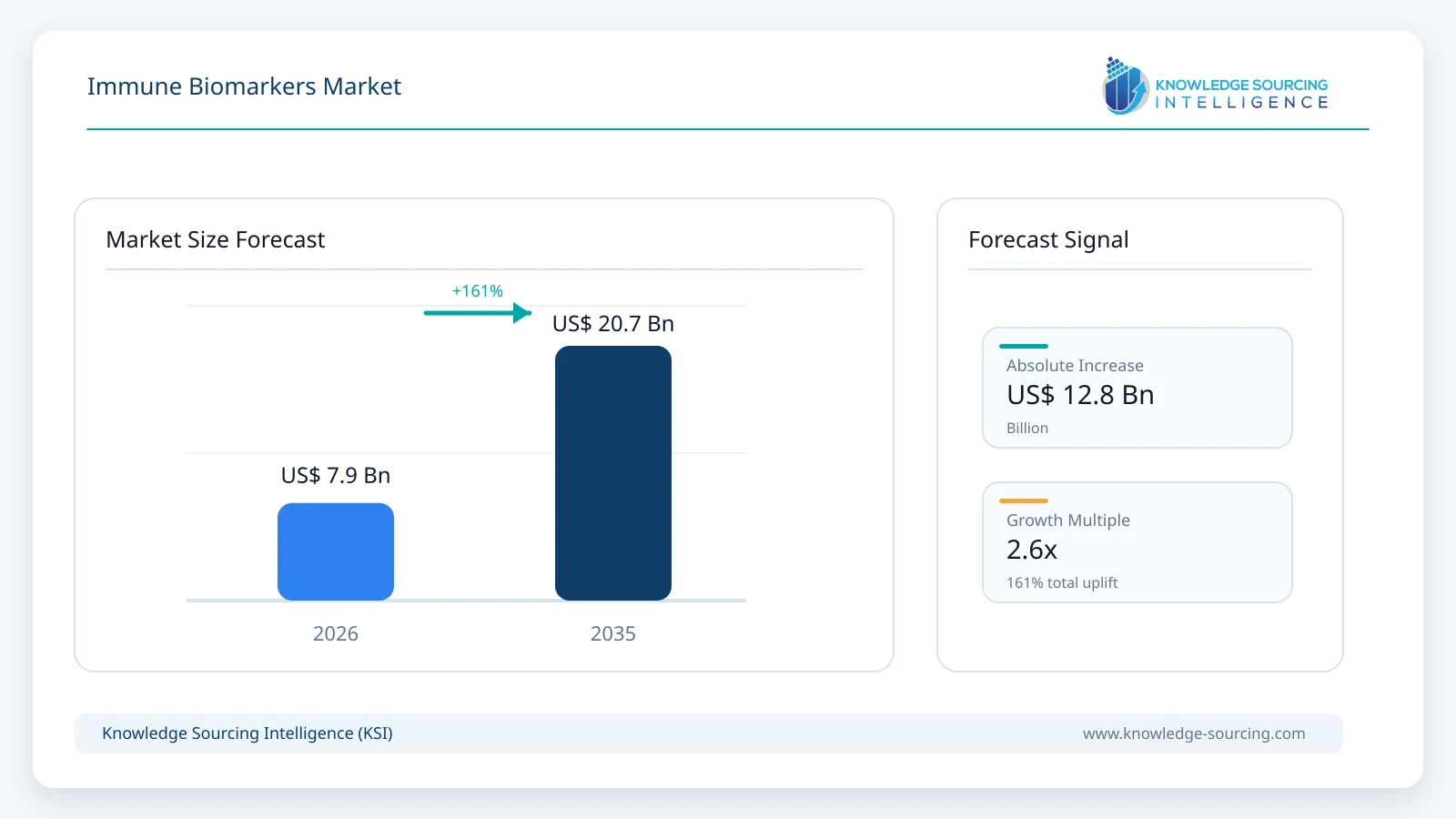
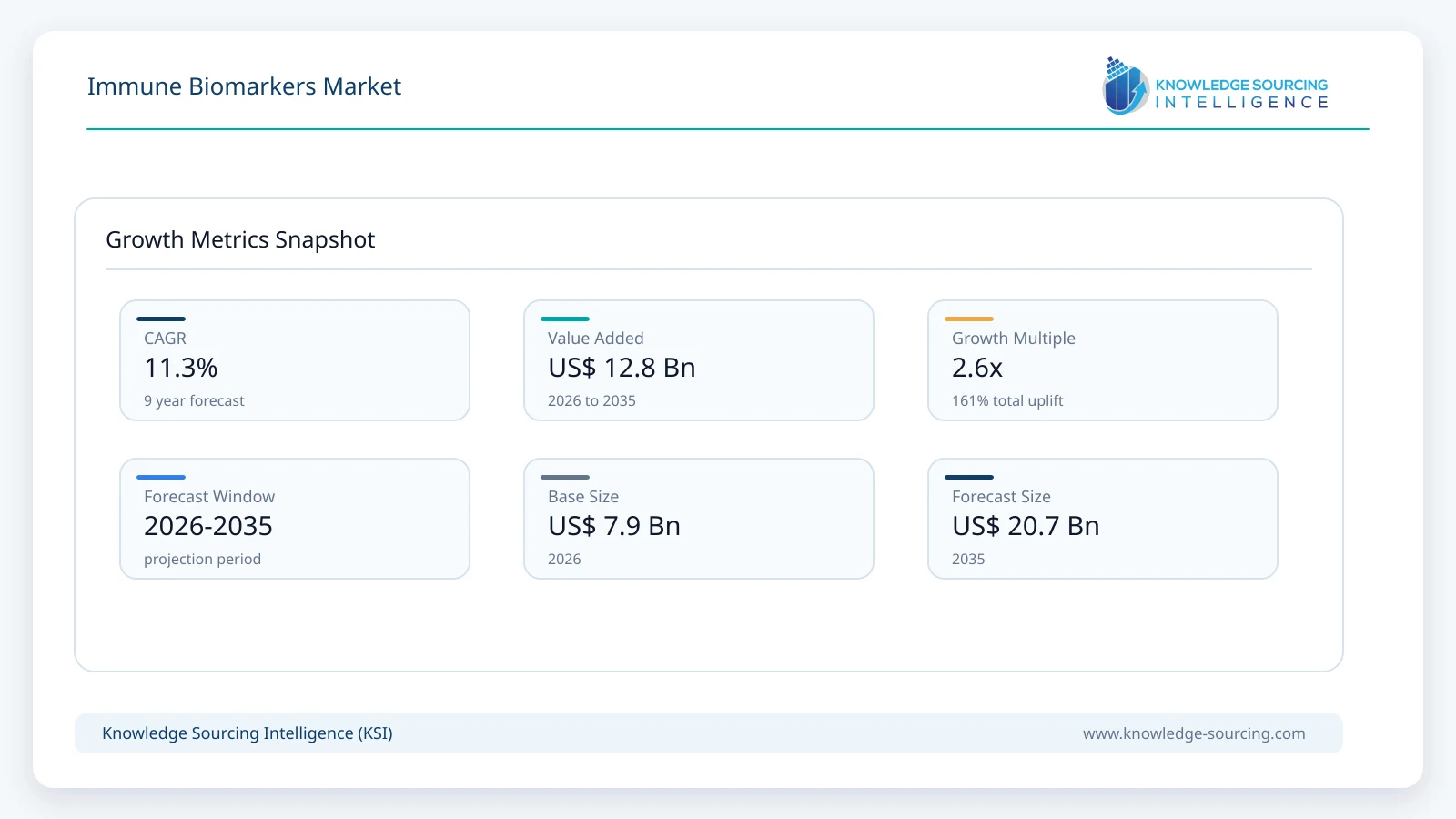
The Immune Biomarkers Market is anticipated to grow at a CAGR of 11.3% from USD 7.92 billion in 2026 to USD 20.68 billion in 2035.
Highlights:
- 1Growth in immunotherapy development is increasing demand for immune biomarkers because treatment response increasingly depends on patient-specific immune characteristics.
- 2Expansion of precision medicine programs is driving demand for multi-parameter immune profiling because single-marker approaches provide limited biological insight.
- 3Rising adoption of next-generation sequencing and single-cell technologies is increasing biomarker discovery activity because researchers seek deeper understanding of immune mechanisms.
- 4Growth in autoimmune and inflammatory disease research is strengthening demand for immune monitoring biomarkers because treatment effectiveness varies across patient populations.
Immune biomarkers provide measurable indicators of immune system activity that support disease detection, prognosis assessment, treatment selection, and therapeutic monitoring. Demand for these biomarkers is increasing because healthcare systems are prioritizing personalized treatment approaches that depend on biological response patterns. This requirement creates dependence on technologies capable of detecting subtle immune variations across diverse patient populations. Diagnostic developers are advancing analytical platforms to improve sensitivity, specificity, and clinical utility. The result is broader adoption of immune biomarker testing across research and clinical environments.
The expansion of immunotherapy continues to influence biomarker demand because treatment response varies significantly among patients with similar clinical diagnoses. Demand for predictive biomarkers is rising as clinicians seek tools that improve patient stratification and reduce treatment uncertainty. This challenge limits the effectiveness of conventional treatment selection approaches that rely primarily on clinical observations. Healthcare providers are incorporating biomarker-driven decision frameworks to improve therapeutic precision. The outcome is stronger integration of immune biomarkers within treatment pathways.
Regulatory agencies increasingly recognize the importance of biomarker-based evidence because precision medicine requires objective biological measurements to support clinical decisions. Demand for validated biomarkers is increasing as pharmaceutical developers pursue targeted therapies that require robust patient selection strategies. This environment raises expectations for analytical performance and clinical validation. Industry stakeholders are investing in evidence generation and standardization initiatives to address regulatory requirements. The result is a more structured and clinically relevant immune biomarker landscape.
Market Dynamics
Market Drivers
Expansion of Immunotherapy Development: Immunotherapy relies on understanding individual immune responses to achieve optimal clinical outcomes. Demand for immune biomarkers is increasing because developers require tools that identify patients most likely to benefit from treatment. This need creates pressure on research organizations to generate more predictive biological indicators. Pharmaceutical companies are integrating biomarker strategies earlier in development programs to improve trial performance. The outcome is sustained growth in immune biomarker utilization across therapeutic pipelines.
Increasing Adoption of Precision Medicine: Precision medicine depends on accurate biological characterization of patients. Demand for immune biomarkers is rising because healthcare providers increasingly seek individualized treatment strategies. This shift reduces reliance on generalized therapeutic approaches that may not account for immune variability. Diagnostic developers are expanding immune profiling capabilities to improve treatment selection and monitoring. The result is broader clinical adoption of immune biomarker technologies.
Advancements in Multi-omics Technologies: Multi-omics technologies provide deeper insight into immune system behavior by integrating genomic, transcriptomic, and proteomic information. Demand for advanced biomarker analysis is increasing because disease mechanisms often involve multiple biological pathways. This complexity limits the effectiveness of isolated biomarker measurements. Research organizations are adopting integrated analytical approaches to generate more comprehensive immune profiles. The outcome is greater demand for sophisticated immune biomarker platforms.
Rising Clinical Trial Biomarker Utilization: Clinical trial success increasingly depends on precise patient selection and treatment monitoring. Demand for immune biomarkers is increasing because sponsors seek measurable indicators that support efficacy evaluation. This requirement creates greater emphasis on biomarker validation and standardization. Companies are incorporating immune biomarker endpoints into development programs to improve clinical evidence generation. The result is expanding use of biomarkers throughout therapeutic development.
Market Restraints
High analytical complexity limits widespread implementation because immune responses involve dynamic and highly variable biological pathways.
Standardization challenges persist because biomarker measurement methodologies differ across laboratories and testing platforms.
Clinical validation requirements remain resource-intensive because regulatory acceptance depends on demonstrating reproducible clinical utility.
Market Opportunities
Expansion of Single-Cell Immune Analysis: Single-cell technologies enable detailed characterization of immune populations at an individual cell level. Demand for these approaches is increasing because researchers seek greater understanding of immune heterogeneity. This need exposes limitations in bulk analysis methods that mask important biological differences. Technology developers are advancing single-cell platforms to improve biomarker discovery and validation. The outcome is a growing opportunity for high-resolution immune profiling solutions.
Growth of Blood-Based Immune Monitoring: Blood-based testing provides a practical approach to monitoring immune activity over time. Demand for minimally invasive immune assessment is increasing because clinicians require repeatable methods for tracking treatment response. Traditional tissue-based approaches create accessibility and procedural limitations. Diagnostic developers are enhancing blood-based biomarker technologies to improve clinical utility. The result is expanding adoption of non-invasive immune monitoring solutions.
Integration of Artificial Intelligence in Biomarker Discovery: Immune system data increasingly involves large and complex biological datasets. Demand for advanced analytical capabilities is rising because traditional analysis methods struggle to identify meaningful patterns across multiple variables. This challenge creates opportunities for artificial intelligence-enabled biomarker discovery platforms. Organizations are integrating machine learning technologies into research workflows to accelerate biological insight generation. The outcome is improved efficiency in biomarker identification and validation.
Expansion of Biomarker-Guided Drug Development: Therapeutic pipelines increasingly target specific immune pathways and mechanisms. Demand for validated biomarkers is increasing because developers require tools that support patient selection and response prediction. This requirement strengthens the role of biomarkers throughout clinical development. Pharmaceutical companies are expanding collaborations with diagnostic and technology providers to support biomarker-driven programs. The result is a growing market opportunity linked directly to precision therapeutics.
Government Regulations
Region/Country | Regulatory Authority | Regulatory Relevance for Immune Biomarkers |
United States | U.S. Food and Drug Administration (FDA) | Oversees biomarker qualification programs, in vitro diagnostic approvals, and companion diagnostic regulation |
European Union | European Commission / National Competent Authorities | Regulates biomarker-related diagnostic products under the In Vitro Diagnostic Regulation (IVDR) |
Japan | Pharmaceuticals and Medical Devices Agency (PMDA) | Evaluates diagnostic technologies and biomarker-supported clinical applications |
China | National Medical Products Administration (NMPA) | Oversees clinical validation and commercialization of diagnostic products |
Market Segmentation
By Biomarker Type
Biomarker type determines the biological depth that clinicians and researchers can extract from immune system activity. Demand is shifting toward multi-parameter immune biomarkers because immune responses increasingly involve interconnected cellular, genomic, and proteomic mechanisms. This complexity reduces the predictive value of isolated biomarkers in many therapeutic settings. Researchers are integrating cellular, cytokine, genomic, and protein-based markers to generate more comprehensive immune profiles. The outcome is stronger adoption of biomarker panels capable of supporting personalized treatment strategies and advanced clinical research.
By Technology Platform
Technology platforms define the analytical capability available for immune biomarker detection and validation. Demand is increasing for next-generation sequencing, single-cell analysis, and high-dimensional flow cytometry because researchers require deeper characterization of immune responses. Traditional analytical approaches face limitations when addressing highly heterogeneous biological systems. Technology providers are expanding platform sensitivity, multiplexing capacity, and data integration capabilities to address these challenges. The result is greater utilization of advanced immune profiling technologies across research and clinical environments.
By Application
Application demand increasingly reflects the growing importance of immune response monitoring across diverse disease categories. Demand is rising most rapidly in oncology because immunotherapies require accurate prediction and monitoring of treatment response. This expansion creates broader interest in autoimmune diseases, infectious diseases, transplantation monitoring, neurological disorders, and cardiovascular applications. Healthcare organizations are incorporating immune biomarker testing into disease management frameworks to improve clinical outcomes. The outcome is wider integration of immune biomarkers across therapeutic decision-making processes.
Regional Analysis
North America
North America represents the largest concentration of immune biomarker research and commercialization activity because the region combines advanced healthcare infrastructure, strong pharmaceutical innovation, and significant investment in precision medicine. Demand for immune biomarkers is increasing as immunotherapy adoption expands across oncology and autoimmune disease treatment pathways. This growth creates pressure on healthcare providers and researchers to identify reliable indicators of treatment response and disease progression. Academic institutions, biotechnology companies, and pharmaceutical developers are expanding immune profiling programs to address these needs. The outcome is a highly developed ecosystem that supports both clinical implementation and biomarker innovation.
The United States remains the primary market driver because pharmaceutical development increasingly depends on biomarker-guided clinical strategies. Demand for immune monitoring technologies is rising as immunotherapies target increasingly specialized biological pathways. This complexity increases the need for advanced analytical platforms capable of generating clinically actionable insights. Organizations are investing in genomics, proteomics, and single-cell technologies to improve biomarker discovery and validation. The result is sustained growth in immune biomarker utilization throughout the therapeutic development lifecycle.
Canada contributes through expanding translational research programs and precision medicine initiatives. Demand for immune profiling solutions is increasing because healthcare institutions seek improved patient stratification and disease management capabilities. This objective encourages greater collaboration between research organizations and industry participants. Stakeholders are strengthening biomarker development networks to accelerate clinical adoption. The outcome is continued regional expansion supported by research-driven innovation.
Europe
Europe maintains a strong position within the immune biomarkers market because healthcare systems increasingly emphasize precision medicine and evidence-based treatment approaches. Demand for immune biomarkers is increasing as clinicians seek better tools for evaluating treatment response across oncology and chronic disease management programs. This requirement creates greater reliance on validated biomarker platforms capable of supporting clinical decision-making. Research institutions and healthcare providers are expanding biomarker-focused initiatives to improve patient outcomes. The outcome is growing integration of immune profiling into routine healthcare and therapeutic development.
The implementation of the In Vitro Diagnostic Regulation continues influencing market development because diagnostic products require stronger analytical and clinical evidence. Demand for validated immune biomarkers is rising as manufacturers adapt to increasingly rigorous regulatory requirements. This transition creates operational challenges while improving confidence in diagnostic reliability and clinical relevance. Companies are strengthening validation programs and regulatory capabilities to address evolving compliance expectations. The result is a more structured and evidence-driven market environment.
Germany, the United Kingdom, France, and Switzerland remain major contributors because these countries support substantial biomedical research activity and pharmaceutical innovation. Demand for immune profiling technologies is increasing as immunotherapy development expands across multiple disease categories. This trend encourages investment in advanced laboratory infrastructure and biomarker discovery programs. Industry participants are enhancing collaborations with healthcare institutions to accelerate translational research. The outcome is continued growth across the European immune biomarker ecosystem.
Asia Pacific
Asia Pacific is emerging as a major growth region because healthcare systems are increasing investment in precision medicine infrastructure and advanced diagnostic capabilities. Demand for immune biomarkers is rising as awareness of personalized treatment strategies expands among clinicians and healthcare policymakers. This shift exposes limitations in traditional disease management approaches that lack biological stratification. Governments and healthcare organizations are supporting genomic medicine initiatives to improve treatment effectiveness. The outcome is increasing adoption of immune biomarker technologies throughout the region.
China remains a key growth engine because pharmaceutical innovation and immunotherapy development continue expanding rapidly. Demand for immune profiling solutions is increasing as drug developers seek biomarkers capable of supporting targeted clinical programs. This requirement creates pressure on diagnostic and research organizations to improve analytical capabilities. Companies are investing in sequencing technologies, proteomics platforms, and biomarker validation infrastructure to address these needs. The result is accelerated development of the regional biomarker ecosystem.
Japan and South Korea continue strengthening their positions because advanced healthcare systems support precision medicine implementation. Demand for immune monitoring technologies is rising as healthcare providers seek improved methods for evaluating treatment effectiveness. This need encourages broader adoption of high-dimensional analytical technologies. Industry participants are expanding collaborations with academic and clinical institutions to support biomarker innovation. The outcome is sustained market growth across developed Asia-Pacific economies.
India and Australia are contributing through increasing investment in clinical research and translational medicine. Demand for immune biomarker testing is increasing because healthcare systems are recognizing the value of personalized treatment frameworks. This recognition encourages development of biomarker research capabilities and laboratory infrastructure. Organizations are expanding clinical validation activities to improve healthcare integration. The result is growing regional participation in immune biomarker development and adoption.
Rest of the World
The Rest of the World region is experiencing gradual expansion because healthcare systems increasingly recognize the value of immune-based precision medicine. Demand for immune biomarkers is rising as treatment strategies become more dependent on understanding patient-specific biological responses. This transition creates infrastructure and accessibility challenges that can limit adoption. Healthcare organizations are pursuing investments and partnerships to strengthen diagnostic capabilities. The outcome is progressive market development across emerging healthcare environments.
Latin America demonstrates growing interest in biomarker-driven healthcare because oncology and chronic disease management increasingly rely on personalized treatment approaches. Demand for immune profiling technologies is increasing as healthcare providers seek better methods for evaluating therapeutic effectiveness. This trend creates pressure on laboratory networks to improve testing capacity and analytical sophistication. Industry participants are supporting capability expansion through technology deployment and collaboration initiatives. The result is strengthening demand across major Latin American healthcare markets.
The Middle East continues investing in advanced healthcare services as governments prioritize healthcare modernization and innovation. Demand for immune biomarker solutions is rising because precision medicine programs require reliable biological assessment tools. This objective encourages adoption of advanced diagnostics and translational research capabilities. Healthcare providers are integrating biomarker-guided approaches into clinical practice to improve treatment outcomes. The outcome is expanding market potential across the region.
Africa remains at an earlier stage of adoption because infrastructure limitations affect access to advanced diagnostic technologies. Demand for immune biomarker testing is increasing within specialized healthcare centers as oncology and immunology services continue developing. This evolution creates opportunities for targeted technology deployment and research partnerships. Stakeholders are strengthening laboratory capacity to support future precision medicine initiatives. The result is gradual advancement of immune biomarker utilization across selected healthcare markets.
Regulatory Landscape
Immune biomarkers increasingly influence clinical and regulatory decision-making because precision medicine depends on measurable biological evidence. Demand for validated biomarkers is increasing as healthcare systems seek objective methods for treatment selection, monitoring, and risk assessment. This requirement creates stronger emphasis on analytical performance, reproducibility, and clinical relevance. Regulatory authorities are expanding guidance frameworks to support biomarker qualification and diagnostic development. The outcome is a more structured environment for biomarker commercialization and clinical adoption.
The U.S. Food and Drug Administration continues supporting biomarker qualification initiatives because therapeutic development increasingly relies on biological response indicators. Demand for regulatory-grade evidence is rising as pharmaceutical companies integrate biomarkers into clinical development programs. This trend increases the importance of standardized validation methodologies and robust data generation. Industry participants are strengthening regulatory engagement strategies to improve development efficiency. The result is greater alignment between biomarker innovation and regulatory expectations.
European regulatory oversight continues to evolve under the IVDR framework because diagnostic reliability plays an increasingly important role in clinical decision-making. Demand for validated immune biomarkers is increasing as manufacturers seek compliance with expanded performance and documentation requirements. This environment encourages greater investment in analytical validation and quality management systems. Organizations are enhancing regulatory capabilities to support market access and long-term commercialization. The outcome is a stronger evidence-based foundation for immune biomarker deployment.
Pipeline Analysis
The immune biomarker pipeline continues expanding because therapeutic development increasingly requires detailed understanding of immune system behavior. Demand for novel biomarkers is increasing as immunotherapies target more specific biological pathways and patient populations. This specialization creates pressure on developers to identify measurable indicators that predict treatment response and disease progression. Research organizations are advancing discovery programs using genomics, proteomics, and single-cell technologies to address these requirements. The outcome is a growing pipeline of candidate biomarkers across multiple therapeutic areas.
Oncology remains the largest area of immune biomarker development because immunotherapies increasingly depend on accurate patient stratification and response monitoring. According to ClinicalTrials.gov, thousands of active oncology studies incorporate biomarker endpoints as part of clinical development strategies. Demand for predictive immune biomarkers is increasing because sponsors seek to improve trial efficiency and therapeutic effectiveness. Organizations are expanding research into tumor microenvironment biomarkers, immune cell signatures, and cytokine-based indicators. The result is continued pipeline growth within precision oncology.
Multi-omics and immune repertoire analysis are becoming increasingly important because disease mechanisms involve complex interactions across multiple biological systems. Demand for integrated biomarker approaches is rising as researchers seek broader understanding of immune regulation and therapeutic response. This complexity encourages adoption of advanced analytical platforms capable of generating high-dimensional biological data. Industry participants are investing in technologies that combine genomic, proteomic, transcriptomic, and cellular information. The outcome is a more sophisticated immune biomarker pipeline capable of supporting future precision medicine applications.
Competitive Landscape
Thermo Fisher Scientific Inc.
Thermo Fisher Scientific maintains a strategically distinct position because it combines life sciences tools, analytical technologies, sequencing platforms, reagents, and laboratory services within a single ecosystem. Demand for integrated immune biomarker workflows is increasing as researchers seek end-to-end solutions that reduce operational complexity and improve reproducibility. This requirement strengthens Thermo Fisher’s relevance across biomarker discovery, validation, and translational research activities. The company is expanding proteomics, genomics, and immune profiling capabilities to support growing precision medicine requirements. Its broad instrument portfolio, including flow cytometry systems, molecular biology tools, and sequencing solutions, creates strong cross-platform adoption opportunities. Pharmaceutical developers increasingly depend on comprehensive analytical infrastructures because biomarker development requires consistency across multiple stages of research and clinical validation. Thermo Fisher is responding through continued investment in automation, bioinformatics, and high-throughput analytical technologies. The outcome is a diversified competitive position supported by technological breadth, global commercial reach, and deep integration within pharmaceutical and academic research ecosystems.
Danaher Corporation
Danaher occupies a strategically important position because its life sciences businesses support multiple layers of immune biomarker development, including genomics, proteomics, diagnostics, and analytical instrumentation. Demand for advanced biomarker characterization is increasing as immunotherapies require increasingly sophisticated biological assessment tools. This need strengthens the value of Danaher’s portfolio, particularly through businesses involved in molecular analysis and translational research. The company is expanding capabilities that support biomarker discovery, assay development, and clinical validation activities. Healthcare and pharmaceutical organizations increasingly seek scalable analytical platforms because immune biomarker programs generate large and complex datasets. Danaher is enhancing automation, digital integration, and analytical performance to address these challenges. The outcome is a strong market position supported by broad scientific expertise, established laboratory relationships, and continuous investment in innovation.
F. Hoffmann-La Roche Ltd
Roche maintains strategic differentiation because it combines pharmaceutical development expertise with advanced diagnostic capabilities. Demand for biomarker-guided therapies is increasing as treatment effectiveness becomes more dependent on biological stratification. This dynamic strengthens Roche’s ability to align diagnostic innovation with therapeutic development objectives. The company is expanding precision medicine initiatives that integrate immune biomarkers into drug development and clinical decision-making processes. Pharmaceutical developers increasingly require coordinated biomarker strategies because regulatory and commercial success often depends on patient selection accuracy. Roche is leveraging its diagnostics infrastructure and pharmaceutical pipeline to address these requirements. The outcome is a highly integrated competitive position that supports both biomarker development and therapeutic commercialization.
Bio-Rad Laboratories, Inc.
Bio-Rad Laboratories differentiates itself through expertise in molecular biology, digital PCR, and life science research technologies. Demand for highly sensitive immune biomarker detection is increasing because researchers increasingly focus on low-abundance biological signals associated with treatment response and disease progression. This requirement creates opportunities for analytical platforms capable of delivering precise and reproducible measurements. Bio-Rad is expanding applications for digital PCR and molecular analysis technologies to support biomarker discovery and validation activities. Research organizations increasingly require quantitative biomarker assessment because immune profiling programs continue growing in complexity. The company is strengthening product capabilities to address these evolving analytical needs. The outcome is a specialized market position focused on high-sensitivity immune biomarker measurement.
QIAGEN N.V.
QIAGEN maintains competitive strength through its focus on molecular diagnostics, sample preparation technologies, and biomarker development support. Demand for immune biomarker testing is increasing because precision medicine programs increasingly depend on reliable molecular analysis. This dependency raises the importance of standardized workflows and reproducible testing performance. QIAGEN is expanding biomarker solutions that support translational research, clinical development, and diagnostic applications. Pharmaceutical developers increasingly seek partners capable of supporting biomarker programs from discovery through commercialization. The company is enhancing analytical platforms and companion diagnostic capabilities to address these requirements. The outcome is a strong position within molecular biomarker ecosystems and precision medicine initiatives.
Agilent Technologies, Inc.
Agilent Technologies occupies an important position because immune biomarker research increasingly depends on high-performance analytical instrumentation and bioanalytical workflows. Demand for advanced biomarker characterization is rising as researchers seek greater understanding of immune system complexity. This trend increases reliance on technologies capable of generating accurate and reproducible biological measurements. Agilent is expanding mass spectrometry, pathology, and molecular analysis capabilities to support immune biomarker development. Research organizations require scalable analytical platforms because biomarker discovery programs continue producing larger datasets and more complex biological questions. The company is enhancing workflow efficiency and analytical precision to meet these needs. The outcome is sustained relevance across biomarker discovery and translational research applications.
Illumina, Inc.
Illumina maintains a leading role because genomic analysis increasingly supports immune biomarker discovery and immune system characterization. Demand for sequencing-based immune profiling is increasing as researchers seek comprehensive insight into immune response mechanisms. This shift creates dependence on scalable sequencing technologies capable of generating high-resolution biological data. Illumina is advancing sequencing platforms and analytical tools to support expanding biomarker research requirements. Pharmaceutical and academic organizations increasingly utilize genomic approaches because treatment development depends on understanding complex biological interactions. The company is strengthening sequencing accessibility and analytical performance to support broader adoption. The outcome is a strong competitive position driven by leadership in genomic technologies and precision medicine applications.
Standard BioTools Inc.
Standard BioTools maintains strategic relevance because high-dimensional immune analysis increasingly requires technologies capable of measuring multiple biological parameters simultaneously. Demand for single-cell and multiplexed biomarker assessment is rising as researchers seek deeper understanding of immune heterogeneity. This need creates opportunities for specialized analytical platforms designed to capture complex cellular interactions. The company is advancing technologies that support systems-level immune analysis across research and clinical development environments. Investigators increasingly require multi-parameter data because disease mechanisms involve interconnected biological pathways rather than isolated molecular events. Standard BioTools is enhancing analytical depth and workflow integration to address these requirements. The outcome is a differentiated position within advanced immune profiling and biomarker discovery markets.
Future Market Outlook
The immune biomarkers market is moving toward increasingly comprehensive biological characterization because therapeutic development depends on understanding complex immune system interactions. Demand for multi-parameter profiling is rising as immunotherapies expand into broader disease categories and target increasingly specific biological mechanisms. This evolution reduces the clinical value of isolated biomarkers and increases the importance of integrated analytical approaches. Industry participants are investing in genomics, proteomics, immune repertoire analysis, and single-cell technologies to address these emerging requirements. The outcome is a transition toward more predictive and clinically actionable biomarker frameworks.
Artificial intelligence is becoming increasingly important because immune biomarker datasets continue expanding in scale and complexity. Demand for advanced computational analysis is increasing as researchers seek to identify meaningful biological patterns across diverse data sources. This challenge encourages greater integration of machine learning tools within biomarker discovery and validation workflows. Organizations are strengthening bioinformatics capabilities to improve efficiency and accelerate translational research outcomes. The result is a more data-driven biomarker development environment.
Precision medicine continues strengthening the strategic importance of immune biomarkers because treatment effectiveness increasingly depends on patient-specific biological information. Demand for validated biomarkers is rising as healthcare systems prioritize treatment optimization and value-based care models. This environment encourages closer collaboration among diagnostic companies, pharmaceutical developers, healthcare providers, and research institutions. Stakeholders are expanding integrated development strategies to improve clinical utility and commercialization success. The outcome is a stronger and more interconnected precision medicine ecosystem.
Immune biomarkers increasingly function as critical decision-making tools rather than supplementary research measurements. Demand continues expanding because healthcare providers require objective indicators that improve diagnosis, treatment selection, monitoring, and therapeutic development. This requirement reinforces investment in advanced analytical technologies, biomarker validation programs, and translational research capabilities. Organizations that successfully combine scientific innovation, regulatory readiness, and scalable analytical infrastructure are likely to achieve the strongest competitive positions as precision medicine adoption continues accelerating across global healthcare systems.
Immune Biomarkers Market Scope:
| Report Metric | Details |
|---|---|
| Total Market Size in 2026 | USD 7.92 billion |
| Total Market Size in 2035 | USD 20.68 billion |
| Forecast Unit | USD Billion |
| Growth Rate | 11.3% |
| Study Period | 2021 to 2035 |
| Historical Data | 2021 to 2024 |
| Base Year | 2025 |
| Forecast Period | 2026 – 2035 |
| Segmentation | Biomarker Type, Technology Platform, End User, Geography |
| Companies |
|
Market Segmentation
Biomarker Type
Technology Platform
End User
Geography
- North America
- South America
- Europe
- Middle East and Africa
- Asia Pacific
Table of Contents
1. EXECUTIVE SUMMARY
1.1 Market Snapshot
1.2 Key Findings
1.3 Analyst Insights
1.4 Strategic Recommendations
2. RESEARCH METHODOLOGY
2.1 Research Design
2.2 Data Collection Methodology
2.3 Market Size Estimation
2.4 Forecasting Model
2.5 Assumptions & Limitations
3. IMMUNE BIOMARKERS MARKET OVERVIEW, SIZE & FORECAST
3.1 Market Definition & Scope
3.2 Industry Overview
3.3 Industry Evolution
3.4 Key Market Trends
3.5 Historical Market Size Analysis (2021-2025)
3.6 Market Forecast Analysis (2026-2035)
3.7 Immune Biomarker Ecosystem Analysis
3.8 Biomarker Discovery and Validation Framework
3.9 Immune Response Monitoring Landscape
3.10 Testing Volume Analysis
3.11 User Adoption Analysis
3.12 Role of Immune Biomarkers in Precision Medicine
3.13 Clinical Utility Across Disease Areas
4. MARKET DYNAMICS
4.1 Market Drivers
4.2 Market Restraints
4.3 Market Opportunities
4.4 Market Challenges
5. INDUSTRY LANDSCAPE
5.1 Industry Value Chain Analysis
5.2 Pricing Analysis
5.3 Reimbursement Landscape
5.4 Stakeholder Ecosystem Analysis
5.5 Laboratory Services and Testing Infrastructure Analysis
6. INNOVATION LANDSCAPE
6.1 Emerging Technologies in Immune Biomarker Research
6.2 Product Innovation Trends
6.3 Clinical Trial Analysis
6.4 Immune Biomarker Pipeline Analysis
6.5 Single-Cell Analysis Innovations
6.6 Multi-omics Integration Trends
6.7 AI Integration in Biomarker Discovery and Validation
6.8 Digital Biomarker Development Trends
6.9 Technology Roadmap
7. REGULATORY LANDSCAPE
7.1 Regulatory Framework
7.2 Approval Pathways
7.3 Compliance Requirements
7.4 Biomarker Qualification Programs
7.5 Clinical Validation Requirements
8. IMMUNE BIOMARKERS MARKET LANDSCAPE ANALYSIS
8.1 Analysis by Biomarker Type
8.2 Analysis by Technology Platform
8.3 Analysis by Sample Type
8.4 Analysis by Clinical Application
8.5 Analysis by Disease Area
8.6 Analysis by Testing Methodology
8.7 Analysis by End User
8.8 Analysis by Development Stage
9. IMMUNE BIOMARKERS MARKET SEGMENT ANALYSIS (2021-2035)
9.1 By Biomarker Type
9.1.1 Cellular Biomarkers
9.1.2 Cytokine and Chemokine Biomarkers
9.1.3 Genetic and Genomic Biomarkers
9.1.4 Protein Biomarkers
9.1.5 Multi-parameter Immune Biomarkers
9.2 By Technology Platform
9.2.1 Flow Cytometry
9.2.2 Next-Generation Sequencing (NGS)
9.2.3 Polymerase Chain Reaction (PCR)
9.2.4 Immunoassays
9.2.5 Mass Spectrometry
9.2.6 Single-Cell Analysis Technologies
9.3 By Application
9.3.1 Oncology
9.3.2 Autoimmune Diseases
9.3.3 Infectious Diseases
9.3.4 Transplantation Monitoring
9.3.5 Neurological Disorders
9.3.6 Cardiovascular Diseases
9.4 By Sample Type
9.4.1 Blood
9.4.2 Tissue
9.4.3 Bone Marrow
9.4.4 Other Biological Samples
9.5 By End User
9.5.1 Pharmaceutical and Biotechnology Companies
9.5.2 Academic and Research Institutes
9.5.3 Clinical Laboratories
9.5.4 Hospitals and Healthcare Providers
9.5.5 Contract Research Organizations (CROs)
10. IMMUNE BIOMARKERS MARKET GEOGRAPHICAL ANALYSIS (2021-2035)
10.1 North America
10.2 Europe
10.3 Asia-Pacific
10.4 South America
10.5 Middle East & Africa
11. IMMUNE BIOMARKERS MARKET COUNTRY ANALYSIS (2021-2035)
11.1 United States
11.2 Canada
11.3 Germany
11.4 United Kingdom
11.5 France
11.6 Switzerland
11.7 Japan
11.8 China
11.9 South Korea
11.10 Australia
11.11 India
11.12 Singapore
12. COMPETITIVE LANDSCAPE
12.1 Market Share Analysis
12.2 Strategic Developments
12.3 Mergers & Acquisitions, Partnerships & Collaborations
12.4 Product Launches
12.5 Competitive Benchmarking
12.6 Biomarker Development Partnership Analysis
13. COMPANY PROFILES
13.1 Thermo Fisher Scientific Inc.
13.2 Danaher Corporation
13.3 F. Hoffmann-La Roche Ltd
13.4 Bio-Rad Laboratories, Inc.
13.5 QIAGEN N.V.
13.6 Agilent Technologies, Inc.
13.7 Illumina, Inc.
13.8 Standard BioTools Inc.
13.9 Revvity, Inc.
13.10 Olink Holding AB
13.11 Adaptive Biotechnologies Corporation
13.12 Myriad Genetics, Inc.
13.13 NeoGenomics, Inc.
13.14 Becton, Dickinson and Company
13.15 Bio-Techne Corporation
14. IMMUNE BIOMARKERS MARKET COMMERCIAL FORECAST ANALYSIS
14.1 Cellular Biomarker Testing
14.2 Cytokine and Chemokine Biomarker Testing
14.3 Genomic Immune Biomarker Testing
14.4 Protein Biomarker Testing
14.5 Multi-omics Immune Biomarker Platforms
14.6 Flow Cytometry-Based Biomarker Solutions
14.7 NGS-Based Immune Profiling Solutions
15. INVESTMENT & FUNDING ANALYSIS
15.1 Venture Capital Trends
15.2 Government Funding
15.3 R&D Investments
15.4 Precision Medicine Funding Trends
15.5 Immunology Research Investment Landscape
15.6 Biomarker Discovery Funding Analysis
16. FUTURE OUTLOOK
16.1 Key Growth Opportunities
16.2 Future Industry Trends
16.3 Evolution of Multi-omics Biomarker Platforms
16.4 AI-Driven Biomarker Discovery Outlook
16.5 Future Role of Immune Biomarkers in Precision Medicine
16.6 Long-Term Market Outlook (2035)
Navigate
Trusted by the world's leading organizations











