
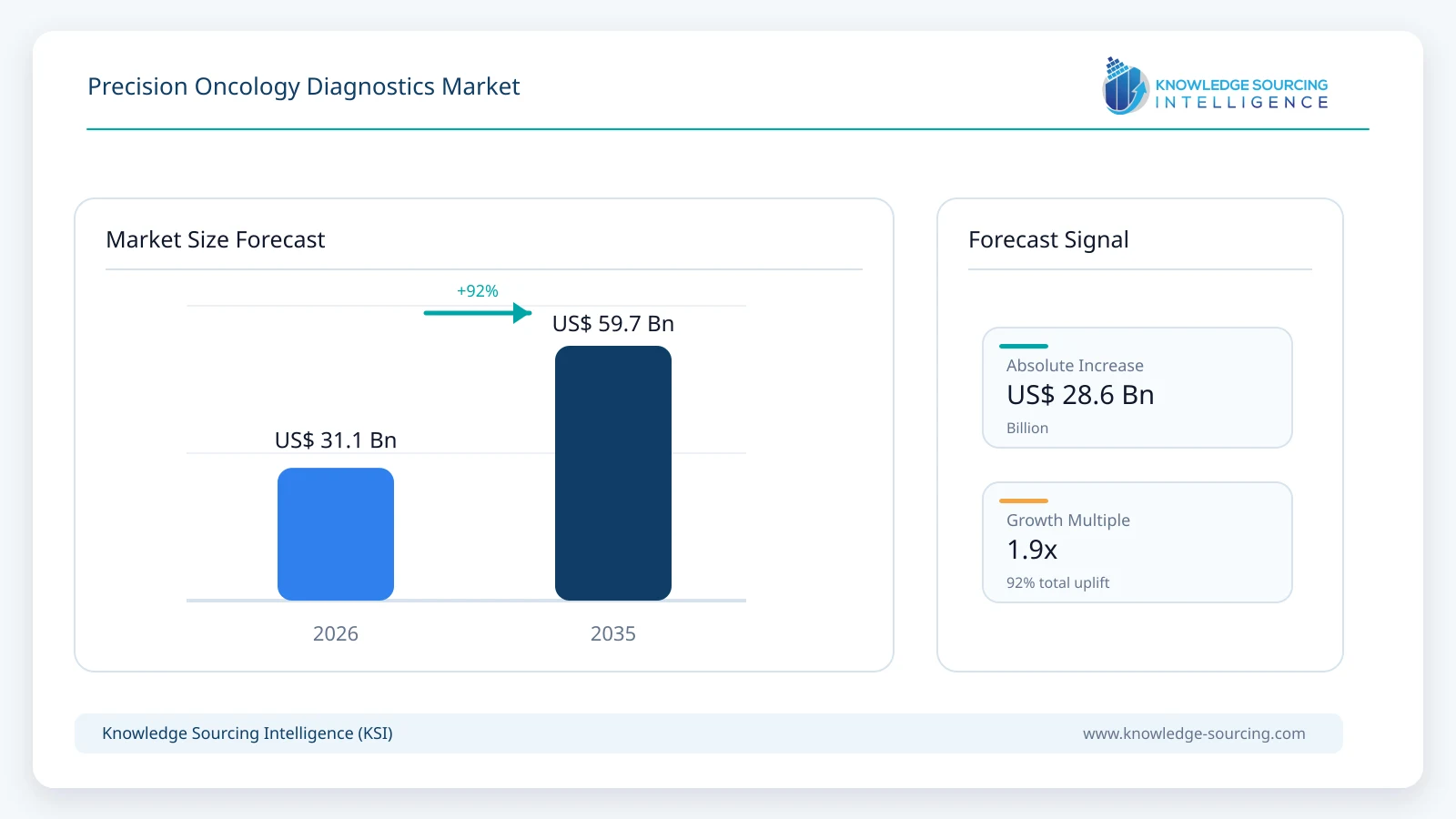
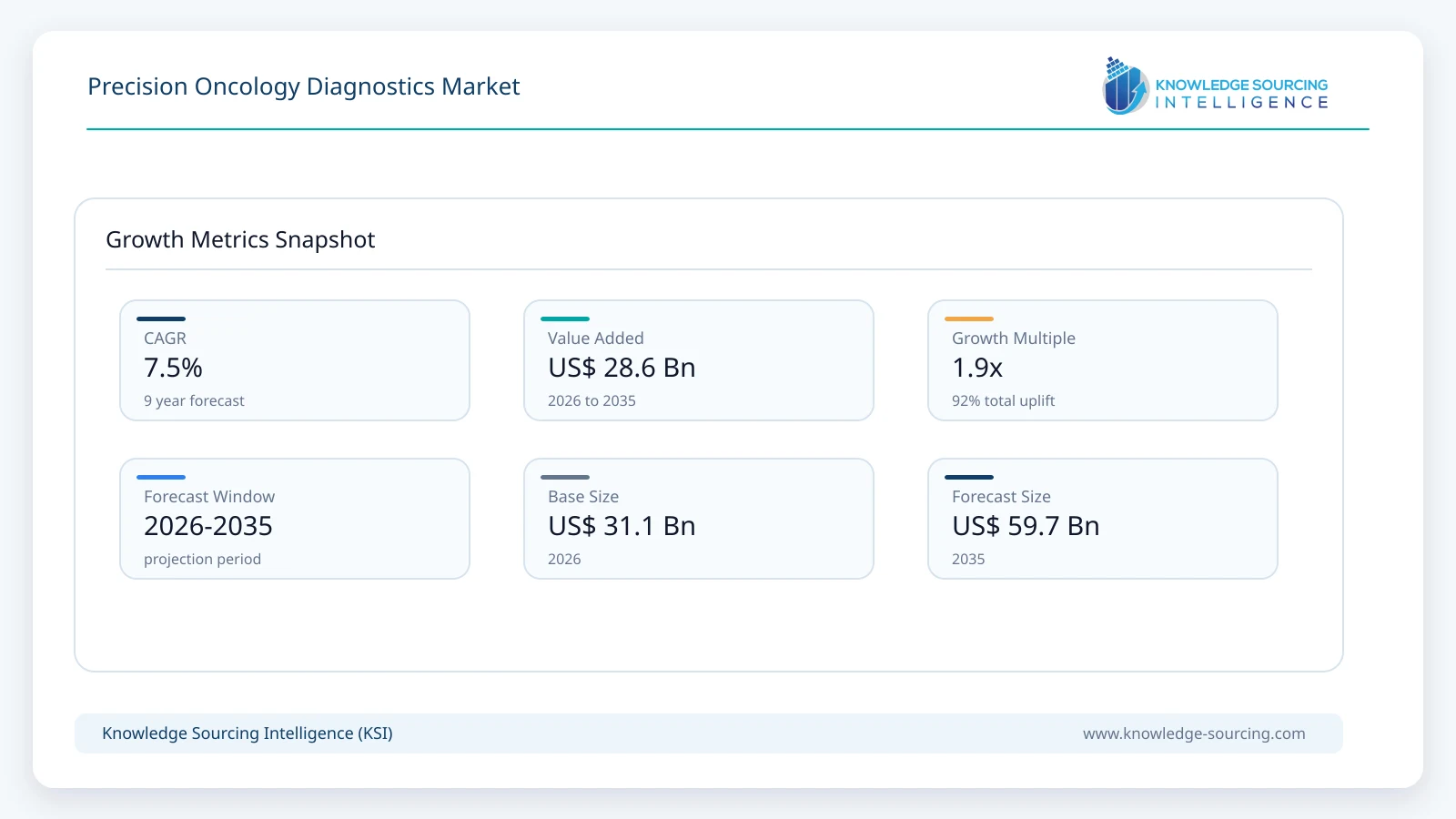
The Precision Oncology Diagnostics Market is expected to grow at a CAGR of 7.5% from a market value of USD 31.1 billion in 2026 to USD 59.7 billion in 2035.
Highlights:
- 1Increasing availability of biomarker-directed oncology therapies is expanding demand for comprehensive molecular profiling because treatment eligibility increasingly depends on validated genomic evidence.
- 2Rising adoption of liquid biopsy technologies is improving longitudinal disease monitoring because repeated tissue sampling remains clinically challenging for many patients.
- 3Companion diagnostic development is accelerating alongside targeted drug pipelines because pharmaceutical sponsors require synchronized regulatory approval strategies.
- 4Artificial intelligence-supported bioinformatics platforms are strengthening the interpretation of complex genomic datasets because sequencing panels continue generating larger volumes of clinically relevant variants.
Precision Oncology Diagnostics establishes the biological foundation for personalized cancer treatment by identifying genomic alterations, protein expression patterns, gene fusions, microsatellite instability, tumor mutational burden, and other predictive biomarkers influencing therapeutic response. Demand continues shifting from single-gene assays toward comprehensive molecular profiling because expanding targeted therapy portfolios require simultaneous evaluation of multiple clinically actionable biomarkers within limited tissue samples. This transition increases reliance on advanced sequencing technologies while encouraging laboratories to consolidate multiple assays into integrated testing workflows.
Therapeutic innovation increasingly depends on diagnostic precision because oncology drug developers require reliable biomarker identification throughout clinical development and commercialization. Companion diagnostic requirements influence clinical trial enrollment, regulatory approval strategies, and post-marketing adoption, creating sustained demand for standardized molecular testing platforms. Healthcare systems are expanding investment in molecular pathology infrastructure as precision medicine becomes embedded within national cancer management strategies. The resulting ecosystem strengthens collaboration among diagnostic manufacturers, pharmaceutical sponsors, academic cancer centers, and regulatory authorities.
Regulatory expectations continue evolving alongside technological innovation because analytical validation, clinical performance, and reproducibility remain essential for biomarker-driven therapeutic decisions. Regulatory agencies are encouraging evidence generation supporting clinical utility while manufacturers continue improving assay sensitivity, automation, and laboratory efficiency. These developments reinforce the strategic importance of precision oncology diagnostics across drug development, clinical decision-making, and longitudinal disease monitoring.
Market Dynamics
Market Drivers
Expansion of Biomarker-Driven Therapeutics: Precision oncology diagnostics provide the molecular evidence required for targeted therapy selection across numerous malignancies. Pharmaceutical pipelines are introducing increasing numbers of biomarker-specific therapies because molecularly defined patient populations improve treatment efficacy and clinical trial outcomes. Limited tissue availability creates pressure for comprehensive genomic profiling instead of sequential testing. Diagnostic developers are expanding multiplex sequencing capabilities that evaluate multiple biomarkers simultaneously.
Growing Adoption of Liquid Biopsy Technologies: Liquid biopsy expands molecular testing opportunities through minimally invasive sampling methods. Clinical practice is incorporating circulating tumor DNA analysis because repeated monitoring supports assessment of treatment response and emerging resistance mutations without repeated tissue biopsies. Tumor heterogeneity limits reliance on single tissue specimens throughout disease progression. Diagnostic manufacturers are improving assay sensitivity and analytical specificity to detect low-frequency genomic alterations.
Regulatory Integration of Companion Diagnostics: Companion diagnostics establish regulatory alignment between therapeutic approval and biomarker identification. Drug developers are incorporating diagnostic strategies during early clinical development because regulatory agencies increasingly evaluate therapeutic effectiveness within biomarker-defined populations. Independent diagnostic validation extends development timelines when analytical performance remains insufficient. Sponsors are strengthening co-development partnerships that synchronize therapeutic and diagnostic submissions.
Expansion of Comprehensive Genomic Profiling: Comprehensive genomic profiling enables simultaneous identification of multiple clinically actionable alterations. Healthcare institutions are replacing sequential single-gene testing because expanding oncology treatment guidelines recommend broader molecular characterization across diverse cancers. Laboratory efficiency declines when multiple independent assays consume limited tissue samples. Technology providers are integrating sequencing automation, bioinformatics, and reporting platforms into unified diagnostic workflows.
Market Restraints
High implementation costs for sequencing infrastructure, bioinformatics platforms, and specialized laboratory personnel restrict broader adoption across resource-constrained healthcare systems.
Variable reimbursement policies and inconsistent clinical coverage delay routine utilization of advanced molecular diagnostics despite expanding clinical evidence.
Complex genomic interpretation requires highly specialized expertise, creating workforce limitations that constrain implementation across smaller diagnostic laboratories.
Market Opportunities
Earlier Integration into Cancer Care Pathways: Precision oncology diagnostics increasingly support decision-making beyond advanced disease management. Screening and early-stage oncology programs are evaluating molecular diagnostics because earlier identification of clinically actionable biomarkers may improve long-term therapeutic planning. Evidence generation remains necessary across multiple tumor types. Diagnostic developers are expanding prospective clinical validation studies supporting earlier testing strategies.
Increasing Pharmaceutical-Diagnostic Partnerships: Companion diagnostic development strengthens commercial differentiation for targeted oncology therapies. Pharmaceutical companies are expanding strategic collaborations with diagnostic manufacturers because synchronized clinical development improves regulatory efficiency and market readiness. Independent development increases commercialization uncertainty. Joint development programs are aligning assay validation with therapeutic clinical trials.
Artificial Intelligence in Molecular Interpretation: Large genomic datasets require efficient interpretation supporting timely clinical decisions. Diagnostic laboratories are incorporating artificial intelligence-assisted variant classification because sequencing complexity continues to increase across comprehensive genomic profiling platforms. Manual interpretation limits reporting consistency. Software developers are integrating automated knowledge databases with clinical reporting systems. Improved analytical efficiency enhances laboratory scalability while supporting precision treatment recommendations.
Expansion of Emerging Healthcare Infrastructure: Healthcare systems increasingly recognize molecular diagnostics as an essential oncology capability. National cancer programs are investing in genomic medicine infrastructure because precision treatment strategies require standardized diagnostic capacity across regional healthcare networks. Laboratory variability limits equitable patient access. Public and private stakeholders are expanding molecular pathology capabilities through technology investments and workforce development initiatives.
Disease & Epidemiology Analysis
Cancer incidence continues to increase globally because of population aging, environmental risk factors, lifestyle changes, and improved diagnostic awareness, collectively expanding the number of patients requiring molecular characterization. Precision oncology diagnostics, therefore, occupy an increasingly important role within oncology management since treatment selection depends on identifying clinically actionable genomic alterations rather than relying exclusively on histopathological classification. Tumor heterogeneity remains a defining biological challenge because cancers originating from the same tissue frequently exhibit distinct molecular signatures that influence therapeutic response, disease progression, and resistance mechanisms. Healthcare providers are expanding comprehensive molecular testing across solid tumors and hematological malignancies as precision medicine continues to replace empiric treatment approaches.
The epidemiological burden increasingly reflects cancers with well-established biomarker-driven therapeutic pathways, including non-small cell lung cancer, breast cancer, colorectal cancer, ovarian cancer, melanoma, prostate cancer, and hematological malignancies. Clinical guidelines recommend biomarker testing for multiple genomic alterations because targeted therapies demonstrate superior clinical benefit in molecularly selected populations. Disease recurrence and acquired therapeutic resistance create additional demand for repeat molecular assessment throughout the treatment journey. Liquid biopsy technologies are supporting longitudinal genomic surveillance because evolving resistance mutations frequently emerge during therapy, requiring treatment modification based on updated molecular evidence.
Treatment Guidelines Landscape
Organization | Cancer Type/Scope | Guideline Focus | Demand Impact on Precision Oncology Diagnostics |
National Comprehensive Cancer Network (NCCN) | Multiple solid tumors and hematologic malignancies | Recommends biomarker-driven treatment selection using validated molecular diagnostics | Expands routine adoption of comprehensive genomic profiling before therapy initiation. |
American Society of Clinical Oncology (ASCO) | Multiple cancers | Supports evidence-based molecular testing for clinically actionable biomarkers | Increases physician confidence in integrating genomic testing into standard oncology practice. |
European Society for Medical Oncology (ESMO) | Solid tumors | Recommends comprehensive genomic profiling in selected advanced cancers with established clinical utility | Drives demand for NGS platforms and standardized interpretation frameworks. |
College of American Pathologists (CAP) | Laboratory diagnostics | Establishes quality standards for molecular pathology laboratories | Improves analytical consistency and strengthens confidence in diagnostic reporting. |
Market Segmentation
By Technology
Next-generation sequencing represents the technological foundation of precision oncology because comprehensive genomic profiling identifies multiple clinically actionable alterations within a single analytical workflow. Clinical laboratories are replacing sequential single-gene assays with multiplex sequencing because expanding targeted therapy options requires simultaneous evaluation of numerous biomarkers using limited tissue samples. Increasing genomic complexity creates interpretation challenges that extend beyond sequencing performance alone. Technology providers are integrating automated bioinformatics, standardized reporting, and workflow optimization into clinical platforms. Comprehensive sequencing, therefore, remains the preferred technology supporting precision treatment selection across diverse oncology indications.
By Sample Type
Liquid biopsy expands molecular testing through minimally invasive blood sampling that enables repeated genomic assessment throughout disease progression. Oncology clinicians are incorporating circulating tumor DNA analysis because serial monitoring identifies emerging resistance mutations without requiring repeated invasive tissue procedures. Analytical sensitivity remains critical when circulating tumor DNA concentrations are extremely low during early disease stages. Diagnostic developers are improving assay performance through enhanced sequencing depth, optimized bioinformatics, and refined analytical validation. These advances position liquid biopsy as an increasingly valuable complement to conventional tissue-based molecular diagnostics.
By Application
Companion diagnostics establish the clinical bridge connecting molecular biomarkers with targeted therapeutic selection. Pharmaceutical developers are integrating companion diagnostic strategies into oncology clinical development because regulatory approval increasingly depends on validated identification of biomarker-positive patient populations. Biomarker validation requirements extend development complexity across both therapeutic and diagnostic programs. Diagnostic manufacturers are collaborating closely with pharmaceutical sponsors throughout clinical development and regulatory submission. This integrated development model strengthens treatment precision while supporting the commercialization of biomarker-directed oncology therapies.
Regional Analysis
North America Market Analysis
North America represents the most mature precision oncology diagnostics ecosystem because of advanced healthcare infrastructure, extensive genomic research capabilities, and strong pharmaceutical innovation, which support widespread molecular testing adoption. Healthcare providers are expanding comprehensive genomic profiling across community hospitals and academic cancer centers because targeted therapies continue receiving regulatory approvals for biomarker-defined patient populations. Diagnostic complexity increases as oncology treatment algorithms require simultaneous assessment of multiple genomic alterations instead of sequential biomarker evaluation. Diagnostic manufacturers are strengthening laboratory automation, cloud-based bioinformatics, and integrated reporting systems that improve workflow efficiency while supporting increasing testing volumes.
Europe Market Analysis
Europe maintains a strong precision oncology diagnostics landscape because national healthcare systems increasingly recognize biomarker-guided therapy as a central component of cancer management. Oncology centers are adopting comprehensive genomic profiling through coordinated precision medicine initiatives because clinical guidelines increasingly recommend molecular testing for multiple tumor types. Healthcare budget constraints require careful evaluation of clinical utility before large-scale implementation across national health systems. Diagnostic developers are generating additional clinical evidence supporting cost-effectiveness, standardized laboratory performance, and improved patient outcomes to strengthen healthcare adoption. Regulatory harmonization across European markets continues to support the broader commercialization of molecular diagnostics despite country-specific reimbursement variations.
Asia Pacific Market Analysis
Asia Pacific demonstrates accelerating demand for precision oncology diagnostics because cancer incidence continues to increase while healthcare infrastructure undergoes substantial modernization. Governments are investing in genomic medicine programs because precision oncology aligns with broader healthcare modernization strategies and national cancer control initiatives. Access disparities remain evident between highly developed healthcare markets and lower-resource settings, limiting consistent molecular testing availability across the region. Diagnostic companies are expanding regional manufacturing capabilities, laboratory partnerships, and localized sequencing solutions that improve accessibility while reducing operational costs. Academic institutions continue generating population-specific genomic data supporting improved understanding of regional cancer biology and biomarker prevalence.
Rest of the World
The Rest of the World region presents substantial long-term growth potential because healthcare systems increasingly recognize the clinical value of molecularly guided cancer treatment. National oncology programs are evaluating precision medicine implementation as targeted therapies become available across additional healthcare markets. Infrastructure limitations, laboratory shortages, and restricted reimbursement continue to slow widespread molecular diagnostic adoption in many countries. International diagnostic companies are establishing strategic collaborations with regional healthcare providers, academic institutions, and reference laboratories that expand access to advanced molecular testing while supporting workforce development. Technology providers continue introducing scalable diagnostic platforms requiring lower operational complexity to address infrastructure constraints.
Regulatory Landscape
Regulatory oversight increasingly emphasizes analytical validity, clinical validity, and clinical utility because molecular diagnostic results directly influence therapeutic decision-making in oncology. Regulatory authorities continue refining companion diagnostic approval pathways as targeted therapies increasingly require validated biomarker identification before treatment initiation. Manufacturers are strengthening analytical validation, quality management systems, and post-market performance monitoring because regulatory expectations continue expanding alongside technological innovation. These developments improve confidence in molecular testing while supporting consistent diagnostic performance across clinical laboratories.
Regulators are also encouraging greater harmonization of genomic testing standards because international clinical trials increasingly require standardized biomarker assessment across multiple geographic regions. Diagnostic developers continue investing in globally applicable quality systems that facilitate broader commercialization while reducing regulatory complexity. This evolving regulatory environment strengthens precision oncology diagnostics as an integral component of personalized cancer care rather than an independent laboratory discipline.
Pipeline Analysis
The precision oncology diagnostics pipeline continues expanding because targeted oncology drug development increasingly depends on validated molecular biomarker identification throughout clinical development. Diagnostic companies are advancing comprehensive genomic profiling assays, liquid biopsy platforms, minimal residual disease detection technologies, and multiplex biomarker panels supporting treatment selection across multiple cancer types. Development programs increasingly integrate genomic, transcriptomic, proteomic, and epigenetic biomarkers because multidimensional molecular characterization improves patient stratification and therapeutic precision.
Clinical validation efforts are increasingly focusing on earlier disease detection, longitudinal treatment monitoring, and identification of acquired resistance mechanisms because oncology management now extends beyond initial therapeutic selection. Pharmaceutical sponsors continue integrating companion diagnostic strategies during Phase I and Phase II clinical development to streamline later-stage regulatory submissions. Artificial intelligence-assisted interpretation platforms are simultaneously advancing because expanding genomic complexity requires faster and more standardized clinical reporting.
Reimbursement Landscape
Reimbursement remains one of the primary determinants of precision oncology diagnostics adoption because healthcare providers require sustainable payment pathways before integrating advanced molecular testing into routine clinical workflows. Coverage policies increasingly recognize the clinical value of biomarker-guided treatment because precision medicine reduces inappropriate therapy selection and supports improved patient stratification. Demand is shifting toward comprehensive genomic profiling as multiple targeted therapies require simultaneous biomarker assessment rather than sequential single-gene testing. Variability in payer requirements continues to create differences in laboratory utilization across healthcare systems.
Healthcare payers increasingly evaluate molecular diagnostics using clinical utility, analytical validity, and cost-effectiveness because expanding oncology testing portfolios require evidence supporting long-term healthcare value. Pharmaceutical companies are collaborating with diagnostic developers to generate real-world evidence because companion diagnostics increasingly influence therapeutic reimbursement decisions alongside drug approval. Laboratory reimbursement policies continue evolving as liquid biopsy applications expand into disease monitoring and treatment response assessment. This gradual alignment between clinical evidence and reimbursement frameworks supports sustainable market development.
Competitive Landscape
F. Hoffmann-La Roche Ltd.
F. Hoffmann-La Roche Ltd. remains strategically distinct because it combines one of the world's largest oncology pharmaceutical portfolios with an extensive molecular diagnostics business, enabling integrated development of targeted therapies and companion diagnostics. The company is strengthening biomarker-driven development programs because regulatory agencies increasingly require validated diagnostic evidence before approving precision oncology medicines.
Illumina, Inc.
Illumina, Inc. maintains strategic leadership through advanced next-generation sequencing technologies that support comprehensive genomic profiling across clinical oncology, translational research, and pharmaceutical development. Demand is increasing for high-throughput sequencing because precision oncology increasingly requires simultaneous evaluation of numerous clinically actionable biomarkers within limited biological samples.
Thermo Fisher Scientific Inc.
Thermo Fisher Scientific Inc. differentiates itself through a diversified molecular diagnostics portfolio spanning sequencing technologies, PCR platforms, sample preparation systems, laboratory automation, and bioinformatics. Clinical laboratories are adopting integrated molecular workflows because operational efficiency increasingly influences diagnostic scalability.
Guardant Health, Inc.
Guardant Health specializes in liquid biopsy technologies that enable non-invasive genomic profiling throughout the cancer treatment continuum. Demand is expanding for circulating tumor DNA analysis because longitudinal monitoring increasingly supports treatment optimization, detection of resistance mutations, and disease surveillance.
QIAGEN N.V.
QIAGEN N.V. maintains a strong position through integrated molecular diagnostics, sample preparation technologies, PCR systems, and companion diagnostic development capabilities. Molecular testing demand continues to increase because expanding precision oncology treatment pathways require standardized biomarker identification across multiple healthcare settings.
Exact Sciences Corporation
Exact Sciences Corporation differentiates itself through molecular oncology diagnostics focused on cancer detection, genomic testing, and precision medicine applications. Healthcare providers are incorporating advanced molecular diagnostics across broader clinical pathways because early detection and personalized treatment increasingly complement one another.
Key Developments
March 2026: GenomOncology announced a strategic partnership with WeTrials to accelerate clinical trial enrollment for CNS cancer patients, integrating AI-powered patient engagement with precision medicine software. The collaboration enables clinicians to move from a patient's molecular report directly into WeTrials' patient-friendly trial information page, where complex studies are simplified, and patients can explore enrollment options.
March 2026: Illumina and Labcorp announced an expanded collaboration to broaden access to precision oncology testing through new distributed offerings and co-commercialized genomic test solutions. The partnership emphasizes development of new IVD tests for whole genome sequencing and comprehensive genomic profiling, plus joint commercialization of Labcorp's FDA-approved PGD elio focus Dx biopsy assay with Illumina's FDA-cleared TruSight Oncology Comprehensive.
Strategic Insights and Future Market Outlook
Precision oncology diagnostics increasingly function as the clinical foundation for personalized cancer management because therapeutic innovation continues shifting toward biomarker-defined patient populations. Healthcare providers are integrating comprehensive genomic profiling earlier in treatment pathways as evidence demonstrates that molecular stratification improves therapeutic precision while reducing unnecessary treatment exposure. Pharmaceutical companies continue embedding companion diagnostic strategies throughout clinical development because synchronized regulatory approval supports faster commercialization of targeted therapies. These structural trends strengthen long-term demand for integrated molecular diagnostics across the oncology continuum.
Technological innovation continues expanding beyond genomic sequencing because transcriptomics, proteomics, epigenetics, artificial intelligence-assisted interpretation, and longitudinal liquid biopsy monitoring increasingly complement conventional molecular testing. Diagnostic companies are investing in automation, cloud-based bioinformatics, and standardized clinical reporting because healthcare systems require scalable precision medicine infrastructure capable of supporting growing testing volumes. Continued regulatory harmonization, expanding reimbursement evidence, and stronger pharmaceutical collaborations position precision oncology diagnostics for sustained clinical integration across global oncology practice.
Precision oncology diagnostics remains central to the future evolution of cancer care because individualized therapeutic decision-making increasingly depends on accurate molecular characterization rather than conventional disease classification alone. Ongoing advances in biomarker science, integrated diagnostic platforms, and companion diagnostic development strengthen the market's strategic importance while supporting improved clinical outcomes through increasingly personalized treatment selection.
Precision Oncology Diagnostics Market Scope:
| Report Metric | Details |
|---|---|
| Total Market Size in 2026 | USD 31.1 billion |
| Total Market Size in 2035 | USD 59.7 billion |
| Forecast Unit | USD Billion |
| Growth Rate | 7.5% |
| Study Period | 2021 to 2035 |
| Historical Data | 2021 to 2024 |
| Base Year | 2025 |
| Forecast Period | 2026 – 2035 |
| Segmentation | Technology, Biomarker Type, End User, Geography |
| Companies |
|
Market Segmentation
Technology
Biomarker Type
End User
Geography
- North America
- South America
- Europe
- Middle East and Africa
- Asia Pacific
Table of Contents
1. EXECUTIVE SUMMARY
1.1 Market Snapshot
1.2 Key Findings
1.3 Analyst Insights
1.4 Strategic Recommendations
2. RESEARCH METHODOLOGY
2.1 Research Design
2.2 Data Collection Methodology
2.3 Market Size Estimation
2.4 Forecasting Model
2.5 Assumptions & Limitations
3. PRECISION ONCOLOGY DIAGNOSTICS MARKET OVERVIEW, SIZE & FORECAST
3.1 Market Definition & Scope
3.2 Overview of Precision Oncology Diagnostics
3.3 Evolution of Precision Oncology Diagnostics
3.4 Key Market Trends
3.5 Historical Market Size Analysis (2021–2025)
3.6 Market Forecast (2026–2035)
3.7 Cancer Burden and Unmet Clinical Needs
3.8 Precision Medicine in Oncology: Clinical Adoption Landscape
3.9 Biomarker Testing Landscape
3.10 Companion Diagnostics Landscape
3.11 Cancer Biomarker Testing Volume Analysis
3.12 Molecular Testing Adoption Analysis
3.13 Patient Testing Journey Analysis
4. MARKET DYNAMICS
4.1 Market Drivers
4.2 Market Restraints
4.3 Market Opportunities
4.4 Market Challenges
5. INDUSTRY LANDSCAPE
5.1 Industry Value Chain Analysis
5.2 Pricing Analysis
5.3 Reimbursement Landscape
6. INNOVATION LANDSCAPE
6.1 Emerging Diagnostic Technologies
6.2 Product Innovation Analysis
6.3 Clinical Trial Analysis for Precision Oncology Diagnostics
6.4 Companion Diagnostic Development Pipeline Analysis
6.5 Liquid Biopsy Innovation Landscape
6.6 AI Integration in Precision Oncology Diagnostics
6.7 Digital Pathology and Integrated Diagnostics Landscape
6.8 Technology Roadmap
7. REGULATORY LANDSCAPE
7.1 Regulatory Framework
7.2 Approval Pathways
7.3 Compliance Requirements
8. PRECISION ONCOLOGY DIAGNOSTICS MARKET LANDSCAPE ANALYSIS
8.1 Analysis by Technology
8.2 Analysis by Biomarker Type
8.3 Analysis by Sample Type
8.4 Analysis by Clinical Application
8.5 Analysis by Cancer Type
8.6 Analysis by End User
9. PRECISION ONCOLOGY DIAGNOSTICS MARKET SEGMENT ANALYSIS (2021–2035)
9.1 By Technology
9.1.1 Next-Generation Sequencing (NGS)
9.1.2 Polymerase Chain Reaction (PCR)
9.1.3 Fluorescence In Situ Hybridization (FISH)
9.1.4 Immunohistochemistry (IHC)
9.1.5 In Situ Hybridization (ISH)
9.1.6 Other Molecular Technologies
9.2 By Biomarker Type
9.2.1 Genomic Biomarkers
9.2.2 Proteomic Biomarkers
9.2.3 Others
9.3 By Sample Type
9.3.1 Tissue Biopsy
9.3.2 Liquid Biopsy
9.3.3 Bone Marrow Samples
9.3.4 Other Biological Samples
9.4 By Application
9.4.1 Companion Diagnostics
9.4.2 Prognostic Testing
9.4.3 Predictive Testing
9.4.4 Screening & Early Detection
9.4.5 Disease Monitoring & Recurrence Monitoring
9.5 By Cancer Type
9.5.1 Solid Tumors
9.5.1.1Breast Cancer
9.5.1.2 Lung Cancer
9.5.1.3 Colorectal Cancer
9.5.1.4 Prostate Cancer
9.5.1.5 Melanoma
9.5.1.6 Others
9.5.2 Hematological Malignancies
9.6 By End User
9.6.1 Hospitals
9.6.2 Diagnostic Laboratories
9.6.3 Cancer Centers
9.6.4 Pharmaceutical & Biotechnology Companies
9.6.5 Others
10. PRECISION ONCOLOGY DIAGNOSTICS MARKET GEOGRAPHICAL ANALYSIS (2021–2035)
10.1 North America
10.2 Europe
10.3 Asia-Pacific
10.4 South America
10.5 Middle East & Africa
11. PRECISION ONCOLOGY DIAGNOSTICS MARKET COUNTRY ANALYSIS (2021–2035)
11.1 United States
11.2 Canada
11.3 Germany
11.4 United Kingdom
11.5 France
11.6 Italy
11.7 Spain
11.8 Netherlands
11.9 Japan
11.10 China
11.11 India
11.12 South Korea
11.13 Australia
11.14 Brazil
11.15 Saudi Arabia
12. COMPETITIVE LANDSCAPE
12.1 Market Share Analysis
12.2 Strategic Developments
12.3 Mergers & Acquisitions, Partnerships & Collaborations
12.4 Product Launches
13. COMPANY PROFILES
13.1 F. Hoffmann-La Roche Ltd.
13.1.1 Company Overview
13.1.2 Financials
13.1.3 Product Portfolio
13.1.4 Recent Developments
13.2 Illumina, Inc.
13.3 Thermo Fisher Scientific Inc.
13.4 Natera
13.5 Abbott Laboratories
13.6 Guardant Health, Inc.
13.7 Exact Sciences Corporation
13.8 Agilent Technologies
13.9 Bio-Rad Laboratories, Inc
13.10 QIAGEN N.V.
14. PRECISION ONCOLOGY DIAGNOSTICS MARKET COMMERCIAL FORECAST ANALYSIS
14.1 Next-Generation Sequencing-Based Oncology Diagnostics
14.2 PCR-Based Oncology Diagnostics
14.3 Immunohistochemistry-Based Diagnostics
14.4 Fluorescence In Situ Hybridization Diagnostics
14.5 Liquid Biopsy Diagnostics
14.6 Companion Diagnostics
14.7 Multi-Gene Panel Testing
14.8 Comprehensive Genomic Profiling
14.9 Minimal Residual Disease (MRD) Testing
14.10 AI-Enabled Precision Oncology Diagnostic Solutions
15. INVESTMENT & FUNDING ANALYSIS
15.1 Venture Capital Trends
15.2 Government Funding
15.3 R&D Investments
16. FUTURE OUTLOOK
16.1 Key Growth Opportunities
16.2 Future Industry Trends
Navigate
Trusted by the world's leading organizations











