
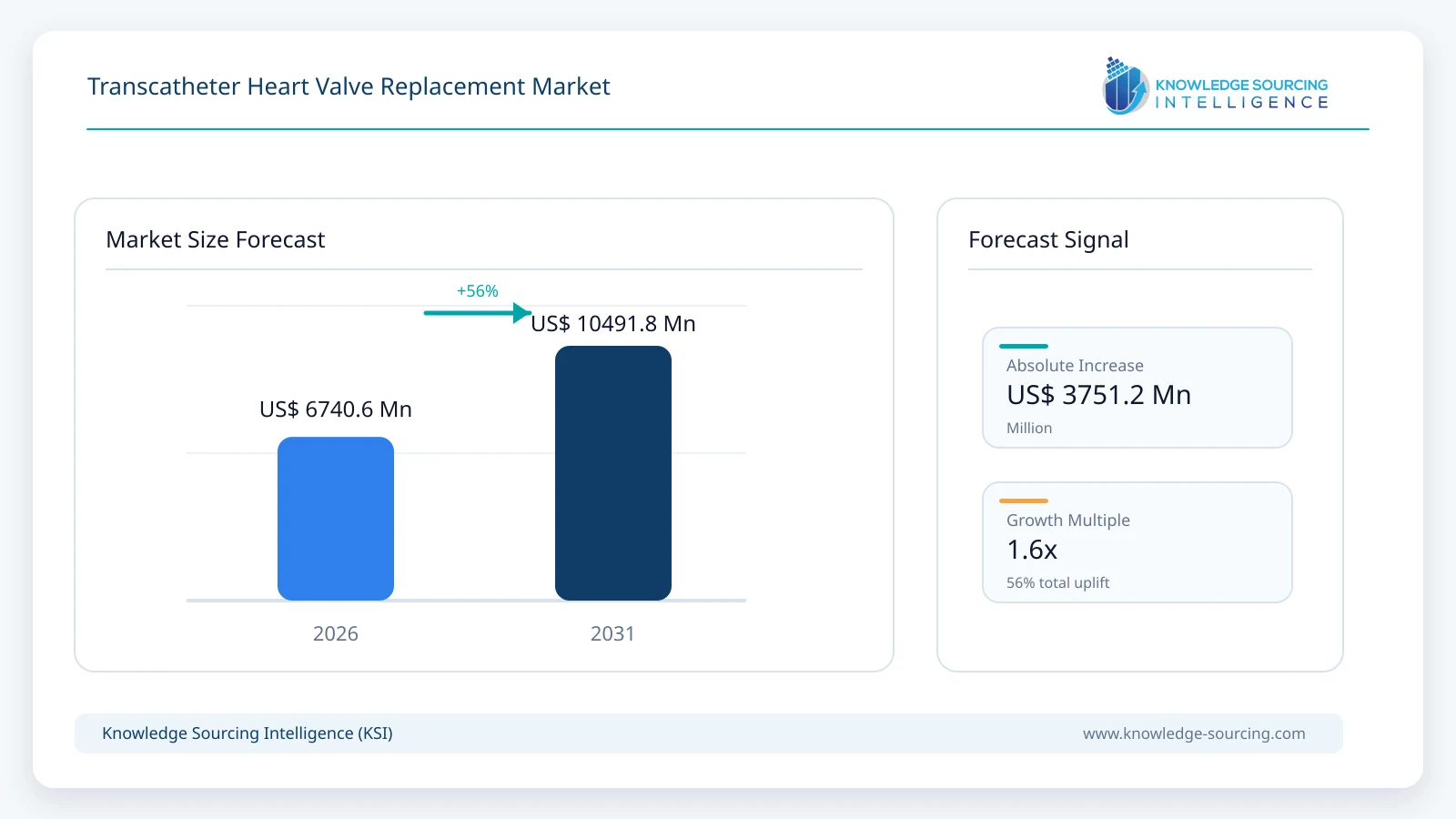
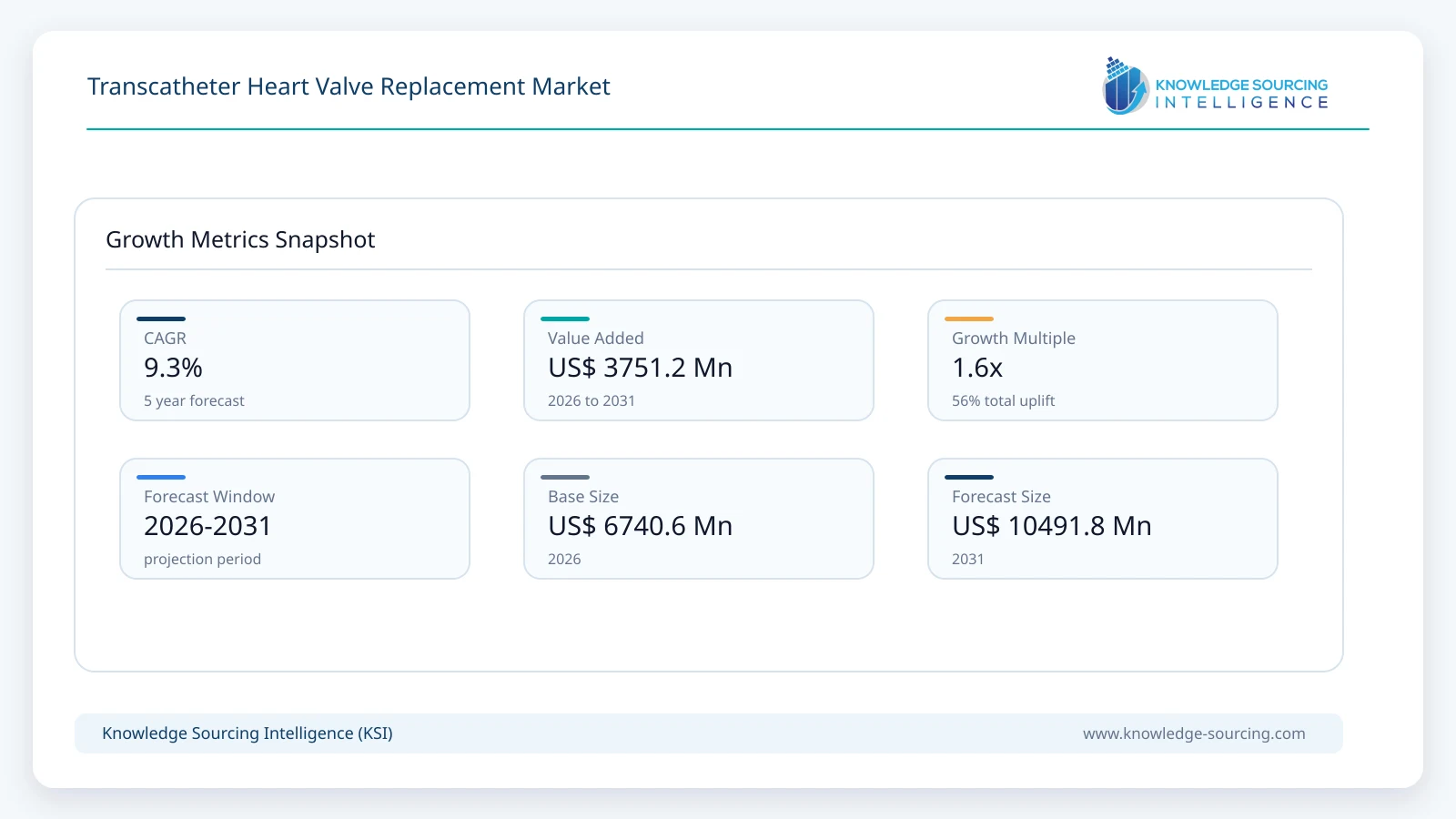
The transcatheter heart valve replacement market is set to reach USD 10,491.8 million in 2031, growing at a CAGR of 9.3% from a valuation of USD 6,740.6 million in 2026.
Highlights:
- 1Minimally invasive transcatheter procedures are increasingly preferred over traditional open-heart surgery for treating severe aortic stenosis and mitral regurgitation, offering reduced recovery times and lower risks for patients.
- 2Ongoing technological innovations in valve design, delivery systems, and materials enhance procedural safety, efficacy, and long-term durability across broader patient populations.
- 3Regulatory approvals and indication expansions, including for asymptomatic severe aortic stenosis and redo procedures, broaden access to transcatheter therapies for lower-risk and complex cases.
- 4Advancements in mitral and tricuspid valve replacement systems address previously untreated patient groups, expanding treatment options beyond aortic applications with transseptal approaches.
Rapid growth in the transcatheter heart valve replacement (THVR) market is driven by the rising number of patients with cardiovascular disease, the global elderly population, and technological advancements that allow the implementation of minimally invasive techniques. More patients are now choosing less invasive methods rather than open-heart surgery, along with continued global growth in the expansion of healthcare systems supporting THVR adoption.
Market Overview
Transcatheter Heart Valve Procedure (THVR) is a medical treatment using transcatheter technology to treat a diseased aortic valve, the most frequently treated valve, and to insert a new valve into the heart without performing open-heart surgery. Transcatheter heart valve replacement has experienced rapid advancement and adoption during the last decade within treatment guidelines of structural heart disease in the U.S., Canada, and many large healthcare systems worldwide. Patients classified as high, medium, or low surgical risk now have the option of undergoing this procedure, with strong scientific evidence to support its safety and efficacy based on data collected from national registries and through the efforts of multidisciplinary heart care teams.
In the United States, Medicare reimbursements for transcatheter aortic valve replacement procedures depend on the procedure being performed per FDA-approved indications and in the context of a multidisciplinary team approach. This will continue to provide coverage under a national payment policy linking reimbursements to outcomes data and registry participation to further develop evidence supporting TAVR procedures.
Medtronic’s Structural Heart and Aortic segment revenue climbed from USD 883 million in FY 2024 to USD 944 million in FY 2025, reflecting meaningful growth in products tied to transcatheter aortic valve therapies. This increase indicates that Medtronic is strengthening its role in the Transcatheter Heart Valve Replacement market by delivering solutions clinicians are choosing more often. Higher revenue in this segment suggests rising procedural volumes, broader adoption of minimally invasive aortic treatments, and growing demand for alternatives to traditional surgery, all of which are driving market expansion.
Transcatheter heart valve replacement market leaders include Medtronic, Meril Life Sciences, Edwards Lifesciences Corporation, Abbott, and Boston Scientific Corporation. Through innovation in valve design, development of minimally invasive technology, and increased efficiency of the transcatheter heart valve replacement procedure, these manufacturers are expanding the scope of their global activities by developing partnerships with hospitals and cardiac centres to facilitate the adoption of transcatheter heart valve replacement procedures. Research conducted by these leading companies, patient safety practices adopted by the companies, as well as ongoing post-market support provided for their transcatheter heart valves, are contributing to the growth of the transcatheter heart valve replacement market and establishing these companies as industry leaders.
Market Drivers
Ageing Population with Rising Valvular Heart Disease Prevalence
Valvular heart disease prevalence among older adults has increased over the past 50 years; thus, many more people are suitable candidates for transcatheter valve procedures than in years past. Heart valve disease is estimated to affect at least 5 million people in the United States, according to the Centers for Disease Control and Prevention (CDC). While the risk for developing heart valve disease increases with age, approximately 5% of individuals over 65 years of age are diagnosed with aortic (aortic stenosis), a key type of valvular dysfunction.
Epidemiological data indicate that moderate or greater valvular heart disease becomes increasingly prevalent with age. Researchers studying a cohort of United States residents aged between 65 and 85 years found a rise in prevalence rates from ~5% for the youngest group to ~15% for the oldest group. It was discovered that >8% of total participants experienced moderate to severe valvular heart disease.
Globally and across the different types of valves, the increase in the number of people suffering from moderate and greater levels of valvular heart disease is due to the degenerative processes associated with older age and the cumulative amount of time that has passed since developing these lesions. Calcific degeneration of the aortic valve is common among people aged 70 years and older and, therefore, has become the largest group of patients being treated for clinically significant disease.
Older adults comprise a large portion of patients who have moderate or greater valvular heart disease but have an increased risk for open-heart surgery. Therefore, transcatheter replacements of valves have emerged as the principal mode of surgical intervention for large numbers of these patients.
The projected rise in global cardiovascular deaths from 20.5 million in 2025 to 35.6 million by 2050 highlights the accelerating burden of cardiovascular disease driven largely by population ageing. As survival improves and life expectancy increases, a growing share of the population lives long enough to develop age-related degenerative conditions, including clinically significant valvular heart disease. Aortic and mitral valve degeneration are strongly associated with advanced age and contribute substantially to morbidity in older adults. This expanding pool of elderly patients with symptomatic valve disease directly supports demand for transcatheter heart valve replacement, as these minimally invasive procedures are increasingly preferred for older and high-risk patients who may not be suitable candidates for conventional open-heart surgery.
Segment Analysis
By End-user: Hospitals
Based on end-user, the transcatheter heart valve replacement market is divided into hospitals, Cath labs, and others. Cardiovascular disease (CVD) has become a major health issue globally, and according to the World Health Organization, nearly 17.6 million people lose their lives annually due to CVD. Hence, to address such health concerns, various innovations and developments of new treatments have gained traction, driving their implementation in hospitals and healthcare centers.
Similarly, transcatheter heart valve replacement, due to its minimally invasive nature, has provided a new cost-effective approach over open heart surgery, transforming the overall cardiovascular disease treatment. Additionally, due to its short-recovery period and compatibility with high-risk patients, various hospitals are implementing this approach through strategic programs. For instance, in June 2025, Stone Brook University Hospital launched the “Transcatheter Tricuspid Valve Replacement (TTVR) Program” at Stone Brook Heart Institute (SBHI), aiming to offer minimally invasive treatment options for symptomatic tricuspid regurgitation.
Furthermore, hospitals are also launching cardiac surgery programs to offer high-level cardiac care services to patients. For instance, in August 2025, Memorial Herman Northeast Hospital announced the expansion of cardiac care services through its cardiac surgery program, which provides cardiac procedures including heart valve surgery. The USD 13 million expansion program marked a key strategic initiative that has enabled Memorial Herman Northeast Hospitals to offer exceptional cardiac care.
Moreover, the aging population, which is more prone to valvular heart disease, has also become a major factor that is driving the need for minimally invasive options with improved outcomes. According to the American Heart Association’s “2025 Heart Disease & Stroke Statistics Update, cardiovascular disease holds a high prevalence rate in people aged 60-79 years. Additional factors, such as ongoing development by major market players, namely Medtronic, have further provided new growth prospects. In August 2025, the company received FDA approval for its expanded “Redo-TAVR” system.
Geographical Outlook
North America: the US
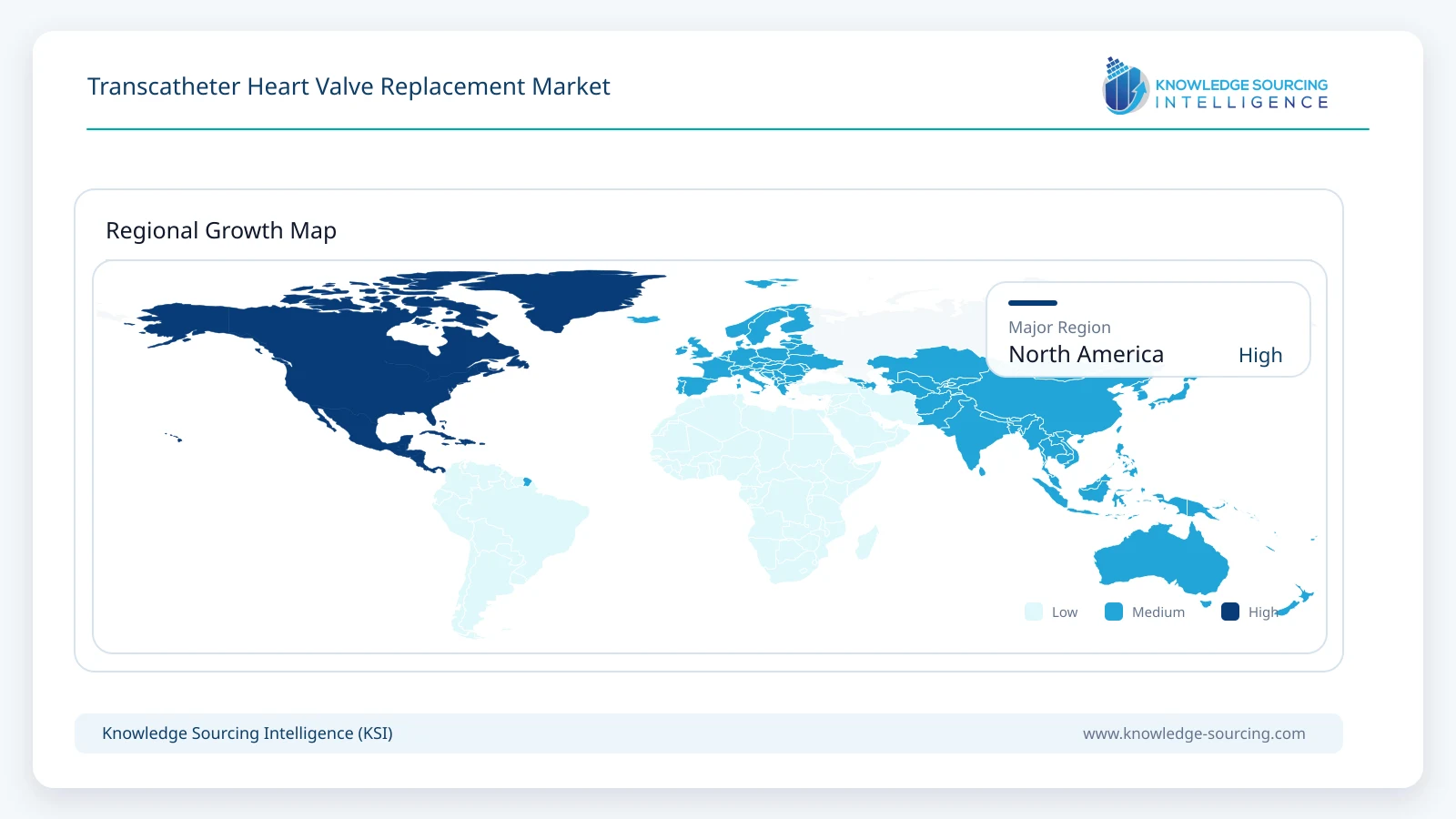
The United States is expected to witness a significant growth in this market, driven by the country’s aging population and the rise in valvular heart diseases. For instance, according to the U.S. Centers for Disease Control and Prevention (CDC) data reports, more than 5 million individuals in the country are diagnosed with heart valve disease per year, with over 25,000 deaths caused by this annually.
Moreover, the growing aging population in the country makes them more prone to suffer from age-related calcification of the aortic valve, which will contribute to market growth. For instance, in the press release of the U.S. Census Bureau titled “Older Adults Outnumber Children” press release of June 2025, the population aged 65 and older rose to 61.2 million in 2024, a 3.1 percent increase from 59.4 million in 2023. Additionally, this is expected to rise to about 90 million by 2050, as per the Rural Health Information Hub.
Aortic stenosis prevalence is at 2% to 3% in people aged 65 years and older; there is potential for early treatment, given a lack of awareness among Americans. For example, 75% of American adults do not know about heart valve disease, according to reports from the CDC as of September 2024. An increase in the population increases the potential for transcatheter heart valve replacement, given that it has become a preferred treatment option for older, high-risk patients with comorbidities.
Furthermore, key players are stressing the need to develop long-lasting, redo TAVR-compatible transcatheter heart valves that would expand long-term treatment avenues within the country. For instance, in August 2025, Medtronic revealed that the FDA broadened the approval of its Evolut transcatheter aortic valve replacement systems for patients who have undergone Redo-TAVR, thereby allowing US physicians to place a fresh Evolut valve into the previously placed transcatheter valve in the patient, making it especially suitable for those who are highly susceptible to open-heart surgery. As a result, treatment options for patients with deteriorating bioprosthetic valves have been widened, and long-term care planning has been supported. In addition, the company has made the RESTORE study public, which is aimed at assessing the clinical outcomes of this surgical procedure over five years.
Transcatheter Heart Valve Replacement Market Developments
May 2026: Boston Scientific invested US$1.5 billion in MiRus LLC, securing rights to re-enter the transcatheter heart valve replacement market through advanced balloon-expandable valve technology development initiatives.
December 2025: Edwards Lifesciences secured U.S. FDA approval for the SAPIEN M3 transcatheter mitral valve replacement system, marking the first FDA-approved transseptal transcatheter therapy for mitral regurgitation treatment.
November 2025: Abbott Laboratories presented positive one-year SUMMIT-MAC clinical data for its Tendyne transcatheter mitral valve replacement system, demonstrating survival and symptomatic improvement in previously untreatable mitral valve patients.
August 2025: Abbott announced that its product Navitor TAVI System received the CE mark as an alternative minimally invasive treatment in place of surgery for severe aortic stenosis in Europe.
May 2025: Abbott announced receiving the FDA approval for its Tendyne transcatheter mitral valve replacement system for the treatment of severe mitral annular calcification in open heart surgery.
Transcatheter Heart Valve Replacement Market Scope:
| Report Metric | Details |
|---|---|
| Total Market Size in 2026 | USD 6,740.6 million |
| Total Market Size in 2031 | USD 10,491.8 million |
| Forecast Unit | Million |
| Growth Rate | 9.3% |
| Study Period | 2021 to 2031 |
| Historical Data | 2021 to 2024 |
| Base Year | 2025 |
| Forecast Period | 2026 – 2031 |
| Segmentation | Product , Surgical Approach, End-user, Geography |
| Companies |
|
Market Segmentation
By Product
Transcatheter Aortic Valve Replacement
Transcatheter Mitral Valve Repair and Replacement
Transcatheter Pulmonary Valve Replacement
By Surgical Approach
Transfemoral Approach
Transapical Approach
Others
By End-User
Hospitals
Cath Labs
Others
By Geography
North America
United States
Canada
Mexico
South America
Brazil
Argentina
Others
Europe
United Kingdom
Germany
France
Spain
Others
Middle East and Africa
Saudi Arabia
UAE
Others
Asia Pacific
China
India
Japan
South Korea
Indonesia
Thailand
Others
Table of Contents
1. Executive Summary
2. Market Snapshot
2.1. Market Overview
2.2. Market Definition
2.3. Scope of the Study
2.4. Market Segmentation
3. Business Landscape
3.1. Market Drivers
3.2. Market Restraints
3.3. Market Opportunities
3.4. Porter’s Five Forces Analysis
3.5. Industry Value Chain Analysis
3.6. Policies and Regulations
3.7. Strategic Recommendations
4. Technological Outlook
5. Transcatheter Heart Valve Replacement Market By Product
5.1. Introduction
5.2. Transcatheter Aortic Valve Replacement
5.3. Transcatheter Mitral Valve Repair and Replacement
5.4. Transcatheter Pulmonary Valve Replacement
6. Transcatheter Heart Valve Replacement Market By Surgical Approach
6.1. Introduction
6.2. Transfemoral Approach
6.3. Transapical Approach
6.4. Others
7. Transcatheter Heart Valve Replacement Market By End-User
7.1. Introduction
7.2. Hospitals
7.3. Cath Labs
7.4. Others
8. Transcatheter Heart Valve Replacement Market By Geography
8.1. Introduction
8.2. North America
8.2.1. United States
8.2.2. Canada
8.2.3. Mexico
8.3. South America
8.3.1. Brazil
8.3.2. Argentina
8.3.3. Others
8.4. Europe
8.4.1. United Kingdom
8.4.2. Germany
8.4.3. France
8.4.4. Spain
8.4.5. Others
8.5. Middle East and Africa
8.5.1. Saudi Arabia
8.5.2. UAE
8.5.3. Others
8.6. Asia Pacific
8.6.1. China
8.6.2. India
8.6.3. Japan
8.6.4. South Korea
8.6.5. Indonesia
8.6.6. Thailand
8.6.7. Others
9. Competitive Environment and Analysis
9.1. Major Players and Strategy Analysis
9.2. Market Share Analysis
9.3. Mergers, Acquisitions, Agreements, and Collaborations
9.4. Competitive Dashboard
10. Company Profiles
10.1. Medtronic
10.2. Meril Life Sciences
10.3. Edwards Lifesciences Corporation
10.4. Abbott Laboratories
10.5. Boston Scientific Corporation
10.6. Venus Medtech (Hangzhou) Inc.
10.7. MicroPort Scientific Corporation
10.8. Braile Biomédica
10.9. Biosensors International Group, Ltd.
10.10. Sahajanand Medical Technologies Pvt. Ltd.
11. Research Methodology
List of Figures
List of Tables
Navigate
Trusted by the world's leading organizations











