
Acrylics are unique man-made materials, which have found their applications in various industries ranging from home furnishing to clothing manufacturing sectors. Acrylonitrile is a synthetic polymer utilized for its manufacturing purpose. The raw materials for these products are derived from petrole...
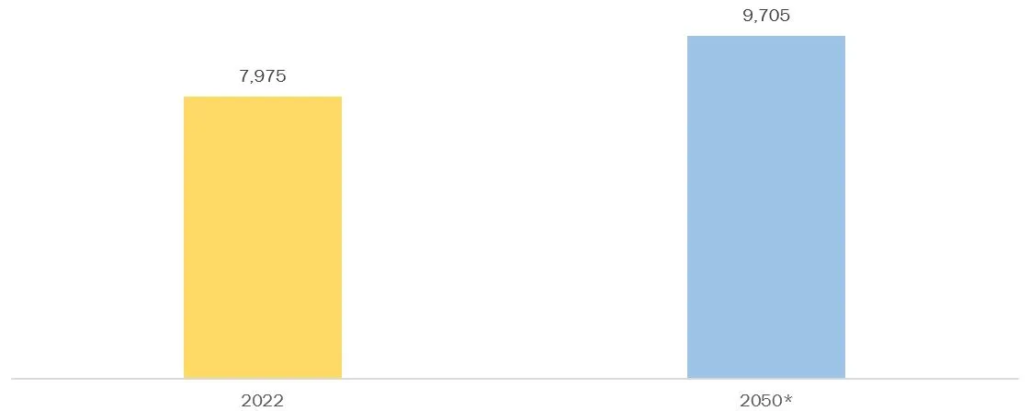 Source: UNCTAD
The growing demand for acrylic fibre will be driven by urbanization since this kind of fabric finds applications in many industries including the automotive industry and textiles industry. The main benefit of acrylic fabric for upholstery applications is its stain and scratch resistance, durability, and variety of colour options. Furthermore, it is simple to clean and maintain, thus making it highly suitable for furniture like couches, chairs, cushions, or curtains among other things.
Key Developments
Source: UNCTAD
The growing demand for acrylic fibre will be driven by urbanization since this kind of fabric finds applications in many industries including the automotive industry and textiles industry. The main benefit of acrylic fabric for upholstery applications is its stain and scratch resistance, durability, and variety of colour options. Furthermore, it is simple to clean and maintain, thus making it highly suitable for furniture like couches, chairs, cushions, or curtains among other things.
Key Developments
- In April 2024, Archroma developed an innovative formaldehyde and PFAS-free durable hydrophobic acrylic copolymer. The polymer produced has low water absorption and tightness for all conditions. Named APPRETAN® FFX1540 liq, it provides hydrophobicity for bonded nonwovens and coated technical fabrics. The manufacturing provides a low carbon footprint and sustainability. It can be used for finishing glass fibre materials. Further, the material has high mechanical properties and excellent wet strength. Archroma is a Swiss global leader in speciality chemicals focused on sustainable solutions and provides a range of APPRETAN Formaldehyde-Free portfolio. APPRETAN FFX1540 liq can be used in various industries, such as home textiles, technical fabrics, performance textiles, and food packaging.
- In October 2023, The Mitsubishi Chemical Group announced a collaboration with Honda Motor Co. Ltd. to develop PMMA material for automotive body parts. This new acrylic material can be used indoors, hoods, fenders, and other automotive body parts.. The material is used with rubber particles to improve the impact required for automobile bodies. This material also helps reduce carbon emissions as further painting is not required in the body of the automobiles. Furthermore, this acrylic resin is suitable for recycling. The major advantages of using acrylic resins are, that it is highly transparent and can be mixed with various colours, allowing manufacturers to create glossy surfaces by adding colourants.
- In February 2023, Mitsubishi Chemical Group Corporation established Japan’s First Acrylic Resin Collection Scheme with the collaboration of Tokio Marine & Nichido and ABT. This testing centre aims to verify a scheme for collected acrylic resins from end-of-life vehicles, to commercialize molecular recycling operations for acrylic resin together. TMNF would be collecting end-of-life vehicles with the payment of insurance claims, ABT was commissioned by TMNF to dismantle and properly dispose of end-of-life vehicles, including reuse and recycling, and Mitsubishi Chemical Group Corporation, a leading acrylic resin manufacturer, was allocated work for developing a full-fledged business to molecularly recycle and reuse of the collected acrylic resins, in addition to manufacturing acrylic resin.
Have questions?
More Blogs
Clinical Decision Support Diagnostic Systems Market: Why the U.S. Healthcare System Is Quietly Rebuilding Diagnosis Around Algorithms
The U.S. clinical decision support diagnostic systems market is rapidly evolving as hospitals adopt AI-driven tools to manage rising diagnostic complexity, workforce shortages, and operational pressures. Growth is fueled by demand for faster, accurate diagnoses, workflow efficiency, interoperability, and value-based care, while physician trust, cybersecurity, and regulatory compliance increasingly determine long-term market success.
Top U.S. Healthcare Industry Trends to Watch in 2026 for the Global Healthcare Market
The global healthcare industry in 2026 is shifting toward AI-driven efficiency, stronger cybersecurity, outpatient care expansion, and domestic pharmaceutical manufacturing. U.S. healthcare leaders are prioritizing workforce support, operational resilience, value-based care, and integrated digital systems to improve patient outcomes while controlling costs.
How AI Is Reshaping the American Healthcare Industry
The U.S. healthcare industry is rapidly integrating artificial intelligence across clinical, administrative, and pharmaceutical operations. AI is improving diagnostics, automating workflows, reducing clinician burden, accelerating drug discovery, and enhancing personalized care. With strong adoption by hospitals and tech companies, AI is transforming healthcare delivery while driving the U.S. AI healthcare market toward significant growth by 2031.