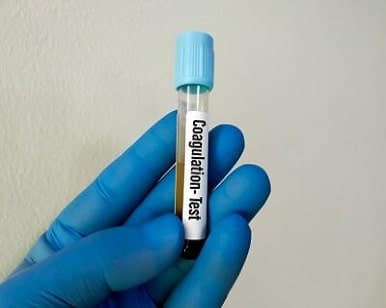
The Coagulation Testing market is expected to grow at a compound annual growth rate of 3.84% to reach a market size worth US$3,868.871 million by 2029. This market was valued a...
The Coagulation Testing market is expected to grow at a compound annual growth rate of 3.84% to reach a market size worth US$3,868.871 million by 2029. This market was valued at US$2,972.150 million in 2022.
Medical treatments that check the hemostasis system are known as coagulation tests. A doa, ulometer, which measures and assesses the speed of clot formation or blood coagulation, is used to perform this test. By detection and identification of blood clots in blood vessels, these tests help to prevent heart attacks, thrombosis, and embolism.
Analysts anticipate that the market will grow due to the increased prevalence of liver disease during the forecast period.
Acute and chronic liver disease usually results in coagulation abnormalities due to a variety of causes, including decreased production of clotting and inhibitor factors, inability to remove active factors, and defects in platelet quantity and quality. According to the Centers for Disease Control and Prevention (CDC), there are 4.5 million adults with liver disease and a 1.8 percent prevalence of liver disease in adults. Furthermore, Increased prevalence of blood disorders and cardiovascular problems, rise in the geriatric population, high demand for point of care (POC) coagulation testing, and technical improvements such as faster and more accurate testing are all contributing to the growth of the coagulation testing market.
There have been a significant number of companies that have contributed considerably to market expansion. Product innovation and constant R&D operations to generate improved technologies have assisted the market's expansion. For example, Siemens Healthineers and Sysmex Corporation announced a multi-year extension of their long-standing global supply, distributorship, sales, and support agreement for a comprehensive portfolio of hemostasis devices in February 2021. Sysmex's CN-Series automated blood coagulation analyzers, the CN-3000 and CN-6000, will be distributed by Siemens Healthineers in the future, delivering the next generation of entirely automated solutions for middle and upper coagulation testing to laboratories.
The high costs of devices and stringent regulatory reforms can act as a constraint on market growth at a global level.
The cost of having a completely automated coagulation system is significantly high. Other than hematologists, all employees must be trained and competent. Outside of the laboratory, establishing strict quality assurance standards is more difficult. The global market is being held back by strict laws governing coagulation testing devices, the expensive cost of fully automatic hemostasis equipment, and concerns about the potential negative effects of blood testing. Furthermore, the market expansion is hampered by the slow adoption of sophisticated hemostasis instruments and a lack of awareness about the novel and advanced applications of coagulation test devices, particularly in developing nations.
By test type, the D-Dimer testing segment is anticipated to witness a significant market share during the forecast period.
D-Dimer testing is expected to account for a significant part of the market and will likely dominate the industry over the projected period. When a blood clot dissolves in the body, one of the protein fragments formed is D-dimer. Unless the body is producing or breaking down blood clots, it is normally undetectable or detectable at a very low level, after which its level in the blood might rapidly rise. Several studies have found a relationship between high d-dimer and t-PA antigen levels and the risk of coronary heart disease (CHD). Increased D-dimer levels are linked to the severity of coronary artery disease (CAD), and D-dimer levels predict the long-term risk of arterial and venous events, cardiovascular death, and non-CVD noncancer fatalities, regardless of other risk factors. D-dimer is also a good predictor of cancer death and occurrence. As the number of people dying from cancer, coronary heart disease, and cardiovascular illness rises, so will the demand for D-Dimer analysis devices, which may aid in better understanding these diseases. As a result, the demand for D-dimer testing has increased, strengthening the coagulation testing market.
By end-user, the hospital and clinic segment is anticipated to witness a significant market share during the forecast period.
The hospital and clinic segment is expected to rise rapidly during the projection period. In many hospitals and health facilities, blood coagulation testing is widely used. Adoption is high because of the high frequency of blood illnesses and cardiovascular diseases. Furthermore, the increased demand for specialized coagulation and hematology facilities could be a major growth driver for the coagulation testing industry's hospitals segment. Microfluidics, fluorescence microscopy, photoacoustic detection, and electrochemical sensing are among the cutting-edge technologies being used to produce reliable, cost-effective point-of-care (POC) devices, which is fueling demand.
According to regional analysis, the Coagulation Testing market in North America is expected to hold a significant share during the projected period.
Significant growth is projected in the North American region. The market's expansion is being fueled by the rising frequency of chronic blood illnesses, increasing laboratory automation, and industry players implementing strategic initiatives. According to a February 2020 update from the Centers for Disease Control and Prevention (CDC), the exact number of people afflicted by deep vein thrombosis is unknown, although it is estimated that 900,000 people (1 to 2 per 1,000) in the United States are impacted each year. According to the same source, venous thromboembolism kills 60,000–100,000 Americans per year. As a result of these figures, the market for coagulation analyzers in the region is expected to rise.
Furthermore, various market players are implementing strategic initiatives, which are helping to drive the industry forward. For example, Haemonetics Corporation, based in the United States, bought Enicor, a developer of blood coagulation diagnostic systems, in April 2020. As a result of the factors mentioned above, the market is predicted to increase significantly over the forecast period.
COVID-19 Insights
The Coagulation Testing market was positively affected by COVID-19. COVID-19 patients have a high D-dimer level. COVID-19-related coagulation disorders are more likely in patients with severe infections than in people with moderate illnesses, and COVID-19-related deaths are more likely to meet ISTH criteria than survivors. The rapid rise in D-dimer levels over time, as well as the rise in D-dimer levels after admission, are linked to a high rate of mortality, indicating coagulation activation due to infection/sepsis, cytokine storm, or progressive organ failure. The greater knowledge of the disease, the benefits of early diagnosis, and the opportunity to monitor blood flow in persons with COVID-19 are all driving the expansion of the coagulation testing market.
Have questions?
More Blogs
Clinical Decision Support Diagnostic Systems Market: Why the U.S. Healthcare System Is Quietly Rebuilding Diagnosis Around Algorithms
The U.S. clinical decision support diagnostic systems market is rapidly evolving as hospitals adopt AI-driven tools to manage rising diagnostic complexity, workforce shortages, and operational pressures. Growth is fueled by demand for faster, accurate diagnoses, workflow efficiency, interoperability, and value-based care, while physician trust, cybersecurity, and regulatory compliance increasingly determine long-term market success.
Top U.S. Healthcare Industry Trends to Watch in 2026 for the Global Healthcare Market
The global healthcare industry in 2026 is shifting toward AI-driven efficiency, stronger cybersecurity, outpatient care expansion, and domestic pharmaceutical manufacturing. U.S. healthcare leaders are prioritizing workforce support, operational resilience, value-based care, and integrated digital systems to improve patient outcomes while controlling costs.
How AI Is Reshaping the American Healthcare Industry
The U.S. healthcare industry is rapidly integrating artificial intelligence across clinical, administrative, and pharmaceutical operations. AI is improving diagnostics, automating workflows, reducing clinician burden, accelerating drug discovery, and enhancing personalized care. With strong adoption by hospitals and tech companies, AI is transforming healthcare delivery while driving the U.S. AI healthcare market toward significant growth by 2031.