The advanced recycling market is pivotal in advancing the circular plastics economy, transforming post-consumer recycled (PCR) plastics into virgin-like plastics for high-quality applications. Sustainable plastic solutions leverage chemical and mechanical processes to enhance waste valorisation, converting plastic waste into valuable resources.
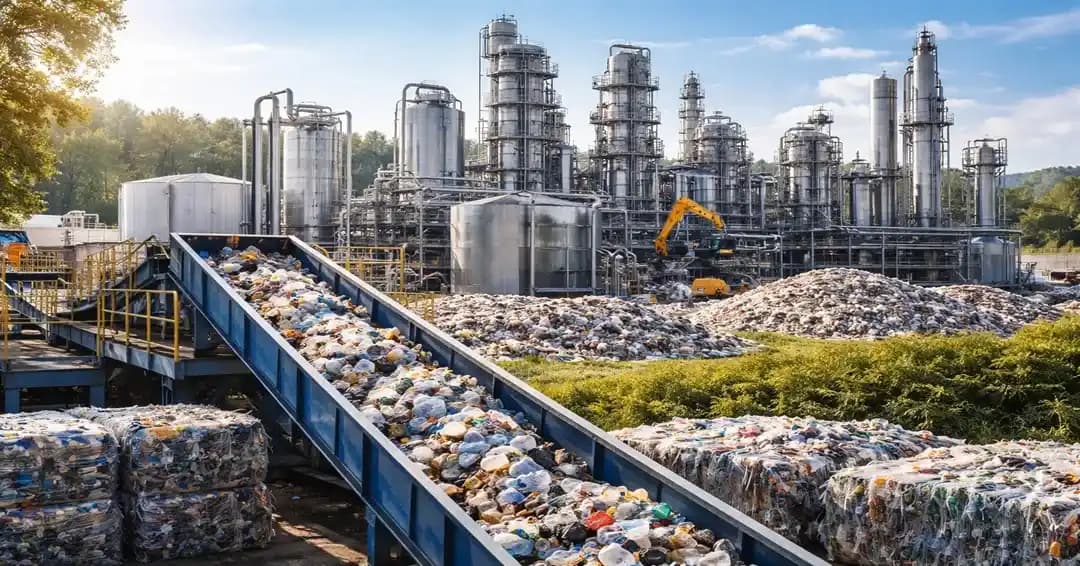
Advanced Recycling Market Trends & Forecast
According to a research study published by Knowledge Sourcing Intelligence (KSI), the advanced recycling market will expand from USD 2.3 billion in 2026 to USD 4.3 billion in 2031 at a CAGR of 13.3% during the forecast period.
Advanced Recycling is making strides as the market in both Chemical and Advanced Recycling continues to evolve by utilising innovative technologies such as Pyrolysis, Depolymerisation, Enzymatic, Solvolysis and Hydrothermal Recycling for the recycling of plastics, greatly increasing material recovery and yielding high-quality products from waste plastics. Plastic waste can also be converted into valuable fuels and gases through the Gasification of Plastics Waste, and Plastic-to-Oil Technologies, and there are processes for molecular recycling or producing "virgin-like" plastics through plastic-to-monomer processes. Additionally, using these processes will help with increased scalability and less environmental impact. There is also a significant focus on utilising efficient and low-emission technologies as motivators to drive both the packaging and automotive industries' adoption of advanced recycling, so that advanced recycling can become a major driver in establishing a sustainable, efficient method for recycling plastic waste and recovering resources.
Request a free sample copy or view the report summary: Advanced Recycling Market Report
Advanced Recycling Market Report Highlights
It is becoming increasingly common to use advanced recycling methods, alternative chemical recycling methods including pyrolysis and depolymerisation, in the recycling sector. This type of recycling can break up (depolymerise) plastic into its chemical building blocks, which allows those same building blocks to later be used as feedstock for manufacturing. Contaminated plastics and/or mixed-use plastics cannot be processed using mechanical recycling methods. Many companies have been establishing large-scale chemical recycling facilities in order to move forward with commercialising more advanced recycling methods and improving the operations of these facilities. With the growing demand for recycled feedstock across all industries, chemical recycling will be an important element for solving the challenge of plastic waste management, as well as assisting the efforts of many countries in supporting circular economies globally.
Numerous large companies have established aggressive global sustainability initiatives that include reducing their plastic waste and increasing the amount of recycled content they use in their products. Thus, the need for advanced recycling methods that can create high-quality (i.e. 98% purity) recycled feedstocks will also continue to increase. Packaging, consumer goods and automotive companies are collaborating with advanced recycling technology companies to help achieve many of their sustainability initiatives. As companies make more progress toward meeting the environmental regulations and growing consumer demands for sustainable products, companies' investments in advanced recycling infrastructure will grow. These commitments from companies will significantly contribute to the rapid growth and adoption of advanced recycling technologies on a global basis.
Report Coverage:
Report Metric | Details |
|---|---|
Total Market Size in 2026 | USD 2.3 billion |
Total Market Size in 2031 | USD 4.3 billion |
Growth Rate | 13.3% |
Drivers |
|
Restraints |
|
Segmentation | Technology, Product Type, End-User Industry, Geography |
Companies |
|
Advanced Recycling Market Growth Drivers and Restraints
Growth Drivers:
Supportive Government Policies and Regulations: Government actions/initiatives that support recycling and reduce carbon emissions are important to support the continued growth of the advanced recycling market. Many nations have developed laws to encourage recycled material usage, limit/discourage the use of single-use plastics, and provide subsidies, financial incentives, and regulatory frameworks to facilitate the development of advanced recycling infrastructures. The implementation of extended producer responsibility (EPR) programs also holds manufacturers liable for fully developing their products throughout their total product lifecycle, which results in manufacturers investing in advanced recycling technologies. Supportive government initiatives promote the expansion of advanced recycling solutions by creating favourable market conditions for advanced recycling systems to be created and utilised.
Rising Plastic Waste and Environmental Concerns: The substantial amount of plastic waste generated throughout the world has led to an increase in the growth of the advanced recycling market. Conventional waste disposal techniques, such as landfilling and burning, are not environmentally sound and contribute to contaminating our environment, but using advanced recycling processes to recover valuable resources from our plastic waste will help lessen the environmental impact. Strict regulations at many governmental levels, along with increasing public knowledge about global environmental issues, will result in accelerated use of advanced recycling by industry to successfully manage waste and minimise their carbon footprint.
Restraints:
High Capital and Operational Costs: Advanced recycling technologies require significant investment in infrastructure, equipment, and skilled labor. High operational costs and energy consumption can limit profitability, especially in the early stages of deployment. These financial challenges may slow down adoption, particularly in developing regions with limited access to funding and technical expertise.
Technological and Scalability Challenges: Many advanced recycling technologies are still in the development or early commercialization stages. Scaling these technologies to industrial levels while maintaining efficiency and cost-effectiveness remains a challenge. Technical complexities and inconsistent feedstock quality can impact process performance, limiting widespread adoption across global markets.
Advanced Recycling Market Key Development
September 2025: PlasCred Circular Innovations received a non-binding term sheet from the Business Development Bank of Canada for up to CAD 8.5 million, supporting advanced recycling feedstock and technology development.
Advanced Recycling Market Segmentation
Knowledge Sourcing Intelligence has segmented the advanced recycling market based on technology, product type, end user industry and region:
Advanced Recycling Market, By Technology
Pyrolysis/Cracking
Gasification
Others
Advanced Recycling Market By Product Type
Naphtha
Polymers
Monomers
Others
Advanced Recycling Market, By End-User Industry
Packaging
Construction
Electronics
Automotive
Others
Advanced Recycling Market, By Region
North America
USA
Canada
Mexico
Europe
Germany
France
UK
Spain
Others
Asia Pacific
China
Japan
India
South Korea
Others
South America
Brazil
Argentina
Others
Middle East and Africa (MEA)
Saudi Arabia
Israel
Others
Advanced Recycling Market Key Players
PLASTIC ENERGY
Total Energies
GARBO SRL
Brightmark
Synova
Loop Industries, Inc.
Agilyx
Dow
Ineos Group
Polystyvert
Need specialized data cuts or competitive intelligence?
Our analyst team provides bespoke market sizing, supplier audits, and country-level feasibility reports tailored to your enterprise roadmap.
Speak With an Industry Analyst →Ask an Industry Analyst
Have questions regarding this briefing or market projections? Inquire with our sector lead.
Related Press Releases
View All →
ADC Manufacturing & CDMO Market is expected to reach USD 10.49 billion by 2031
Aug 7, 2026
Lifestyle-Associated Cancer Epidemiology Market is expected to reach USD 13.12 billion by 2031
Aug 5, 2026
Psycho-Oncology Digital Health Market is anticipated to surpass USD 290.01 million in 2031 at a CAGR of 8.5%
Jul 30, 2026
Intratumoral Injection Therapy Market is expected to reach USD 630.39 million by 2031
Jul 24, 2026
Palliative Care in Oncology Market is expected to reach USD 244.1 billion by 2031
Jul 22, 2026More Press Releases
Oncology Drug Resistance Testing Market is projected to reach USD 3.41 billion in 2031 at a CAGR of 6.6 %
The oncology drug resistance testing market is expanding due to rising cancer prevalence, increasing drug resistance, and growing adoption of precision oncology. Advances in NGS-based testing, companion diagnostics, and targeted therapies, alongside FDA approvals and investments in personalized medicine, are accelerating demand for effective resistance monitoring across hospitals and clinical diagnostics worldwide.
TROP-2 Targeted Therapy Market is anticipated to surpass USD 3.29 billion in 2031 at a CAGR of 8.6 %
The TROP-2 Targeted Therapy market is expanding rapidly due to increasing precision oncology adoption, rising cancer prevalence, and growing use of antibody-drug conjugates. North America leads the market, while Asia Pacific shows the fastest growth. Continuous clinical trials, regulatory approvals, and strategic collaborations are accelerating innovation and commercial adoption worldwide.
Second Primary Cancer Prevention Market is expected to reach USD 24.7 billion by 2031
The Second primary cancer prevention refers to strategies aimed at reducing the risk of developing a new, unrelated cancer in individuals with a prior cancer diagnosis. Growing cancer survivorship, advances in treatment, and increasing awareness of long-term health outcomes have heightened the importance of prevention and surveillance programs. Key approaches include routine screening, genetic risk assessment, lifestyle modification, and long-term follow-up care. Government agencies and healthcare organisations increasingly emphasise survivorship care plans and evidence-based screening protocols to detect new malignancies at earlier stages. Continued investments in early detection technologies and personalised risk assessment are expected to support advancements in second primary cancer prevention.