Beef Tallow Market Trends & Forecast According to a research study published by Knowledge Sourcing Intelligence (KSI), the beef tallow market will expand from USD 3...
Beef Tallow Market Trends & Forecast
According to a research study published by Knowledge Sourcing Intelligence (KSI), the beef tallow market will expand from USD 3.818 billion in 2025 to USD 4.809 billion in 2030 at a CAGR of 4.72% during the forecast period.The global beef tallow market refers to the global market for the application and trade of beef tallow, a type of rendered fat from beef cattle. Beef tallow is a valued cooking ingredient due to its high smoke point, heat stability, and distinctive flavor, and it is used for deep frying, baking, and sautéing. In addition to its culinary uses, tallow is greatly valued in other industries for the manufacture of biofuels, soaps, candles, lubricants, greases, cosmetics, and even biodiesel. Numerous factors, including global beef product demands, shifts in meat processing and beef tallow demand, consumer preference changes, and health and sustainability issue considerations, are positively influencing the beef tallow demand. The increase in health awareness is promoting the adoption of organic and health-enhancing alternatives to artificial trans fats and hydrogenated vegetable oils. Beef tallow users are captivated by its status as a very healthy and light cooking fat. Being from grass-fed cattle, it is more stable for consumers and integrates well with health-promoting omega-3 and omega-6 fatty acids. Consequently, it is the preferred choice for health-conscious consumers, superseding all other options.
Get In-Depth Analysis of the Beef Tallow Market
This article provides an overview. Our full market report offers detailed insights, competitive analysis, and growth forecasts to navigate the global beef tallow industry.- ? Comprehensive Market Size & Growth Projections
- ? Key Player Profiles & Market Share
- ? Application Insights & Regional Trends
Beef Tallow Market Report Highlights
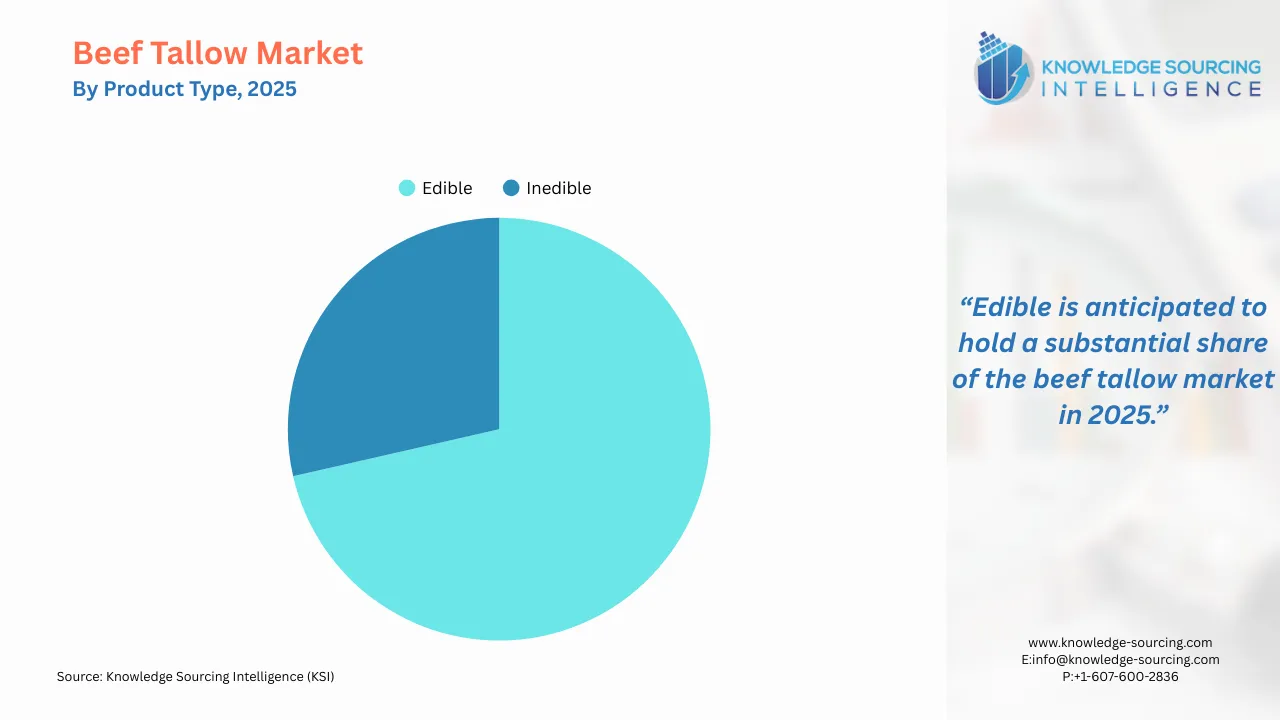
- The edible beef tallow segment is estimated to attain a greater market share by 2030 in the product type segment. The segment is growing, driven by the increase in the health-conscious trend, driven by the rise in popularity of high-fat diets and ketogenic which grows demand for natural fats such as edible beef tallow. Additionally, the growing consumer preference toward this segment as a natural ingredient that offers stability, a high smoke point with unique flavor is also promoting the market.
- The food and bakery segment is the fastest-growing segment in the application of the beef tallow market due to the growing consumer demand for sustainable and natural ingredients. Further, the growing shift away from artificial trans-fat and other vegetable oils is boosting the beef tallow for its health advantages and flavors. The rise in the fast-food trend and fine dining industry globally is also promoting the requirement for beef tallow in baking and frying, and in other culinary applications.
- Asia Pacific is predicted to expand at the fastest rate in the beef tallow market during the projected period because of the increase in disposable income and middle-class population in the region. The rise in changing dietary preferences along with the expanding industrialization, like food processing and cosmetics, is also promoting the beef tallow supply across the region.
Explore the Cosmetics Ingredients Market
Beef tallow is a key ingredient in cosmetics. Dive into our comprehensive report on the Cosmetics Ingredients Market to uncover trends, applications, and growth opportunities.Report Coverage:
| Report Metric | Details |
| Beef Tallow Market Size in 2025 | US$3.818 billion |
| Beef Tallow Market Size in 2030 | US$4.809 billion |
| Growth Rate | CAGR of 4.72% |
| Drivers |
|
| Restraints |
|
| Segmentation |
|
| List of Major Companies in the Beef Tallow Market |
|
Beef Tallow Market Growth Drivers and Restraints
Growth Drivers:- Growing Demand for Natural and Sustainable Ingredients: The growing shift globally towards sustainable and eco-friendly products that are chemical-free among food, personal care, and cosmetic products is promoting the demand for beef tallow. Additionally, the utilization of beef tallow is growing in skincare and soaps due to an increase in health-conscious and environmental concerns among consumers.
- Rise in Meat Production: The growth in global meat production, especially in countries like China and Brazil, is leading to an increase in the supply chain of beef tallow globally as a byproduct. This is growing due to beef tallow offering renewability and biodegradability, which will promote its production.
- Competition from Plant-Based Alternatives: The rise in plant-based oils and fats alternatives is supported due to an increase in plant-based diets and veganism among consumers, due to health and ethical concerns, could hamper the market.
- Issue related to Health Concerns About Saturated Fats: The concerns related to saturated fats like obesity and cardiovascular disease, which are promoted by public health initiatives regarding awareness among people about them, could lead to discouraging consumers from using beef tallow.
Discover the Biodiesel Market Trends
Beef tallow is a key feedstock in biodiesel production. Explore our detailed report on the Biodiesel Market to understand its growth, applications, and future potential.Beef Tallow Market Key Development
- Operational change: In January 2025, Steak-n-Shake announced the change of cooking method in preparation for their strongest franchises with the utilization of 100 percent all-natural beef at all their regional stores. This is done with a focus on aiming for the best taste and increasing quality.
- Marketing Initiative: In July 2025, Coast Packaging Company announced the eighth annual contest under #BeefTallowFrenchFries.
Beef Tallow Market Segmentation
Knowledge Sourcing Intelligence has segmented the beef tallow market based on the product type, application, and region: Beef Tallow Market, By Product Type- Inedible
- Edible
- Cosmetic and Personal Care
- Animal Feed
- Food and Bakery
- Biodiesel
- Others
- North America
- USA
- Canada
- Mexico
- South America
- Brazil
- Argentina
- Others
- Europe
- United Kingdom
- Germany
- France
- Italy
- Others
- Middle East and Africa
- Saudi Arabia
- UAE
- Others
- Asia Pacific
- China
- Japan
- India
- South Korea
- Indonesia
- Thailand
- Others
Beef Tallow Market Key Players
- The Australian Agricultural Company
- Cargill Incorporated
- The Archer-Daniels-Midland Company
- SARIA Ltd
- Darling Ingredients
- Baker Commodities Inc.
- Ajinomoto Co. Inc.
- Ten Kate Holding B.V.
- Jacob Stern & Sons Inc
Go from Insight to Action with Our Market Research
You've seen the overview. Now, get the detailed data and strategic analysis you need to stay ahead in the food and beverage market. Explore our related, in-depth reports. Each report includes comprehensive data, forecasts, and competitive analysis to empower your business decisions.Need specialized data cuts or competitive intelligence?
Our analyst team provides bespoke market sizing, supplier audits, and country-level feasibility reports tailored to your enterprise roadmap.
Speak With an Industry Analyst →Beef Tallow Market - Strategic Insights and Forecasts (2025-2030)
The beef tallow market is estimated at US$3.818 billion in 2025 and is anticipated to grow at a CAGR of 4.72% during the forecast period and reach US$4.809 billion in 2030. The beef tallow market refers to the global industry and trade involving beef tallow, a type of rendered fat obtained from cattle.
Ask an Industry Analyst
Have questions regarding this briefing or market projections? Inquire with our sector lead.
Related Press Releases
View All →
ADC Manufacturing & CDMO Market is expected to reach USD 10.49 billion by 2031
Aug 7, 2026
Lifestyle-Associated Cancer Epidemiology Market is expected to reach USD 13.12 billion by 2031
Aug 5, 2026
Psycho-Oncology Digital Health Market is anticipated to surpass USD 290.01 million in 2031 at a CAGR of 8.5%
Jul 30, 2026
Intratumoral Injection Therapy Market is expected to reach USD 630.39 million by 2031
Jul 24, 2026
Palliative Care in Oncology Market is expected to reach USD 244.1 billion by 2031
Jul 22, 2026More Press Releases
Oncology Drug Resistance Testing Market is projected to reach USD 3.41 billion in 2031 at a CAGR of 6.6 %
The oncology drug resistance testing market is expanding due to rising cancer prevalence, increasing drug resistance, and growing adoption of precision oncology. Advances in NGS-based testing, companion diagnostics, and targeted therapies, alongside FDA approvals and investments in personalized medicine, are accelerating demand for effective resistance monitoring across hospitals and clinical diagnostics worldwide.
TROP-2 Targeted Therapy Market is anticipated to surpass USD 3.29 billion in 2031 at a CAGR of 8.6 %
The TROP-2 Targeted Therapy market is expanding rapidly due to increasing precision oncology adoption, rising cancer prevalence, and growing use of antibody-drug conjugates. North America leads the market, while Asia Pacific shows the fastest growth. Continuous clinical trials, regulatory approvals, and strategic collaborations are accelerating innovation and commercial adoption worldwide.
Second Primary Cancer Prevention Market is expected to reach USD 24.7 billion by 2031
The Second primary cancer prevention refers to strategies aimed at reducing the risk of developing a new, unrelated cancer in individuals with a prior cancer diagnosis. Growing cancer survivorship, advances in treatment, and increasing awareness of long-term health outcomes have heightened the importance of prevention and surveillance programs. Key approaches include routine screening, genetic risk assessment, lifestyle modification, and long-term follow-up care. Government agencies and healthcare organisations increasingly emphasise survivorship care plans and evidence-based screening protocols to detect new malignancies at earlier stages. Continued investments in early detection technologies and personalised risk assessment are expected to support advancements in second primary cancer prevention.