The ion exchange resins market is expanding due to rising demand for clean water, industrial purification, and biopharmaceutical processing. Technological advances, including monodisperse resins, improve efficiency, while high regeneration costs and disposal concerns remain key challenges.
Ion Exchange Resins Market Trends & Forecast
According to a research study published by Knowledge Sourcing Intelligence (KSI), the ion exchange resins market will expand from USD 2.10 billion in 2026 to USD 2.80 billion in 2031 at a CAGR of 5.9% during the forecast period.
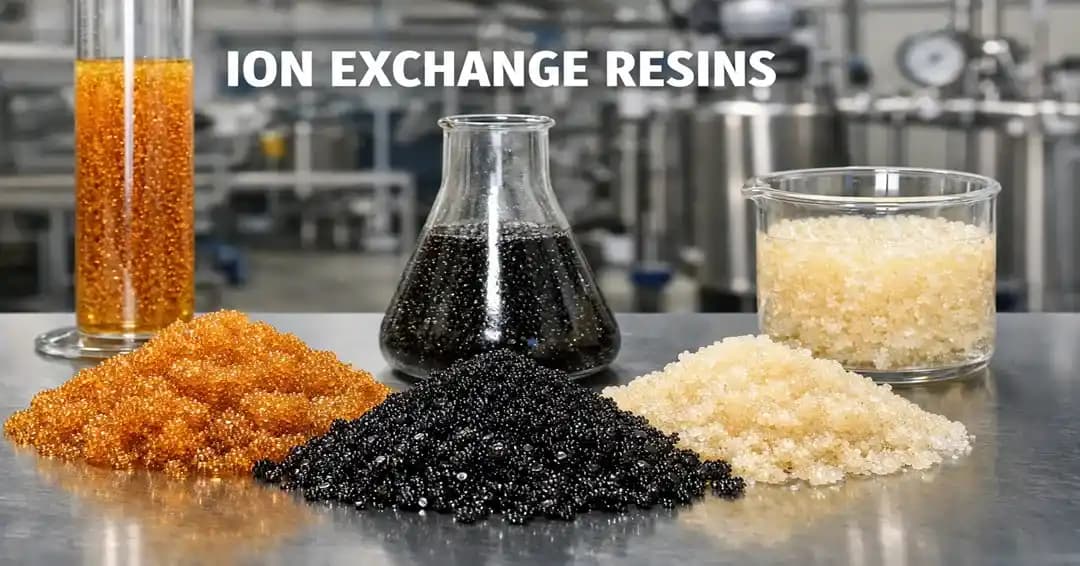
Ion exchange resins are regarded as porous polymer beads that are essential in removing unwanted charged particles from liquids by swapping them for the more desirable ones. Ion exchange resin demand in the market is linked to their operating cycles, which makes them sensitive towards regulatory enforcement, process intensification, and replacement intervals. A bifurcation of the market in the last few years has resulted in two separate worlds, one of large-scale water treatment and the other of life sciences and specialty sectors with high-value applications, each having its own procurement triggers.
Request a free sample copy or view the report summary: Ion Exchange Resins Market Report
Ion Exchange Resins Market Report Highlights
Cation Exchange Resins or Strong acid cation (SAC) resins are experiencing a remarkable surge in demand as companies increase their use of high-efficiency softening, demineralization, and condensate polishing processes. For instance, their capacity to operate over broad pH ranges, withstand high temperatures, and tolerate very dirty feedwater makes them essential in industries such as power generation, microelectronics, and ultrapure water production.
Monodisperse resins are expanding quickly because of their excellent performance in breakthrough capacity, regeneration efficiency, and process predictability. These resins are becoming the most preferred ones in biopharmaceutical manufacturing, semiconductor water purification, and nuclear power applications due to their reproducibility and precision. The demand for ultra-clean and high-throughput purification processes, particularly in biologics, monoclonal antibodies, and cell-based therapeutics, has been the main factor behind the rapid increase in adoption.
The purification of biopharmaceuticals has played an essential role in the market. With the worldwide demand for biologics, vaccines, biosimilars, and advanced therapies, the biopharmaceutical segment is expected to grow. Ion exchange resins represent one of the most important elements in the downstream purification process; they are the main facilitators of selective protein capture, high-resolution separation, and the achievement of compliance with very strict regulatory standards.
Life science and biopharma companies are the fastest-growing user group of the trend, mainly driven by radical therapeutic innovations and a massive increase in R&D investments worldwide. To meet the demand for biologics and precision-medicine therapies, which are taking off at an incredible pace, producers are turning to ion-exchange resins as their go-to method for purification, buffer exchange, and polishing steps.
Report Coverage:
Report Metric | Details |
|---|---|
Total Market Size in 2026 | USD 2.10 billion |
Total Market Size in 2031 | USD 2.80 billion |
Growth Rate | 5.9% |
Drivers |
|
Restraints |
|
Segmentation | Type, Technology, Application, Geography |
Companies |
|
Ion Exchange Resins Market Growth Drivers and Restraints
Growth Drivers:
Rising Global Demand for Clean and Potable Water: Governments and utilities are forced by rapid urbanization, worsening freshwater sources, and growing consumer awareness to implement advanced purification technologies. In this process, ion exchange resins are the main contributors in various operations such as hardness removal, desalination pre-treatment, nitrate removal, and dissolved solids control.
Strong Growth in Industrial Water Treatment Requirements: Industries like oil refineries, chemical plants, and power stations are compelled to meet very stringent standards of water purity and waste discharge. Supercritical and ultracritical power plants need to have boiler feedwater of the highest purity, and for that, they use cation and anion exchange systems heavily.
Restraints:
High Regeneration Chemical Costs and Operational Expenses: Although ion exchange systems are effective, they require regular regeneration using acids, alkalis, or salt solutions. The rising cost of chemicals and energy required for regeneration increases total operational expenditure.
Environmental Concerns Related to Resin Disposal: Resins that have been used can create problems for the environment because they are contaminated with toxic chemicals, heavy metals, and pollutants from the industry. Rules imposed on the disposal of solid waste and the use of landfills raise the costs of compliance. Although there are some recycling methods, they are still very few and expensive; hence, disposal is the main limitation in regulated markets.
Ion Exchange Resins Market Key Development
Product Launch: In November 2024, LANXESS, which is known to be a speciality chemicals company, equipped its first mobile plant of De Watergroep. This plant will be essential in the removal process of PFAS from water with its Lewatit TP 108 DW ion exchange resin.
Ion Exchange Resins Market Segmentation
Knowledge Sourcing Intelligence has segmented the ion exchange resins market based on type, technology, application, end-user, and region:
Ion Exchange Resins Market, By Type
Cation Exchange Resins (strong acid, weak acid)
Anion Exchange Resins (strong base, weak base)
Mixed-Bed Resins
Chelating / Functionalized Resins
Affinity / Chromatography Resins
Ion Exchange Resins Market, By Technology
Gel-type Resins
Macroporous Resins
Monodisperse / Jetted Beads
Solvent-free / Sustainable Resins
Ion Exchange Resins Market, By Application
Municipal Drinking Water Treatment
Industrial Water Treatment
Biopharmaceutical Purification
Mining and Metals Processing
Food and Beverage Processing
Ion Exchange Resins Market, By End-User
Utilities and Water Districts
Power and Energy Producers
Chemical and Petrochemical Industries
Life Sciences and Biopharma
Mining and Battery Supply Chain Operators
Ion Exchange Resins Market, By Region
North America
USA
Canada
Mexico
Europe
UK
Germany
France
Italy
Spain
Others
Asia Pacific
China
India
Japan
South Korea
Taiwan
Indonesia
Thailand
Others
South America
Brazil
Argentina
Others
Middle East and Africa (MEA)
Saudi Arabia
UAE
Others
Ion Exchange Resins Market Key Players
LANXESS (Lewatit)
Ecolab (Purolite)
Mitsubishi Chemical Group
DuPont
ResinTech Inc.
Thermax Limited
Ion Exchange (India) Ltd.
Samyang Corporation
Novasep
Tosoh Corporation
Need specialized data cuts or competitive intelligence?
Our analyst team provides bespoke market sizing, supplier audits, and country-level feasibility reports tailored to your enterprise roadmap.
Speak With an Industry Analyst →Ask an Industry Analyst
Have questions regarding this briefing or market projections? Inquire with our sector lead.
Related Press Releases
View All →
ADC Manufacturing & CDMO Market is expected to reach USD 10.49 billion by 2031
Aug 7, 2026
Lifestyle-Associated Cancer Epidemiology Market is expected to reach USD 13.12 billion by 2031
Aug 5, 2026
Psycho-Oncology Digital Health Market is anticipated to surpass USD 290.01 million in 2031 at a CAGR of 8.5%
Jul 30, 2026
Intratumoral Injection Therapy Market is expected to reach USD 630.39 million by 2031
Jul 24, 2026
Palliative Care in Oncology Market is expected to reach USD 244.1 billion by 2031
Jul 22, 2026More Press Releases
Oncology Drug Resistance Testing Market is projected to reach USD 3.41 billion in 2031 at a CAGR of 6.6 %
The oncology drug resistance testing market is expanding due to rising cancer prevalence, increasing drug resistance, and growing adoption of precision oncology. Advances in NGS-based testing, companion diagnostics, and targeted therapies, alongside FDA approvals and investments in personalized medicine, are accelerating demand for effective resistance monitoring across hospitals and clinical diagnostics worldwide.
TROP-2 Targeted Therapy Market is anticipated to surpass USD 3.29 billion in 2031 at a CAGR of 8.6 %
The TROP-2 Targeted Therapy market is expanding rapidly due to increasing precision oncology adoption, rising cancer prevalence, and growing use of antibody-drug conjugates. North America leads the market, while Asia Pacific shows the fastest growth. Continuous clinical trials, regulatory approvals, and strategic collaborations are accelerating innovation and commercial adoption worldwide.
Second Primary Cancer Prevention Market is expected to reach USD 24.7 billion by 2031
The Second primary cancer prevention refers to strategies aimed at reducing the risk of developing a new, unrelated cancer in individuals with a prior cancer diagnosis. Growing cancer survivorship, advances in treatment, and increasing awareness of long-term health outcomes have heightened the importance of prevention and surveillance programs. Key approaches include routine screening, genetic risk assessment, lifestyle modification, and long-term follow-up care. Government agencies and healthcare organisations increasingly emphasise survivorship care plans and evidence-based screening protocols to detect new malignancies at earlier stages. Continued investments in early detection technologies and personalised risk assessment are expected to support advancements in second primary cancer prevention.