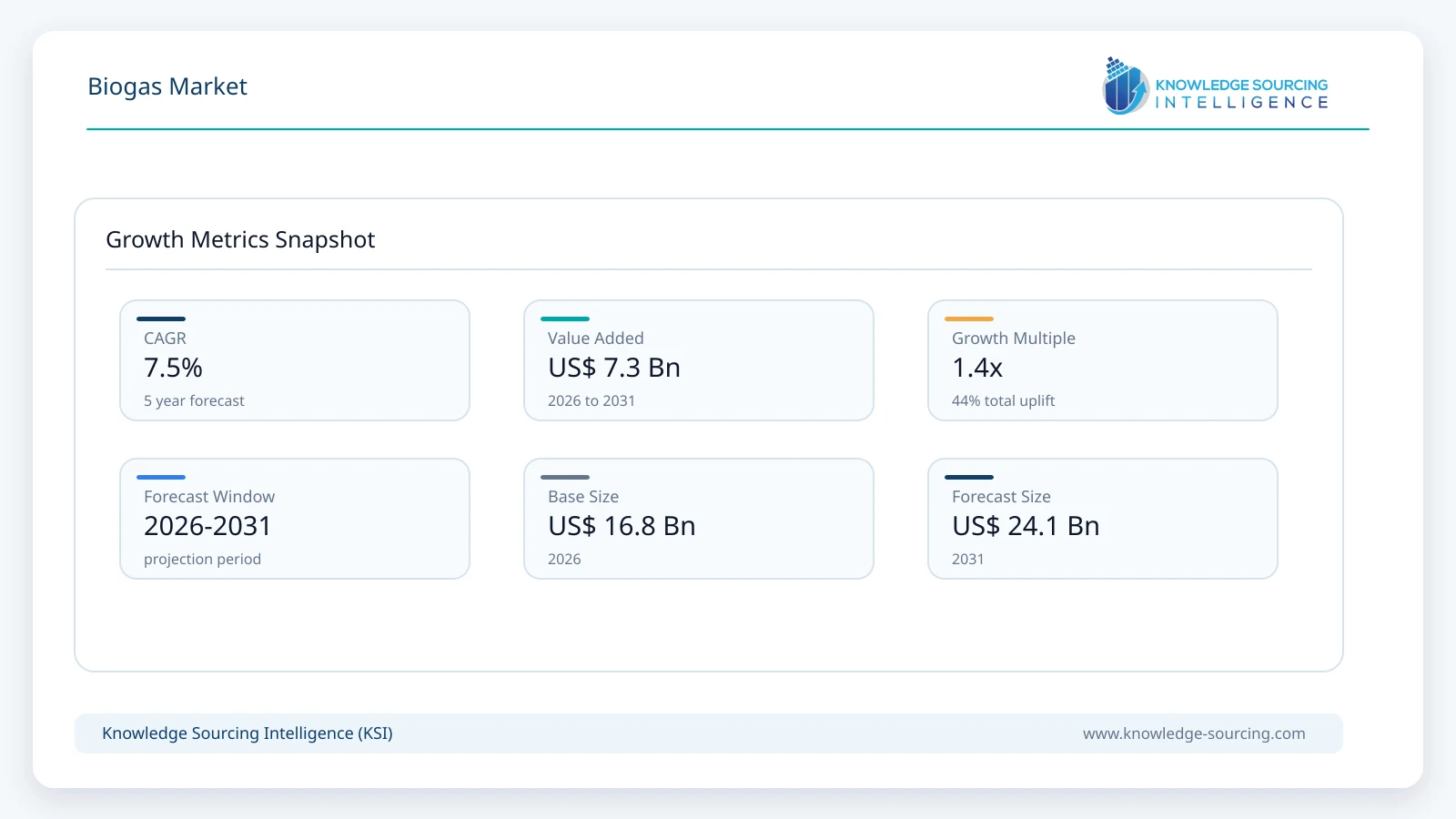
The Biogas Market is projected to grow from USD 16.8 billion in 2026 to USD 24.12 billion by 2031, at a CAGR of 7.5% during forecast period.
Highlights:
- 1Regional market development is influenced by resource availability, supportive policies, and the maturity of renewable energy infrastructure.
- 2Feedstock availability plays a key role in market development, with agricultural waste, animal manure, and organic waste serving as important raw materials for biogas production.
- 3Wet and dry anaerobic digestion technologies cater to different feedstock characteristics, with technology adoption influenced by waste composition, water availability, and operational requirements.
- 4Electricity generation remains an important application, while renewable fuels are gaining traction due to increasing demand for low-carbon energy solutions.
- 5Plant capacity varies according to feedstock availability, project economics, and end-user requirements, supporting the development of both centralized and decentralized facilities.
- 6Policy support, decarbonization targets, and demand for cleaner fuels are encouraging the expansion of biomethane upgrading, renewable natural gas production, and alternative applications for biogas.
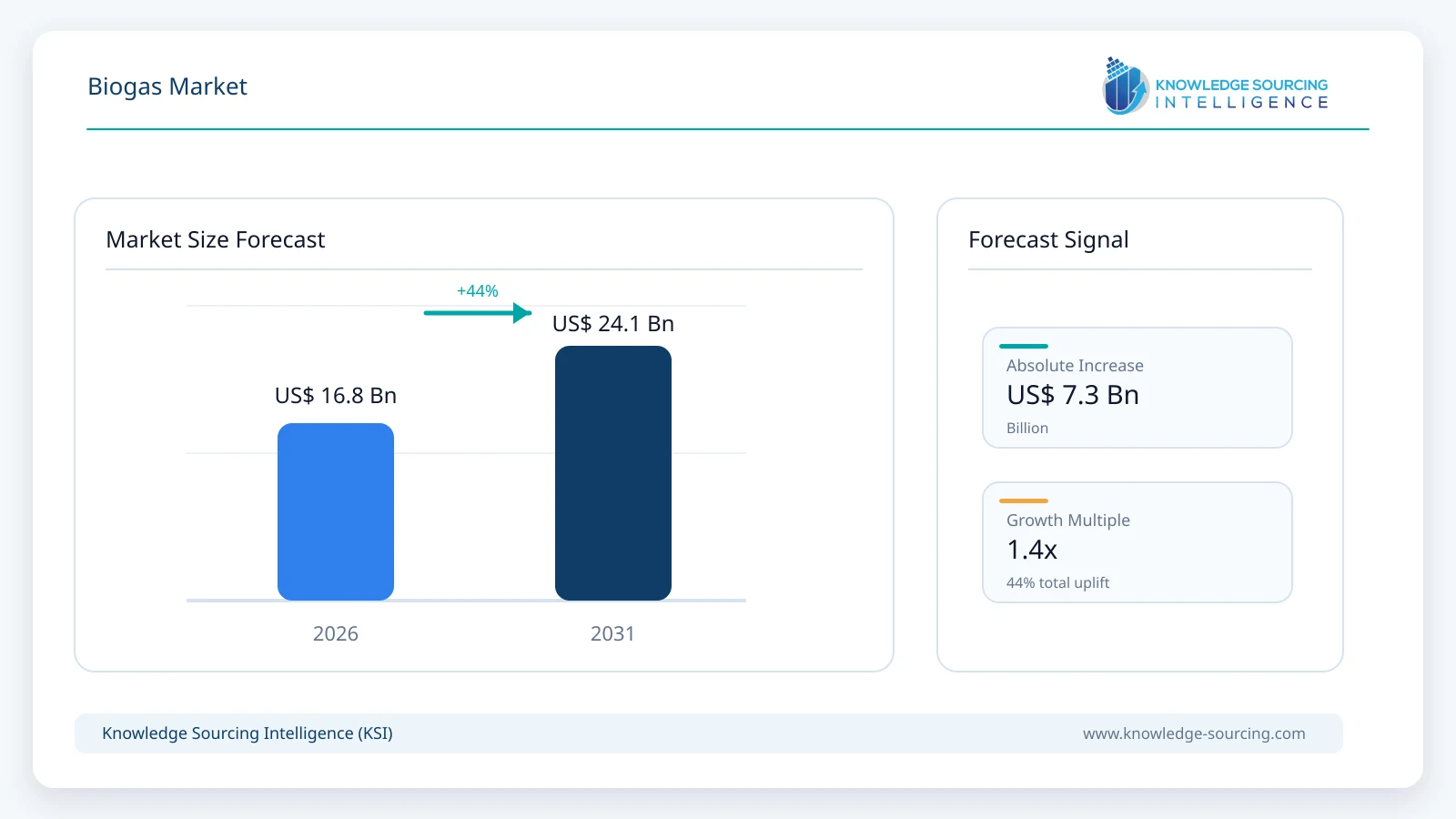
Livestock manure is anticipated to be the leading feedstock in 2026, while food waste is expected to be the fastest-growing feedstock through 2031, driven by landfill-diversion regulations and the expansion of organic-waste collection programs. From a process technology perspective, wet anaerobic digestion might account for the largest share of installations in 2026, while dry digestion is projected to experience the fastest growth due to its ability to process high-solids waste and its lower water consumption.
Plant capacity varies across the market, with medium-sized facilities serving established applications and smaller plants gaining traction due to the growing adoption of decentralized and on-farm projects. By application, electricity generation remains a key use, while vehicle fuel and renewable natural gas are gaining importance, supported by demand for low-carbon energy alternatives and the expansion of renewable fuel infrastructure.
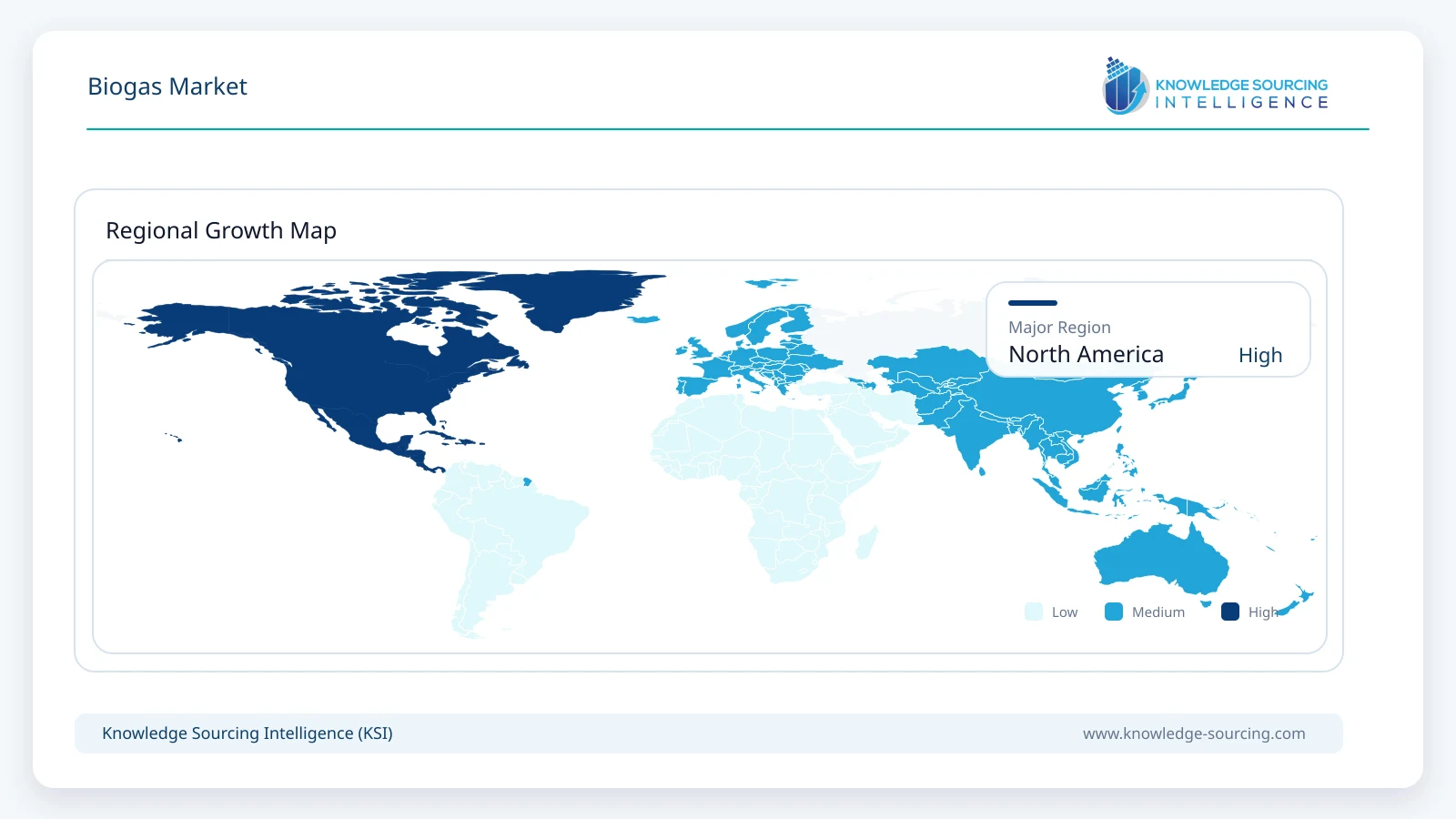
Geographically, Europe is expected to dominate the market in 2026, supported by its established agricultural anaerobic digestion industry in Germany, Italy, and France, alongside favourable biomethane policies. Meanwhile, South America is expected to record the fastest regional growth through 2031, driven by the region's abundant sugarcane residues, livestock manure, and landfill gas resources, particularly in Brazil.
Market Dynamics
Market Drivers
Project economics and new capacity are being boosted by strong policy incentives and decarbonisation targets, such as renewable gas mandates, feed-in and premium policies and low-carbon fuel standards.
As the amount of organic waste increases and landfills become increasingly difficult to divert and methane reduces, municipalities, farms and food processors are moving toward anaerobic digestion.
The market for upgraded biomethane and vehicle fuels has been growing because more people are looking for renewable and dispatchable energy and for low carbon transport and industrial fuels.
The use of digestate as an alternative to synthetic fertilizers provides an extra income and contributes to circular-agriculture targets.
Market Restraints & Opportunities
Investment risk is due to high capital expenses, long permitting processes, feedstock price and availability fluctuations, and grid connection and gas-injection restrictions.
Despite this, the cost-efficiencies of the technology, the attractiveness of expanded food-waste collections, and the increased demand for renewable natural gas and carbon-credit revenues, there is significant opportunity, especially for small and more decentralized plants, and dry-digestion systems.
Key Developments
October 2026: Metacon's fully owned Greek subsidiary Metacon SA has been awarded EU project funding to develop and demonstrate hydrogen production from biomethane in the BIOH2VAP project. The project validates Metacon's reforming technology in an industrial biogas setting and assess the commercial potential of converting locally produced biomethane into renewable hydrogen.
August 2026: The Union Cabinet, chaired by the Prime Minister Shri Narendra Modi, has approved GOBARdhan, the National Circular Bioenergy Scheme, with a total outlay of Rs.23,731 crore.
June 2026: On the occasion of World Environment Day, Maruti Suzuki India Limited announced two biogas projects, reinforcing its commitment to building a clean energy ecosystem.
Biogas Market Segmentation
The market is segmented by feedstock, process technology, plant capacity, application, and geography.
By Feedstock
Livestock Manure
The biggest feedstock is livestock manure (stable and combined), which is also a source of energy, reducing emissions and digestate.
EnviTec Biogas AG is a biogas developer, designer, builder and operator of agricultural and industrial biogas plants based in Europe.
PlanET Biogas Group GmbH offers turnkey biogas systems and services to farmers.
By Process Technology
Wet Anaerobic Digestion
The WAD technology is a wet anaerobic digestion process.WAD technology is a wet anaerobic digestion process.
Most installations involve wet digestion, and liquid or slurry feedstocks, and dry digestion is the fastest growing category for high solids waste and water-limited facilities.
WELTEC BIOPWR GmbH offers modular biogas plants based on a wet digestion process.
BTS Biogas S.r.l. develops and constructs biogas plants (including dry digestion) and biomethane plants.
By Application
Electricity Generation and Vehicle Fuel
Electricity generation is the primary application and will be the fastest growing after vehicle fuel (captured in the premium fuel market) and renewable natural gas (RNG).
Air Liquide S.A. offers biogas upgrading technology and biomethane for mobility and industry.
Gasum Oy is a biogas and biomethane producer and distributor in Nordic region.
Regional Analysis
North America
North America has a growing base of landfill, dairy and wastewater digesters, supported by renewable fuel and low-carbon fuel programs that favor renewable natural gas.
Europe
Europe held about 65% of the market in 2025, led by Germany, Italy and France, with a mature base of agricultural plants and strong biomethane and renewable gas policy.
Asia-Pacific
Asia-Pacific is expanding quickly, with China and India pursuing large-scale rural and municipal digestion and biogas upgrading for fuel, alongside supportive national programs.
Middle East and Africa
The Middle East and Africa are an early-stage market, with interest concentrated in waste-to-energy and small-scale rural digesters.
South America
South America is the fastest-growing region, at roughly 9.5% annually through 2031, driven by sugarcane, livestock and landfill resources in Brazil and neighboring markets.
List of Companies
IES Biogas S.r.l.
EnviTec Biogas AG
PlanET Biogas Group GmbH
BTS Biogas S.r.l.
WELTEC BIOPOWER GmbH
Air Liquide S.A.
Veolia Environnement S.A.
Gasum Oy
Clarke Energy Ltd.
Verbio SE
Competitive Landscape
EnviTec Biogas AG
EnviTec is a Germany-based provider of biogas plants and upgrading systems, covering planning, construction, operation and direct marketing of renewable gas.
PlanET Biogas Group GmbH
PlanET Biogas delivers turnkey biogas plants and services, with a focus on agricultural customers and international expansion.
Air Liquide S.A.
Air Liquide supplies upgrading technology and biomethane for mobility and industrial customers as part of its renewable gas strategy.
Analyst View
The Biogas market is growing steadily rather than explosively, anchored by Europe's mature base and increasingly shaped by the shift toward biomethane and renewable natural gas. Measured by capacity, growth is in the mid-single digits, but the value mix is changing toward upgraded gas and transport fuel, which grow faster. Small plants, dry digestion and food-waste feedstock are the fastest-growing niches, and South America and Asia-Pacific offer the strongest regional growth. Policy support remains the decisive variable. Developers and suppliers that can secure feedstock, control capital costs and tap premium fuel markets are best positioned.
Biogas Market Scope:
| Report Metric | Details |
|---|---|
| Total Market Size in 2026 | USD 16.8 billion |
| Total Market Size in 2031 | USD 24.12 billion |
| Forecast Unit | USD Billion |
| Growth Rate | 7.5% |
| Study Period | 2021 to 2031 |
| Historical Data | 2021 to 2024 |
| Base Year | 2025 |
| Forecast Period | 2026 – 2031 |
| Segmentation | Feedstock, Process Technology, Plant Capacity, Application, Geography |
| Companies |
|
Market Segmentation
By Feedstock
Livestock Manure
Food Waste
Agricultural Residues
Sewage Sludge
Landfill & Others
By Process Technology
Wet Anaerobic Digestion
Dry Anaerobic Digestion
By Plant Capacity
Below 0.5 MW
0.5–2 MW
Above 2 MW
By Application
Electricity Generation
Heat
Vehicle Fuel / RNG
Others
By Geography
North America
USA
Canada
Mexico
South America
Brazil
Others
Europe
Germany
France
United Kingdom
Others
Middle East and Africa
UAE
Saudi Arabia
Others
Asia Pacific
China
India
Japan
Others
Table of Contents
1. EXECUTIVE SUMMARY
2. MARKET SNAPSHOT
2.1. Market Overview
2.2. Market Definition
2.3. Scope of the Study
2.4. Market Segmentation
3. BUSINESS LANDSCAPE
3.1. Market Drivers
3.2. Market Restraints
3.3. Market Opportunities
3.4. Porter's Five Forces Analysis
3.5. Industry Value Chain Analysis
3.6. Policies and Regulations (Renewable Gas Mandates, Low-Carbon Fuel Standards, Landfill Diversion)
3.7. Strategic Recommendations
4. TECHNOLOGICAL OUTLOOK
4.1. Anaerobic Digestion Technologies
4.2. Biogas Upgrading to Biomethane
4.3. Co-Digestion & Feedstock Pre-Treatment
4.4. Digestate Valorization
5. BIOGAS MARKET BY FEEDSTOCK
5.1. Introduction
5.2. Livestock Manure
5.3. Food Waste
5.4. Agricultural Residues
5.5. Sewage Sludge
5.6. Landfill & Others
6. BIOGAS MARKET BY PROCESS TECHNOLOGY
6.1. Introduction
6.2. Wet Anaerobic Digestion
6.3. Dry Anaerobic Digestion
7. BIOGAS MARKET BY PLANT CAPACITY
7.1. Introduction
7.2. Below 0.5 MW
7.3. 0.5 - 2 MW
7.4. Above 2 MW
8. BIOGAS MARKET BY APPLICATION
8.1. Introduction
8.2. Electricity Generation
8.3. Heat
8.4. Vehicle Fuel / RNG
8.5. Others
9. BIOGAS MARKET BY GEOGRAPHY
9.1. Introduction
9.2. North America
9.2.1. USA
9.2.2. Canada
9.2.3. Mexico
9.3. South America
9.3.1. Brazil
9.3.2. Others
9.4. Europe
9.4.1. Germany
9.4.2. France
9.4.3. United Kingdom
9.4.4. Others
9.5. Middle East and Africa
9.5.1. UAE
9.5.2. Saudi Arabia
9.5.3. Others
9.6. Asia Pacific
9.6.1. China
9.6.2. India
9.6.3. Japan
9.6.4. Others
10. COMPETITIVE ENVIRONMENT AND ANALYSIS
10.1. Major Players and Strategy Analysis
10.2. Market Share Analysis
10.3. Mergers, Acquisitions, Agreements, and Collaborations
10.4. Competitive Dashboard
11. COMPANY PROFILES
11.1. IES Biogas S.r.l.
11.2. EnviTec Biogas AG
11.3. PlanET Biogas Group GmbH
11.4. BTS Biogas S.r.l.
11.5. WELTEC BIOPOWER GmbH
11.6. Air Liquide S.A.
11.7. Veolia Environnement S.A.
11.8. Gasum Oy
11.9. Clarke Energy Ltd.
11.10. Verbio SE
12. APPENDIX
12.1. Currency
12.2. Assumptions
12.3. Base and Forecast Years Timeline
12.4. Key Benefits for the Stakeholders
12.5. Research Methodology
12.6. Abbreviations
Navigate
Trusted by the world's leading organizations