
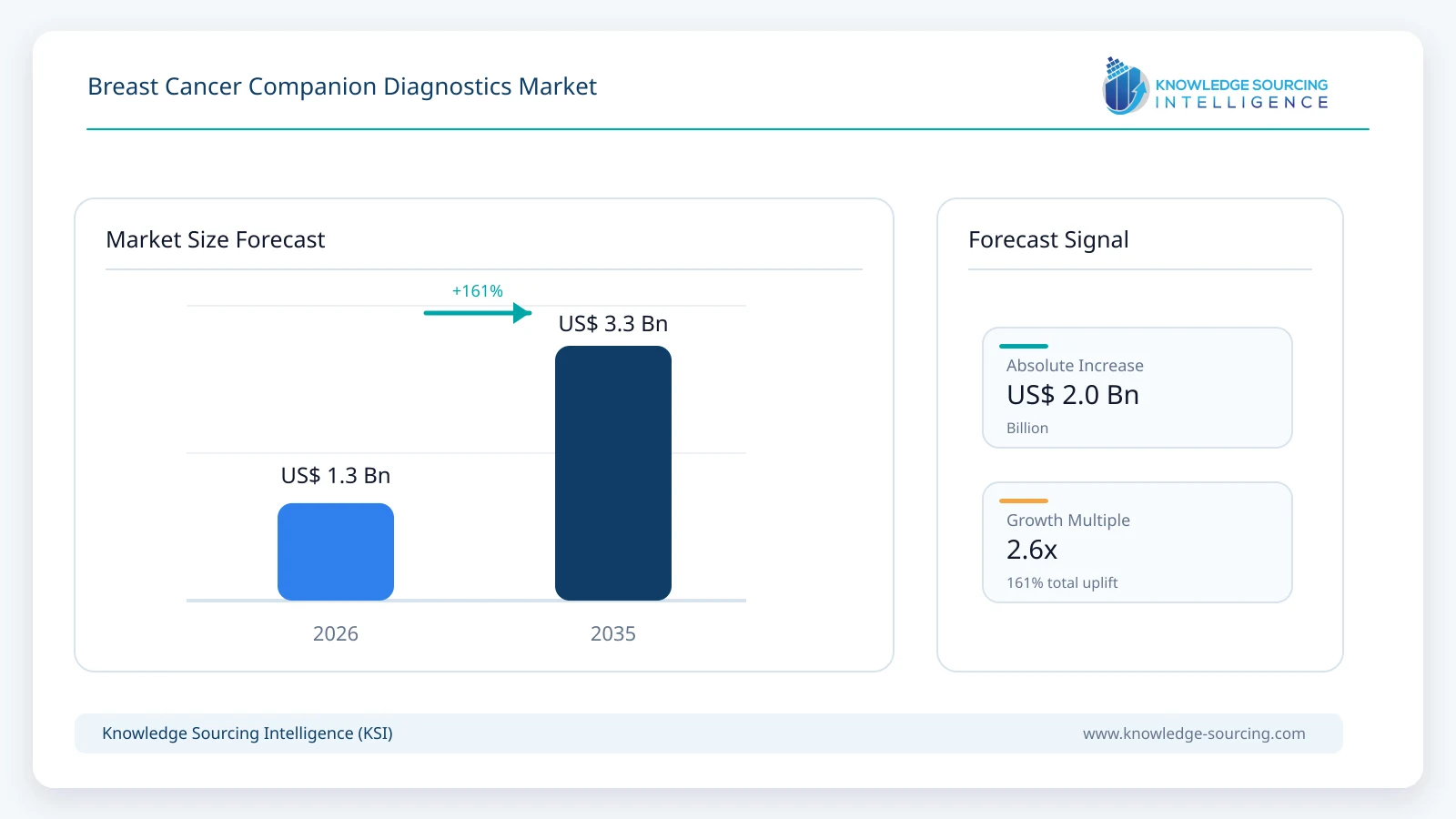
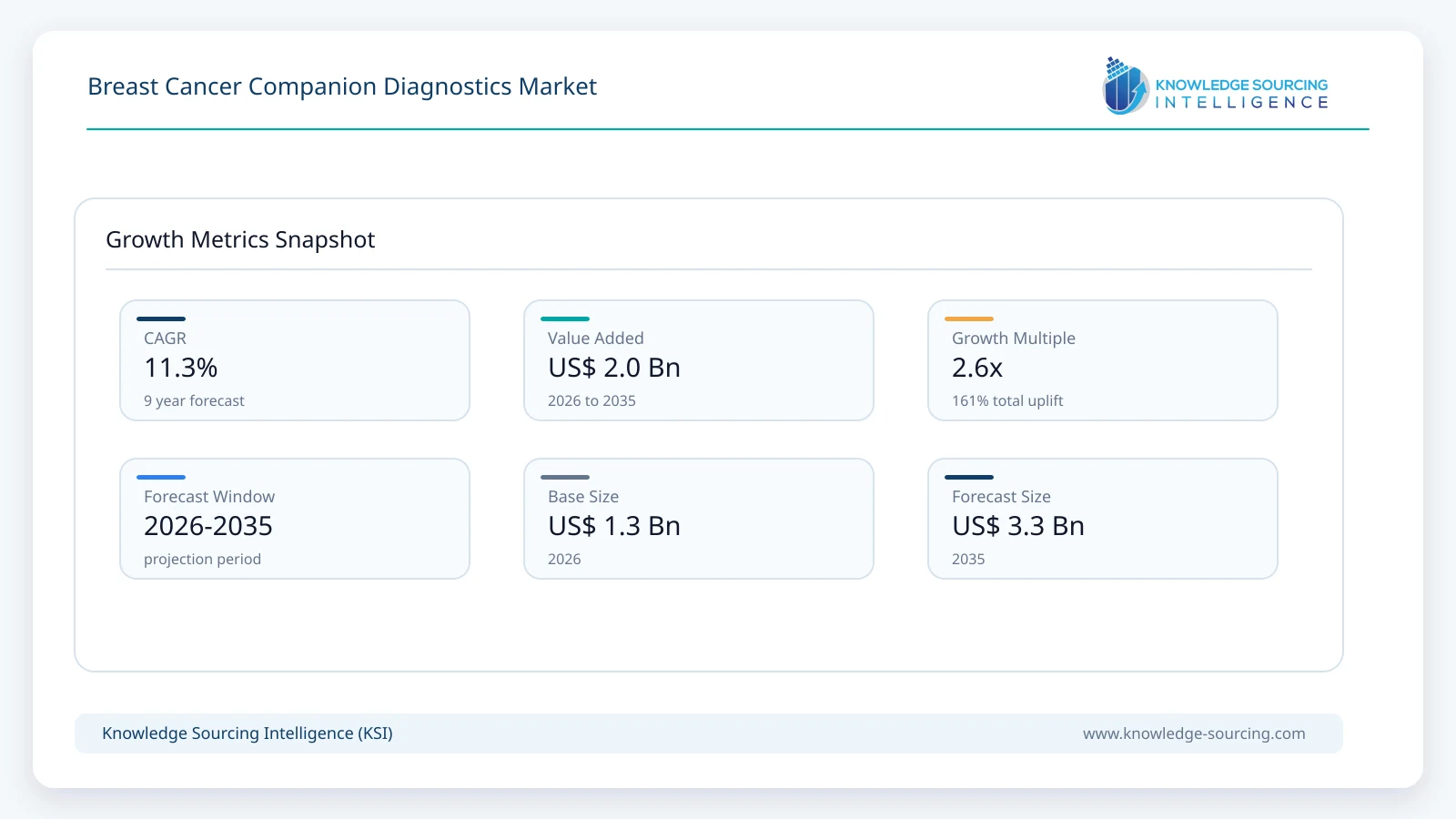
The Breast Cancer Companion Diagnostics Market is expected to grow at a CAGR of 11.3% from a market value of USD 1.27 billion in 2026 to USD 3.32 billion in 2035.
Highlights:
- 1Rising approvals of biomarker-specific targeted therapies are increasing demand for validated companion diagnostic assays before treatment initiation.
- 2Growing adoption of next-generation sequencing platforms is enabling simultaneous evaluation of multiple clinically actionable biomarkers, improving testing efficiency.
- 3Expanding pharmaceutical investment in precision oncology is strengthening strategic collaborations between drug developers and diagnostic manufacturers.
- 4Regulatory agencies are increasingly aligning therapeutic approvals with companion diagnostic requirements, accelerating integrated drug-diagnostic development.
Breast cancer companion diagnostics enable physicians to identify patients who are most likely to respond to targeted therapies through validated molecular biomarkers such as HER2, PIK3CA, BRCA1/2, ESR1, PD-L1, NTRK, and other emerging genomic alterations. Precision treatment increasingly depends on molecular characterization because breast cancer exhibits substantial biological heterogeneity across hormone receptor-positive, HER2-positive, and triple-negative disease subtypes. Pharmaceutical companies are simultaneously expanding targeted therapy pipelines, requiring diagnostic developers to validate biomarkers alongside therapeutic candidates throughout clinical development.
Regulatory agencies increasingly require analytical validity, clinical validity, and clinical utility before approving companion diagnostic assays. This requirement is encouraging closer partnerships between pharmaceutical sponsors and diagnostic manufacturers, reducing uncertainties during therapeutic commercialization while improving patient stratification. Hospitals, oncology centers, and specialized molecular laboratories continue investing in advanced genomic testing platforms capable of supporting multiple companion diagnostic assays within routine clinical workflows.
Clinical practice also continues to integrate liquid biopsy technologies for treatment monitoring and resistance detection because repeated tissue sampling presents procedural limitations in metastatic disease. Consequently, diagnostic developers are expanding assay menus that combine tissue-based and blood-based biomarkers, strengthening precision oncology infrastructure across both developed and emerging healthcare systems.
Market Dynamics
Market Drivers
Expanding Precision Oncology Therapeutics Increases Companion Diagnostic Adoption: Precision oncology relies on molecular characterization to match patients with targeted therapies. Pharmaceutical companies are continuously expanding breast cancer drug pipelines that depend on validated biomarker identification before treatment selection. This dependency is increasing demand for companion diagnostic assays capable of accurately detecting HER2 amplification, BRCA mutations, PIK3CA alterations, ESR1 mutations, and PD-L1 expression. Diagnostic manufacturers are simultaneously developing broader molecular testing capabilities to support multiple therapeutic indications within a single analytical workflow. The resulting integration between drug development and biomarker testing strengthens long-term demand for companion diagnostics across early-stage and advanced breast cancer management.
Growing Clinical Adoption of Next-Generation Sequencing Expands Biomarker Testing: Next-generation sequencing enables simultaneous analysis of multiple clinically actionable genomic alterations using limited patient samples. Clinical laboratories are increasingly adopting comprehensive genomic profiling because oncologists require broader molecular information before selecting targeted therapies. Single-gene testing becomes less efficient as therapeutic options diversify across different biomarker populations. Diagnostic developers are optimizing NGS workflows to improve turnaround time, analytical sensitivity, and reimbursement acceptance. Comprehensive genomic testing consequently strengthens the clinical relevance of companion diagnostics throughout disease progression.
Increasing Use of Liquid Biopsy Supports Longitudinal Disease Monitoring: Tissue biopsy remains the diagnostic standard, yet repeated tissue sampling presents procedural limitations in metastatic disease. Liquid biopsy technologies are providing minimally invasive alternatives for detecting circulating tumor DNA and monitoring treatment response over time. Clinical researchers continue validating blood-based biomarkers that identify resistance mutations emerging during therapy. Diagnostic companies are expanding liquid biopsy portfolios to complement tissue-based testing rather than replacing conventional pathology. The broader availability of longitudinal molecular monitoring supports precision treatment adjustments throughout disease management.
Regulatory Co-Development Models Strengthen Market Expansion: Companion diagnostics require coordinated regulatory review alongside corresponding therapeutics. Regulatory agencies increasingly encourage synchronized drug-diagnostic development because biomarker validation improves therapeutic benefit-risk assessment. Pharmaceutical sponsors are therefore incorporating diagnostic partners earlier in clinical development programs to reduce commercialization delays. Diagnostic manufacturers benefit from predictable regulatory pathways that support global market expansion. These integrated development strategies continue to reinforce demand for clinically validated companion diagnostic platforms.
Market Restraints
High analytical validation requirements and complex regulatory pathways increase development timelines and commercialization costs for companion diagnostic assays.
Limited reimbursement coverage for comprehensive genomic profiling in several healthcare systems restricts routine adoption outside specialized oncology centers.
Variability in molecular testing infrastructure, laboratory expertise, and standardized biomarker interpretation creates uneven clinical implementation across developing healthcare markets.
Market Opportunities
Expanding Biomarker Discovery Creates New Companion Diagnostic Indications: Targeted therapy development increasingly focuses on novel genomic and proteomic biomarkers beyond established HER2 and BRCA alterations. Clinical researchers are identifying emerging predictive biomarkers associated with endocrine resistance, DNA damage repair pathways, immune checkpoint activity, and tumor microenvironment interactions. Diagnostic companies are expanding assay menus to accommodate these discoveries alongside existing biomarkers. Broader molecular characterization supports sustained growth opportunities as additional targeted therapies progress through clinical development.
Artificial Intelligence Improves Molecular Data Interpretation: Large genomic datasets require efficient interpretation before clinical decision-making. Artificial intelligence platforms are increasingly supporting molecular variant classification, workflow automation, and clinical reporting within diagnostic laboratories. Healthcare providers require standardized interpretation because precision treatment decisions depend on accurate genomic analysis. Diagnostic developers are integrating bioinformatics solutions with sequencing platforms to improve laboratory efficiency. Enhanced analytical capabilities strengthen confidence in biomarker-guided therapeutic selection.
Pharmaceutical-Diagnostic Partnerships Accelerate Commercialization: Drug developers increasingly recognize that successful targeted therapies depend on reliable biomarker identification. Pharmaceutical companies are expanding strategic collaborations with molecular diagnostics firms during early clinical development to ensure synchronized regulatory approval. Shared clinical evidence generation reduces uncertainty while improving market access strategies. Integrated commercialization models continue expanding opportunities for diagnostic manufacturers participating in precision oncology partnerships.
Emerging Healthcare Systems Expand Precision Oncology Infrastructure: National cancer control programs increasingly prioritize molecular diagnostics within comprehensive oncology services. Governments and academic institutions are investing in genomic medicine infrastructure because precision oncology improves treatment selection and healthcare resource utilization. Diagnostic laboratories are expanding sequencing capacity to meet growing clinical demand across emerging markets. These investments create long-term opportunities for companion diagnostic manufacturers seeking broader geographic expansion.
Disease & Epidemiology Analysis
Breast cancer remains the most frequently diagnosed cancer among women worldwide and represents one of the leading causes of cancer-related mortality. Disease burden continues increasing because population aging, urbanization, reproductive factors, obesity, and lifestyle-related risks are influencing incidence across both developed and developing countries. Earlier detection programs improve diagnosis rates, yet increasing case volumes simultaneously expand demand for biomarker-guided therapeutic decision-making.
Breast cancer comprises biologically distinct molecular subtypes, including hormone receptor-positive/HER2-negative, HER2-positive, and triple-negative disease. Each subtype demonstrates different therapeutic responses because tumor biology influences sensitivity to endocrine therapy, HER2-targeted agents, PARP inhibitors, immune checkpoint inhibitors, and PI3K inhibitors. Companion diagnostics play a central role in accurately identifying eligible patient populations before treatment initiation.
Metastatic breast cancer continues to require repeated molecular assessment because tumor evolution generates resistance mechanisms during treatment. Liquid biopsy technologies are increasingly supporting longitudinal genomic monitoring, where repeated tissue biopsy remains clinically challenging. This transition strengthens demand for companion diagnostics across both initial diagnosis and disease progression.
Treatment Guidelines Landscape
Organization | Guideline Focus | Companion Diagnostic Relevance |
National Comprehensive Cancer Network (NCCN) | Biomarker-directed breast cancer management | Recommends HER2, BRCA, PIK3CA, PD-L1, and other biomarker testing for appropriate treatment selection. |
American Society of Clinical Oncology (ASCO) | Evidence-based breast cancer treatment recommendations | Supports validated biomarker testing before administration of targeted therapies. |
European Society for Medical Oncology (ESMO) | Precision oncology recommendations | Encourages standardized molecular testing for clinically actionable genomic alterations. |
College of American Pathologists (CAP), ASCO & AMP | Biomarker testing standards | Provides recommendations for analytical quality and standardized molecular testing practices. |
Market Segmentation
By Sample Type
Tissue biopsy remains the reference standard for companion diagnostic testing because preserved tumor architecture enables comprehensive histopathological and molecular characterization. Targeted therapy selection depends on accurate biomarker identification, encouraging pathology laboratories to maintain validated tissue-based testing workflows. Pharmaceutical sponsors are continuing clinical trial enrollment using tissue-confirmed biomarker status because regulatory evidence primarily originates from tissue-derived analyses. Tissue biopsy remains the dominant sample type supporting regulatory-approved companion diagnostics despite growing adoption of complementary liquid biopsy technologies.
By Indication
Metastatic breast cancer generates substantial demand for companion diagnostics because treatment strategies continuously evolve throughout disease progression. Tumor biology frequently changes under therapeutic pressure, requiring repeated molecular assessment to identify emerging resistance mechanisms and new therapeutic opportunities. Liquid biopsy technologies are increasingly supporting serial biomarker monitoring where repeated tissue sampling becomes clinically challenging. Precision oncology depends on continuous molecular profiling to optimize treatment sequencing and improve patient outcomes in advanced disease.
By End User
Diagnostic laboratories represent a critical end-user segment because advanced molecular testing requires specialized infrastructure, quality management systems, and experienced genomic interpretation teams. Healthcare providers increasingly refer complex biomarker testing to centralized laboratories capable of performing high-throughput sequencing and multiplex molecular assays. Laboratory networks are expanding genomic testing capacity as precision oncology becomes integrated into routine breast cancer management. Centralized diagnostic expertise supports consistent analytical performance and broader access to companion diagnostic testing across healthcare systems.
Regional Analysis
North America Market Analysis
North America represents the most mature market for breast cancer companion diagnostics because precision oncology is embedded within routine clinical practice and supported by advanced molecular pathology infrastructure. The region is continuing to expand comprehensive genomic profiling as targeted therapies become available for a wider range of breast cancer biomarkers. This transition increases demand for companion diagnostic assays that identify HER2 amplification, BRCA1/2 mutations, PIK3CA alterations, ESR1 mutations, PD-L1 expression, and emerging genomic targets before therapy initiation. Integrated cancer networks routinely incorporate biomarker testing into multidisciplinary treatment pathways, reducing variability in clinical decision-making while supporting evidence-based personalized medicine. Regulatory alignment between therapeutics and companion diagnostics strengthens market adoption because the U.S. Food and Drug Administration (FDA) frequently approves targeted drugs together with corresponding diagnostic assays.
Europe Market Analysis
Europe maintains a strong position in the breast cancer companion diagnostics market because national cancer strategies increasingly prioritize precision oncology within comprehensive cancer care. Clinical practice follows evidence-based molecular testing recommendations, encouraging hospitals and reference laboratories to integrate validated biomarker assays before targeted therapy selection. Demand is shifting toward comprehensive genomic profiling as oncologists require broader molecular information to optimize treatment sequencing across hormone receptor-positive, HER2-positive, and triple-negative breast cancer populations. The European Medicines Agency (EMA) supports coordinated regulatory assessment of targeted therapeutics and associated diagnostic technologies, creating greater consistency across member states.
Asia Pacific Market Analysis
Asia Pacific is experiencing rapid expansion in breast cancer companion diagnostics because healthcare systems are strengthening oncology infrastructure while cancer incidence continues increasing across the region. Governments increasingly recognize precision medicine as a strategic priority, encouraging investments in molecular diagnostics, genomic medicine programs, and specialized oncology centers. This transition increases demand for validated companion diagnostic assays capable of supporting targeted breast cancer therapies within routine clinical practice. Countries including Japan, South Korea, China, Australia, and Singapore continue expanding national genomic medicine initiatives that integrate molecular testing into cancer management.
Rest of the World
The Rest of the World market, including Latin America, the Middle East, and Africa, demonstrates gradual adoption of breast cancer companion diagnostics because healthcare infrastructure varies considerably across countries. Precision oncology remains concentrated within tertiary hospitals and specialized cancer centers where advanced molecular testing capabilities are available. Governments are increasingly investing in cancer control programs as breast cancer incidence rises, creating demand for diagnostic technologies that improve treatment selection and healthcare efficiency. International collaborations continue supporting laboratory capacity development through technology transfer, workforce training, and academic partnerships.
Regulatory Landscape
Companion diagnostics operate within one of the most rigorous regulatory environments in in vitro diagnostics because test performance directly influences therapeutic decision-making. Regulatory agencies require analytical validity, clinical validity, and demonstrated clinical utility before approving companion diagnostic assays linked to targeted therapies. This regulatory framework ensures that patients receive therapies supported by reliable biomarker evidence while reducing the risk of inappropriate treatment selection. Pharmaceutical companies increasingly coordinate clinical development with diagnostic manufacturers because synchronized regulatory submissions shorten commercialization timelines and strengthen therapeutic value propositions.
The U.S. Food and Drug Administration continues to recognize companion diagnostics as essential medical devices whenever therapeutic labeling requires biomarker identification before treatment administration. Simultaneous review of therapeutics and companion diagnostics is becoming increasingly common, encouraging earlier collaboration between pharmaceutical sponsors and diagnostic developers during clinical trial design. European regulatory authorities similarly emphasize analytical performance, clinical evidence, and quality management under evolving in vitro diagnostic regulatory requirements. These frameworks increase development complexity but establish higher confidence in precision oncology implementation.
Regulatory expectations are also expanding beyond analytical performance to include software validation, bioinformatics transparency, cybersecurity considerations for digital platforms, and post-market performance monitoring. Diagnostic manufacturers are investing in regulatory science capabilities because comprehensive genomic assays increasingly integrate artificial intelligence-assisted interpretation and large sequencing datasets.
Pipeline Analysis
The breast cancer companion diagnostics pipeline closely mirrors the evolution of precision oncology therapeutics because biomarker identification determines patient eligibility for targeted treatment. Clinical development continues focusing on biomarkers associated with HER2 expression, DNA damage repair pathways, PI3K signaling, endocrine resistance, immune checkpoint activity, and circulating tumor DNA. Pharmaceutical sponsors are expanding biomarker-driven clinical trials that evaluate therapeutic efficacy only within molecularly defined patient populations. This strategy improves response rates while strengthening regulatory evidence supporting both therapeutics and companion diagnostics.
Next-generation sequencing continues replacing single-gene testing in many investigational programs because broader genomic profiling identifies multiple actionable alterations using limited tissue samples. Diagnostic manufacturers are validating multiplex assays capable of simultaneously detecting HER2 amplification, BRCA1/2 mutations, PIK3CA mutations, ESR1 alterations, NTRK fusions, and additional emerging biomarkers. Liquid biopsy technologies are also progressing through clinical validation for longitudinal monitoring of treatment response and acquired resistance. These developments expand the potential clinical applications of companion diagnostics beyond initial patient selection.
Clinical trial sponsors increasingly adopt adaptive trial designs, basket studies, umbrella studies, and biomarker-enriched enrollment strategies to improve development efficiency. Pharmaceutical companies continue establishing long-term collaborations with diagnostic developers before initiating pivotal Phase III trials because integrated biomarker validation reduces regulatory uncertainty.
Reimbursement Landscape
Reimbursement remains one of the principal determinants of companion diagnostic adoption because molecular testing frequently represents the gateway to high-cost targeted therapies. Healthcare payers generally evaluate clinical validity, demonstrated patient benefit, and cost-effectiveness before extending reimbursement to new biomarker assays. Coverage policies increasingly favor companion diagnostics supported by robust clinical evidence because accurate patient selection reduces ineffective treatment utilization while improving therapeutic outcomes. This relationship strengthens demand for assays that demonstrate measurable clinical utility within routine oncology practice.
Reimbursement frameworks continue evolving alongside precision medicine because comprehensive genomic profiling is expanding beyond single-gene testing. Public and private healthcare systems increasingly recognize that multiplex molecular testing may reduce repeated diagnostic procedures while identifying multiple actionable biomarkers from a single patient sample. Diagnostic manufacturers are generating health-economic evidence to support reimbursement negotiations by demonstrating improved treatment selection, reduced unnecessary therapy exposure, and optimized healthcare resource utilization. These activities are gradually improving access to advanced companion diagnostics, although reimbursement consistency continues to vary across countries and healthcare systems.
Competitive Landscape
F. Hoffmann-La Roche Ltd.
Roche is strategically distinguished by its integrated pharmaceuticals and diagnostics business, allowing simultaneous development of targeted breast cancer therapies and FDA-approved companion diagnostics. The company continues expanding its tissue- and blood-based molecular diagnostic portfolio through the Ventana and cobas platforms to strengthen precision oncology leadership.
Agilent Technologies, Inc.
Agilent differentiates itself through advanced pathology, immunohistochemistry (IHC), and molecular diagnostics solutions supporting biomarker-driven breast cancer treatment decisions. The company continues enhancing companion diagnostic capabilities through collaborations with pharmaceutical developers and digital pathology innovations.
QIAGEN N.V.
QIAGEN maintains a strong position in companion diagnostics by offering PCR- and NGS-based biomarker assays that support precision oncology applications. The company is expanding strategic collaborations with biopharmaceutical sponsors to develop and commercialize companion diagnostics linked to targeted cancer therapies.
Illumina, Inc.
Illumina is recognized for its leadership in next-generation sequencing technologies that enable comprehensive genomic profiling for precision oncology. The company continues advancing clinical sequencing solutions that support multi-biomarker companion diagnostic development across breast cancer indications.
Thermo Fisher Scientific Inc.
Thermo Fisher Scientific leverages its broad molecular diagnostics portfolio, including NGS, PCR, and laboratory automation platforms, to support precision medicine workflows. The company is strengthening partnerships with pharmaceutical companies to accelerate the development and commercialization of companion diagnostic assays.
bioMérieux SA
bioMérieux is strategically expanding its molecular diagnostics capabilities through investments in oncology testing and precision medicine solutions. The company continues strengthening its biomarker testing portfolio by integrating advanced molecular technologies and collaborating with oncology research partners.
Key Developments
June 2026: The FDA approved FoundationOne CDx as a companion diagnostic for Itovebi (inavolisib) to identify patients with hormone receptor-positive (HR+), HER2-negative breast cancer with a PIK3CA mutation. It represents the first FDA-approved tissue-based comprehensive genomic profiling test for detecting PIK3CA mutations in this patient population.
May 2026: The FDA approved Guardant360 CDx as a companion diagnostic for Arvinas and Pfizer's VEPPANU (vepdegestrant) for patients with ER+/HER2- advanced breast cancer with ESR1 mutations. It marks Guardant's third ESR1 companion diagnostic FDA approval to help guide timely treatment decisions for patients with advanced breast cancer.
May 2025: The FDA approved Guardant360 CDx as a companion diagnostic for Eli Lilly and Company's Inluriyo (imlunestrant) for the treatment of ESR1-mutated advanced breast cancer.
Strategic Insights and Future Market Outlook
The breast cancer companion diagnostics market is evolving from single-biomarker testing toward comprehensive genomic profiling because targeted therapies increasingly require simultaneous evaluation of multiple molecular alterations. Pharmaceutical companies are expanding precision oncology pipelines while diagnostic manufacturers are integrating tissue biopsy, liquid biopsy, and next-generation sequencing technologies into unified testing platforms. This convergence is strengthening the role of companion diagnostics throughout the entire breast cancer treatment pathway.
Regulatory agencies continue reinforcing co-development models that link therapeutic approvals with validated companion diagnostics, encouraging earlier collaboration between drug developers and diagnostic companies. Artificial intelligence, digital pathology, and advanced bioinformatics are improving molecular data interpretation, while broader reimbursement support for clinically validated assays is expected to increase adoption across hospitals, diagnostic laboratories, and cancer centers. These trends position companion diagnostics as an indispensable component of future personalized breast cancer management.
Breast cancer care is increasingly depending on biomarker-guided treatment selection as precision oncology continues to reshape clinical practice. Companies that expand clinically validated biomarker portfolios, establish strategic pharmaceutical collaborations, and strengthen global regulatory and laboratory capabilities are expected to maintain competitive advantages throughout the forecast period.
Breast cancer companion diagnostics are becoming a foundational element of precision oncology by enabling accurate patient stratification and improving targeted therapy outcomes. Continued innovation in molecular diagnostics, regulatory harmonization, and integrated drug–diagnostic development is expected to support sustained clinical adoption, making companion diagnostics an essential pillar of personalized breast cancer treatment between 2026 and 2035.
Breast Cancer Companion Diagnostics Market Scope:
| Report Metric | Details |
|---|---|
| Total Market Size in 2026 | USD 1.27 billion |
| Total Market Size in 2035 | USD 3.32 billion |
| Forecast Unit | USD Billion |
| Growth Rate | 11.3% |
| Study Period | 2021 to 2035 |
| Historical Data | 2021 to 2024 |
| Base Year | 2025 |
| Forecast Period | 2026 – 2035 |
| Segmentation | Technology, Sample Type, End User, Geography |
| Companies |
|
Market Segmentation
Technology
Sample Type
End User
Geography
- North America
- South America
- Europe
- Middle East and Africa
- Asia Pacific
Table of Contents
1. EXECUTIVE SUMMARY
1.1 Market Snapshot
1.2 Key Findings
1.3 Analyst Insights
1.4 Strategic Recommendations
2. RESEARCH METHODOLOGY
2.1 Research Design
2.2 Data Collection Methodology
2.3 Market Size Estimation
2.4 Forecasting Model
2.5 Assumptions & Limitations
3. GLOBAL BREAST CANCER COMPANION DIAGNOSTICS MARKET OVERVIEW, SIZE & FORECAST
3.1 Market Definition & Scope
3.2 Breast Cancer Overview
3.3 Role of Companion Diagnostics in Breast Cancer Management
3.4 Evolution of Breast Cancer Companion Diagnostics
3.5 Key Market Trends
3.6 Historical Market Size Analysis (2021–2025)
3.7 Market Forecast (2026–2035)
3.8 Breast Cancer Epidemiology and Disease Burden Analysis
3.9 Disease Prevalence Analysis
3.10 Diagnosed Patient Population Analysis
3.11 Biomarker Testing Volume Analysis
3.12 Treatment Landscape and Companion Diagnostic Integration
3.13 Patient Journey Analysis
4. MARKET DYNAMICS
4.1 Market Drivers
4.2 Market Restraints
4.3 Market Opportunities
4.4 Market Challenges
5. INDUSTRY LANDSCAPE
5.1 Industry Value Chain Analysis
5.2 Pricing Analysis
5.3 Reimbursement Landscape
6. INNOVATION LANDSCAPE
6.1 Emerging Technologies in Breast Cancer Companion Diagnostics
6.2 Product Innovation
6.3 Clinical Trial Analysis
6.4 Companion Diagnostic Pipeline Analysis
6.5 Artificial Intelligence Integration in Companion Diagnostics
6.6 Digital Pathology and Precision Oncology Integration
7. REGULATORY LANDSCAPE
7.1 Regulatory Framework
7.2 Approval Pathways
7.3 Compliance Requirements
8. GLOBAL BREAST CANCER COMPANION DIAGNOSTICS MARKET LANDSCAPE ANALYSIS
8.1 Analysis by Technology Platform
8.2 Analysis by Biomarker
8.3 Analysis by Sample Type
8.4 Analysis by Clinical Application
8.5 Analysis by Testing Methodology
9. GLOBAL BREAST CANCER COMPANION DIAGNOSTICS MARKET SEGMENT ANALYSIS (2021–2035)
9.1 By Technology
9.1.1 Immunohistochemistry (IHC)
9.1.2 In Situ Hybridization (ISH)
9.1.3 Polymerase Chain Reaction (PCR)
9.1.4 Next-Generation Sequencing (NGS)
9.1.5 Others
9.2 By Biomarker
9.2.1 HER2 (ERBB2)
9.2.2 PIK3CA
9.2.3 BRCA1/BRCA2
9.2.4 ESR1
9.2.5 Others
9.3 By Sample Type
9.3.1 Tissue Biopsy
9.3.2 Liquid Biopsy
9.4 By Indication
9.4.1 Early Breast Cancer
9.4.2 Locally Advanced Breast Cancer
9.4.3 Metastatic Breast Cancer
9.5 By End User
9.5.1 Hospitals
9.5.2 Diagnostic Laboratories
9.5.3 Cancer Centers
9.5.4 Others
10. GLOBAL BREAST CANCER COMPANION DIAGNOSTICS MARKET GEOGRAPHICAL ANALYSIS (2021–2035)
10.1 North America
10.2 Europe
10.3 Asia-Pacific
10.4 South America
10.5 Middle East & Africa
11. GLOBAL BREAST CANCER COMPANION DIAGNOSTICS MARKET COUNTRY ANALYSIS (2021–2035)
11.1 United States
11.2 Canada
11.3 Germany
11.4 United Kingdom
11.5 France
11.6 Italy
11.7 Spain
11.8 Japan
11.9 China
11.10 India
11.11 South Korea
11.12 Australia
11.13 Brazil
11.14 Mexico
11.15 Saudi Arabia
11.16 South Africa
12. COMPETITIVE LANDSCAPE
12.1 Market Share Analysis
12.2 Strategic Developments
12.3 Mergers & Acquisitions, Partnerships & Collaborations
12.4 Product Launches
13. COMPANY PROFILES
13.1 F. Hoffmann-La Roche Ltd.
13.1.1 Company Overview
13.1.2 Financials
13.1.3 Product Portfolio
13.1.4 Recent Developments
13.2 Agilent Technologies, Inc.
13.3 QIAGEN N.V.
13.4 Illumina, Inc.
13.5 Thermo Fisher Scientific Inc.
13.6 BioMérieux SA
13.7 Exact Sciences
13.8 NeoGenomics Inc.
13.9 Myriad Genetics, Inc.
13.10 Guardant Health, Inc.
14. GLOBAL BREAST CANCER COMPANION DIAGNOSTICS MARKET COMMERCIAL FORECAST ANALYSIS
14.1 HER2 Companion Diagnostics
14.2 PIK3CA Companion Diagnostics
14.3 BRCA1/BRCA2 Companion Diagnostics
14.4 ESR1 Companion Diagnostics
14.5 PD-L1 Companion Diagnostics
14.6 NGS-Based Comprehensive Genomic Profiling Panels
14.7 Liquid Biopsy Companion Diagnostics
15. INVESTMENT & FUNDING ANALYSIS
15.1 Venture Capital Trends
15.2 Government Funding
15.3 R&D Investments
16. FUTURE OUTLOOK
16.1 Key Growth Opportunities
16.2 Future Industry Trends
Navigate
Trusted by the world's leading organizations











