
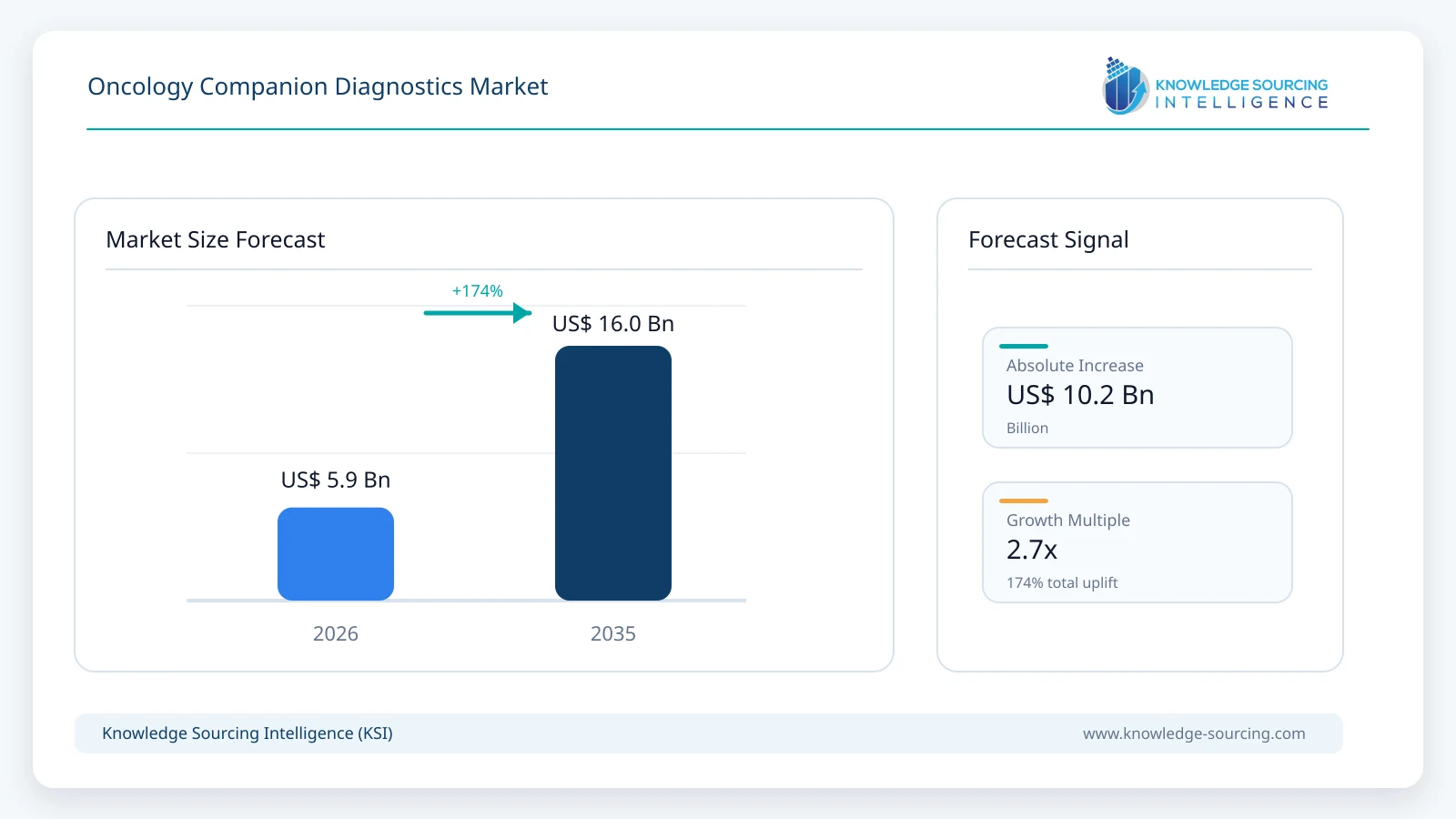
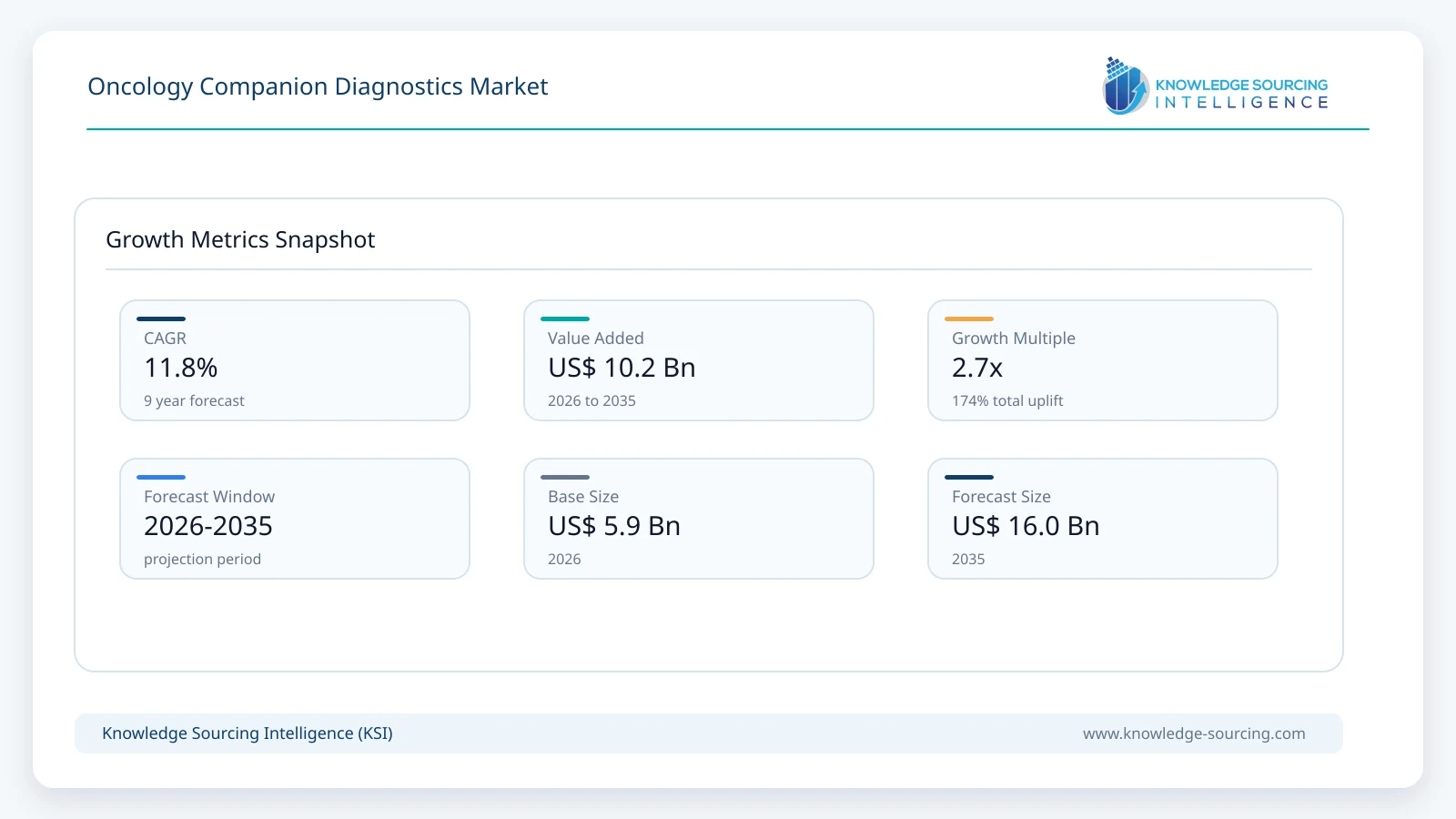
The Oncology Companion Diagnostics Market is predicted to increase at a CAGR of 11.8% from a market value of USD 5.86 billion in 2026 to USD 16.03 billion in 2035.
Highlights:
- 1Expansion of biomarker-driven oncology drug pipelines is increasing demand for validated companion diagnostics because targeted therapies require accurate patient selection before treatment initiation.
- 2Regulatory agencies are strengthening co-development frameworks, accelerating integration of companion diagnostics into oncology clinical development, while increasing evidence requirements for analytical and clinical validation.
- 3Adoption of comprehensive genomic profiling is reducing dependence on sequential single-gene testing because multiple actionable biomarkers increasingly guide therapeutic decisions.
- 4Pharmaceutical companies are expanding strategic partnerships with diagnostic developers because synchronized therapeutic and diagnostic development shortens commercialization timelines.
The oncology companion diagnostics market consists of molecular diagnostic technologies that determine patient eligibility for targeted anticancer therapies through the detection of clinically actionable biomarkers. Companion diagnostics establish a direct relationship between biomarker status and therapeutic response, making them essential components of precision oncology treatment pathways.
Demand is increasing because oncology drug development increasingly targets genetically defined disease subtypes instead of histology alone. Pharmaceutical developers are expanding biomarker-driven clinical programs across lung cancer, breast cancer, colorectal cancer, melanoma, hematologic malignancies, and emerging rare tumor indications. This expansion increases the requirement for validated diagnostic assays capable of supporting regulatory approval and clinical adoption.
Regulatory agencies continue strengthening evidence requirements for analytical validity, clinical validity, and clinical utility because treatment decisions increasingly depend on molecular test accuracy. These expectations encourage diagnostic manufacturers to develop standardized assays with reproducible performance across diverse laboratory environments while simultaneously supporting global commercialization strategies.
The strategic importance of companion diagnostics extends beyond patient stratification because biomarker testing influences clinical trial enrollment, treatment sequencing, reimbursement decisions, and post-market evidence generation. As targeted therapies continue expanding across oncology indications, companion diagnostics remain fundamental to improving treatment precision while supporting sustainable healthcare resource utilization.
Market Dynamics
Market Drivers
Expansion of Precision Oncology Drug Development: Precision oncology increasingly relies on biomarker-defined patient populations for therapeutic development. Pharmaceutical companies are expanding targeted therapy pipelines because genomic alterations increasingly determine treatment response rather than tumor origin alone. This transition increases demand for companion diagnostics capable of identifying eligible patients with high analytical accuracy. Diagnostic developers are integrating assays into earlier phases of drug development to support biomarker-based clinical trial enrollment. Companion diagnostics become essential commercial assets that improve regulatory success and optimize targeted therapy utilization.
Growing Adoption of Comprehensive Genomic Profiling: Comprehensive genomic profiling enables the simultaneous detection of multiple actionable biomarkers within a single test. Healthcare providers are replacing sequential biomarker testing because expanding targeted therapy portfolios requires broader molecular characterization. This evolution reduces tissue consumption while shortening diagnostic turnaround time. Diagnostic manufacturers are introducing multiplex sequencing assays supported by advanced bioinformatics platforms to improve workflow efficiency. Comprehensive profiling consequently strengthens demand for high-throughput companion diagnostic technologies across oncology centers.
Increasing Regulatory Support for Therapeutic–Diagnostic Co-development: Regulatory agencies recognize companion diagnostics as integral components of precision medicine. Regulatory pathways are evolving to facilitate coordinated review of therapeutics and associated diagnostic assays because synchronized approvals improve patient access to targeted treatments. These frameworks require robust analytical validation and clinical evidence linking biomarkers to therapeutic outcomes. Diagnostic companies are investing earlier in regulatory planning alongside pharmaceutical sponsors to meet evolving approval expectations. Regulatory alignment supports broader adoption of companion diagnostics across oncology drug pipelines.
Rising Utilization of Liquid Biopsy Technologies: Liquid biopsy expands molecular testing opportunities for patients who cannot undergo repeat tissue biopsy. Clinical practice is incorporating circulating tumor DNA analysis because disease monitoring and resistance detection increasingly require minimally invasive approaches. Limited tissue availability remains a constraint for comprehensive biomarker assessment in advanced cancers. Diagnostic companies are refining assay sensitivity and analytical performance to improve the detection of low-frequency variants. Liquid biopsy consequently broadens access to companion diagnostic testing while supporting longitudinal disease management.
Market Restraints
Variability in reimbursement policies across healthcare systems limits routine adoption of comprehensive companion diagnostic testing.
Complex regulatory validation requirements increase development timelines and commercialization costs for diagnostic manufacturers.
Limited access to advanced molecular testing infrastructure in lower-resource healthcare settings restricts equitable patient access to precision oncology.
Market Opportunities
Expansion of Biomarker-Driven Clinical Trials: Clinical development increasingly incorporates molecular eligibility criteria across oncology indications. Pharmaceutical sponsors are expanding adaptive and basket trial designs because biomarker-defined populations improve therapeutic evaluation efficiency. Recruitment becomes increasingly dependent on validated molecular testing platforms that identify eligible participants rapidly. Diagnostic companies are collaborating earlier with drug developers to establish clinically validated assays before pivotal studies begin. This trend strengthens long-term demand for companion diagnostics throughout oncology research.
Integration of Artificial Intelligence in Molecular Diagnostics: Artificial intelligence supports the interpretation of complex genomic datasets generated through next-generation sequencing. Clinical laboratories are implementing machine learning algorithms because expanding biomarker panels require standardized analytical workflows. Increasing genomic complexity creates interpretation challenges that delay therapeutic decision-making. Technology providers are developing AI-enabled bioinformatics platforms to improve variant classification and reporting consistency.
Development of Multi-Cancer Biomarker Platforms: Precision oncology increasingly requires evaluation of numerous predictive biomarkers across diverse tumor types. Diagnostic developers are designing pan-cancer testing platforms because targeted therapies increasingly receive tissue-agnostic regulatory approvals. Conventional single-gene assays create workflow inefficiencies as biomarker requirements expand. Manufacturers are investing in multiplex technologies capable of supporting multiple therapeutic indications within a unified testing framework. Multi-cancer companion diagnostics consequently improve laboratory efficiency while supporting broader therapeutic adoption.
Increasing Pharmaceutical–Diagnostic Strategic Partnerships: Successful commercialization of targeted therapies depends on synchronized therapeutic and diagnostic development. Pharmaceutical companies are expanding strategic collaborations with molecular diagnostic developers because integrated development reduces regulatory uncertainty and accelerates market entry. Independent product development creates misalignment between clinical evidence generation and diagnostic readiness. Collaborative development models are improving clinical validation while strengthening global launch strategies. These partnerships remain central to future innovation within companion diagnostics.
Disease & Epidemiology Analysis
Cancer incidence continues to increase globally because aging populations, improved screening programs, and changing environmental risk factors are expanding the number of patients requiring molecular characterization. Precision oncology increasingly depends on the identification of actionable genomic alterations, making companion diagnostics an essential component of therapeutic selection rather than an optional laboratory procedure.
Non-small cell lung cancer represents one of the largest companion diagnostic applications because multiple actionable biomarkers—including EGFR, ALK, ROS1, BRAF, MET, RET, KRAS, NTRK, and HER2—guide targeted treatment selection. Breast cancer also demonstrates expanding biomarker complexity through HER2, PIK3CA, ESR1, and BRCA testing, while colorectal cancer increasingly requires evaluation of RAS, BRAF, MSI, and HER2 status before therapy selection.
Hematologic malignancies continue expanding molecular testing requirements because genomic profiling increasingly guides precision therapies in leukemia, lymphoma, and multiple myeloma. Melanoma similarly relies on biomarker-directed treatment strategies centered on BRAF mutation testing. These evolving biomarker landscapes increase demand for multiplex testing technologies capable of supporting rapidly expanding therapeutic options.
Treatment Guidelines Landscape
Organization | Cancer Type | Companion Diagnostic Recommendation | Clinical Significance |
NCCN | NSCLC | Comprehensive molecular profiling before first-line targeted therapy | Supports selection of EGFR, ALK, ROS1, RET, MET, KRAS, HER2 and other targeted therapies |
ASCO | Breast Cancer | HER2, BRCA, PIK3CA, and other biomarker testing where clinically indicated | Enables personalized targeted treatment selection |
ESMO | Solid Tumors | Broad next-generation sequencing in appropriate advanced cancers | Expands identification of actionable genomic alterations |
CAP/IASLC/AMP | Lung Cancer | Standardized molecular testing guidelines | Improves analytical consistency and treatment selection |
Market Segmentation
By Sample Type
Tissue biopsy remains the primary sample type for oncology companion diagnostics because it provides direct access to tumor architecture and molecular characteristics. Demand is shifting toward integrated genomic profiling as targeted therapy portfolios continue expanding across multiple biomarkers. Limited tissue availability creates pressure for laboratories to maximize analytical yield from individual specimens. Diagnostic developers are optimizing multiplex assays that extract greater molecular information from smaller tissue samples. Tissue biopsy continues serving as the clinical reference standard despite increasing adoption of complementary liquid biopsy approaches.
By Cancer Type
NSCLC represents the largest clinical application for companion diagnostics because treatment selection depends on an expanding range of actionable genomic alterations. Clinical practice is incorporating comprehensive molecular profiling before first-line therapy as targeted treatment options continue increasing. Sequential biomarker testing delays treatment initiation and increases tissue utilization. Healthcare providers are implementing broad next-generation sequencing panels that evaluate multiple biomarkers simultaneously. NSCLC consequently remains the leading driver of innovation across companion diagnostic technologies and pharmaceutical co-development programs.
By Product Type
Consumables and assay kits constitute the largest recurring product category because every companion diagnostic test requires validated reagents for molecular analysis. Testing volumes are increasing as biomarker-directed therapies continue entering oncology practice across multiple indications. Regulatory expectations require standardized assay performance that maintains analytical consistency between laboratories. Manufacturers are developing increasingly automated assay kits compatible with high-throughput sequencing and PCR platforms. Consumables generate sustained commercial demand while supporting long-term expansion of precision oncology testing.
Regional Analysis
North America Market Analysis
North America represents the most established market for oncology companion diagnostics because the region combines advanced molecular testing infrastructure with a strong pipeline of targeted oncology therapeutics. Demand is increasing as pharmaceutical companies continue expanding biomarker-driven clinical development programs that require validated companion diagnostic assays throughout the product lifecycle. The growing number of precision oncology therapies increases pressure on healthcare systems to identify eligible patients rapidly, making comprehensive genomic profiling an essential component of routine oncology practice. Clinical laboratories are investing in next-generation sequencing (NGS), digital pathology, and bioinformatics platforms to improve testing capacity and support increasingly complex biomarker panels. The United States Food and Drug Administration (FDA) maintains a mature regulatory framework for therapeutic–diagnostic co-development, which strengthens confidence among pharmaceutical sponsors and diagnostic manufacturers. Academic cancer centers, commercial laboratories, and integrated healthcare systems continue collaborating on translational research because real-world molecular evidence supports both drug development and reimbursement decisions.
Europe Market Analysis
Europe maintains a strong position in the oncology companion diagnostics market because precision medicine initiatives are becoming increasingly integrated into national cancer strategies. Demand is shifting toward standardized molecular testing as healthcare systems seek consistent access to targeted therapies across member countries. Differences in reimbursement policies and laboratory capacity continue to create variability in testing adoption, which increases the need for harmonized diagnostic standards. National health systems are expanding investment in genomic medicine programs and centralized sequencing facilities to improve equitable access to precision oncology services. The implementation of the In Vitro Diagnostic Regulation (IVDR) is strengthening analytical and clinical evidence requirements for companion diagnostics while encouraging manufacturers to enhance quality management and clinical validation. Pharmaceutical sponsors are expanding collaborations with European academic institutions and comprehensive cancer centers because biomarker-driven clinical trials require access to diverse patient populations.
Asia Pacific Market Analysis
Asia Pacific is emerging as one of the fastest-evolving regions for oncology companion diagnostics because cancer incidence continues to increase alongside improvements in healthcare infrastructure and genomic medicine capabilities. Demand is expanding as governments invest in national precision medicine initiatives that encourage broader adoption of molecular diagnostics across tertiary hospitals. Large population sizes create significant testing requirements, although differences in laboratory standardization and healthcare access continue to limit uniform implementation across the region. Healthcare providers are expanding next-generation sequencing capacity because targeted therapies increasingly require comprehensive biomarker evaluation before treatment initiation. International pharmaceutical companies are increasing clinical trial activity across the Asia Pacific to accelerate patient recruitment for biomarker-defined oncology studies. Local diagnostic manufacturers are strengthening technological capabilities through partnerships with global sequencing and biotechnology companies while expanding access to molecular testing platforms.
Rest of the World
The Rest of the World region is gradually expanding its adoption of oncology companion diagnostics because access to targeted cancer therapies is increasing across several emerging healthcare markets. Demand remains concentrated within major urban cancer centers where molecular pathology infrastructure supports advanced genomic testing. Limited laboratory capacity, reimbursement variability, and shortages of specialized molecular pathology expertise continue to restrict widespread implementation across many countries. Governments and healthcare providers are strengthening oncology services by investing in specialized cancer institutes and laboratory modernization programs that improve access to precision diagnostics. International diagnostic companies are expanding regional partnerships because localized laboratory networks improve testing availability while reducing dependence on overseas reference laboratories.
Regulatory Landscape
Companion diagnostics operate under regulatory frameworks that require simultaneous consideration of both diagnostic performance and therapeutic effectiveness because treatment decisions directly depend on accurate biomarker identification. Regulatory agencies increasingly expect analytical validity, clinical validity, and clinical utility to be demonstrated before approval, reducing uncertainty regarding patient selection and therapeutic outcomes. These requirements encourage pharmaceutical companies and diagnostic manufacturers to initiate co-development strategies early in clinical development rather than after pivotal efficacy studies.
The U.S. Food and Drug Administration (FDA) continues refining guidance for companion diagnostic devices by emphasizing coordinated review with associated therapeutics whenever biomarker testing is essential for safe and effective treatment use. The European Union In Vitro Diagnostic Regulation (IVDR) has strengthened evidence requirements for in vitro diagnostic devices, increasing expectations for clinical performance studies, post-market surveillance, and quality management systems. Similar regulatory modernization efforts are also occurring across Japan, China, South Korea, and other major healthcare markets as precision oncology becomes increasingly integrated into national cancer programs.
Manufacturers are responding by investing in regulatory science, global clinical validation studies, and standardized quality systems that support simultaneous submissions across multiple jurisdictions. This regulatory evolution strengthens confidence in companion diagnostics while increasing development complexity and extending collaboration between pharmaceutical sponsors, diagnostic developers, clinical laboratories, and regulatory authorities.
Pipeline Analysis
The oncology companion diagnostics pipeline is expanding because pharmaceutical development increasingly targets molecularly defined patient populations rather than broad histological indications. Companion diagnostics are now being incorporated during Phase I and Phase II clinical development to identify responsive patient subsets before pivotal efficacy studies begin. This strategy improves clinical trial efficiency while increasing the probability of demonstrating statistically significant therapeutic benefit in biomarker-positive populations.
Current development activity focuses heavily on next-generation sequencing (NGS)-based companion diagnostics capable of detecting multiple actionable biomarkers within a single assay. Drug developers are increasingly evaluating biomarkers associated with KRAS G12C, EGFR exon 20 insertion, HER2 mutations, RET fusions, MET exon 14 skipping, NTRK fusions, BRAF mutations, BRCA1/2, homologous recombination deficiency (HRD), MSI-H/dMMR, and emerging antibody-drug conjugate (ADC) biomarkers. Multiplex testing platforms are replacing single-analyte assays because expanding targeted therapy portfolios require simultaneous biomarker assessment to avoid sequential testing delays.
Liquid biopsy continues gaining importance within the pipeline because circulating tumor DNA technologies enable non-invasive detection of predictive biomarkers and acquired resistance mutations. Diagnostic developers are advancing assay sensitivity to improve the detection of low-frequency variants that influence treatment selection and longitudinal disease monitoring. Pharmaceutical sponsors increasingly include liquid biopsy endpoints in clinical protocols to evaluate biomarker evolution throughout therapy, supporting future label expansion and post-market evidence generation.
Reimbursement Landscape
Reimbursement plays a critical role in companion diagnostic adoption because clinical availability depends not only on regulatory approval but also on payer recognition of clinical value. Healthcare systems increasingly evaluate companion diagnostics based on their ability to improve patient outcomes while reducing unnecessary exposure to ineffective therapies. This assessment encourages evidence generation demonstrating both clinical utility and economic benefit before widespread reimbursement decisions are implemented.
Coverage policies continue evolving toward broader reimbursement for guideline-recommended biomarker testing, particularly for advanced non-small cell lung cancer, breast cancer, colorectal cancer, melanoma, and selected hematologic malignancies. At the same time, reimbursement for comprehensive genomic profiling varies considerably across countries because health technology assessment agencies apply different evidence thresholds regarding cost-effectiveness and clinical utility. These differences create variability in testing access despite similar regulatory approvals.
Diagnostic manufacturers and pharmaceutical sponsors are responding by generating real-world evidence, health economic analyses, and outcomes research that demonstrate improvements in treatment selection, avoidance of ineffective therapies, and optimization of healthcare resources. As precision oncology continues expanding, reimbursement strategies are increasingly becoming integrated with drug commercialization plans, making payer engagement an essential component of successful companion diagnostic deployment.
Competitive Landscape
Roche Laboratories
Roche maintains a leading position through its integrated pharmaceutical and diagnostics business, enabling synchronized development of targeted therapies and FDA-approved companion diagnostics. The company is expanding its tissue- and NGS-based biomarker portfolio through strategic partnerships and continuous investment in precision oncology.
Agilent Technologies, Inc.
Agilent Technologies focuses on pathology, molecular diagnostics, and genomic analysis solutions that support biomarker testing across oncology workflows. The company is strengthening companion diagnostic capabilities through collaborations with pharmaceutical developers and the expansion of precision pathology technologies.
Abbott Laboratories
Abbott Laboratories leverages its global diagnostics portfolio to develop molecular testing solutions that support personalized cancer treatment. The company continues expanding assay development and automation capabilities to improve accessibility and laboratory efficiency for precision oncology.
Thermo Fisher Scientific
Thermo Fisher Scientific provides next-generation sequencing platforms, PCR technologies, and companion diagnostic development services for pharmaceutical companies worldwide. The company is expanding strategic collaborations to support biomarker discovery, clinical trial testing, and regulatory submissions.
Tempus AI
Tempus AI combines artificial intelligence with large-scale clinical and molecular datasets to enable precision oncology decision-making. The company continues expanding its genomic testing and data analytics partnerships with biopharmaceutical sponsors to accelerate biomarker-driven drug development.
NeoGenomics
NeoGenomics specializes in comprehensive oncology testing, clinical trial services, and biomarker validation for pharmaceutical companies. The company is enhancing its genomic profiling and laboratory services to support precision medicine and companion diagnostic commercialization.
Key Developments
April 2026: Guardant Health announced a multi-year strategic collaboration with clinical-stage biopharmaceutical company Nuvalent to develop companion diagnostics and support potential commercialization of Nuvalent's targeted cancer therapies using the Guardant Infinity platform, utilizing Guardant's tissue and liquid biopsy portfolio to support certain Nuvalent global clinical studies, evaluate opportunities to develop Guardant tissue and/or liquid biopsy assays as companion diagnostics for regulatory approvals of Nuvalent's investigational candidates, and collaborate on global commercialization across major global key markets to support precision oncology pipeline using Guardant Infinity platform.
September 2025: Myriad Genetics and SOPHiA GENETICS announced a strategic collaboration to develop and provide pharmaceutical companies with an innovative global liquid biopsy companion diagnostic (CDx) test. This initially focuses on the MSK-ACCESS liquid biopsy application powered with SOPHiA DDM platform, developed with Memorial Sloan Kettering Cancer Center, which detects actionable genomic alterations from a single blood draw using proprietary algorithms analyzing circulating tumor DNA (ctDNA).
June 2025: QIAGEN and Incyte entered into a new global collaboration to co-develop a novel diagnostic panel supporting investigational treatments for myeloproliferative neoplasms (MPNs), a group of rare blood cancers, with QIAGEN creating a multimodal panel using next-generation sequencing technology to detect clinically relevant gene alterations in hematological malignancies, validated on the Illumina NextSeq 550Dx platform for use with whole blood samples, supporting Incyte's pipeline, including the mutCALR-targeting antibody INCA033989, advancing precision diagnostics for patients with MPNs.
Strategic Insights and Future Market Outlook
The oncology companion diagnostics market is transitioning from single-marker assays to comprehensive biomarker platforms because oncology drug pipelines increasingly target multiple genomic alterations across diverse tumor types. Pharmaceutical companies are integrating companion diagnostics earlier in clinical development, allowing biomarker strategies to shape trial design, patient recruitment, and regulatory planning. This evolution is strengthening partnerships between drug developers, diagnostic manufacturers, sequencing technology providers, and artificial intelligence companies, creating more integrated precision oncology ecosystems.
Regulatory agencies continue supporting therapeutic–diagnostic co-development while increasing expectations for clinical evidence, analytical performance, and post-market surveillance. Healthcare providers are adopting comprehensive genomic profiling and liquid biopsy technologies because broader biomarker coverage improves treatment selection and reduces delays associated with sequential testing. As reimbursement policies increasingly recognize the clinical value of precision medicine, demand for standardized, high-throughput, and AI-enabled companion diagnostics is expected to strengthen across both developed and emerging healthcare markets.
The future of the global oncology companion diagnostics market depends on the continued convergence of targeted therapeutics, molecular diagnostics, and data-driven clinical decision-making. Expanding biomarker discovery, advances in next-generation sequencing and liquid biopsy, evolving regulatory frameworks, and stronger pharmaceutical–diagnostic collaborations are reinforcing the role of companion diagnostics throughout the oncology care continuum.
Oncology Companion Diagnostics Market Scope:
| Report Metric | Details |
|---|---|
| Total Market Size in 2026 | USD 5.86 billion |
| Total Market Size in 2035 | USD 16.03 billion |
| Forecast Unit | USD Billion |
| Growth Rate | 11.8% |
| Study Period | 2021 to 2035 |
| Historical Data | 2021 to 2024 |
| Base Year | 2025 |
| Forecast Period | 2026 – 2035 |
| Segmentation | Technology, Biomarker Type, End User, Geography |
| Companies |
|
Market Segmentation
Technology
Biomarker Type
End User
Geography
- North America
- South America
- Europe
- Middle East and Africa
- Asia Pacific
Table of Contents
1. EXECUTIVE SUMMARY
1.1 Market Snapshot
1.2 Key Findings
1.3 Analyst Insights
1.4 Strategic Recommendations
2. RESEARCH METHODOLOGY
2.1 Research Design
2.2 Data Collection Methodology
2.3 Market Size Estimation
2.4 Forecasting Model
2.5 Assumptions & Limitations
3. GLOBAL ONCOLOGY COMPANION DIAGNOSTICS MARKET OVERVIEW, SIZE & FORECAST
3.1 Market Definition & Scope
3.2 Oncology Companion Diagnostics Industry Overview
3.3 Industry Evolution
3.4 Key Market Trends
3.5 Historical Market Size Analysis (2021–2025)
3.6 Market Forecast Analysis (2026–2035)
3.7 Cancer Burden and Precision Oncology Landscape
3.8 Biomarker-Driven Treatment Paradigm
3.9 Companion Diagnostic Testing Landscape
3.10 Patient Population and Diagnosed Population Analysis
3.11 Treatment Decision Pathway and Role of Companion Diagnostics
4. MARKET DYNAMICS
4.1 Market Drivers
4.2 Market Restraints
4.3 Market Opportunities
4.4 Market Challenges
5. INDUSTRY LANDSCAPE
5.1 Industry Value Chain Analysis
5.2 Pricing Analysis
5.3 Reimbursement Landscape
6. INNOVATION LANDSCAPE
6.1 Emerging Diagnostic Technologies
6.2 Biomarker Innovation Landscape
6.3 Next-Generation Sequencing (NGS) Integration
6.4 Liquid Biopsy Innovation
6.5 Multiplex and Multi-Biomarker Assay Development
6.6 Artificial Intelligence Integration in Companion Diagnostics
6.7 Clinical Trial Analysis
6.8 Companion Diagnostics Pipeline Analysis
6.9 Technology Roadmap
7. REGULATORY LANDSCAPE
7.1 Regulatory Framework
7.2 Approval Pathways
7.3 Compliance Requirements
8. GLOBAL ONCOLOGY COMPANION DIAGNOSTICS MARKET LANDSCAPE ANALYSIS
8.1 Analysis by Technology Platform
8.2 Analysis by Biomarker Type
8.3 Analysis by Cancer Indication
8.4 Analysis by Sample Type
8.5 Analysis by Testing Methodology
8.6 Analysis by Clinical Application
8.7 Analysis by Regulatory Status
9. GLOBAL ONCOLOGY COMPANION DIAGNOSTICS MARKET SEGMENT ANALYSIS (2021–2035)
9.1 By Technology
9.1.1 Polymerase Chain Reaction (PCR)
9.1.2 Next-Generation Sequencing (NGS)
9.1.3 Immunohistochemistry (IHC)
9.1.4 In Situ Hybridization (ISH/FISH/CISH)
9.1.5 Other Molecular Technologies
9.2 By Biomarker Type
9.2.1 Genomic Biomarkers
9.2.2 Protein Biomarkers
9.2.3 Gene Expression Biomarkers
9.2.4 Others
9.3 By Sample Type
9.3.1 Tissue Biopsy
9.3.2 Liquid Biopsy
9.3.3 Other Biological Samples
9.4 By Cancer Type
9.4.1 Non-Small Cell Lung Cancer (NSCLC)
9.4.2 Breast Cancer
9.4.3 Colorectal Cancer
9.4.4 Melanoma
9.4.5 Gastric Cancer
9.4.6 Hematologic Malignancies
9.4.7 Other Solid Tumors
9.5 By Product Type
9.5.1 Instruments
9.5.2 Consumables & Assay Kits
9.5.3 Software & Services
9.6 By End User
9.6.1 Hospital
9.6.2 Diagnostic Laboratories
9.6.3 Cancer Centers
9.6.4 Others
10. GLOBAL ONCOLOGY COMPANION DIAGNOSTICS MARKET GEOGRAPHICAL ANALYSIS (2021–2035)
10.1 North America
10.2 Europe
10.3 Asia-Pacific
10.4 South America
10.5 Middle East & Africa
11. GLOBAL ONCOLOGY COMPANION DIAGNOSTICS MARKET COUNTRY ANALYSIS (2021–2035)
11.1 United States
11.2 Canada
11.3 Germany
11.4 United Kingdom
11.5 France
11.6 Italy
11.7 Spain
11.8 Japan
11.9 China
11.10 South Korea
11.11 India
11.12 Australia
11.13 Brazil
11.14 Mexico
11.15 Saudi Arabia
11.16 South Africa
12. COMPETITIVE LANDSCAPE
12.1 Market Share Analysis
12.2 Strategic Developments
12.3 Mergers & Acquisitions, Partnerships & Collaborations
12.4 Product Launches
13. COMPANY PROFILES
13.1 Roche Diagnostics
13.1.1 Company Overview
13.1.2 Financials
13.1.3 Product Portfolio
13.1.4 Recent Developments
13.2 Agilent Technologies, Inc.
13.3 Caris Life Sciences
13.4 Abbott Laboratories
13.5 Tempus AI
13.6 Grail
13.7 NeoGenomics
13.8 Adaptive Biotechnologies
13.9 Thermo Fisher Scientific
13.10 Exact Sciences
14. GLOBAL ONCOLOGY COMPANION DIAGNOSTICS MARKET COMMERCIAL FORECAST ANALYSIS
14.1 PCR-Based Companion Diagnostics
14.2 NGS-Based Companion Diagnostics
14.3 Immunohistochemistry Companion Diagnostics
14.4 In Situ Hybridization Companion Diagnostics
14.5 Liquid Biopsy Companion Diagnostics
14.6 Tissue-Based Companion Diagnostics
14.7 Companion Diagnostics for Targeted Therapies
14.8 Companion Diagnostics for Immuno-Oncology Therapies
15. INVESTMENT & FUNDING ANALYSIS
15.1 Venture Capital Trends
15.2 Government Funding
15.3 R&D Investments
16. FUTURE OUTLOOK
16.1 Key Growth Opportunities
16.2 Future Industry Trends
Navigate
Trusted by the world's leading organizations











