
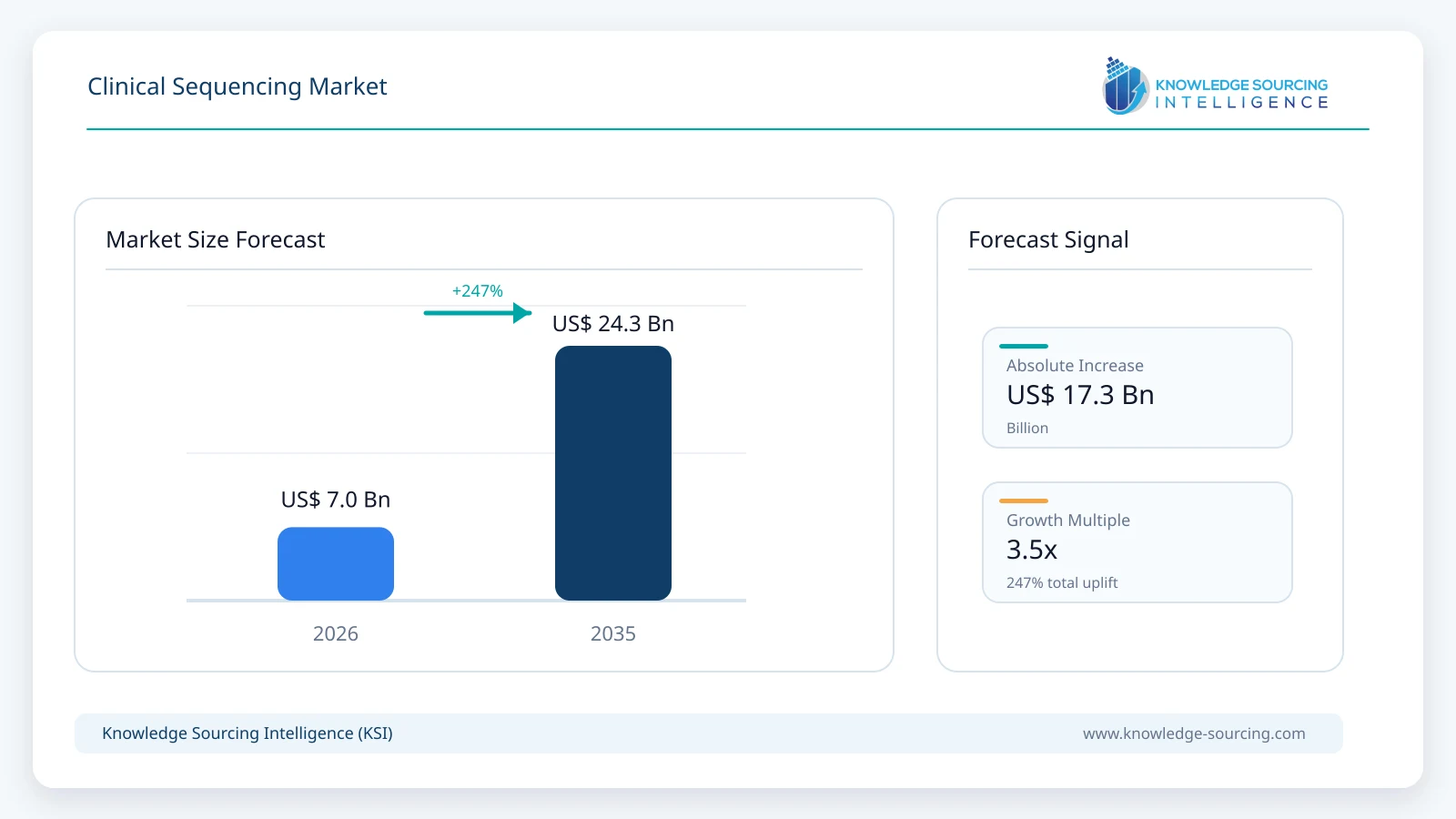
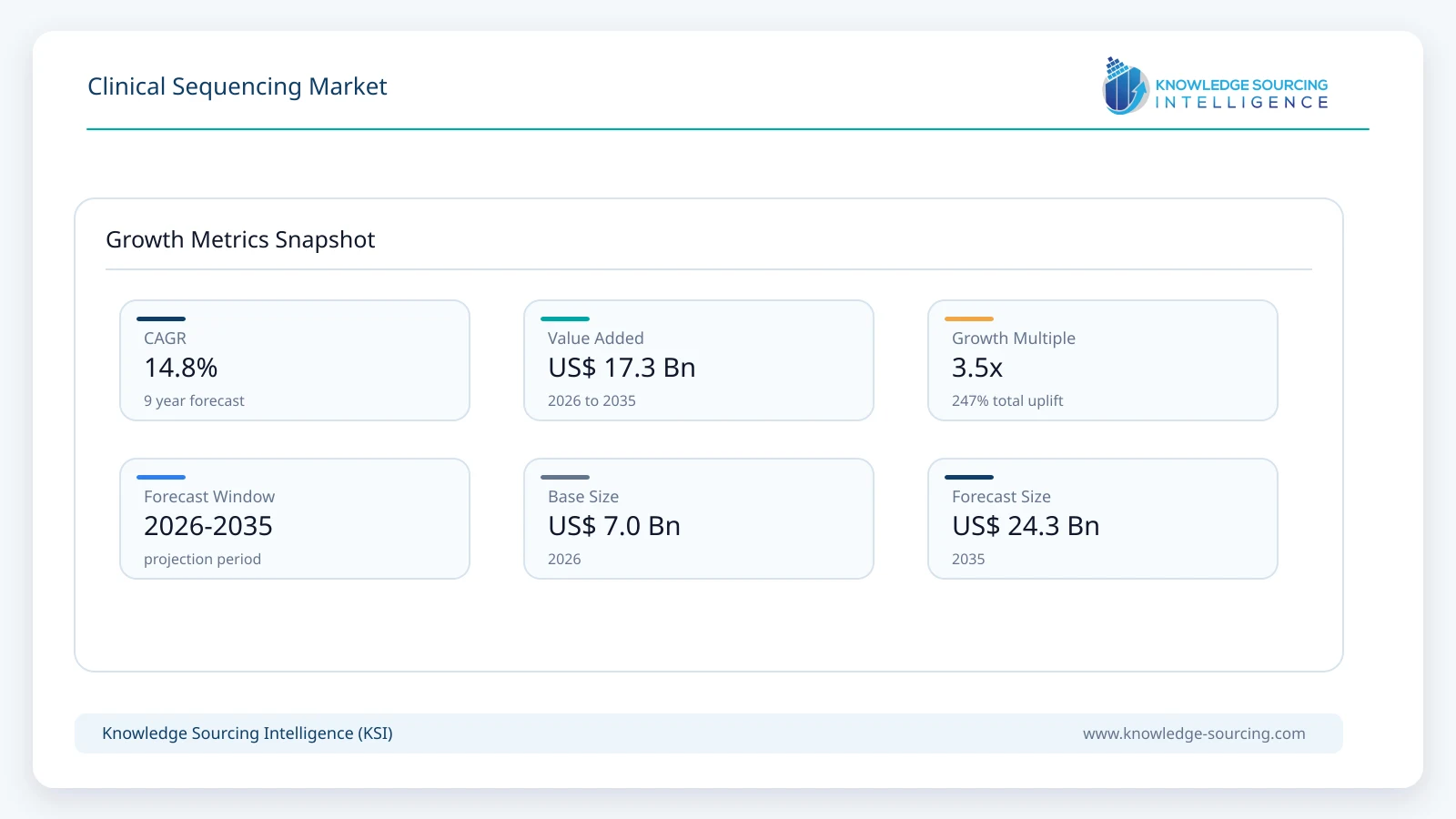
The Clinical Sequencing Market is expected to grow at a CAGR of 14.8% from a market value of USD 7.01 billion in 2026 to USD 24.33 billion in 2035.
Highlights:
- 1Rising adoption of precision oncology is increasing demand for comprehensive genomic profiling because targeted therapies require accurate molecular characterization before treatment initiation.
- 2Expansion of national genomic medicine initiatives is strengthening clinical sequencing infrastructure because governments are supporting population genomics, rare disease diagnosis, and healthcare modernization.
- 3Pharmaceutical companies are integrating genomic biomarkers throughout clinical development because precision patient selection improves therapeutic success rates and regulatory evidence generation.
- 4Long-read sequencing technologies are gaining clinical interest because structural variants, repeat expansions, and complex genomic rearrangements remain difficult to characterize using conventional short-read sequencing.
Clinical sequencing provides genomic information that supports disease diagnosis, treatment selection, therapeutic monitoring, and preventive healthcare across multiple medical specialties. Its value lies in identifying clinically relevant genetic variants that influence disease susceptibility, progression, drug response, and inherited risk. Demand is increasing because clinicians are seeking earlier molecular diagnoses that reduce unnecessary diagnostic procedures and enable targeted interventions.
Healthcare systems are incorporating sequencing into routine clinical workflows as precision medicine initiatives expand nationally and institutionally. This transition requires standardized laboratory infrastructure, validated sequencing assays, clinical bioinformatics pipelines, and multidisciplinary genomic interpretation teams. Laboratory accreditation requirements and quality assurance programs remain fundamental to market adoption because clinical confidence depends upon reproducible and clinically actionable genomic findings.
Pharmaceutical companies increasingly depend on clinical sequencing throughout drug development because molecular stratification improves patient selection and biomarker identification. Clinical trials are integrating genomic profiling to identify responder populations, evaluate resistance mechanisms, and support companion diagnostic development. This evolution strengthens partnerships between sequencing technology providers, pharmaceutical manufacturers, contract research organizations, and clinical laboratories.
Artificial intelligence is becoming increasingly integrated into genomic interpretation because sequencing datasets continue expanding in complexity. Automated variant classification, phenotype correlation, and clinical decision support systems are reducing interpretation burden while improving reporting consistency. These technological developments strengthen the long-term strategic importance of software platforms alongside sequencing hardware and consumables.
Market Dynamics
Market Drivers
Precision Oncology Is Expanding Clinical Sequencing Demand: Cancer treatment increasingly depends on molecular profiling because genomic alterations determine eligibility for targeted therapies and immuno-oncology approaches. Hospitals and cancer centers are incorporating comprehensive genomic sequencing into routine diagnostic workflows as biomarker-guided treatment pathways continue expanding. Clinical laboratories require scalable sequencing platforms capable of detecting single-nucleotide variants, insertions, deletions, copy number alterations, and gene fusions with high analytical accuracy. Technology developers are responding by improving workflow automation, expanding companion diagnostic collaborations, and strengthening oncology-focused sequencing portfolios.
Rare Disease Diagnosis Is Increasing Adoption of Whole Genome Sequencing: Rare genetic disorders frequently remain undiagnosed because conventional diagnostic testing evaluates limited genomic regions. Healthcare providers are increasingly adopting whole genome and whole exome sequencing to improve diagnostic yield while shortening prolonged diagnostic journeys. Earlier molecular diagnosis reduces unnecessary investigations and supports individualized clinical management for affected patients. Healthcare institutions are expanding multidisciplinary genomic medicine programs that integrate clinical genetics, bioinformatics, and genetic counseling services.
Government Genomic Medicine Programs Are Strengthening Clinical Infrastructure: National precision medicine strategies encourage systematic genomic integration because population-scale sequencing supports disease prevention, research, and healthcare planning. Governments are investing in sequencing laboratories, clinical genomics networks, digital health infrastructure, and genomic data repositories as personalized healthcare initiatives continue expanding. Standardized implementation requires regulatory oversight, laboratory accreditation, workforce development, and secure genomic data governance.
Market Driver: Bioinformatics Innovation Is Improving Clinical Utility: Clinical sequencing generates complex genomic datasets that require accurate interpretation before influencing patient management. Healthcare organizations are adopting cloud-enabled bioinformatics platforms as sequencing volume continues increasing across clinical specialties. Variant interpretation software integrates curated databases, published evidence, clinical guidelines, and phenotype information to improve diagnostic confidence. Technology providers are incorporating artificial intelligence into interpretation workflows while expanding automation across laboratory operations.
Market Restraints
High implementation costs continue limiting adoption among resource-constrained healthcare institutions because sequencing infrastructure requires specialized equipment, bioinformatics capabilities, and skilled personnel.
Regulatory variability across countries creates commercialization challenges because evidence requirements differ for laboratory-developed tests, companion diagnostics, and in vitro diagnostic sequencing platforms.
Genomic data privacy and cybersecurity concerns remain significant because expanding clinical sequencing programs require secure long-term storage, controlled access, and regulatory compliance.
Market Opportunities
Expansion of Long-Read Sequencing in Clinical Diagnostics: Long-read sequencing provides improved characterization of structural variants, repetitive genomic regions, and complex chromosomal abnormalities that remain difficult to resolve using short-read technologies. Clinical researchers are validating these platforms across neurological disorders, inherited diseases, hematological malignancies, and pharmacogenomics. Technology developers are optimizing sequencing chemistry, analytical accuracy, and workflow scalability for regulated clinical environments. These improvements create opportunities for broader clinical adoption beyond specialized research laboratories.
Companion Diagnostics Are Expanding Commercial Partnerships: Targeted therapeutics increasingly depend on molecular biomarkers because treatment eligibility requires genomic confirmation. Pharmaceutical sponsors are collaborating with sequencing companies throughout clinical development to establish companion diagnostic strategies. Regulatory submissions increasingly incorporate integrated therapeutic and diagnostic evidence that supports precision treatment selection. These partnerships strengthen recurring demand for clinically validated sequencing platforms while expanding long-term commercial opportunities.
Decentralized Clinical Sequencing Is Broadening Healthcare Access: Healthcare delivery models increasingly prioritize regional diagnostic accessibility because centralized genomic laboratories may delay clinical decision-making. Sequencing platform developers are introducing simplified workflows, automated sample preparation, and compact sequencing instruments suitable for hospital laboratories. Digital bioinformatics platforms are enabling remote genomic interpretation while maintaining standardized reporting quality. These innovations improve accessibility across emerging healthcare systems and community-based diagnostic networks.
AI-Enabled Clinical Interpretation Is Creating Service Differentiation: Variant interpretation remains one of the largest operational challenges because genomic evidence continues expanding rapidly. Artificial intelligence is supporting automated evidence synthesis, phenotype correlation, and pathogenicity classification within clinical reporting systems. Software providers are integrating continuously updated genomic databases into decision-support platforms that improve reporting consistency across laboratories. This transition increases the strategic importance of software and interpretation services alongside sequencing hardware.
Disease & Epidemiology Analysis
Clinical sequencing addresses diseases in which genomic variation directly influences diagnosis, prognosis, therapeutic selection, or inherited risk assessment. Oncology represents the largest clinical application because tumor genomic profiling identifies actionable mutations that determine eligibility for targeted therapies, immunotherapies, and precision clinical trials. Cancer incidence continues increasing globally while molecular classification is becoming standard practice for multiple solid tumors and hematological malignancies, expanding demand for comprehensive sequencing panels.
Rare and inherited diseases constitute another major demand segment because conventional diagnostic approaches frequently fail to identify causative genetic variants. Whole exome sequencing and whole genome sequencing are increasingly shortening diagnostic timelines by detecting pathogenic mutations across diverse genetic disorders. Earlier diagnosis supports personalized clinical management, reproductive counseling, and family screening while reducing prolonged healthcare utilization associated with diagnostic uncertainty.
Clinical sequencing is also strengthening infectious disease surveillance because genomic characterization improves pathogen identification, antimicrobial resistance monitoring, and outbreak investigation. Reproductive health applications continue expanding through carrier screening, preimplantation genetic testing, prenatal diagnosis, and non-invasive genomic assessment. Neurological and cardiovascular disorders are increasingly incorporating genomic testing because inherited variants influence disease susceptibility, prognosis, and therapeutic decision-making.
Treatment Guidelines Landscape
Disease Area | Primary Guideline/Organization | Role of Clinical Sequencing |
Oncology | National Comprehensive Cancer Network Clinical Practice Guidelines | Recommends genomic profiling for selected solid tumors and hematologic malignancies to identify actionable alterations. |
Rare & Inherited Diseases | American College of Medical Genetics and Genomics | Recommends exome or genome sequencing as first- or second-tier testing for many unexplained genetic disorders. |
Reproductive Health | American College of Obstetricians and Gynecologists | Supports carrier screening and genetic testing based on family history, ethnicity, and pregnancy risk. |
Infectious Diseases | World Health Organization | Supports genomic surveillance for pathogen characterization and antimicrobial resistance monitoring. |
Market Segmentation
By Product Type
Kits and reagents represent the largest recurring revenue component because every sequencing workflow depends upon sample preparation, library construction, enrichment chemistry, amplification, quality control, and sequencing consumables. Clinical laboratories are increasing testing volumes as precision medicine programs continue expanding across oncology and inherited disease diagnostics. Instrument utilization, therefore, creates sustained consumable demand throughout routine laboratory operations. Manufacturers are introducing workflow-specific reagent portfolios that improve automation compatibility and analytical reproducibility. This recurring purchasing model provides greater revenue stability than capital equipment sales while strengthening long-term customer relationships.
By Technology Type
Whole genome sequencing provides comprehensive genomic characterization because it evaluates coding and non-coding regions within a single assay. Healthcare institutions are increasingly adopting WGS for rare diseases, oncology, neonatal intensive care, and complex inherited disorders where targeted approaches may overlook clinically relevant variants. Larger datasets require sophisticated bioinformatics infrastructure and standardized interpretation pipelines before influencing patient care. Technology providers are reducing sequencing costs while improving throughput and computational efficiency. These developments position WGS as a foundational technology supporting comprehensive genomic medicine.
By Application
Oncology remains the leading application because molecular biomarkers increasingly determine treatment selection across multiple cancer types. Cancer centers are incorporating comprehensive genomic profiling into routine diagnostic workflows as targeted therapies and immunotherapies continue expanding. Greater genomic complexity increases demand for highly sensitive sequencing platforms capable of detecting multiple classes of genomic alterations from limited tissue samples. Sequencing developers are strengthening oncology-focused assay portfolios while collaborating with pharmaceutical companies on companion diagnostics. This integration reinforces oncology as the primary commercial driver within the clinical sequencing market.
Regional Analysis
North America Market Analysis
North America maintains the largest clinical sequencing ecosystem because of advanced healthcare infrastructure, established reimbursement mechanisms, strong biotechnology investment, and extensive genomic research networks, collectively supporting widespread adoption. Healthcare providers are integrating sequencing into oncology, rare disease diagnosis, reproductive medicine, and pharmacogenomics as precision medicine becomes increasingly embedded within clinical practice. This expansion increases demand for standardized sequencing platforms, validated laboratory workflows, and sophisticated bioinformatics solutions capable of supporting routine clinical interpretation. Regulatory oversight strengthens market confidence because agencies continue refining quality standards for sequencing-based diagnostics and companion diagnostic development.
Europe Market Analysis
Europe demonstrates sustained demand because national healthcare systems increasingly recognize genomic medicine as an essential component of precision healthcare. Public health authorities are expanding genomic medicine initiatives while hospitals continue incorporating sequencing into oncology and inherited disease management. This transition increases investment in accredited molecular diagnostic laboratories, clinical bioinformatics infrastructure, and workforce development programs supporting genomic medicine implementation.
Regulatory harmonization across the European region promotes consistent quality expectations while creating structured pathways for sequencing-based diagnostic technologies. Implementation of the In Vitro Diagnostic Regulation has increased analytical evidence requirements, encouraging manufacturers to strengthen validation programs before commercialization.
Asia Pacific Market Analysis
Asia Pacific represents the fastest-evolving regional market because healthcare investment, biotechnology development, and national genomic initiatives continue expanding simultaneously. Governments are strengthening precision medicine strategies while healthcare providers increasingly adopt genomic testing across oncology, inherited diseases, infectious diseases, and reproductive health. Greater testing demand requires expanded laboratory infrastructure, together with improved access to sequencing platforms and trained genomic professionals. Pharmaceutical research activity continues to grow across several Asia-Pacific countries, increasing demand for sequencing throughout biomarker discovery and clinical development.
Rest of the World
Clinical sequencing adoption across Latin America, the Middle East, and Africa remains heterogeneous because healthcare infrastructure, reimbursement availability, and genomic medicine capacity differ substantially between countries. Academic medical centers are introducing genomic testing services while governments gradually expand national precision medicine initiatives. This transition creates demand for scalable sequencing platforms that operate efficiently within resource-constrained healthcare environments. Limited specialist availability constrains broader implementation because genomic interpretation requires multidisciplinary expertise and validated laboratory processes. International collaborations are supporting technology transfer, workforce development, and laboratory accreditation programs that strengthen local sequencing capabilities.
Regulatory Landscape
Clinical sequencing operates within highly regulated healthcare environments because genomic information directly influences clinical decision-making. Regulatory agencies require analytical validity, clinical validity, and quality management systems before sequencing technologies support routine patient care. Laboratory accreditation standards, therefore, remain essential because consistent analytical performance determines physician confidence in genomic diagnostics. Regulatory expectations are continuing to evolve as sequencing applications expand beyond inherited diseases into oncology, infectious diseases, reproductive medicine, and population genomics.
The U.S. Food and Drug Administration continues refining oversight for sequencing-based diagnostics while distinguishing requirements applicable to in vitro diagnostic devices and laboratory-developed tests. In Europe, the implementation of the In Vitro Diagnostic Regulation has strengthened evidence requirements for manufacturers introducing sequencing-based clinical products. These evolving frameworks encourage technology developers to generate robust clinical evidence while improving quality assurance across product development.
International standardization efforts continue to strengthen genomic testing consistency because organizations responsible for laboratory accreditation, molecular pathology, and clinical genetics are updating technical recommendations. Sequencing manufacturers are expanding regulatory affairs capabilities while incorporating quality-by-design principles throughout product development.
Pipeline Analysis
Clinical sequencing innovation increasingly focuses on improving diagnostic performance rather than simply increasing read output. Technology developers are advancing sequencing chemistries, sample preparation methods, long-read capabilities, single-cell sequencing, methylation analysis, and integrated multi-omics workflows because clinicians require increasingly comprehensive molecular information. These innovations are progressing through analytical validation, clinical evaluation, and regulatory review before broader healthcare implementation.
Several platform developers continue expanding clinical validation studies supporting oncology, inherited disease diagnosis, infectious disease surveillance, and reproductive medicine. Long-read sequencing platforms are demonstrating increasing clinical utility for structural variants, repeat expansion disorders, and complex genomic rearrangements that remain difficult to resolve using conventional short-read sequencing. These programs are strengthening evidence supporting future routine clinical adoption.
Pharmaceutical sponsors are increasingly incorporating genomic sequencing throughout precision medicine trials because biomarker-driven enrollment improves therapeutic targeting and clinical trial efficiency. Companion diagnostic development is progressing alongside targeted therapeutics, encouraging strategic collaborations between sequencing technology providers and pharmaceutical companies.
Reimbursement Landscape
Reimbursement remains one of the principal determinants of clinical sequencing adoption because healthcare providers require sustainable payment mechanisms before integrating advanced genomic testing into routine clinical workflows. Coverage policies increasingly recognize sequencing for oncology, rare diseases, inherited disorders, and selected prenatal applications where strong clinical evidence demonstrates improved patient outcomes. Expanded reimbursement encourages healthcare providers to invest in sequencing infrastructure while increasing physician confidence in genomic testing.
Coverage remains variable across healthcare systems because evidence requirements differ according to disease indication, clinical utility, and regulatory environment. Payers are increasingly evaluating health-economic outcomes alongside analytical performance when determining reimbursement eligibility. Technology developers are generating real-world clinical evidence demonstrating improved diagnostic efficiency, treatment optimization, and healthcare resource utilization. These efforts strengthen the long-term economic justification for broader reimbursement of clinical sequencing services.
Competitive Landscape
Oxford Nanopore Technologies plc
Oxford Nanopore Technologies differentiates itself through nanopore-based long-read sequencing that enables real-time analysis of DNA and RNA while supporting portable and high-throughput applications. The company is expanding its clinical sequencing portfolio by improving sequencing accuracy, automation, and regulatory validation for precision medicine and infectious disease diagnostics.
BGI Group
BGI Group has established a broad sequencing ecosystem spanning clinical diagnostics, population genomics, reproductive health, and oncology, supported by high-throughput sequencing capabilities. The company continues strengthening its clinical sequencing presence through integrated laboratory services, proprietary sequencing platforms, and international collaborations.
QIAGEN N.V.
QIAGEN combines sample preparation technologies, molecular diagnostics, bioinformatics, and next-generation sequencing solutions, enabling end-to-end clinical genomic workflows. The company is expanding companion diagnostics and clinical interpretation capabilities through strategic partnerships with pharmaceutical and biotechnology companies.
Bio-Rad Laboratories
Bio-Rad Laboratories leverages its expertise in molecular biology, digital PCR, and life science research to support high-quality genomic testing workflows. The company continues investing in sequencing-compatible reagents and precision diagnostics that improve analytical reliability for clinical laboratories.
Takara Bio Inc.
Takara Bio focuses on genomics, cell therapy, and molecular biology technologies with a strong portfolio of sequencing reagents and sample preparation solutions. The company is strengthening its clinical genomics business through innovation in library preparation, automation, and translational research collaborations.
Agilent Technologies, Inc.
Agilent Technologies offers integrated genomics solutions, including target enrichment, quality control, automation, and bioinformatics for clinical sequencing laboratories. The company is expanding precision medicine applications by supporting oncology testing, biomarker discovery, and companion diagnostic development.
Key Developments
July 2026: GeneCentric launched ExpressCT Rewind™, a retrospective fragmentomics analysis service that applies its ExpressCT pipeline to existing DNA sequencing data, such as commercial comprehensive genomic profiling (CGP) panels.
June 2026: Roche announced the launch of AXELIOS 1, a transformative next-generation sequencing platform powered by sequencing by expansion (SBX) technology that delivers a unique combination of accuracy, speed, scalability, and cost efficiency.
June 2025: Meridian Bioscience and 4bases announced a collaboration to enable rapid, globally scalable next-generation sequencing workflows, combining Meridian's molecular diagnostic expertise with 4bases' sequencing technology.
Strategic Insights and Future Market Outlook
Clinical sequencing is transitioning from specialized genomic testing toward routine clinical practice because precision medicine increasingly depends on comprehensive molecular characterization across oncology, rare diseases, reproductive health, infectious diseases, and inherited disorders. Healthcare providers are expanding genomic medicine programs, while sequencing manufacturers are integrating automation, artificial intelligence, cloud-based bioinformatics, and standardized clinical reporting to improve scalability and diagnostic efficiency.
Regulatory harmonization, broader reimbursement support, and pharmaceutical investment in biomarker-driven drug development are strengthening long-term demand for clinically validated sequencing technologies. Long-read sequencing, multi-omics integration, and AI-assisted variant interpretation are expected to become major competitive differentiators as healthcare systems continue prioritizing earlier diagnosis, personalized treatment selection, and data-driven clinical decision-making. These structural shifts position clinical sequencing as a foundational technology supporting the continued evolution of precision healthcare through 2035.
Clinical Sequencing Market Scope:
| Report Metric | Details |
|---|---|
| Total Market Size in 2026 | USD 7.01 billion |
| Total Market Size in 2035 | USD 24.33 billion |
| Forecast Unit | USD Billion |
| Growth Rate | 14.8% |
| Study Period | 2021 to 2035 |
| Historical Data | 2021 to 2024 |
| Base Year | 2025 |
| Forecast Period | 2026 – 2035 |
| Segmentation | Product Type, Technology Type, End User, Geography |
| Companies |
|
Market Segmentation
Product Type
Technology Type
End User
Geography
- North America
- South America
- Europe
- Middle East and Africa
- Asia Pacific
Table of Contents
1. EXECUTIVE SUMMARY
1.1 Market Snapshot
1.2 Key Findings
1.3 Analyst Insights
1.4 Strategic Recommendations
2. RESEARCH METHODOLOGY
2.1 Research Design
2.2 Data Collection Methodology
2.3 Market Size Estimation
2.4 Forecasting Model
2.5 Assumptions & Limitations
3. GLOBAL CLINICAL SEQUENCING MARKET OVERVIEW, SIZE & FORECAST
3.1 Market Definition & Scope
3.2 Clinical Sequencing Industry Overview
3.3 Industry Evolution
3.4 Key Market Trends
3.5 Historical Market Size Analysis (2021–2025)
3.6 Market Forecast (2026–2035)
3.7 Disease Burden and Clinical Need for Genomic Testing
3.8 Clinical Sequencing Workflow Overview
3.9 Testing Volume Analysis
3.10 Adoption Analysis Across Clinical Settings
3.11 Precision Medicine and Personalized Healthcare Landscape
4. MARKET DYNAMICS
4.1 Market Drivers
4.2 Market Restraints
4.3 Market Opportunities
4.4 Market Challenges
5. INDUSTRY LANDSCAPE
5.1 Industry Value Chain Analysis
5.2 Pricing Analysis
5.3 Reimbursement Landscape
6. INNOVATION LANDSCAPE
6.1 Next-Generation Sequencing Technology Advancements
6.2 Product Innovation
6.3 Clinical Trial Analysis
6.4 Pipeline Analysis
6.5 AI Integration in Clinical Sequencing
6.6 Digital Health and Clinical Decision Support Integration
7. REGULATORY LANDSCAPE
7.1 Regulatory Framework
7.2 Approval Pathways
7.3 Compliance Requirements
8. GLOBAL CLINICAL SEQUENCING MARKET LANDSCAPE ANALYSIS
8.1 Analysis by Sequencing Technology
8.2 Analysis by Sequencing Application
8.3 Analysis by Test Type
8.4 Analysis by Sample Type
8.5 Analysis by Clinical Indication
8.6 Analysis by End User
9. GLOBAL CLINICAL SEQUENCING MARKET SEGMENT ANALYSIS (2021–2035)
9.1 By Product Type
9.1.1 Instruments
9.1.2 Kits & Reagents
9.1.3 Software & Services
9.2 By Technology Type
9.2.1 Whole Genome Sequencing (WGS)
9.2.2 Whole Exome Sequencing (WES)
9.2.3 Targeted Gene Sequencing
9.2.4 Others
9.3 By Sample Type
9.3.1 Blood
9.3.2 Tissue
9.3.3 Saliva
9.3.4 Bone Marrow
9.3.5 Other Sample Types
9.4 By Application
9.4.1 Oncology
9.4.2 Rare & Inherited Diseases
9.4.3 Reproductive Health
9.4.4 Infectious Diseases
9.4.5 Neurological Disorders
9.4.6 Cardiovascular Diseases
9.4.7 Others
9.5 By End User
9.5.1 Hospitals
9.5.2 Clinical Diagnostic Laboratories
9.5.3 Academic & Research Medical Centers
9.5.4 Others
10. GLOBAL CLINICAL SEQUENCING MARKET GEOGRAPHICAL ANALYSIS (2021–2035)
10.1 North America
10.2 Europe
10.3 Asia-Pacific
10.4 South America
10.5 Middle East & Africa
11. GLOBAL CLINICAL SEQUENCING MARKET COUNTRY ANALYSIS (2021–2035)
11.1 United States
11.2 Canada
11.3 Germany
11.4 United Kingdom
11.5 France
11.6 Italy
11.7 Spain
11.8 Netherlands
11.9 China
11.10 Japan
11.11 India
11.12 South Korea
11.13 Australia
11.14 Brazil
11.15 Saudi Arabia
12. COMPETITIVE LANDSCAPE
12.1 Market Share Analysis
12.2 Strategic Developments
12.3 Mergers & Acquisitions, Partnerships & Collaborations
12.4 Product Launches
13. COMPANY PROFILES
13.1 Oxford Nanopore Technologies
13.1.1 Company Overview
13.1.2 Financials
13.1.3 Product Portfolio
13.1.4 Recent Developments
13.2 BGI Group
13.3 QIAGEN N.V.
13.4 Bio-Rad Laboratories
13.5 Takara Bio Inc.
13.6 Oxford Nanopore Technologies plc
13.7 Agilent Technologies, Inc.
13.8 Element Biosciences
13.9 Eurofins Genomics
13.10 Ultima Genomics
14. GLOBAL CLINICAL SEQUENCING MARKET COMMERCIAL FORECAST ANALYSIS
14.1 Commercial Forecast by Sequencing Technology
14.2 Commercial Forecast by Test Type
14.3 Commercial Forecast by Clinical Indication
14.4 Commercial Forecast by End User
14.5 Commercial Opportunity Assessment
15. INVESTMENT & FUNDING ANALYSIS
15.1 Venture Capital Trends
15.2 Government Funding
15.3 R&D Investments
16. FUTURE OUTLOOK
16.1 Key Growth Opportunities
16.2 Future Industry Trends
Navigate
Trusted by the world's leading organizations











