
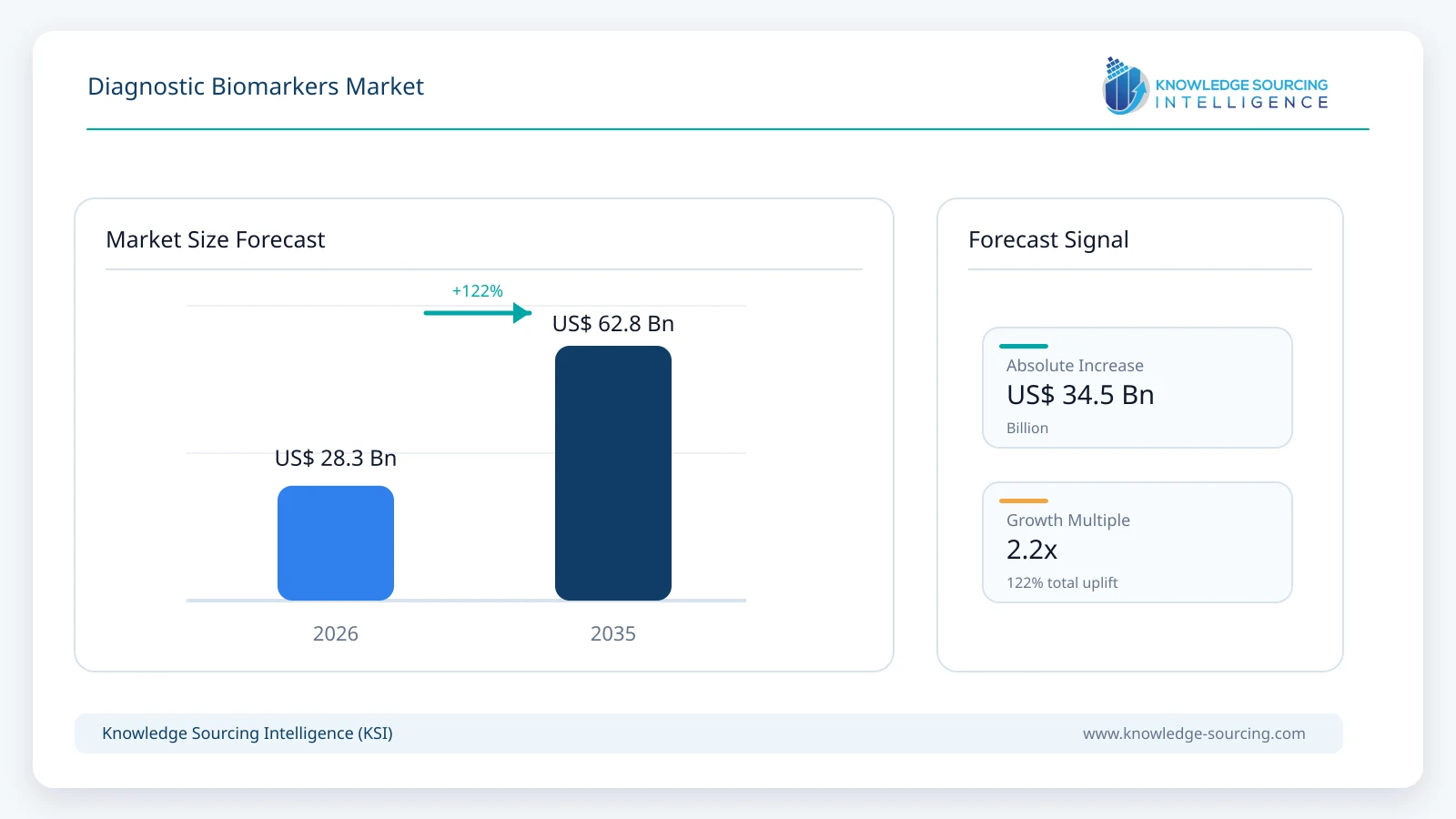
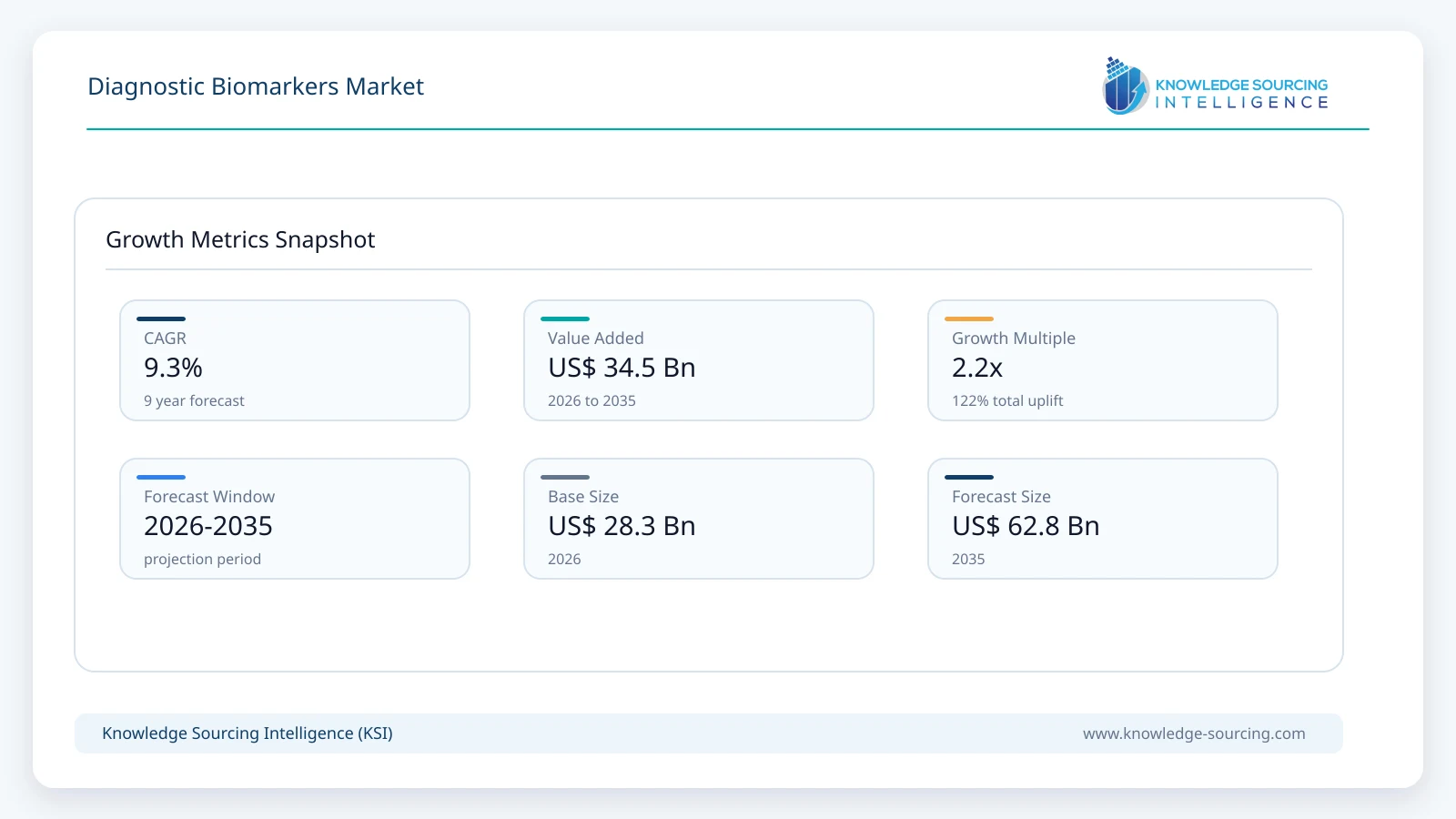
The Diagnostic Biomarkers Market is expected to grow at a CAGR of 9.3% from a market value of USD 28.32 billion in 2026 to USD 62.82 billion in 2035.
Highlights:
- 1Growing adoption of precision medicine is increasing demand for clinically validated biomarkers because physicians require molecular evidence for individualized therapeutic decisions.
- 2Expansion of companion diagnostics is strengthening biomarker utilization as pharmaceutical developers are integrating biomarker testing into targeted drug development programs.
- 3Increasing availability of liquid biopsy technologies is accelerating non-invasive disease detection while reducing dependence on surgical tissue collection.
- 4Artificial intelligence integration is improving biomarker interpretation because multi-omics datasets require advanced computational analysis for clinical decision-making.
Diagnostic biomarkers represent measurable biological characteristics that indicate normal physiological processes, disease progression, or therapeutic response. They include genetic alterations, protein expression profiles, histological signatures, circulating nucleic acids, metabolites, and other measurable biological indicators that improve diagnostic precision.
Healthcare systems are increasingly adopting biomarker-guided diagnostics because rising disease complexity requires earlier and more individualized clinical intervention. Conventional diagnostic pathways frequently identify disease after significant progression, whereas validated biomarkers enable clinicians to classify patients according to molecular characteristics, predict treatment response, monitor recurrence, and evaluate therapeutic effectiveness. This capability improves treatment selection while reducing unnecessary interventions.
The market also depends heavily on advances in next-generation sequencing, digital pathology, multiplex immunoassays, mass spectrometry, artificial intelligence, and bioinformatics. These technologies are improving biomarker discovery, accelerating clinical validation, and supporting simultaneous analysis of multiple biological targets from limited patient samples. Pharmaceutical companies are expanding companion diagnostic collaborations because biomarker-guided clinical trials improve patient selection and increase therapeutic success rates.
Regulatory oversight continues to strengthen across major healthcare markets. Organizations, including the U.S. Food and Drug Administration (FDA), European Medicines Agency (EMA), and other national regulatory authorities, are emphasizing analytical performance, clinical validity, software transparency, and evidence supporting real-world clinical utility before approving advanced biomarker diagnostics. These regulatory developments are increasing development costs while improving physician confidence and long-term clinical adoption.
Market Dynamics
Market Drivers
Expansion of Precision Oncology Is Increasing Companion Diagnostic Adoption: Precision oncology represents one of the strongest structural drivers for diagnostic biomarkers because targeted therapies require identification of specific molecular alterations before treatment initiation. Demand is increasingly shifting toward genomic and proteomic biomarker testing as oncologists seek to improve treatment response while minimizing unnecessary toxicity. Clinical trial sponsors are expanding biomarker-driven enrollment strategies because genetically defined patient populations improve therapeutic outcomes. This transition strengthens long-term demand for comprehensive biomarker panels across multiple cancer indications.
Multi-Omics Technologies Are Accelerating Biomarker Discovery: Biomarker development depends on comprehensive biological characterization of disease mechanisms. Sequencing platforms, transcriptomics, proteomics, metabolomics, and spatial biology technologies are increasingly generating integrated datasets that identify clinically relevant molecular signatures. Research organizations are expanding multi-omics programs because single-biomarker approaches frequently fail to capture disease heterogeneity. This evolution supports the continuous expansion of clinically actionable biomarkers across oncology, neurology, cardiovascular medicine, and rare diseases.
Liquid Biopsy Is Transforming Disease Monitoring: Liquid biopsy enables the detection of circulating tumor DNA, circulating tumor cells, extracellular vesicles, and other biomarkers through minimally invasive sampling. Clinical demand is increasingly shifting toward blood-based testing because repeated monitoring becomes feasible without invasive tissue biopsies. Healthcare providers are incorporating longitudinal biomarker assessment into disease management as treatment resistance evolves over time. This capability expands diagnostic testing frequency while supporting personalized therapeutic adjustment.
Artificial Intelligence Is Improving Clinical Interpretation: Large biomarker datasets require sophisticated computational interpretation before meaningful clinical decisions become possible. Artificial intelligence platforms are increasingly supporting genomic variant interpretation, digital pathology image analysis, and biomarker prioritization because clinicians require rapid and standardized reporting. Technology developers are integrating machine learning into diagnostic workflows while healthcare systems expand digital pathology infrastructure. This combination improves diagnostic consistency and strengthens confidence in biomarker-guided clinical practice.
Market Restraints
Clinical validation requirements remain extensive because regulatory authorities require strong evidence demonstrating analytical validity, clinical validity, and clinical utility before commercialization.
Reimbursement policies differ considerably across healthcare systems, limiting routine adoption of several advanced biomarker tests despite strong scientific evidence.
Biomarker discovery frequently identifies candidate markers that fail during late-stage validation, increasing development timelines and research expenditure.
Market Opportunities
Expansion of Minimal Residual Disease Testing: Minimal residual disease (MRD) testing is emerging as a major opportunity because clinicians require highly sensitive biomarkers following primary treatment completion. Molecular monitoring is increasingly replacing conventional imaging for recurrence assessment across several hematological malignancies and solid tumors. Diagnostic developers are expanding ultra-sensitive sequencing platforms that improve recurrence detection while supporting individualized treatment planning.
Growth of Neurological Biomarkers: Neurodegenerative disorders require earlier diagnosis because therapeutic intervention becomes less effective during advanced disease stages. Researchers are increasingly validating blood-based biomarkers for Alzheimer's disease, Parkinson's disease, and other neurological disorders as healthcare systems seek scalable screening approaches. Improved biomarker accessibility expands diagnostic opportunities beyond specialized neurology centers.
Integration of Biomarkers into Population Screening: Population health programs increasingly emphasize preventive diagnostics because healthcare expenditures continue rising globally. Blood-based biomarker screening is gradually expanding beyond high-risk populations as assay sensitivity improves. Diagnostic manufacturers are developing scalable laboratory platforms capable of supporting large screening initiatives while maintaining analytical consistency. This trend broadens commercial opportunities across national healthcare systems.
Companion Diagnostic Partnerships Are Expanding: Pharmaceutical companies increasingly integrate biomarker strategies during early clinical development because targeted therapies require molecular patient selection. Diagnostic companies are forming strategic collaborations with drug developers to co-develop companion diagnostics that align with regulatory approval timelines. These partnerships strengthen long-term commercial sustainability while improving market access following therapeutic approvals.
Disease & Epidemiology Analysis
The burden of chronic diseases continues driving global demand for diagnostic biomarkers because earlier disease identification directly influences treatment effectiveness and long-term healthcare costs. Cancer remains the largest clinical application since biomarker-guided diagnostics support disease classification, targeted therapy selection, treatment monitoring, and recurrence surveillance. Rising incidence of colorectal, breast, lung, prostate, and hematological malignancies is increasing utilization of genomic sequencing, immunohistochemistry, circulating tumor DNA analysis, and multiplex molecular assays across clinical laboratories. Healthcare providers are expanding precision oncology programs because molecular characterization increasingly determines therapeutic eligibility rather than tumor location alone.
Neurological disorders are becoming another important area of biomarker development because conventional diagnosis frequently occurs after irreversible neuronal damage has developed. Blood-based biomarkers, cerebrospinal fluid proteins, and neuroimaging-associated molecular markers are improving earlier identification of Alzheimer's disease, Parkinson's disease, multiple sclerosis, and other neurodegenerative disorders. Research institutions are validating biomarkers that differentiate disease subtypes while supporting therapeutic monitoring throughout disease progression. These developments are increasing investment in neurodiagnostic biomarker platforms.
Cardiovascular diseases, infectious diseases, metabolic disorders, and respiratory illnesses also continue expanding biomarker utilization. Cardiac biomarkers improve rapid diagnosis of myocardial injury, inflammatory biomarkers assist infectious disease management, metabolic biomarkers support diabetes risk stratification, and respiratory biomarkers are strengthening personalized treatment selection for asthma and chronic obstructive pulmonary disease. Growing emphasis on preventive medicine is increasing routine biomarker testing across multiple disease categories because healthcare systems seek earlier intervention and improved patient outcomes.
Treatment Guidelines Landscape
Organization | Disease Area | Guideline/Framework | Role of Diagnostic Biomarkers |
National Comprehensive Cancer Network (NCCN) | Oncology | NCCN Clinical Practice Guidelines | Recommends biomarker testing for patient stratification, targeted therapy selection, companion diagnostics, and treatment monitoring across multiple tumor types. |
American Society of Clinical Oncology (ASCO) | Oncology | Evidence-Based Clinical Practice Guidelines | Supports validated molecular biomarkers for precision oncology, predictive testing, and therapy optimization while emphasizing analytical and clinical validity. |
European Society for Medical Oncology (ESMO) | Oncology | Precision Medicine Recommendations | Recommends comprehensive genomic profiling for selected advanced cancers and standardized biomarker testing before initiating targeted therapies. |
U.S. Food and Drug Administration (FDA) | Companion Diagnostics | FDA Companion Diagnostic Framework | Requires approved or cleared companion diagnostics when biomarker testing is essential for the safe and effective use of specific therapeutics |
Market Segmentation
By Biomarker Type
Genetic biomarkers constitute the largest technological foundation of precision diagnostics because they directly identify inherited and acquired molecular alterations associated with disease development. Demand is increasingly shifting toward comprehensive genomic profiling as physicians require actionable molecular information before selecting targeted therapies. Conventional single-gene assays present limitations when multiple clinically relevant mutations coexist within individual patients. Diagnostic manufacturers are expanding next-generation sequencing panels that simultaneously evaluate numerous genetic alterations while improving laboratory efficiency. This transition establishes genetic biomarkers as the primary platform supporting companion diagnostics, inherited disease screening, oncology treatment selection, and disease monitoring across precision medicine.
By Sample Type
Blood-based diagnostics represent the fastest-evolving sample category because minimally invasive collection enables repeated clinical monitoring throughout disease progression. Healthcare providers are increasingly adopting liquid biopsy technologies as serial molecular assessment reduces dependence on surgical tissue acquisition. Tissue availability frequently limits comprehensive biomarker evaluation, particularly in advanced cancers and recurrent disease. Diagnostic developers are improving circulating tumor DNA, circulating RNA, protein biomarker, and extracellular vesicle detection technologies to enhance analytical sensitivity. This evolution expands routine monitoring, facilitates treatment response evaluation, and supports earlier recurrence detection across multiple clinical applications.
By Clinical Application
Oncology remains the largest clinical application because targeted cancer therapies increasingly depend on validated biomarker identification before treatment initiation. Demand is continuously shifting toward comprehensive molecular characterization as therapeutic options become more genetically specific. Tumor heterogeneity limits conventional pathology-based treatment selection because identical histological diagnoses often demonstrate distinct molecular drivers. Diagnostic companies are integrating genomics, proteomics, digital pathology, and artificial intelligence into comprehensive oncology testing platforms. This structural transition strengthens precision oncology while improving patient stratification, therapeutic effectiveness, and long-term disease management.
Regional Analysis
North America Market Analysis
North America represents the most mature diagnostic biomarkers market because precision medicine infrastructure, advanced clinical laboratories, and pharmaceutical innovation remain highly developed across the United States and Canada. Healthcare providers increasingly incorporate biomarker-guided treatment pathways as oncology, cardiovascular medicine, and neurology continue adopting molecular diagnostics within routine clinical practice. Strong reimbursement support exists for several validated companion diagnostics, although coverage variability remains for emerging biomarker assays. Pharmaceutical companies are expanding biomarker-driven clinical trials because regulatory agencies encourage precision medicine development supported by companion diagnostics. Artificial intelligence integration is improving genomic interpretation while digital pathology adoption continues accelerating within academic medical centers. Regulatory agencies maintain rigorous analytical validation standards that increase development requirements but strengthen physician confidence following commercialization.
Europe Market Analysis
Europe maintains strong demand for diagnostic biomarkers because national healthcare systems increasingly prioritize personalized medicine and evidence-based therapeutic selection. Molecular diagnostics are becoming integrated into routine oncology management as European clinical guidelines continue expanding biomarker recommendations for multiple cancer types. Healthcare providers emphasize standardized laboratory quality because cross-border clinical consistency supports equitable patient access. Pharmaceutical developers are increasing collaborative research programs with European academic centers as companion diagnostic development becomes essential for targeted therapeutics. Regulatory harmonization under the European Union continues to strengthen analytical performance expectations while implementation of the In Vitro Diagnostic Regulation (IVDR) is increasing clinical evidence requirements for diagnostic manufacturers.
Asia Pacific Market Analysis
Asia Pacific represents the fastest-evolving regional market because healthcare infrastructure, genomic medicine programs, and cancer screening initiatives continue expanding across major economies. Governments are increasing investment in precision medicine research as chronic disease prevalence rises throughout the region. Clinical laboratories are adopting advanced sequencing technologies because healthcare systems seek earlier disease detection and improved treatment selection. International diagnostic companies are expanding regional partnerships while domestic biotechnology firms accelerate biomarker innovation through government-supported research initiatives. Regulatory agencies are gradually strengthening clinical validation requirements to improve diagnostic quality and international competitiveness.
Rest of the World
The Rest of the World market continues developing as healthcare modernization programs improve diagnostic capabilities across Latin America, the Middle East, and Africa. Cancer diagnosis increasingly incorporates biomarker testing within tertiary healthcare institutions because targeted therapies require molecular confirmation before treatment initiation. Healthcare disparities limit widespread adoption since advanced laboratory infrastructure remains concentrated within urban medical centers. Governments are investing in laboratory modernization and digital healthcare systems to strengthen diagnostic capacity while international collaborations improve technology transfer and workforce training. Pharmaceutical companies continue expanding multinational clinical trials because broader geographic diversity supports biomarker validation across heterogeneous populations.
Regulatory Landscape
Diagnostic biomarkers operate within one of the most highly regulated segments of the in vitro diagnostics industry because biomarker results directly influence therapeutic selection and patient management. Regulatory agencies require evidence demonstrating analytical validity, clinical validity, and clinical utility before permitting commercialization of biomarker-based assays. Demand is increasingly shifting toward companion diagnostics as targeted therapies require validated molecular testing prior to treatment initiation. This evolution is increasing collaboration between pharmaceutical sponsors and diagnostic manufacturers throughout clinical development. Regulatory expectations now extend beyond assay performance to include software validation, bioinformatics transparency, cybersecurity for digital platforms, and post-market performance monitoring. These requirements improve physician confidence while increasing development timelines and investment requirements.
The U.S. Food and Drug Administration (FDA) continues strengthening oversight of companion diagnostics through coordinated reviews of therapeutics and associated diagnostic assays. Simultaneously, the European Union's In Vitro Diagnostic Regulation (IVDR) is increasing evidence requirements by introducing more rigorous conformity assessments, clinical performance evaluations, and post-market surveillance obligations. Regulatory agencies across Japan, China, Australia, and other Asia-Pacific countries are also strengthening approval pathways to align with international quality standards. These developments are encouraging manufacturers to establish global regulatory strategies early in product development while generating multicenter clinical evidence that supports approvals across multiple jurisdictions.
International standards organizations are also influencing biomarker commercialization through laboratory quality requirements and standardized testing protocols. Accreditation under ISO 15189 and implementation of quality management systems remain essential for clinical laboratories performing biomarker analysis. These frameworks reduce analytical variability while improving reproducibility across healthcare systems, supporting broader clinical confidence in biomarker-guided medicine.
Pipeline Analysis
The diagnostic biomarker pipeline is expanding rapidly because precision medicine increasingly depends on molecular characterization throughout disease management. Oncology continues representing the largest pipeline segment as pharmaceutical companies are developing companion diagnostics alongside targeted therapies and immunotherapies. Clinical research is increasingly focusing on circulating tumor DNA (ctDNA), minimal residual disease (MRD), multi-cancer early detection (MCED), transcriptomic signatures, spatial biology, and multi-omics biomarker platforms. These technologies are improving patient stratification while enabling earlier therapeutic intervention and longitudinal disease monitoring.
Several sponsors are advancing blood-based diagnostic biomarkers through Phase II and Phase III clinical studies that evaluate cancer detection, treatment response, and recurrence surveillance. Natera continues expanding the clinical evidence supporting its Signatera™ MRD platform across colorectal, breast, bladder, lung, and other solid tumors. Exact Sciences is advancing liquid biopsy programs designed for multi-cancer detection and molecular profiling. Roche, QIAGEN, Thermo Fisher Scientific, and Illumina are strengthening companion diagnostic pipelines through collaborations with pharmaceutical companies developing targeted oncology therapies. Tempus AI is integrating artificial intelligence with multimodal clinical datasets to improve biomarker interpretation and clinical decision support.
Pipeline activity is also expanding beyond oncology. Neurological biomarkers for Alzheimer's disease increasingly focus on plasma phosphorylated tau (p-tau), neurofilament light chain (NfL), amyloid-associated biomarkers, and other blood-based indicators that reduce dependence on invasive cerebrospinal fluid testing. Cardiovascular biomarker research continues evaluating novel inflammatory proteins, genetic markers, and RNA signatures for earlier risk prediction. Infectious disease pipelines are incorporating host-response biomarkers that distinguish viral from bacterial infections while supporting antimicrobial stewardship. These diversified development programs indicate that biomarker innovation is becoming increasingly disease-agnostic rather than remaining concentrated solely within oncology.
Reimbursement Landscape
Reimbursement remains one of the principal determinants of commercial adoption because advanced biomarker diagnostics frequently require substantial laboratory infrastructure and specialized analytical expertise. Healthcare systems generally reimburse biomarker tests that demonstrate clear clinical utility, improved patient outcomes, and cost-effectiveness compared with conventional diagnostic pathways. Demand is increasingly shifting toward evidence-supported molecular diagnostics because payers require robust health economic data before expanding reimbursement coverage. Manufacturers are therefore investing in prospective clinical studies and real-world evidence generation to strengthen reimbursement submissions.
In the United States, the Centers for Medicare & Medicaid Services (CMS) supports reimbursement for several molecular diagnostics through National Coverage Determinations (NCDs) and Local Coverage Determinations (LCDs), particularly for next-generation sequencing in selected oncology indications. European reimbursement frameworks differ by country, with health technology assessment (HTA) agencies evaluating clinical benefit and economic value before reimbursement decisions. Several Asia-Pacific countries are gradually expanding reimbursement for precision diagnostics as national cancer programs continue integrating biomarker-guided treatment pathways. Despite these advances, reimbursement variability continues to influence the pace of adoption for emerging biomarker technologies, particularly multi-omics assays and novel liquid biopsy platforms.
Competitive Landscape
F. Hoffmann-La Roche Ltd.
Roche remains strategically distinct because it combines one of the world's largest pharmaceutical portfolios with a comprehensive diagnostics business, enabling integrated development of therapeutics and companion diagnostics. This structure allows simultaneous advancement of targeted drugs and biomarker assays, strengthening clinical adoption and regulatory alignment across precision medicine.
Thermo Fisher Scientific Inc.
Thermo Fisher Scientific differentiates itself through an extensive portfolio of laboratory instruments, molecular diagnostic technologies, sequencing workflows, reagents, and bioinformatics solutions supporting both clinical diagnostics and biomedical research. Its diversified technology platform enables laboratories to implement comprehensive biomarker testing within standardized analytical workflows.
QIAGEN N.V.
QIAGEN maintains strategic differentiation through its expertise in molecular diagnostics, sample preparation technologies, companion diagnostics, and clinical bioinformatics. The company's integrated workflow supports biomarker discovery, validation, and routine clinical implementation across multiple disease areas.
Abbott Laboratories
Abbott leverages its diversified diagnostics portfolio to integrate biomarker testing across immunoassays, molecular diagnostics, point-of-care systems, and clinical laboratory platforms. Its extensive global commercial network supports widespread accessibility of diagnostic technologies across developed and emerging healthcare markets.
Natera, Inc.
Natera specializes in cell-free DNA technologies that support oncology, reproductive health, and organ transplant diagnostics. The company has established a strong competitive position through personalized molecular residual disease testing and highly sensitive circulating tumor DNA analysis.
Tempus AI, Inc.
Tempus AI differentiates itself through the integration of artificial intelligence, multimodal clinical data, genomic sequencing, digital pathology, and real-world evidence into precision medicine workflows. Rather than focusing solely on laboratory diagnostics, the company combines computational analytics with large-scale clinical datasets to improve biomarker interpretation.
Key Developments
March 2026: The Alzheimer’s Drug Discovery Foundation said the next phase of its Diagnostics Accelerator will fund next-generation biomarkers to support Alzheimer’s precision medicine worldwide. The program builds on earlier blood-based diagnostics work and adds more funding to accelerate drug development and combination approaches.
February 2026: Quanterix announced submission of a 510(k) premarket notification for a blood-based algorithmic test designed to help assess Alzheimer’s disease using multiple biomarkers rather than a single marker. The company said the test integrates amyloid, tau, neuroinflammation, and axonal damage signals into one result.
May 2025: Fujirebio announced a new fully automated neuro-testing offering for research use, extending its blood-based Alzheimer’s biomarker portfolio on the Lumipulse platform. The release reinforces the company’s focus on automated, high-throughput neurodegenerative disease testing.
Strategic Insights and Future Market Outlook
Diagnostic biomarkers are becoming fundamental components of modern clinical decision-making because disease management increasingly depends on molecular characterization rather than symptomatic assessment alone. Precision medicine continues expanding across oncology, neurology, cardiovascular medicine, and rare diseases as pharmaceutical innovation shifts toward highly targeted therapeutics. This evolution is increasing demand for clinically validated biomarkers that demonstrate analytical reliability, reproducibility, and actionable clinical value.
Artificial intelligence, multi-omics technologies, liquid biopsy platforms, and digital pathology are collectively transforming biomarker development by improving discovery efficiency and clinical interpretation. Pharmaceutical sponsors are strengthening strategic partnerships with diagnostic developers because integrated companion diagnostic strategies accelerate regulatory approval while improving treatment outcomes. Clinical laboratories are simultaneously investing in automation and standardized analytical workflows to support growing testing volumes.
Long-term market development will depend less on the number of available biomarker assays and more on their ability to generate clinically meaningful evidence that satisfies regulators, physicians, payers, and healthcare systems. Companies capable of integrating biomarker discovery, regulatory compliance, pharmaceutical collaboration, digital analytics, and real-world evidence generation are expected to establish sustainable competitive advantages throughout the forecast period.
The diagnostic biomarkers market is therefore evolving from a laboratory testing segment into a core enabler of precision healthcare. Continued advances in molecular biology, computational medicine, and companion diagnostics are strengthening personalized disease management while creating durable opportunities for innovation across the global healthcare ecosystem.
Diagnostic Biomarkers Market Scope:
| Report Metric | Details |
|---|---|
| Total Market Size in 2026 | USD 28.32 billion |
| Total Market Size in 2035 | USD 62.82 billion |
| Forecast Unit | USD Billion |
| Growth Rate | 9.3% |
| Study Period | 2021 to 2035 |
| Historical Data | 2021 to 2024 |
| Base Year | 2025 |
| Forecast Period | 2026 – 2035 |
| Segmentation | Biomarker Type, Technology Platform, End User, Geography |
| Companies |
|
Market Segmentation
Biomarker Type
Technology Platform
End User
Geography
- North America
- South America
- Europe
- Middle East and Africa
- Asia Pacific
Table of Contents
1. EXECUTIVE SUMMARY
1.1 Market Snapshot
1.2 Key Findings
1.3 Analyst Insights
1.4 Strategic Recommendations
2. RESEARCH METHODOLOGY
2.1 Research Design
2.2 Data Collection Methodology
2.3 Market Size Estimation
2.4 Forecasting Model
2.5 Assumptions & Limitations
3. GLOBAL DIAGNOSTIC BIOMARKERS MARKET OVERVIEW, SIZE & FORECAST
3.1 Market Definition & Scope
3.2 Industry Overview
3.3 Industry Evolution
3.4 Key Market Trends
3.5 Historical Market Size Analysis (2021–2025)
3.6 Market Forecast (2026–2035)
3.7 Disease Burden and Clinical Importance of Diagnostic Biomarkers
3.8 Disease Prevalence Analysis
3.9 Diagnosed Patient Population Analysis
3.10 Testing Volume Analysis
3.11 Biomarker Development and Clinical Validation Landscape
3.12 Biomarker Adoption Across Disease Areas
4. MARKET DYNAMICS
4.1 Market Drivers
4.2 Market Restraints
4.3 Market Opportunities
4.4 Market Challenges
5. INDUSTRY LANDSCAPE
5.1 Industry Value Chain Analysis
5.2 Pricing Analysis
5.3 Reimbursement Landscape
6. INNOVATION LANDSCAPE
6.1 Emerging Biomarker Technologies
6.2 Product Innovation
6.3 Clinical Trial Analysis
6.4 Pipeline Analysis
6.5 AI Integration in Biomarker Discovery and Diagnostics
6.6 Multi-Omics and Digital Biomarker Integration
7. REGULATORY LANDSCAPE
7.1 Regulatory Framework
7.2 Approval Pathways
7.3 Compliance Requirements
8. GLOBAL DIAGNOSTIC BIOMARKERS MARKET LANDSCAPE ANALYSIS
8.1 Analysis by Biomarker Type
8.2 Analysis by Technology Platform
8.3 Analysis by Sample Type
8.4 Analysis by Clinical Application
8.5 Analysis by Testing Methodology
8.6 Analysis by End User
9. GLOBAL DIAGNOSTIC BIOMARKERS MARKET SEGMENT ANALYSIS (2021–2035)
9.1 By Biomarker Type
9.1.1 Genetic Biomarkers
9.1.2 Protein Biomarkers
9.1.3 Histologic Biomarkers
9.1.4 Others
9.2 By Technology Platform
9.2.1 Polymerase Chain Reaction (PCR)
9.2.2 Next-Generation Sequencing (NGS)
9.2.3 Immunoassays
9.2.4 In Situ Hybridization (ISH)
9.2.5 Other Molecular Technologies
9.3 By Sample Type
9.3.1 Blood
9.3.2 Tissue
9.3.3 Urine
9.3.4 Saliva
9.3.5 Cerebrospinal Fluid (CSF)
9.3.6 Other Body Fluids
9.4 By Clinical Application
9.4.1 Oncology
9.4.2 Cardiovascular Diseases
9.4.3 Neurological Disorders
9.4.4 Infectious Diseases
9.4.5 Metabolic Disorders
9.4.6 Respiratory Diseases
9.4.7 Other Clinical Applications
9.5 By End User
9.5.1 Hospitals
9.5.2 Clinical Laboratories
9.5.3 Academic & Research Institutes
9.5.4 Pharmaceutical & Biotechnology Companies
9.5.5 Others
10. GLOBAL DIAGNOSTIC BIOMARKERS MARKET GEOGRAPHICAL ANALYSIS (2021–2035)
10.1 North America
10.2 Europe
10.3 Asia-Pacific
10.4 South America
10.5 Middle East & Africa
11. GLOBAL DIAGNOSTIC BIOMARKERS MARKET COUNTRY ANALYSIS (2021–2035)
11.1 United States
11.2 Canada
11.3 Germany
11.4 United Kingdom
11.5 France
11.6 Italy
11.7 Spain
11.8 Japan
11.9 China
11.10 India
11.11 South Korea
11.12 Australia
11.13 Brazil
11.14 Mexico
11.15 Saudi Arabia
11.16 South Africa
12. COMPETITIVE LANDSCAPE
12.1 Market Share Analysis
12.2 Strategic Developments
12.3 Mergers & Acquisitions, Partnerships & Collaborations
12.4 Product Launches
13. COMPANY PROFILES
13.1 F. Hoffmann-La Roche Ltd.
13.1.1 Company Overview
13.1.2 Financials
13.1.3 Product Portfolio
13.1.4 Recent Developments
13.2 Thermo Fisher Scientific Inc.
13.3 QIAGEN N.V.
13.4 Abbott Laboratories
13.5 Natera Inc..
13.6 Tempus Labs
13.7 Illumina, Inc.
13.8 Agilent Technologies, Inc.
13.9 Exact Sciences
13.10 Myriad Genetics
14. GLOBAL DIAGNOSTIC BIOMARKERS MARKET COMMERCIAL FORECAST ANALYSIS
14.1 Commercial Forecast by Biomarker Type
14.2 Commercial Forecast by Technology Platform
14.3 Commercial Forecast by Clinical Application
14.4 Commercial Forecast by Testing Methodology
14.5 Commercial Forecast by End User
15. INVESTMENT & FUNDING ANALYSIS
15.1 Venture Capital Trends
15.2 Government Funding
15.3 R&D Investments
16. FUTURE OUTLOOK
16.1 Key Growth Opportunities
16.2 Future Industry Trends
Navigate
Trusted by the world's leading organizations











