
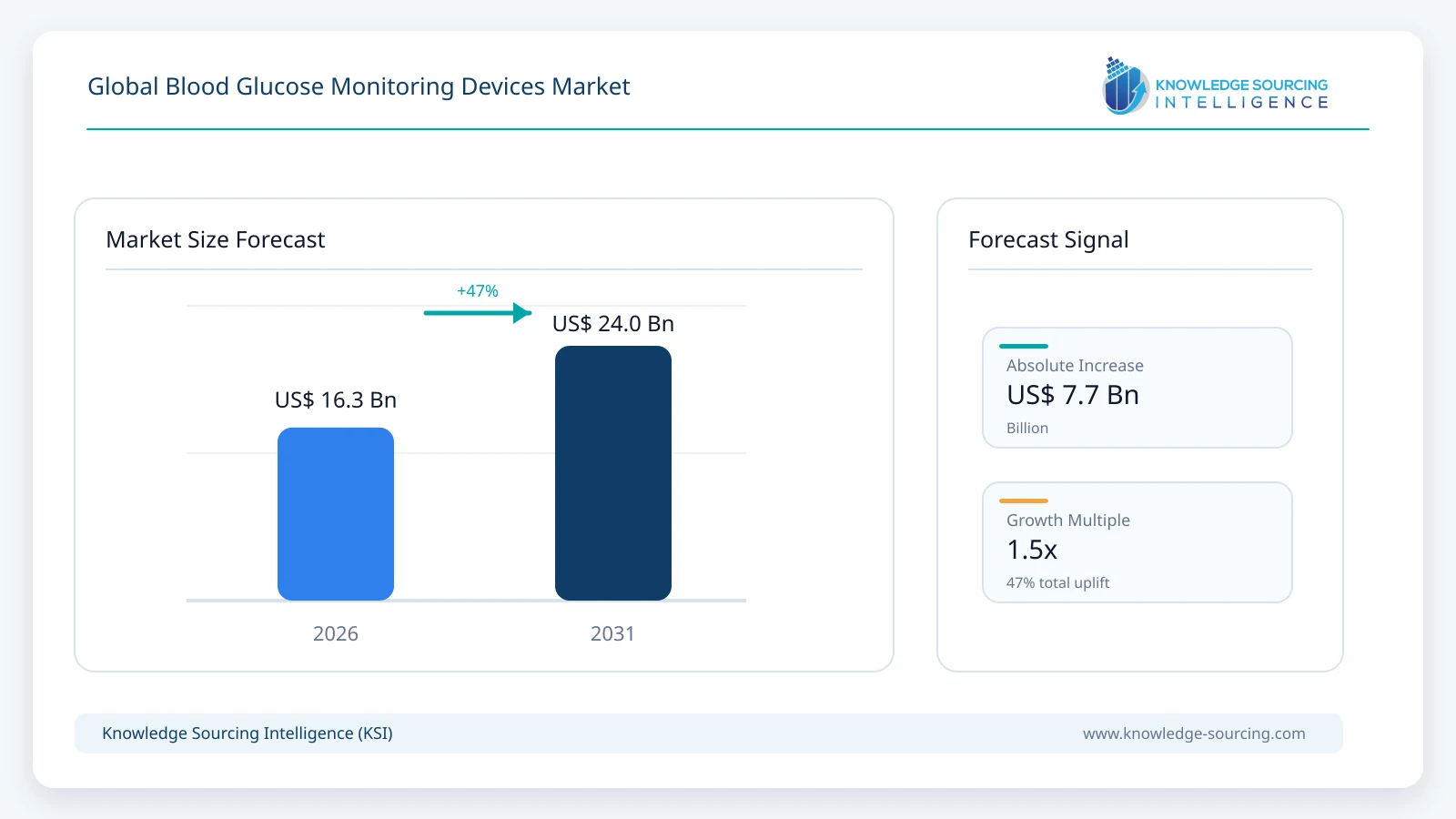
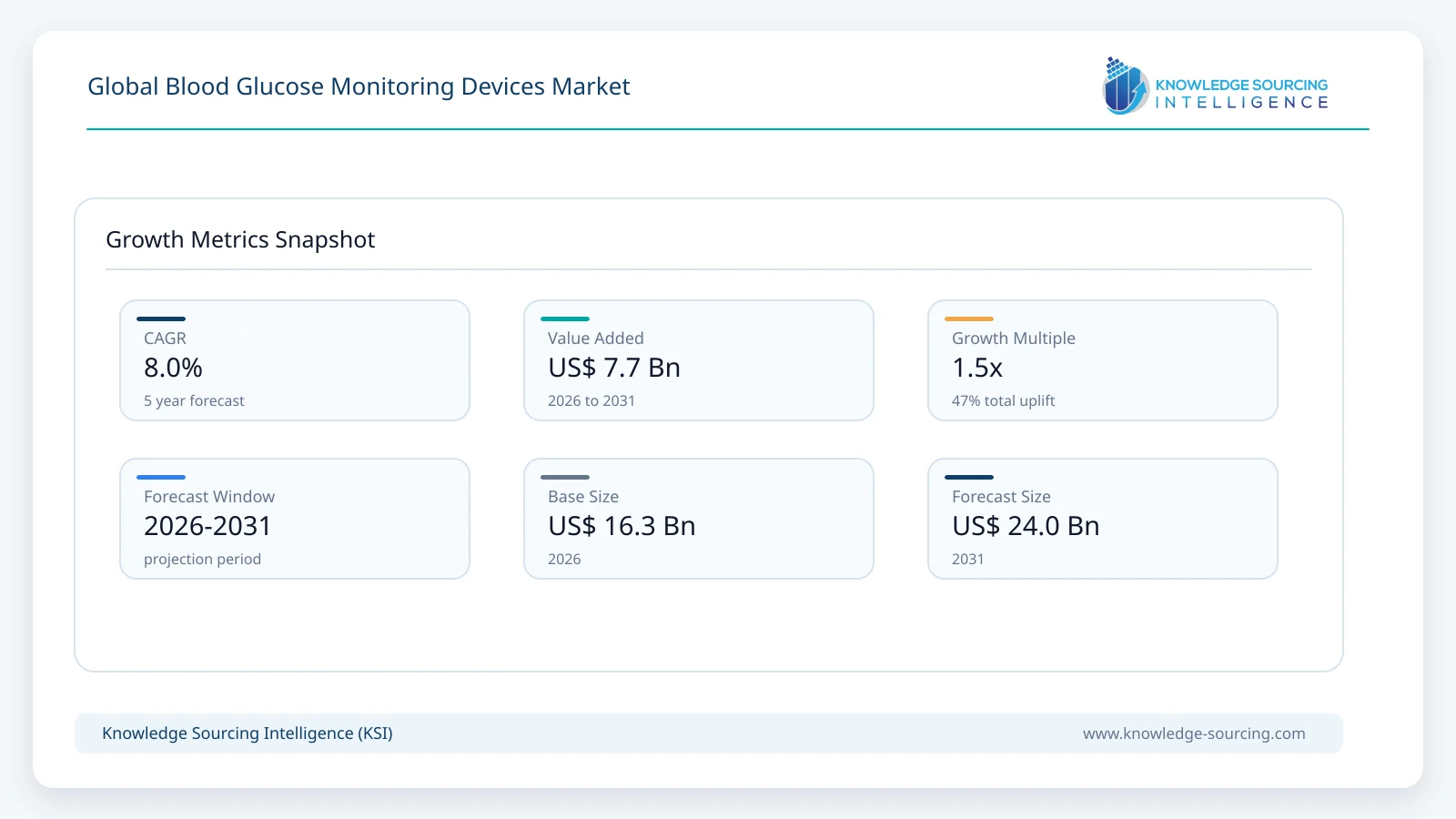
The global blood glucose monitoring devices market is forecast to grow at a CAGR of 8.0%, reaching USD 24.0 billion in 2031 from USD 16.3 billion in 2026.
Highlights:
- 1High cost of advanced monitoring devices, particularly CGM systems, limits affordability in low- and middle-income regions
- 2Limited reimbursement coverage in certain countries restricts widespread adoption
- 3Accuracy concerns and calibration requirements in some devices affect user trust
- 4Data privacy and cybersecurity concerns associated with connected devices
Blood glucose monitoring devices are used for monitoring the blood sugar levels for better understanding of diabetes. The growing demand among the people diagnosed with diabetes to test the blood sugar regularly to understand the effects of different food, medicines and activities on the body in terms of diabetes is likely to drive the market for the devices in the coming years. The device also helps in monitoring the change and helps the doctor to plan future treatments.
With the advancements in the world of healthcare, the technological advancements in these devices help keep the track of blood sugar levels on-the-go using portable blood glucose meters (also called as glucometers). This helps the patient and their doctors to plan the medication, exercise and diet accordingly. The market has shown some high growth after the emergence of continuous glucose monitoring devices (CGM) which monitor the blood glucose level at frequent intervals. This device takes the reading every 5 to 15 minutes providing the patients as well as their doctors an insight about the patient's condition and then help them to make more informed decisions.
One of the major drivers for the market of blood glucose monitoring device is the change in the lifestyle pattern which is also driven by the increasing trend of unhealthy lifestyle such as smoking, drinking and intake of unhealthy food products which in turn has resulted in a rapid growth in the number of diabetes cases globally. According to International Diabetes Federation, an estimated 81 percent of the adult population in low- and middle-income countries are living with diabetes in 2024. On the other hand, globally, 1 in 9 adults are living with diabetes in 2024 which will rise to 1 in 8 adults in 2050. The growth is predominantly seen in the cases of type 2 diabetes. The growth in the number of diabetes patients is expected to drive the growth of the market for Blood glucose monitoring devices in the future.
The blood glucose market is expected to experience a rapid growth as people and recovered patients are becoming more health conscious and are likely to keep a track on their health. Also, the devices are in high demand in hospitals and other health care centres to aid in monitoring the health of the patients. The market for the device is expected to grow at a constant pace in the next few years as a result of the growing health awareness.
Market Dynamics
Market Drivers
Rising Global Diabetes Burden: The increasing prevalence of diabetes worldwide is a primary driver for the adoption of blood glucose monitoring devices. With a growing population of both Type 1 and Type 2 diabetic patients, continuous monitoring has become essential for effective disease management and prevention of complications. Type 2 diabetes accounts for the vast majority (over 90%) of diabetes cases worldwide. It is currently the 8th leading cause of disease burden globally and estimated to become the second leading cause by 2050. Sedentary lifestyles, aging populations, and dietary changes are further accelerating demand.
Countries with the highest number of people living with T1 Diabetes, 2024
Rank | Country | Number of People (All Ages) | Country | Number of Children & Adolescents (<20) |
1 | United States of America | 1,477,000 | India | 301,000 |
2 | India | 941,000 | United States of America | 197,000 |
3 | China | 599,000 | China | 117,000 |
4 | Brazil | 499,000 | Brazil | 99,000 |
5 | United Kingdom | 341,000 | Egypt | 69,000 |
6 | Germany | 337,000 | Russian Federation | 61,000 |
7 | Russian Federation | 323,000 | Algeria | 56,000 |
8 | Canada | 243,000 | Turkey | 47,000 |
9 | Saudi Arabia | 223,000 | Saudi Arabia | 46,000 |
10 | Turkey | 196,000 | Morocco | 43,000 |
Innovations in Monitoring Devices: The development of continuous glucose monitoring (CGM) devices, flash glucose monitoring, as well as non-invasive devices is greatly contributing to convenience and accuracy. The connections with mobile phones, wearables and cloud data management systems is improving real-time monitoring and decision support.
For example, in May 2025, Roche announced the investment plan of nearly $550 million by 2030 to its diagnostic manufacturing site in Indianpolis for the production of Roche's continuous glucose monitoring (CGM) devices. This is for the advancement, innovation and additional product offering of the company and to boost the availability of the diabetes management system to improve patient's health outcome in the US and across the world.
Rising Awareness and Trend of Preventive Health: The growing awareness of the importance of diabetes care and need for continuous glucose monitoring is a key factor for the adoption of the device. Earlier detection and self-monitoring is being encouraged by governments and healthcare providers, particularly for high-risk groups.
Growth of Digital Health Platforms: Connecting blood glucose monitoring devices with digital health solutions, apps, and telehealth services is facilitating remote monitoring and personalised health care. This is useful for the efficient treatment of chronic diseases.
For example, in September 2024, Senseonics announced it has gained FDA approval clearance for the Eversence 365, a continuous glucose monitor (CGM) for adults with Type 1 or Type 2 diabetes for one year of use and is expected to be commercialised in fourth quarter 2024.
Market Restraints
Market Opportunities
Non-Invasive Glucose Monitoring Technologies: The development of needle-free monitoring solutions represents a major opportunity, as it addresses patient discomfort and improves compliance.
Emerging Markets Expansion: Developing regions present significant growth potential due to rising diabetes prevalence, improving healthcare infrastructure, and increasing healthcare expenditure.
Integration with AI and Predictive Analytics: Advanced analytics can provide predictive insights, helping patients and clinicians manage glucose levels proactively and reduce complications.
Home Healthcare and Remote Monitoring Growth: The shift toward home-based care is increasing demand for user-friendly and portable monitoring devices.
Key Developments
February 2026: LifeScan, a world leader in glucose monitoring, announced a transformational partnership with i-SENS, a global biosensor specialist, to launch a continuous glucose monitoring system under the OneTouch® Vita brand.
January 2026: Senseonics Holdings, Inc., a medical technology company focused on the development, manufacturing and commercialization of long-term, implantable CGM systems for people with diabetes with Sequel MedTech, LLC, a company developing state-of-the-art insulin delivery technologies, have launched the integration of their products with the first patients having received a Sequel twiist AID system paired with the Eversense 365 CGM.
January 2026: Medtronic plc announced U.S. FDA clearance for its MiniMed Go™ Smart MDI system integrating InPen™ smart insulin pen with Abbott’s Instinct CGM sensor for connected diabetes management.
September 2025: Senseonics Holdings, Inc., which develops and manufactures CGM systems, commercialised and distributed Eversense 365 and future products from Ascensia Diabetes Care, a member of PHC Group, to Senseonics in the U.S.
Market Segmentation
By Virus Platform
Self-Monitoring Blood Glucose (SMBG) Devices dominate due to affordability and widespread usage
Continuous Glucose Monitoring (CGM) Devices are the fastest-growing segment driven by real-time monitoring benefits
By Application
Type 2 Diabetes holds the largest share due to high global prevalence
Type 1 Diabetes drives demand for continuous monitoring solutions
By End User
Homecare Settings dominate due to increasing self-management trends
Hospitals & Clinics hold a significant share for diagnosis and critical care monitoring
Diagnostic Centers support routine testing and screening
Regional Analysis
North America Market Analysis
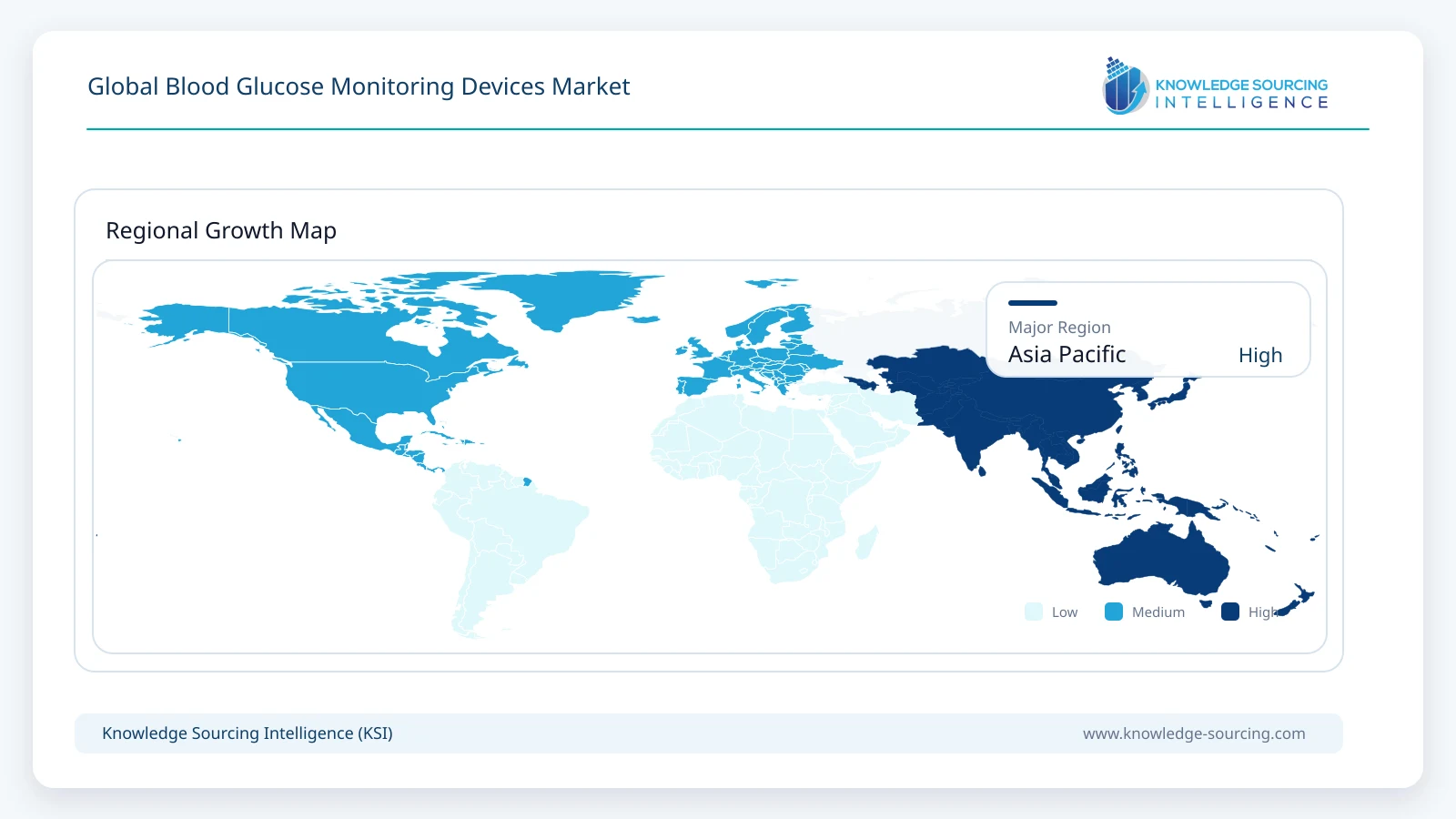
North America leads the market due to high diabetes prevalence, strong reimbursement frameworks, and rapid adoption of advanced technologies such as CGM systems.
Europe Market Analysis
Europe shows steady growth supported by favorable healthcare policies, increasing awareness, and strong adoption of digital health solutions.
Asia Pacific Market Analysis
Asia Pacific is the fastest-growing region due to a rapidly increasing diabetic population, improving healthcare access, and rising disposable incomes.
Rest of the World
Gradual growth is observed due to improving healthcare infrastructure, although affordability remains a key challenge.
Regulatory Landscape
Regulation for blood glucose monitoring devices is concerned with accuracy, safety and reliability. The FDA and European agencies mandate adherence to performance specifications and clinical validation.
There's a growing focus on interoperability with digital health systems and cybersecurity, particularly for internet-connected devices. Regulators are also streamlining processes to accelerate approvals for new technologies, especially non-invasive monitoring technologies.
Pipeline Analysis
Innovations in non-invasive monitoring, artificial intelligence, and wearable sensors are the key drivers for the pipeline of blood glucose monitoring devices. A number of firms are working on next-generation continuous glucose monitoring (CGM) devices with higher accuracy, extended sensor life, and minimal calibrations.
Another focus is on the integration of monitoring systems with insulin delivery and other diabetes management solutions, signalling the shift towards closed-loop systems.
Competitive Landscape
Abbott Laboratories
Abbott is a global leader in the blood glucose monitoring devices market, driven by the strong commercial success of its FreeStyle Libre continuous glucose monitoring (CGM) portfolio. The company focuses on expanding global access through cost-effective sensor technology, user-friendly designs, and integration with digital health platforms. Abbott’s strategy emphasizes scaling adoption in both developed and emerging markets while continuously improving sensor accuracy, wear duration, and real-time connectivity features.
Dexcom, Inc.
Dexcom is a key innovator in real-time continuous glucose monitoring systems, known for its high-accuracy sensors and advanced data analytics capabilities. The company prioritizes seamless integration with smartphones, insulin delivery systems, and digital health ecosystems to enable automated diabetes management. Dexcom’s ongoing investments in next-generation CGM technologies, including smaller wearable devices and extended sensor life, position it strongly in the premium segment of the market.
Medtronic Plc
Medtronic plays a significant role in the market through its integrated diabetes management solutions, combining continuous glucose monitoring with insulin pump systems. The company focuses on developing closed-loop or “artificial pancreas” systems that automate insulin delivery based on real-time glucose readings. Its strategy centers on enhancing patient outcomes through end-to-end solutions, supported by strong clinical evidence and global distribution capabilities.
Roche Holding AG
Roche maintains a strong presence in the self-monitoring blood glucose (SMBG) segment with its Accu-Chek product line. The company leverages its expertise in diagnostics and digital health to offer connected monitoring solutions that support personalized diabetes management. Roche’s approach includes enhancing device accuracy, improving patient usability, and integrating monitoring data with broader healthcare systems for better clinical decision-making.
Ascensia Diabetes Care Holdings AG
Ascensia is a prominent player in the SMBG market, recognized for its Contour range of blood glucose monitoring systems. The company focuses on delivering high-accuracy, easy-to-use devices tailored for everyday diabetes management. Ascensia is also expanding its presence in digital diabetes care through partnerships and technology integration, aiming to enhance patient engagement and long-term disease management outcomes.
LifeScan
LifeScan is a well-established brand in blood glucose monitoring, known for its OneTouch portfolio. The company emphasizes simplicity, reliability, and affordability in its devices, making them widely accessible across diverse patient populations. LifeScan is increasingly focusing on digital connectivity and data-driven insights to strengthen its position in the evolving diabetes care ecosystem.
Strategic Insights and Future Market Outlook
The global blood glucose monitoring devices market is expected to witness steady growth driven by increasing diabetes prevalence and continuous technological innovation. The shift toward real-time, connected, and patient-centric monitoring solutions is transforming disease management.
Future growth is being shaped by non-invasive technologies, AI-driven analytics, and integration with digital health ecosystems. Companies focusing on affordability, accuracy, and user convenience will gain a competitive edge.
As healthcare systems increasingly emphasize preventive care and remote monitoring, blood glucose monitoring devices play a critical role in managing chronic diseases and reducing long-term healthcare costs.
Blood Glucose Monitoring Devices Market Scope
| Report Metric | Details |
|---|---|
| Total Market Size in 2026 | USD 16.3 billion |
| Total Market Size in 2031 | USD 24.0 billion |
| Forecast Unit | Billion |
| Growth Rate | 8.0% |
| Study Period | 2021 to 2031 |
| Historical Data | 2021 to 2024 |
| Base Year | 2025 |
| Forecast Period | 2026 – 2031 |
| Segmentation | Type, End-User, Distribution Channel, Geography |
| Companies |
|
Market Segmentation
By Type
By End-user
By Distribution Channel
By Geography
Table of Contents
1. EXECUTIVE SUMMARY
2. MARKET SNAPSHOT
2.1. Market Overview
2.2. Market Definition
2.3. Scope of the Study
2.4. Market Segmentation
3. BUSINESS LANDSCAPE
3.1. Market Drivers
3.2. Market Restraints
3.3. Market Opportunities
3.4. Porter’s Five Forces Analysis
3.5. Industry Value Chain Analysis
3.6. Policies and Regulations
3.7. Strategic Recommendations
4. TECHNOLOGICAL OUTLOOK
5. GLOBAL BLOOD GLUCOSE MONITORING DEVICES MARKET BY TYPE
5.1. Introduction
5.2. Continuous Monitoring Devices
5.3. Self-Monitoring Devices
5.4. Flash Glucose Monitoring (FGM) Systems
6. GLOBAL BLOOD GLUCOSE MONITORING DEVICES MARKET BY END-USER
6.1. Introduction
6.2. Hospitals
6.3. Home Care Settings
6.4. Clinics/Diagnostic Centers
6.5. Ambulatory Surgical Centers
6.6. Long-Term Care Facilities
6.7. Others
7. GLOBAL BLOOD GLUCOSE MONITORING DEVICES MARKET BY DISTRIBUTION CHANNEL
7.1. Introduction
7.2. Online
7.3. Offline
8. GLOBAL BLOOD GLUCOSE MONITORING DEVICES MARKET BY GEOGRAPHY
8.1. Introduction
8.2. North America
8.2.1. USA
8.2.2. Canada
8.2.3. Mexico
8.3. South America
8.3.1. Brazil
8.3.2. Argentina
8.3.3. Others
8.4. Europe
8.4.1. Germany
8.4.2. France
8.4.3. United Kingdom
8.4.4. Spain
8.4.5. Others
8.5. Middle East and Africa
8.5.1. Saudi Arabia
8.5.2. UAE
8.5.3. Others
8.6. Asia Pacific
8.6.1. China
8.6.2. India
8.6.3. Japan
8.6.4. South Korea
8.6.5. Indonesia
8.6.6. Thailand
8.6.7. Others
9. COMPETITIVE ENVIRONMENT AND ANALYSIS
9.1. Major Players and Strategy Analysis
9.2. Market Share Analysis
9.3. Mergers, Acquisitions, Agreements, and Collaborations
9.4. Competitive Dashboard
10. COMPANY PROFILES
10.1. Abbott Laboratories
10.2. Medtronic plc
10.3. BD
10.4. F. Hoffmann-La Roche Ltd.
10.5. DexCom, Inc.
10.6. Ascensia Diabetes Care Holdings AG
10.7. Sanofi S.A.
10.8. B. Braun Melsungen AG
10.9. LifeScan, Inc.
10.10. Terumo Medical Corporation
11. APPENDIX
11.1. Currency
11.2. Assumptions
11.3. Base and Forecast Years Timeline
11.4. Key benefits for the stakeholders
11.5. Research Methodology
11.6. Abbreviations
Navigate
Trusted by the world's leading organizations











