
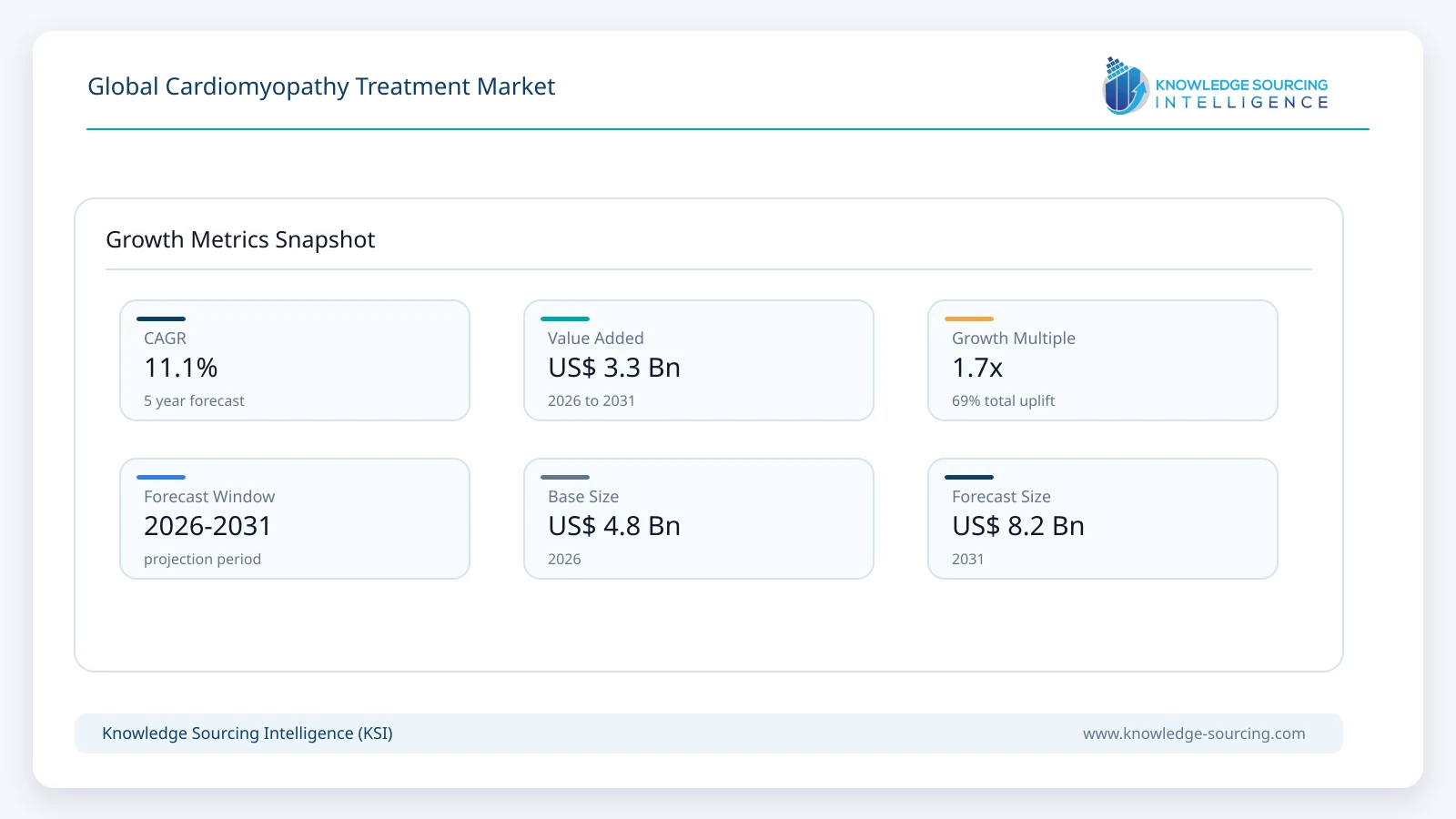
Global Cardiomyopathy Treatment Market is forecast to grow at a CAGR of 11.1%, reaching USD 8.20 billion in 2031 from USD 4.85 billion in 2026.
Highlights:
- 1Increasing adoption of genetic screening is expanding diagnosed patient populations, which raises demand for subtype-specific therapies and family-based cardiac monitoring.
- 2Growing utilization of cardiac MRI is improving disease stratification accuracy, which increases targeted treatment selection across hypertrophic and restrictive cardiomyopathy cases.
- 3SGLT2 inhibitor integration into heart failure management is strengthening cardiomyopathy treatment pathways because physicians increasingly prioritize hospitalization reduction.
- 4Development of cardiac myosin inhibitors is reshaping treatment protocols because obstructive hypertrophic cardiomyopathy requires disease-targeted therapeutic intervention.
- 5Rising sudden cardiac death risk awareness is increasing ICD and CRT implantation demand among high-risk cardiomyopathy patients.
- 6Gene therapy investment is accelerating because inherited cardiomyopathy subtypes increasingly represent commercially viable rare disease targets.
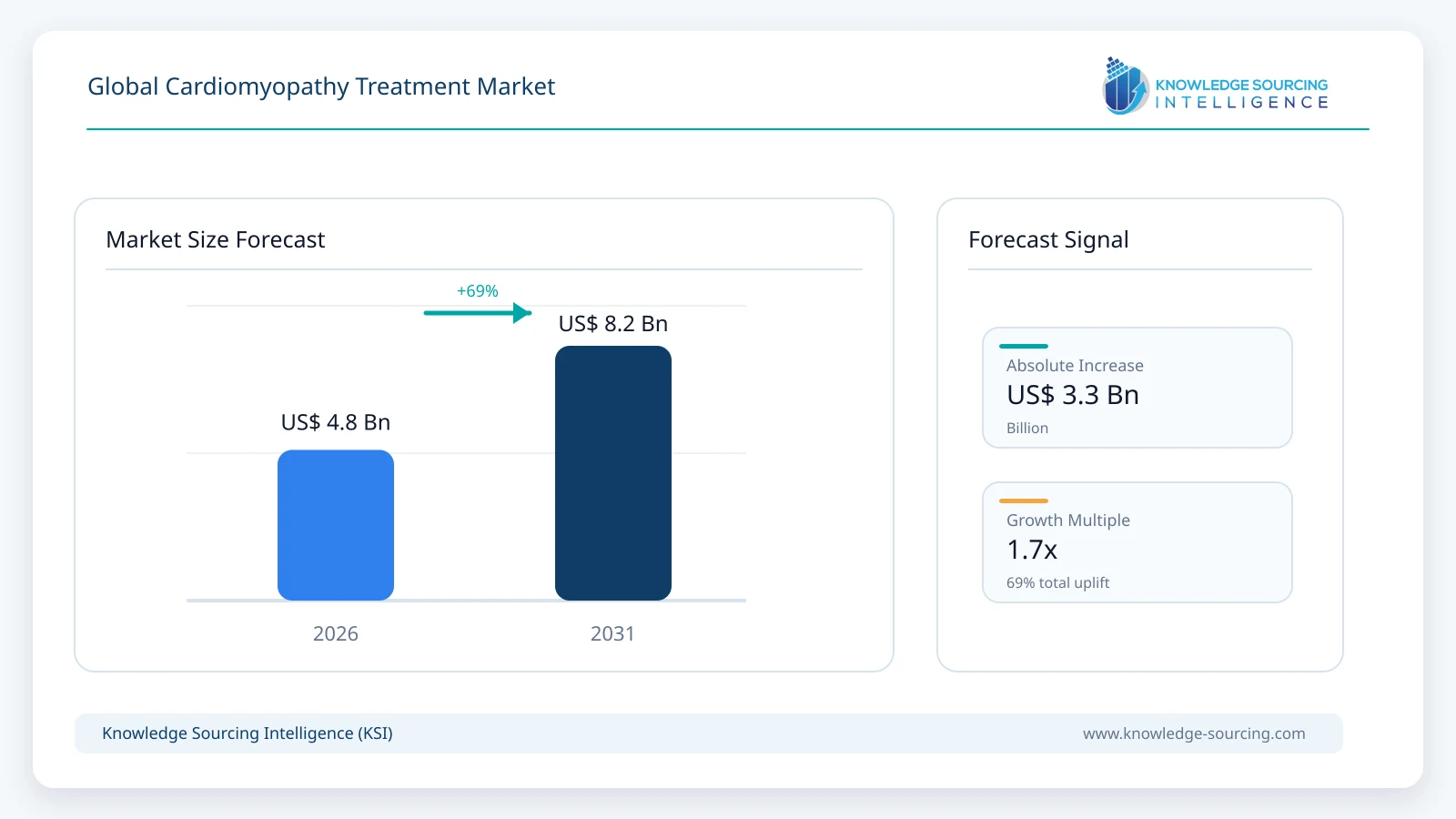
Cardiomyopathy treatment demand originates from the growing clinical burden of progressive myocardial dysfunction and associated heart failure complications. Cardiomyopathies increase hospitalization risk, arrhythmia burden, and mortality because structural myocardial abnormalities impair ventricular performance and electrical stability. Healthcare systems therefore prioritize earlier intervention pathways to reduce long-term cardiac decompensation costs.
Demand is increasingly shifting toward disease-modifying treatment strategies because conventional symptom-management approaches do not adequately delay myocardial remodeling progression in many patients. Advanced cardiac imaging adoption is improving subtype differentiation, which increases physician confidence in precision therapeutic selection. This transition is reinforcing investment in targeted cardiovascular drug development and specialty cardiac infrastructure.
The strategic importance of cardiomyopathy treatment is increasing because cardiovascular mortality reduction programs increasingly depend on preventing progression into advanced heart failure and sudden cardiac death. Hospitals are integrating electrophysiology, imaging, genetic counseling, and interventional cardiology functions into coordinated cardiomyopathy centers. This structural integration supports long-term demand for pharmacological therapies, implantable devices, and precision medicine platforms.
Market Dynamics
Market Drivers
Expansion of Genetic and Molecular Diagnostics: Genetic diagnostics increase clinical visibility into inherited cardiomyopathies because pathogenic mutations often remain undetected through conventional cardiovascular assessment alone. Hospitals are integrating next-generation sequencing into cardiac risk evaluation programs, which expands diagnosis rates among younger and asymptomatic populations. This diagnostic expansion increases long-term treatment demand because earlier disease identification requires prolonged pharmacological management and monitoring. Biotechnology companies are responding through mutation-targeted therapy development, which strengthens precision cardiology commercialization pathways.
Increasing Burden of Heart Failure-Associated Hospitalization: Heart failure complications remain a major healthcare expenditure driver because cardiomyopathy progression frequently leads to recurrent inpatient management. Healthcare systems are prioritizing therapies that reduce hospitalization frequency, which increases adoption of ARNIs and SGLT2 inhibitors in cardiomyopathy-associated heart failure populations. This transition strengthens pharmaceutical demand because physicians increasingly prefer therapies demonstrating cardiovascular outcome improvement. Payer systems are simultaneously emphasizing outpatient disease management programs, which supports long-term monitoring technology utilization.
Growth in Disease-Specific Pharmacological Innovation: Traditional cardiovascular drugs primarily manage symptoms rather than myocardial pathophysiology, which creates demand for disease-modifying therapies. Pharmaceutical companies are advancing cardiac myosin inhibitor development because hypertrophic cardiomyopathy treatment increasingly depends on targeted contractility regulation. Regulatory support for orphan cardiovascular therapies is accelerating clinical development activity, which expands competitive investment across precision cardiology. This innovation cycle strengthens commercial differentiation opportunities for specialized cardiovascular portfolios.
Market Restraints
High development costs for gene therapies and precision cardiovascular biologics limit broad commercial accessibility because manufacturing complexity increases treatment pricing pressure.
Delayed diagnosis across developing healthcare systems restricts early therapeutic intervention because cardiomyopathy symptoms often overlap with generalized heart failure conditions.
Long clinical trial timelines constrain pipeline commercialization because cardiovascular outcome validation requires extended patient monitoring and safety evaluation.
Market Opportunities
Expansion of Gene Therapy Platforms: Inherited cardiomyopathies increasingly represent commercially attractive rare disease segments because genomic sequencing is improving mutation identification accuracy. Biotechnology companies are advancing AAV-based therapies targeting myocardial protein dysfunction, which expands future disease-modifying treatment potential. Regulatory agencies continue supporting orphan cardiovascular therapies, which improves investment confidence across precision medicine platforms. This transition creates long-term partnership opportunities between academic cardiac centers and biotechnology developers.
Growth of Specialty Cardiomyopathy Centers: Multidisciplinary cardiomyopathy programs improve treatment coordination because imaging, electrophysiology, and genetics increasingly operate within integrated care pathways. Hospitals are expanding dedicated cardiovascular excellence centers, which increases demand for advanced diagnostics and specialty therapeutics. Referral concentration strengthens high-value treatment adoption because complex patients increasingly require tertiary care intervention. This infrastructure expansion supports sustained demand for premium cardiovascular technologies.
Rising Penetration of Digital Cardiac Monitoring: Continuous rhythm surveillance improves risk management because cardiomyopathy patients frequently experience unpredictable arrhythmic progression. Healthcare providers are adopting wearable and implantable monitoring technologies, which expands demand for remote cardiovascular management systems. Data-driven monitoring supports earlier intervention decisions, which reduces emergency hospitalization dependence. Device manufacturers are therefore strengthening AI-enabled cardiac analytics integration into monitoring platforms.
Supply Chain Analysis
The cardiomyopathy treatment supply chain depends on highly specialized pharmaceutical manufacturing, biologic development infrastructure, and cardiovascular device production networks. Active pharmaceutical ingredient sourcing remains concentrated among regulated manufacturing regions because cardiovascular therapies require stringent quality compliance standards. This dependency increases vulnerability to supply disruptions when regulatory inspections or geopolitical trade restrictions affect production continuity.
Biotechnology firms are increasingly outsourcing viral vector manufacturing because cardiovascular gene therapy development requires advanced bioprocessing capacity. Limited global AAV manufacturing infrastructure constrains clinical scalability, which increases production costs and development timelines. Contract development and manufacturing organizations are expanding cardiovascular biologics capacity, which partially alleviates supply bottlenecks. This expansion strengthens long-term commercialization feasibility for precision cardiology pipelines.
Cardiac device manufacturers depend on semiconductor components, telemetry systems, and implantable battery technologies because ICD and CRT platforms increasingly incorporate connected monitoring functions. Supply chain digitization is improving inventory visibility, which supports stable device deployment across tertiary care networks. Healthcare providers continue prioritizing long-term supplier relationships because treatment continuity remains critical for chronic cardiovascular management.
Government Regulations
Region | Regulatory Authority | Regulatory Focus |
United States | U.S. Food and Drug Administration | Orphan drug designation, gene therapy oversight, cardiovascular device approvals |
Europe | European Medicines Agency | Advanced therapy medicinal product regulation |
Japan | Pharmaceuticals and Medical Devices Agency | Regenerative medicine and expedited approval frameworks |
China | National Medical Products Administration | Local clinical trial compliance and biologic regulation |
India | Central Drugs Standard Control Organization | Clinical trial oversight and drug approval regulation |
Market Segmentation
By Disease Type
Dilated cardiomyopathy remains clinically significant because ventricular dilation frequently progresses into chronic heart failure and arrhythmic complications. Diagnosis rates are increasing as imaging accessibility improves across tertiary cardiac centers, which expands long-term treatment demand. Hypertrophic cardiomyopathy treatment demand is simultaneously shifting toward targeted myosin inhibition because disease-specific therapies increasingly demonstrate functional improvement potential. Restrictive and arrhythmogenic cardiomyopathies continue requiring specialized monitoring pathways because fibrosis progression and electrical instability increase sudden cardiac death risk. This segmentation structure strengthens demand for precision diagnostics and subtype-specific intervention strategies.
By Therapy Type
Pharmacological therapy dominates treatment pathways because chronic disease management requires sustained ventricular function stabilization and arrhythmia control. Physicians are increasingly integrating SGLT2 inhibitors and ARNIs into cardiomyopathy-associated heart failure protocols, which expands advanced cardiovascular drug utilization. Device-based therapy demand remains structurally important because ICD and CRT implantation reduces mortality risk among high-risk patients. Surgical and interventional procedures continue supporting advanced disease management because severe ventricular dysfunction frequently necessitates invasive correction strategies. This therapeutic diversification strengthens multidisciplinary cardiomyopathy care models.
By Drug Class
Beta-blockers and ACE inhibitors remain foundational therapies because heart rate regulation and ventricular unloading continue supporting long-term symptom management. Demand is increasingly shifting toward cardiac myosin inhibitors and SGLT2 inhibitors because clinicians prioritize therapies demonstrating disease-modifying and hospitalization-reduction potential. Antiarrhythmic utilization remains clinically important because electrical instability significantly increases morbidity risk in arrhythmogenic cardiomyopathy populations. Diuretics continue supporting symptomatic fluid management, which maintains their relevance in chronic heart failure-associated cardiomyopathy care. This drug class transition increases pharmaceutical investment in precision cardiovascular innovation.
Regional Analysis
North America Market Analysis
North America maintains strong cardiomyopathy treatment demand because advanced cardiovascular infrastructure supports earlier diagnosis and precision therapeutic adoption. Genetic testing utilization is increasing across U.S. cardiac centers, which expands identification of inherited cardiomyopathy populations. This diagnostic expansion increases demand for disease-specific therapies because physicians increasingly differentiate treatment strategies by molecular subtype. Pharmaceutical innovation remains concentrated in the region because orphan cardiovascular drug incentives support high-value pipeline investment. Academic medical centers are simultaneously strengthening gene therapy research programs, which accelerates translational cardiovascular development activity. Device adoption remains high because electrophysiology integration supports widespread ICD and CRT utilization. Reimbursement structures continue favoring advanced heart failure management, which strengthens commercial uptake of premium cardiovascular therapies. This ecosystem positions North America as a leading commercialization region for targeted cardiomyopathy treatment platforms.
Europe Market Analysis
Europe demonstrates sustained cardiomyopathy treatment demand because coordinated cardiovascular screening frameworks support early disease management. National healthcare systems increasingly emphasize hospitalization reduction, which strengthens adoption of outcome-focused cardiovascular therapies. SGLT2 inhibitors and ARNIs are gaining broader integration into treatment protocols because clinicians prioritize long-term ventricular stabilization strategies. Genetic counseling services are expanding across Western Europe, which improves inherited disease identification and family screening participation. Regulatory support for advanced therapy medicinal products strengthens gene therapy development activity because biotechnology firms benefit from structured approval pathways. Academic cardiovascular collaboration networks continue supporting multicenter cardiomyopathy research, which improves clinical evidence generation. Device utilization remains significant because aging patient populations increase arrhythmia management demand. This regional structure reinforces Europe’s role in precision cardiovascular therapy expansion.
Asia Pacific Market Analysis
Asia Pacific is experiencing increasing cardiomyopathy treatment demand because cardiovascular disease prevalence continues rising across urbanizing populations. Healthcare infrastructure investment is improving access to advanced cardiac imaging, which increases diagnosis rates in previously underserved regions. Specialty cardiac hospitals are expanding electrophysiology and heart failure programs, which strengthens demand for ICDs, CRT systems, and targeted cardiovascular therapies. Pharmaceutical companies are increasing regional clinical trial activity because large patient populations support precision cardiology development. Japan continues supporting regenerative cardiovascular innovation through accelerated regulatory pathways, which strengthens regional biotechnology competitiveness. China and India are simultaneously expanding tertiary cardiac care capacity, which increases long-term demand for advanced pharmacological therapies. This infrastructure evolution positions Asia Pacific as a high-growth operational market for cardiomyopathy treatment providers.
Rest of the World
The Rest of the World region demonstrates uneven cardiomyopathy treatment access because specialized cardiovascular infrastructure remains concentrated in major urban healthcare systems. Middle Eastern healthcare providers are increasing investment in advanced cardiac centers, which strengthens demand for precision diagnostics and implantable cardiac devices. Latin American markets are gradually improving access to heart failure management therapies because chronic cardiovascular disease burden continues to increase. African healthcare systems continue facing diagnostic limitations, which delays early cardiomyopathy identification and treatment initiation. International partnerships are supporting physician training and cardiovascular infrastructure development, which improves long-term specialty care accessibility. This regional variability maintains strong demand for scalable and cost-effective cardiomyopathy management strategies.
Regulatory Landscape
Cardiomyopathy treatment regulation increasingly prioritizes precision cardiovascular therapies because inherited cardiac disorders represent high unmet medical need populations. Regulatory agencies are expanding orphan drug and breakthrough therapy frameworks, which accelerates clinical development timelines for targeted cardiovascular products. Gene therapy oversight remains stringent because long-term safety monitoring continues influencing approval requirements for AAV-based cardiovascular platforms.
Cardiovascular device regulation is becoming more data-intensive because remote monitoring and AI-enabled rhythm management systems require cybersecurity and interoperability evaluation. Regulatory agencies are strengthening post-market surveillance expectations, which increases manufacturer investment in real-world evidence generation. This transition improves long-term patient safety oversight while increasing compliance complexity for device developers.
Pipeline Analysis
The cardiomyopathy pipeline is increasingly concentrated around cardiac myosin modulation and gene replacement strategies because conventional heart failure therapies provide limited disease modification in inherited cardiomyopathies. Cytokinetics, Incorporated is advancing aficamten development for hypertrophic cardiomyopathy because selective sarcomere modulation improves ventricular outflow management potential. Edgewise Therapeutics, Inc. is simultaneously developing EDG-7500, which reflects increasing industry focus on precision sarcomeric protein targeting.
Gene therapy programs are expanding because mutation-specific intervention strategies increasingly demonstrate translational feasibility. Rocket Pharmaceuticals, Inc. continues advancing RP-A501 for Danon disease-associated cardiomyopathy, while Tenaya Therapeutics, Inc. is progressing TN-201 and TN-401 programs targeting inherited cardiac disorders. This development activity increases strategic competition within rare cardiovascular disease therapeutics.
Competitive Landscape
Bristol Myers Squibb
Bristol Myers Squibb maintains strategic distinction through commercial leadership in cardiac myosin inhibition because Camzyos established one of the first targeted therapies for obstructive hypertrophic cardiomyopathy. The company is expanding cardiovascular precision medicine positioning as physicians increasingly prioritize disease-specific intervention over generalized symptom management. Its commercial infrastructure supports rapid specialist engagement, which strengthens adoption across tertiary cardiac centers. Clinical evidence generation remains central to its strategy because long-term ventricular remodeling outcomes continue influencing treatment expansion opportunities. Bristol Myers Squibb benefits from established cardiovascular commercialization capabilities, which improve physician education and reimbursement engagement. The company’s precision cardiology focus positions it strongly within evolving hypertrophic cardiomyopathy treatment pathways.
Cytokinetics, Incorporated
Cytokinetics differentiates itself through selective sarcomere biology expertise because aficamten development targets functional myocardial modulation in hypertrophic cardiomyopathy. The company is strengthening competitive positioning as cardiologists increasingly seek alternatives with flexible dosing and hemodynamic management profiles. Clinical development strategy prioritizes targeted patient stratification, which supports precision cardiovascular commercialization. Strategic collaborations continue expanding research capabilities because advanced cardiomyopathy therapeutics require specialized cardiovascular trial infrastructure. Cytokinetics maintains strong innovation visibility within the targeted cardiac contractility modulation segment.
Edgewise Therapeutics, Inc.
Edgewise Therapeutics focuses on precision muscle biology because inherited cardiovascular and neuromuscular disorders increasingly require molecularly targeted intervention. The company is advancing EDG-7500 development to address hypertrophic cardiomyopathy through selective sarcomere regulation. Early-stage innovation positioning strengthens long-term commercial potential because precision cardiology pipelines continue attracting strategic investment. Its research strategy emphasizes differentiated mechanistic targeting, which supports competitive diversification within emerging cardiomyopathy therapeutics.
Rocket Pharmaceuticals, Inc.
Rocket Pharmaceuticals differentiates itself through gene therapy specialization because inherited cardiomyopathies increasingly represent viable rare disease intervention opportunities. RP-A501 development targets Danon disease-associated cardiomyopathy, which addresses a high unmet clinical need population. The company is strengthening translational cardiovascular capabilities as regulatory agencies increasingly support rare disease innovation pathways. Manufacturing scalability and long-term durability validation remain central strategic priorities because commercial gene therapy success depends on sustainable clinical outcomes.
Tenaya Therapeutics, Inc.
Tenaya Therapeutics combines gene therapy, regenerative medicine, and precision cardiology platforms because inherited myocardial disorders require multifaceted intervention strategies. TN-201 and TN-401 programs strengthen its pipeline differentiation as genomic cardiology research expands. The company is increasing translational research collaboration because complex cardiac diseases require integrated biomarker and delivery optimization capabilities. Its long-term positioning depends on successful cardiac-specific gene expression and durable therapeutic efficacy.
Key Developments
March 2026: Intellia Therapeutics, Inc., a leading biopharmaceutical company focused on revolutionizing medicine leveraging CRISPR gene editing and other core technologies, announced that the U.S. Food and Drug Administration (FDA) has removed the clinical hold on the Investigational New Drug application (IND) for the MAGNITUDE Phase 3 clinical trial of nexiguran ziclumeran (nex-z) for patients with transthyretin amyloidosis with cardiomyopathy (ATTR-CM).
March 2026: Capricor Therapeutics, a biotechnology company developing transformative cell and exosome-based therapeutics for the treatment of rare diseases, announced that the U.S. Food and Drug Administration (“FDA”) has lifted the previously issued Complete Response Letter and resumed review of its Biologics License Application (“BLA”) seeking full approval of Deramiocel, an investigational cell therapy, for the treatment of Duchenne muscular dystrophy (“DMD”) cardiomyopathy.
December 2025: Cytokinetics announces fda approval of MYQORZO™ (aficamten) for the treatment of adults with symptomatic obstructive hypertrophic cardiomyopathy to improve functional capacity and symptoms
Strategic Insights and Future Market Outlook
The cardiomyopathy market is entering a precision-driven transformation phase because treatment demand increasingly depends on molecular characterization rather than generalized heart failure classification. Healthcare providers are integrating genetic diagnostics, advanced imaging, and biomarker-guided monitoring into routine cardiovascular assessment, which is improving subtype-specific treatment selection. This transition increases commercial value for targeted pharmacological therapies because clinicians increasingly prioritize interventions that directly influence myocardial mechanics and disease progression. Pharmaceutical companies are therefore reallocating cardiovascular research investment toward sarcomere modulation, fibrosis reduction, and mutation-specific therapeutic platforms.
Competitive dynamics are shifting toward integrated cardiovascular ecosystems because long-term disease management increasingly requires coordinated pharmacological, electrophysiological, and digital monitoring capabilities. Device manufacturers are strengthening remote monitoring integration as chronic arrhythmia surveillance becomes central to cardiomyopathy management. Hospitals are simultaneously expanding specialty cardiomyopathy centers, which concentrates high-value treatment adoption within tertiary cardiac networks. This structural consolidation strengthens market entry barriers because specialized clinical expertise, genomic interpretation, and advanced imaging infrastructure increasingly determine treatment accessibility and physician preference.
Cardiomyopathy Treatment Market Scope:
| Report Metric | Details |
|---|---|
| Total Market Size in 2026 | USD 4.85 billion |
| Total Market Size in 2031 | USD 8.20 billion |
| Forecast Unit | USD Billion |
| Growth Rate | 11.1% |
| Study Period | 2021 to 2031 |
| Historical Data | 2021 to 2024 |
| Base Year | 2025 |
| Forecast Period | 2026 – 2031 |
| Segmentation | Disease Type, Therapy Type, Drug Class, Geography |
| Companies |
|
Market Segmentation
By Geography
Key Countries Analysis
Regulatory & Policy Landscape
Table of Contents
1. EXECUTIVE SUMMARY
1.1 Market Overview
1.2 Key Findings
1.3 Snapshot of Global Cardiomyopathy Burden
1.4 Current Treatment Landscape Overview
1.5 Emerging Therapeutic Innovations
1.6 Market Size and Forecast Summary
1.7 Key Commercial Opportunities
1.8 Competitive Landscape Highlights
1.9 Analyst Insights and Strategic Recommendations
2. DISEASE & EPIDEMIOLOGY ANALYSIS
2.1 Introduction to Cardiomyopathy
2.2 Disease Classification
2.2.1 Dilated Cardiomyopathy (DCM)
2.2.2 Hypertrophic Cardiomyopathy (HCM)
2.2.3 Restrictive Cardiomyopathy (RCM)
2.2.4 Arrhythmogenic Cardiomyopathy (ACM/ARVC)
2.2.5 Unclassified Cardiomyopathies
2.3 Disease Pathophysiology
2.4 Genetic Basis and Familial Cardiomyopathies
2.5 Risk Factors and Comorbidities
2.6 Clinical Manifestations and Disease Progression
2.7 Diagnostic Pathway Overview
2.7.1 Echocardiography
2.7.2 Cardiac Magnetic Resonance Imaging (MRI)
2.7.3 Electrocardiography (ECG)
2.7.4 Genetic Testing
2.7.5 Endomyocardial Biopsy
2.8 Epidemiology Analysis
2.8.1 Global Prevalence
2.8.2 Global Incidence
2.8.3 Diagnosed Patient Population
2.8.4 Age-wise Epidemiology
2.8.5 Gender-wise Epidemiology
2.8.6 Subtype-wise Epidemiology
2.8.6.1 Dilated Cardiomyopathy
2.8.6.2 Hypertrophic Cardiomyopathy
2.8.6.3 Restrictive Cardiomyopathy
2.8.6.4 Arrhythmogenic Cardiomyopathy
2.9 Mortality and Disease Burden Analysis
2.10 Unmet Clinical Needs
3. MARKET DYNAMICS
3.1 Market Definition and Scope
3.2 Market Drivers
3.2.1 Increasing Prevalence of Cardiovascular Diseases
3.2.2 Rising Adoption of Precision Medicine and Genetic Testing
3.2.3 Expanding Awareness and Early Diagnosis
3.2.4 Growing Availability of Novel Targeted Therapies
3.2.5 Increasing Use of Advanced Cardiac Imaging Technologies
3.3 Market Restraints
3.3.1 High Treatment Costs
3.3.2 Limited Access to Advanced Therapies in Developing Regions
3.3.3 Diagnostic Complexity and Delayed Diagnosis
3.3.4 Regulatory and Reimbursement Challenges
3.4 Market Opportunities
3.4.1 Expansion of Gene-targeted Therapies
3.4.2 Development of Disease-modifying Treatments
3.4.3 Growth in Rare Disease Funding and Incentives
3.4.4 Expansion of Digital Cardiology and Remote Monitoring
3.5 Market Challenges
3.5.1 Heterogeneity of Disease Presentation
3.5.2 Limited Long-term Clinical Outcome Data
3.5.3 Clinical Trial Recruitment Challenges
3.6 Porter’s Five Forces Analysis
3.7 PESTLE Analysis
3.8 Value Chain Analysis
3.9 Pricing Analysis
3.10 Stakeholder Analysis
4. COMMERCIAL & MARKET ACCESS
4.1 Commercialization Landscape
4.2 Reimbursement Environment
4.3 Health Technology Assessment (HTA) Trends
4.4 Patient Access Programs
4.5 Orphan Drug Incentives and Rare Disease Policies
4.6 Market Access Challenges for Novel Therapies
4.7 Pricing and Cost-effectiveness Analysis
4.8 Distribution and Supply Chain Overview
4.9 Physician and Patient Adoption Trends
5. INNOVATION & PIPELINE LANDSCAPE
5.1 Overview of Emerging Innovations
5.2 Pipeline Analysis by Development Stage
5.2.1 Discovery and Preclinical Stage
5.2.2 Phase I Pipeline
5.2.3 Phase II Pipeline
5.2.4 Phase III Pipeline
5.3 Pipeline Analysis by Mechanism of Action
5.3.1 Cardiac Myosin Inhibitors
5.3.2 Gene Therapy Approaches
5.3.3 RNA-based Therapeutics
5.3.4 Anti-fibrotic Therapies
5.3.5 Metabolic Modulators
5.4 Pipeline Analysis by Modality
5.4.1 Small Molecules
5.4.2 Biologics
5.4.3 Gene Therapies
5.4.4 RNA Therapeutics
5.5 Clinical Trial Landscape
5.6 Recent Clinical Trial Outcomes
5.7 Patent and Intellectual Property Analysis
5.8 Collaborations, Licensing, and Strategic Alliances
5.9 Future Innovation Trends
6. TREATMENT LANDSCAPE
6.1 Current Standard of Care
6.2 Pharmacological Treatment Landscape
6.2.1 Beta-blockers
6.2.2 ACE Inhibitors and ARBs
6.2.3 Angiotensin Receptor-Neprilysin Inhibitors (ARNIs)
6.2.4 Calcium Channel Blockers
6.2.5 Antiarrhythmic Drugs
6.2.6 Diuretics
6.2.7 Sodium-Glucose Cotransporter-2 (SGLT2) Inhibitors
6.2.8 Cardiac Myosin Inhibitors
6.2.8.1 Camzyos (mavacamten)
6.2.8.2 Sotyktu? [EXCLUDE – not relevant]
6.2.9 Anticoagulants and Antiplatelets
6.3 Device-based Treatment Landscape
6.3.1 Implantable Cardioverter Defibrillators (ICDs)
6.3.2 Cardiac Resynchronization Therapy (CRT) Devices
6.3.3 Left Ventricular Assist Devices (LVADs)
6.3.4 Pacemakers
6.4 Surgical and Interventional Procedures
6.4.1 Septal Myectomy
6.4.2 Alcohol Septal Ablation
6.4.3 Heart Transplantation
6.5 Treatment Guidelines and Clinical Recommendations
6.6 Comparative Analysis of Approved Therapies
6.7 Treatment Algorithm by Disease Subtype
6.8 Emerging Therapeutic Paradigms
7. MARKET SIZE & FORECAST
7.1 Global Market Size Overview (Historical and Forecast)
7.2 Market Forecast Assumptions and Methodology
7.3 Global Cardiomyopathy Market Revenue Forecast
7.4 Market Forecast by Therapy Type
7.5 Market Forecast by Disease Type
7.6 Market Forecast by Route of Administration
7.7 Market Forecast by End User
7.8 Market Forecast by Distribution Channel
7.9 Market Forecast by Region
7.10 Scenario Analysis
7.11 Opportunity Assessment
8. MARKET SEGMENTATION
8.1 By Disease Type
8.1.1 Dilated Cardiomyopathy
8.1.2 Hypertrophic Cardiomyopathy
8.1.3 Restrictive Cardiomyopathy
8.1.4 Arrhythmogenic Cardiomyopathy
8.2 By Therapy Type
8.2.1 Pharmacological Therapy
8.2.2 Device-based Therapy
8.2.3 Surgical and Interventional Procedures
8.3 By Drug Class
8.3.1 Beta-blockers
8.3.2 ACE Inhibitors and ARBs
8.3.3 ARNIs
8.3.4 SGLT2 Inhibitors
8.3.5 Cardiac Myosin Inhibitors
8.3.6 Antiarrhythmics
8.3.7 Diuretics
8.4 By Route of Administration
8.4.1 Oral
8.4.2 Injectable
8.5 By End User
8.5.1 Hospitals
8.5.2 Cardiology Clinics
8.5.3 Ambulatory Surgical Centers
8.5.4 Specialty Heart Institutes
8.6 By Distribution Channel
8.6.1 Hospital Pharmacies
8.6.2 Retail Pharmacies
8.6.3 Online Pharmacies
9. GEOGRAPHICAL ANALYSIS
9.1 North America
9.1.1 Market Size and Forecast
9.1.2 Epidemiology Overview
9.1.3 Demand Drivers
9.1.4 Regional Regulatory Overview
9.1.5 Reimbursement Trends
9.1.6 Competitive Landscape
9.2 Europe
9.2.1 Market Size and Forecast
9.2.2 Epidemiology Overview
9.2.3 Demand Drivers
9.2.4 Regional Regulatory Overview
9.2.5 Reimbursement Trends
9.2.6 Competitive Landscape
9.3 Asia-Pacific
9.3.1 Market Size and Forecast
9.3.2 Epidemiology Overview
9.3.3 Demand Drivers
9.3.4 Regional Regulatory Overview
9.3.5 Reimbursement Trends
9.3.6 Competitive Landscape
9.4 Latin America
9.4.1 Market Size and Forecast
9.4.2 Epidemiology Overview
9.4.3 Demand Drivers
9.4.4 Regional Regulatory Overview
9.4.5 Reimbursement Trends
9.4.6 Competitive Landscape
9.5 Middle East & Africa
9.5.1 Market Size and Forecast
9.5.2 Epidemiology Overview
9.5.3 Demand Drivers
9.5.4 Regional Regulatory Overview
9.5.5 Reimbursement Trends
9.5.6 Competitive Landscape
10. KEY COUNTRIES ANALYSIS
10.1 United States
10.1.1 Market Size and Forecast
10.1.2 Epidemiology Analysis
10.1.3 FDA Regulatory Framework
10.1.4 Reimbursement Environment
10.1.5 Key Companies and Product Presence
10.2 Canada
10.2.1 Market Size and Forecast
10.2.2 Epidemiology Analysis
10.2.3 Regulatory Framework
10.2.4 Reimbursement Environment
10.2.5 Key Companies and Product Presence
10.3 Germany
10.3.1 Market Size and Forecast
10.3.2 Epidemiology Analysis
10.3.3 Regulatory Framework
10.3.4 Reimbursement Environment
10.3.5 Key Companies and Product Presence
10.4 United Kingdom
10.4.1 Market Size and Forecast
10.4.2 Epidemiology Analysis
10.4.3 Regulatory Framework
10.4.4 Reimbursement Environment
10.4.5 Key Companies and Product Presence
10.5 France
10.5.1 Market Size and Forecast
10.5.2 Epidemiology Analysis
10.5.3 Regulatory Framework
10.5.4 Reimbursement Environment
10.5.5 Key Companies and Product Presence
10.6 Italy
10.6.1 Market Size and Forecast
10.6.2 Epidemiology Analysis
10.6.3 Regulatory Framework
10.6.4 Reimbursement Environment
10.6.5 Key Companies and Product Presence
10.7 Spain
10.7.1 Market Size and Forecast
10.7.2 Epidemiology Analysis
10.7.3 Regulatory Framework
10.7.4 Reimbursement Environment
10.7.5 Key Companies and Product Presence
10.8 China
10.8.1 Market Size and Forecast
10.8.2 Epidemiology Analysis
10.8.3 NMPA Regulatory Framework
10.8.4 Reimbursement Environment
10.8.5 Key Companies and Product Presence
10.9 Japan
10.9.1 Market Size and Forecast
10.9.2 Epidemiology Analysis
10.9.3 PMDA Regulatory Framework
10.9.4 Reimbursement Environment
10.9.5 Key Companies and Product Presence
10.10 India
10.10.1 Market Size and Forecast
10.10.2 Epidemiology Analysis
10.10.3 CDSCO Regulatory Framework
10.10.4 Reimbursement Environment
10.10.5 Key Companies and Product Presence
10.11 South Korea
10.11.1 Market Size and Forecast
10.11.2 Epidemiology Analysis
10.11.3 Regulatory Framework
10.11.4 Reimbursement Environment
10.11.5 Key Companies and Product Presence
10.12 Australia
10.12.1 Market Size and Forecast
10.12.2 Epidemiology Analysis
10.12.3 Regulatory Framework
10.12.4 Reimbursement Environment
10.12.5 Key Companies and Product Presence
10.13 Brazil
10.13.1 Market Size and Forecast
10.13.2 Epidemiology Analysis
10.13.3 Regulatory Framework
10.13.4 Reimbursement Environment
10.13.5 Key Companies and Product Presence
10.14 Mexico
10.14.1 Market Size and Forecast
10.14.2 Epidemiology Analysis
10.14.3 Regulatory Framework
10.14.4 Reimbursement Environment
10.14.5 Key Companies and Product Presence
10.15 Saudi Arabia
10.15.1 Market Size and Forecast
10.15.2 Epidemiology Analysis
10.15.3 Regulatory Framework
10.15.4 Reimbursement Environment
10.15.5 Key Companies and Product Presence
10.16 South Africa
10.16.1 Market Size and Forecast
10.16.2 Epidemiology Analysis
10.16.3 Regulatory Framework
10.16.4 Reimbursement Environment
10.16.5 Key Companies and Product Presence
11. REGULATORY & POLICY LANDSCAPE
11.1 Overview of Global Regulatory Environment
11.2 United States FDA Regulatory Framework
11.3 European Medicines Agency (EMA) Framework
11.4 Japan PMDA Framework
11.5 India CDSCO Framework
11.6 China NMPA Framework
11.7 Orphan Drug Regulations and Incentives
11.8 Approval Pathways for Cardiovascular Therapies
11.9 Pharmacovigilance and Post-marketing Surveillance
11.10 Reimbursement and Pricing Policies
11.11 Clinical Trial Governance and Compliance
12. COMPETITIVE LANDSCAPE
12.1 Market Share Analysis
12.2 Competitive Benchmarking
12.3 Product Portfolio Analysis
12.4 Pipeline Competitiveness Assessment
12.5 Strategic Developments
12.5.1 Mergers and Acquisitions
12.5.2 Licensing Agreements
12.5.3 Collaborations and Partnerships
12.5.4 Product Launches and Approvals
12.6 SWOT Analysis
12.7 Strategic Positioning of Leading Players
13. COMPANY PROFILES
13.1 Bristol Myers Squibb
13.1.1 Company Overview
13.1.2 Approved Cardiovascular Portfolio
13.1.2.1 Camzyos (mavacamten)
13.1.3 Key Indications
13.1.4 Pipeline and Clinical Development
13.1.5 Strategic Initiatives
13.2 Cytokinetics, Incorporated
13.2.1 Company Overview
13.2.2 Pipeline Portfolio
13.2.2.1 Aficamten
13.2.3 Clinical Development Status
13.2.4 Strategic Collaborations
13.3 Edgewise Therapeutics, Inc.
13.3.1 Company Overview
13.3.2 Pipeline Portfolio
13.3.2.1 EDG-7500
13.3.3 Clinical Development Status
13.3.4 Strategic Outlook
13.4 Rocket Pharmaceuticals, Inc.
13.4.1 Company Overview
13.4.2 Gene Therapy Pipeline
13.4.2.1 RP-A501
13.4.3 Clinical Development Status
13.4.4 Strategic Initiatives
13.5 Tenaya Therapeutics, Inc.
13.5.1 Company Overview
13.5.2 Gene Therapy and Precision Medicine Pipeline
13.5.2.1 TN-201
13.5.2.2 TN-401
13.5.3 Clinical Development Status
13.5.4 Strategic Collaborations
13.6 Lexeo Therapeutics, Inc.
13.6.1 Company Overview
13.6.2 Cardiovascular Gene Therapy Pipeline
13.6.2.1 LX2006
13.6.3 Clinical Development Status
13.6.4 Strategic Outlook
13.7 Pfizer Inc.
13.7.1 Company Overview
13.7.2 Cardiovascular Portfolio
13.7.3 Heart Failure and Cardiomyopathy-related Therapies
13.7.4 Pipeline and R&D Activities
13.7.5 Strategic Developments
13.8 Novartis AG
13.8.1 Company Overview
13.8.2 Cardiovascular Portfolio
13.8.2.1 Entresto (sacubitril/valsartan)
13.8.3 Key Indications
13.8.4 Pipeline and Clinical Programs
13.8.5 Strategic Initiatives
13.9 AstraZeneca PLC
13.9.1 Company Overview
13.9.2 Cardiovascular Portfolio
13.9.2.1 Farxiga/Forxiga (dapagliflozin)
13.9.3 Key Indications
13.9.4 Pipeline and Clinical Development
13.9.5 Strategic Outlook
13.10 Abbott Laboratories
13.10.1 Company Overview
13.10.2 Cardiac Rhythm Management Portfolio
13.10.3 Implantable Cardioverter Defibrillator (ICD) Portfolio
13.10.4 Cardiac Monitoring Technologies
13.10.5 Strategic Developments
13.11 Medtronic plc
13.11.1 Company Overview
13.11.2 Cardiac Device Portfolio
13.11.3 CRT and ICD Product Portfolio
13.11.4 Structural Heart and Monitoring Solutions
13.11.5 Strategic Initiatives
13.12 Boston Scientific Corporation
13.12.1 Company Overview
13.12.2 Cardiac Rhythm Management Portfolio
13.12.3 ICD and CRT Device Portfolio
13.12.4 Clinical and Commercial Strategy
13.12.5 Strategic Developments
14. FUTURE OUTLOOK
14.1 Future Market Projections
14.2 Emerging Treatment Paradigms
14.3 Evolution of Precision Cardiology
14.4 Future of Gene Therapy in Cardiomyopathy
14.5 AI and Digital Cardiology Integration
14.6 Anticipated Regulatory Trends
14.7 Investment and Funding Trends
14.8 Strategic Recommendations for Stakeholders
15. METHODOLOGY
15.1 Research Methodology Overview
15.2 Secondary Research Sources
15.3 Primary Research Methodology
15.4 Epidemiology Modeling Approach
15.5 Market Estimation and Forecasting Methodology
15.6 Data Triangulation
15.7 Assumptions and Limitations
15.8 Currency Conversion and Inflation Adjustment
15.9 Abbreviations and Definitions
Navigate
Trusted by the world's leading organizations











