
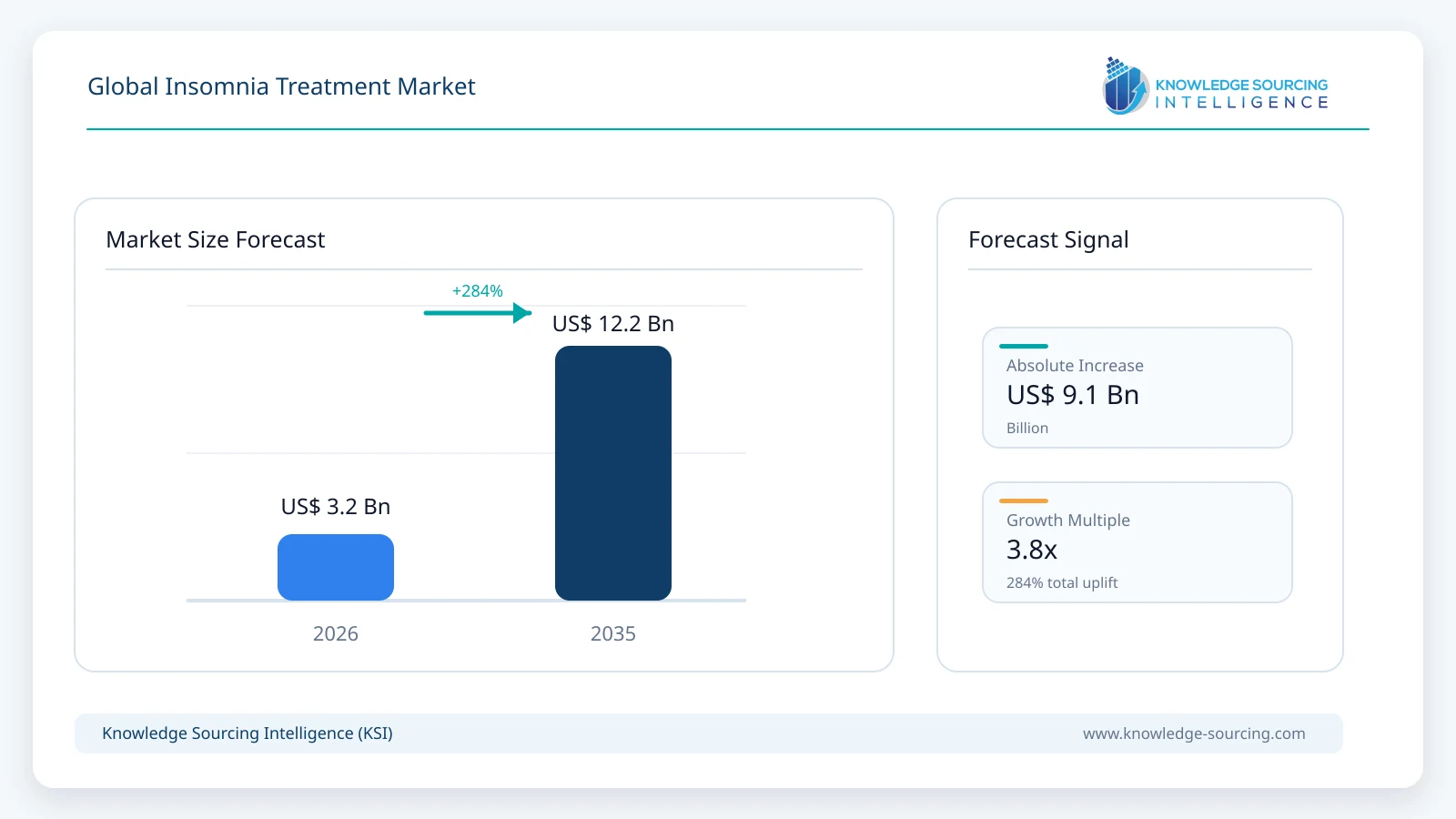
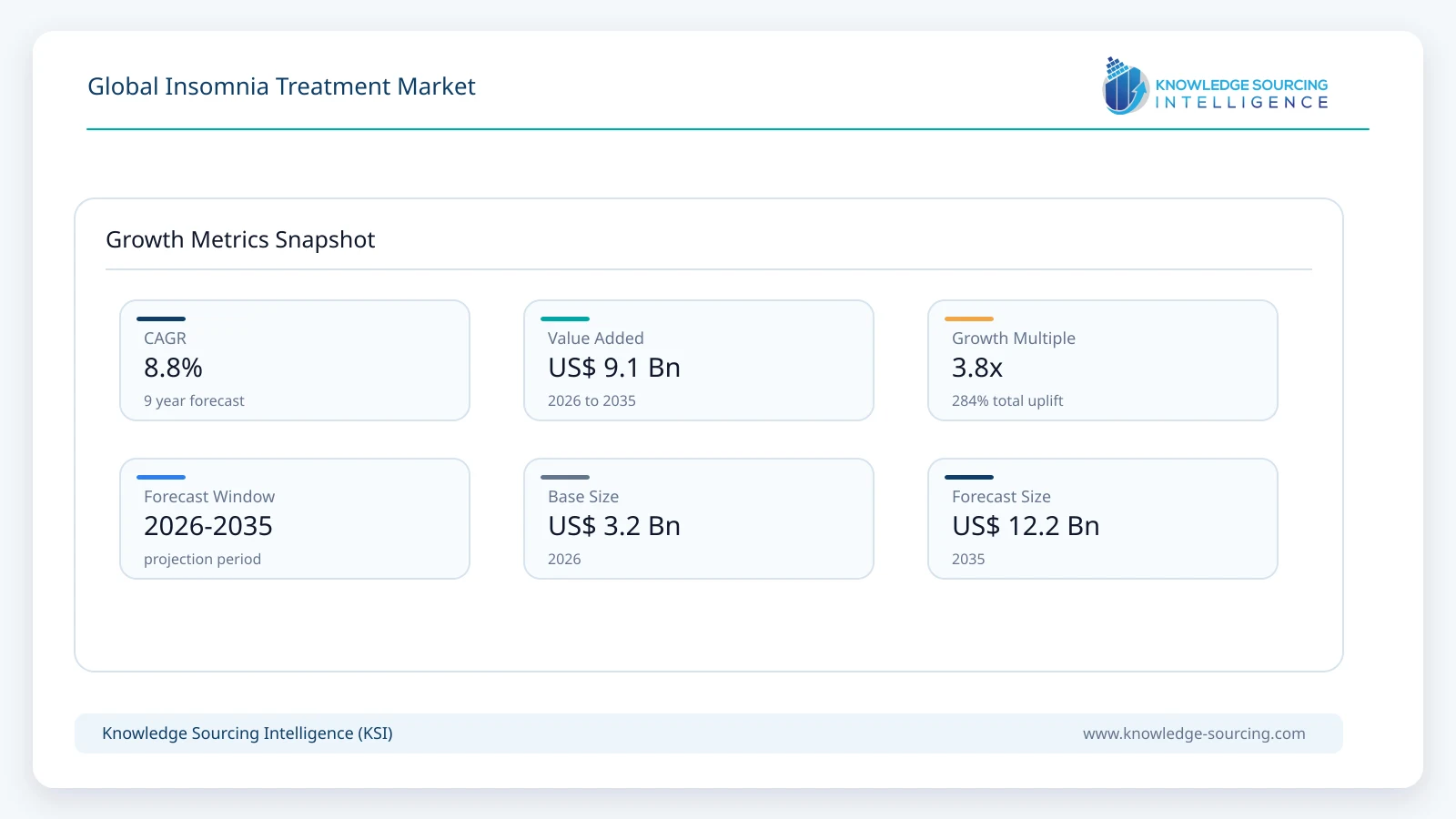
The global Insomnia Treatment Market is anticipated to grow at a CAGR of 8.8% from USD 3.19 billion in 2026 to USD 12.24 billion in 2035.
Highlights:
- 1Growing recognition of insomnia as a chronic disorder is increasing demand for therapies that address long-term disease management rather than short-term symptom suppression.
- 2Expanding clinical evidence supporting orexin-pathway modulation is accelerating investment in dual orexin receptor antagonists and related mechanisms.
- 3Demand for improved daytime functioning is reshaping clinical trial endpoints and influencing regulatory evaluation criteria.
- 4Concerns regarding dependence and cognitive impairment are reducing reliance on traditional sedative approaches and encouraging adoption of targeted therapies.
Insomnia treatment demand is expanding because sleep disorders increasingly coexist with psychiatric, neurological, cardiovascular, and metabolic conditions. Rising diagnosis rates are bringing more patients into formal treatment pathways, creating demand for therapies that demonstrate sustained efficacy and long-term safety. Existing treatment paradigms continue to depend on pharmacologic interventions and behavioral therapies, yet limitations associated with chronic use are increasing interest in newer mechanisms.
Regulatory agencies are placing greater emphasis on patient-reported outcomes, daytime functioning measures, and long-term safety profiles because chronic insomnia requires prolonged management rather than episodic intervention. This emphasis is encouraging developers to design trials that measure both sleep architecture and next-day performance. The resulting development environment favors differentiated therapies capable of demonstrating durable clinical benefit while minimizing residual sedation.
The strategic importance of insomnia therapeutics continues to increase because sleep health is becoming integrated into broader mental health, neurological, and preventive care frameworks. As healthcare systems recognize the economic burden associated with untreated insomnia, demand is supporting continued investment in innovative therapeutic platforms.
Market Dynamics
Market Drivers
Increasing Recognition of Chronic Insomnia as a Distinct Disease: Chronic insomnia increasingly receives recognition as a standalone clinical condition rather than a secondary symptom of lifestyle stress. Diagnostic activity is expanding because healthcare providers are identifying long-term functional consequences associated with untreated sleep disorders. This trend exposes limitations in episodic treatment approaches that fail to address persistent hyperarousal mechanisms. Pharmaceutical developers are advancing therapies that target biological drivers of wakefulness to address this gap. The resulting treatment landscape increasingly supports long-term disease management strategies.
Growing Demand for Daytime Function Improvement: Patient expectations increasingly extend beyond sleep duration because functional performance during waking hours remains a major determinant of treatment satisfaction. Demand is shifting toward therapies that improve cognition, alertness, and productivity without causing residual impairment. This shift challenges therapies associated with next-day sedation. Clinical development programs are incorporating daytime functioning endpoints to demonstrate broader patient benefit. The resulting differentiation increasingly influences prescribing decisions.
Expansion of Orexin-Based Therapeutics: The orexin system represents a validated biological target involved in wakefulness regulation. Clinical evidence continues to support orexin modulation because excessive wake signaling contributes directly to insomnia pathology. Traditional therapies often suppress neural activity broadly, creating tolerability concerns. Developers are advancing orexin-targeted therapies that selectively address wake-promoting pathways. This mechanism-based approach is strengthening confidence among physicians and regulators.
Increasing Sleep Disorder Screening: Healthcare systems increasingly incorporate sleep assessments into primary care and behavioral health evaluations. Screening activity is expanding because untreated insomnia contributes to substantial healthcare utilization and productivity losses. Earlier diagnosis reveals larger treatment populations requiring long-term management. Treatment providers are broadening intervention strategies to address these patients. The resulting increase in diagnosed prevalence supports continued therapeutic
Market Restraints
Long-term safety expectations increase development complexity and extend evidence-generation requirements.
Behavioral therapies remain recommended in treatment pathways, limiting exclusive dependence on pharmacological interventions.
Generic sedative-hypnotics continue to create pricing pressure for novel branded therapies.
Market Opportunities
Expansion into Comorbid Insomnia Populations: Comorbid insomnia frequently coexists with psychiatric, neurological, and respiratory conditions. Clinical research is increasingly evaluating therapeutic performance within these patient populations because treatment outcomes often differ from those observed in primary insomnia. Existing management approaches may not fully address overlapping disease mechanisms. Developers are expanding clinical programs into broader patient groups. This expansion creates opportunities for differentiated labeling and market penetration.
Pediatric and Adolescent Development Programs: Unmet need remains significant among younger patient populations because approved treatment options are limited. Clinical activity is expanding toward pediatric evaluation as developers seek additional growth opportunities. Regulatory requirements create development challenges that restrict competitor participation. Sponsors are generating evidence to address these barriers. The resulting market opportunity supports lifecycle management strategies.
Precision Sleep Medicine: Sleep disorders increasingly receive attention through a neurobiological framework rather than a purely symptomatic perspective. Research activity is identifying distinct patient subgroups with varying therapeutic requirements. Conventional treatment algorithms often overlook these differences. Developers are investigating targeted interventions and personalized treatment approaches. This trend creates opportunities for differentiated clinical positioning.
Integration with Digital Sleep Monitoring: Digital health adoption is expanding because patients increasingly utilize wearable devices and sleep tracking platforms. Continuous monitoring generates larger volumes of behavioral and physiological data. Traditional assessment methods may not fully capture treatment response dynamics. Clinical programs are increasingly incorporating digital measures to improve outcome evaluation. The resulting integration supports more personalized treatment strategies.
Disease & Epidemiology Analysis
Insomnia remains among the most prevalent sleep disorders globally and affects adults across diverse demographic groups. Disease burden increases because chronic sleep disruption influences cardiovascular health, metabolic regulation, psychiatric stability, cognitive performance, and workplace productivity. Growing awareness is increasing diagnosis rates, which in turn expands the treated patient population. Healthcare systems are responding by integrating sleep management into broader chronic disease frameworks. The resulting shift elevates insomnia from a quality-of-life concern to a significant public health issue.
Chronic insomnia represents the dominant clinical segment because symptoms frequently persist for months or years. Demand is increasingly originating from patients experiencing comorbid psychiatric disorders, chronic pain conditions, and respiratory diseases. These overlapping conditions complicate treatment decisions because therapeutic choices must balance efficacy, safety, and tolerability. Clinical development programs are increasingly evaluating these populations. The outcome is a broader understanding of disease heterogeneity and treatment needs.
Treatment Guidelines Landscape
Organization | Focus Area | Competitive Relevance |
American Academy of Sleep Medicine | Insomnia treatment recommendations | Influences clinical adoption |
National Institutes of Health | Sleep research priorities | Supports innovation focus |
U.S. Food and Drug Administration | Drug approval oversight | Determines development requirements |
European Medicines Agency | Regulatory evaluation | Shapes European commercialization |
Market Segmentation
By Development Phase
The development phase structure determines how rapidly innovation reaches clinical practice. Activity is increasingly concentrating in clinical-stage programs because developers are seeking differentiated therapies that improve sleep quality while maintaining daytime function. This concentration raises competitive pressure on late-stage assets that must demonstrate meaningful advantages over established treatments. Sponsors are refining trial designs and endpoint selection to improve regulatory success rates. The resulting pipeline increasingly favors mechanism-driven candidates with clear differentiation strategies. Current activity indicates that Phase II and Phase III programs continue to represent the most commercially significant portion of the insomnia pipeline.
By Mechanism of Action
Mechanism-based competition increasingly defines the insomnia market because physicians are prioritizing therapies that target underlying wakefulness pathways. Demand is shifting toward orexin-based approaches as evidence continues supporting the role of hyperarousal and orexin signaling in chronic insomnia. Traditional GABAergic therapies remain important, yet concerns regarding residual sedation and dependence continue influencing treatment selection. Developers are advancing selective and dual orexin receptor antagonists to address these limitations. The resulting market structure increasingly centers on orexin biology as the primary innovation platform.
By End-User Indication
Patient populations increasingly extend beyond primary insomnia because diagnosis rates are rising among individuals with psychiatric, neurological, metabolic, and respiratory comorbidities. This expansion creates clinical complexity since treatment outcomes vary across patient groups. Development programs are increasingly evaluating broader patient populations to support differentiated positioning and future label expansion. Healthcare providers are adopting more individualized treatment approaches to accommodate disease heterogeneity. The resulting demand profile increasingly supports precision-oriented therapeutic development.
Regional Analysis
North America
North America remains the largest center for insomnia innovation because the region combines advanced sleep medicine infrastructure with high awareness of sleep disorders. Diagnosis rates continue increasing as healthcare providers integrate sleep assessments into routine clinical care. This expansion exposes unmet needs among patients requiring long-term treatment solutions that preserve daytime functioning. Pharmaceutical companies are increasing investment in orexin-targeted therapies because regulators and clinicians increasingly favor mechanism-driven approaches over broad central nervous system depressants. The resulting environment supports accelerated adoption of innovative insomnia therapeutics.
Clinical research activity remains concentrated in the United States because leading academic sleep centers and pharmaceutical developers continue generating substantial clinical evidence. Demand is increasingly shifting toward treatments capable of demonstrating durable efficacy and favorable safety profiles. This shift places pressure on traditional hypnotics that may present tolerability concerns during chronic use. Sponsors are conducting larger and more sophisticated clinical studies to demonstrate differentiation. The outcome is a highly competitive development environment that rewards evidence-based innovation.
Reimbursement systems continue emphasizing clinical value because payers increasingly evaluate daytime functioning outcomes alongside nighttime sleep improvements. Developers are generating broader evidence packages to support favorable coverage decisions. This strategy strengthens market access opportunities for differentiated therapies. The resulting commercial landscape favors products capable of demonstrating meaningful functional benefits.
Europe
Europe represents a major center of insomnia therapeutic development because the region maintains strong regulatory oversight and extensive clinical research capabilities. Demand is increasing as healthcare systems recognize insomnia as a chronic condition associated with substantial healthcare utilization and productivity losses. This recognition places pressure on healthcare providers to improve diagnosis and treatment pathways. Pharmaceutical companies are expanding clinical programs to address these needs. The resulting market supports continued innovation.
Clinical development activity increasingly focuses on orexin biology because European research institutions have contributed substantially to understanding sleep-wake regulation. This scientific foundation strengthens confidence in mechanism-driven approaches. Traditional treatment approaches continue to face scrutiny regarding long-term tolerability and dependency concerns. Developers are advancing targeted therapies that align with evolving treatment expectations. The outcome is a gradual transition toward precision-oriented sleep medicine.
Regulatory agencies continue emphasizing robust safety and efficacy evidence because chronic insomnia requires sustained treatment. Sponsors are generating long-term datasets to address these requirements. This effort improves confidence among clinicians and payers. The resulting regulatory environment encourages high-quality evidence generation and supports differentiated innovation.
Asia Pacific
Asia Pacific is emerging as a significant growth center for insomnia therapeutics because healthcare access, awareness, and diagnostic capabilities continue improving across major markets. Demand is increasing as urbanization, workplace stress, and aging populations contribute to a growing sleep disorder burden. This trend expands the addressable patient population requiring treatment. Pharmaceutical companies are increasing regional investment to capture these opportunities. The resulting market is becoming increasingly attractive for both multinational and regional developers.
Clinical trial activity continues expanding because sponsors seek access to large patient populations and diverse research environments. This expansion improves enrollment efficiency while supporting broader evidence generation. Regulatory authorities are modernizing review processes to encourage innovation and improve patient access. Companies are pursuing regional development strategies to accelerate commercialization timelines. The outcome is stronger competitive activity across the region.
China, Japan, South Korea, and Australia continue attracting particular attention because these markets offer substantial commercial potential and established research infrastructure. Developers are increasing partnerships and licensing arrangements to strengthen regional positioning. This activity enhances technology transfer and market penetration opportunities. The resulting ecosystem supports sustained pipeline expansion.
Rest of the World
The Rest of the World region remains an emerging opportunity because awareness of sleep disorders continues increasing across Latin America, the Middle East, and Africa. Demand is growing as healthcare systems increasingly recognize the broader consequences of untreated insomnia. This recognition exposes gaps in diagnosis and treatment availability. Healthcare providers are expanding sleep medicine services to address these deficiencies. The resulting demand environment supports gradual market development.
Resource limitations continue constraining rapid adoption because access to specialized sleep centers remains uneven across many countries. This constraint limits early diagnosis and treatment initiation. Healthcare stakeholders are investing in education and awareness programs to improve disease recognition. These initiatives are expanding the potential patient pool entering treatment pathways. The outcome is a progressive improvement in market accessibility.
Pharmaceutical companies increasingly view these regions as long-term growth opportunities because disease awareness and healthcare investment continue advancing. Commercial strategies are focusing on partnerships and phased market expansion. This approach reduces entry barriers while supporting sustainable growth. The resulting competitive landscape remains less crowded than developed markets.
Regulatory Landscape
Regulatory agencies increasingly evaluate insomnia therapies through a broader clinical lens because treatment goals now extend beyond sleep initiation and maintenance. Daytime functioning measures are receiving greater attention as regulators seek evidence that therapies improve overall patient well-being. This expectation creates additional development requirements for sponsors. Clinical programs are incorporating patient-reported outcomes and functional assessments to address these demands. The resulting regulatory framework favors therapies that demonstrate comprehensive benefits.
Safety requirements remain stringent because chronic insomnia often requires prolonged treatment. Long-term exposure data therefore plays a critical role in regulatory evaluation. Developers are conducting extended studies to establish sustained efficacy and tolerability. This approach supports regulatory confidence while improving commercial positioning. The outcome is a development environment characterized by increasing evidence standards.
Pipeline Analysis
The insomnia pipeline increasingly concentrates around orexin biology because growing evidence links hyperarousal and excessive wake signaling to disease pathology. Dual orexin receptor antagonists currently represent the most advanced innovation category, supported by clinical evidence demonstrating improvements in both sleep outcomes and daytime functioning. This scientific validation attracts additional investment into orexin-targeted research. Developers are expanding programs that build upon this mechanism. The resulting pipeline demonstrates increasing mechanistic convergence.
Daridorexant remains one of the most visible orexin-based therapies and continues generating regulatory and commercial momentum across multiple geographies. Expansion into additional markets is increasing competitive pressure on future entrants because physician familiarity with orexin-based approaches continues strengthening. Sponsors developing competing therapies must therefore demonstrate meaningful differentiation. Clinical programs are increasingly focusing on functional outcomes and patient quality of life measures. The resulting competitive environment emphasizes both efficacy and broader patient benefit.
Selective orexin receptor antagonists are also advancing because developers seek greater target specificity. Seltorexant continues demonstrating efficacy in clinical studies and reflects ongoing interest in selective modulation strategies. This trend broadens the innovation landscape while creating opportunities for differentiated clinical positioning. Research efforts are expanding into additional patient populations and treatment settings. The outcome is a pipeline that remains active despite increasing competition.
Reimbursement Landscape
Reimbursement decisions increasingly depend on evidence demonstrating meaningful clinical value because payers face growing pressure to control healthcare expenditures. Therapies that improve both nighttime sleep and daytime functioning are attracting greater interest since these outcomes influence productivity, healthcare utilization, and quality of life. This focus raises evidence expectations for sponsors. Companies are generating broader health-economic datasets to support reimbursement discussions. The resulting environment favors therapies with measurable real-world benefits.
Coverage frameworks continue evaluating insomnia therapies against existing generic treatment options because lower-cost alternatives remain widely available. This comparison creates pricing pressure for innovative therapies. Developers are emphasizing differentiation through safety, tolerability, and functional outcomes. These efforts support value-based reimbursement discussions. The outcome is a reimbursement landscape increasingly linked to demonstrable patient benefit rather than sleep outcomes alone.
Competitive Landscape
Merck & Co.
Merck established one of the most important foundations in modern insomnia therapeutics through the development of suvorexant, a dual orexin receptor antagonist that introduced a new mechanism for insomnia management. The company recognized the importance of orexin signaling before many competitors, allowing it to help define the current scientific direction of insomnia drug development. This early investment created a reference point for future orexin-targeted innovation. Merck subsequently demonstrated that wakefulness pathways could be selectively targeted without relying solely on broad sedative mechanisms. The resulting scientific validation accelerated industry-wide interest in orexin biology.
The company continues maintaining a strong neuroscience research capability despite increasing competition from specialized CNS developers. Its historical success with orexin antagonism provides strategic credibility as sleep medicine increasingly shifts toward mechanism-based approaches. Regulatory expertise and global commercialization capabilities remain important competitive advantages. These strengths allow Merck to influence treatment standards even as newer entrants advance differentiated programs. The outcome is a durable competitive position built upon scientific leadership and established physician familiarity with orexin-based therapy.
Idorsia Pharmaceuticals Ltd.
Idorsia represents the most focused insomnia innovator among the selected companies because daridorexant remains central to its growth strategy. The company continues expanding the global footprint of QUVIVIQ through new commercialization partnerships and geographic launches. This expansion increases physician awareness of orexin biology while strengthening market access across multiple regions. Commercial growth creates additional resources for lifecycle management and future sleep-related development. The resulting strategy reinforces Idorsia's leadership within the insomnia segment.
Clinical development continues extending beyond the original adult insomnia indication. Pediatric insomnia research is advancing, and recent Phase II data demonstrated positive outcomes in children with insomnia disorder. This expansion broadens the potential addressable population while creating opportunities for differentiated labeling. Regulatory agencies increasingly value long-term safety and daytime functioning outcomes, areas where daridorexant has accumulated meaningful evidence. The outcome is a company that combines commercial execution with ongoing clinical innovation.
Eisai Co., Ltd.
Eisai benefits from extensive neuroscience expertise and a long-standing presence within central nervous system therapeutics. The company participates in sleep medicine through its historical collaboration on insomnia therapies and maintains strategic relevance through its broader neurological portfolio. Growing recognition of sleep health as a contributor to neurological outcomes supports continued interest in sleep-related innovation. This relationship strengthens the strategic value of insomnia therapeutics within Eisai's CNS framework. The resulting position allows the company to evaluate future opportunities at the intersection of sleep and neurological disease.
The competitive environment increasingly rewards companies capable of integrating sleep science with broader neurological understanding. Eisai's research capabilities provide a platform for evaluating emerging sleep-related opportunities. Expanding awareness of sleep dysfunction across neurodegenerative and psychiatric conditions creates additional strategic relevance. The company therefore remains positioned to benefit from future convergence between sleep medicine and neuroscience. The outcome is a stable but potentially expandable role within the evolving sleep therapeutics landscape.
Takeda Pharmaceutical Company Limited
Takeda maintains a strong global neuroscience presence that supports ongoing participation in sleep-related therapeutic opportunities. Demand for differentiated insomnia treatments is increasing because patients and physicians seek alternatives to traditional hypnotic agents. This trend aligns with Takeda's broader strategy of focusing on high-value specialty therapeutic areas. The company continues evaluating opportunities where neuroscience expertise can create competitive advantages. The resulting positioning allows participation in future sleep-wake disorder innovation.
Growing industry investment in orexin biology highlights the strategic importance of sleep-related neuroscience. Takeda benefits from extensive development capabilities and established regulatory experience across major markets. These strengths support potential participation in future sleep medicine initiatives. Market evolution increasingly favors companies capable of translating neuroscience research into differentiated therapeutic value. The outcome is a competitive position supported by scientific infrastructure and global reach.
Vanda Pharmaceuticals Inc.
Vanda Pharmaceuticals occupies a unique position because its portfolio emphasizes disorders associated with circadian rhythm regulation and sleep-wake disruption. Demand for personalized sleep management continues increasing as clinicians recognize heterogeneity across sleep disorders. This trend creates opportunities for companies focusing on biologically distinct patient populations. Vanda's experience with circadian rhythm disorders provides relevant expertise within the broader sleep medicine ecosystem. The resulting strategic position differs from companies concentrating primarily on insomnia alone.
The market increasingly values therapies capable of addressing specific sleep-related mechanisms rather than broad symptom suppression. Vanda's specialization supports potential expansion opportunities as precision sleep medicine evolves. Clinical differentiation remains critical because competitive pressure continues increasing within traditional insomnia segments. Focused expertise therefore becomes an important strategic asset. The outcome is a company positioned around targeted sleep and circadian biology.
Neurocrine Biosciences, Inc.
Neurocrine Biosciences benefits from deep expertise in neuroscience drug development, particularly in areas involving complex neurobiological pathways. Sleep regulation increasingly attracts attention because many neurological disorders involve disrupted sleep-wake patterns. This connection expands opportunities for neuroscience-focused companies. Neurocrine's research capabilities provide a strong foundation for evaluating sleep-related therapeutic opportunities. The resulting strategic relevance increases as sleep health becomes integrated into broader neurological care.
The industry continues moving toward mechanism-driven therapies that target underlying biological pathways. Neurocrine's development model aligns with this trend because it emphasizes scientifically differentiated approaches. Competition increasingly favors companies capable of translating neurobiology into clinically meaningful outcomes. These capabilities support potential future participation in sleep therapeutics. The outcome is a company with strong scientific credentials and potential strategic optionality within sleep medicine.
Harmony Biosciences Holdings, Inc.
Harmony Biosciences focuses on sleep-wake disorders and therefore occupies a strategically relevant position within the broader sleep therapeutics ecosystem. Demand for treatments addressing excessive daytime sleepiness and related conditions continues expanding because awareness of sleep disorders is increasing globally. This trend strengthens the importance of companies with established expertise in sleep-wake regulation. Harmony is leveraging this specialization to build credibility among sleep medicine stakeholders. The resulting position supports long-term participation in evolving sleep disorder markets.
Scientific interest increasingly extends beyond nighttime sleep quality toward overall wakefulness management. Harmony's therapeutic focus aligns with this broader perspective. Clinical experience within sleep medicine creates opportunities to evaluate adjacent indications and future partnerships. Competitive differentiation therefore depends on demonstrating meaningful patient benefits across the sleep-wake continuum. The outcome is a focused company operating within an increasingly important therapeutic area.
Apnimed, Inc.
Apnimed differs from traditional insomnia-focused developers because its lead program targets obstructive sleep apnea rather than primary insomnia. Interest in sleep health is expanding beyond insomnia alone because healthcare systems increasingly recognize the interconnected nature of sleep disorders. This shift creates opportunities for companies addressing broader sleep-related conditions. Apnimed is advancing AD109, an oral therapy that has demonstrated positive Phase III results in obstructive sleep apnea studies. The resulting momentum strengthens investor and industry interest in pharmacological sleep-disorder management.
Successful Phase III outcomes continue attracting attention because many sleep disorder treatments historically relied on devices rather than medicines. This transition highlights growing confidence in pharmaceutical approaches to sleep-related conditions. Apnimed is preparing for potential regulatory advancement while continuing to generate supporting evidence. The resulting strategy positions the company as an important participant in the broader sleep therapeutics market.
Strategic Insights and Future Market Outlook
The future of insomnia treatment increasingly depends on biological precision because clinicians and regulators are seeking therapies that improve both sleep and daytime functioning. Orexin-targeted approaches continue gaining momentum as evidence reinforces their ability to address fundamental wakefulness mechanisms. This scientific validation attracts investment into next-generation sleep therapeutics. Developers are expanding programs into pediatric, comorbid, and geographically diverse patient populations. The resulting innovation cycle continues strengthening the strategic importance of sleep medicine.
Commercial competition is increasingly shifting from simple efficacy comparisons toward broader value demonstration. Healthcare providers are emphasizing functional outcomes, safety, adherence, and quality-of-life improvements because these factors influence long-term treatment success. Sponsors are generating more comprehensive clinical and health-economic evidence to address these expectations. This approach supports reimbursement and regulatory objectives simultaneously. The outcome is a more sophisticated and evidence-driven market environment.
Industry investment trends suggest continued confidence in sleep-disorder therapeutics. Recent large-scale transactions involving orexin-focused assets demonstrate growing strategic interest from major pharmaceutical companies. This activity reinforces the perception that sleep medicine represents a significant long-term growth opportunity. The resulting investment environment is likely to support additional innovation, partnerships, and acquisition activity through the forecast period.
The insomnia treatment landscape is transitioning from symptom-focused management toward mechanism-driven intervention. Growing understanding of orexin biology, expanding clinical evidence, and increasing recognition of insomnia as a chronic disease are reshaping therapeutic priorities. Companies that combine validated mechanisms, strong clinical differentiation, and effective commercialization strategies are likely to capture the greatest value through 2031. The market therefore remains positioned for continued innovation, broader adoption of targeted therapies, and increasing integration of sleep health within comprehensive healthcare management.
Insomnia Treatment Market Scope:
| Report Metric | Details |
|---|---|
| Total Market Size in 2026 | USD 3.19 billion |
| Total Market Size in 2035 | USD 12.24 billion |
| Forecast Unit | USD Billion |
| Growth Rate | 8.8% |
| Study Period | 2021 to 2035 |
| Historical Data | 2021 to 2024 |
| Base Year | 2025 |
| Forecast Period | 2026 – 2035 |
| Segmentation | Development Phase, Mechanism of Action, Modality, Geography |
| Companies |
|
Market Segmentation
Development Phase
Mechanism of Action
Modality
Geography
- North America
- South America
- Europe
- Middle East and Africa
- Asia Pacific
Table of Contents
1. EXECUTIVE SUMMARY
1.1 Market and Pipeline Snapshot
1.1.1 Global Insomnia Burden Overview
1.1.2 Current Treatment Landscape Assessment
1.1.3 Pipeline Maturity Overview
1.1.4 Key Innovation Themes
1.1.5 Emerging Clinical Development Trends
1.2 Strategic Pipeline Highlights
1.2.1 Most Advanced Pipeline Assets
1.2.2 High-Potential Emerging Candidates
1.2.3 Novel Mechanism Opportunities
1.2.4 Competitive Threat Assessment
1.2.5 Expected Regulatory Milestones
1.3 Key Conclusions and Future Outlook
1.3.1 Near-Term Approval Opportunities
1.3.2 Long-Term Innovation Outlook
1.3.3 Investment Attractiveness Assessment
2. PIPELINE OVERVIEW
2.1 Global Insomnia Pipeline Landscape
2.1.1 Pipeline Evolution and Historical Development
2.1.2 Active Asset Distribution by Development Phase
2.1.3 Pipeline Growth Trends
2.1.4 Clinical Development Activity Trends
2.1.5 Sponsor Participation Trends
2.2 Current Pipeline Composition
2.2.1 Total Active Assets
2.2.2 Dormant and Discontinued Programs
2.2.3 Geographic Distribution of Pipeline Assets
2.2.4 Sponsor Type Analysis
2.2.5 Development Risk Profile
2.3 Asset Inventory Overview
2.3.1 Preclinical Asset Summary
2.3.2 Phase I Asset Summary
2.3.3 Phase II Asset Summary
2.3.4 Phase III Asset Summary
2.3.5 Filed and Under Regulatory Review Assets
3. DISEASE AND UNMET NEED ANALYSIS
3.1 Clinical Overview of Insomnia Disorders
3.1.1 Chronic Insomnia Disorder
3.1.2 Acute Insomnia
3.1.3 Comorbid Insomnia
3.1.4 Treatment-Resistant Insomnia
3.1.5 Special Population Insomnia
3.2 Disease Burden Assessment
3.2.1 Epidemiology Overview
3.2.2 Quality of Life Impact
3.2.3 Economic Burden
3.2.4 Healthcare Resource Utilization
3.2.5 Productivity Loss Analysis
3.3 Unmet Clinical Needs
3.3.1 Limitations of Existing Therapies
3.3.2 Long-Term Safety Challenges
3.3.3 Dependence and Abuse Concerns
3.3.4 Residual Daytime Impairment Issues
3.3.5 Patient Adherence Challenges
4. MECHANISM AND MODALITY LANDSCAPE
4.1 Mechanism of Action Landscape
4.1.1 Orexin Receptor Antagonists
4.1.2 GABA-A Receptor Modulators
4.1.3 Melatonin Receptor Agonists
4.1.4 Serotonergic Mechanisms
4.1.5 Histaminergic Mechanisms
4.1.6 Circadian Rhythm Modulators
4.1.7 Multi-Target Approaches
4.1.8 Emerging Novel Mechanisms
4.2 Mechanism-Based Competitive Benchmarking
4.2.1 Established versus Emerging Mechanisms
4.2.2 First-in-Class Innovation Assessment
4.2.3 Best-in-Class Differentiation Potential
4.2.4 Mechanism Saturation Analysis
4.2.5 White Space Opportunities
4.3 Modality Analysis
4.3.1 Small Molecule Pipeline
4.3.2 Biologic-Based Programs
4.3.3 RNA-Based Therapeutic Programs
4.3.4 Cell and Gene Therapy Exploration
4.3.5 Digital Therapeutic Integration Opportunities
4.4 Innovation Index Assessment
4.4.1 Scientific Novelty Evaluation
4.4.2 Target Innovation Trends
4.4.3 Platform Technology Assessment
4.4.4 Translational Potential Analysis
5. CLINICAL DEVELOPMENT INTELLIGENCE
5.1 Clinical Trial Landscape
5.1.1 Historical Trial Activity Trends
5.1.2 Active Clinical Trial Distribution
5.1.3 Global Trial Initiation Trends
5.1.4 Trial Completion Trends
5.1.5 Development Cycle Benchmarking
5.2 Clinical Trial Design Benchmarking
5.2.1 Sample Size Analysis
5.2.2 Trial Duration Analysis
5.2.3 Randomization Approaches
5.2.4 Comparator Selection Strategies
5.2.5 Endpoint Selection Trends
5.3 Clinical Endpoint Assessment
5.3.1 Wake After Sleep Onset (WASO)
5.3.2 Latency to Persistent Sleep (LPS)
5.3.3 Total Sleep Time (TST)
5.3.4 Subjective Sleep Quality Measures
5.3.5 Daytime Functioning Assessments
5.3.6 Patient-Reported Outcomes
5.4 Recruitment and Retention Analysis
5.4.1 Recruitment Timelines
5.4.2 Enrollment Success Rates
5.4.3 Dropout Trends
5.4.4 Regional Recruitment Performance
5.4.5 Protocol Complexity Impact
5.5 Development Success Analysis
5.5.1 Historical Success Rates
5.5.2 Clinical Failure Drivers
5.5.3 Regulatory Setback Analysis
5.5.4 Clinical Risk Factors
5.5.5 Development Bottlenecks
6. PIPELINE SEGMENTATION ANALYSIS
6.1 Pipeline Segmentation by Development Phase
6.1.1 Preclinical Pipeline Assessment
6.1.1.1 Asset-Level Profiles
6.1.1.2 Developer Landscape
6.1.1.3 Mechanism Distribution
6.1.1.4 Innovation Potential Assessment
6.1.2 Phase I Pipeline Assessment
6.1.2.1 Asset-Level Profiles
6.1.2.2 Safety Development Trends
6.1.2.3 Sponsor Analysis
6.1.2.4 Clinical Milestones
6.1.3 Phase II Pipeline Assessment
6.1.3.1 Asset-Level Profiles
6.1.3.2 Proof-of-Concept Evaluation
6.1.3.3 Competitive Differentiation
6.1.3.4 Key Readout Timelines
6.1.4 Phase III Pipeline Assessment
6.1.4.1 Asset-Level Profiles
6.1.4.2 Registrational Development Strategies
6.1.4.3 Approval Readiness Assessment
6.1.4.4 Commercial Preparedness
6.1.5 Filed and Under Review Assets
6.1.5.1 Regulatory Submission Status
6.1.5.2 Approval Probability Assessment
6.1.5.3 Launch Preparation Activities
6.2 Pipeline Segmentation by Mechanism of Action
6.2.1 Orexin-Based Programs
6.2.2 GABAergic Programs
6.2.3 Melatonin-Based Programs
6.2.4 Circadian Rhythm Programs
6.2.5 Emerging Mechanism Programs
6.3 Pipeline Segmentation by Modality
6.3.1 Small Molecules
6.3.2 Biologics
6.3.3 RNA Therapeutics
6.3.4 Combination Therapies
7. PROBABILITY OF SUCCESS AND RISK ANALYSIS
7.1 Phase Transition Probability Modeling
7.1.1 Preclinical to Phase I Probability
7.1.2 Phase I to Phase II Probability
7.1.3 Phase II to Phase III Probability
7.1.4 Phase III to Approval Probability
7.1.5 Overall Likelihood of Approval
7.2 Risk-Adjusted Pipeline Assessment
7.2.1 Asset-Level Risk Scores
7.2.2 Mechanism-Based Risk Analysis
7.2.3 Sponsor Execution Risk Assessment
7.2.4 Regulatory Risk Evaluation
7.2.5 Commercial Risk Assessment
7.3 Attrition Analysis
7.3.1 Historical Attrition Trends
7.3.2 Failure by Development Phase
7.3.3 Failure by Mechanism
7.3.4 Failure by Sponsor Type
7.3.5 Lessons from Discontinued Assets
7.4 Probability-Weighted Opportunity Assessment
7.4.1 Risk-Adjusted Asset Valuation
7.4.2 Probability-Weighted Revenue Forecasts
7.4.3 Expected Portfolio Contribution
7.4.4 Scenario Modeling
8. LAUNCH TIMELINE AND COMMERCIAL POTENTIAL
8.1 Regulatory and Approval Outlook
8.1.1 Expected Regulatory Filings
8.1.2 Anticipated Approval Timelines
8.1.3 Major Regulatory Milestones
8.1.4 Potential Review Risks
8.2 Launch Sequencing Analysis
8.2.1 Near-Term Launch Candidates
8.2.2 Mid-Term Launch Candidates
8.2.3 Long-Term Launch Opportunities
8.2.4 Competitive Launch Timing
8.3 Commercial Opportunity Assessment
8.3.1 Market Access Outlook
8.3.2 Pricing Potential
8.3.3 Reimbursement Landscape
8.3.4 Physician Adoption Potential
8.3.5 Patient Uptake Potential
8.4 Peak Sales Forecasting
8.4.1 Asset-Level Peak Sales Estimates
8.4.2 Risk-Adjusted Revenue Modeling
8.4.3 Market Share Capture Scenarios
8.4.4 Revenue Sensitivity Analysis
9. COMPETITIVE PIPELINE LANDSCAPE
9.1 Company-Wise Pipeline Assessment
9.1.1 Leading Developers
9.1.2 Emerging Challengers
9.1.3 Academic and Research Sponsors
9.1.4 Strategic Positioning Analysis
9.2 Competitive Benchmarking
9.2.1 Pipeline Breadth Comparison
9.2.2 Pipeline Depth Comparison
9.2.3 Innovation Leadership Ranking
9.2.4 Development Efficiency Assessment
9.3 Asset Concentration Analysis
9.3.1 Top Assets by Development Stage
9.3.2 Top Assets by Commercial Potential
9.3.3 High-Risk High-Reward Programs
9.3.4 White Space Opportunity Mapping
10. GEOGRAPHIC ANALYSIS
10.1 North America
10.1.1 Clinical Trial Activity
10.1.2 Regulatory Environment
10.1.3 Innovation Ecosystem
10.1.4 Key Sponsors
10.2 Europe
10.2.1 Clinical Trial Activity
10.2.2 Regulatory Environment
10.2.3 Innovation Ecosystem
10.2.4 Key Sponsors
10.3 Asia-Pacific
10.3.1 Clinical Trial Activity
10.3.2 Regulatory Environment
10.3.3 Innovation Ecosystem
10.3.4 Key Sponsors
10.4 Latin America
10.4.1 Clinical Trial Activity
10.4.2 Regulatory Environment
10.4.3 Innovation Ecosystem
10.4.4 Key Sponsors
10.5 Middle East and Africa
10.5.1 Clinical Trial Activity
10.5.2 Regulatory Environment
10.5.3 Innovation Ecosystem
10.5.4 Key Sponsors
11. KEY COUNTRIES ANALYSIS
11.1 United States
11.2 Canada
11.3 Germany
11.4 United Kingdom
11.5 France
11.6 Italy
11.7 Spain
11.8 China
11.9 Japan
11.10 India
11.11 South Korea
11.12 Australia
11.13 Brazil
11.14 Mexico
11.15 Saudi Arabia
11.16 South Africa
12. DEALS AND INVESTMENT LANDSCAPE
12.1 Licensing Activity
12.1.1 Licensing Deal Trends
12.1.2 Regional Licensing Patterns
12.1.3 Asset-Type Licensing Trends
12.2 Strategic Collaborations
12.2.1 Co-Development Agreements
12.2.2 Research Collaborations
12.2.3 Platform Partnerships
12.3 Mergers and Acquisitions
12.3.1 Asset-Driven Acquisitions
12.3.2 Pipeline Expansion Transactions
12.3.3 Strategic Consolidation Trends
12.4 Financing and Investment Trends
12.4.1 Venture Capital Activity
12.4.2 Private Equity Participation
12.4.3 Public Market Financing
12.4.4 Funding by Development Stage
13. FUTURE OUTLOOK AND STRATEGIC INSIGHTS
13.1 Future Pipeline Evolution
13.1.1 Next-Generation Mechanisms
13.1.2 Emerging Scientific Approaches
13.1.3 Future Competitive Dynamics
13.2 Strategic Opportunity Assessment
13.2.1 Licensing Opportunities
13.2.2 Acquisition Targets
13.2.3 Partnership Opportunities
13.2.4 White Space Opportunities
13.3 Long-Term Market Outlook
13.3.1 Innovation Outlook Through Forecast Period
13.3.2 Expected Standard-of-Care Evolution
13.3.3 Future Commercial Winners
14. METHODOLOGY AND DATA FRAMEWORK
14.1 Research Methodology
14.1.1 Pipeline Identification Methodology
14.1.2 Asset Inclusion and Exclusion Criteria
14.1.3 Data Verification Framework
14.2 Data Sources
14.2.1 Clinical Trial Registries
14.2.2 Regulatory Databases
14.2.3 Company Pipeline Disclosures
14.2.4 Scientific Literature Sources
14.3 Forecasting and Modeling Framework
14.3.1 Probability of Success Methodology
14.3.2 Risk Adjustment Methodology
14.3.3 Revenue Forecasting Methodology
14.3.4 Scenario Analysis Framework
14.4 Assumptions and Limitations
14.4.1 Key Forecast Assumptions
14.4.2 Data Constraints
14.4.3 Model Limitations
14.4.4 Validation Framework
Navigate
Trusted by the world's leading organizations











