
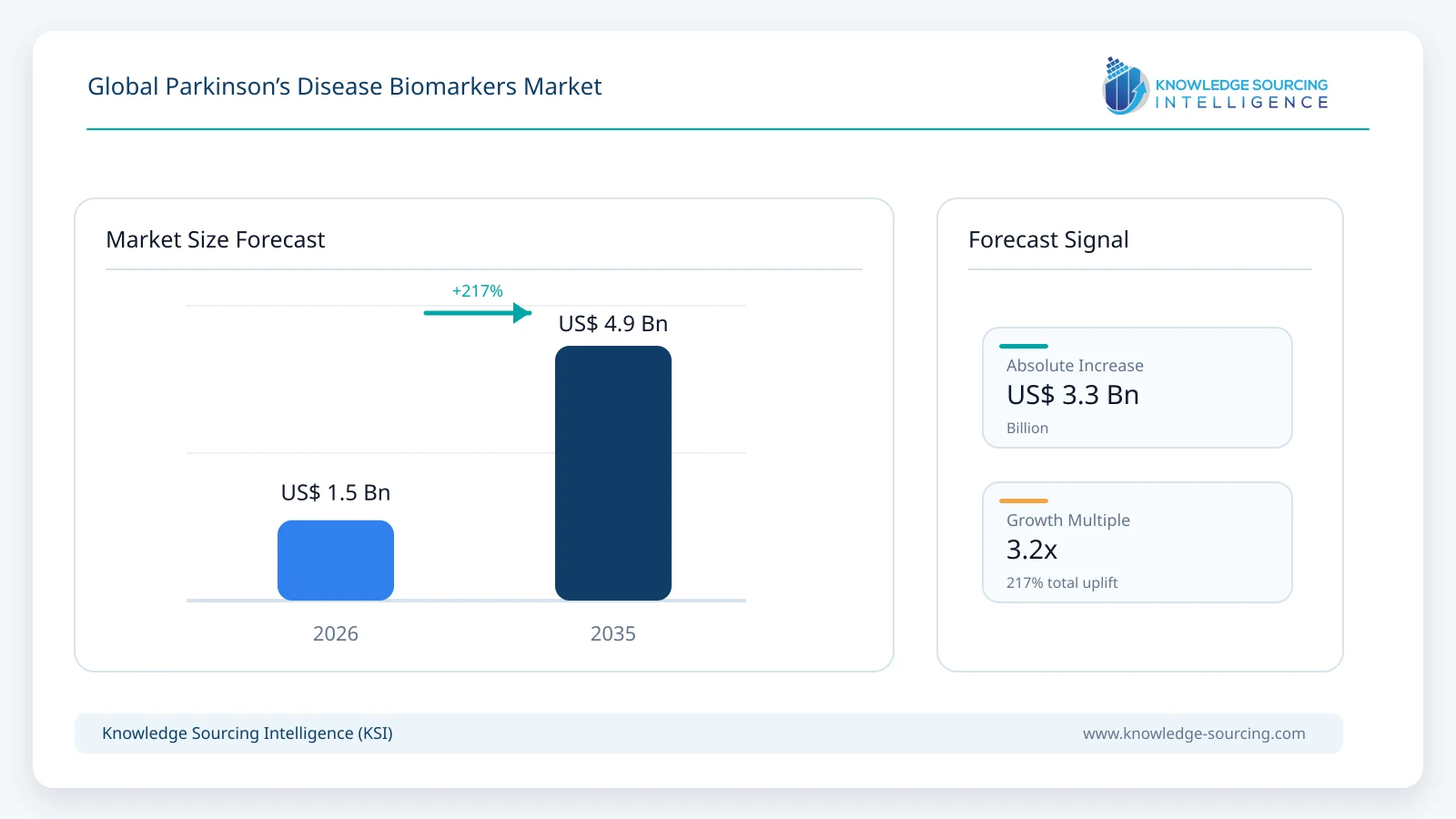
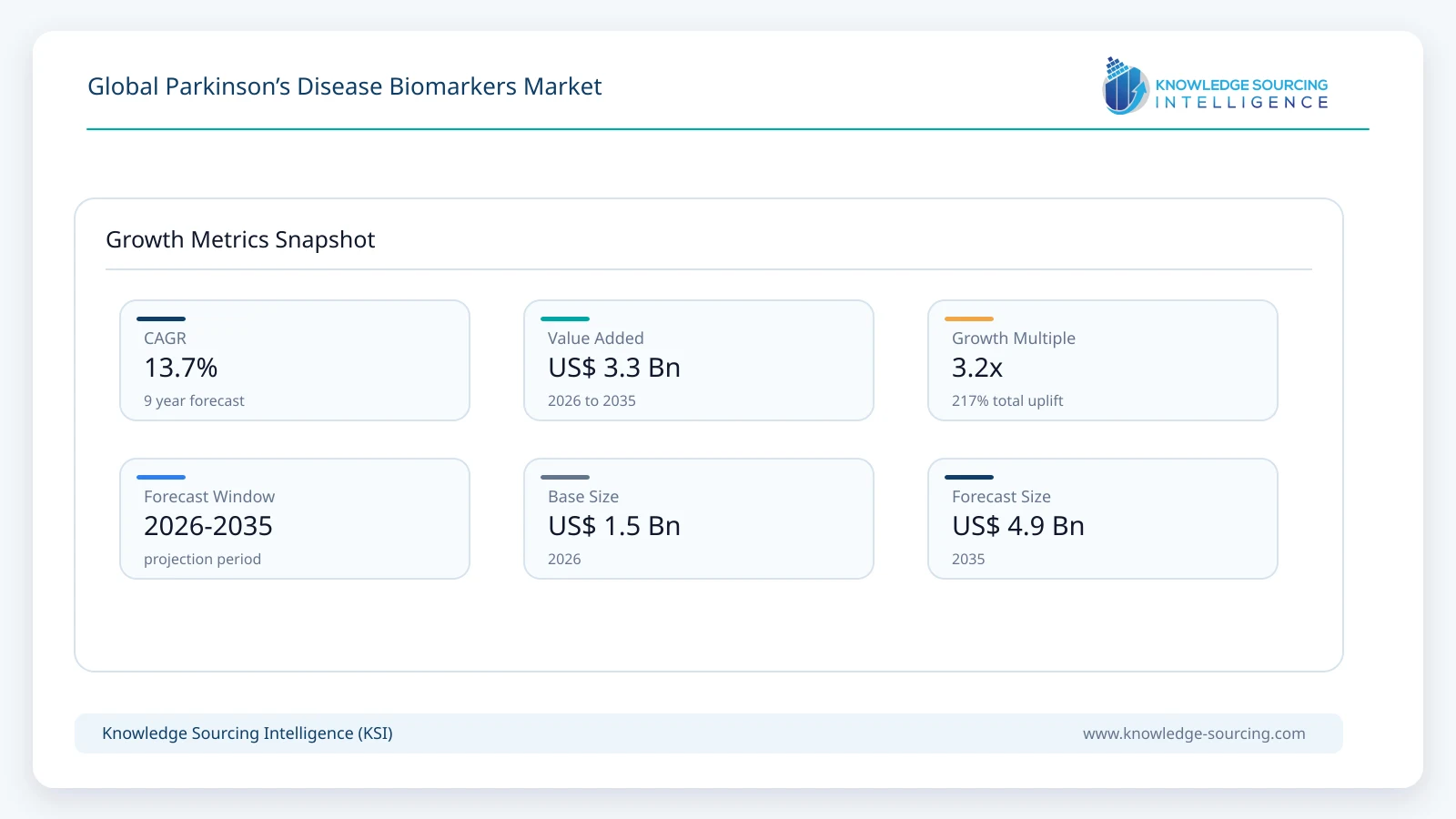
The Global Parkinson’s Disease Biomarkers Market is expected to increase at a CAGR of 13.7% the forecast period, growing from USD 1.54 billion in 2026 to USD 4.88 billion by 2035.
Highlights:
- 1Increasing investment in alpha-synuclein-targeted therapeutics is driving demand for assays capable of identifying pathology before motor symptoms emerge.
- 2Clinical trial complexity is increasing, which is accelerating adoption of biomarker-guided patient stratification approaches.
- 3Blood-based biomarker research is expanding because healthcare systems seek scalable alternatives to cerebrospinal fluid sampling.
- 4Regulatory support for Syn-SAA utilization is strengthening confidence among pharmaceutical developers and diagnostic innovators.
Parkinson’s disease represents one of the fastest-growing neurological disorders globally, creating a substantial need for objective biological measures that identify disease pathology before significant neuronal loss occurs. Traditional diagnosis relies largely on clinical evaluation, which limits early intervention opportunities and complicates patient selection for disease-modifying therapies.
Demand is increasing for biomarkers that directly reflect alpha-synuclein pathology because therapeutic development is focusing on mechanisms underlying disease progression rather than symptomatic management. This shift creates dependency on molecular assays, imaging technologies, and multi-modal biomarker frameworks capable of identifying biological changes during prodromal and early-stage disease.
Regulatory influence is becoming more significant because agencies are encouraging biomarker adoption within clinical development pathways. The U.S. FDA issued a Letter of Support encouraging the use of alpha-synuclein seed amplification assay (?Syn-SAA) in Parkinson’s-related clinical research, reflecting growing recognition of biomarker-enabled drug development.
The strategic importance of biomarkers extends beyond diagnosis because pharmaceutical companies increasingly require biomarker-defined patient populations to improve clinical trial outcomes. As disease-modifying therapies advance through development, biomarker platforms are becoming essential infrastructure within neurology research ecosystems.
Market Dynamics
Market Drivers
Expansion of Disease-Modifying Therapy Development: Parkinson’s disease drug development increasingly targets disease biology rather than symptomatic control. Pharmaceutical developers are seeking biomarkers that identify patients most likely to benefit from mechanism-specific interventions. Trial sponsors are incorporating biomarker endpoints because heterogeneous patient populations reduce statistical power. This trend is increasing demand for validated molecular and imaging biomarkers. The result is stronger integration of biomarker platforms throughout neurological drug development programs.
Emergence of Alpha-Synuclein-Based Diagnostics: Alpha-synuclein pathology represents a core biological feature of Parkinson’s disease. Research institutions are validating seed amplification assays capable of detecting pathological alpha-synuclein with high diagnostic utility. Clinical investigators are adopting these technologies because earlier disease detection remains a major unmet need. Diagnostic confidence improves when biological evidence complements clinical assessment. This development strengthens commercial opportunities for assay developers and laboratory service providers.
Growing Need for Early Diagnosis: Clinical symptoms often emerge after substantial neuronal degeneration has occurred. Healthcare providers require biomarkers that identify disease before irreversible damage progresses. Research groups are developing blood-based and peripheral biomarkers because invasive testing limits broad implementation. Earlier identification supports therapeutic intervention and longitudinal monitoring. This dynamic increases investment across biomarker discovery and validation programs.
Increasing Precision Neurology Adoption: Neurological disease management increasingly emphasizes biological characterization. Academic centers and pharmaceutical companies are integrating genomics, proteomics, and imaging datasets to create individualized disease profiles. Biomarker ecosystems are evolving because patient populations exhibit substantial biological diversity. Precision medicine approaches require objective biological measures. This requirement reinforces long-term demand for advanced biomarker solutions.
Market Restraints
Lack of universally accepted clinical validation standards limits widespread biomarker adoption across healthcare systems.
Cerebrospinal fluid collection remains invasive, reducing routine testing utilization outside specialized centers.
Reimbursement uncertainty constrains commercial expansion of emerging biomarker assays in several healthcare markets.
Market Opportunities
Blood-Based Biomarker Commercialization: Blood testing provides a scalable pathway for Parkinson’s disease screening and monitoring. Researchers are demonstrating the feasibility of detecting pathological alpha-synuclein signals in blood years before clinical diagnosis. Healthcare providers are seeking less invasive alternatives to lumbar puncture procedures. Diagnostic developers are investing in assay sensitivity improvements. This trend creates substantial commercialization opportunities for laboratory and diagnostics companies.
Digital Biomarker Integration: Wearable devices and remote monitoring platforms generate continuous neurological data. Healthcare systems are expanding tele-neurology capabilities because specialist access remains limited in many regions. Digital biomarkers are complementing biological measurements by capturing real-world disease manifestations. Data-driven monitoring enhances longitudinal assessment. This convergence broadens the biomarker ecosystem beyond laboratory testing.
Companion Diagnostic Development: Drug developers increasingly require biomarker-defined patient cohorts. Clinical programs are incorporating biomarker endpoints because targeted therapies demand biologically characterized populations. Diagnostic companies are forming partnerships with pharmaceutical sponsors. Co-development strategies improve trial design efficiency. This evolution strengthens the role of companion diagnostics within Parkinson’s disease management.
Multi-Omics Platforms: Single biomarkers often fail to explain disease complexity. Research institutions are integrating genomic, proteomic, metabolomic, and imaging datasets to improve disease characterization. Advanced analytical tools are enabling multi-dimensional patient profiling. Improved biological understanding supports precision medicine objectives. This creates opportunities for platform providers capable of combining diverse biomarker modalities.
Disease & Epidemiology Analysis
Parkinson’s disease is a progressive neurodegenerative disorder characterized by dopaminergic neuron loss and alpha-synuclein aggregation. Disease burden continues increasing because population aging expands the number of individuals at risk for neurodegenerative disorders. Earlier diagnosis remains challenging since motor symptoms typically emerge after substantial neurodegeneration has occurred.
The epidemiology landscape increasingly emphasizes prodromal disease identification. Researchers are evaluating biomarkers capable of detecting pathology before clinical diagnosis because disease-modifying interventions are expected to deliver greater benefit during early stages. Alpha-synuclein seed amplification assays have demonstrated potential to identify pathological processes prior to symptom manifestation, creating new opportunities for patient stratification and preventive therapeutic development.
Genetic contributors, including LRRK2, GBA, and SNCA mutations, continue influencing biomarker development strategies. Patient populations are becoming biologically segmented because genetic and molecular heterogeneity affects disease progression and therapeutic response. This segmentation strengthens demand for personalized biomarker frameworks across clinical practice and research settings.
Treatment Guidelines Landscape
Organization | Biomarker Position | Clinical Relevance |
FDA | Supports biomarker qualification frameworks and contextual biomarker utilization in drug development | Accelerates clinical research integration |
Movement Disorder Research Networks | Increasingly evaluate ?-synuclein-based biomarkers for patient stratification | Improves biological disease characterization |
Academic Neurology Centers | Utilize imaging and molecular biomarkers in research settings | Supports differential diagnosis and monitoring |
Market Segmentation
By Biomarker Type
Biomarker type defines the technological foundation of Parkinson’s disease detection and monitoring. Molecular biomarkers currently attract substantial attention because alpha-synuclein-focused research is providing direct insight into disease biology. Researchers are validating increasingly sensitive assays as pharmaceutical companies seek biologically defined trial populations. Clinical adoption faces standardization challenges because assay methodologies continue evolving. Technology providers are expanding analytical capabilities to improve reproducibility. This dynamic positions molecular biomarkers as a central component of future precision neurology strategies.
Imaging biomarkers maintain a critical role because structural and functional visualization supports differential diagnosis and disease assessment. Healthcare providers continue using imaging tools where biological confirmation remains uncertain. Digital and genetic biomarkers complement molecular approaches because disease heterogeneity requires broader characterization frameworks. Multi-modal biomarker strategies therefore represent the long-term direction of market development.
By Sample Type
Sample type directly influences clinical scalability and patient accessibility. Cerebrospinal fluid remains highly valuable because many alpha-synuclein assays demonstrate strong analytical performance within this matrix. Researchers continue utilizing CSF samples during biomarker validation programs because pathological signals are often concentrated and measurable. Clinical implementation remains constrained since lumbar puncture procedures limit routine testing adoption. Alternative sample sources are therefore attracting increasing investment.
Blood-based approaches are gaining momentum because healthcare systems require minimally invasive testing solutions. Diagnostic developers are improving assay sensitivity to capture low-abundance pathological markers. Saliva and urine investigations continue expanding because non-invasive collection supports longitudinal monitoring. The resulting shift favors sample types capable of balancing analytical performance with clinical practicality.
By End User
Hospitals represent a major end-user category because complex neurological evaluations often occur within multidisciplinary care environments. Neurologists increasingly require objective biological information to complement clinical assessment. Diagnostic laboratories are expanding specialized neurodegenerative testing capabilities because biomarker complexity demands advanced analytical infrastructure. Testing volumes are increasing as research programs broaden patient recruitment efforts. Laboratory networks are investing in specialized assay platforms to address emerging demand.
Neurology clinics remain important because early disease assessment frequently begins within specialist practices. Clinical workflows are evolving as biomarker evidence becomes more integrated into diagnostic decision-making. This evolution strengthens collaboration among hospitals, laboratories, and specialty clinics, creating an interconnected biomarker ecosystem.
Regional Analysis
North America Market Analysis
North America represents the most advanced Parkinson’s disease biomarker ecosystem because the region combines strong neurological research infrastructure, active pharmaceutical development programs, and extensive clinical trial activity. Demand is increasing for biologically validated diagnostic tools because disease-modifying therapeutic development requires objective patient selection. Academic institutions, biotechnology companies, and pharmaceutical sponsors are expanding biomarker validation programs to support precision medicine strategies. Regulatory engagement remains robust because the FDA continues supporting biomarker qualification frameworks and encouraging scientifically validated biomarker utilization. This environment positions North America as the primary innovation center for Parkinson’s disease biomarker development.
Europe Market Analysis
Europe maintains a strong position because collaborative neurological research networks support biomarker discovery and validation. Demand is increasing for harmonized diagnostic approaches because cross-border clinical research requires standardized biological measurements. Academic consortia are expanding investigations into molecular, genetic, and imaging biomarkers. Healthcare systems emphasize evidence generation before widespread implementation, creating pressure for robust clinical validation. This framework supports sustainable adoption of scientifically rigorous biomarker technologies.
Asia Pacific Market Analysis
Asia Pacific is becoming increasingly important because aging populations are expanding the neurological disease burden across major healthcare markets. Research institutions are increasing participation in global biomarker studies as governments strengthen neuroscience investment. Diagnostic demand is rising because healthcare providers seek earlier disease identification strategies. Infrastructure disparities remain across countries, creating uneven adoption patterns. Market development therefore depends on cost-effective and scalable biomarker solutions capable of supporting diverse healthcare environments.
Rest of the World
The Rest of the World market remains at an earlier stage of development because specialized neurological diagnostic infrastructure is concentrated within selected healthcare centers. Awareness of neurodegenerative disease management is increasing, which is encouraging adoption of advanced diagnostic technologies. Research collaborations are expanding access to biomarker studies and clinical trials. Resource constraints continue limiting broad implementation. The long-term outlook remains positive because global pharmaceutical development increasingly requires geographically diverse patient populations.
Regulatory Landscape
Regulatory agencies increasingly recognize the importance of biomarkers in neurological drug development because clinical endpoints alone often fail to capture early disease biology. The FDA Biomarker Qualification Program provides a structured pathway for evaluating biomarkers intended for drug development applications. Qualification efforts focus on demonstrating reliability, analytical validity, and clearly defined contexts of use.
The regulatory environment is evolving as Parkinson’s disease research shifts toward biological definitions of disease. The FDA’s 2024 Letter of Support for ?Syn-SAA reflects growing institutional recognition of biomarkers capable of improving trial design and patient stratification. Researchers are generating additional validation evidence because broader regulatory acceptance requires reproducible performance across diverse populations.
International regulatory discussions increasingly emphasize standardization because assay variability may limit cross-study comparability. Industry participants are collaborating with academic institutions and regulatory stakeholders to establish consistent performance benchmarks. This process supports future commercialization pathways for validated Parkinson’s disease biomarkers.
Pipeline Analysis
The Parkinson’s disease biomarker pipeline increasingly focuses on alpha-synuclein detection technologies because pathological protein aggregation represents a defining biological feature of disease. Research programs are evaluating cerebrospinal fluid, blood, skin, and other peripheral samples to identify scalable diagnostic approaches. Seed amplification assays currently represent one of the most active areas of development because they demonstrate the ability to detect pathological alpha-synuclein with high sensitivity.
Blood-based biomarker programs are gaining momentum because healthcare providers require accessible testing solutions suitable for large populations. Research published in 2024 demonstrated detection of pathological alpha-synuclein signals years before clinical diagnosis, highlighting the potential for earlier intervention strategies. Investigators are expanding validation efforts to determine performance across broader patient populations.
Pipeline activity also includes imaging biomarkers, digital monitoring tools, and multi-omics platforms. Developers are integrating molecular and clinical datasets because disease heterogeneity limits the utility of single-marker approaches. Future biomarker strategies are likely to combine multiple biological signals to improve diagnostic accuracy, disease monitoring, and therapeutic response assessment.
Competitive Landscape
Roche Holding
Roche remains strategically distinct because it combines diagnostics expertise, biomarker development capabilities, and a substantial neuroscience research presence. The company benefits from integrated diagnostic and pharmaceutical competencies that support translational biomarker programs.
Fujirebio
Fujirebio maintains a strong position in neurodegenerative disease biomarkers through extensive assay development expertise. The company focuses on translating research biomarkers into clinically deployable testing solutions. Its experience in neurological diagnostics strengthens relevance within Parkinson’s disease biomarker markets.
Quanterix
Quanterix differentiates itself through ultra-sensitive biomarker detection technologies. The company’s platform capabilities support low-abundance protein measurement, which is increasingly important for neurodegenerative disease applications. Its technology portfolio aligns with demand for earlier and more precise biological detection.
Bio-Techne
Bio-Techne benefits from a broad life sciences portfolio supporting biomarker discovery and translational research. The company provides tools and assays that facilitate neurological biomarker investigation. Its position within research workflows supports ongoing participation in biomarker ecosystem development.
Thermo Fisher Scientific
Thermo Fisher Scientific leverages extensive analytical, laboratory, and life sciences capabilities. The company supports biomarker research through instrumentation, reagents, and testing solutions. Its scale and global reach strengthen participation in neurodegenerative disease research initiatives.
Siemens Healthineers
Siemens Healthineers benefits from diagnostic platform expertise and strong imaging capabilities. The company participates in neurological assessment through advanced imaging technologies and laboratory solutions. Its diversified portfolio supports multi-modal biomarker strategies.
GE HealthCare
GE HealthCare maintains importance within imaging biomarker applications. Advanced imaging technologies support neurological disease evaluation and clinical research activities. The company’s imaging infrastructure contributes to biomarker-based disease characterization.
Life Molecular Imaging
Life Molecular Imaging focuses on molecular imaging solutions relevant to neurological disorders. The company’s specialization strengthens its role in imaging biomarker development and disease visualization. Its targeted approach supports advanced neurodegenerative disease assessment.
Key Developments
June 2026: Neuropacs announced the publication of a new study comparing its first-of-its-kind FDA De Novo-classified imaging biomarker for Parkinson's disease with the CSF alpha-synuclein seed amplification assay, demonstrating that the AI-based MRI diagnostic tool can differentiate Parkinson's disease from atypical Parkinsonian disorders with high accuracy comparable to the invasive CSF testing method.
May 2026: The Michael J. Fox Foundation announced that its landmark Parkinson's study, the Accelerating Medicines Partnership® in Parkinson's Disease (AMP® PD), has entered a new era of precision medicine by identifying multiple distinct disease subtypes and developing targeted therapies tailored to specific patient populations, marking a transformative shift from treating Parkinson's as a single condition to a precision approach.
March 2026: Annovis Bio partnered with NeurorPM to deploy AI-powered digital biomarker technology in a Parkinson's disease study, combining Annovis's therapeutic development capabilities with NeurorPM's advanced AI algorithms to measure and track Parkinson's symptoms digitally for more precise disease monitoring.
Strategic Insights and Future Market Outlook
The Parkinson’s disease biomarker market is evolving from exploratory research toward clinically actionable biological measurement. Therapeutic development increasingly depends on objective disease characterization, which elevates biomarkers from supportive tools to essential components of neurology innovation. Demand is shifting toward scalable, minimally invasive assays because healthcare systems require practical approaches for broader patient populations.
Competitive dynamics increasingly favor organizations capable of integrating molecular, imaging, genetic, and digital data streams. Research efforts are moving beyond isolated biomarker evaluation because disease complexity requires multi-dimensional biological understanding. This transition supports the emergence of platform-based biomarker ecosystems rather than single-test commercial models.
Regulatory support, growing pharmaceutical investment, and expanding validation datasets collectively strengthen long-term market potential. Commercial success ultimately depends on demonstrating clinical utility, reproducibility, and healthcare system value. Organizations that align biomarker development with therapeutic decision-making are likely to occupy the most influential positions within the future Parkinson’s disease diagnostics landscape.
The market remains fundamentally driven by the need to identify Parkinson’s disease earlier, characterize it more accurately, and monitor it more objectively. As biological understanding continues advancing, biomarkers are becoming a central mechanism through which neurological care and therapeutic development evolve.
Global Parkinson’s Disease Biomarkers Market Scope:
| Report Metric | Details |
|---|---|
| Total Market Size in 2026 | USD 1.54 billion |
| Total Market Size in 2035 | USD 4.88 billion |
| Forecast Unit | USD Billion |
| Growth Rate | 13.7% |
| Study Period | 2021 to 2035 |
| Historical Data | 2021 to 2024 |
| Base Year | 2025 |
| Forecast Period | 2026 – 2035 |
| Segmentation | Biomarker Type, Sample Type, Technology Platform, Geography |
| Companies |
|
Market Segmentation
By Geography
Key Countries Analysis
Regulatory & Policy Landscape
Table of Contents
1. Executive Summary
1.1 Market Overview
1.2 Key Findings
1.3 Market Snapshot
1.3.1 Current Market Landscape
1.3.2 Key Growth Drivers
1.3.3 Emerging Biomarker Trends
1.4 Analyst Perspective
1.5 Strategic Recommendations
2. DISEASE & EPIDEMIOLOGY ANALYSIS
2.1 Introduction to Parkinson’s Disease
2.1.1 Disease Definition
2.1.2 Disease Pathophysiology
2.1.3 Disease Progression Stages
2.2 Disease Burden
2.2.1 Global Prevalence
2.2.2 Global Incidence
2.2.3 Mortality and Disability Burden
2.3 Risk Factors and Etiology
2.3.1 Genetic Factors
2.3.2 Environmental Factors
2.3.3 Age-Related Risk Factors
2.4 Clinical Manifestations
2.4.1 Motor Symptoms
2.4.2 Non-Motor Symptoms
2.5 Diagnostic Pathway
2.5.1 Clinical Evaluation
2.5.2 Imaging-Based Assessment
2.5.3 Biomarker-Based Assessment
2.6 Epidemiology by Disease Stage
2.6.1 Prodromal Parkinson’s Disease
2.6.2 Early-Stage Parkinson’s Disease
2.6.3 Moderate Parkinson’s Disease
2.6.4 Advanced Parkinson’s Disease
2.7 Unmet Needs in Early Diagnosis and Monitoring
2.8 Role of Biomarkers in Disease Management
3. MARKET DYNAMICS
3.1 Market Overview
3.2 Market Drivers
3.2.1 Increasing Prevalence of Parkinson’s Disease
3.2.2 Growing Demand for Early Diagnosis
3.2.3 Advancements in Biomarker Discovery Technologies
3.2.4 Expansion of Precision Medicine Approaches
3.2.5 Increasing Clinical Trial Activity
3.3 Market Restraints
3.3.1 Lack of Definitive Diagnostic Biomarkers
3.3.2 Regulatory Challenges
3.3.3 High Validation Costs
3.3.4 Limited Reimbursement Coverage
3.4 Market Opportunities
3.4.1 Blood-Based Biomarker Development
3.4.2 AI-Enabled Biomarker Analytics
3.4.3 Companion Diagnostic Opportunities
3.4.4 Multi-Omics Research Integration
3.5 Market Challenges
3.5.1 Standardization Issues
3.5.2 Clinical Utility Validation
3.5.3 Cross-Platform Reproducibility
3.6 Porter’s Five Forces Analysis
3.7 PESTLE Analysis
3.8 Value Chain Analysis
3.9 Stakeholder Analysis
4. COMMERCIAL & MARKET ACCESS
4.1 Market Access Landscape
4.2 Reimbursement Environment
4.3 Coverage Policies for Biomarker Testing
4.4 Pricing Analysis
4.5 Healthcare Economic Impact
4.6 Market Adoption Framework
4.7 Procurement and Laboratory Adoption Trends
4.8 Commercialization Challenges
5. INNOVATION & PIPELINE LANDSCAPE
5.1 Biomarker Development Landscape
5.2 Innovation Trends
5.2.1 Alpha-Synuclein Seed Amplification Assays
5.2.2 Neurofilament Light Chain Biomarkers
5.2.3 Genetic Biomarkers
5.2.4 Digital Biomarkers
5.2.5 Multi-Analyte Biomarker Panels
5.3 Pipeline Biomarker Analysis by Development Stage
5.3.1 Discovery Stage
5.3.2 Validation Stage
5.3.3 Clinical Development Stage
5.3.4 Commercialization Stage
5.4 Pipeline Analysis by Biomarker Type
5.4.1 Molecular Biomarkers
5.4.2 Imaging Biomarkers
5.4.3 Genetic Biomarkers
5.4.4 Digital Biomarkers
5.5 Pipeline Analysis by Modality
5.5.1 Protein-Based Biomarkers
5.5.2 Genomic Biomarkers
5.5.3 Transcriptomic Biomarkers
5.5.4 Metabolomic Biomarkers
5.5.5 Imaging-Based Biomarkers
5.6 Clinical Trial Landscape
5.6.1 Ongoing Studies
5.6.2 Completed Studies
5.6.3 Recruitment Trends
5.7 Biomarker–Therapeutic Co-Development Trends
5.8 Intellectual Property Landscape
6. TREATMENT LANDSCAPE
6.1 Current Treatment Paradigm
6.2 Pharmacological Treatment Overview
6.2.1 Levodopa-Based Therapies
6.2.2 Dopamine Agonists
6.2.3 MAO-B Inhibitors
6.2.4 COMT Inhibitors
6.2.5 Adenosine A2A Receptor Antagonists
6.2.6 Device-Aided Therapies
6.3 Role of Biomarkers in Treatment Selection
6.4 Biomarkers in Disease Monitoring
6.5 Biomarkers in Clinical Trials
6.6 Emerging Precision Medicine Approaches
7. GLOBAL PARKINSON’S DISEASE BIOMARKERS MARKET SIZE & FORECAST
7.1 Global Market Overview
7.2 Historical Market Analysis
7.3 Market Forecast Methodology
7.4 Market Size and Forecast by Biomarker Type
7.5 Market Size and Forecast by Sample Type
7.6 Market Size and Forecast by End User
7.7 Market Size and Forecast by Region
7.8 Incremental Opportunity Analysis
7.9 Scenario Analysis
7.9.1 Conservative Scenario
7.9.2 Base Case Scenario
7.9.3 Optimistic Scenario
8. GLOBAL PARKINSON’S DISEASE BIOMARKERS MARKET SEGMENTATION
8.1 By Biomarker Type
8.1.1 Molecular Biomarkers
8.1.2 Imaging Biomarkers
8.1.3 Genetic Biomarkers
8.1.4 Digital Biomarkers
8.2 By Sample Type
8.2.1 Blood
8.2.2 Cerebrospinal Fluid
8.2.3 Saliva & Urine
8.2.4 Tissue Samples
8.3 By Technology Platform
8.3.1 Immunoassays
8.3.2 PCR-Based Technologies
8.3.3 Next-Generation Sequencing
8.3.4 Mass Spectrometry
8.3.5 Imaging Technologies
8.4 By End User
8.4.1 Hospitals
8.4.2 Neurology Clinics
8.4.3 Diagnostic Laboratories
8.4.4 Others
9. GEOGRAPHICAL ANALYSIS (REGIONAL LEVEL)
9.1 North America
9.1.1 Market Size and Forecast
9.1.2 Demand Drivers
9.1.3 Regional Regulatory Overview
9.1.4 Competitive Intensity
9.2 Europe
9.2.1 Market Size and Forecast
9.2.2 Demand Drivers
9.2.3 Regional Regulatory Overview
9.2.4 Competitive Intensity
9.3 Asia-Pacific
9.3.1 Market Size and Forecast
9.3.2 Demand Drivers
9.3.3 Regional Regulatory Overview
9.3.4 Competitive Intensity
9.4 Latin America
9.4.1 Market Size and Forecast
9.4.2 Demand Drivers
9.4.3 Regional Regulatory Overview
9.4.4 Competitive Intensity
9.5 Middle East & Africa
9.5.1 Market Size and Forecast
9.5.2 Demand Drivers
9.5.3 Regional Regulatory Overview
9.5.4 Competitive Intensity
10. KEY COUNTRIES ANALYSIS
10.1 United States
10.1.1 Market Size
10.1.2 Epidemiology
10.1.3 Regulatory Framework
10.1.4 Reimbursement Landscape
10.1.5 Key Companies and Product Presence
10.2 Canada
10.2.1 Market Size
10.2.2 Epidemiology
10.2.3 Regulatory Framework
10.2.4 Reimbursement Landscape
10.2.5 Key Companies and Product Presence
10.3 Germany
10.4 United Kingdom
10.5 France
10.6 Italy
10.7 Spain
10.8 China
10.9 Japan
10.10 India
10.11 South Korea
10.12 Australia
10.13 Brazil
10.14 Mexico
10.15 Saudi Arabia
10.16 South Africa
11. REGULATORY & POLICY LANDSCAPE
11.1 Global Regulatory Overview
11.2 United States Regulatory Framework
11.2.1 FDA In Vitro Diagnostic Regulations
11.2.2 Laboratory Developed Test Regulations
11.2.3 Breakthrough Device Program
11.3 Europe Regulatory Framework
11.3.1 In Vitro Diagnostic Regulation (IVDR)
11.3.2 EMA-Related Biomarker Qualification Programs
11.4 Japan Regulatory Framework
11.4.1 PMDA Approval Pathways
11.4.2 Companion Diagnostic Considerations
11.5 India Regulatory Framework
11.5.1 CDSCO Regulations
11.5.2 Medical Device Rules
11.6 China Regulatory Framework
11.6.1 NMPA Diagnostic Approval Process
11.6.2 Clinical Evidence Requirements
11.7 Regulatory Harmonization Initiatives
11.8 Data Privacy and Real-World Evidence Regulations
11.9 Quality and Laboratory Standards
12. COMPETITIVE LANDSCAPE
12.1 Market Structure Analysis
12.2 Competitive Benchmarking
12.3 Market Share Analysis
12.4 Strategic Developments
12.4.1 Collaborations
12.4.2 Licensing Agreements
12.4.3 Acquisitions and Mergers
12.4.4 Research Partnerships
12.5 Product Launch Analysis
12.6 SWOT Analysis
12.7 Competitive Positioning Matrix
13. COMPANY PROFILES
13.1 Roche Holding
13.1.1 Company Overview
13.1.2 Approved Neurology Diagnostic Portfolio
13.1.3 Parkinson’s Disease Biomarker Activities
13.1.4 Key Indications
13.1.5 Verified Research and Pipeline Programs
13.1.6 Strategic Developments
13.2 Fujirebio
13.2.1 Company Overview
13.2.2 Approved Neurodegenerative Disease Biomarker Portfolio
13.2.3 Parkinson’s Disease Biomarker Programs
13.2.4 Key Indications
13.2.5 Verified Pipeline Activities
13.2.6 Strategic Developments
13.3 Quanterix
13.3.1 Company Overview
13.3.2 Commercial Biomarker Platforms
13.3.3 Parkinson’s Disease Applications
13.3.4 Key Indications
13.3.5 Pipeline and Research Collaborations
13.3.6 Strategic Developments
13.4 Bio-Techne
13.4.1 Company Overview
13.4.2 Commercial Assay Portfolio
13.4.3 Parkinson’s Disease Biomarker Programs
13.4.4 Key Indications
13.4.5 Pipeline Activities
13.4.6 Strategic Developments
13.5 Thermo Fisher Scientific
13.5.1 Company Overview
13.5.2 Diagnostic and Research Solutions Portfolio
13.5.3 Parkinson’s Disease Biomarker Applications
13.5.4 Key Indications
13.5.5 Pipeline Activities
13.5.6 Strategic Developments
13.6 Biogen
13.6.1 Company Overview
13.6.2 Neurology Testing Portfolio
13.6.3 Parkinson’s Disease Biomarker Programs
13.6.4 Key Indications
13.6.5 Pipeline Activities
13.6.6 Strategic Developments
13.7 AbbVie
13.7.1 Company Overview
13.7.2 Neurology Diagnostics Portfolio
13.7.3 Parkinson’s Disease Biomarker Programs
13.7.4 Key Indications
13.7.5 Pipeline Activities
13.7.6 Strategic Developments
13.8 Siemens Healthineers
13.8.1 Company Overview
13.8.2 Diagnostic Platform Portfolio
13.8.3 Neurodegenerative Biomarker Applications
13.8.4 Key Indications
13.8.5 Pipeline Activities
13.8.6 Strategic Developments
13.9 GE HealthCare
13.9.1 Company Overview
13.9.2 Approved Imaging Portfolio
13.9.3 Parkinson’s Disease Imaging Biomarker Applications
13.9.4 Key Indications
13.9.5 Pipeline Activities
13.9.6 Strategic Developments
13.10 Life Molecular Imaging
13.10.1 Company Overview
13.10.2 Approved Imaging Agent Portfolio
13.10.3 Neurodegenerative Disease Biomarker Applications
13.10.4 Key Indications
13.10.5 Pipeline Activities
13.10.6 Strategic Developments
14. FUTURE OUTLOOK
14.1 Market Evolution Outlook
14.2 Future Biomarker Adoption Trends
14.3 Precision Neurology Opportunities
14.4 AI and Digital Biomarker Integration
14.5 Emerging Commercial Opportunities
14.6 Future Competitive Landscape
14.7 Long-Term Market Forecast
15. METHODOLOGY
15.1 Research Objectives
15.2 Research Design
15.3 Secondary Research Methodology
15.4 Primary Research Methodology
15.5 Epidemiology Modeling Framework
15.6 Market Estimation Methodology
15.7 Forecasting Methodology
15.8 Data Validation and Triangulation
15.9 Assumptions and Limitations
15.10 Abbreviations and Definitions
15.11 Sources and References
Navigate
Trusted by the world's leading organizations











