
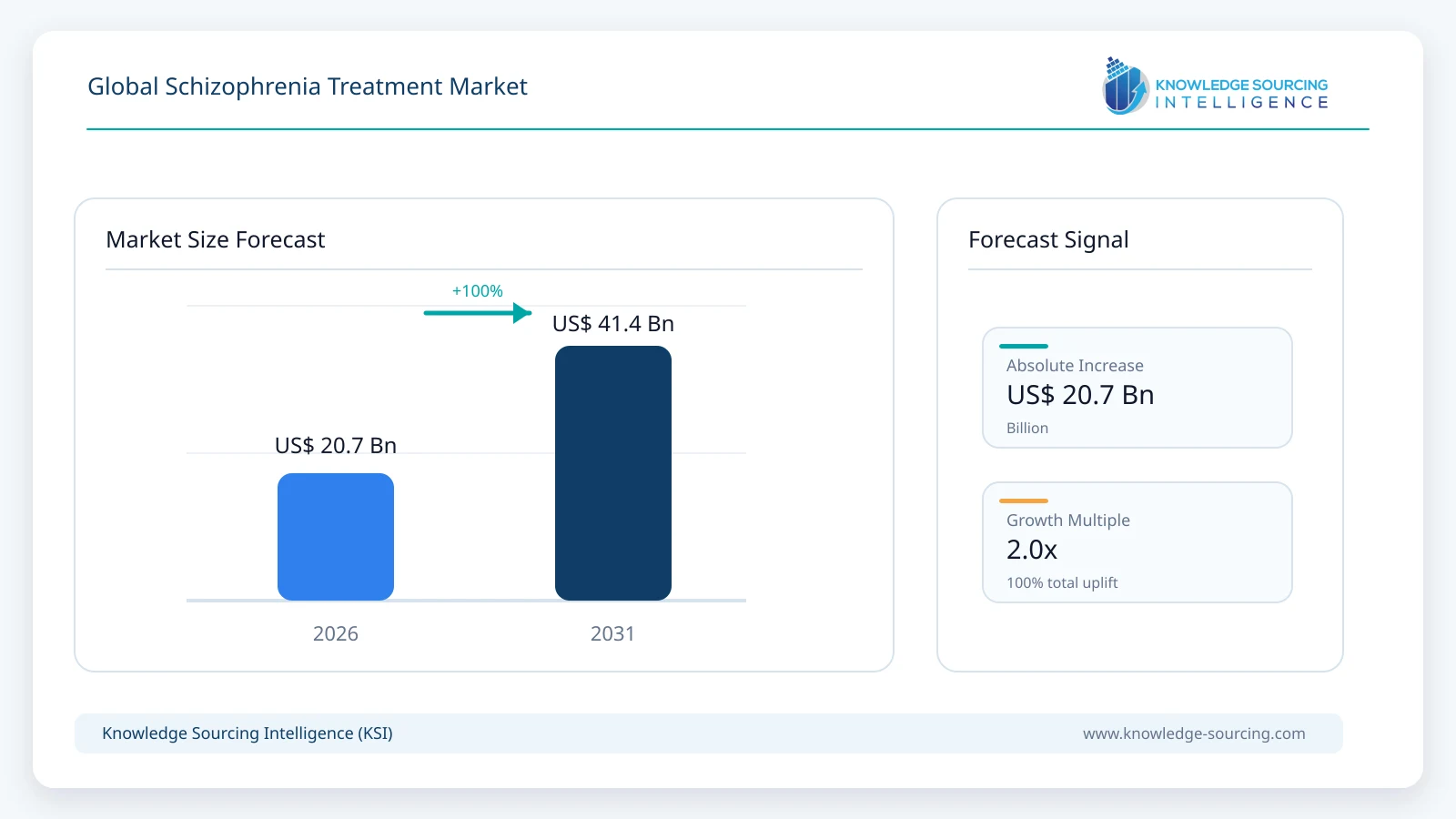
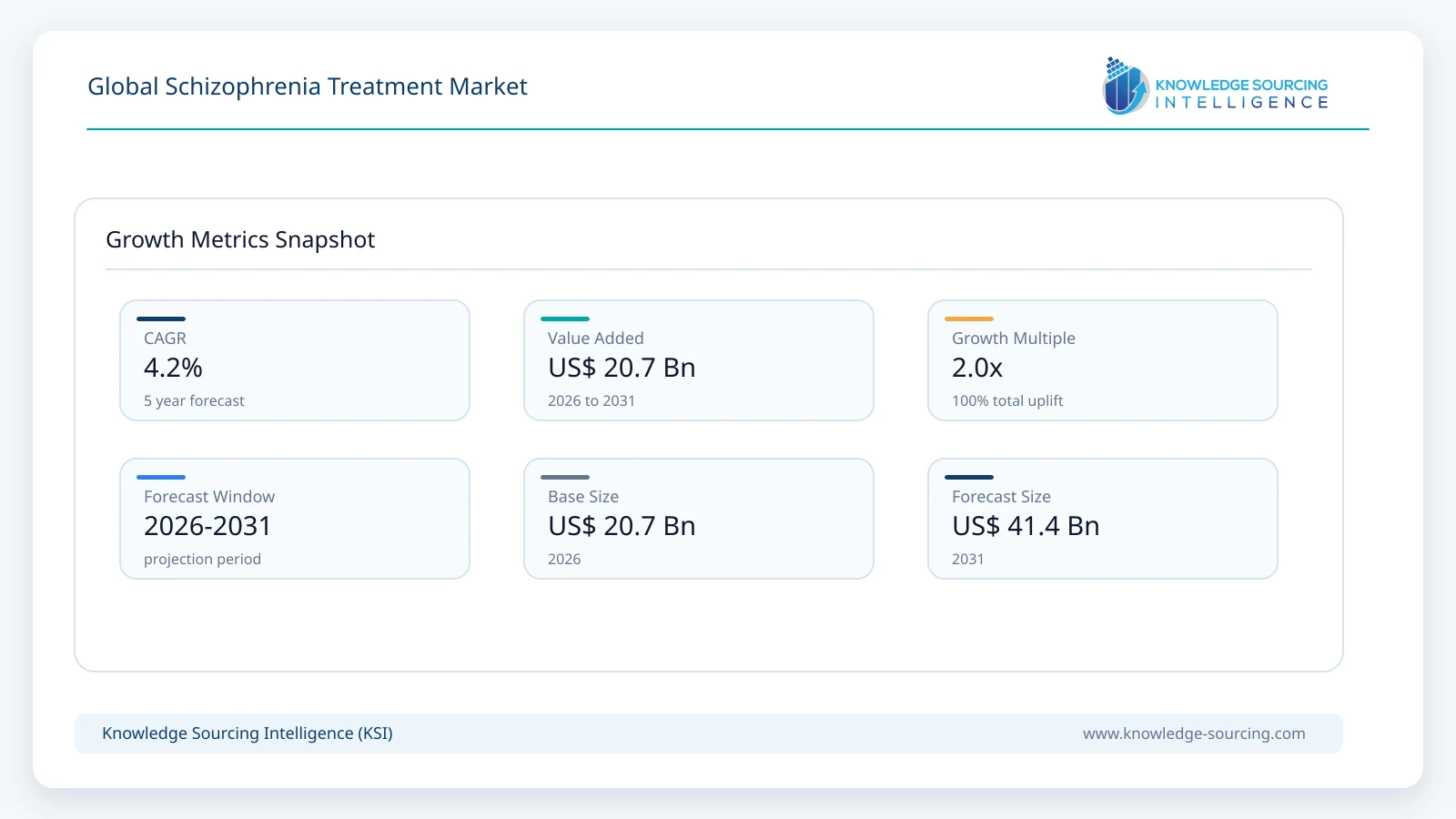
The Global Schizophrenia Treatment Market is estimated to grow from USD 20.7 billion in 2026 at a CAGR of 4.2% to USD 41.39 billion in 2031.
Highlights:
- 1Growing awareness initiatives are increasing diagnosis rates, which expands demand for long-term pharmacological and psychosocial treatment services.
- 2Healthcare systems are prioritizing relapse prevention because recurrent psychotic episodes increase hospitalization burden, leading to greater adoption of adherence-focused treatment approaches.
- 3Community-based care models are expanding because institutional treatment alone cannot meet rising demand, resulting in broader access to outpatient schizophrenia management.
- 4Long-acting injectable therapies are gaining utilization because treatment non-adherence remains a major challenge, supporting greater continuity of care.
The schizophrenia treatment landscape depends on sustained healthcare engagement because the disorder often requires lifelong management to control symptoms and reduce relapse risk. Demand for treatment services is increasing as healthcare systems improve disease recognition and expand psychiatric screening initiatives. Delayed diagnosis continues limiting outcomes because prolonged untreated psychosis contributes to greater functional decline. Providers are implementing earlier intervention pathways to accelerate treatment initiation and improve long-term prognosis. This approach increases demand for both pharmacological therapies and supportive mental health services.
Regulatory and policy frameworks increasingly prioritize mental health because schizophrenia contributes significantly to disability-adjusted life years and healthcare expenditures. Treatment availability remains uneven because workforce shortages and infrastructure gaps restrict access in many healthcare systems. Public health authorities are expanding mental health investment programs to strengthen diagnosis, treatment, and follow-up services. These efforts support broader patient access while encouraging long-term treatment continuity.
Strategic importance continues growing because healthcare stakeholders increasingly recognize that effective schizophrenia management reduces hospitalization, social burden, and productivity losses. Treatment providers are shifting toward multidisciplinary care models that integrate psychiatry, psychology, social support, and community services. Resource constraints continue challenging implementation across several regions. Healthcare systems are adapting service delivery structures to improve patient outcomes and reduce long-term disease burden. This evolution strengthens the role of comprehensive treatment approaches within schizophrenia care.
Market Dynamics
Market Drivers
Increasing Focus on Early Intervention: Early intervention improves long-term outcomes because schizophrenia often progresses during the initial years following symptom onset. Healthcare systems are expanding first-episode psychosis programs as evidence increasingly supports earlier treatment initiation. Limited psychiatric capacity continues delaying referrals in several regions. Providers are strengthening coordinated care pathways to reduce diagnostic delays and accelerate treatment access. This trend increases demand for specialized schizophrenia treatment services.
Expansion of Long-Acting Injectable Utilization: Treatment adherence remains essential because symptom control depends on consistent medication use. Healthcare providers are increasing adoption of long-acting injectable therapies as relapse prevention becomes a higher clinical priority. Reimbursement limitations continue restricting utilization in certain healthcare environments. Payers and providers are evaluating long-term cost reductions associated with improved adherence and reduced hospitalization rates. This supports growing demand for injectable treatment options.
Growth of Community-Based Mental Health Services: Community care improves treatment continuity because schizophrenia management extends beyond acute clinical intervention. Healthcare authorities are expanding outpatient support networks as institutional care models face capacity limitations. Workforce shortages continue affecting service availability in underserved areas. Public health programs are strengthening local mental health infrastructure to improve patient engagement. This development supports broader treatment accessibility and continuity of care.
Rising Government Investment in Mental Health: Mental health receives greater policy attention because untreated schizophrenia creates substantial economic and social burden. Governments are increasing healthcare spending on psychiatric services as public awareness and advocacy efforts gain momentum. Resource allocation challenges continue affecting implementation speed. National mental health strategies are expanding treatment capacity and improving service integration. This contributes to greater demand for schizophrenia therapies and support services.
Market Restraints
Persistent social stigma delays treatment-seeking behavior and reduces engagement with mental health services.
Shortages of psychiatrists and mental health professionals limit treatment availability in many healthcare systems.
Long-term medication non-adherence increases relapse risk and constrains treatment effectiveness.
Market Opportunities
Digital Psychiatry and Telehealth Expansion: Telepsychiatry improves access because geographical barriers often prevent timely psychiatric consultation. Healthcare providers are integrating digital monitoring tools into routine care pathways. Infrastructure limitations remain evident in several developing regions. Governments and healthcare organizations are supporting virtual mental health services to address workforce shortages. This trend expands treatment accessibility and enhances patient monitoring.
Early Psychosis Detection Programs: Early detection reduces disease progression because intervention during initial symptom stages improves long-term outcomes. Healthcare systems are implementing specialized programs targeting high-risk populations. Diagnostic variability continues creating challenges for standardized implementation. Clinical networks are developing structured referral mechanisms to improve patient identification. The result is increased treatment initiation and reduced long-term disability.
Integration of Mental Health into Primary Care: Primary care settings provide the first point of healthcare contact for many patients. Mental health services are becoming increasingly integrated within these settings to improve accessibility. Limited psychiatric training among primary care providers remains a challenge. Healthcare systems are expanding collaborative care models to strengthen diagnosis and treatment pathways. This integration improves continuity of care and broadens service reach.
Digital Monitoring and Adherence Support: Treatment adherence remains a critical determinant of long-term outcomes in schizophrenia. Digital health technologies are supporting medication tracking and symptom monitoring. Technology adoption barriers continue affecting implementation in some populations. Healthcare organizations are investing in digital adherence solutions to reduce relapse risk. This supports improved treatment continuity and healthcare efficiency.
Disease & Epidemiology Analysis
Schizophrenia remains a leading contributor to psychiatric disability because symptoms frequently impair education, employment, and social functioning. Disease burden continues expanding in absolute terms as global populations grow and healthcare systems improve case identification. Diagnostic disparities remain significant across regions where mental health resources are limited. Public health organizations are strengthening awareness and screening initiatives to reduce underdiagnosis. The result is a gradual increase in the recognized schizophrenia population worldwide.
Incidence patterns remain relatively stable compared with many chronic diseases because schizophrenia primarily reflects complex interactions among genetic, neurodevelopmental, and environmental risk factors. Urbanization is increasing exposure to social stressors and environmental influences associated with psychosis risk. Healthcare access limitations continue delaying diagnosis among vulnerable populations. Mental health systems are expanding community outreach and early intervention programs to improve disease detection. This trend supports earlier treatment initiation and improved disease management.
Treatment gaps persist because many individuals remain undiagnosed or inadequately treated despite available therapeutic options. Healthcare systems increasingly recognize the importance of long-term management strategies that combine pharmacological and psychosocial interventions. Resource limitations continue affecting continuity of care in several regions. Governments are expanding mental health funding and service integration efforts to address these challenges. The outcome is a gradual improvement in treatment coverage while substantial unmet needs remain.
Treatment Guidelines Landscape
Organization | Guideline Focus | Key Recommendations |
World Health Organization (WHO) | Severe Mental Disorders Management | Early diagnosis, continuous antipsychotic treatment, community-based care |
National Institute for Health and Care Excellence (NICE) | Schizophrenia Management | Coordinated specialty care, psychological interventions, antipsychotic therapy |
American Psychiatric Association (APA) | Treatment of Schizophrenia | Individualized treatment planning, pharmacotherapy, psychosocial support |
World Psychiatric Association (WPA) | Global Mental Health Standards | Long-term disease management and functional recovery focus |
Market Segmentation
By Disease Stage
First-episode schizophrenia represents a critical intervention window because clinical outcomes depend heavily on treatment initiation timing. Mental health systems are increasingly prioritizing early psychosis programs as evidence demonstrates that delayed intervention contributes to long-term functional decline. Diagnostic uncertainty continues creating delays because early symptoms frequently overlap with other psychiatric conditions. Healthcare providers are expanding specialized assessment pathways to improve case identification among adolescents and young adults. This approach supports improved symptom control, reduces relapse risk, and strengthens long-term recovery prospects.
By Age Group
Early-onset schizophrenia remains relatively uncommon but creates profound long-term consequences because symptoms emerge during critical developmental stages. Mental health awareness is increasing recognition of psychiatric symptoms among younger populations. Diagnostic complexity remains a major challenge due to symptom overlap with developmental and behavioral disorders. Healthcare providers are expanding child and adolescent psychiatric services to improve early diagnosis and intervention. This development supports better long-term outcomes and reduces future disease burden.
By Treatment Status
The diagnosed schizophrenia population continues expanding because awareness campaigns and improved screening practices are increasing case identification rates. Diagnostic disparities remain evident where mental health infrastructure is underdeveloped. Healthcare systems are implementing structured referral pathways to improve access to psychiatric assessment. This supports earlier treatment initiation and reduces delays in clinical management.
Regional Analysis
North America
Treatment demand in North America remains strongly linked to high diagnosis rates and relatively mature mental health infrastructure. Healthcare providers are increasing utilization of adherence-focused treatment approaches because relapse prevention remains a major clinical priority. Significant healthcare expenditure supports broad availability of pharmacological and psychosocial interventions, although disparities continue affecting rural and underserved populations. Mental health systems are expanding telepsychiatry and digital care services to address workforce shortages and improve patient accessibility. Long-acting injectable therapies are gaining wider adoption as providers seek to improve treatment continuity and reduce hospitalization rates. Public and private payers continue evaluating strategies that support earlier intervention and long-term disease management. This contributes to a treatment landscape characterized by strong clinical engagement and continued emphasis on improving functional recovery.
Europe
Demand for schizophrenia treatment in Europe remains supported by universal healthcare structures that facilitate access to psychiatric services. Mental health authorities are expanding community-based care models because long-term institutional treatment creates significant economic and social challenges. Workforce shortages continue limiting service capacity in several countries despite increasing policy support for mental health initiatives. Healthcare systems are strengthening integrated care pathways that combine pharmacological treatment with psychosocial interventions. Early intervention programs are receiving greater attention as evidence increasingly supports improved outcomes through timely treatment initiation. Governments continue prioritizing mental health reforms that improve service accessibility and continuity of care. This supports sustained demand for comprehensive schizophrenia treatment services across the region.
Asia Pacific
Asia Pacific accounts for a substantial proportion of global schizophrenia treatment demand because the region contains a large and expanding patient population. Mental health awareness is increasing as governments recognize the societal and economic burden associated with untreated psychiatric disorders. Significant disparities remain because specialist psychiatric resources often concentrate in major urban centers. Healthcare systems are investing in mental health infrastructure and workforce development to improve treatment accessibility. Telehealth adoption is expanding because digital solutions offer scalable approaches to addressing treatment gaps. National mental health strategies continue supporting earlier diagnosis and broader treatment coverage. This drives gradual expansion of schizophrenia treatment utilization across diverse healthcare environments.
Rest of the World
Treatment demand across the Rest of the World remains influenced by substantial unmet mental health needs and varying levels of healthcare infrastructure development. Access limitations continue restricting diagnosis and treatment because psychiatric resources remain scarce in many healthcare systems. Governments are increasing attention toward mental health policy development as awareness of schizophrenia-related burden grows. Community-based treatment models are gaining importance because they provide scalable solutions in resource-constrained environments. International organizations are supporting capacity-building efforts to strengthen psychiatric service delivery. Digital mental health technologies are improving access where specialist availability remains limited. This supports gradual expansion of treatment access despite ongoing structural challenges.
Regulatory Landscape
Regulatory authorities increasingly recognize schizophrenia as a major public health priority because untreated disease contributes substantially to disability and healthcare utilization. Healthcare systems are strengthening mental health legislation and policy frameworks as awareness of treatment gaps continues growing. Resource limitations remain a challenge because implementation capacity varies significantly across regions. Governments are expanding mental health investment and service integration initiatives to improve treatment access. This supports broader availability of schizophrenia care and strengthens long-term disease management infrastructure.
Mental health regulations increasingly emphasize community-based treatment because institutional care alone does not adequately support long-term recovery. Healthcare providers are adapting service delivery models as regulatory guidance promotes integrated and patient-centered approaches. Workforce shortages continue affecting implementation across many healthcare systems. Policymakers are supporting training programs and infrastructure expansion to improve service capacity. This contributes to greater continuity of care and improved patient outcomes.
Pipeline Analysis
Treatment innovation remains focused on improving symptom management, adherence, and functional recovery because significant unmet clinical needs persist within schizophrenia care. Pharmaceutical companies are investing in novel mechanisms and differentiated therapeutic approaches as limitations of traditional treatments continue driving demand for innovation. Development complexity remains high because schizophrenia presents substantial biological and clinical heterogeneity. Clinical research programs are refining study designs to improve treatment evaluation and patient selection. This supports continued advancement of the schizophrenia therapeutic pipeline.
Companies including Johnson & Johnson, Bristol Myers Squibb, Otsuka Pharmaceutical, Lundbeck, Alkermes, Neurocrine Biosciences, Teva Pharmaceutical Industries, and Vanda Pharmaceuticals continue maintaining strategic involvement in schizophrenia-related treatment development. Research efforts are increasingly targeting treatment adherence, cognitive symptoms, and long-term disease management outcomes. Clinical development challenges continue influencing program timelines and investment decisions. Developers are strengthening evidence-generation strategies to improve differentiation and demonstrate clinical value. This sustains ongoing innovation across the treatment landscape.
Reimbursement Landscape
Reimbursement policies significantly influence schizophrenia treatment access because long-term disease management often requires continuous pharmacological and psychosocial interventions. Public healthcare systems frequently provide coverage for essential antipsychotic therapies due to the substantial disability burden associated with untreated disease. Coverage variability remains evident across regions where healthcare funding and insurance structures differ. Policymakers are expanding mental health reimbursement frameworks to improve treatment continuity and reduce barriers to care. This supports greater treatment penetration among diagnosed patients.
Healthcare payers increasingly recognize that effective schizophrenia management reduces hospitalization rates and long-term healthcare expenditures. Reimbursement models are evolving to support integrated care approaches that combine medication management with psychosocial services. Budgetary constraints continue affecting implementation in several healthcare systems. Governments and insurers are strengthening mental health coverage policies to improve patient outcomes and reduce societal costs. The result is a gradual expansion of treatment accessibility and continuity across many regions.
Competitive Landscape
Johnson & Johnson
Johnson & Johnson remains strategically distinct because it established a strong presence in schizophrenia through long-acting injectable antipsychotic therapies that address treatment adherence challenges. Medication non-adherence continues contributing to relapse, hospitalization, and disease progression among schizophrenia patients. Healthcare providers increasingly prioritize treatment options that reduce dosing frequency and improve continuity of care. The company continues strengthening its psychiatric portfolio through lifecycle management strategies and clinical evidence generation. Its extensive commercial infrastructure supports broad healthcare provider engagement and facilitates treatment access across multiple markets. Established relationships with mental health professionals enhance adoption within psychiatric care settings. Long-term investment in neuroscience allows the company to maintain a significant position in severe mental illness management. This combination of clinical experience, global reach, and adherence-focused treatment approaches supports its leadership position within the schizophrenia landscape.
Bristol Myers Squibb
Bristol Myers Squibb remains strategically distinct because of its emphasis on neuroscience innovation and its commitment to addressing complex psychiatric disorders through differentiated therapeutic approaches. Demand for improved schizophrenia management continues increasing as healthcare systems seek treatments capable of enhancing both symptom control and functional outcomes. Traditional treatment limitations create opportunities for novel mechanisms that may address persistent unmet clinical needs. The company continues expanding research activities within neuroscience while leveraging expertise gained through broader central nervous system development programs. Scientific advances are improving understanding of schizophrenia pathophysiology, creating opportunities for targeted therapeutic innovation. Research investments support exploration of mechanisms that may contribute to improved patient outcomes. The company's strategic focus on high-value therapeutic areas strengthens its position within the evolving psychiatric treatment landscape. This approach enables sustained participation in schizophrenia-related innovation efforts.
Otsuka Pharmaceutical
Otsuka Pharmaceutical remains strategically distinct because it maintains one of the most recognized global psychiatric franchises and possesses extensive expertise in schizophrenia treatment development. Demand for therapies that support long-term disease management continues increasing because schizophrenia requires continuous clinical intervention across much of a patient's lifetime. Healthcare providers seek treatment options that balance efficacy, safety, and patient adherence. The company continues investing in psychiatric research and physician education initiatives that support disease awareness and treatment optimization. Strong relationships with psychiatric specialists contribute to continued market presence across multiple regions. Clinical development activities remain focused on improving patient outcomes while addressing evolving treatment expectations. Otsuka's longstanding commitment to mental health allows it to maintain substantial credibility among healthcare professionals. This foundation supports continued participation in both established and emerging schizophrenia treatment opportunities.
Lundbeck
Lundbeck remains strategically distinct because neuroscience serves as its primary corporate focus, allowing concentrated investment in psychiatric and neurological disorders. Schizophrenia continues requiring specialized expertise because treatment challenges extend beyond symptom reduction and include long-term functional recovery. Healthcare systems increasingly recognize the importance of comprehensive disease management approaches that integrate medical and psychosocial interventions. The company continues advancing neuroscience research while strengthening collaborations across the mental health ecosystem. Scientific specialization supports deeper understanding of disease mechanisms and patient needs. Research programs are exploring opportunities to improve treatment outcomes and quality of life for individuals living with severe mental illness. Lundbeck's focused business model differentiates it from diversified pharmaceutical competitors. This specialization supports sustained commitment to schizophrenia-related innovation and clinical development.
Teva Pharmaceutical Industries
Teva Pharmaceutical Industries remains strategically distinct because of its extensive global pharmaceutical presence and ability to support broad treatment accessibility. Healthcare systems continue emphasizing affordable access to essential psychiatric medicines because schizophrenia creates substantial long-term healthcare requirements. Cost pressures remain a significant constraint in many healthcare environments, particularly where mental health budgets face competing priorities. The company maintains a diverse portfolio that supports availability of treatments across multiple healthcare settings. Global manufacturing capabilities strengthen supply reliability and facilitate broad geographic reach. Healthcare providers increasingly prioritize sustainable treatment access as diagnosed patient populations continue expanding. Teva's scale and operational infrastructure contribute to its relevance within schizophrenia treatment markets. This position supports continued participation in efforts to improve patient access to psychiatric care.
Alkermes
Alkermes remains strategically distinct because it focuses on developing therapies designed to address treatment adherence and long-term disease management challenges. Relapse prevention remains a critical objective because recurrent psychotic episodes often contribute to functional decline and increased healthcare utilization. Healthcare providers increasingly seek therapeutic approaches that support consistent treatment engagement among patients with chronic psychiatric conditions. The company continues emphasizing innovation in treatment delivery and patient-centered therapeutic strategies. Clinical development activities focus on improving outcomes while addressing practical barriers associated with long-term care. Research efforts align with healthcare system priorities that emphasize reduced hospitalization and improved disease stability. Alkermes benefits from expertise in developing therapies intended for chronic disease management. This capability supports its ongoing role within the schizophrenia treatment landscape.
Neurocrine Biosciences
Neurocrine Biosciences remains strategically distinct because it emphasizes neuroscience-focused innovation and pursues opportunities within disorders characterized by significant unmet clinical needs. Demand for improved schizophrenia therapies continues increasing as healthcare stakeholders seek treatments capable of addressing broader dimensions of disease burden. Existing treatment limitations create opportunities for scientific advances that may improve patient outcomes. The company continues expanding research activities within neuroscience while leveraging expertise in central nervous system disorders. Scientific progress is improving understanding of neural pathways relevant to psychiatric disease. Research initiatives support exploration of therapeutic approaches that may contribute to improved symptom management and functional recovery. Neurocrine's focused development strategy strengthens its relevance within emerging psychiatric innovation. This commitment supports continued participation in schizophrenia-related research and development efforts.
Vanda Pharmaceuticals
Vanda Pharmaceuticals remains strategically distinct because it focuses on specialized central nervous system disorders and seeks opportunities where targeted innovation may address unmet patient needs. Schizophrenia continues presenting significant therapeutic challenges because symptom variability and disease complexity influence treatment outcomes. Healthcare providers increasingly seek individualized treatment approaches capable of supporting diverse patient populations. The company continues evaluating opportunities within psychiatric and neurological disorders while maintaining a research-driven development strategy. Scientific understanding of schizophrenia is evolving, creating new possibilities for therapeutic exploration. Development efforts emphasize areas where clinical differentiation may provide meaningful patient benefits. Vanda's focused organizational structure allows concentration of resources within selected therapeutic areas. This approach supports continued engagement with psychiatric treatment innovation and long-term neuroscience development opportunities.
Strategic Insights and Future Market Outlook
Schizophrenia treatment demand is expected to remain strong through 2031 because healthcare systems continue expanding diagnosis rates and improving patient identification. Greater awareness is increasing recognition of psychotic disorders, which expands the number of individuals entering formal treatment pathways. Workforce shortages remain a constraint because psychiatric service capacity continues lagging demand growth in many regions. Healthcare organizations are strengthening community-based care models and digital mental health programs to improve access. This supports continued growth in treated patient populations across global healthcare systems.
Treatment strategies are increasingly focusing on long-term disease stability because relapse remains one of the primary drivers of hospitalization and healthcare expenditure. Providers are expanding use of adherence-supporting interventions as evidence continues linking treatment continuity with improved outcomes. Barriers associated with medication persistence and healthcare access continue affecting disease management. Mental health systems are implementing integrated care approaches that combine pharmacological treatment, psychosocial support, and digital monitoring. This shift strengthens patient engagement and supports better long-term recovery outcomes.
Innovation continues targeting unmet needs because existing therapies often provide incomplete symptom control for many patients. Research efforts are exploring new therapeutic pathways as healthcare stakeholders seek improvements in cognition, negative symptoms, and functional recovery. Scientific complexity remains a challenge because schizophrenia involves diverse biological mechanisms and clinical presentations. Pharmaceutical developers are refining research strategies to improve treatment differentiation and patient outcomes. This environment supports sustained innovation throughout the forecast period.
Market Segmentation
Development Phase
Mechanism of Action
Therapeutic Modality
Geography
- North America
- South America
- Europe
- Middle East and Africa
- Asia Pacific
Table of Contents
1. EXECUTIVE SUMMARY
1.1 Report Scope and Objectives
1.2 Schizophrenia Treatment Landscape Overview
1.3 Pipeline Snapshot by Development Phase
1.4 Key Pipeline Intelligence Findings
1.5 Emerging Mechanistic Trends
1.6 Competitive Positioning Summary
1.7 Probability-Adjusted Opportunity Assessment
1.8 Strategic Conclusions and Investment Highlights
2. PIPELINE OVERVIEW
2.1 Schizophrenia Drug Development Ecosystem
2.1.1 Current Treatment Landscape
2.1.2 Evolution of Schizophrenia Therapeutics
2.1.3 Historical Innovation Cycles
2.1.4 Current Development Priorities
2.2 Pipeline Inventory Overview
2.2.1 Total Active Pipeline Assets
2.2.2 Active Developers and Sponsors
2.2.3 Pipeline Distribution by Clinical Phase
2.2.4 Pipeline Distribution by Mechanism of Action
2.2.5 Pipeline Distribution by Modality
2.2.6 Pipeline Distribution by Geography
2.3 Historical Pipeline Evolution
2.3.1 Five-Year Asset Growth Trends
2.3.2 Clinical Advancement Trends
2.3.3 Discontinued Asset Analysis
2.3.4 Historical Approval Trends
3. DISEASE AND UNMET NEED ANALYSIS
3.1 Disease Burden Overview
3.1.1 Epidemiology Summary
3.1.2 Healthcare Burden
3.1.3 Economic Burden
3.1.4 Quality-of-Life Impact
3.2 Current Treatment Paradigm
3.2.1 First-Line Therapy Landscape
3.2.2 Maintenance Therapy Landscape
3.2.3 Long-Acting Injectable Utilization
3.2.4 Adjunctive Therapy Utilization
3.3 Unmet Clinical Needs
3.3.1 Negative Symptoms
3.3.2 Cognitive Impairment
3.3.3 Treatment-Resistant Schizophrenia
3.3.4 Relapse Prevention
3.3.5 Treatment Adherence Challenges
3.3.6 Safety and Tolerability Limitations
3.4 Future Therapeutic Requirements
3.4.1 Precision Psychiatry Opportunities
3.4.2 Biomarker-Driven Development
3.4.3 Functional Recovery Endpoints
3.4.4 Digital Therapeutic Integration
4. MECHANISM AND MODALITY LANDSCAPE
4.1 Mechanism of Action Clustering
4.1.1 Dopamine Receptor Modulators
4.1.2 Dopamine D2/D3 Partial Agonists
4.1.3 Serotonin-Dopamine Antagonists
4.1.4 Muscarinic Receptor Agonists
4.1.5 TAAR1 Agonists
4.1.6 Glutamatergic Modulators
4.1.7 GABAergic Modulators
4.1.8 Neuroinflammatory Pathway Targets
4.1.9 Multi-Target Novel Mechanisms
4.2 Innovation Benchmarking
4.2.1 Established Mechanisms
4.2.2 Emerging Mechanisms
4.2.3 First-in-Class Candidates
4.2.4 Best-in-Class Candidates
4.2.5 High-Risk High-Reward Programs
4.3 Modality Analysis
4.3.1 Small Molecules
4.3.2 Biologics
4.3.3 RNA-Based Therapeutics
4.3.4 Cell and Gene Therapy Programs
4.3.5 Combination Therapeutics
4.3.6 Digital-Enabled Therapeutic Approaches
4.4 Mechanism-Specific Competitive Intensity
4.4.1 Asset Density by MoA
4.4.2 Developer Concentration Analysis
4.4.3 White Space Identification
5. CLINICAL DEVELOPMENT INTELLIGENCE
5.1 Clinical Trial Landscape
5.1.1 Total Active Studies
5.1.2 Trial Growth Trends
5.1.3 Interventional vs Observational Studies
5.1.4 Sponsor Type Analysis
5.2 Trial Design Benchmarking
5.2.1 Sample Size Analysis
5.2.2 Primary Endpoint Analysis
5.2.3 Secondary Endpoint Analysis
5.2.4 Duration Benchmarking
5.2.5 Comparator Selection Trends
5.2.6 Patient Inclusion Criteria
5.3 Development Performance Metrics
5.3.1 Recruitment Timelines
5.3.2 Enrollment Success Rates
5.3.3 Protocol Amendment Trends
5.3.4 Trial Completion Rates
5.3.5 Trial Discontinuation Analysis
5.4 Clinical Success and Failure Intelligence
5.4.1 Historical Success Rates
5.4.2 Historical Failure Rates
5.4.3 Attrition Drivers
5.4.4 Clinical Risk Factors
5.4.5 Regulatory Risk Factors
6. PIPELINE SEGMENTATION
6.1 Pipeline by Development Phase
6.1.1 Preclinical Assets
6.1.2 Phase I Assets
6.1.3 Phase II Assets
6.1.4 Phase III Assets
6.1.5 Filed / Under Regulatory Review Assets
6.2 Pipeline by Mechanism of Action
6.3 Pipeline by Modality
6.4 Pipeline by Target Patient Population
6.5 Pipeline by Sponsor Type
6.6 Asset-Level Intelligence Profiles
6.6.1 Asset Profile Structure
7. PROBABILITY OF SUCCESS AND RISK ANALYSIS
7.1 Phase Transition Probability Model
7.1.1 Preclinical to Phase I
7.1.2 Phase I to Phase II
7.1.3 Phase II to Phase III
7.1.4 Phase III to Approval
7.1.5 Overall Likelihood of Approval
7.2 Risk-Adjusted Pipeline Assessment
7.2.1 Risk-Weighted Asset Valuation
7.2.2 Risk-Adjusted Asset Ranking
7.2.3 Portfolio Risk Distribution
7.3 Attrition Analysis
7.3.1 Scientific Failure Risk
7.3.2 Clinical Failure Risk
7.3.3 Regulatory Failure Risk
7.3.4 Commercial Failure Risk
7.4 Scenario Modeling
7.4.1 Base Case Scenario
7.4.2 Optimistic Scenario
7.4.3 Conservative Scenario
8. LAUNCH TIMELINE AND COMMERCIAL POTENTIAL
8.1 Expected Approval Timeline
8.1.1 Near-Term Launch Candidates
8.1.2 Mid-Term Launch Candidates
8.1.3 Long-Term Launch Candidates
8.2 Launch Sequencing Analysis
8.3 Competitive Entry Timing
8.4 Peak Sales Potential Assessment
8.5 Probability-Weighted Revenue Modeling
8.6 Market Access Considerations
8.7 Commercial Risk Assessment
9. COMPETITIVE PIPELINE LANDSCAPE
9.1 Company-Wise Pipeline Strength Assessment
9.2 Top Developers Ranking
9.3 Pipeline Concentration Analysis
9.4 Leader vs Challenger Positioning
9.5 Innovation Leadership Matrix
9.6 Emerging Biotechnology Participants
9.7 Academic and Research Institution Contributions
9.8 Strategic Competitive Outlook
10. GEOGRAPHIC ANALYSIS
10.1 North America
10.2 Europe
10.3 Asia-Pacific
10.4 Latin America
10.5 Middle East & Africa
11. KEY COUNTRIES ANALYSIS
11.1 United States
11.2 Canada
11.3 Germany
11.4 United Kingdom
11.5 France
11.6 Italy
11.7 Spain
11.8 China
11.9 Japan
11.10 India
11.11 South Korea
11.12 Australia
11.13 Brazil
11.14 Mexico
11.15 Saudi Arabia
11.16 South Africa
12. DEALS AND INVESTMENT LANDSCAPE
12.1 Licensing Agreements
12.2 Co-Development Partnerships
12.3 Mergers and Acquisitions
12.4 Financing Landscape
12.5 Investment Trend Analysis
13. FUTURE OUTLOOK AND STRATEGIC INSIGHTS
13.1 Future Innovation Directions
13.2 Next-Generation Therapeutic Platforms
13.3 Emerging Scientific Paradigms
13.4 Future Competitive Dynamics
13.5 High-Potential Development Areas
13.6 Strategic Recommendations for Developers
13.7 Strategic Recommendations for Investors
13.8 Long-Term Pipeline Outlook (2025–2040)
14. METHODOLOGY AND DATA FRAMEWORK
14.1 Research Methodology
14.2 Data Collection Framework
14.3 Clinical Trial Data Sources
14.4 Asset Inclusion Criteria
14.5 Phase Classification Methodology
14.6 Mechanism Classification Methodology
14.7 Probability Modeling Methodology
14.8 Revenue Forecasting Methodology
14.9 Competitive Benchmarking Methodology
14.10 Limitations and Assumptions
14.11 Validation Framework
14.12 Glossary and Definitions
Navigate
Trusted by the world's leading organizations











