
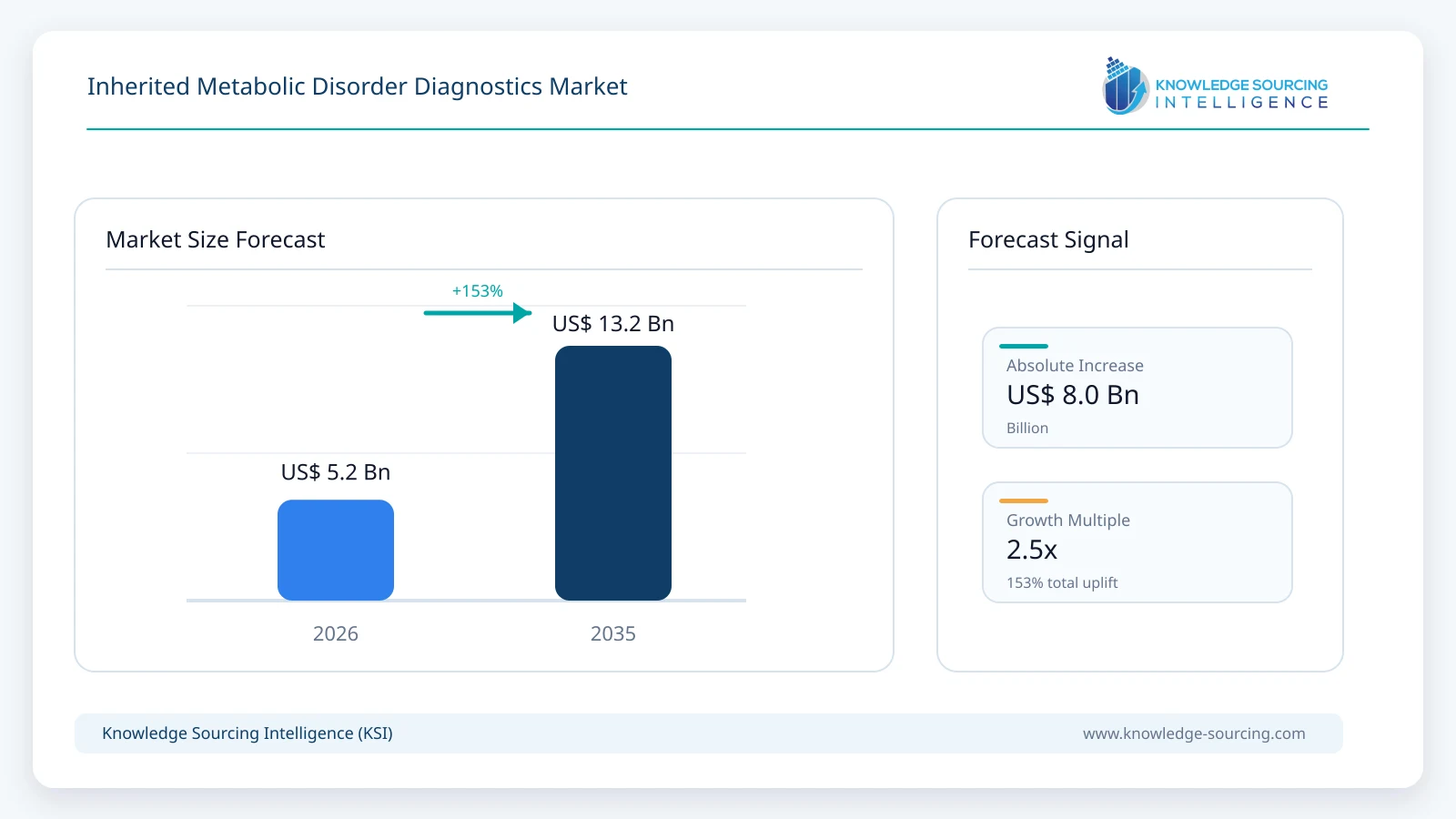
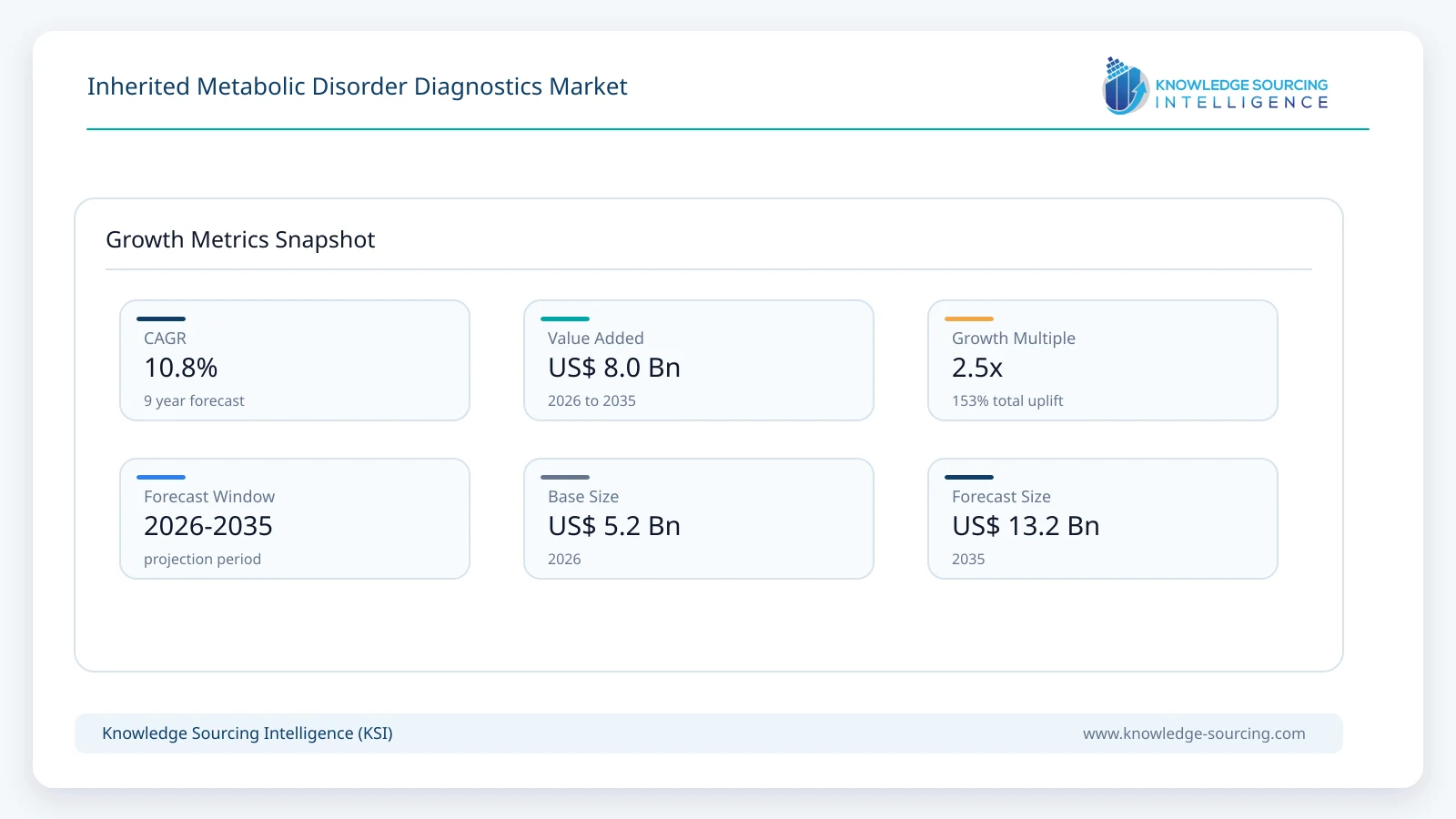
The Inherited Metabolic Disorder Diagnostics Market is anticipated to grow at a CAGR of 10.8% from USD 5.22 billion in 2026 to USD 13.19 billion in 2035.
Highlights:
- 1Expansion of newborn screening programs is increasing diagnostic demand because earlier disease identification improves treatment outcomes.
- 2Genetic testing adoption is expanding because molecular confirmation supports precision medicine approaches.
- 3Rare disease awareness is increasing because patient advocacy organizations continue promoting earlier diagnosis.
- 4Biomarker research is accelerating because clinicians seek more efficient diagnostic pathways.
Inherited metabolic disorder diagnostics remain essential because many metabolic diseases present with non-specific symptoms that delay clinical recognition. Diagnostic demand is increasing as healthcare providers seek earlier identification of treatable genetic conditions. This requirement is becoming more important because therapeutic options are expanding across several metabolic disease categories.
The market depends on accurate disease classification because treatment strategies frequently vary according to the specific metabolic pathway affected. Healthcare providers are expanding utilization of genetic testing because molecular confirmation increasingly guides clinical management. Diagnostic workflows are becoming more comprehensive as laboratories integrate sequencing technologies with biochemical testing approaches. These developments continue strengthening demand for advanced diagnostic solutions.
Regulatory agencies, public health authorities, and rare disease organizations emphasize newborn screening, genetic diagnosis, and early intervention. These priorities support investments in advanced diagnostic infrastructure and encourage broader access to testing. The strategic importance of inherited metabolic disorder diagnostics continues increasing because early diagnosis often reduces long-term healthcare burden and improves patient outcomes.
Market Dynamics
Market Drivers
Expansion of Newborn Screening Programs: Newborn screening supports early intervention because many inherited metabolic disorders progress rapidly if untreated. Screening coverage is expanding as governments recognize the long-term benefits of early diagnosis. Delayed detection increases disease burden and healthcare costs. Public health systems are strengthening newborn screening infrastructure. This trend supports market growth.
Rising Adoption of Genetic Testing: Disease classification increasingly depends on molecular confirmation because many metabolic disorders share overlapping clinical features. Genetic testing utilization is increasing as sequencing technologies become more accessible. Conventional biochemical testing may not fully characterize disease-causing variants. Healthcare providers are incorporating genomic diagnostics into routine evaluation pathways. These developments strengthen market demand.
Growing Availability of Targeted Therapies: Therapeutic outcomes improve when treatment begins early because disease progression often causes irreversible complications. Availability of targeted therapies is increasing across multiple inherited metabolic disorders. Diagnostic delays reduce opportunities for timely intervention. Healthcare providers are expanding testing to identify eligible patients. This trend accelerates diagnostic adoption.
Advancements in Mass Spectrometry Technologies: Diagnostic efficiency influences healthcare outcomes because inherited metabolic disorders frequently require broad screening approaches. Tandem mass spectrometry technologies are advancing as laboratories seek higher throughput and improved analytical performance. Traditional testing methods may increase diagnostic complexity. Diagnostic centers are investing in advanced screening platforms. Innovation continues driving market expansion.
Market Restraints
High costs associated with comprehensive genetic testing limit accessibility in certain healthcare systems.
Limited awareness of rare metabolic diseases contributes to diagnostic delays.
Uneven reimbursement coverage affects adoption of advanced molecular diagnostics.
Market Opportunities
Expansion of Rare Disease Screening Initiatives: Rare disease detection remains challenging because many inherited metabolic disorders occur infrequently within the general population. Screening initiatives are expanding as governments and healthcare organizations prioritize earlier diagnosis. Historical underdiagnosis created substantial unmet need. Healthcare systems are increasing investments in rare disease programs. These developments create significant commercial opportunities.
Multi-Omics Integration: Disease complexity often extends beyond single-gene analysis because metabolic pathways involve multiple biological mechanisms. Multi-omics approaches are gaining attention as researchers seek improved disease characterization. Traditional diagnostic methods may provide incomplete information. Diagnostic developers are integrating genomic, proteomic, and metabolomic data. These innovations enhance market potential.
Artificial Intelligence in Diagnostic Interpretation: Diagnostic interpretation frequently involves complex biochemical and genetic datasets. AI-enabled technologies are attracting interest as laboratories seek improved efficiency and consistency. Manual interpretation can extend diagnostic timelines. Technology providers are developing advanced analytical solutions. AI integration supports long-term growth opportunities.
Supply Chain Analysis
The inherited metabolic disorder diagnostics supply chain begins with suppliers of sequencing reagents, laboratory consumables, assay components, mass spectrometry materials, bioinformatics platforms, and software solutions. Diagnostic manufacturers transform these inputs into newborn screening systems, genetic testing kits, tandem mass spectrometry platforms, enzyme assays, and laboratory software applications. Distribution networks subsequently deliver products to hospitals, newborn screening laboratories, specialty diagnostic centers, and research institutions.
Demand increasingly favors integrated diagnostic workflows because clinicians require both biochemical and molecular information to support diagnosis. Manufacturers therefore focus on combining genomic testing, metabolite analysis, and advanced software capabilities. Regulatory requirements and quality standards continue influencing supplier selection and market participation.
Government Regulations
Region | Regulatory Authority | Key Requirement |
United States | FDA | Regulation of diagnostic technologies and laboratory testing |
European Union | European Commission / IVDR | Compliance with in vitro diagnostic regulations |
Japan | PMDA | Clinical validation and regulatory approval requirements |
China | NMPA | Registration and quality compliance standards |
Market Segmentation
By Product Type
Reagents and kits represent a major demand segment because newborn screening and molecular testing workflows require continuous assay consumption. Instruments continue supporting diagnostic activities through sequencing, mass spectrometry, and laboratory automation applications. Software and services are becoming increasingly important because interpretation of genetic and biochemical data requires sophisticated analytical tools. Diagnostic consumables remain essential because high-volume screening programs depend on reliable laboratory supplies. Demand therefore increasingly favors integrated diagnostic ecosystems.
By Diagnostic Method
Newborn screening represents a major diagnostic category because population-level testing supports early disease detection. Genetic testing adoption is increasing because molecular confirmation improves diagnostic precision. Tandem mass spectrometry continues serving as a core technology because it enables simultaneous screening for multiple disorders. Enzyme assays remain important for disease confirmation and characterization. Molecular diagnostics and metabolite analysis continue gaining relevance because comprehensive diagnostic evaluation increasingly requires both genomic and biochemical information.
By Disorder Type
Amino acid metabolism disorders represent a significant diagnostic segment because newborn screening programs routinely evaluate these conditions. Lysosomal storage disorders are receiving increasing attention because therapeutic options continue expanding. Fatty acid oxidation disorders remain important because early diagnosis can prevent severe complications. Organic acid disorders, carbohydrate metabolism disorders, and urea cycle disorders continue supporting demand for specialized testing. Diagnostic adoption increasingly reflects the growing emphasis on precision medicine and early intervention.
Regional Analysis
North America
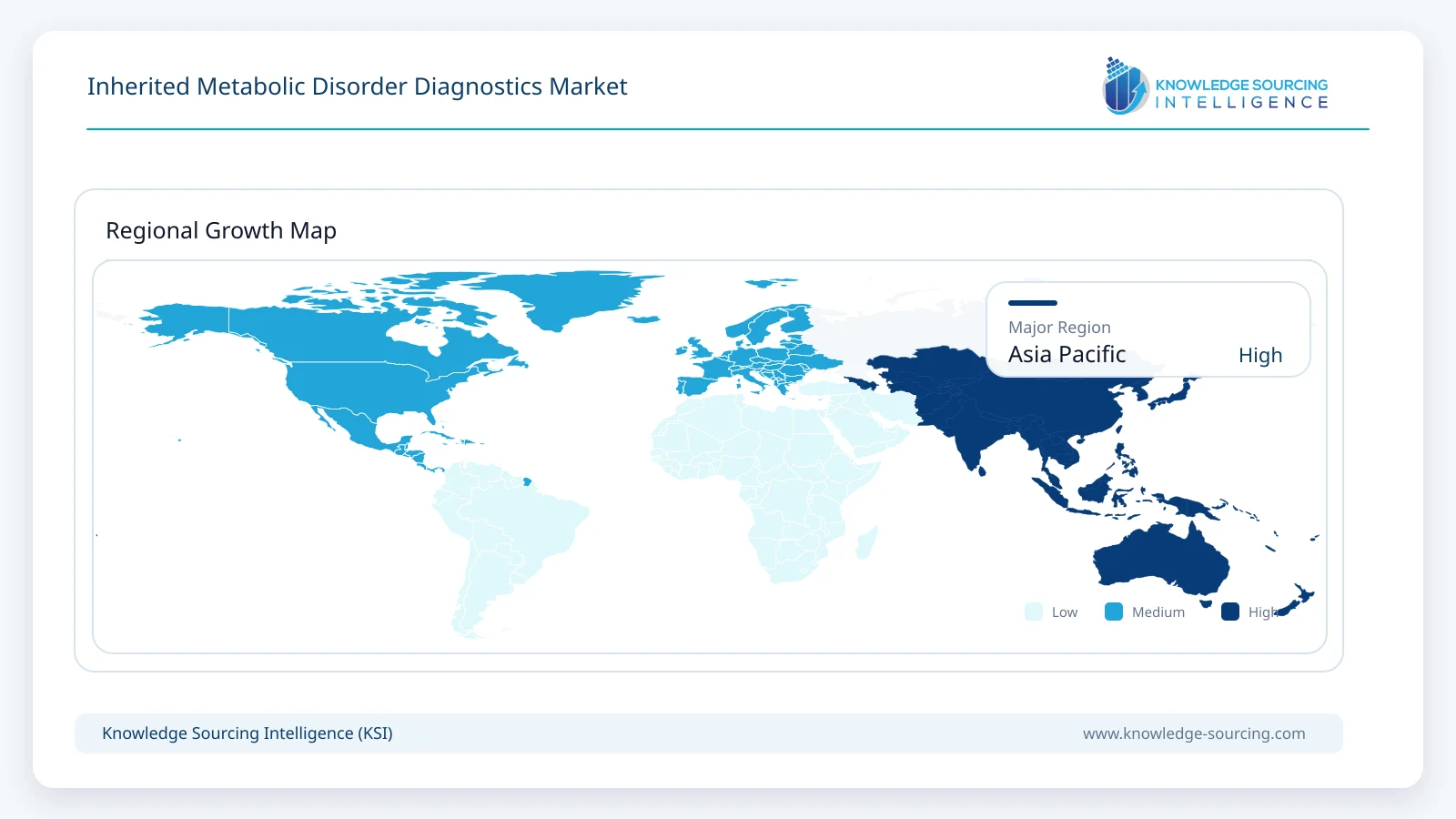
North America represents a leading market because advanced healthcare infrastructure supports widespread newborn screening and genetic testing adoption. Diagnostic demand continues increasing as rare disease awareness expands. Healthcare providers are incorporating genomic technologies into routine diagnostic workflows because precision medicine increasingly influences treatment decisions. Research investment and public health initiatives strengthen market development. These factors support sustained regional growth.
Europe
European healthcare systems continue emphasizing rare disease diagnosis because earlier intervention improves patient outcomes and healthcare efficiency. Diagnostic demand is increasing as newborn screening programs expand across multiple countries. Healthcare providers are adopting advanced molecular testing because clinical guidelines increasingly support genomic evaluation. Research investment continues fostering innovation. These developments strengthen market expansion.
Asia Pacific
Asia Pacific demonstrates substantial growth potential because healthcare access and genomic testing capabilities continue improving. Diagnostic demand is increasing as governments prioritize rare disease identification. Sequencing infrastructure investments support broader utilization of advanced technologies. Healthcare providers are expanding newborn screening coverage across multiple countries. These trends support regional growth.
Rest of the World
Latin America, the Middle East, and Africa continue experiencing unmet diagnostic needs for inherited metabolic disorders. Demand is increasing because awareness and healthcare infrastructure continue developing. Access to specialized testing remains limited in certain regions. Healthcare investment is gradually improving diagnostic capabilities. These developments create long-term market opportunities.
Regulatory Landscape
Regulatory oversight remains critical because inherited metabolic disorder diagnostics directly influence clinical decision-making and treatment selection. Authorities emphasize analytical validity, clinical utility, and patient safety. These standards encourage developers to maintain rigorous quality requirements.
The regulatory environment continues evolving as genomic technologies, newborn screening programs, and multi-omics diagnostics become increasingly prominent. Developers are adapting products to satisfy expanding regulatory expectations. These requirements increase development complexity, yet they strengthen confidence in commercial diagnostic solution
Pipeline Analysis
The inherited metabolic disorder diagnostics pipeline remains active because healthcare providers continue seeking earlier and more comprehensive disease identification. Development programs increasingly focus on expanded newborn screening panels, next-generation sequencing assays, biomarker-based diagnostics, and AI-supported analytical tools. These innovations seek to reduce diagnostic delays while improving clinical outcomes.
Research activity continues expanding because therapeutic advances increase the value of early diagnosis. Companies and academic institutions are evaluating novel biomarkers, metabolomic approaches, and integrated genomic technologies capable of improving disease characterization. These developments reflect growing demand for precision diagnostic solutions.
Competitive Landscape
Revvity, Inc.
Revvity remains strategically distinct because of its leadership position in newborn screening technologies and rare disease diagnostics. The company continues expanding genomic and biochemical testing capabilities that support early disease identification. Strong relationships with public health laboratories reinforce its competitive position.
F. Hoffmann-La Roche Ltd.
Roche leverages extensive molecular diagnostics expertise to support rare disease testing and precision medicine initiatives. The company continues investing in genomic technologies and integrated diagnostic solutions that enhance clinical decision-making.
Thermo Fisher Scientific Inc.
Thermo Fisher supports inherited metabolic disorder diagnostics through sequencing technologies, laboratory instruments, and genomic analysis solutions. Broad technological capabilities strengthen participation across multiple diagnostic workflows.
QIAGEN N.V.
QIAGEN differentiates itself through molecular testing technologies and sample preparation solutions supporting genetic diagnostics. Continuous innovation in genomic workflows enhances its market relevance.
Bio-Rad Laboratories, Inc.
Bio-Rad contributes through molecular diagnostic platforms, reagents, and laboratory technologies supporting rare disease testing. Strong expertise in laboratory diagnostics supports competitive positioning.
Danaher Corporation
Danaher participates through diagnostic businesses focused on molecular testing, laboratory automation, and analytical technologies. Broad capabilities support engagement across multiple segments of the diagnostic market.
Illumina, Inc.
Illumina remains a leading provider of sequencing technologies critical to inherited metabolic disorder diagnosis. Continuous advancements in genomic testing capabilities strengthen its role in precision medicine.
Future Market Outlook
Demand increasingly favors integrated diagnostic approaches because inherited metabolic disorders frequently require both molecular and biochemical characterization. Healthcare providers continue prioritizing technologies capable of delivering comprehensive diagnostic information while reducing diagnostic timelines. This environment supports sustained investment in genomic technologies, metabolomics, and advanced screening solutions.
Purchasing decisions increasingly reflect diagnostic accuracy, workflow efficiency, and clinical utility rather than technology availability alone. Market participants are responding through integrated platforms combining sequencing, metabolite analysis, newborn screening, and AI-enabled interpretation tools. This transition supports broader adoption across healthcare systems.
The inherited metabolic disorder diagnostics market remains positioned for continued innovation because precision medicine, rare disease initiatives, and expanded newborn screening programs continue driving demand. As healthcare access, technological sophistication, and disease awareness expand, demand increasingly concentrates on solutions capable of enabling earlier diagnosis, improving treatment selection, and supporting personalized patient care.
Inherited metabolic disorder diagnosis is gradually transitioning from symptom-driven investigation toward proactive population-level screening and comprehensive molecular characterization. This shift is encouraging collaboration among diagnostic developers, healthcare providers, research institutions, and public health organizations. As these collaborations continue strengthening, the market is expected to advance toward more accessible, accurate, and patient-centered diagnostic pathways.
Inherited Metabolic Disorder Diagnostics Market Scope:
| Report Metric | Details |
|---|---|
| Total Market Size in 2026 | USD 5.22 billion |
| Total Market Size in 2035 | USD 13.19 billion |
| Forecast Unit | Billion |
| Growth Rate | 10.8% |
| Study Period | 2021 to 2035 |
| Historical Data | 2021 to 2024 |
| Base Year | 2025 |
| Forecast Period | 2026 – 2035 |
| Segmentation | Product Type, Diagnostic Method, Disorder Type, Geography |
| Companies |
|
Market Segmentation
Product Type
Diagnostic Method
End User
Geography
- North America
- South America
- Europe
- Middle East and Africa
- Asia Pacific
Table of Contents
1. EXECUTIVE SUMMARY
1.1 Market Snapshot
1.2 Key Findings
1.3 Analyst Insights
1.4 Strategic Recommendations
2. RESEARCH METHODOLOGY
2.1 Research Design
2.2 Data Collection Methodology
2.3 Market Size Estimation
2.4 Forecasting Model
2.5 Assumptions & Limitations
3. INHERITED METABOLIC DISORDER DIAGNOSTICS MARKET OVERVIEW, SIZE & FORECAST
3.1 Market Definition & Scope
3.2 Inherited Metabolic Disorders Overview
3.3 Industry Evolution
3.4 Key Market Trends
3.5 Disease Classification Analysis
3.6 Disease Burden & Unmet Diagnostic Needs
3.7 Epidemiology and Prevalence Analysis
3.8 Diagnosed Patient Population Analysis
3.9 Newborn Screening Adoption Analysis
3.10 Genetic Testing Utilization Analysis
3.11 Patient Diagnostic Journey Analysis
3.12 Historical Market Size Analysis (2021–2025)
3.13 Market Forecast Analysis (2026–2035)
4. MARKET DYNAMICS
4.1 Market Drivers
4.2 Market Restraints
4.3 Market Opportunities
4.4 Market Challenges
5. INDUSTRY LANDSCAPE
5.1 Industry Value Chain Analysis
5.2 Pricing Analysis
5.3 Reimbursement Landscape
6. INNOVATION LANDSCAPE
6.1 Emerging Diagnostic Technologies
6.2 Product Innovation Analysis
6.3 Clinical Trial Analysis
6.4 Pipeline Analysis
6.5 Technology Roadmap
6.6 Next-Generation Sequencing Innovation Landscape
6.7 Multi-Omics and Biomarker Development Analysis
6.8 Artificial Intelligence Integration in Rare Disease Diagnostics
7. REGULATORY LANDSCAPE
7.1 Regulatory Framework
7.2 Approval Pathways
7.3 Compliance Requirements
8. INHERITED METABOLIC DISORDER DIAGNOSTICS MARKET LANDSCAPE ANALYSIS
8.1 Analysis by Diagnostic Technology Platform
8.2 Analysis by Biomarker Type
8.3 Analysis by Sample Type
8.4 Analysis by Disease Category
8.5 Analysis by Diagnostic Setting
9. INHERITED METABOLIC DISORDER DIAGNOSTICS MARKET SEGMENT ANALYSIS (2021–2035)
9.1 By Product Type
9.1.1 Instruments
9.1.2 Reagents & Kits
9.1.3 Software & Services
9.1.4 Diagnostic Consumables
9.2 By Diagnostic Method
9.2.1 Newborn Screening
9.2.2 Genetic Testing
9.2.3 Tandem Mass Spectrometry (MS/MS)
9.2.4 Enzyme Assays
9.2.5 Molecular Diagnostics
9.2.6 Metabolite Analysis
9.3 By Disorder Type
9.3.1 Amino Acid Metabolism Disorders
9.3.2 Organic Acid Disorders
9.3.3 Fatty Acid Oxidation Disorders
9.3.4 Lysosomal Storage Disorders
9.3.5 Carbohydrate Metabolism Disorders
9.3.6 Urea Cycle Disorders
9.3.7 Other Inherited Metabolic Disorders
10. INHERITED METABOLIC DISORDER DIAGNOSTICS MARKET GEOGRAPHICAL ANALYSIS (2021–2035)
10.1 North America
10.2 Europe
10.3 Asia-Pacific
10.4 South America
10.5 Middle East & Africa
11. INHERITED METABOLIC DISORDER DIAGNOSTICS MARKET COUNTRY ANALYSIS (2021–2035)
11.1 United States
11.2 Canada
11.3 Germany
11.4 United Kingdom
11.5 France
11.6 Italy
11.7 Spain
11.8 Netherlands
11.9 Switzerland
11.10 China
11.11 Japan
11.12 India
11.13 Australia
11.14 South Korea
11.15 Brazil
12. COMPETITIVE LANDSCAPE
12.1 Market Share Analysis
12.2 Strategic Developments
12.3 Mergers & Acquisitions, Partnerships & Collaborations
12.4 Product Launches
13. COMPANY PROFILES
13.1 Revvity, Inc.
13.2 F. Hoffmann-La Roche Ltd.
13.3 Thermo Fisher Scientific Inc.
13.4 QIAGEN N.V.
13.5 Bio-Rad Laboratories, Inc.
13.6 Danaher Corporation
13.7 Illumina, Inc.
13.8 Centogene N.V.
13.9 Laboratory Corporation of America Holdings (Labcorp)
13.10 Quest Diagnostics Incorporated
13.11 Eurofins Scientific SE
13.12 Siemens Healthineers AG
13.13 BGI Genomics Co., Ltd.
13.14 Agilent Technologies, Inc.
13.15 ARCHIMEDlife Science GmbH
14. INHERITED METABOLIC DISORDER DIAGNOSTICS MARKET COMMERCIAL FORECAST ANALYSIS
14.1 Newborn Screening Technologies
14.2 Genetic Testing Solutions
14.3 Tandem Mass Spectrometry-Based Diagnostics
14.4 Enzyme Assay Diagnostics
14.5 Molecular Diagnostic Platforms
14.6 Biomarker-Based Diagnostic Solutions
15. INVESTMENT & FUNDING ANALYSIS
15.1 Venture Capital Trends
15.2 Government Funding
15.3 R&D Investments
16. FUTURE OUTLOOK
16.1 Key Growth Opportunities
16.2 Future Industry Trends
Navigate
Trusted by the world's leading organizations











