
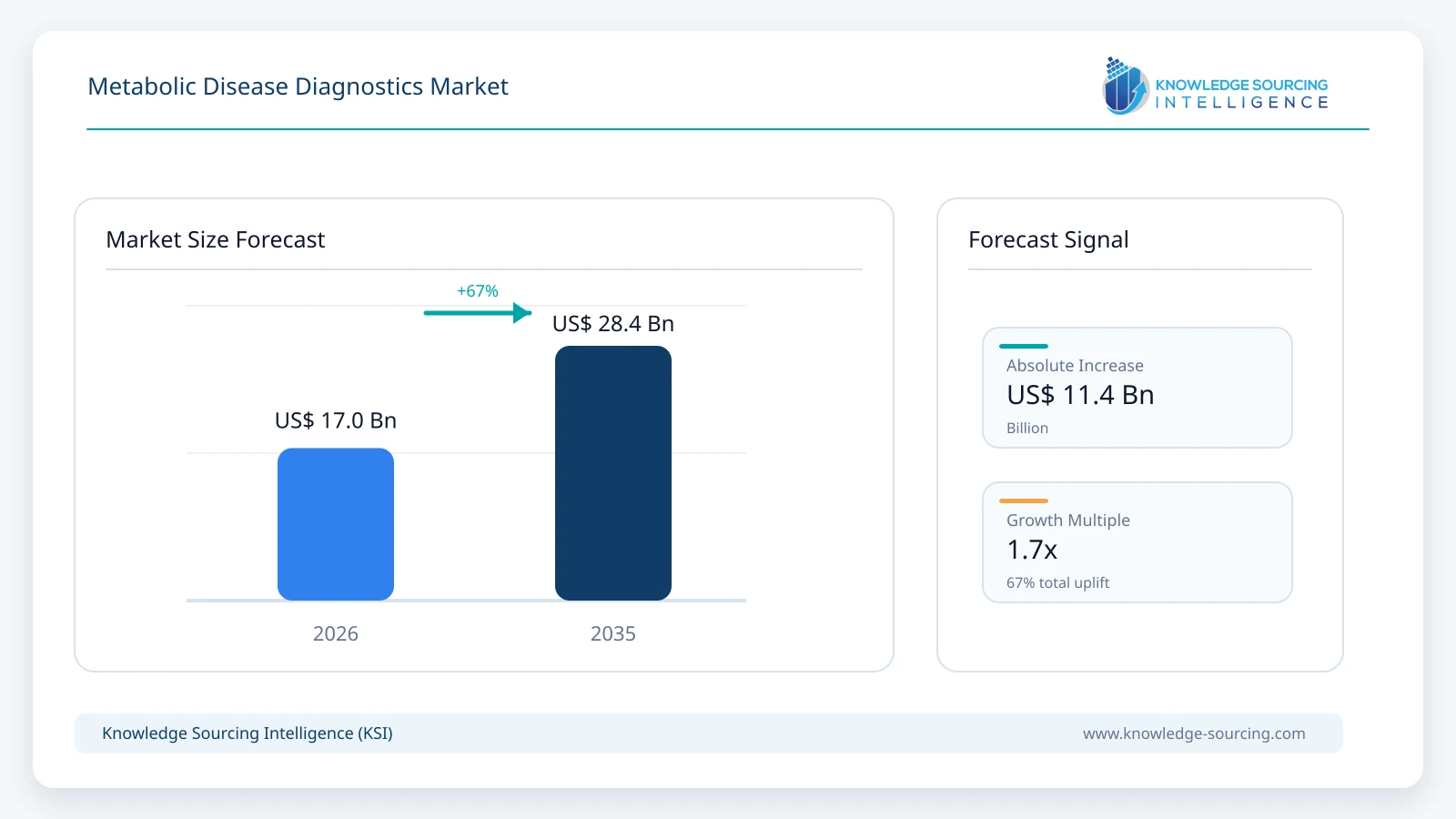
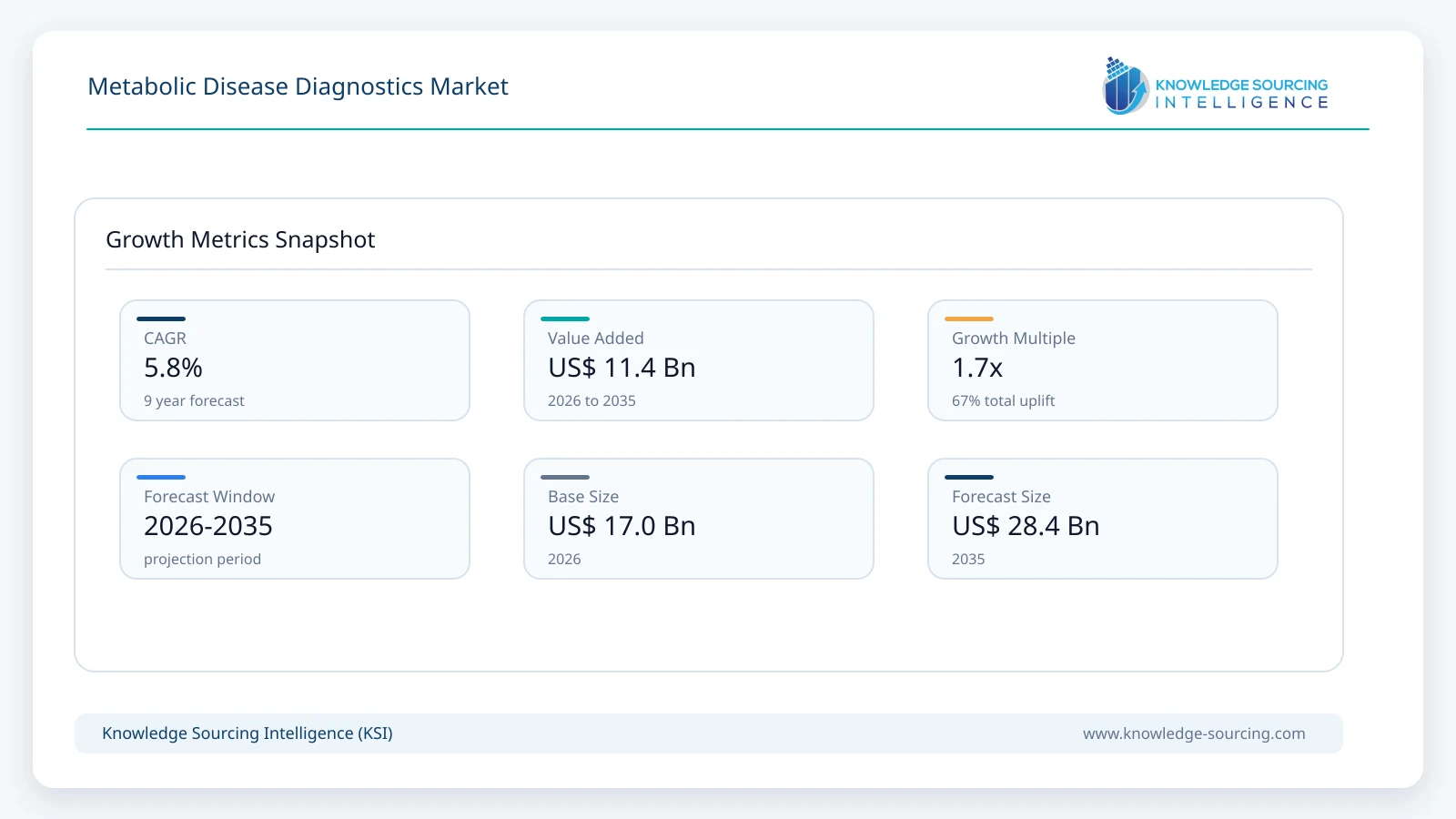
The Metabolic Disease Diagnostics Market is expected to grow at a CAGR of 5.8% from a market value of USD 17.0 billion in 2026 to USD 28.4 billion in 2035.
Highlights:
- 1Expansion of newborn screening programs is increasing demand for high-throughput mass spectrometry because healthcare systems are prioritizing earlier identification of inherited metabolic disorders.
- 2Precision medicine adoption is accelerating molecular diagnostic utilization as targeted therapies require accurate genetic confirmation before treatment initiation.
- 3Pharmaceutical pipeline expansion for lysosomal storage disorders and mitochondrial diseases is strengthening demand for companion diagnostics and biomarker-based patient stratification.
- 4Automation across clinical laboratories is increasing adoption of integrated diagnostic platforms because laboratories seek higher throughput, reproducibility, and operational efficiency.
Metabolic disease diagnostics identify abnormalities in carbohydrate, lipid, amino acid, mitochondrial, and lysosomal metabolic pathways using biochemical assays, molecular diagnostics, mass spectrometry, immunoassays, and genomic technologies. These diagnostic approaches support disease confirmation, carrier identification, newborn screening, therapeutic monitoring, prognosis assessment, and treatment selection across inherited and acquired metabolic disorders.
Demand is increasing because healthcare providers are recognizing that earlier diagnosis significantly improves clinical outcomes for conditions requiring lifelong management or timely therapeutic intervention. Expanding access to genomic sequencing, tandem mass spectrometry, and multiplex biomarker analysis enables laboratories to detect disease-associated biomarkers before irreversible complications develop. This capability is increasing testing volumes across hospital laboratories, specialty diagnostic centers, newborn screening programs, and reference laboratories.
Regulatory frameworks increasingly emphasize analytical validity, clinical performance, quality management, and post-market surveillance for advanced diagnostic technologies. Simultaneously, orphan drug development and precision therapeutics are strengthening the strategic value of companion diagnostics, molecular characterization, and longitudinal biomarker monitoring. These interconnected trends are reinforcing the importance of integrated diagnostic platforms that combine biochemical, genomic, and digital analytics within routine clinical practice.
Market Dynamics
Market Drivers
Expansion of Precision Medicine for Rare Metabolic Disorders: Precision medicine requires accurate molecular characterization before targeted therapies can be prescribed. Pharmaceutical sponsors are expanding clinical development across lysosomal storage disorders, inherited metabolic diseases, and mitochondrial disorders, increasing demand for genomic confirmation and biomarker profiling. Diagnostic manufacturers are responding by integrating sequencing technologies, multiplex assays, and bioinformatics platforms that improve disease classification while supporting personalized therapeutic decision-making.
Growth of National Newborn Screening Programs: Newborn screening remains the primary pathway for identifying inherited metabolic disorders before clinical symptoms emerge. Governments continue expanding screening panels through tandem mass spectrometry and molecular confirmation because early intervention substantially reduces lifelong morbidity. Diagnostic laboratories are increasing analytical capacity to accommodate broader screening programs, reinforcing sustained demand for automated high-throughput platforms.
Increasing Adoption of Multi-Omics Technologies: Metabolic diseases frequently involve complex biochemical and genetic interactions that require complementary diagnostic approaches. Clinical laboratories are incorporating metabolomics, genomics, transcriptomics, and proteomics into integrated diagnostic workflows that improve disease differentiation. This transition is increasing demand for advanced analytical instruments, specialized reagents, and software capable of interpreting multidimensional clinical datasets.
Expansion of Laboratory Automation and Digital Analytics: Clinical laboratories require higher efficiency as testing volumes continue expanding across chronic and rare metabolic diseases. Automated sample preparation, digital workflow management, and AI-assisted interpretation are reducing analytical variability while improving turnaround time. Instrument manufacturers are strengthening integrated platform offerings that combine automation, connectivity, and advanced analytics within unified laboratory ecosystems.
Market Restraints
High capital investment requirements for mass spectrometry, next-generation sequencing, and advanced laboratory automation limit adoption among smaller diagnostic laboratories.
Limited availability of trained metabolic specialists and clinical geneticists reduces interpretation capacity for complex genomic and metabolomic findings.
Reimbursement variability across countries delays routine adoption of advanced molecular diagnostic technologies despite demonstrated clinical value.
Market Opportunities
Expansion of Companion Diagnostics for Targeted Therapies: Rare disease therapeutics increasingly require biomarker confirmation before treatment begins. Diagnostic developers are collaborating with pharmaceutical sponsors to co-develop companion diagnostics that identify eligible patient populations while supporting regulatory submissions and post-marketing monitoring.
Integration of Artificial Intelligence into Diagnostic Interpretation: Complex metabolic datasets require sophisticated interpretation beyond conventional laboratory analysis. Artificial intelligence platforms are improving variant classification, biomarker interpretation, and clinical decision support, enabling laboratories to deliver more standardized diagnostic reporting across diverse metabolic disorders.
Increasing Utilization of Liquid Biopsy and Non-Invasive Sampling: Healthcare providers seek diagnostic approaches that reduce patient burden while supporting longitudinal disease monitoring. Advancements in blood-based biomarkers and minimally invasive sampling technologies are expanding opportunities for repeated metabolic assessment across pediatric and adult patient populations.
Expansion of Genomic Medicine Programs in Emerging Healthcare Systems: National genomic medicine initiatives are increasing investment in sequencing infrastructure, laboratory modernization, and rare disease diagnosis. These programs are creating new commercial opportunities for diagnostic manufacturers offering integrated molecular testing platforms and workflow automation.
Disease & Epidemiology Analysis
Metabolic diseases comprise a heterogeneous group of inherited and acquired disorders characterized by disruption of normal biochemical pathways regulating carbohydrate, lipid, amino acid, mitochondrial, and lysosomal metabolism. Diabetes mellitus accounts for the largest diagnostic volume because continuous biochemical monitoring remains integral to disease management, while rare inherited metabolic disorders generate increasing demand for highly specialized molecular and biochemical testing owing to expanding newborn screening and precision medicine initiatives. The diagnostic pathway increasingly combines clinical chemistry with molecular confirmation because many metabolic disorders present overlapping clinical manifestations that complicate diagnosis through conventional laboratory testing alone.
Rare metabolic diseases collectively affect a relatively small proportion of the global population, yet their cumulative disease burden is increasing because broader newborn screening panels, improved clinician awareness, and wider access to genomic sequencing are identifying patients who previously remained undiagnosed. Many inherited metabolic disorders manifest during infancy or early childhood, making timely diagnosis essential for preventing irreversible neurological damage, organ dysfunction, or developmental impairment. This clinical reality is increasing reliance on tandem mass spectrometry, enzymatic assays, and next-generation sequencing to establish definitive diagnoses before therapeutic intervention begins.
Treatment Guidelines Landscape
Organization | Disease Focus | Diagnostic Recommendations | Clinical Impact |
American Diabetes Association (ADA) | Diabetes Mellitus | HbA1c, fasting plasma glucose, oral glucose tolerance testing, continuous glucose monitoring where appropriate | Supports early diagnosis, disease classification, and therapeutic monitoring |
International Society for Neonatal Screening (ISNS) | Inherited Metabolic Disorders | Expanded newborn screening using tandem mass spectrometry with confirmatory molecular testing | Improves early identification and reduces irreversible complications |
American College of Medical Genetics and Genomics (ACMG) | Inherited Metabolic Diseases | Biochemical screening followed by targeted genetic testing and comprehensive genomic sequencing | Standardizes diagnosis across rare metabolic disorders |
European Society for Paediatric Endocrinology (ESPE) | Pediatric Metabolic Disorders | Multidisciplinary diagnostic evaluation integrating laboratory biomarkers and genetic confirmation | Enables earlier therapeutic intervention |
Market Segmentation
By Disease Type
Diabetes mellitus represents the largest diagnostic segment because disease management depends on continuous biochemical assessment throughout the patient journey. Growing disease prevalence is increasing utilization of HbA1c testing, glucose monitoring, molecular risk assessment, and biomarker evaluation across primary care, hospitals, and specialty laboratories. Healthcare systems continue emphasizing earlier diagnosis because delayed intervention substantially increases cardiovascular, renal, neurological, and ophthalmic complications. Diagnostic manufacturers therefore prioritize automation, digital connectivity, and integrated laboratory workflows that improve testing efficiency while supporting long-term disease management.
By Diagnostic Technology
Mass spectrometry remains a cornerstone technology for diagnosing inherited metabolic disorders because it enables simultaneous detection of multiple metabolites with high analytical sensitivity and specificity. National newborn screening programs are expanding tandem mass spectrometry utilization as broader screening panels require comprehensive metabolic profiling from limited biological samples. Instrument manufacturers continue improving throughput, automation, and software-assisted interpretation to reduce laboratory complexity while supporting increasing testing demand. These technological improvements reinforce mass spectrometry as one of the most strategically important diagnostic platforms for precision metabolic medicine.
By Sample Type
Dried blood spot testing provides a minimally invasive sampling method that supports large-scale newborn screening and decentralized diagnostic programs. Healthcare providers increasingly adopt this sample type because collection, transportation, and storage remain simpler than conventional venous blood sampling, particularly in remote healthcare settings. Expanded screening initiatives continue increasing demand for validated assays capable of analyzing dried blood spot specimens across multiple metabolic biomarkers. This combination of operational efficiency and clinical reliability strengthens its role within national screening infrastructures.
Regional Analysis
North America Market Analysis
North America represents the most mature market for metabolic disease diagnostics because the region combines advanced laboratory infrastructure, comprehensive reimbursement pathways for many diagnostic services, strong genomic research capabilities, and widespread newborn screening programs. Precision medicine initiatives are increasing demand for genomic sequencing and advanced metabolomic testing as healthcare providers seek earlier diagnosis of rare inherited disorders alongside improved disease stratification for chronic metabolic conditions. Pharmaceutical developers continue expanding targeted therapies for lysosomal storage disorders and inherited metabolic diseases, increasing demand for companion diagnostics and biomarker validation throughout clinical development. Regulatory agencies maintain rigorous analytical standards that encourage manufacturers to invest in assay quality, laboratory automation, and digital workflow integration. Academic medical centers, reference laboratories, and biotechnology collaborations continue generating biomarker discoveries that strengthen translational research and accelerate commercialization of advanced diagnostic technologies.
Europe Market Analysis
Europe maintains a strong position in the metabolic disease diagnostics market because coordinated rare disease policies, established newborn screening programs, and widespread adoption of molecular diagnostics support early disease identification. The region is expanding genomic medicine initiatives as healthcare systems integrate sequencing into routine clinical practice for inherited metabolic disorders. This transition increases demand for standardized molecular assays, tandem mass spectrometry, and bioinformatics platforms capable of interpreting complex genetic variants. The European Union's regulatory framework for in vitro diagnostic medical devices is strengthening analytical performance and clinical evidence requirements, prompting manufacturers to enhance validation strategies and post-market surveillance. Pharmaceutical companies continue advancing therapies for lysosomal storage disorders and mitochondrial diseases, increasing the need for reliable companion diagnostics and longitudinal biomarker monitoring.
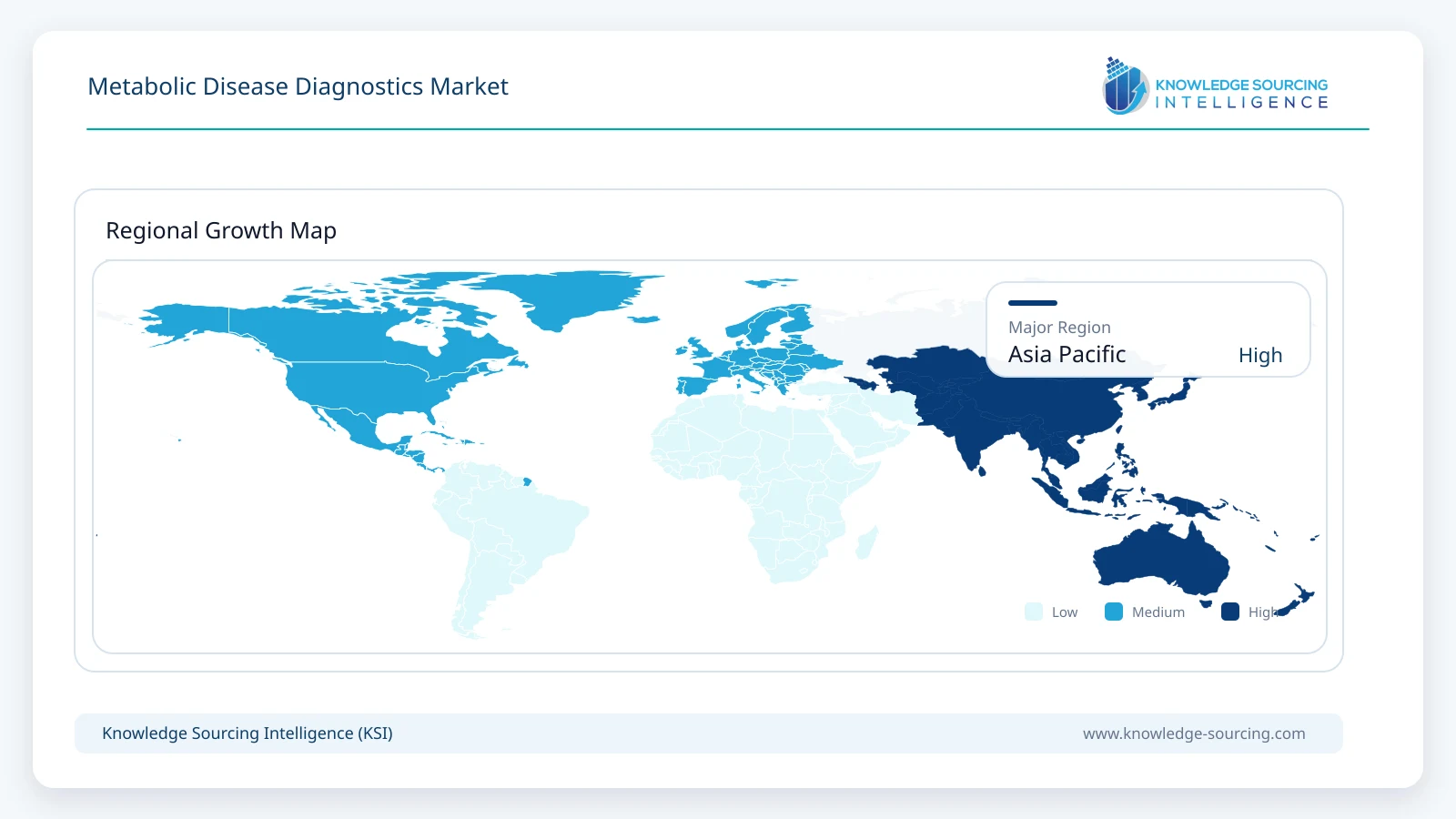
Asia Pacific Market Analysis
Asia Pacific is emerging as the fastest-evolving regional market because healthcare infrastructure modernization, expanding newborn screening, and increasing investment in genomic medicine are improving diagnostic accessibility. Governments are strengthening national rare disease programs while public hospitals are expanding laboratory capabilities to support molecular diagnostics and advanced biochemical testing. Growing awareness among clinicians is increasing referrals for inherited metabolic disorder testing, particularly where expanded newborn screening programs are identifying patients earlier in life. Regional biotechnology companies are collaborating with international diagnostic manufacturers to introduce automated laboratory systems, sequencing platforms, and metabolomic technologies that improve testing efficiency. Demand is also increasing for affordable, high-throughput diagnostic solutions because healthcare systems must balance expanding patient populations with resource limitations.
Rest of the World
The Rest of the World market is developing steadily as governments recognize the clinical and economic benefits of early metabolic disease diagnosis. Countries in Latin America, the Middle East, and parts of Africa are expanding newborn screening capacity through partnerships with international healthcare organizations and diagnostic manufacturers. Healthcare providers are increasing adoption of standardized biochemical testing because early detection reduces long-term treatment costs associated with advanced disease complications. Reference laboratories continue serving as regional testing hubs where access to advanced molecular diagnostics remains limited at the local hospital level. International funding initiatives and academic collaborations are supporting laboratory modernization, workforce training, and implementation of quality management systems that improve diagnostic reliability.
Regulatory Landscape
Regulatory oversight for metabolic disease diagnostics increasingly emphasizes analytical validity, clinical performance, software reliability, and lifecycle quality management because diagnostic results directly influence treatment selection and long-term patient outcomes. Regulatory agencies require manufacturers to demonstrate assay accuracy, reproducibility, and clinical utility before commercialization, particularly for molecular diagnostics and next-generation sequencing platforms used in rare disease diagnosis. These requirements encourage manufacturers to invest in robust clinical validation studies while strengthening post-market monitoring systems that ensure continued diagnostic reliability.
The implementation of the European Union In Vitro Diagnostic Regulation (IVDR) has increased evidence requirements for many diagnostic products, prompting companies to expand clinical documentation and quality management activities before market introduction. In the United States, the FDA continues applying risk-based oversight to in vitro diagnostics while supporting innovation through programs that facilitate development of technologies addressing unmet medical needs. Similar regulatory modernization efforts are progressing across Asia-Pacific as authorities strengthen quality standards for molecular diagnostics, laboratory-developed tests, and genomic medicine applications.
Growing international harmonization of laboratory quality standards is improving consistency across diagnostic workflows while facilitating broader clinical adoption of advanced technologies. Manufacturers increasingly integrate regulatory strategy into product development because compliance now influences commercialization timelines, market access, and competitive differentiation.
Pipeline Analysis
The therapeutic pipeline for metabolic diseases is expanding across enzyme replacement therapy, substrate reduction therapy, gene therapy, messenger RNA therapeutics, and genome editing approaches. These programs increasingly depend on molecular diagnostics to identify eligible patients, characterize pathogenic variants, and monitor treatment response throughout clinical development. Diagnostic platforms therefore are evolving alongside therapeutic innovation rather than functioning independently of pharmaceutical research.
Lysosomal storage disorders remain one of the most active areas of clinical development, with sponsors evaluating therapies for Fabry disease, Gaucher disease, Pompe disease, mucopolysaccharidoses, and other ultra-rare conditions. Gene therapy programs targeting inherited metabolic diseases also continue progressing through clinical trials, increasing demand for next-generation sequencing, biomarker validation, and standardized companion diagnostic strategies. Mitochondrial disease research is similarly expanding because advances in genomic characterization are improving understanding of disease mechanisms and patient stratification.
Diagnostic manufacturers are strengthening collaborations with pharmaceutical companies during early clinical development to establish validated biomarkers, develop companion diagnostics, and generate real-world evidence supporting regulatory submissions. This integrated development approach is reducing uncertainty during patient enrollment while improving the efficiency of precision medicine trials for rare metabolic diseases.
Reimbursement Landscape
Reimbursement policies significantly influence adoption of advanced metabolic disease diagnostics because molecular testing and genomic sequencing require substantial laboratory investment. Established reimbursement frameworks generally support routine biochemical testing for diabetes and newborn screening, while coverage for advanced genomic diagnostics varies according to disease prevalence, clinical evidence, and national healthcare policies. This variation continues affecting the pace of adoption for high-complexity diagnostic technologies across different healthcare systems.
Payers increasingly recognize that early diagnosis reduces long-term healthcare expenditure by preventing irreversible disease progression and enabling timely therapeutic intervention. As additional precision therapies receive regulatory approval, reimbursement agencies are expected to place greater emphasis on diagnostics demonstrating measurable improvements in clinical outcomes, patient stratification, and healthcare resource utilization.
Competitive Landscape
F. Hoffmann-La Roche Ltd.
F. Hoffmann-La Roche Ltd. differentiates itself through the integration of molecular diagnostics, clinical chemistry, sequencing technologies, and digital healthcare capabilities within a unified diagnostics portfolio. The company continues strengthening automated laboratory ecosystems that combine high-throughput instrumentation with advanced software analytics, enabling efficient management of complex metabolic disease testing.
Danaher Corporation
Danaher Corporation maintains a diversified diagnostics strategy through operating companies specializing in molecular diagnostics, life sciences, laboratory automation, and analytical instrumentation. Its portfolio supports biochemical testing, genomic analysis, and laboratory workflow optimization that collectively address growing demand for precision diagnostics.
Siemens Healthineers AG
Siemens Healthineers AG combines clinical chemistry, immunodiagnostics, laboratory automation, and digital health technologies to deliver integrated diagnostic solutions for healthcare providers. The company emphasizes workflow efficiency and standardized laboratory operations, enabling hospitals to manage increasing diagnostic complexity without compromising analytical quality.
Thermo Fisher Scientific Inc.
Thermo Fisher Scientific Inc. maintains a comprehensive position in the metabolic disease diagnostics market through its extensive portfolio spanning next-generation sequencing (NGS), mass spectrometry, PCR technologies, clinical reagents, specialty instruments, and bioinformatics solutions. The company differentiates itself by integrating research and clinical diagnostics, enabling healthcare providers and researchers to transition biomarker discoveries into validated diagnostic applications.
Bruker Corporation
Bruker Corporation distinguishes itself through expertise in mass spectrometry, nuclear magnetic resonance (NMR), and advanced analytical technologies that support metabolomics and biomarker discovery. The company continues expanding high-resolution analytical capabilities because metabolic disease diagnostics increasingly require comprehensive characterization of complex biochemical pathways.
Bio-Rad Laboratories, Inc.
Bio-Rad Laboratories, Inc. maintains a strong competitive position through its molecular diagnostics, quality control products, life science research tools, and clinical diagnostic solutions. The company differentiates itself by emphasizing laboratory standardization and analytical accuracy, both of which are becoming increasingly important as diagnostic complexity rises.
Key Developments
June 2026: Imperial College London and CNRS launched a new international research laboratory to accelerate metabolism research across multiple disease areas. The collaboration is designed to combine AI, learning, and cross-institution expertise to improve understanding of metabolic disorders.
September 2025: Radboudumc became an official partner of HFML-FELIX to strengthen metabolite identification, biomarker discovery, and diagnostics research for inherited metabolic diseases. The partnership builds on prior joint work and adds clinical and analytical expertise to support future research and training..
Strategic Insights and Future Market Outlook
The metabolic disease diagnostics market is entering a phase in which molecular characterization, metabolomic profiling, and digital laboratory integration collectively determine competitive differentiation. Diagnostic manufacturers are increasingly moving beyond standalone testing platforms because healthcare providers require comprehensive solutions that combine biochemical assays, genomic sequencing, automation, and clinical decision support. This transition is strengthening demand for interoperable laboratory ecosystems capable of delivering faster, more accurate, and clinically actionable diagnostic information.
Pipeline expansion across gene therapies, enzyme replacement therapies, substrate reduction therapies, and RNA-based medicines is reinforcing the strategic importance of precision diagnostics. Pharmaceutical sponsors increasingly require validated biomarkers, standardized molecular testing, and longitudinal monitoring tools throughout clinical development and commercialization. Diagnostic companies are therefore expanding partnerships with biotechnology firms, academic institutions, and healthcare providers to develop companion diagnostics that align with evolving therapeutic pipelines. These collaborations are improving patient identification while reducing uncertainty during clinical trial enrollment and regulatory review.
Artificial intelligence, cloud-based bioinformatics, and multi-omics integration are expected to reshape laboratory workflows during the forecast period. Healthcare systems are seeking diagnostic platforms capable of combining genomic, proteomic, and metabolomic information into unified clinical reports that support personalized treatment decisions. Companies capable of integrating advanced analytical technologies with scalable automation and regulatory-compliant software are likely to strengthen their competitive positions as precision medicine becomes increasingly embedded in routine metabolic disease management.
The market continues evolving from conventional laboratory testing toward integrated precision diagnostic ecosystems where biomarker discovery, molecular characterization, clinical interpretation, and therapeutic monitoring function as interconnected components of patient care. This structural transformation positions metabolic disease diagnostics as an essential enabler of future personalized healthcare while creating sustained opportunities for innovation across analytical technologies, digital health platforms, and companion diagnostic development.
Metabolic Disease Diagnostics Market Scope:
| Report Metric | Details |
|---|---|
| Total Market Size in 2026 | USD 17.0 billion |
| Total Market Size in 2035 | USD 28.4 billion |
| Forecast Unit | Billion |
| Growth Rate | 5.8% |
| Study Period | 2021 to 2035 |
| Historical Data | 2021 to 2024 |
| Base Year | 2025 |
| Forecast Period | 2026 – 2035 |
| Segmentation | Disease Type, Diagnostic Technology, Biomarker Type, Sample Type, Testing Setting, End User, Geography |
| Companies |
|
Market Segmentation
Disease Type
Diagnostic Technology
End User
Geography
- North America
- South America
- Europe
- Middle East and Africa
- Asia Pacific
Table of Contents
1. EXECUTIVE SUMMARY
1.1 Market Snapshot
1.2 Key Findings
1.3 Analyst Insights
1.4 Strategic Recommendations
2. RESEARCH METHODOLOGY
2.1 Research Design
2.2 Data Collection Methodology
2.3 Market Size Estimation
2.4 Forecasting Model
2.5 Assumptions & Limitations
3. GLOBAL METABOLIC DISEASE DIAGNOSTICS MARKET OVERVIEW, SIZE & FORECAST
3.1 Market Definition & Scope
3.2 Metabolic Disease Overview
3.3 Classification of Metabolic Diseases
3.4 Industry Evolution
3.5 Key Market Trends
3.6 Historical Market Size Analysis (2021–2025)
3.7 Market Forecast Analysis (2026–2035)
3.8 Disease Burden & Unmet Diagnostic Needs
3.9 Epidemiology and Prevalence Analysis
3.9.1 Disease Prevalence
3.9.2 Diagnosed Patient Population
3.10 Testing Volume Analysis
3.11 Diagnostic Pathway Analysis
4. MARKET DYNAMICS
4.1 Market Drivers
4.2 Market Restraints
4.3 Market Opportunities
4.4 Market Challenges
5. INDUSTRY LANDSCAPE
5.1 Industry Value Chain Analysis
5.2 Pricing Analysis
5.3 Reimbursement Landscape
6. INNOVATION LANDSCAPE
6.1 Emerging Diagnostic Technologies
6.2 Biomarker Innovation
6.3 Clinical Trial Analysis
6.4 Pipeline Analysis
6.5 AI Integration in Metabolic Disease Diagnostics
6.6 Digital Health Integration
7. REGULATORY LANDSCAPE
7.1 Regulatory Framework
7.2 Approval Pathways
7.3 Compliance Requirements
8. GLOBAL METABOLIC DISEASE DIAGNOSTICS MARKET LANDSCAPE ANALYSIS
8.1 Analysis by Technology Platform
8.2 Analysis by Biomarker
8.3 Analysis by Sample Type
8.4 Analysis by Clinical Application
8.5 Analysis by Testing Methodology
9. GLOBAL METABOLIC DISEASE DIAGNOSTICS MARKET SEGMENT ANALYSIS (2021–2035)
9.1 By Disease Type
9.1.1 Diabetes Mellitus
9.1.2 Lysosomal Storage Disorders
9.1.3 Inherited Metabolic Disorders
9.1.4 Mitochondrial Disorders
9.1.5 Lipid Metabolism Disorders
9.1.6 Other Metabolic Diseases
9.2 By Diagnostic Technology
9.2.1 Clinical Chemistry
9.2.2 Molecular Diagnostics
9.2.3 Mass Spectrometry
9.2.4 Immunoassays
9.2.5 Next-Generation Sequencing
9.2.6 Other Diagnostic Technologies
9.3 By Biomarker Type
9.3.1 Genetic Biomarkers
9.3.2 Protein Biomarkers
9.3.3 Metabolite Biomarkers
9.3.4 Enzyme Biomarkers
9.4 By Sample Type
9.4.1 Blood
9.4.2 Dried Blood Spot
9.4.3 Urine
9.4.4 Saliva
9.4.5 Other Sample Types
9.5 By Testing Setting
9.5.1 Laboratory-Based Testing
9.5.2 Point-of-Care Testing
9.6 By End User
9.6.1 Hospitals
9.6.2 Diagnostic Laboratories
9.6.3 Academic & Research Institutes
9.6.4 Others
10. GLOBAL METABOLIC DISEASE DIAGNOSTICS MARKET GEOGRAPHICAL ANALYSIS (2021–2035)
10.1 North America
10.2 Europe
10.3 Asia-Pacific
10.4 South America
10.5 Middle East & Africa
11. GLOBAL METABOLIC DISEASE DIAGNOSTICS MARKET COUNTRY ANALYSIS (2021–2035)
11.1 United States
11.2 Canada
11.3 Germany
11.4 United Kingdom
11.5 France
11.6 Italy
11.7 Spain
11.8 Japan
11.9 China
11.10 India
11.11 South Korea
11.12 Australia
11.13 Brazil
11.14 Saudi Arabia
12. COMPETITIVE LANDSCAPE
12.1 Market Share Analysis
12.2 Strategic Developments
12.3 Mergers & Acquisitions, Partnerships & Collaborations
12.4 Product Launches
13. COMPANY PROFILES
13.1 F. Hoffmann-La Roche Ltd.
13.1.1 Company Overview
13.1.2 Financials
13.1.3 Product Portfolio
13.1.4 Recent Developments
13.2 Danaher Corporation
13.3 Siemens Healthineers AG
13.4 Waters Corporation
13.5 Thermo Fisher Scientific Inc.
13.6 Bruker Corporation
13.7 Bio-Rad Laboratories, Inc.
13.8 Agilent Technologies, Inc.
13.9 QIAGEN N.V.
13.10 bioMérieux S.A.
14. GLOBAL METABOLIC DISEASE DIAGNOSTICS MARKET COMMERCIAL FORECAST ANALYSIS
14.1 Clinical Chemistry Diagnostics
14.2 Molecular Diagnostic Tests
14.3 Mass Spectrometry-Based Diagnostics
14.4 Immunoassay-Based Diagnostics
14.5 Next-Generation Sequencing-Based Diagnostics
14.6 Newborn Screening Diagnostics
15. INVESTMENT & FUNDING ANALYSIS
15.1 Venture Capital Trends
15.2 Government Funding
15.3 R&D Investments
16. FUTURE OUTLOOK
16.1 Key Growth Opportunities
16.2 Future Industry Trends
Navigate
Trusted by the world's leading organizations











