
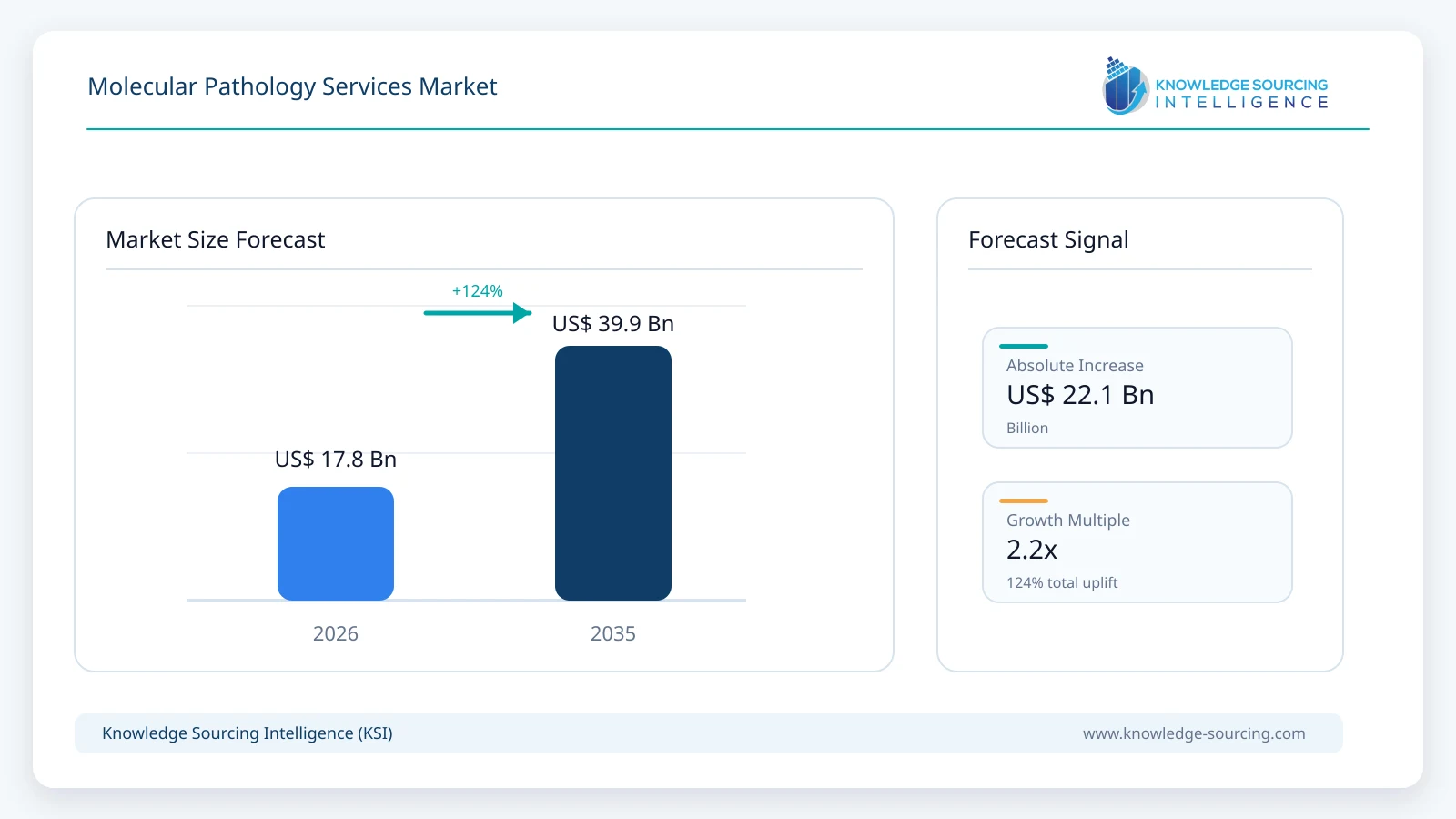
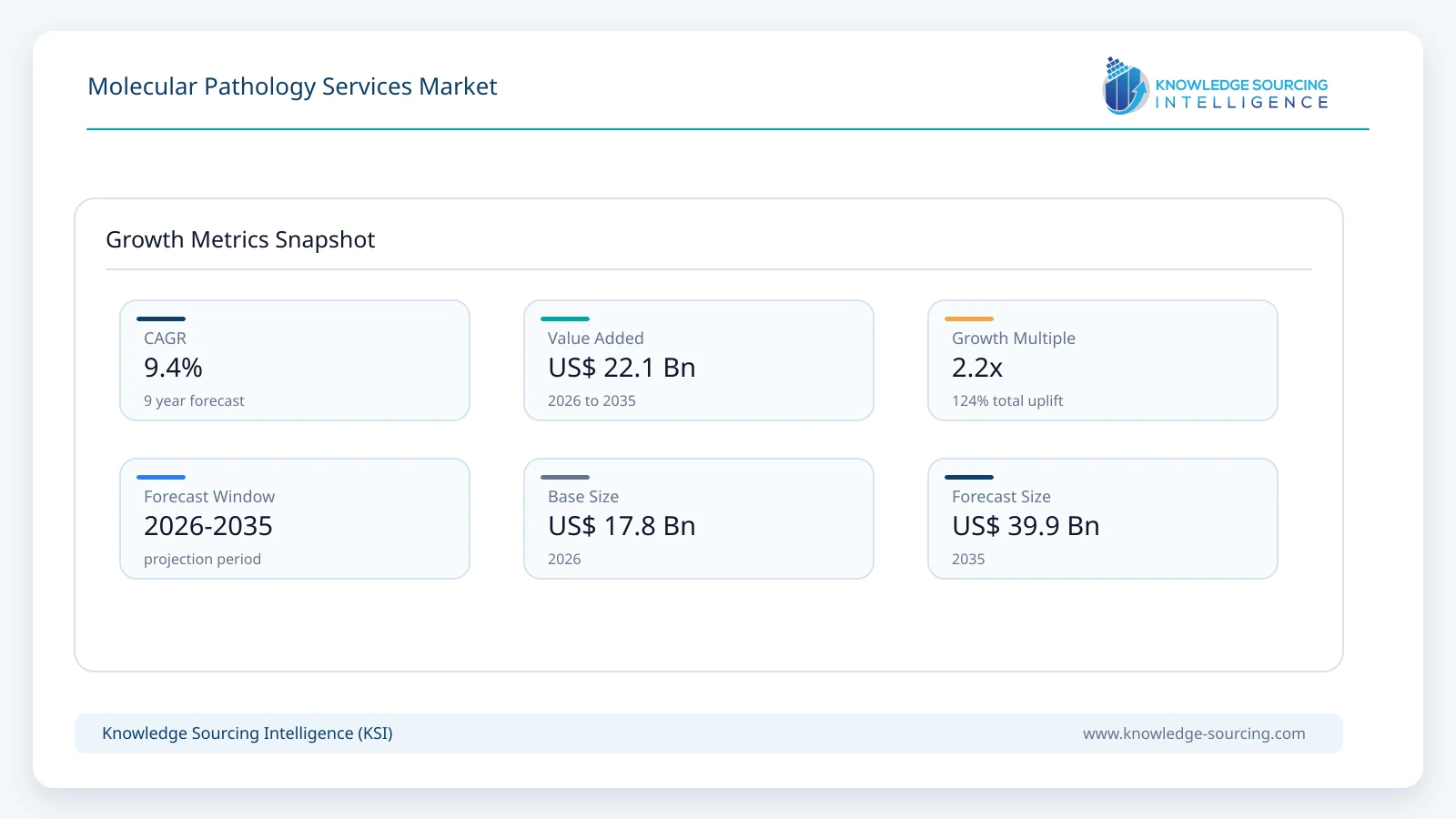
The Molecular Pathology Market is anticipated to grow at a CAGR of 9.4% from USD 17.82 billion in 2026 to USD 39.91 billion in 2035.
Highlights:
- 1Growing adoption of targeted therapies is increasing demand for biomarker testing because treatment eligibility increasingly depends on molecular evidence.
- 2Expansion of precision oncology programs is accelerating genomic profiling utilization because clinicians require broader molecular characterization for therapy selection.
- 3Rising prevalence of cancer and rare genetic disorders is supporting testing volume growth because healthcare providers require earlier and more accurate diagnoses.
- 4Pharmaceutical companies are increasing companion diagnostic collaborations because biomarker-driven drug development improves patient stratification.
Molecular pathology services support clinical decision-making by linking molecular biomarkers with disease mechanisms and therapeutic options. Demand is increasing because physicians require more precise diagnostic information as treatment pathways become increasingly biomarker-driven. This requirement strengthens the role of specialized testing laboratories capable of generating clinically actionable molecular insights.
The market depends on advances in sequencing technologies, computational biology, laboratory automation, and biomarker discovery programs. Healthcare providers are increasingly integrating molecular testing into routine clinical workflows because targeted therapies often require biomarker confirmation before treatment initiation. This dependency creates sustained demand for high-quality testing services and interpretation expertise.
Regulatory agencies continue to strengthen standards surrounding laboratory-developed tests, companion diagnostics, genomic data management, and quality assurance processes. These frameworks support reliability and clinical confidence while influencing operational investments across laboratory networks. The strategic importance of molecular pathology services continues to rise because precision medicine programs increasingly depend on molecular evidence to guide patient management decisions.
Market Dynamics
Market Drivers
Expansion of Precision Oncology: Precision oncology relies on biomarker-guided treatment decisions. Demand is increasing because oncologists require comprehensive genomic insights before selecting targeted therapies. This requirement raises testing complexity and expands the use of advanced molecular pathology services. Laboratories are expanding sequencing capabilities to accommodate broader biomarker panels. The result is stronger integration of molecular testing within routine oncology care.
Growth of Companion Diagnostics: Companion diagnostics link therapeutic selection with molecular evidence. Demand is increasing because pharmaceutical developers are pursuing biomarker-specific drug development strategies. This approach increases the need for validated molecular testing services across clinical development and commercialization stages. Laboratories are strengthening partnerships with drug developers to support these requirements. The outcome is greater alignment between diagnostics and therapeutics.
Rising Prevalence of Complex Diseases: Complex diseases often involve heterogeneous molecular mechanisms. Demand is increasing because traditional diagnostic methods frequently provide insufficient biological resolution. Healthcare providers are adopting molecular testing to improve diagnostic confidence and treatment planning. Laboratories are expanding service portfolios to address broader disease categories. The result is sustained growth in testing volumes.
Advances in Sequencing Technologies: Sequencing technologies continue to improve analytical performance. Demand is increasing because clinicians can obtain broader molecular information from a single test. Laboratories are adopting more efficient platforms to improve throughput and reduce turnaround times. These investments enhance scalability and support wider clinical adoption. The outcome is increasing accessibility of molecular pathology services.
Market Restraints
High capital requirements for sequencing platforms, bioinformatics infrastructure, and specialized personnel limit expansion in resource-constrained healthcare systems.
Reimbursement variability across countries creates uncertainty for laboratories and delays broader clinical adoption.
Complex regulatory requirements increase compliance costs and extend validation timelines for new testing services.
Market Opportunities
Expansion of Liquid Biopsy Services: Liquid biopsy enables non-invasive molecular monitoring. Demand is increasing because clinicians seek alternatives to repeated tissue sampling. Laboratories are expanding circulating tumor DNA testing capabilities to address this need. The result is growing utilization across oncology applications.
AI-Enabled Molecular Interpretation: Molecular datasets continue to grow in complexity. Demand is increasing because healthcare providers require faster interpretation of genomic findings. Laboratories are integrating AI-assisted analytics to improve clinical reporting efficiency. This transition enhances scalability and decision support capabilities. The outcome is improved service differentiation.
Growth in Rare Disease Diagnostics: Rare diseases often remain undiagnosed for extended periods. Demand is increasing because genomic testing improves diagnostic yield. Healthcare systems are expanding access to advanced molecular testing programs. Laboratories are developing specialized rare disease workflows. The result is increasing adoption of genomic profiling services.
Precision Medicine Initiatives: National precision medicine programs support genomic integration. Demand is increasing because governments and healthcare institutions are investing in genomic infrastructure. Laboratories are participating in large-scale testing initiatives. These collaborations strengthen market expansion opportunities. The outcome is broader utilization of molecular pathology services.
Supply Chain Analysis
The molecular pathology services supply chain begins with reagent manufacturers, sequencing technology providers, consumable suppliers, and sample collection networks. Demand is increasing because testing complexity requires highly specialized inputs and instrumentation. This dependence elevates the importance of supplier reliability and regulatory compliance.
Samples move through collection centers, hospitals, physician networks, and logistics providers before reaching molecular laboratories. Testing workflows rely on sequencing platforms, PCR systems, automation technologies, and bioinformatics pipelines. Laboratories are increasing investments in digital infrastructure because data interpretation has become a major value component. This transition strengthens the role of software and analytics providers within the value chain.
Clinical reports are delivered to healthcare providers, pharmaceutical companies, and research organizations. Demand is increasing because treatment decisions increasingly depend on molecular evidence. This requirement supports continuous investment across the broader molecular diagnostics ecosystem.
Government Regulations
Region | Regulatory Authority | Key Regulatory Focus |
United States | FDA, CMS, CLIA | Laboratory quality, companion diagnostics, molecular testing standards |
Europe | European Commission, National Authorities | IVDR compliance, clinical evidence requirements |
United Kingdom | MHRA | Diagnostic oversight and quality standards |
Japan | PMDA | Molecular diagnostic approvals and laboratory compliance |
Market Segmentation
By Service Type
Service type segmentation reflects differences in clinical utility and healthcare demand. Molecular diagnostic testing services represent the foundational segment because healthcare providers require molecular evidence for diagnosis and disease classification. Demand is increasing for companion diagnostic testing because targeted therapies often depend on biomarker confirmation. Genomic profiling services are expanding because comprehensive molecular characterization supports precision oncology programs. Biomarker testing services continue gaining importance as treatment pathways become increasingly personalized. Infectious disease molecular testing remains relevant because rapid pathogen identification improves clinical management. Pharmacogenomic testing adoption is increasing because providers seek optimized treatment selection based on genetic variability.
By Technology
Technology adoption reflects evolving requirements for sensitivity, scalability, and clinical utility. PCR-based technologies remain widely utilized because they offer reliable and cost-effective molecular detection. Demand is increasing for digital PCR because clinicians require highly sensitive biomarker quantification. NGS platforms continue expanding because they provide broader molecular insights from a single analysis. FISH technologies remain important for chromosomal and gene rearrangement assessments. Microarray-based testing supports specialized applications where large-scale genomic screening is required. Laboratories are increasingly investing in advanced sequencing technologies because healthcare providers seek comprehensive molecular characterization. The result is a gradual shift toward high-content molecular testing platforms.
By Application
Application demand varies according to disease complexity and treatment requirements. Oncology dominates molecular pathology service utilization because biomarker-driven therapies require extensive molecular characterization. Demand is increasing in hematological disorders because genetic profiling supports diagnosis and treatment planning. Infectious disease applications continue evolving as molecular testing improves pathogen identification. Genetic and rare disease diagnostics are expanding because sequencing technologies improve diagnostic yield. Neurological and cardiovascular applications are gaining relevance as researchers identify clinically actionable biomarkers. Healthcare providers increasingly rely on molecular evidence across multiple disease categories. The outcome is broader clinical integration of molecular pathology services.
Regional Analysis
North America
North America represents the most advanced molecular pathology services environment because precision medicine adoption remains highly developed. Demand is increasing as targeted therapies require increasingly sophisticated molecular evidence before treatment initiation. This requirement expands testing volumes across oncology and rare disease applications. Healthcare providers maintain strong dependence on molecular diagnostics because therapeutic decision-making increasingly relies on biomarker data. Laboratories are investing in high-throughput sequencing platforms and AI-enabled interpretation capabilities to support growing demand. Regulatory frameworks support quality standards while encouraging innovation through established approval pathways. The result is sustained market leadership supported by advanced healthcare infrastructure, extensive pharmaceutical activity, and significant genomic research investment.
Europe
Europe maintains strong molecular pathology demand because healthcare systems increasingly prioritize personalized medicine strategies. Demand is increasing as oncology programs expand biomarker testing requirements across major markets. This expansion creates pressure for laboratories to comply with evolving regulatory requirements under the In Vitro Diagnostic Regulation framework. Healthcare providers continue integrating molecular testing into treatment pathways because precision therapies require validated biomarker evidence. Laboratories are strengthening partnerships with research institutions and pharmaceutical companies to support innovation. The result is continued market growth driven by precision medicine initiatives and increasing genomic integration.
Asia Pacific
Asia Pacific represents one of the fastest-evolving molecular pathology environments because healthcare infrastructure investment continues expanding. Demand is increasing as cancer incidence and awareness of genomic medicine rise across major economies. This shift creates greater demand for advanced laboratory services and sequencing capabilities. Healthcare providers are expanding precision medicine programs to improve clinical outcomes. Laboratories are investing in technology upgrades and workforce development to address increasing testing requirements. Government-supported genomic initiatives strengthen adoption across several countries. The outcome is expanding regional participation in molecular diagnostics and precision healthcare.
Rest of the World
The Rest of the World region demonstrates increasing molecular pathology adoption because healthcare systems are gradually integrating precision medicine approaches. Demand is increasing as healthcare providers recognize the value of biomarker-guided treatment strategies. Resource limitations continue constraining adoption in some markets because advanced testing infrastructure requires substantial investment. Laboratories are expanding reference testing capabilities to improve access to specialized services. International collaborations support technology transfer and knowledge development. The result is gradual but sustained growth in molecular pathology utilization across emerging healthcare markets.
Regulatory Landscape
Regulatory oversight focuses on ensuring analytical validity, clinical validity, and quality assurance within molecular testing services. Healthcare providers rely on accurate molecular results because treatment decisions increasingly depend on biomarker evidence. Regulatory agencies continue strengthening validation requirements to support confidence in molecular diagnostics. This oversight promotes standardized laboratory practices and quality management systems.
Companion diagnostics remain a major regulatory focus because therapeutic eligibility frequently depends on molecular testing outcomes. Demand is increasing for coordinated regulatory review processes that align diagnostic and therapeutic approvals. Laboratories are adapting compliance strategies to accommodate evolving standards. The result is greater integration between diagnostic and therapeutic development pathways.
Data privacy and genomic information governance continue receiving increased attention because molecular testing generates highly sensitive patient information. Regulatory frameworks emphasize secure data management and responsible use of genomic information. These requirements support trust and encourage broader adoption of precision medicine programs.
Pipeline Analysis
The molecular pathology pipeline continues expanding because pharmaceutical and diagnostic developers increasingly pursue biomarker-driven healthcare models. Demand is increasing for advanced assays capable of detecting multiple genomic alterations simultaneously. This requirement supports ongoing development of comprehensive genomic profiling technologies and liquid biopsy platforms.
Companion diagnostics remain a significant pipeline category because targeted therapies require validated biomarker identification strategies. Pharmaceutical developers are expanding precision medicine programs to improve patient stratification during clinical development. Diagnostic companies are simultaneously developing molecular assays that support these therapeutic programs. The result is a growing pipeline of integrated diagnostic and therapeutic solutions.
Artificial intelligence-enabled interpretation tools are becoming increasingly important within the development pipeline. Laboratories are evaluating computational approaches that improve variant classification and clinical reporting efficiency. This evolution supports scalable precision medicine implementation and strengthens the future role of molecular pathology services.
Competitive Landscape
Quest Diagnostics
Quest Diagnostics distinguishes itself through its extensive laboratory network, broad testing portfolio, and strong payer relationships. The company continues expanding advanced molecular testing services while leveraging national infrastructure and established healthcare provider relationships.
Labcorp
Labcorp differentiates itself through integrated laboratory services, clinical trial support capabilities, and broad diagnostic expertise. Its position across both clinical diagnostics and drug development services creates strategic advantages within precision medicine ecosystems.
NeoGenomics Laboratories
NeoGenomics specializes in oncology-focused testing services. Its emphasis on cancer diagnostics, genomic profiling, and pharmaceutical partnerships supports strong positioning within precision oncology markets.
Sonic Healthcare
Sonic Healthcare leverages a global laboratory footprint and diversified diagnostic operations. The company continues expanding molecular testing capabilities while supporting precision medicine initiatives across multiple regions.
Eurofins Scientific
Eurofins Scientific benefits from extensive laboratory infrastructure and broad scientific expertise. The company supports clinical diagnostics, pharmaceutical services, and specialized molecular testing programs through a global network.
ARUP Laboratories
ARUP Laboratories maintains strong academic affiliations and advanced testing capabilities. Its focus on specialized diagnostics and laboratory innovation supports differentiation within complex molecular testing applications.
Mayo Clinic Laboratories
Mayo Clinic Laboratories leverages clinical expertise, research integration, and advanced diagnostic capabilities. Its reputation for specialized testing supports demand across complex disease categories.
Tempus AI
Tempus AI differentiates itself through data-driven precision medicine platforms and AI-enabled analytics. The company combines molecular testing with large-scale clinical and genomic datasets to support oncology decision-making.
Future Market Outlook
Molecular pathology services occupy a central position within the precision medicine ecosystem because treatment pathways increasingly depend on molecular evidence. Demand is increasing as healthcare providers seek more personalized approaches to diagnosis and therapy selection. This transition strengthens the role of advanced laboratory services and genomic interpretation capabilities.
Artificial intelligence, liquid biopsy technologies, and large-scale genomic databases are expanding the practical utility of molecular testing. Healthcare providers are integrating these capabilities because they support earlier intervention and more informed treatment decisions. Laboratories are adapting business models to accommodate increasing data complexity and clinical expectations. The result is continued evolution toward highly integrated precision medicine platforms.
Regulatory oversight, reimbursement frameworks, and technological innovation will continue shaping market development. Organizations that combine laboratory excellence with advanced analytics and strong clinical partnerships are likely to maintain competitive advantages. The market remains strategically important because molecular insights increasingly determine therapeutic pathways and healthcare outcomes.
The molecular pathology services market continues evolving from a specialized diagnostic niche into a foundational component of modern healthcare delivery. Precision medicine adoption, biomarker-driven drug development, and advances in molecular technologies support long-term demand, positioning molecular pathology services as a critical enabler of future clinical decision-making.
Molecular Pathology Services Market Scope:
| Report Metric | Details |
|---|---|
| Total Market Size in 2026 | USD 17.82 billion |
| Total Market Size in 2035 | USD 39.91 billion |
| Forecast Unit | USD Billion |
| Growth Rate | 9.4% |
| Study Period | 2021 to 2035 |
| Historical Data | 2021 to 2024 |
| Base Year | 2025 |
| Forecast Period | 2026 – 2035 |
| Segmentation | Service Type, Technology, End User, Geography |
| Companies |
|
Market Segmentation
Service Type
Technology
End User
Geography
- North America
- South America
- Europe
- Middle East and Africa
- Asia Pacific
Table of Contents
1. EXECUTIVE SUMMARY
1.1 Market Snapshot
1.2 Key Findings
1.3 Analyst Insights
1.4 Strategic Recommendations
2. RESEARCH METHODOLOGY
2.1 Research Design
2.2 Data Collection Methodology
2.3 Market Size Estimation
2.4 Forecasting Model
2.5 Assumptions & Limitations
3. GLOBAL MOLECULAR PATHOLOGY SERVICES MARKET OVERVIEW, SIZE & FORECAST
3.1 Market Definition & Scope
3.2 Molecular Pathology Industry Overview
3.3 Industry Evolution
3.4 Key Market Trends
3.5 Historical Market Size Analysis (2021–2025)
3.6 Market Forecast Analysis (2026–2035)
3.7 Disease Burden and Precision Medicine Landscape
3.8 Testing Volume Analysis
3.9 Patient Population Analysis by Major Disease Areas
3.10 Biomarker Testing Adoption Trends
3.11 Oncology Molecular Diagnostics Landscape
3.12 Companion Diagnostics Utilization Analysis
4. MARKET DYNAMICS
4.1 Market Drivers
4.2 Market Restraints
4.3 Market Opportunities
4.4 Market Challenges
5. INDUSTRY LANDSCAPE
5.1 Industry Value Chain Analysis
5.2 Pricing Analysis
5.3 Reimbursement Landscape
6. INNOVATION LANDSCAPE
6.1 Emerging Technologies in Molecular Pathology Services
6.2 Product and Service Innovation
6.3 Clinical Trial Analysis
6.4 Pipeline Analysis for Molecular Diagnostic Assays
6.5 Technology Roadmap
6.6 AI Integration in Molecular Pathology Workflows
6.7 Digital Pathology and Informatics Integration
7. REGULATORY LANDSCAPE
7.1 Regulatory Framework
7.2 Approval Pathways
7.3 Compliance Requirements
8. GLOBAL MOLECULAR PATHOLOGY SERVICES MARKET LANDSCAPE ANALYSIS
8.1 Analysis by Technology Platform
8.2 Analysis by Biomarker Type
8.3 Analysis by Sample Type
8.4 Analysis by Clinical Application
8.5 Analysis by Testing Methodology
9. GLOBAL MOLECULAR PATHOLOGY SERVICES MARKET SEGMENT ANALYSIS (2021–2035)
9.1 By Service Type
9.1.1 Molecular Diagnostic Testing Services
9.1.2 Companion Diagnostic Testing Services
9.1.3 Genomic Profiling Services
9.1.4 Biomarker Testing Services
9.1.5 Infectious Disease Molecular Testing Services
9.1.6 Pharmacogenomic Testing Services
9.2 By Technology
9.2.1 Polymerase Chain Reaction (PCR)
9.2.2 Quantitative PCR (qPCR)
9.2.3 Digital PCR (dPCR)
9.2.4 Next-Generation Sequencing (NGS)
9.2.5 Fluorescence In Situ Hybridization (FISH)
9.2.6 Microarray-Based Testing
9.2.7 Sanger Sequencing
9.2.8 Other Molecular Technologies
9.3 By Application
9.3.1 Oncology
9.3.2 Hematological Disorders
9.3.3 Infectious Diseases
9.3.4 Genetic and Rare Diseases
9.3.5 Neurological Disorders
9.3.6 Cardiovascular Disorders
9.3.7 Other Applications
9.4 By Sample Type
9.4.1 Tissue Samples
9.4.2 Blood Samples
9.4.3 Bone Marrow Samples
9.4.4 Cytology Samples
9.4.5 Other Sample Types
9.5 By End User
9.5.1 Hospitals
9.5.2 Independent Diagnostic Laboratories
9.5.3 Academic and Research Institutes
9.5.4 Specialty Clinics
9.5.5 Pharmaceutical and Biotechnology Companies
10. GLOBAL MOLECULAR PATHOLOGY SERVICES MARKET GEOGRAPHICAL ANALYSIS (2021–2035)
10.1 North America
10.2 Europe
10.3 Asia-Pacific
10.4 South America
10.5 Middle East & Africa
11. GLOBAL MOLECULAR PATHOLOGY SERVICES MARKET COUNTRY ANALYSIS (2021–2035)
11.1 United States
11.2 Canada
11.3 Germany
11.4 United Kingdom
11.5 France
11.6 Italy
11.7 Spain
11.8 Japan
11.9 China
11.10 India
11.11 South Korea
11.12 Australia
11.13 Brazil
11.14 Saudi Arabia
11.15 South Africa
12. COMPETITIVE LANDSCAPE
12.1 Market Share Analysis
12.2 Strategic Developments
12.3 Mergers & Acquisitions, Partnerships & Collaborations
12.4 Product Launches
13. COMPANY PROFILES
13.1 Quest Diagnostics
13.2 Labcorp
13.3 NeoGenomics Laboratories
13.4 Sonic Healthcare
13.5 Eurofins Scientific
13.6 ARUP Laboratories
13.7 Mayo Clinic Laboratories
13.8 Tempus AI
13.9 Foundation Medicine
13.10 Caris Life Sciences
13.11 Guardant Health
13.12 Exact Sciences
13.13 Natera
13.14 Fulgent Genetics
13.15 Unilabs
14. GLOBAL MOLECULAR PATHOLOGY SERVICES MARKET COMMERCIAL FORECAST ANALYSIS
14.1 Molecular Diagnostic Testing Services Forecast
14.2 Companion Diagnostic Testing Services Forecast
14.3 Genomic Profiling Services Forecast
14.4 Biomarker Testing Services Forecast
14.5 Infectious Disease Molecular Testing Services Forecast
14.6 Pharmacogenomic Testing Services Forecast
14.7 NGS-Based Testing Services Forecast
14.8 Liquid Biopsy Testing Services Forecast
15. INVESTMENT & FUNDING ANALYSIS
15.1 Venture Capital Trends
15.2 Government Funding
15.3 R&D Investments
16. FUTURE OUTLOOK
16.1 Key Growth Opportunities
16.2 Future Industry Trends
Navigate
Trusted by the world's leading organizations











