
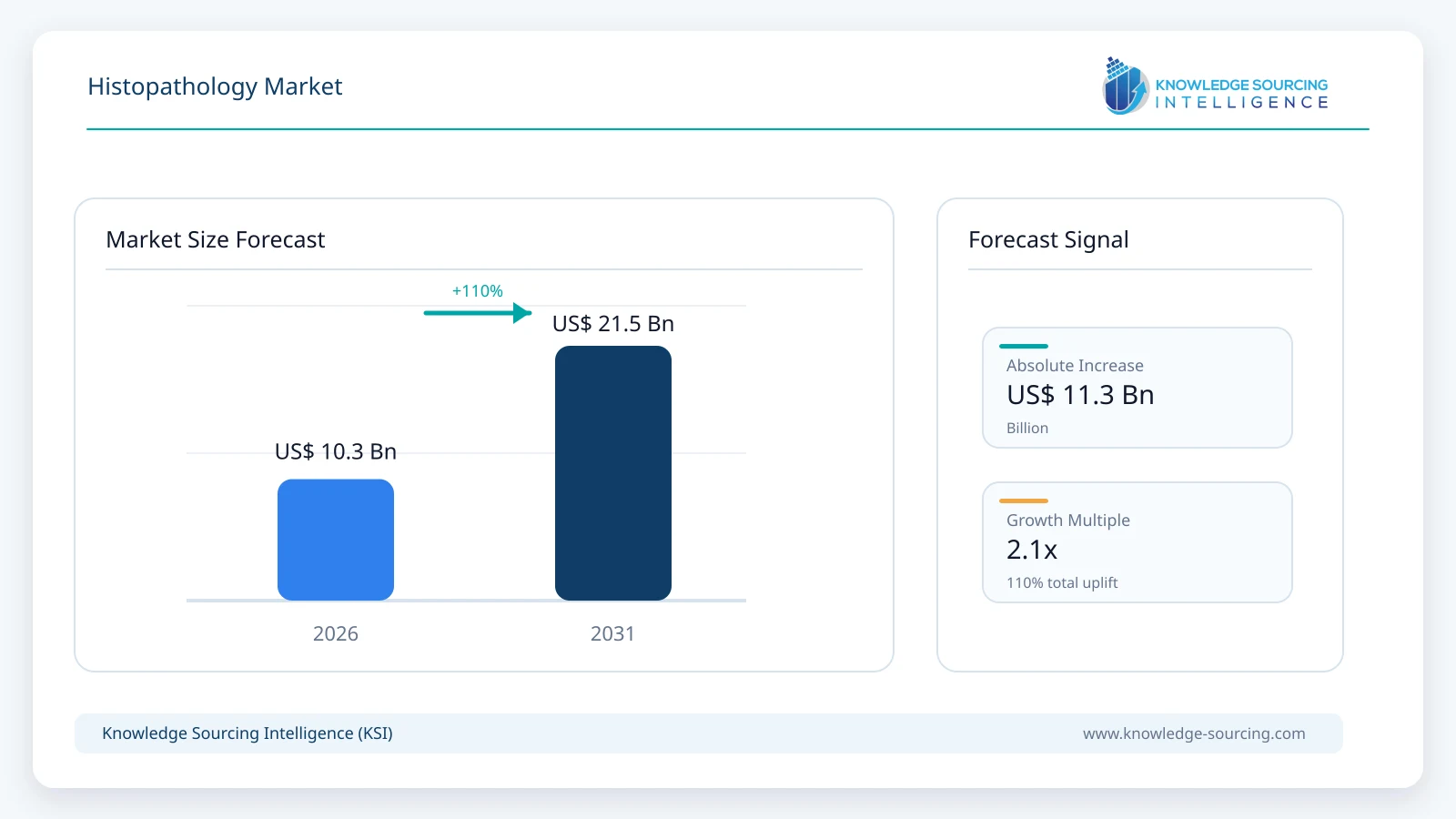
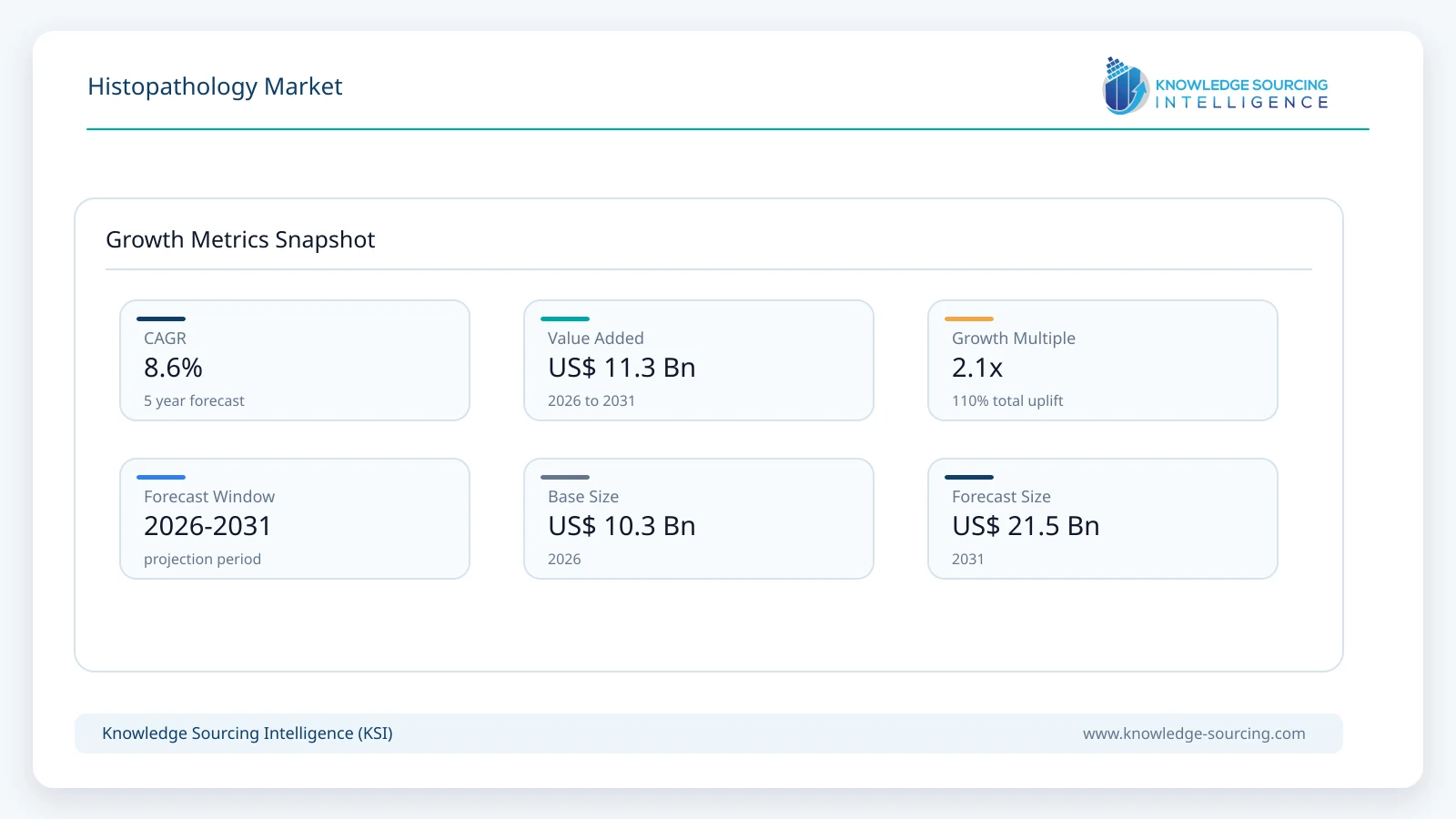
The Histopathology Market is set to reach USD 21.54 billion in 2031, growing at a CAGR of 8.6 % from USD 10.27 billion in 2026.
Highlights:
- 1Rising global cancer incidence continues to increase biopsy procedures, strengthening demand for automated histopathology instruments and standardized laboratory workflows.
- 2Digital pathology adoption is accelerating because healthcare providers seek faster diagnosis, remote consultation capabilities, and artificial intelligence-assisted image analysis.
- 3Precision medicine programs are expanding tissue-based biomarker testing, increasing utilization of advanced staining systems, immunohistochemistry platforms, and digital imaging technologies.
- 4Pharmaceutical companies continue increasing investments in translational research, supporting greater demand for histopathology services throughout drug discovery and clinical development.
Histopathology comprises instruments, consumables, reagents, software, and imaging technologies that enable microscopic examination of tissue samples for disease diagnosis and research applications. The market serves hospitals, independent pathology laboratories, academic institutions, pharmaceutical companies, and biotechnology organizations that require accurate tissue evaluation to guide clinical and research decisions.
The increasing global burden of cancer remains the primary factor driving market expansion because histopathological examination represents the diagnostic gold standard for confirming malignancies and determining treatment strategies. Healthcare systems continue expanding cancer screening programs, resulting in higher biopsy volumes and greater demand for automated laboratory workflows capable of managing increasing specimen loads without compromising quality.
Market Dynamics
Market Drivers
Rising Global Cancer Burden Increases Histopathology Testing Demand
Cancer diagnosis depends heavily on histopathological examination because tissue analysis confirms disease type, stage, and biological characteristics. Growing cancer incidence continues to increase biopsy volumes across hospitals and diagnostic laboratories. Healthcare providers are expanding pathology capacity to accommodate rising diagnostic demand, encouraging investments in automated instruments, advanced staining technologies, and digital pathology platforms that improve diagnostic accuracy and laboratory efficiency.
Digital Pathology Adoption Strengthens Laboratory Modernization
Healthcare organizations increasingly implement digital pathology to improve diagnostic workflows and specialist collaboration. Whole-slide imaging systems, artificial intelligence-enabled software, and cloud-based image management platforms reduce reporting turnaround time while supporting remote consultations. Vendors continue enhancing integrated digital ecosystems, accelerating technology adoption throughout developed and emerging healthcare markets.
Automation Improves Laboratory Productivity
Pathology laboratories require greater operational efficiency because specimen volumes continue increasing while workforce shortages remain significant. Automated tissue processors, slide stainers, embedding systems, and microtomes reduce manual intervention and improve workflow standardization. Healthcare providers continue replacing legacy equipment with automated solutions that enhance productivity, minimize errors, and support consistent diagnostic quality.
Precision Medicine Expands Advanced Histopathology Applications
Precision oncology increasingly relies on detailed tissue characterization to guide targeted therapies and companion diagnostic testing. Pharmaceutical companies and healthcare providers continue expanding biomarker-driven treatment strategies, increasing demand for immunohistochemistry, digital pathology, and molecular pathology technologies. Histopathology therefore becomes an essential component of personalized medicine across multiple therapeutic areas.
Market Restraints
High capital investment requirements for automated histopathology instruments and digital pathology infrastructure limit adoption among smaller laboratories.
Regulatory compliance, quality assurance requirements, and laboratory accreditation standards increase implementation complexity for new technologies.
Limited availability of experienced pathologists and laboratory professionals constrains efficient utilization of advanced diagnostic platforms.
Market Opportunities
Artificial Intelligence Creates Next-Generation Diagnostic Workflows
Artificial intelligence continues improving image interpretation, workflow prioritization, and quantitative tissue analysis. Healthcare providers increasingly integrate AI into digital pathology platforms to improve diagnostic consistency while supporting precision medicine initiatives.
Emerging Economies Expand Diagnostic Infrastructure
Governments continue investing in cancer screening programs, pathology laboratories, and hospital infrastructure across developing countries. These investments create significant opportunities for manufacturers offering scalable histopathology solutions suitable for expanding healthcare systems.
Companion Diagnostics Strengthen Precision Oncology
Biopharmaceutical companies continue developing targeted therapies that require tissue-based biomarker identification. Histopathology technologies therefore play a central role in companion diagnostic development, expanding opportunities for specialized reagents, imaging systems, and digital pathology software.
Disease & Epidemiology Analysis
Cancer remains the primary disease area driving demand for histopathology services because tissue examination provides definitive diagnosis for most solid tumors. The increasing incidence of breast, lung, colorectal, prostate, gastric, liver, cervical, and skin cancers continues to expand biopsy volumes across hospitals and pathology laboratories. Healthcare providers are strengthening pathology capacity to support earlier diagnosis, accurate tumor classification, and personalized treatment planning.
Chronic inflammatory and autoimmune diseases also contribute substantially to histopathology utilization because tissue biopsy frequently confirms disease severity and differentiates inflammatory conditions from malignancies. Gastrointestinal disorders, liver diseases, renal diseases, dermatological conditions, and connective tissue disorders increasingly require histopathological evaluation to guide therapeutic decisions. The growing prevalence of these chronic conditions continues to support routine laboratory workloads.
Treatment Guidelines Landscape
Organization | Disease Area | Histopathology Recommendation | Clinical Significance |
World Health Organization (WHO) | Cancer Diagnosis | Recommends histopathological confirmation as the diagnostic standard for most malignant tumors | Enables accurate disease classification and staging |
National Comprehensive Cancer Network (NCCN) | Solid Tumors | Requires pathological confirmation before treatment selection | Supports personalized oncology treatment planning |
American Society of Clinical Oncology (ASCO) | Precision Oncology | Recommends biomarker testing using validated pathology techniques | Improves targeted therapy selection |
College of American Pathologists (CAP) | Laboratory Practice | Establishes standardized specimen handling, fixation, and reporting guidelines | Improves diagnostic quality and reproducibility |
European Society for Medical Oncology (ESMO) | Cancer Management | Supports standardized pathology reporting and biomarker evaluation | Facilitates precision medicine implementation |
International Collaboration on Cancer Reporting (ICCR) | Cancer Reporting | Promotes structured pathology reporting protocols | Improves consistency across healthcare systems |
Market Segmentation
By Product
The product segment consists of instruments, consumables & reagents, and software, each supporting a different stage of the histopathology workflow. Instruments account for substantial capital investments because laboratories require automated tissue processors, microtomes, slide stainers, and digital scanners to improve throughput and diagnostic consistency. Consumables & reagents generate continuous demand since every tissue sample requires stains, antibodies, cassettes, slides, embedding media, and processing chemicals, making this the largest recurring revenue segment. Software is expanding rapidly as pathology laboratories adopt digital pathology, artificial intelligence-assisted image analysis, workflow management, and laboratory information system integration to improve efficiency, reduce reporting time, and enable remote pathology consultations.
By Technology
The technology segment includes tissue processing systems, microtomes, cryostats, tissue embedding systems, slide staining systems, digital pathology systems, and whole slide imaging systems. Conventional tissue preparation technologies continue to support routine diagnostic workflows, while laboratories increasingly invest in automation to reduce manual intervention and improve reproducibility. Digital pathology and whole slide imaging are experiencing the fastest adoption because healthcare providers are implementing remote diagnostics, artificial intelligence-assisted pathology, and centralized reporting platforms to address growing pathology workloads and improve diagnostic accuracy across healthcare networks.
By Application
The application segment comprises disease diagnosis, drug discovery & development, and academic research. Disease diagnosis represents the largest segment because histopathology remains the gold standard for confirming cancer and numerous non-oncological diseases through tissue examination. Drug discovery & development continues expanding as pharmaceutical and biotechnology companies increasingly depend on histopathological evaluation for preclinical safety studies, biomarker validation, and therapeutic development. Academic research also contributes steadily as universities and research institutes use advanced histopathology technologies to investigate disease mechanisms, develop novel biomarkers, and support translational medicine initiatives.
Regional Analysis
North America
North America leads the global histopathology market because the region maintains advanced healthcare infrastructure, high cancer screening rates, and extensive adoption of laboratory automation technologies. Hospitals and independent diagnostic laboratories continue investing in digital pathology systems, whole-slide imaging, artificial intelligence-assisted diagnostics, and integrated laboratory workflows. The United States remains the largest regional market due to strong reimbursement frameworks, widespread implementation of precision oncology, and continuous investment in cancer diagnostics. Pharmaceutical and biotechnology companies also contribute significantly by expanding biomarker research, companion diagnostic development, and translational medicine programs. Regulatory support for digital pathology and increasing utilization of AI-assisted image analysis continue to accelerate commercialization of innovative diagnostic platforms. Canada complements regional growth through expanding cancer care programs, academic research, and healthcare digitization initiatives.
Europe
Europe represents a mature histopathology market supported by universal healthcare systems, standardized pathology practices, and increasing adoption of digital diagnostics. Countries including Germany, the United Kingdom, France, Italy, Spain, and the Netherlands continue modernizing pathology laboratories to improve efficiency and diagnostic quality. Implementation of the European Union Medical Device Regulation (MDR) and In Vitro Diagnostic Regulation (IVDR) is encouraging manufacturers to strengthen product quality, clinical validation, and post-market surveillance. Precision oncology initiatives continue expanding companion diagnostic testing and biomarker-driven treatment selection across major European healthcare systems. Academic collaborations and government-funded cancer research programs further strengthen regional demand for advanced histopathology technologies.
Asia-Pacific
Asia-Pacific is emerging as the fastest-growing regional market because governments continue expanding healthcare infrastructure, cancer screening programs, and pathology laboratory capacity. China, Japan, India, South Korea, and Australia continue investing in digital healthcare, laboratory automation, and precision medicine initiatives. Rising cancer incidence, improving healthcare accessibility, and increasing healthcare expenditure continue driving demand for automated tissue processing systems, digital pathology platforms, and advanced imaging technologies. Multinational manufacturers are expanding regional manufacturing, distribution, and research partnerships to capture growing demand. Increasing private diagnostic laboratory networks and government healthcare modernization programs continue creating long-term opportunities throughout the region.
Rest of the World
The Rest of the World, including Latin America, the Middle East, and Africa, continues demonstrating gradual market expansion as healthcare infrastructure improves and cancer diagnosis receives greater policy attention. Governments continue investing in pathology laboratories, hospital modernization, and national cancer control programs to improve diagnostic accessibility. International healthcare organizations and public-private partnerships continue supporting laboratory capacity building and workforce development. Private healthcare providers increasingly adopt automated histopathology technologies to improve diagnostic quality and operational efficiency. Although infrastructure limitations and reimbursement challenges remain in several countries, ongoing investments in healthcare modernization continue creating sustainable opportunities for histopathology manufacturers across these emerging markets.
Regulatory Landscape
The regulatory environment for the global histopathology market is evolving toward greater standardization, digital validation, and quality assurance as pathology laboratories increasingly adopt automated and AI-enabled diagnostic workflows. Regulatory agencies continue requiring manufacturers to demonstrate analytical performance, clinical validity, software reliability, cybersecurity, and interoperability before commercial approval. These requirements are accelerating investments in validation studies while encouraging manufacturers to develop integrated diagnostic platforms that comply with international laboratory standards.
The U.S. Food and Drug Administration (FDA) regulates histopathology instruments, digital pathology systems, immunohistochemistry assays, and companion diagnostics under medical device regulations. The agency continues expanding clearances for whole-slide imaging systems, AI-assisted pathology software, and biomarker-based companion diagnostics that support precision oncology. FDA guidance on software as a medical device (SaMD) is also influencing the development of artificial intelligence-enabled pathology platforms.
The European Union Medical Device Regulation (EU MDR 2017/745) and the In Vitro Diagnostic Regulation (IVDR 2017/746) have strengthened clinical evidence, post-market surveillance, and performance evaluation requirements for histopathology equipment, digital pathology software, and tissue-based diagnostic assays. Manufacturers are increasing regulatory investments to maintain CE marking while improving product traceability, clinical documentation, and quality management systems.
Pipeline Analysis
Although histopathology is primarily an established diagnostics market rather than a therapeutic pipeline market, manufacturers continue developing next-generation digital pathology platforms, artificial intelligence-assisted image analysis software, multiplex tissue diagnostics, spatial biology technologies, and advanced companion diagnostics. Product development is shifting from standalone laboratory instruments toward integrated digital ecosystems that combine slide preparation, whole-slide imaging, cloud connectivity, AI-assisted interpretation, and laboratory workflow management.
Artificial intelligence remains the most active innovation area because manufacturers are expanding algorithms capable of identifying tumor morphology, quantifying biomarkers, detecting metastatic lesions, and supporting pathologist decision-making. Companies including Roche, Leica Biosystems (Danaher), Agilent Technologies, and Philips are strengthening digital pathology pipelines through AI-enabled image analysis, cloud-based pathology platforms, and companion diagnostic software. Spatial biology and multiplex immunohistochemistry platforms are also progressing rapidly as pharmaceutical companies increasingly require tissue-level biomarker characterization for precision oncology and immunotherapy development.
Reimbursement Landscape
Reimbursement for histopathology services primarily depends on national healthcare systems, private insurers, and established pathology procedure coding rather than reimbursement for individual instruments. Tissue biopsy evaluation, histological examination, immunohistochemistry, and molecular pathology testing receive reimbursement under procedure-based payment models in most developed healthcare markets. Expanding cancer screening programs and precision oncology initiatives continue supporting reimbursement for advanced pathology services because tissue diagnosis remains essential for treatment selection.
Companion diagnostic testing is receiving broader reimbursement as regulatory agencies approve biomarker-guided targeted therapies. Healthcare payers increasingly recognize the clinical value of immunohistochemistry, digital pathology, and molecular pathology because accurate biomarker identification improves therapeutic outcomes while reducing unnecessary treatment costs. Emerging reimbursement policies for digital pathology and AI-assisted diagnostics are also supporting gradual commercial adoption across hospitals and diagnostic laboratories.
Competitive Landscape
F. Hoffmann-La Roche Ltd.
Roche maintains one of the strongest competitive positions in histopathology by integrating tissue diagnostics, companion diagnostics, digital pathology, and precision oncology into a unified ecosystem. The company's VENTANA platform, advanced immunohistochemistry assays, and digital pathology capabilities support hospitals and pharmaceutical companies throughout cancer diagnosis and targeted therapy selection. Roche continues investing heavily in AI-assisted pathology, biomarker discovery, and companion diagnostic development, strengthening its leadership in precision medicine.
Danaher Corporation
Danaher operates through Leica Biosystems, one of the world's leading providers of histopathology solutions. The company offers comprehensive tissue processing systems, microtomes, slide stainers, digital pathology platforms, and whole-slide imaging technologies. Leica Biosystems continues expanding automation and AI capabilities while strengthening collaborations with pharmaceutical companies to support companion diagnostics and biomarker-driven oncology research.
Thermo Fisher Scientific Inc.
Thermo Fisher Scientific competes through its broad pathology consumables, antibodies, tissue diagnostics, and laboratory workflow portfolio. The company continues integrating histopathology with molecular diagnostics, translational research, and precision medicine applications. Strategic investments in digital laboratory infrastructure and biomarker technologies continue expanding its position across clinical diagnostics and pharmaceutical research.
Agilent Technologies, Inc.
Agilent strengthens its market position through Dako-branded immunohistochemistry systems, companion diagnostics, and automated staining platforms. The company focuses on biomarker testing that supports targeted oncology therapies while expanding digital pathology collaborations. Continued investment in precision medicine positions Agilent among the leading providers of advanced tissue diagnostics.
PHC Holdings Corporation
PHC Holdings, through Epredia, provides tissue processing systems, slide preparation equipment, cryostats, microtomes, and pathology workflow solutions. The company continues expanding digital pathology capabilities while emphasizing laboratory automation, workflow optimization, and integrated diagnostic solutions that improve operational efficiency.
Sakura Finetek Japan Co., Ltd.
Sakura Finetek specializes exclusively in histopathology workflow automation. The company develops tissue processors, embedding systems, slide stainers, and digital pathology technologies designed to improve laboratory productivity. Continuous innovation in specimen processing and automation strengthens Sakura's global competitive position.
Abbott Laboratories
Abbott supports histopathology through biomarker development, companion diagnostics, and precision medicine initiatives. Although diagnostics represent a broader portfolio, Abbott continues expanding oncology-focused biomarker technologies that complement tissue-based diagnosis and personalized treatment selection.
Merck KGaA
Merck KGaA supports the histopathology market primarily through research reagents, antibodies, laboratory chemicals, and biomarker collaborations. The company continues partnering with pharmaceutical developers to strengthen companion diagnostics and precision oncology programs, supporting translational research and tissue-based biomarker discovery.
Bio SB Inc.
Bio SB focuses on immunohistochemistry antibodies, detection systems, and pathology reagents used in oncology diagnostics. The company's specialized product portfolio enables pathology laboratories to expand biomarker testing capabilities while maintaining cost-effective diagnostic workflows.
Biocare Medical, LLC
Biocare Medical specializes in immunohistochemistry assays, automated staining systems, antibodies, and molecular pathology solutions. The company continues launching new cancer biomarkers while expanding precision diagnostic capabilities that support personalized oncology treatment.
StatLab Medical Products
StatLab Medical provides histology consumables, reagents, specimen management products, and laboratory workflow solutions. The company strengthens its market presence through acquisitions and portfolio expansion focused on improving laboratory efficiency and standardization.
Histo-Line Laboratories S.r.l.
Histo-Line develops histology instruments, laboratory consumables, staining systems, and pathology workflow products for European and international laboratories. The company emphasizes laboratory efficiency, product quality, and workflow optimization across routine histopathology operations.
Leica Biosystems Nussloch GmbH
Leica Biosystems remains one of the global leaders in histopathology by offering complete workflow solutions that include tissue processors, embedding systems, microtomes, slide stainers, scanners, and digital pathology software. The company continues expanding AI-enabled digital pathology platforms while strengthening precision oncology capabilities through companion diagnostic collaborations.
Key Developments
August 2026: Leica Biosystems announced multiple FDA clearances for digital pathology solutions, including AI-assisted quality control software, strengthening clinical workflow automation and accelerating diagnosis delivery.
August 2026: Roche received FDA clearance for Elecsys pTau217, expanding blood-based Alzheimer’s pathology assessment across primary and specialty care settings in the United States nationwide.
July 2026: Danaher’s Leica Biosystems agreed to acquire StatLab Medical Products, expanding its anatomical pathology portfolio across specimen collection, tissue processing, slide preparation, and staining.
May 2026: Roche entered a definitive agreement to acquire PathAI, integrating AI-powered image management and analysis capabilities with Roche’s digital pathology portfolio to advance automated diagnostics.
Strategic Insights and Future Market Outlook
Precision medicine will remain the primary structural growth driver because targeted therapies increasingly depend on accurate tissue characterization and biomarker identification. Companion diagnostics, multiplex immunohistochemistry, spatial biology, and AI-assisted pathology will continue expanding the clinical role of histopathology beyond routine diagnosis. Pharmaceutical partnerships are therefore becoming an increasingly important source of innovation and commercial growth.
Emerging healthcare markets are expected to create substantial long-term opportunities as governments continue investing in cancer diagnostics, laboratory modernization, and digital healthcare infrastructure. Manufacturers offering scalable automation platforms, affordable digital pathology systems, and integrated workflow solutions will be well positioned to capture future demand. Continuous advances in artificial intelligence, cloud computing, and precision oncology are expected to redefine histopathology as a central component of next-generation diagnostic medicine.
Histopathology will continue serving as the foundation of cancer diagnosis while evolving into a digitally connected discipline that supports precision medicine, translational research, and personalized healthcare across global healthcare systems.
Histopathology Market Scope:
| Report Metric | Details |
|---|---|
| Total Market Size in 2026 | USD 10.27 billion |
| Total Market Size in 2031 | USD 21.54 billion |
| Forecast Unit | USD Billion |
| Growth Rate | 8.6 % |
| Study Period | 2021 to 2031 |
| Historical Data | 2021 to 2024 |
| Base Year | 2025 |
| Forecast Period | 2026 – 2031 |
| Segmentation | Product, Technology, End User, Geography |
| Companies |
|
Market Segmentation
Product
Technology
End User
Geography
- North America
- South America
- Europe
- Middle East and Africa
- Asia Pacific
Table of Contents
1. EXECUTIVE SUMMARY
1.1 Market Snapshot
1.2 Key Findings
1.3 Analyst Insights
1.4 Strategic Recommendations
2. RESEARCH METHODOLOGY
2.1 Research Design
2.2 Data Collection Methodology
2.3 Market Size Estimation
2.4 Forecasting Model
2.5 Assumptions & Limitations
3. GLOBAL HISTOPATHOLOGY MARKET OVERVIEW, SIZE & FORECAST
3.1 Market Definition & Scope
3.2 Industry Overview
3.3 Industry Evolution
3.4 Key Market Trends
3.5 Historical Market Size Analysis (2021–2025)
3.6 Market Forecast (2026–2035)
3.7 Disease Burden and Biopsy Volume Analysis
3.8 Histopathology Testing Volume Analysis
3.9 Laboratory Workflow Analysis
3.10 Role of Histopathology in Disease Diagnosis and Precision Medicine
4. MARKET DYNAMICS
4.1 Market Drivers
4.2 Market Restraints
4.3 Market Opportunities
4.4 Market Challenges
5. INDUSTRY LANDSCAPE
5.1 Industry Value Chain Analysis
5.2 Pricing Analysis
5.3 Reimbursement Landscape
6. INNOVATION LANDSCAPE
6.1 Emerging Technologies
6.2 Product Innovation
6.3 Digital Pathology Integration
6.4 Artificial Intelligence in Histopathology
6.5 Whole Slide Imaging and Image Analysis
6.6 Automation in Histopathology Laboratories
6.7 Technology Roadmap
7. REGULATORY LANDSCAPE
7.1 Regulatory Framework
7.2 Approval Pathways
7.3 Compliance Requirements
8. GLOBAL HISTOPATHOLOGY MARKET LANDSCAPE ANALYSIS
8.1 Analysis by Product Type
8.1.1 Instruments
8.1.2 Consumables & Reagents
8.1.3 Software
8.2 Analysis by Technology Platform
8.2.1 Tissue Processing
8.2.2 Tissue Embedding
8.2.3 Microtomy
8.2.4 Tissue Staining
8.2.5 Digital Pathology
8.2.6 Whole Slide Imaging
8.3 Analysis by Specimen Type
8.3.1 Breast Tissue
8.3.2 Gastrointestinal Tissue
8.3.3 Skin Tissue
8.3.4 Lung Tissue
8.3.5 Prostate Tissue
8.3.6 Other Tissue Types
8.4 Analysis by Clinical Application
8.4.1 Oncology
8.4.2 Infectious Diseases
8.4.3 Neurological Disorders
8.4.4 Renal Diseases
8.4.5 Other Diseases
9. GLOBAL HISTOPATHOLOGY MARKET SEGMENT ANALYSIS (2021–2035)
9.1 By Product
9.1.1 Instruments
9.1.2 Consumables & Reagents
9.1.3 Software
9.2 By Technology
9.2.1 Tissue Processing Systems
9.2.2 Microtomes
9.2.3 Cryostats
9.2.4 Tissue Embedding Systems
9.2.5 Slide Staining Systems
9.2.6 Digital Pathology Systems
9.2.7 Whole Slide Imaging Systems
9.3 By Application
9.3.1 Disease Diagnosis
9.3.2 Drug Discovery & Development
9.3.3 Academic Research
9.4 By End User
9.4.1 Hospitals
9.4.2 Diagnostic Laboratories
9.4.3 Academic & Research Institutes
9.4.4 Pharmaceutical & Biotechnology Companies
9.4.5 Contract Research Organizations
10. GLOBAL HISTOPATHOLOGY MARKET GEOGRAPHICAL ANALYSIS (2021–2035)
10.1 North America
10.2 Europe
10.3 Asia-Pacific
10.4 South America
10.5 Middle East & Africa
11. GLOBAL HISTOPATHOLOGY MARKET COUNTRY ANALYSIS (2021–2035)
11.1 United States
11.2 Canada
11.3 Germany
11.4 United Kingdom
11.5 France
11.6 Italy
11.7 Spain
11.8 Netherlands
11.9 Japan
11.10 China
11.11 India
11.12 South Korea
11.13 Australia
11.14 Brazil
11.15 Mexico
11.16 Saudi Arabia
11.17 South Africa
12. COMPETITIVE LANDSCAPE
12.1 Market Share Analysis
12.2 Strategic Developments
12.3 Mergers & Acquisitions, Partnerships & Collaborations
12.4 Product Launches
13. COMPANY PROFILES
13.1 F. Hoffmann-La Roche Ltd.
13.1.1 Company Overview
13.1.2 Financials
13.1.3 Product Portfolio
13.1.4 Recent Developments
13.2 Danaher Corporation
13.2.1 Company Overview
13.2.2 Financials
13.2.3 Product Portfolio
13.2.4 Recent Developments
13.3 Thermo Fisher Scientific Inc.
13.3.1 Company Overview
13.3.2 Financials
13.3.3 Product Portfolio
13.3.4 Recent Developments
13.4 Agilent Technologies, Inc.
13.4.1 Company Overview
13.4.2 Financials
13.4.3 Product Portfolio
13.4.4 Recent Developments
13.5 PHC Holdings Corporation
13.5.1 Company Overview
13.5.2 Financials
13.5.3 Product Portfolio
13.5.4 Recent Developments
13.6 Sakura Finetek Japan Co., Ltd.
13.6.1 Company Overview
13.6.2 Financials
13.6.3 Product Portfolio
13.6.4 Recent Developments
13.7 Abbott Laboratories
13.7.1 Company Overview
13.7.2 Financials
13.7.3 Product Portfolio
13.7.4 Recent Developments
13.8 Merck KGaA
13.8.1 Company Overview
13.8.2 Financials
13.8.3 Product Portfolio
13.8.4 Recent Developments
13.9 Bio SB Inc.
13.9.1 Company Overview
13.9.2 Financials
13.9.3 Product Portfolio
13.9.4 Recent Developments
13.10 Biocare Medical, LLC
13.10.1 Company Overview
13.10.2 Financials
13.10.3 Product Portfolio
13.10.4 Recent Developments
13.11 StatLab Medical Products
13.11.1 Company Overview
13.11.2 Financials
13.11.3 Product Portfolio
13.11.4 Recent Developments
13.12 Histo-Line Laboratories S.r.l.
13.12.1 Company Overview
13.12.2 Financials
13.12.3 Product Portfolio
13.12.4 Recent Developments
13.13 General Data Healthcare, Inc.
13.13.1 Company Overview
13.13.2 Financials
13.13.3 Product Portfolio
13.13.4 Recent Developments
13.14 CellPath Ltd.
13.14.1 Company Overview
13.14.2 Financials
13.14.3 Product Portfolio
13.14.4 Recent Developments
13.15 SLEE medical GmbH
13.15.1 Company Overview
13.15.2 Financials
13.15.3 Product Portfolio
13.15.4 Recent Developments
14. GLOBAL HISTOPATHOLOGY MARKET COMMERCIAL FORECAST ANALYSIS
14.1 Tissue Processing Systems
14.2 Tissue Embedding Systems
14.3 Microtomes
14.4 Cryostats
14.5 Slide Staining Systems
14.6 Digital Pathology Systems
14.7 Whole Slide Imaging Systems
14.8 Histopathology Reagents & Consumables
15. INVESTMENT & FUNDING ANALYSIS
15.1 Venture Capital Trends
15.2 Government Funding
15.3 R&D Investments
16. FUTURE OUTLOOK
16.1 Key Growth Opportunities
16.2 Future Industry Trends
Navigate
Trusted by the world's leading organizations











