
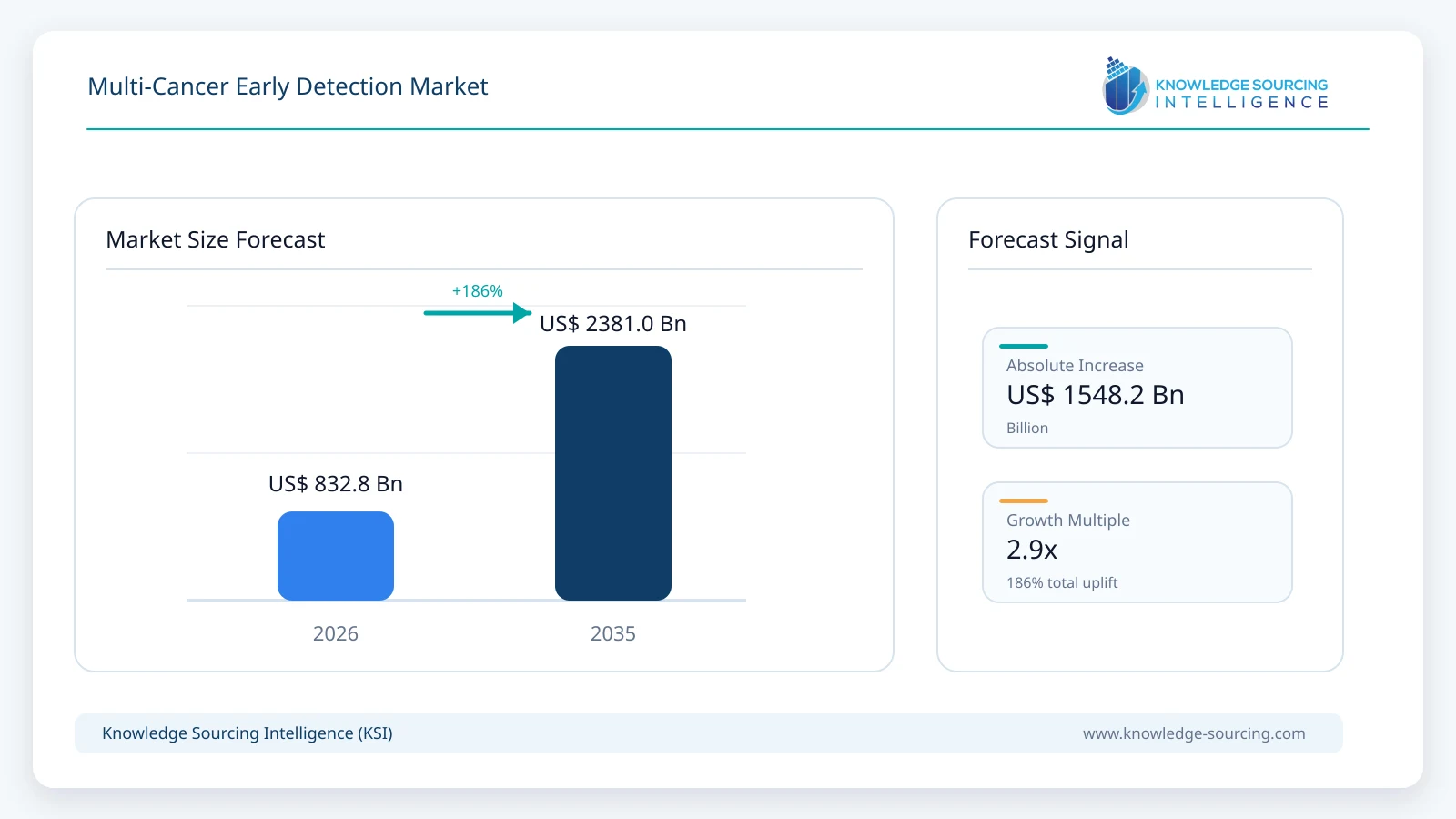
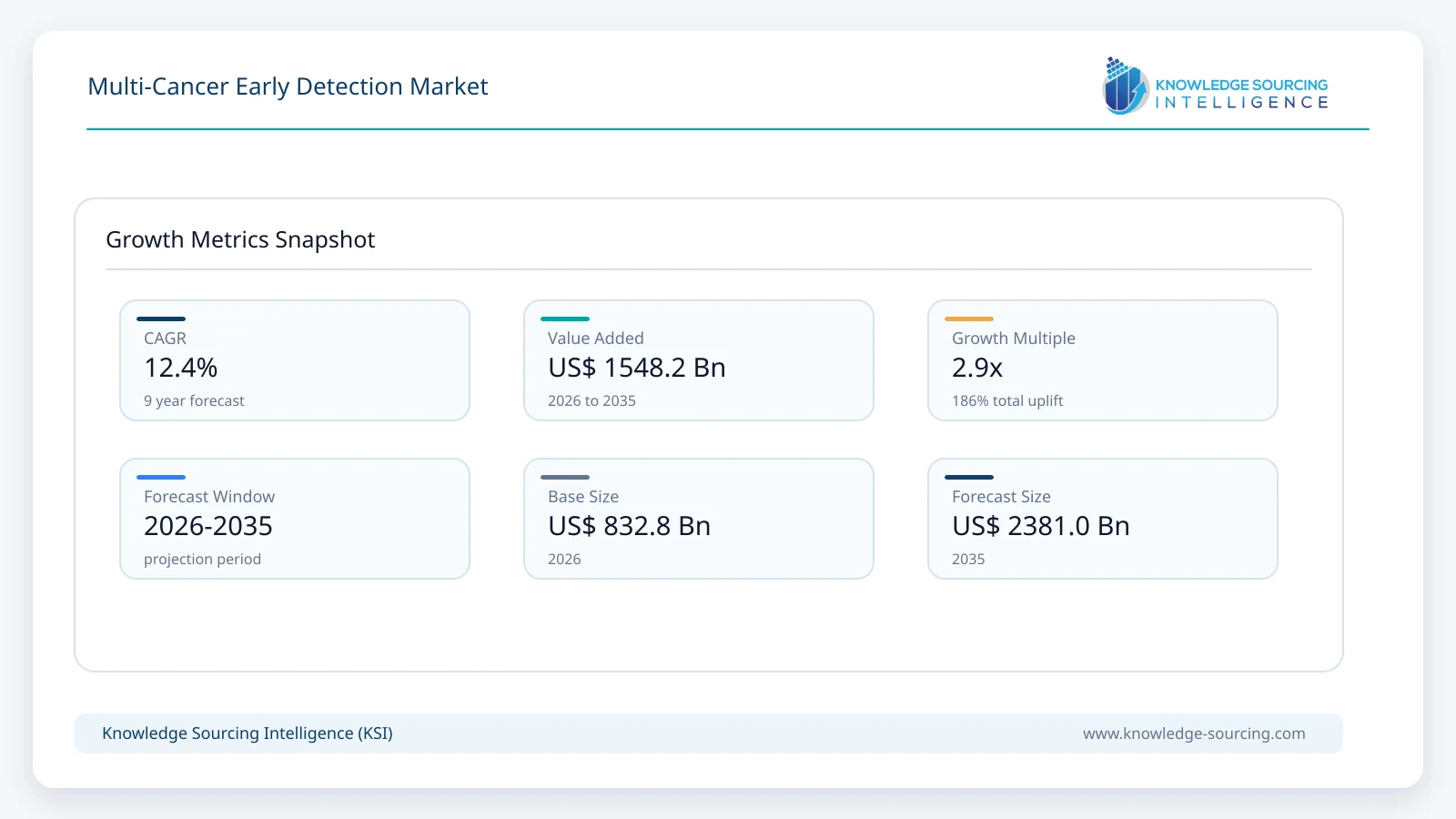
The Multi-Cancer Early Detection Market is expected to grow at a CAGR of 12.4% from a market value of USD 832.78 million in 2026 to USD 2,381.02 million in 2035.
Highlights:
- 1Increasing investment in liquid biopsy technologies is expanding demand for multi-cancer screening platforms because healthcare providers seek minimally invasive approaches capable of detecting multiple malignancies through a single sample.
- 2Large prospective clinical studies are generating stronger evidence supporting analytical performance, which increases confidence among clinicians evaluating future integration into cancer screening pathways.
- 3Advances in next-generation sequencing, epigenetic profiling, and artificial intelligence are improving tissue-of-origin prediction because increasingly complex molecular datasets require sophisticated computational interpretation.
- 4Regulatory agencies are strengthening evidence requirements for population-level screening applications, which encourages developers to prioritize clinical validation and long-term outcome studies.
The multi-cancer early detection market consists of blood-based and other minimally invasive diagnostic approaches that analyze circulating biomarkers to identify the presence of multiple cancers before clinical symptoms emerge. These technologies integrate genomic, epigenomic, transcriptomic, proteomic, and computational analyses to support earlier diagnosis across diverse tumor types.
Cancer remains a leading global health burden because many malignancies continue to be diagnosed after disease progression has already reduced treatment effectiveness. Healthcare providers are increasingly adopting precision diagnostics as they seek screening approaches capable of identifying cancers at earlier stages without requiring multiple organ-specific tests. This demand shift increases interest in liquid biopsy technologies capable of supporting population-scale screening.
The market depends heavily on continuous improvements in sequencing platforms, bioinformatics algorithms, and biomarker validation because accurate detection requires distinguishing cancer-derived molecular signals from normal biological variation. Diagnostic developers are expanding prospective clinical trials while refining machine learning models to improve tissue-of-origin prediction and minimize unnecessary follow-up procedures. This scientific progression strengthens confidence among clinicians considering future implementation.
Regulatory oversight plays a defining role because diagnostic assays intended for population screening require extensive evidence demonstrating analytical validity, clinical validity, and clinical utility. Agencies continue evaluating emerging evidence from large-scale studies, while healthcare organizations are assessing how MCED testing could complement existing cancer screening recommendations rather than replace established programs. This balanced regulatory approach supports responsible clinical integration.
Market Dynamics
Market Drivers
Growing Need for Earlier Cancer Diagnosis Across Multiple Tumor Types: Cancer screening remains limited for many malignancies because established screening programs focus on only a small number of cancers. Healthcare providers are increasingly seeking diagnostic approaches capable of identifying multiple cancers before symptoms appear, since delayed diagnosis frequently limits therapeutic options. This unmet clinical need places greater emphasis on liquid biopsy technologies that analyze circulating molecular biomarkers. Diagnostic developers are expanding validation studies to improve sensitivity across diverse cancer types while maintaining acceptable specificity. Earlier detection remains the principal demand driver supporting continued investment in MCED technologies.
Expansion of Liquid Biopsy and Molecular Diagnostic Technologies: Advances in sequencing technologies enable increasingly sensitive detection of circulating tumor-derived biomarkers from minimally invasive samples. Laboratory platforms are continuously improving analytical precision because lower biomarker concentrations require highly accurate molecular characterization. This technological evolution supports broader investigation of methylation signatures, circulating tumor DNA, cell-free RNA, and protein biomarkers within integrated diagnostic platforms. Companies are incorporating artificial intelligence into analytical workflows to improve signal interpretation and tissue-of-origin prediction.
Increasing Clinical Validation Through Large Prospective Studies: Clinical evidence determines physician confidence because screening technologies require demonstration of meaningful clinical utility before routine adoption. Major diagnostic developers are conducting large prospective clinical studies across asymptomatic populations to evaluate detection performance under real-world conditions. These studies address uncertainties regarding false-positive findings, cancer localization, and diagnostic follow-up pathways. Expanding clinical validation continues to reduce scientific uncertainty surrounding MCED implementation.
Rising Strategic Investment in Precision Oncology: Precision oncology increasingly depends on molecular characterization because individualized treatment planning begins with accurate diagnosis. Biotechnology companies are strengthening investment in biomarker discovery, computational biology, and clinical partnerships as competition expands within liquid biopsy diagnostics. These investments support the development of broader biomarker panels while improving analytical performance across diverse cancer populations. Healthcare institutions are collaborating with industry to generate real-world evidence supporting future clinical adoption.
Market Restraints
Clinical implementation remains constrained by the need for long-term evidence demonstrating improved patient outcomes and reductions in cancer-specific mortality.
Regulatory approval pathways require extensive analytical and clinical validation, increasing development timelines and commercialization costs for diagnostic sponsors.
Reimbursement remains limited in many healthcare systems because health technology assessment organizations continue evaluating cost-effectiveness and clinical utility evidence.
Market Opportunities
Expansion into Population-Level Cancer Screening: Population screening represents a significant long-term opportunity because existing screening programs address only selected cancer types. Healthcare systems are evaluating broader diagnostic strategies as evidence supporting multi-cancer detection continues to expand. Diagnostic developers are optimizing assay performance to improve sensitivity across early-stage malignancies while maintaining high specificity. This progression enables future integration alongside established screening methods rather than replacing them.
Integration of Artificial Intelligence into Biomarker Interpretation: Artificial intelligence improves diagnostic interpretation because MCED platforms generate highly complex molecular datasets requiring advanced computational analysis. Machine learning algorithms are continuously refining cancer signal detection and tissue-of-origin prediction using expanding clinical datasets. Improved analytical performance reduces diagnostic uncertainty while supporting more efficient clinical decision-making. Developers are integrating increasingly sophisticated computational models into laboratory workflows.
Growth of Collaborative Clinical Research Networks: Large clinical datasets improve biomarker validation because molecular signatures vary across demographic and clinical populations. Biotechnology companies are establishing partnerships with hospitals, academic institutions, and national cancer research organizations to strengthen prospective evidence generation. These collaborations support algorithm refinement while increasing confidence among clinicians and regulators. Research networks are also enabling more diverse patient enrollment across geographic regions.
Development of Complementary Oncology Care Pathways: Earlier diagnosis creates opportunities beyond screening because patients require coordinated diagnostic confirmation, molecular profiling, and treatment planning following positive findings. Healthcare providers are developing integrated care pathways that combine MCED testing with imaging, pathology, and precision oncology services. Diagnostic companies are designing platforms that support efficient clinical workflows while facilitating physician interpretation. This integration improves healthcare system readiness for broader implementation.
Disease & Epidemiology Analysis
Cancer remains one of the leading causes of morbidity and mortality worldwide because many malignancies continue being diagnosed after disease progression has already reduced treatment options. The global disease burden includes numerous cancers that currently lack established population screening programs, creating persistent unmet diagnostic needs. Healthcare systems are increasingly emphasizing earlier diagnosis as evidence consistently demonstrates improved outcomes when treatment begins during localized disease stages.
Population aging continues to increase the incidence of multiple solid tumors because cancer risk rises substantially with age. Demographic changes are expanding the number of individuals requiring effective screening strategies, while healthcare providers are seeking scalable diagnostic approaches capable of supporting larger at-risk populations. These demographic trends increase demand for technologies that simultaneously evaluate multiple cancer types through minimally invasive sampling.
Existing screening programs primarily target breast, cervical, colorectal, lung, and prostate cancers, leaving many high-mortality malignancies without routine early detection strategies. Diagnostic developers are focusing on biomarker platforms capable of identifying pancreatic, ovarian, liver, esophageal, gastric, and other difficult-to-detect cancers because these diseases often present at advanced stages.
Treatment Guidelines Landscape
Organization | Guideline Focus | Relevance to MCED Market |
National Comprehensive Cancer Network (NCCN) | Organ-specific cancer screening and diagnostic pathways | Current guidelines primarily support established screening methods while evaluating emerging evidence for novel diagnostics. |
American Cancer Society (ACS) | Population cancer screening recommendations | Recommends evidence-based screening for selected cancers and recognizes ongoing research into blood-based multi-cancer detection technologies. |
U.S. Preventive Services Task Force (USPSTF) | Preventive screening recommendations | Continues recommending validated cancer screening approaches while requiring sufficient evidence before supporting new population-wide screening modalities. |
European Society for Medical Oncology (ESMO) | Oncology diagnosis and treatment guidance | Supports evidence-based integration of molecular diagnostics within precision oncology while emphasizing clinical validation. |
Market Segmentation
By Biomarker Type
Circulating tumor DNA (ctDNA) represents one of the foundational biomarker categories within the multi-cancer early detection (MCED) market because tumor-derived DNA fragments provide molecular evidence of malignant transformation before clinical symptoms develop. Demand is increasing as advances in next-generation sequencing and methylation profiling enable the detection of extremely low concentrations of circulating tumor DNA from a single blood sample. Analytical sensitivity remains a critical challenge because early-stage cancers release significantly smaller quantities of ctDNA than advanced disease. Diagnostic developers are refining sequencing depth, error-correction algorithms, and methylation-based approaches to improve early-stage detection while maintaining high specificity. The segment continues attracting substantial research investment owing to its scalability across multiple solid tumor types and compatibility with high-throughput laboratory workflows.
By Sample Type
Blood remains the dominant sample type because it supports minimally invasive collection while providing access to diverse circulating biomarkers, including ctDNA, cfRNA, proteins, extracellular vesicles, and epigenetic signatures. Healthcare providers are increasingly favoring blood-based screening because standardized collection procedures facilitate integration into routine preventive care and large-scale population screening initiatives. Biological variability continues to influence assay performance since biomarker concentrations differ according to tumor stage, cancer type, and individual physiology. Diagnostic companies are optimizing sample stabilization technologies and laboratory processing protocols to improve analytical reproducibility across healthcare settings. Blood-based testing remains the principal platform supporting the commercialization of multi-cancer early detection technologies.
By End User
Diagnostic laboratories constitute the leading end-user segment because MCED assays require advanced molecular testing infrastructure, high-throughput sequencing platforms, and specialized bioinformatics capabilities. Test volumes are gradually increasing as clinical validation studies expand and healthcare institutions evaluate implementation through centralized laboratory networks. Operational complexity remains an important consideration because laboratories must maintain rigorous quality assurance standards, standardized analytical workflows, and compliance with evolving regulatory requirements. Laboratory providers are investing in automation, digital pathology integration, and computational analysis platforms to improve testing efficiency while supporting future commercial demand.
Regional Analysis
North America Market Analysis
North America maintains the most advanced position in the MCED market because the region combines strong biotechnology innovation, established precision medicine infrastructure, and extensive oncology research networks. Demand is increasing as healthcare providers continue evaluating blood-based screening technologies capable of complementing existing organ-specific cancer screening programs. Large prospective clinical trials are generating evidence across diverse populations, allowing diagnostic developers to refine biomarker algorithms and tissue-of-origin prediction. Regulatory oversight remains rigorous because screening technologies intended for asymptomatic populations require a comprehensive demonstration of analytical validity, clinical validity, and clinical utility. Companies are expanding collaborations with academic medical centers, integrated healthcare systems, and pharmaceutical organizations to accelerate evidence generation and commercial readiness.
Europe Market Analysis
European demand for multi-cancer early detection technologies reflects the region's emphasis on organized cancer control strategies and evidence-based healthcare decision-making. National health systems are increasingly assessing the role of blood-based screening as research continues demonstrating improvements in molecular detection capabilities. Clinical implementation remains closely linked to health technology assessment because reimbursement decisions depend upon demonstrated clinical benefit, cost-effectiveness, and long-term patient outcomes. Research organizations are expanding multicenter collaborations to generate standardized clinical evidence applicable across different healthcare systems. Regulatory harmonization under the European Union Medical Device Regulation continues to strengthen requirements for diagnostic performance and post-market clinical evidence.
Asia Pacific Market Analysis
Asia Pacific represents a rapidly developing market because cancer incidence continues to increase alongside expanding investments in genomic medicine and healthcare infrastructure. Demand is growing as governments strengthen national cancer control programs while healthcare providers seek scalable screening solutions for large populations. Regional diversity presents operational challenges because healthcare infrastructure, laboratory capabilities, and reimbursement frameworks vary considerably between countries. Biotechnology companies are expanding research collaborations with academic institutions and regional healthcare providers to improve biomarker validation across ethnically diverse populations. Countries including Japan, China, South Korea, Singapore, and Australia continue investing in precision medicine initiatives that support advanced molecular diagnostics.
Rest of the World
The Rest of the World region is gradually entering the MCED landscape as healthcare systems strengthen oncology services and improve access to molecular diagnostic technologies. Demand remains concentrated within higher-income countries because advanced laboratory infrastructure and reimbursement mechanisms continue to limit widespread implementation across many developing healthcare markets. National cancer strategies increasingly recognize the value of earlier diagnosis as governments seek to reduce cancer-related mortality and optimize healthcare resource utilization. International collaborations are supporting technology transfer, physician education, and laboratory capacity building to improve access to precision diagnostics. Private healthcare providers are introducing advanced molecular testing services in selected markets where demand for personalized oncology continues to expand.
Regulatory Landscape
The regulatory environment for multi-cancer early detection technologies continues to evolve because population-level cancer screening requires exceptionally high standards for safety, analytical validity, and clinical performance. Regulatory authorities evaluate these assays not only as laboratory diagnostics but also as healthcare interventions capable of influencing downstream diagnostic procedures, treatment decisions, and healthcare resource utilization. Developers are generating increasingly comprehensive analytical and clinical datasets to demonstrate consistent performance across diverse patient populations. This evidence-based approach strengthens confidence among regulators while supporting responsible commercialization.
In the United States, the U.S. Food and Drug Administration (FDA) continues expanding oversight of in vitro diagnostic technologies through risk-based evaluation frameworks. Blood-based cancer screening assays intended for broad clinical use require demonstration of analytical validity, clinical validity, and, where applicable, clinical utility. Sponsors are conducting prospective studies involving thousands of participants because screening tests used in asymptomatic populations demand higher evidentiary standards than diagnostics used after symptom onset.
European regulatory oversight has become more comprehensive following the implementation of the European Union In Vitro Diagnostic Medical Devices Regulation (IVDR 2017/746). Manufacturers are strengthening clinical performance evidence, post-market surveillance activities, and quality management systems to comply with updated regulatory expectations. These evolving requirements encourage continuous clinical evidence generation while supporting greater transparency throughout the diagnostic lifecycle.
Pipeline Analysis
The MCED pipeline remains highly competitive because developers are pursuing distinct biomarker strategies to improve early-stage detection while expanding the number of detectable cancer types. Most investigational platforms integrate multiple molecular signals, including circulating tumor DNA, methylation signatures, cell-free RNA, protein biomarkers, and advanced machine learning algorithms. Sponsors continue refining tissue-of-origin prediction because accurate localization reduces unnecessary diagnostic investigations following a positive screening result.
GRAIL continues advancing Galleri, a methylation-based blood test designed to detect signals associated with multiple cancers while predicting the tissue of origin. Clinical evidence has been generated through studies including Circulating Cell-free Genome Atlas (CCGA), PATHFINDER, and the NHS-Galleri Trial, which collectively involve large participant populations evaluating real-world screening performance. The company remains focused on generating evidence supporting clinical utility and integration into population screening strategies.
Guardant Health continues expanding its liquid biopsy capabilities through advanced genomic analysis while strengthening blood-based cancer screening technologies. Although Shield primarily targets colorectal cancer screening, the company continues investing in broader oncology detection technologies that support future multi-cancer applications. Emerging developers are pursuing differentiated technologies that expand the competitive landscape. Collectively, these pipeline strategies demonstrate continued diversification in biomarker selection, analytical methodologies, and commercialization approaches.
Reimbursement Landscape
Reimbursement remains one of the principal determinants of commercial adoption because healthcare systems require clear evidence that multi-cancer early detection improves patient outcomes while providing acceptable economic value. Most public and private payers continue evaluating whether earlier diagnosis translates into reduced treatment costs, improved survival, and lower healthcare resource utilization across diverse cancer types. Clinical utility remains as important as analytical performance during reimbursement assessment.
Health technology assessment organizations are increasingly reviewing prospective clinical trial evidence alongside real-world studies to determine the value of MCED implementation within organized cancer screening programs. Diagnostic developers are generating health economic evidence, patient outcome analyses, and budget impact assessments to support future reimbursement submissions. Commercial adoption is therefore expected to progress incrementally as evidence supporting clinical effectiveness and cost-effectiveness continues expanding across major healthcare markets.
Competitive Landscape
GRAIL, LLC
GRAIL remains strategically distinct through its Galleri methylation-based MCED test supported by large prospective studies, including CCGA, PATHFINDER, and the NHS-Galleri Trial. The company continues prioritizing clinical utility evidence and healthcare partnerships to support future integration into routine cancer screening.
Guardant Health, Inc.
Guardant Health leverages its expertise in liquid biopsy and genomic diagnostics to expand blood-based cancer screening capabilities. The company continues strengthening its oncology diagnostics portfolio while advancing technologies that support future multi-cancer detection applications.
Exact Sciences Corporation
Exact Sciences combines molecular diagnostics with protein biomarker analysis through the development of CancerSEEK. The company continues investing in clinical validation and precision oncology partnerships to broaden its early cancer detection portfolio.
Freenome Holdings, Inc.
Freenome differentiates itself through a multiomics platform integrating cell-free DNA, protein biomarkers, and artificial intelligence. The company continues conducting prospective clinical studies to improve early-stage cancer detection and screening performance.
Singlera Genomics Inc.
Singlera Genomics focuses on methylation-based liquid biopsy technologies designed for early cancer detection across multiple tumor types. The company continues expanding clinical validation while strengthening genomic biomarker research and international collaborations.
Pleno Inc.
Pleno develops advanced molecular sensing technologies capable of simultaneously analyzing multiple genomic targets. The company continues refining its platform to improve molecular diagnostic efficiency and support future oncology applications.
Key Developments
June, 2026: Caris Life Sciences launched Caris Detect, the world's most sensitive and comprehensive multi-cancer early detection blood test that analyzes the entire genome. Caris Detect is powered by advanced AI technology trained on 50 billion molecular markers from more than 1 million real patient cases, making it the only multi-cancer early detection blood test that analyzes every gene in the human body to find evidence of cancer sooner with industry-leading accuracy.
March 2026: Guardant Health launched Shield Multi-Cancer Detection (MCD) test in Hong Kong, the Philippines, and Singapore through a partnership with Manulife, the first exclusive partnership Guardant Health AMEA has inked with an insurer. Eligible Manulife customers in these three Asian markets will gain access to the Shield MCD test beginning in April 2026, expanding Guardant Health's presence in Asia for multi-cancer detection.
October 2025: Samsung C&T (SCT), Samsung Electronics (SEC), and GRAIL announced a strategic collaboration to bring GRAIL's Galleri multi-cancer early detection test to key Asian markets, with SCT and SEC investing $110 million into GRAIL at $70.05 per share of common stock. This partnership aims to make Galleri accessible to individuals in Asia for early cancer detection, when it can be cured for $950 per test.
Strategic Insights and Future Market Outlook
The MCED market is entering a phase where commercial success increasingly depends on clinical utility rather than analytical innovation alone. Developers continue improving biomarker sensitivity and tissue-of-origin prediction because healthcare providers require evidence that earlier diagnosis leads to meaningful improvements in patient management and survival. This transition is encouraging larger prospective studies, stronger real-world evidence generation, and closer collaboration between diagnostic developers, healthcare systems, and regulatory authorities. The market continues evolving from technology validation toward evidence-based clinical adoption.
Regulatory requirements and reimbursement decisions are becoming the principal determinants of long-term commercialization because population-level screening requires exceptionally high standards of safety, accuracy, and cost-effectiveness. Companies are expanding health economic studies, laboratory automation, and strategic partnerships to strengthen their value proposition for healthcare systems. Artificial intelligence, multiomics integration, and increasingly sophisticated biomarker discovery are expected to improve diagnostic performance while reducing false-positive rates. These developments position MCED technologies to complement existing cancer screening programs rather than replace established screening modalities.
The competitive environment is expected to remain research-intensive over the forecast period as sponsors continue investing in clinical validation and regulatory engagement. Companies capable of demonstrating reproducible clinical utility, scalable laboratory operations, and sustainable reimbursement pathways are likely to establish long-term competitive advantages. Continued collaboration among biotechnology companies, academic institutions, and healthcare providers is expected to accelerate evidence generation, supporting broader physician confidence and gradual expansion of multi-cancer early detection into routine clinical practice.
Multi-Cancer Early Detection Market Scope:
| Report Metric | Details |
|---|---|
| Total Market Size in 2026 | USD 832.78 million |
| Total Market Size in 2035 | USD 2,381.02 million |
| Forecast Unit | USD Billion |
| Growth Rate | 12.4% |
| Study Period | 2021 to 2035 |
| Historical Data | 2021 to 2024 |
| Base Year | 2025 |
| Forecast Period | 2026 – 2035 |
| Segmentation | Biomarker Type, Sample Type, End User, Geography |
| Companies |
|
Market Segmentation
Biomarker Type
Sample Type
End User
Geography
- North America
- South America
- Europe
- Middle East and Africa
- Asia Pacific
Table of Contents
1. EXECUTIVE SUMMARY
1.1 Market Snapshot
1.2 Key Findings
1.3 Analyst Insights
1.4 Strategic Recommendations
2. RESEARCH METHODOLOGY
2.1 Research Design
2.2 Data Collection Methodology
2.3 Market Size Estimation
2.4 Forecasting Model
2.5 Assumptions & Limitations
3. GLOBAL MULTI-CANCER EARLY DETECTION MARKET OVERVIEW, SIZE & FORECAST
3.1 Market Definition & Scope
3.2 Industry Overview
3.3 Evolution of Multi-Cancer Early Detection Technologies
3.4 Key Market Trends
3.5 Historical Market Size Analysis (2021–2025)
3.6 Market Forecast (2026–2035)
3.7 Cancer Burden and Unmet Clinical Need
3.8 Epidemiology and Cancer Prevalence Analysis
3.9 Diagnosed Patient Population Analysis
3.10 Screening Landscape and Adoption Trends
3.11 Patient Journey Analysis for Early Cancer Detection
3.12 Clinical Utility of Multi-Cancer Early Detection Tests
4. MARKET DYNAMICS
4.1 Market Drivers
4.2 Market Restraints
4.3 Market Opportunities
4.4 Market Challenges
5. INDUSTRY LANDSCAPE
5.1 Industry Value Chain Analysis
5.2 Pricing Analysis
5.3 Reimbursement Landscape
6. INNOVATION LANDSCAPE
6.1 Emerging Technologies
6.2 Product Innovation
6.3 Clinical Trial Analysis
6.4 Pipeline Analysis
6.5 Artificial Intelligence Integration in Multi-Cancer Detection
6.6 Multi-Omics and Biomarker Innovation
6.7 Technology Roadmap
7. REGULATORY LANDSCAPE
7.1 Regulatory Framework
7.2 Approval Pathways
7.3 Compliance Requirements
8. GLOBAL MULTI-CANCER EARLY DETECTION MARKET LANDSCAPE ANALYSIS
8.1 Analysis by Technology Platform
8.2 Analysis by Biomarker Type
8.3 Analysis by Sample Type
8.4 Analysis by Testing Methodology
8.5 Analysis by Clinical Application
8.6 Analysis by End User
9. GLOBAL MULTI-CANCER EARLY DETECTION MARKET SEGMENT ANALYSIS (2021–2035)
9.1 By Biomarker Type
9.1.1 Circulating Tumor DNA (ctDNA)
9.1.2 Cell-Free RNA (cfRNA)
9.1.3 Protein Biomarkers
9.1.4 Epigenetic Biomarkers
9.1.5 Others
9.2 By Sample Type
9.2.1 Blood
9.2.2 Plasma
9.2.3 Serum
9.2.4 Other Biofluids
9.3 By Cancer Type
9.3.1 Lung Cancer
9.3.2 Breast Cancer
9.3.3 Colorectal Cancer
9.3.4 Prostate Cancer
9.3.5 Other Solid Tumors
9.4 By Clinical Application
9.4.1 High-Risk Population Screening
9.4.2 Cancer Risk Assessment
9.4.3 Recurrence Monitoring
9.4.4 Others
9.5 By End User
9.5.1 Hospitals
9.5.2 Diagnostic Laboratories
9.5.3 Specialty Cancer Centers
9.5.4 Others
10. GLOBAL MULTI-CANCER EARLY DETECTION MARKET GEOGRAPHICAL ANALYSIS (2021–2035)
10.1 North America
10.2 Europe
10.3 Asia-Pacific
10.4 South America
10.5 Middle East & Africa
11. GLOBAL MULTI-CANCER EARLY DETECTION MARKET COUNTRY ANALYSIS (2021–2035)
11.1 United States
11.2 Canada
11.3 Germany
11.4 United Kingdom
11.5 France
11.6 Italy
11.7 Spain
11.8 Japan
11.9 China
11.10 South Korea
11.11 India
11.12 Australia
11.13 Brazil
11.14 Saudi Arabia
11.15 South Africa
12. COMPETITIVE LANDSCAPE
12.1 Market Share Analysis
12.2 Strategic Developments
12.3 Mergers & Acquisitions, Partnerships & Collaborations
12.4 Product Launches
13. COMPANY PROFILES
13.1 GRAIL, LLC
13.1.1 Company Overview
13.1.2 Financials
13.1.3 Product Portfolio
13.1.4 Recent Developments
13.2 Guardant Health, Inc.
13.3 Exact Sciences Corporation
13.4 Freenome Holdings, Inc.
13.5 Acuamark Diagnostics
13.6 Singlera Genomics Inc.
13.7 Pleno Inc.
13.8 Dxcover Ltd.
13.9 VolitionRx
14. GLOBAL MULTI-CANCER EARLY DETECTION MARKET COMMERCIAL FORECAST ANALYSIS
14.1 Galleri
14.2 Shield
14.3 Guardant SHIELD Multi-Cancer Program
14.4 Freenome Multi-Cancer Detection Platform
14.5 DELFI Multi-Cancer Detection Platform
14.6 Singlera Multi-Cancer Early Detection Platform
14.7 PanSeer
14.8 OLODx Multi-Cancer Detection Platform
14.9 SeekInCare Multi-Cancer Detection Platform
14.10 Multi-Analyte Blood-Based MCED Tests
15. INVESTMENT & FUNDING ANALYSIS
15.1 Venture Capital Trends
15.2 Government Funding
15.3 R&D Investments
16. FUTURE OUTLOOK
16.1 Key Growth Opportunities
16.2 Future Industry Trends
Navigate
Trusted by the world's leading organizations











