
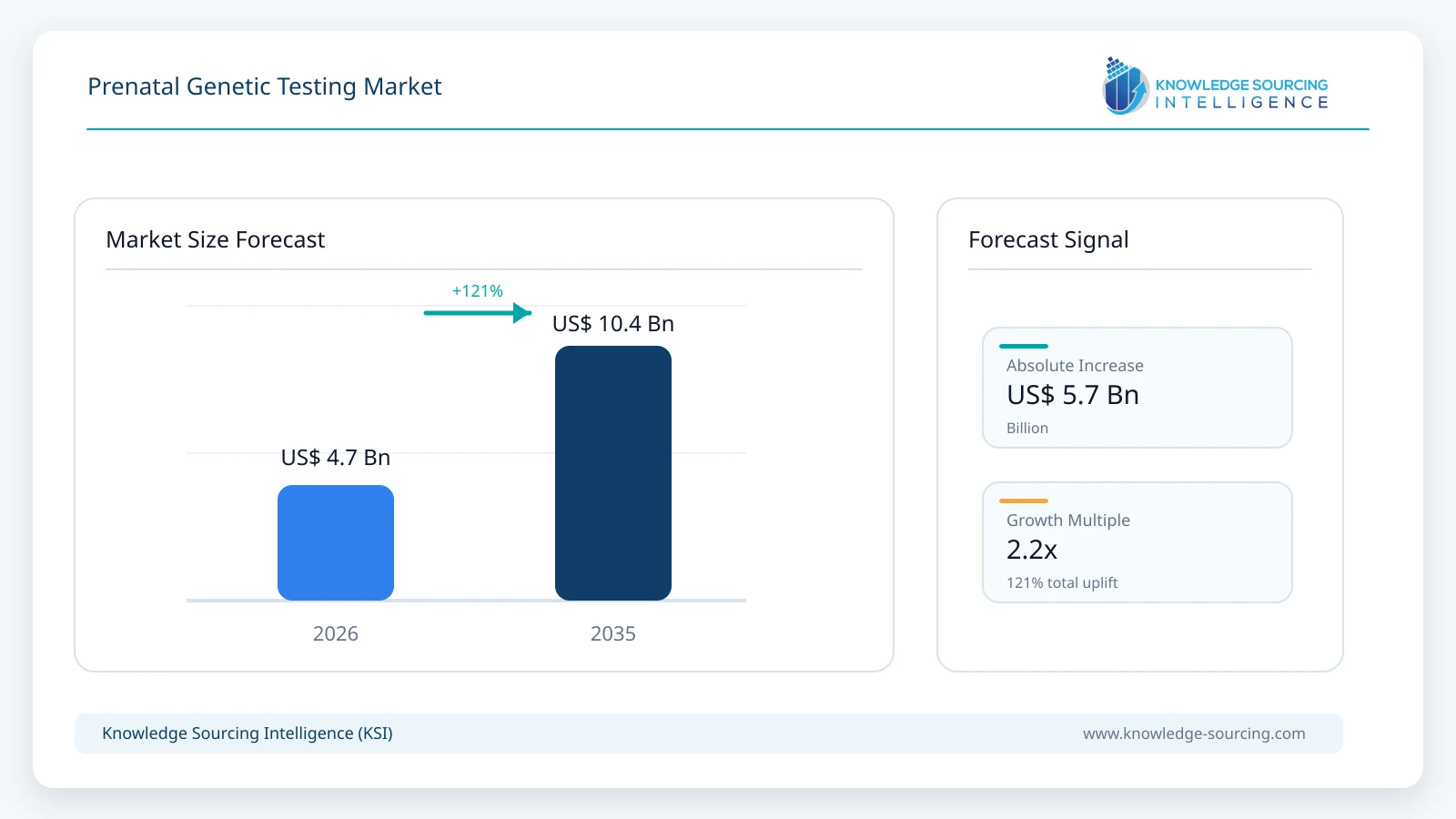
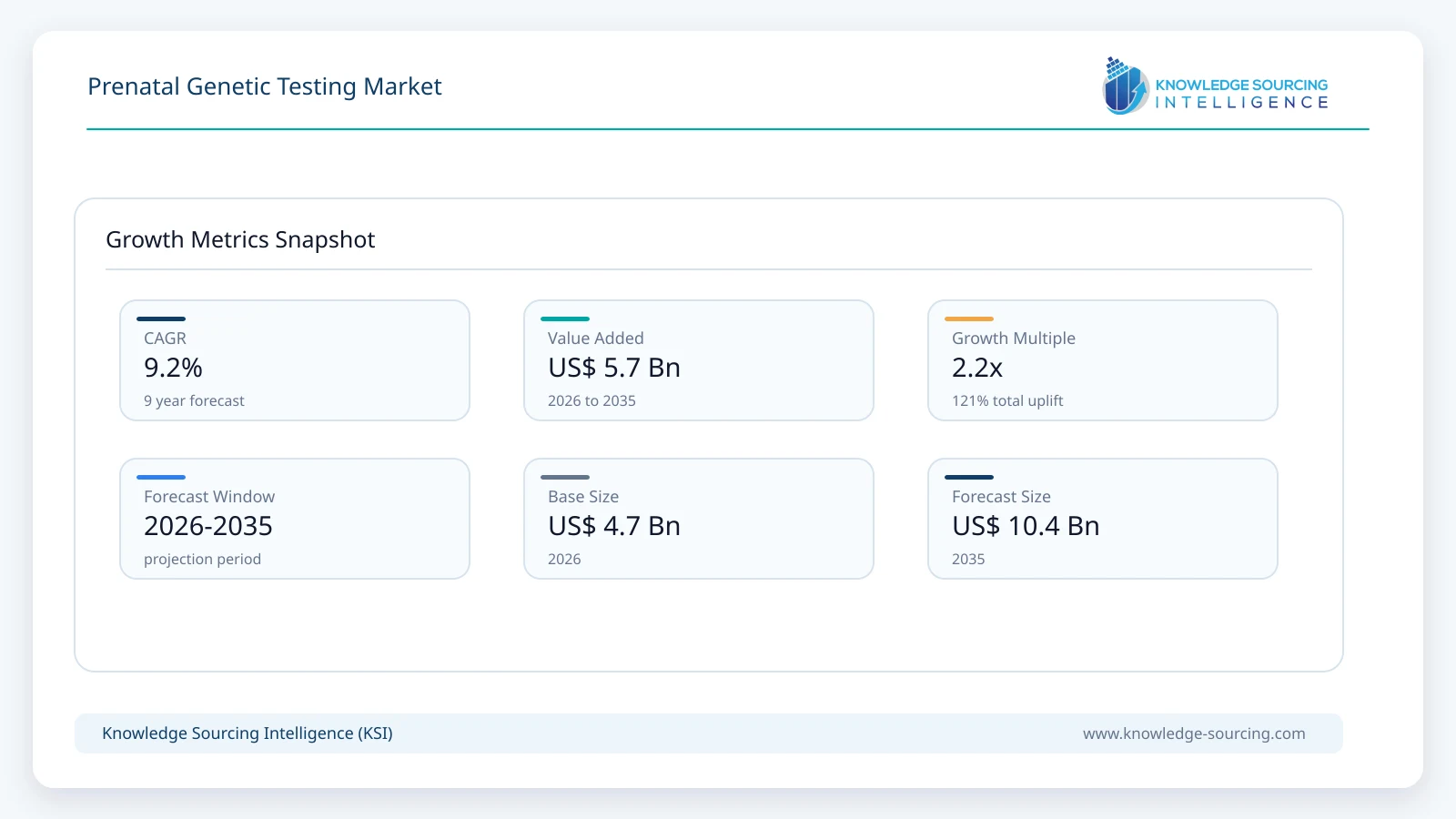
The Prenatal Genetic Testing Market is expected to grow at a CAGR of 9.2% from a market value of USD 4.71 billion in 2026 to USD 10.39 billion in 2035.
Highlights:
- 1Rising maternal age is increasing the clinical need for fetal chromosomal screening, driving sustained demand for high-sensitivity prenatal genetic tests.
- 2Expanding adoption of non-invasive prenatal testing is reducing unnecessary invasive procedures, encouraging broader physician acceptance and patient uptake.
- 3Advances in next-generation sequencing are improving analytical accuracy, enabling laboratories to expand prenatal testing menus for multiple genetic conditions.
- 4Growing integration of genetic counseling into prenatal care is strengthening informed clinical decision-making and supporting responsible utilization of genomic testing.
Prenatal genetic testing identifies fetal chromosomal abnormalities, inherited disorders, and selected genetic conditions before delivery through screening and confirmatory diagnostic methods. The market serves obstetricians, maternal-fetal medicine specialists, genetic counselors, reference laboratories, hospitals, fertility centers, and public health screening programs that require reliable prenatal genomic information for clinical decision-making.
Clinical demand is increasing because maternal age continues rising across numerous countries, which elevates the probability of fetal chromosomal abnormalities and strengthens physician preference for earlier genomic assessment. This demographic shift is encouraging broader implementation of non-invasive prenatal testing (NIPT), reducing dependence on invasive diagnostic procedures for low-risk pregnancies while preserving confirmatory testing for clinically indicated cases.
Technological innovation remains a defining characteristic of the market because sequencing platforms, molecular assays, and bioinformatics algorithms continue improving analytical sensitivity and specificity. Laboratories are expanding multiplex testing capabilities to detect additional chromosomal and monogenic disorders, enabling clinicians to provide more comprehensive prenatal risk assessments within clinically relevant turnaround times.
Healthcare reimbursement and regulatory frameworks significantly influence market expansion because laboratory-developed tests and commercially distributed diagnostic assays require continuous evidence demonstrating analytical performance and clinical utility. Professional practice guidelines also shape physician adoption by defining patient eligibility, counseling requirements, and confirmatory testing pathways that promote responsible implementation of prenatal genomics.
The competitive environment emphasizes integrated diagnostic ecosystems rather than standalone assays. Leading companies combine sequencing platforms, proprietary algorithms, laboratory services, software solutions, and physician education initiatives to strengthen customer retention and improve clinical workflow efficiency. This integrated approach supports sustainable demand as prenatal genomic medicine becomes increasingly embedded within routine obstetric practice.
Market Dynamics
Market Drivers
Growing Adoption of Non-Invasive Prenatal Testing (NIPT): Non-invasive prenatal testing represents the primary growth engine for the market because it combines high analytical performance with minimal procedural risk. Clinical practice is increasingly incorporating cell-free fetal DNA analysis into routine prenatal care as physicians seek accurate early screening without exposing pregnancies to invasive procedures. This transition strengthens laboratory demand for advanced sequencing platforms while expanding testing across both high-risk and average-risk pregnancies. Professional guideline updates and growing physician familiarity continue supporting long-term clinical adoption.
Rising Maternal Age and Increasing Genetic Risk: Advanced maternal age remains one of the strongest predictors of fetal chromosomal abnormalities, creating sustained demand for prenatal genetic evaluation. Maternal demographics are changing across developed and several developing healthcare systems as pregnancies increasingly occur at older reproductive ages. This demographic trend increases physician reliance on genomic screening and confirmatory diagnostic testing, encouraging hospitals and reference laboratories to expand prenatal genetics services. Earlier genetic risk identification improves pregnancy management and supports individualized clinical care.
Expansion of Next-Generation Sequencing Technologies: Sequencing technologies provide higher analytical resolution than conventional cytogenetic approaches for numerous prenatal applications. Laboratory networks are continuously investing in high-throughput sequencing infrastructure because improving automation reduces processing time while increasing testing capacity. These technological improvements enable expanded screening panels, improved detection rates, and stronger laboratory efficiency, supporting broader commercial adoption across healthcare systems.
Increasing Government and Professional Society Support: Clinical practice guidelines strongly influence physician behavior in prenatal diagnostics because standardized recommendations improve confidence in genomic testing pathways. Regulatory organizations and medical societies are continuously updating prenatal screening recommendations as new clinical evidence emerges. These developments strengthen reimbursement discussions, improve laboratory quality expectations, and encourage healthcare providers to integrate evidence-based prenatal genetic testing into routine obstetric care.
Market Restraints
High testing costs and inconsistent reimbursement policies continue limiting equitable patient access across several healthcare systems.
Ethical concerns surrounding prenatal genomic information and genetic counseling requirements slow implementation in certain clinical settings.
Variability in regulatory oversight for laboratory-developed tests creates uncertainty regarding commercialization and international market expansion.
Market Opportunities
Expansion of Comprehensive Prenatal Genomic Panels: Healthcare providers increasingly seek broader genetic information beyond common chromosomal aneuploidies. Diagnostic developers are expanding prenatal panels to include single-gene disorders and clinically relevant microdeletions, creating opportunities for differentiated testing portfolios. This trend strengthens demand for advanced sequencing technologies and specialized bioinformatics capabilities.
Integration of Artificial Intelligence into Genomic Interpretation: Accurate interpretation becomes increasingly complex as prenatal sequencing datasets expand. Artificial intelligence is improving variant prioritization and clinical reporting workflows by supporting faster genomic data interpretation. These innovations reduce laboratory workload while increasing reporting consistency, encouraging adoption among high-volume reference laboratories.
Growth of Prenatal Testing in Emerging Healthcare Markets: Healthcare infrastructure continues improving across several emerging economies, increasing access to molecular diagnostics and specialized maternal care. Governments are expanding prenatal health initiatives while private diagnostic laboratories are strengthening genomic testing capabilities. These developments create opportunities for manufacturers to establish localized partnerships and expand regional laboratory networks.
Strategic Collaborations Between Diagnostic Companies and Healthcare Providers: Collaborative healthcare models improve clinical implementation because hospitals require integrated laboratory services, physician education, and standardized reporting systems. Diagnostic companies are strengthening partnerships with healthcare institutions to expand testing accessibility while supporting clinical training and workflow integration. These initiatives enhance physician confidence and accelerate long-term market penetration.
Disease & Epidemiology Analysis
Prenatal genetic testing addresses fetal chromosomal abnormalities, inherited monogenic disorders, and selected structural genomic alterations that influence pregnancy management and neonatal outcomes. Disease burden remains closely associated with maternal age, family history, ethnicity-specific carrier frequency, and de novo genetic mutations. These factors define clinical demand because they determine which pregnancies require screening, confirmatory diagnosis, or expanded genomic analysis.
Chromosomal aneuploidies constitute the largest indication for prenatal genetic testing because they occur across all populations and remain a leading cause of miscarriage, congenital anomalies, and intellectual disability. Demand is increasing as pregnancies at advanced maternal age become more common, prompting obstetricians to recommend earlier risk assessment using cell-free fetal DNA-based screening. This trend reduces unnecessary invasive procedures while preserving diagnostic confirmation through chorionic villus sampling or amniocentesis when clinically indicated. The result is a care pathway that emphasizes early identification with lower procedural risk.
Single-gene disorders represent another expanding clinical segment because sequencing technologies enable simultaneous evaluation of multiple inherited conditions. Carrier screening identifies couples at increased reproductive risk, which supports personalized pregnancy planning and targeted prenatal diagnosis. Laboratories are expanding comprehensive testing panels as evidence supporting broader genomic evaluation continues growing. This evolution strengthens demand for next-generation sequencing platforms capable of detecting both common and rare pathogenic variants.
Treatment Guidelines Landscape
Organization | Guideline/Recommendation | Clinical Relevance |
American College of Obstetricians and Gynecologists (ACOG) | Recommends that all pregnant patients receive counseling regarding available prenatal genetic screening and diagnostic testing options. | Expands clinical adoption beyond traditional high-risk pregnancies and supports universal patient access to informed prenatal testing decisions. |
Society for Maternal-Fetal Medicine (SMFM) | Supports appropriate use of cell-free DNA screening while emphasizing confirmatory diagnostic testing following positive screening results. | Reinforces balanced clinical pathways that distinguish screening from definitive diagnosis. |
American College of Medical Genetics and Genomics (ACMG) | Recommends broader implementation of non-invasive prenatal screening with standardized laboratory interpretation and post-test counseling. | Encourages wider adoption of genomic technologies while strengthening reporting quality and clinical consistency. |
International Society for Prenatal Diagnosis (ISPD) | Provides evidence-based recommendations covering prenatal screening, invasive diagnostic procedures, laboratory quality, and genetic counseling. | Promotes harmonized international clinical practice and responsible implementation of prenatal genomic technologies |
Market Segmentation
By Test Type
Screening tests constitute the largest share of prenatal genetic testing because they provide early assessment of fetal genetic risk without requiring invasive procedures. Demand is shifting toward non-invasive prenatal testing as healthcare providers prioritize high analytical sensitivity, reduced miscarriage risk, and earlier clinical intervention. Diagnostic testing remains essential for confirming positive screening results, creating sustained demand for chorionic villus sampling and amniocentesis in clinically indicated pregnancies. This complementary relationship supports balanced utilization across the prenatal diagnostic pathway.
By Workflow
Next-generation sequencing represents the dominant technology platform because it enables comprehensive genomic analysis with high analytical accuracy and scalable laboratory workflows. Clinical laboratories are expanding sequencing capacity as testing volumes continue increasing and physicians request broader prenatal genomic information. Conventional molecular platforms such as PCR, microarray analysis, and FISH retain important roles for targeted clinical applications where rapid confirmation or specific chromosomal evaluation is required. The market therefore supports a multi-platform diagnostic ecosystem rather than complete technology replacement.
By Clinical Application
Aneuploidy screening generates the highest clinical demand because chromosomal abnormalities remain the primary indication for prenatal genetic testing. Laboratories are increasingly expanding testing panels to include microdeletion syndromes, sex chromosome abnormalities, and selected single-gene disorders as sequencing technologies improve clinical performance. Healthcare providers require broader genomic information to support individualized pregnancy management and genetic counseling. This evolution increases the strategic value of comprehensive prenatal testing platforms capable of addressing multiple inherited conditions within a single clinical workflow.
Regional Analysis
North America Market Analysis
North America represents the most mature prenatal genetic testing market because advanced molecular diagnostics infrastructure, favorable clinical adoption, and established genetic counseling services support routine implementation of prenatal genomics. Demand is shifting toward expanded non-invasive prenatal testing as professional societies increasingly recommend broader access to prenatal screening regardless of maternal age. This transition increases laboratory testing volumes while requiring continuous investment in sequencing platforms, bioinformatics, and laboratory automation. Healthcare providers are strengthening integrated maternal-fetal medicine programs to improve clinical interpretation and patient counseling for increasingly complex genomic findings. The region also benefits from the presence of major diagnostic manufacturers, reference laboratories, and sequencing technology providers that continuously introduce advanced testing solutions. Academic medical centers and clinical research organizations support ongoing validation of expanded prenatal screening panels, enabling faster translation of scientific evidence into clinical practice. Regulatory oversight from the U.S. Food and Drug Administration (FDA), Clinical Laboratory Improvement Amendments (CLIA), and professional organizations continues shaping laboratory quality standards and analytical performance expectations.
Europe Market Analysis
Europe maintains a significant market position because national healthcare systems, structured prenatal screening programs, and strong regulatory oversight support widespread utilization of prenatal genetic testing. Demand is increasing as European countries continue integrating genomic medicine into maternal healthcare while encouraging standardized clinical pathways for prenatal screening and diagnosis. This evolution strengthens investment in molecular diagnostics laboratories and high-throughput sequencing technologies that improve testing efficiency and analytical performance. Public healthcare providers are expanding access to non-invasive prenatal testing where clinical evidence demonstrates meaningful patient benefit, although reimbursement policies continue to vary across individual countries. Professional medical societies and national health authorities promote evidence-based implementation through standardized clinical guidelines and quality assurance programs. Research collaborations between universities, hospitals, and biotechnology companies support continuous improvements in genomic interpretation and laboratory methodologies.
Asia Pacific Market Analysis
Asia Pacific is emerging as the fastest-evolving regional market because expanding healthcare infrastructure, rising healthcare expenditure, and growing awareness of prenatal genetic disorders are increasing demand for advanced molecular diagnostics. Clinical laboratories are investing in sequencing technologies as governments and private healthcare providers strengthen maternal healthcare services across major economies including China, Japan, India, South Korea, and Australia. The region experiences increasing demand for non-invasive prenatal testing due to rising maternal age in urban populations and greater accessibility to genomic testing services through commercial laboratory networks. Domestic biotechnology companies are expanding local manufacturing capabilities and introducing cost-effective testing solutions that improve market accessibility.
Rest of the World
The Rest of the World market includes Latin America, the Middle East, and Africa, where prenatal genetic testing adoption remains heterogeneous because healthcare infrastructure, reimbursement availability, and molecular diagnostic capacity differ considerably across countries. Demand is gradually increasing as governments strengthen maternal and child health programs while private healthcare providers expand access to specialized prenatal diagnostic services. Urban healthcare centers are adopting next-generation sequencing technologies to improve prenatal risk assessment, although limited laboratory infrastructure and shortages of trained genetic counselors continue constraining broader implementation. International diagnostic companies are establishing regional partnerships to improve technology transfer and laboratory capability, supporting gradual expansion of prenatal genomic services.
Regulatory Landscape
Prenatal genetic testing operates within a highly regulated clinical environment because test results directly influence reproductive decision-making and pregnancy management. Regulatory authorities require diagnostic developers and clinical laboratories to demonstrate analytical validity, clinical validity, and quality assurance before genomic testing becomes widely adopted. Regulatory expectations are continuing to evolve as sequencing technologies expand beyond conventional chromosomal screening toward comprehensive genomic analysis, increasing emphasis on standardized laboratory processes and transparent clinical reporting.
In the United States, the Food and Drug Administration (FDA), the Centers for Medicare & Medicaid Services (CMS) through the Clinical Laboratory Improvement Amendments (CLIA), and the College of American Pathologists (CAP) collectively establish quality expectations for laboratory testing. Europe regulates commercially marketed in vitro diagnostic products under the In Vitro Diagnostic Regulation (IVDR), strengthening clinical evidence requirements and post-market surveillance obligations. These regulatory frameworks improve diagnostic reliability while encouraging manufacturers to invest in robust clinical validation and quality management systems.
Professional organizations including the American College of Obstetricians and Gynecologists (ACOG), the American College of Medical Genetics and Genomics (ACMG), the Society for Maternal-Fetal Medicine (SMFM), and the International Society for Prenatal Diagnosis (ISPD) continue updating evidence-based recommendations as new genomic technologies emerge. Their guidance supports appropriate patient selection, informed consent, genetic counseling, confirmatory diagnostic testing, and standardized interpretation of genomic findings. These evolving recommendations increase physician confidence while promoting responsible expansion of prenatal genetic testing across routine obstetric practice.
Pipeline Analysis
The prenatal genetic testing pipeline is evolving from conventional chromosomal screening toward comprehensive genomic analysis that combines higher analytical accuracy with broader clinical utility. Product development is focusing on expanding detectable genetic conditions while reducing false-positive and false-negative rates through improvements in sequencing chemistry, bioinformatics algorithms, and fetal fraction analysis. Demand is increasing for assays capable of identifying chromosomal aneuploidies, microdeletions, copy number variations, and selected single-gene disorders within a single workflow. This transition is encouraging diagnostic developers to strengthen evidence generation through multicenter clinical validation studies before expanding commercial indications.
Several leading sponsors are advancing research programs that integrate next-generation sequencing (NGS), artificial intelligence-assisted data interpretation, and expanded carrier screening into prenatal diagnostics. Companies such as Illumina, Natera, Roche, BillionToOne, BGI Genomics, and Berry Genomics are continuing to enhance existing prenatal testing portfolios rather than developing entirely new testing paradigms. Current clinical development primarily emphasizes improved analytical performance, validation across diverse populations, broader genomic coverage, and streamlined laboratory workflows. Many studies are evaluating the clinical utility of expanded NIPT panels for rare autosomal aneuploidies, microdeletion syndromes, and selected monogenic disorders while maintaining high specificity for routine prenatal screening.
Clinical development activity is also supporting greater integration of prenatal genetic testing into precision maternal-fetal medicine. Sponsors are generating real-world evidence through collaborations with hospitals, maternal-fetal medicine centers, and academic institutions to demonstrate clinical utility across average-risk and high-risk pregnancies. Regulatory submissions increasingly include analytical validation, clinical performance, and health-economic evidence to strengthen reimbursement discussions with healthcare systems. As sequencing costs continue declining and bioinformatics capabilities improve, pipeline activity is expected to focus on broader prenatal genomic profiling, enhanced automation, and improved accessibility rather than solely increasing the number of detectable genetic conditions.
Reimbursement Landscape
Reimbursement remains one of the most significant determinants of prenatal genetic testing adoption because payer coverage directly influences physician utilization and patient access. Coverage policies are expanding for non-invasive prenatal testing (NIPT) where strong clinical evidence demonstrates improved detection of common fetal chromosomal abnormalities and reduced dependence on invasive diagnostic procedures. At the same time, reimbursement for expanded genomic panels, including microdeletion and single-gene disorder testing, continues to vary across countries and private insurance providers due to ongoing evaluation of clinical utility and cost-effectiveness.
In the United States, Medicare coverage is limited because prenatal genetic testing primarily serves a younger patient population, making commercial insurers the dominant reimbursement source. Private payers increasingly align coverage decisions with recommendations from organizations such as ACOG, ACMG, and SMFM, particularly for pregnancies with established clinical indications. Several European countries reimburse prenatal genetic testing through publicly funded healthcare systems, although eligibility criteria differ according to national screening policies and healthcare budgets. Emerging markets continue to rely heavily on out-of-pocket expenditure, which limits widespread adoption despite growing clinical demand. Continued publication of health-economic evidence and real-world clinical outcomes is expected to strengthen future reimbursement expansion for advanced prenatal genomic testing.
Competitive Landscape
F. Hoffmann-La Roche Ltd.
Roche remains strategically distinct because it combines global leadership in in vitro diagnostics with advanced molecular testing platforms, integrated laboratory automation, and digital healthcare capabilities. The company leverages its extensive diagnostics portfolio to strengthen genomic medicine across oncology, infectious diseases, and reproductive health while continuously investing in sequencing technologies and molecular workflow optimization.
Illumina, Inc.
Illumina differentiates itself through its leadership in next-generation sequencing (NGS), which forms the technological foundation for a large proportion of modern prenatal genetic testing. The company supplies sequencing instruments, reagents, software, and bioinformatics solutions that enable clinical laboratories to perform high-throughput genomic analysis with high analytical accuracy.
Natera, Inc.
Natera has established a strong competitive position through its proprietary cell-free DNA technology and extensive clinical evidence supporting non-invasive prenatal testing. The company's Panorama™ prenatal test is widely recognized within maternal-fetal medicine and is supported by numerous peer-reviewed clinical studies. Natera continues expanding clinical validation, strengthening physician education, and integrating advanced bioinformatics to improve test performance.
Quest Diagnostics Incorporated
Quest Diagnostics distinguishes itself through one of the world's largest diagnostic laboratory networks, providing broad access to genetic testing services across hospitals, physician practices, and healthcare systems. The company combines national laboratory infrastructure with advanced molecular diagnostics, enabling efficient sample processing and standardized reporting.
Laboratory Corporation of America Holdings (Labcorp)
Labcorp maintains a strong market position by integrating one of the largest clinical laboratory networks with advanced genomic diagnostics and comprehensive reproductive health services. The company continues strengthening prenatal testing through expanded sequencing capabilities, digital reporting systems, and nationwide laboratory operations. Strategic collaborations with healthcare providers and biotechnology companies enhance access to precision diagnostics while supporting clinical decision-making.
BGI Genomics Co., Ltd.
BGI Genomics differentiates itself through large-scale sequencing infrastructure, extensive genomic research capabilities, and broad international experience in reproductive genetics. The company provides prenatal genetic testing, sequencing services, and molecular diagnostic solutions across multiple global markets.
Key Developments
July 2026: Myriad Genetics launches FirstGene® Multiple Prenatal Screen
Myriad Genetics launched FirstGene as a multiple prenatal screen that runs four prenatal genetic screens simultaneously as early as eight weeks gestation. The test is designed to streamline prenatal screening and deliver results in about 10 days.
May 2026: BillionToOne launched Unity Confirm, a non-invasive confirmation test for high-risk prenatal screening results using intact circulating fetal cells from maternal blood. The product is positioned to bridge the gap between screening and invasive diagnostic testing.
February 2026: GeneDx announced GenomeDx Prenatal, a prenatal whole-genome sequencing offering that expands its prenatal portfolio. The service was set to become available for clinicians in February 2026.
Strategic Insights and Future Market Outlook
Prenatal genetic testing is becoming a foundational component of precision maternal-fetal medicine because healthcare providers increasingly prioritize earlier identification of fetal genetic abnormalities with minimal procedural risk. Demand is shifting toward comprehensive genomic screening as clinicians seek broader diagnostic information beyond common chromosomal aneuploidies. This transition increases reliance on next-generation sequencing, advanced bioinformatics, and integrated laboratory workflows while requiring stronger clinical validation and standardized interpretation.
Competition increasingly depends on the ability to deliver complete prenatal genomic ecosystems rather than individual diagnostic assays. Manufacturers are expanding non-invasive prenatal testing portfolios, improving analytical sensitivity for rare genetic conditions, and incorporating artificial intelligence into variant interpretation to enhance reporting accuracy. Healthcare systems are adopting integrated genomic services that include physician education, digital reporting, genetic counseling support, and laboratory automation because these capabilities improve clinical workflow efficiency and patient management.
Regulatory frameworks and reimbursement policies continue shaping commercial adoption because evidence demonstrating clinical utility remains essential for expanding payer coverage and physician confidence. Professional organizations are updating clinical guidelines as genomic technologies mature, encouraging broader implementation while reinforcing responsible use through genetic counseling and confirmatory diagnostic pathways. Emerging economies are investing in molecular diagnostics infrastructure and precision medicine initiatives, creating opportunities for diagnostic developers to expand geographically through localized laboratory partnerships and technology transfer.
The prenatal genetic testing market is expected to evolve through continuous advances in sequencing technology, bioinformatics, and clinical evidence generation rather than disruptive replacement of existing diagnostic pathways. Companies that maintain strong regulatory compliance, invest in research collaborations, and demonstrate measurable clinical value are likely to capture the greatest long-term opportunities.
Prenatal Genetic Testing Market Scope:
| Report Metric | Details |
|---|---|
| Total Market Size in 2026 | USD 4.71 billion |
| Total Market Size in 2035 | USD 10.39 billion |
| Forecast Unit | Billion |
| Growth Rate | 9.2% |
| Study Period | 2021 to 2035 |
| Historical Data | 2021 to 2024 |
| Base Year | 2025 |
| Forecast Period | 2026 – 2035 |
| Segmentation | Test Type, Technology Platform, Clinical Application, Sample Type, End User, Geography |
| Companies |
|
Market Segmentation
Test Type
Diagnostic Tests
End User
Geography
- North America
- South America
- Europe
- Middle East and Africa
- Asia Pacific
Table of Contents
1. EXECUTIVE SUMMARY
1.1 Market Snapshot
1.2 Key Findings
1.3 Analyst Insights
1.4 Strategic Recommendations
2. RESEARCH METHODOLOGY
2.1 Research Design
2.2 Data Collection Methodology
2.3 Market Size Estimation
2.4 Forecasting Model
2.5 Assumptions & Limitations
3. GLOBAL PRENATAL GENETIC TESTING MARKET OVERVIEW, SIZE & FORECAST
3.1 Market Definition & Scope
3.2 Industry Overview
3.3 Industry Evolution
3.4 Key Market Trends
3.5 Historical Market Size Analysis (2021–2025)
3.6 Market Forecast (2026–2035)
3.7 Prenatal Screening and Diagnostic Testing Landscape
3.8 Pregnancy Care Pathway and Clinical Adoption of Prenatal Genetic Testing
3.9 Birth Prevalence of Chromosomal and Genetic Disorders
3.10 Testing Volume Analysis
3.11 Diagnostic Yield and Clinical Utility Assessment
3.12 Clinical Practice Guidelines and Screening Recommendations
4. MARKET DYNAMICS
4.1 Market Drivers
4.2 Market Restraints
4.3 Market Opportunities
4.4 Market Challenges
5. INDUSTRY LANDSCAPE
5.1 Industry Value Chain Analysis
5.2 Pricing Analysis
5.3 Reimbursement Landscape
6. INNOVATION LANDSCAPE
6.1 Emerging Technologies in Prenatal Genetic Testing
6.2 Product Innovation Analysis
6.3 Clinical Trial Analysis
6.4 Prenatal Genetic Testing Pipeline Analysis
6.5 AI Integration in Prenatal Genetic Testing
6.6 Digital Health Integration and Genetic Counseling Platforms
7. REGULATORY LANDSCAPE
7.1 Regulatory Framework
7.2 Approval Pathways
7.3 Compliance Requirements
8. GLOBAL PRENATAL GENETIC TESTING MARKET LANDSCAPE ANALYSIS
8.1 Analysis by Test Type
8.2 Analysis by Technology Platform
8.3 Analysis by Sample Type
8.4 Analysis by Clinical Application
8.5 Analysis by Testing Methodology
8.6 Analysis by Screening versus Diagnostic Testing
9. GLOBAL PRENATAL GENETIC TESTING MARKET SEGMENT ANALYSIS (2021–2035)
9.1 By Test Type
9.1.1 Screening Tests
9.1.1.1 Non-Invasive Prenatal Testing (NIPT)
9.1.1.2 Carrier Screening
9.1.1.3 Sequential & Integrated Screening
9.1.1.3 Other Tests
9.1.2 Diagnostic Tests
9.1.2.1 Chorionic Villus Sampling (CVS) Genetic Testing
9.1.2.2 Amniocentesis Genetic Testing
9.1.2.3 Other Tests
9.2 By Technology Platform
9.2.1 Next-Generation Sequencing (NGS)
9.2.2 Microarray Analysis
9.2.3 Polymerase Chain Reaction (PCR)
9.2.4 Fluorescence In Situ Hybridization (FISH)
9.2.5 Other Molecular Technologies
9.3 By Clinical Application
9.3.1 Aneuploidy Screening
9.3.2 Microdeletion Syndrome Detection
9.3.3 Single-Gene Disorder Testing
9.3.4 Sex Chromosome Abnormality Detection
9.3.5 Other Genetic Conditions
9.4 By Sample Type
9.4.1 Maternal Blood
9.4.2 Amniotic Fluid
9.4.3 Chorionic Villi Tissue
9.4.4 Other Sample Types
9.5 By End User
9.5.1 Hospitals
9.5.2 Diagnostic Laboratories
9.5.3 Specialty Genetic Testing Laboratories
9.5.4 Academic & Research Institutions
9.5.5 Fertility and Women's Health Clinics
10. GLOBAL PRENATAL GENETIC TESTING MARKET GEOGRAPHICAL ANALYSIS (2021–2035)
10.1 North America
10.2 Europe
10.3 Asia-Pacific
10.4 South America
10.5 Middle East & Africa
11. GLOBAL PRENATAL GENETIC TESTING MARKET COUNTRY ANALYSIS (2021–2035)
11.1 United States
11.2 Canada
11.3 Germany
11.4 United Kingdom
11.5 France
11.6 Italy
11.7 Spain
11.8 Netherlands
11.9 Japan
11.10 China
11.11 India
11.12 South Korea
11.13 Australia
11.14 Brazil
11.15 Saudi Arabia
12. COMPETITIVE LANDSCAPE
12.1 Market Share Analysis
12.2 Strategic Developments
12.3 Mergers & Acquisitions, Partnerships & Collaborations
12.4 Product Launches
13. COMPANY PROFILES
13.1 F. Hoffmann-La Roche Ltd.
13.1.1 Company Overview
13.1.2 Financials
13.1.3 Product Portfolio
13.1.4 Recent Developments
13.2 Illumina, Inc.
13.3 Natera, Inc.
13.4 Quest Diagnostics Incorporated
13.5 Laboratory Corporation of America Holdings (Labcorp)
13.6 Berry Genomics Co. Ltd.
13.7 OPKO Health
13.8 BillionToOne, Inc.
13.9 BGI Genomics Co., Ltd.
13.10 CENTOGENE GmbH
14. GLOBAL PRENATAL GENETIC TESTING MARKET COMMERCIAL FORECAST ANALYSIS
14.1 Commercial Forecast by Non-Invasive Prenatal Testing (NIPT)
14.2 Commercial Forecast by Carrier Screening
14.3 Commercial Forecast by Invasive Prenatal Diagnostic Testing
14.4 Commercial Forecast by Next-Generation Sequencing-Based Testing
14.5 Commercial Forecast by Chromosomal Microarray-Based Testing
15. INVESTMENT & FUNDING ANALYSIS
15.1 Venture Capital Trends
15.2 Government Funding
15.3 R&D Investments
16. FUTURE OUTLOOK
16.1 Key Growth Opportunities
16.2 Future Industry Trends
Navigate
Trusted by the world's leading organizations











