
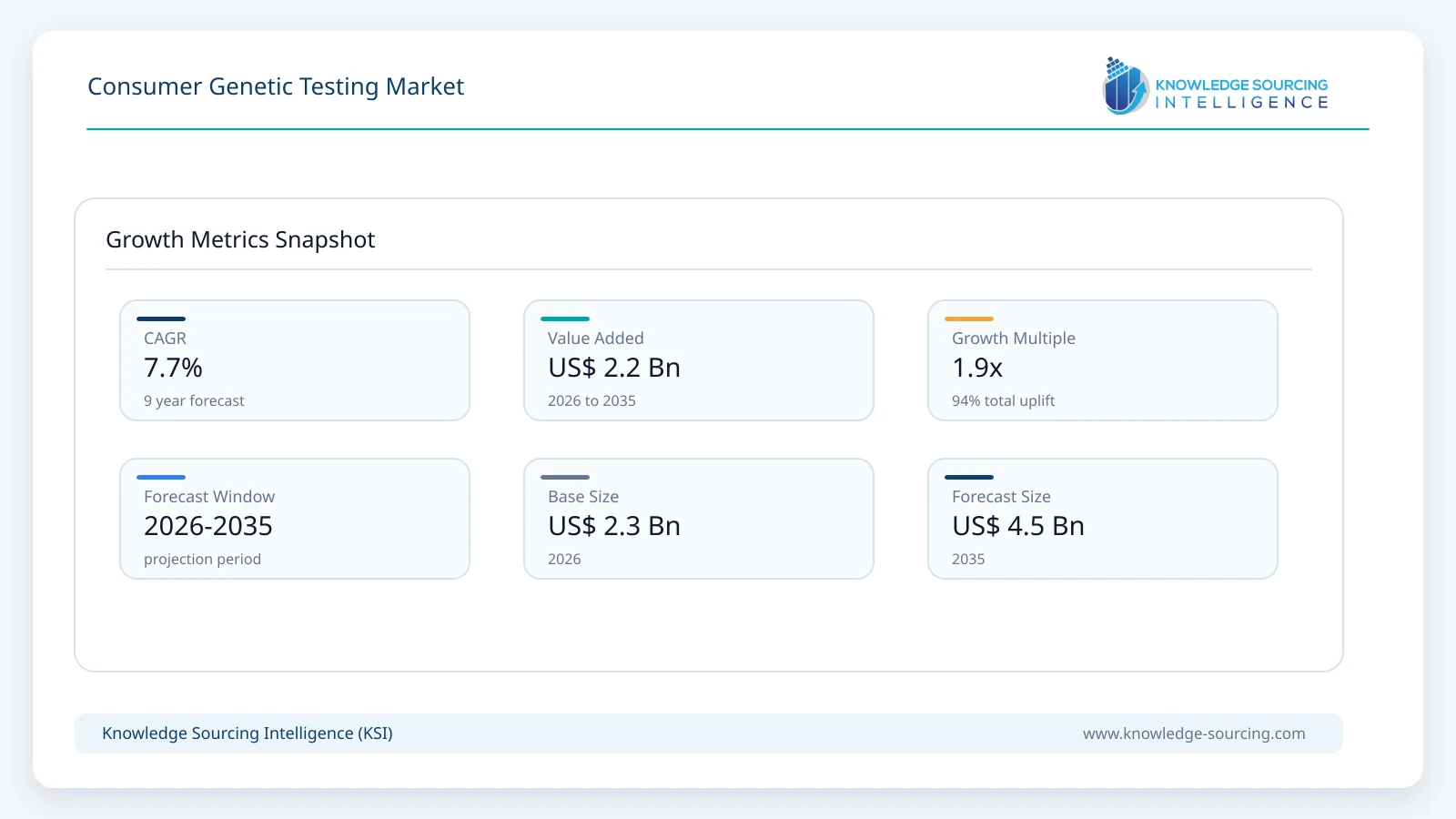
The Consumer Genetic Testing Market is forecast to grow at a CAGR of 7.7%, reaching USD 4.47 billion in 2035 from USD 2.30 billion in 2026.
Highlights:
- 1Growing consumer awareness regarding preventive healthcare is increasing demand for genetic risk assessment services that support early health management.
- 2Declining sequencing costs are improving affordability, allowing companies to expand genomic testing portfolios across broader consumer segments.
- 3Precision medicine initiatives are strengthening demand for pharmacogenomic and hereditary disease information that complements clinical decision-making.
- 4Regulatory oversight is encouraging higher analytical standards, improving consumer confidence in health-related genetic testing services.
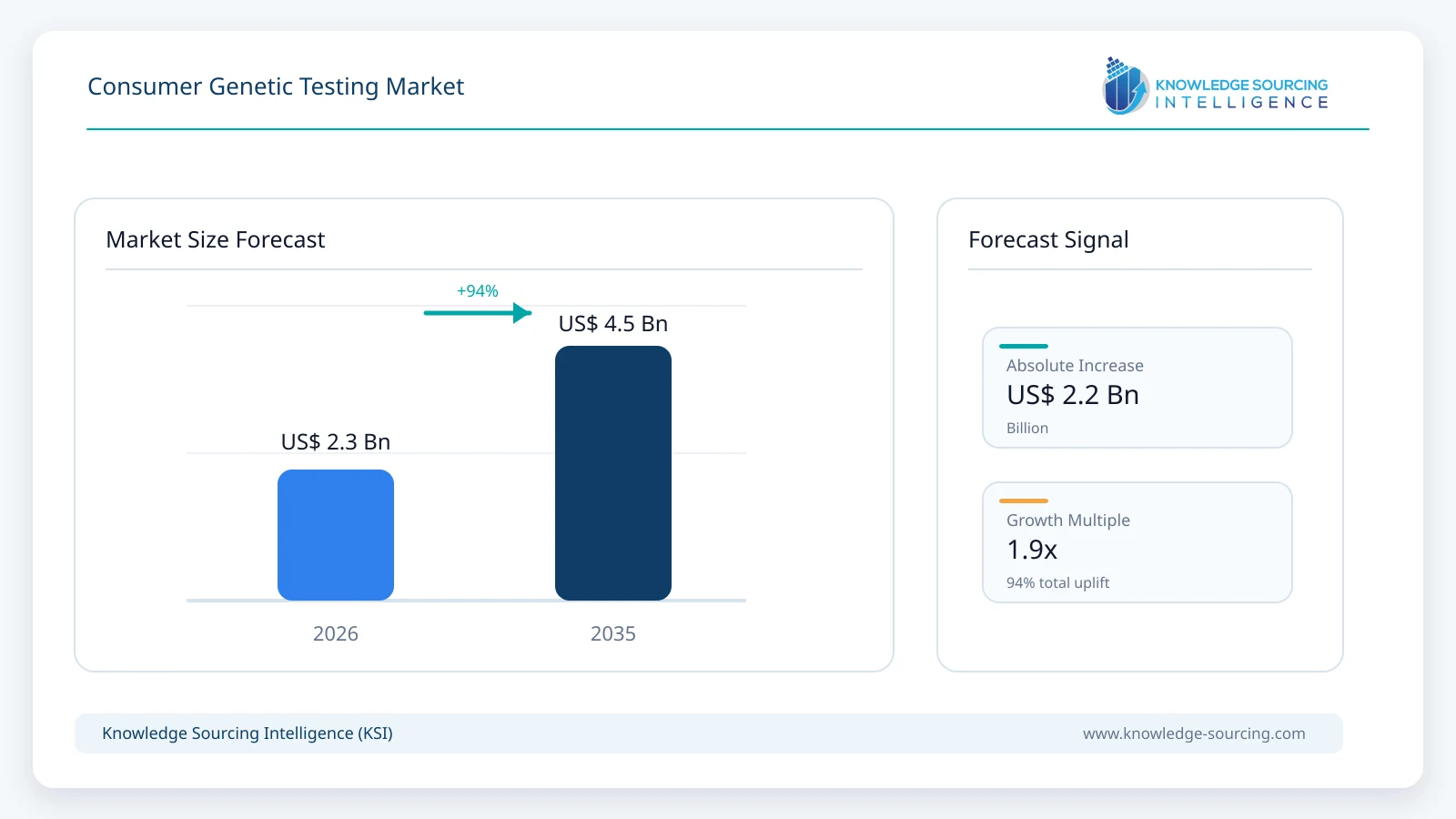
Consumer genetic testing provides individuals with direct access to genomic information that supports ancestry exploration, inherited disease risk assessment, carrier status evaluation, pharmacogenomic insights, nutritional recommendations, and wellness-related genetic interpretation. The market depends on advances in sequencing technologies, declining genomic analysis costs, cloud-based bioinformatics platforms, and expanding scientific evidence linking genetic variation with disease susceptibility and therapeutic response. Demand is increasing as preventive healthcare becomes a priority across developed and emerging healthcare systems, encouraging consumers to incorporate genomic information into lifestyle planning and medical decision-making.
Regulatory oversight continues influencing market development because authorities require analytical validity, clinical validity, transparent consumer communication, and responsible handling of sensitive genomic information. Companies are investing in improved variant databases, artificial intelligence, digital counseling services, and research collaborations to strengthen interpretation accuracy while complying with evolving privacy regulations. These strategic investments are increasing confidence among consumers and healthcare professionals, supporting broader adoption of consumer genomic services within personalized healthcare ecosystems.
Market Dynamics
Market Drivers
Expansion of Preventive Healthcare Is Increasing Consumer Demand for Genetic Risk Information: Preventive healthcare increasingly emphasizes early identification of inherited disease susceptibility before clinical symptoms emerge. Consumers are seeking genomic information that supports proactive lifestyle modification and individualized health planning. Traditional diagnostic approaches identify disease after symptoms appear, creating greater interest in predictive genomic assessments. Consumer genetic testing providers are expanding disease risk panels and evidence-based health reports to address this changing healthcare preference. The market benefits from stronger integration between preventive healthcare strategies and accessible genomic technologies.
Falling Sequencing Costs Are Expanding Consumer Accessibility: Technological innovation reduces the cost of genomic analysis while improving analytical performance and testing throughput. Companies are introducing broader genomic panels without proportionally increasing consumer pricing. Lower laboratory costs create opportunities to include pharmacogenomic, wellness, and carrier screening within integrated testing packages. Greater affordability expands market penetration among first-time users while supporting recurring genomic service models.
Precision Medicine Adoption Is Increasing Clinical Relevance: Precision medicine relies on genomic information to improve individualized healthcare decisions. Healthcare providers increasingly recognize inherited genetic variation as a factor influencing disease susceptibility and medication response. Consumer testing companies are developing clinically relevant reports that align more closely with evidence-based genomic medicine. This evolution strengthens collaboration between consumer genomics providers and healthcare professionals while increasing long-term demand for validated genomic interpretation services.
Digital Health Ecosystems Are Supporting Continuous Consumer Engagement: Digital healthcare platforms increasingly incorporate genomic information alongside wearable data, electronic health records, and wellness applications. Companies are expanding mobile applications, cloud-based reporting platforms, and AI-assisted interpretation systems to maintain ongoing engagement after initial testing. Continuous report updates improve perceived value because genomic knowledge continues evolving.
Market Restraints
Regulatory variation across countries limits the commercialization of health-related genetic claims and increases compliance complexity.
Data privacy concerns reduce consumer willingness to share genomic information for research and commercial applications.
Variable clinical interpretation of certain genetic variants limits confidence in wellness and lifestyle genetic recommendations.
Market Opportunities
AI-Based Variant Interpretation Is Improving Clinical Utility: Artificial intelligence increasingly supports genomic interpretation by integrating expanding scientific literature with continuously updated variant databases. Companies are improving report accuracy while reducing interpretation turnaround times. Better analytical performance increases confidence among consumers and healthcare professionals, strengthening demand for evidence-based genomic services.
Pharmacogenomic Testing Is Expanding Personalized Medication Management: Medication response differs substantially across individuals because inherited genetic variation influences drug metabolism. Consumers are increasingly seeking pharmacogenomic information before initiating long-term therapies. Testing providers are expanding medication-response panels that complement physician-guided treatment decisions. This opportunity strengthens the integration of consumer genomics with precision therapeutics.
Multi-Omics Integration Is Expanding Consumer Health Insights: Consumer genomics increasingly combines genetic information with microbiome analysis, biomarker assessment, and digital health monitoring. Companies are developing integrated wellness platforms that generate broader health insights than standalone genomic reports. This convergence supports recurring subscription models while increasing long-term customer engagement.
Digital Genetic Counseling Services Are Strengthening Consumer Confidence: Growing availability of virtual genetic counseling addresses interpretation challenges associated with complex genomic findings. Companies are integrating licensed genetic counselors into digital healthcare platforms to improve consumer understanding and responsible decision-making. Better educational support strengthens regulatory compliance while increasing adoption of clinically relevant genomic testing.
Disease & Epidemiology Analysis
Consumer genetic testing primarily supports risk identification rather than disease diagnosis, making clinical utility an important determinant of market demand. Hereditary cancer syndromes, cardiovascular disorders, neurodegenerative diseases, reproductive carrier status, and pharmacogenomic applications represent major areas where validated genetic evidence supports healthcare decision-making. Demand is increasing because healthcare systems are recognizing inherited genetic variation as a contributor to preventive medicine rather than solely a diagnostic tool.
The clinical relevance of consumer genetic testing depends on the strength of genotype-phenotype associations established through population genomics research. Companies are continuously updating variant interpretation databases as new evidence becomes available, improving report accuracy over time. Stronger scientific validation supports greater physician acceptance while reducing uncertainty associated with earlier generations of consumer genetic testing.
Treatment Guidelines Landscape
Organization | Guideline Focus | Relevance to Consumer Genetic Testing |
American College of Medical Genetics and Genomics (ACMG) | Secondary findings and clinical interpretation | Supports standardized reporting of medically actionable variants |
Clinical Pharmacogenetics Implementation Consortium (CPIC) | Pharmacogenomic implementation | Guides interpretation of drug-gene interactions |
National Comprehensive Cancer Network (NCCN) | Hereditary cancer genetic assessment | Supports identification of individuals requiring confirmatory clinical testing |
European Society of Human Genetics (ESHG) | Direct-to-consumer genetic testing | Encourages evidence-based reporting and appropriate genetic counseling |
Market Segmentation
By Test Type
Health risk assessment testing represents one of the fastest-evolving segments because consumers increasingly seek predictive insights that support preventive healthcare rather than disease diagnosis alone. Demand is shifting toward clinically supported reports covering hereditary cancers, cardiovascular disorders, metabolic diseases, and neurological conditions. Scientific evidence determines consumer confidence, creating pressure for companies to strengthen variant interpretation and continuously update genomic databases. Providers are expanding physician support services and digital genetic counseling to improve responsible interpretation of medically relevant findings. The segment benefits from the growing integration of preventive healthcare with precision medicine initiatives.
By Technology
Next-Generation Sequencing enables comprehensive genomic analysis while improving analytical sensitivity and scalability compared with earlier testing technologies. Laboratories are adopting higher-throughput sequencing platforms because broader genomic coverage increases the clinical value of consumer reports. Greater sequencing depth supports expanded carrier screening, pharmacogenomics, and whole-exome or whole-genome testing services. Companies are investing in cloud-based bioinformatics pipelines that improve interpretation efficiency without proportionally increasing operational costs. The technology segment remains central to product differentiation because interpretation quality increasingly depends on comprehensive genomic data..
By Sample Type
Saliva remains the dominant sample type because collection is non-invasive, convenient, and suitable for home-based testing. Consumers prefer self-collection kits that eliminate the need for clinical appointments, encouraging broader participation across preventive health programs. Laboratory automation continues improving DNA extraction quality from saliva samples, supporting reliable downstream genomic analysis. Testing providers are optimizing collection devices to improve sample stability during transportation and storage. The widespread acceptance of saliva-based collection strengthens direct-to-consumer distribution models while reducing logistical barriers to testing.
Regional Analysis
North America Market Analysis
North America represents the most mature consumer genetic testing market because precision medicine initiatives, advanced molecular diagnostics infrastructure, and widespread public awareness support sustained demand for genomic services. The United States maintains a strong ecosystem of sequencing laboratories, biotechnology companies, digital health providers, and academic research institutions that continuously expand genomic knowledge. Consumers are increasingly seeking actionable health information beyond ancestry reports, encouraging companies to broaden hereditary disease screening, pharmacogenomics, and wellness-oriented testing portfolios. This transition increases demand for stronger analytical validation because healthcare professionals expect clinically meaningful genomic evidence before incorporating consumer-generated information into medical decision-making. Regulatory oversight continues shaping commercialization strategies through evolving requirements for analytical validity, clinical evidence, consumer communication, and data privacy. Companies are expanding collaborations with healthcare providers because physician engagement improves confidence in medically relevant genetic findings.
Europe Market Analysis
European demand reflects growing acceptance of preventive healthcare while remaining strongly influenced by regulatory requirements governing genetic information and personal data protection. Healthcare systems recognize inherited genetic variation as an important component of personalized medicine, encouraging responsible adoption of genomic services across multiple clinical disciplines. Consumers increasingly value medically relevant health insights over recreational genetic testing, creating stronger demand for validated interpretation supported by scientific evidence. Companies are refining reporting practices because compliance with regional regulatory expectations remains essential for commercial expansion. The General Data Protection Regulation (GDPR) establishes one of the world's most comprehensive frameworks for protecting personal genomic information, increasing consumer confidence while raising operational compliance requirements. Companies are investing in secure digital infrastructure, transparent consent management, and localized laboratory partnerships to satisfy evolving regulatory expectations.
Asia Pacific Market Analysis
Asia Pacific is experiencing rapid expansion because improving healthcare infrastructure, increasing disposable income, and growing awareness of precision medicine are broadening access to genomic services. Governments continue supporting national genomics initiatives that expand sequencing capacity while strengthening domestic biotechnology capabilities. Consumers are increasingly adopting preventive health strategies, encouraging companies to introduce localized ancestry databases and region-specific health risk reports. Diverse genetic populations create opportunities for expanding reference datasets, improving interpretation accuracy across multiple ethnic groups. Healthcare providers increasingly recognize pharmacogenomics and hereditary disease assessment as valuable components of personalized medicine, creating stronger demand for clinically validated genomic information. Domestic biotechnology companies are investing in sequencing technologies, artificial intelligence, and digital health platforms to improve analytical efficiency while reducing testing costs.
Rest of the World
Markets across Latin America, the Middle East, and Africa remain at earlier stages of development but demonstrate increasing interest in consumer genomics because preventive healthcare awareness continues improving. Healthcare modernization programs are expanding molecular diagnostic infrastructure, enabling broader access to genomic technologies beyond specialized academic centers. Consumers increasingly seek hereditary disease information as awareness of inherited health risks grows through public health education and digital healthcare platforms. Market expansion remains influenced by affordability, laboratory capacity, and regulatory maturity. International testing providers are forming regional partnerships with healthcare organizations to improve sample logistics, laboratory quality, and clinical interpretation services. Digital health platforms are supporting remote genetic counseling, reducing geographical barriers that historically limited access to genomic expertise. Governments continue strengthening regulatory oversight for laboratory accreditation and consumer protection while encouraging investment in biotechnology innovation.
Regulatory Landscape
Consumer genetic testing operates within a regulatory environment that balances innovation with consumer safety, analytical validity, clinical evidence, and data privacy. Regulatory authorities distinguish between ancestry-related testing and health-related genetic testing because medically actionable information can influence healthcare decisions. Companies are expanding validation studies and strengthening quality management systems as regulators continue refining requirements for laboratory performance, marketing claims, and post-market oversight. This evolving framework encourages providers to improve scientific transparency while reducing the risk of inaccurate interpretation or misleading health information. The regulatory landscape therefore supports market credibility by promoting evidence-based genomic reporting instead of purely commercial genetic services.
The United States primarily regulates consumer genetic testing through the U.S. Food and Drug Administration (FDA) for applicable health-related genetic tests and the Centers for Medicare & Medicaid Services (CMS) under the Clinical Laboratory Improvement Amendments (CLIA) for laboratory quality standards. Health-related reports require appropriate analytical and clinical validation, particularly when results influence medical decision-making. The European Union regulates in vitro diagnostic genetic tests under the In Vitro Diagnostic Regulation (IVDR) (EU 2017/746), which places greater emphasis on clinical evidence, post-market surveillance, and quality management systems. Other regions, including Japan, Australia, Singapore, and Canada, continue strengthening oversight of genetic testing while encouraging innovation through risk-based regulatory approaches.
Genomic data privacy remains a major regulatory priority because genetic information represents sensitive personal health data with long-term implications. Regulations such as the General Data Protection Regulation (GDPR) in Europe and national privacy frameworks in multiple jurisdictions require explicit informed consent, transparent data processing, secure storage, and clearly defined data-sharing practices. Companies are investing in cybersecurity, encrypted cloud infrastructure, and consumer-controlled consent management to comply with evolving privacy expectations. These regulatory developments improve consumer confidence while increasing operational requirements for companies expanding across international markets.
Pipeline Analysis
The consumer genetic testing pipeline is shifting from single-purpose ancestry testing toward comprehensive genomic health platforms that combine predictive risk assessment, pharmacogenomics, reproductive genetics, and wellness applications. Product development increasingly focuses on expanding medically actionable reports supported by peer-reviewed clinical evidence rather than increasing the number of recreational genetic traits. Companies are integrating larger genomic reference databases because broader population diversity improves variant classification and interpretation accuracy. This transition strengthens the clinical utility of consumer genomics while supporting greater collaboration with healthcare providers.
Artificial intelligence and machine learning are becoming central components of product development because genomic knowledge continues expanding faster than manual interpretation can accommodate. Companies are developing AI-assisted variant interpretation platforms that continuously incorporate newly published scientific literature, clinical databases, and population genomics evidence into consumer reports. These systems are reducing interpretation turnaround times while improving consistency across large genomic datasets. Continuous software-driven report updates also support subscription-based business models, allowing consumers to receive revised health insights as scientific understanding evolves without requiring repeat sample collection.
Clinical validation activities increasingly emphasize hereditary cancer risk assessment, cardiovascular genetics, pharmacogenomics, reproductive carrier screening, and polygenic risk score development. Rather than pursuing pharmaceutical-style clinical trials, companies are conducting observational studies, analytical validation programs, real-world evidence generation, and collaborations with academic medical centers to demonstrate the reliability and clinical relevance of genomic findings. Future product pipelines are expanding toward whole-genome sequencing, multi-omics integration, digital biomarkers, and personalized preventive health platforms, positioning consumer genetic testing as an important contributor to precision healthcare ecosystems.
Reimbursement Landscape
Consumer genetic testing is primarily financed through direct out-of-pocket payments because most ancestry, wellness, and recreational genomic services fall outside public and private reimbursement frameworks. Consumers generally purchase these services independently, creating strong competition around affordability, report quality, and long-term value rather than reimbursement eligibility. Companies are introducing tiered pricing structures, subscription models, and bundled genomic services to improve accessibility while generating recurring revenue beyond one-time testing.
Reimbursement is becoming more favorable for clinically validated applications such as hereditary cancer testing, carrier screening, and pharmacogenomic testing when healthcare providers determine that testing meets established clinical guidelines. Public and private insurers increasingly recognize the value of genomic information for preventing unnecessary treatment, improving medication selection, and identifying individuals at elevated inherited disease risk.
Companies are generating additional clinical evidence and collaborating with healthcare systems because broader reimbursement depends on demonstrating measurable improvements in patient outcomes, healthcare utilization, and cost-effectiveness. Continued expansion of precision medicine initiatives is expected to strengthen reimbursement opportunities for medically actionable consumer genetic testing services while recreational testing remains predominantly self-funded.
Competitive Landscape
Living DNA Ltd.
Living DNA differentiates itself through highly detailed ancestry analysis supported by geographically refined reference populations and advanced population genetics algorithms. The company emphasizes regional ancestry resolution and family heritage reconstruction rather than competing solely on test volume.
23andMe Holding Co.
23andMe remains one of the most recognized companies in direct-to-consumer genomics because it combines ancestry testing with health risk assessment, carrier screening, pharmacogenomic reporting, and genetics research initiatives. The company continues expanding clinically supported health reports while strengthening regulatory compliance for medically relevant genetic information.
Ancestry
Ancestry has established a strong competitive position through the integration of genetic testing with one of the world's largest digital family history ecosystems. The company focuses on combining DNA analysis with historical records, enabling consumers to construct comprehensive family histories alongside genetic ancestry interpretation.
Myriad Genetics, Inc.
Myriad Genetics differentiates itself through its strong clinical genetics expertise and extensive experience in hereditary disease testing. Unlike companies focused primarily on recreational genomics, Myriad emphasizes medically actionable genetic information supported by peer-reviewed clinical evidence.
Color Health, Inc.
Color Health has developed a differentiated strategy by integrating consumer-accessible genetic testing with healthcare delivery, preventive screening programs, and digital clinical support. The company focuses on hereditary cancer risk assessment, cardiovascular genetics, and population health initiatives that extend beyond traditional direct-to-consumer business models.
MyHeritage Ltd.
MyHeritage combines consumer DNA testing with an extensive genealogy platform that enables users to integrate genetic findings with historical family records. The company continuously expands its global historical archives and DNA matching capabilities because richer datasets improve ancestry interpretation and strengthen long-term consumer engagement.
Key Developments
July 2026: Labcorp launched the Marker by Labcorp Genetic Health Panel through Labcorp OnDemand, a consumer genetic test analyzing 163 genes tied to more than 100 medically actionable conditions. The offering includes blood collection at Labcorp service centers, access to genetic counselors, and availability beginning August 3, 2026.
June 2026: 3billion introduced 3B-NEO as a genomic newborn screening service covering 595 clinically actionable genetic conditions. The service uses WES/WGS to support earlier detection and intervention for pediatric-onset diseases.
October 2025: MyHeritage announced that it would shift its consumer DNA tests from genotyping arrays to whole genome sequencing for newly processed kits. The upgrade is intended to improve match quality and ethnicity estimates, and the company said older processed kits would not be reprocessed.
Strategic Insights and Future Market Outlook
Consumer genetic testing is evolving from a transactional testing business into a longitudinal genomic health information ecosystem. Demand increasingly depends on the clinical relevance of genetic insights rather than the volume of reported variants because consumers and healthcare professionals expect genomic information to support measurable health decisions. Companies are expanding clinically validated health reports, pharmacogenomic applications, and hereditary disease assessments as preventive healthcare becomes more personalized. This transition is encouraging greater investment in bioinformatics, artificial intelligence, and continuously curated genomic databases that improve interpretation quality throughout the lifetime of a consumer's genomic profile.
Regulatory oversight is becoming more sophisticated as authorities refine requirements governing analytical validity, clinical evidence, consumer communication, and genomic data privacy. Companies are strengthening quality management systems and expanding validation studies because regulatory approval increasingly depends on transparent scientific evidence rather than technological capability alone. Digital genetic counseling, physician engagement, and secure consent management platforms are becoming integral components of commercialization strategies as healthcare providers seek greater confidence in consumer-generated genomic information.
Artificial intelligence is expected to reshape competitive dynamics because genomic interpretation continues becoming more complex as scientific knowledge expands. Companies are developing adaptive interpretation platforms that continuously incorporate newly validated genetic associations, allowing consumers to receive updated reports without undergoing repeat sequencing. Multi-omics integration, including transcriptomics, proteomics, microbiome analysis, and digital biomarkers, is expected to expand the clinical utility of consumer genomics beyond inherited genetic variation alone. Organizations that successfully combine advanced sequencing technologies, evidence-based interpretation, secure data governance, and integrated digital healthcare services are likely to establish sustainable competitive advantages between 2026 and 2035.
Consumer genetic testing remains positioned as a foundational component of preventive and precision healthcare because genomic information increasingly supports individualized risk assessment, medication optimization, reproductive planning, and long-term wellness management. Continued advances in sequencing technology, artificial intelligence, and clinical genomics are expected to improve accessibility, interpretation accuracy, and healthcare integration while reinforcing the market's strategic importance within the evolving personalized medicine landscape.
Consumer Genetic Testing Market Scope:
| Report Metric | Details |
|---|---|
| Total Market Size in 2026 | USD 2.30 billion |
| Total Market Size in 2035 | USD 4.47 billion |
| Forecast Unit | USD Billion |
| Growth Rate | 7.7% |
| Study Period | 2021 to 2035 |
| Historical Data | 2021 to 2024 |
| Base Year | 2025 |
| Forecast Period | 2026 – 2035 |
| Segmentation | Test Type, Technology, Sample Type, Distribution Channel, End User, Geography |
| Companies |
|
Table of Contents
1. EXECUTIVE SUMMARY
1.1. Market Snapshot
1.2. Key Findings
1.3. Analyst Insights
1.4. Strategic Recommendations
2. RESEARCH METHODOLOGY
2.1. Research Design
2.2. Data Collection Methodology
2.3. Market Size Estimation
2.4. Forecasting Model
2.5. Assumptions & Limitations
3. GLOBAL CONSUMER GENETIC TESTING MARKET OVERVIEW, SIZE & FORECAST
3.1. Market Definition & Scope
3.2. Consumer Genetic Testing Industry Overview
3.3. Industry Evolution
3.4. Key Market Trends
3.5. Historical Market Size Analysis (2021–2025)
3.6. Market Forecast (2026–2035)
3.7. Consumer Adoption Analysis
3.8. Testing Volume Analysis
3.9. Consumer Testing Journey Analysis
3.10. Direct-to-Consumer vs Physician-Mediated Testing Landscape
4. MARKET DYNAMICS
4.1. Market Drivers
4.2. Market Restraints
4.3. Market Opportunities
4.4. Market Challenges
5. INDUSTRY LANDSCAPE
5.1. Industry Value Chain Analysis
5.2. Pricing Analysis
5.3. Reimbursement Landscape
6. INNOVATION LANDSCAPE
6.1. Emerging Technologies
6.2. Product Innovation
6.3. Clinical Trial Analysis
6.4. Pipeline Analysis
6.5. AI Integration
6.6. Digital Health Integration
7. REGULATORY LANDSCAPE
7.1. Regulatory Framework
7.2. Approval Pathways
7.3. Compliance Requirements
8. GLOBAL CONSUMER GENETIC TESTING MARKET LANDSCAPE ANALYSIS
8.1. Analysis by Technology Platform
8.2. Analysis by Sample Type
8.3. Analysis by Clinical Application
8.4. Analysis by Testing Methodology
9. GLOBAL CONSUMER GENETIC TESTING MARKET SEGMENT ANALYSIS (2021–2035)
9.1. By Test Type
9.1.1. Ancestry & Genealogy Testing
9.1.2. Health Risk Assessment Testing
9.1.3. Carrier Screening
9.1.4. Pharmacogenomic Testing
9.1.5. Nutrigenomic Testing
9.1.6. Wellness & Lifestyle Genetic Testing
9.1.7. Trait Testing
9.1.8. Other Consumer Genetic Tests
9.2. By Technology
9.2.1. SNP Genotyping
9.2.2. Next-Generation Sequencing (NGS)
9.2.3. PCR-based Testing
9.2.4. Other Technologies
9.3. By Sample Type
9.3.1. Saliva
9.3.2. Buccal Swab
9.3.3. Blood
9.3.4. Other Sample Types
9.4. By Distribution Channel
9.4.1. Online Pharmacies
9.4.2. Retail Pharmacies
9.4.3. Hospitals & Clinics
9.4.4. Other Distribution Channels
9.5. By End User
9.5.1. Individual Consumers
9.5.2. Healthcare Providers
9.5.3. Other End Users
10. GLOBAL CONSUMER GENETIC TESTING MARKET GEOGRAPHICAL ANALYSIS (2021–2035)
10.1. North America
10.2. Europe
10.3. Asia-Pacific
10.4. South America
10.5. Middle East & Africa
11. GLOBAL CONSUMER GENETIC TESTING MARKET COUNTRY ANALYSIS (2021–2035)
11.1. United States
11.2. Canada
11.3. Germany
11.4. United Kingdom
11.5. France
11.6. Italy
11.7. Spain
11.8. Netherlands
11.9. China
11.10. Japan
11.11. South Korea
11.12. India
11.13. Australia
11.14. Brazil
11.15. Saudi Arabia
12. COMPETITIVE LANDSCAPE
12.1. Market Share Analysis
12.2. Strategic Developments
12.3. Mergers & Acquisitions, Partnerships & Collaborations
12.4. Product Launches
13. COMPANY PROFILES
13.1. Living DNA Ltd.
13.1.1. Company Overview
13.1.2. Financials
13.1.3. Product Portfolio
13.1.4. Recent Developments
13.2. 23andMe Holding Co.
13.3. Ancestry
13.4. Myriad Genetics, Inc.
13.5. Gene by Gene, Ltd.
13.6. MyHeritage Ltd.
13.7. Color Health, Inc.
13.8. Veritas Genetics, Inc.
13.9. 3billion, Inc.
13.10. Labcorp
14. GLOBAL CONSUMER GENETIC TESTING MARKET COMMERCIAL FORECAST ANALYSIS
14.1. Ancestry Testing
14.2. Health Risk Assessment Testing
14.3. Carrier Screening
14.4. Pharmacogenomic Testing
14.5. Nutrigenomic Testing
14.6. Wellness & Lifestyle Genetic Testing
14.7. Whole Genome Sequencing
14.8. Whole Exome Sequencing
15. INVESTMENT & FUNDING ANALYSIS
15.1. Venture Capital Trends
15.2. Government Funding
15.3. R&D Investments
16. FUTURE OUTLOOK
16.1. Key Growth Opportunities
16.2. Future Industry Trends
Navigate
Trusted by the world's leading organizations











