
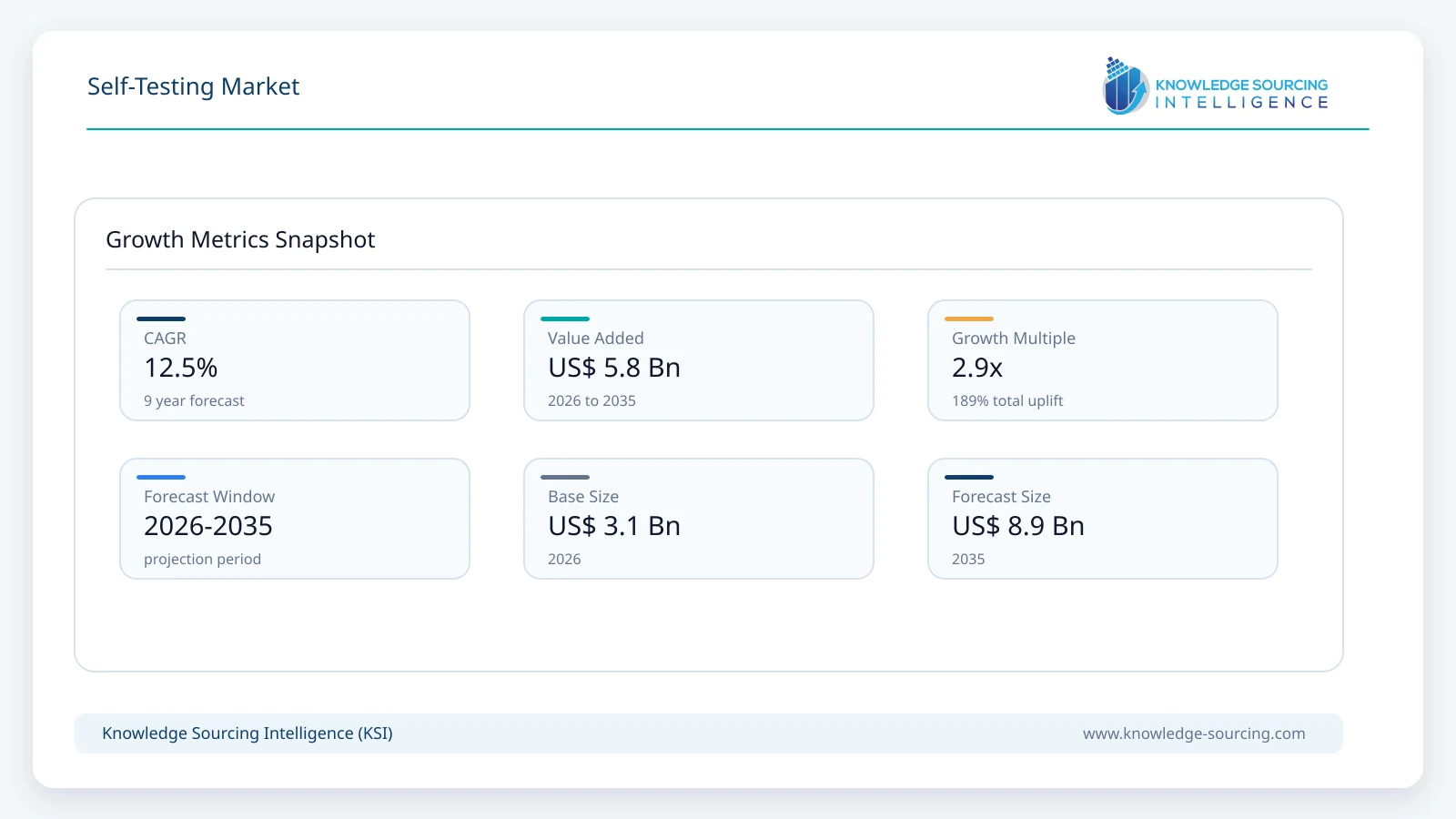
The Self-Testing Market is forecast to grow at a CAGR of 12.5%, reaching USD 8.91 billion in 2035 from USD 3.08 billion in 2026.
Highlights:
- 1Increasing emphasis on preventive healthcare is driving sustained demand for consumer-operated diagnostic tests because individuals seek earlier disease detection and improved health management.
- 2Regulatory expansion of over-the-counter diagnostic pathways is encouraging manufacturers to broaden self-testing portfolios while improving accessibility across retail and online distribution channels.
- 3Digital health integration is increasing adoption because smartphone connectivity enables result interpretation, remote physician consultation, and longitudinal health monitoring.
- 4Rising awareness of infectious disease surveillance is strengthening demand for rapid home diagnostics that reduce delays between symptom onset and clinical decision-making.
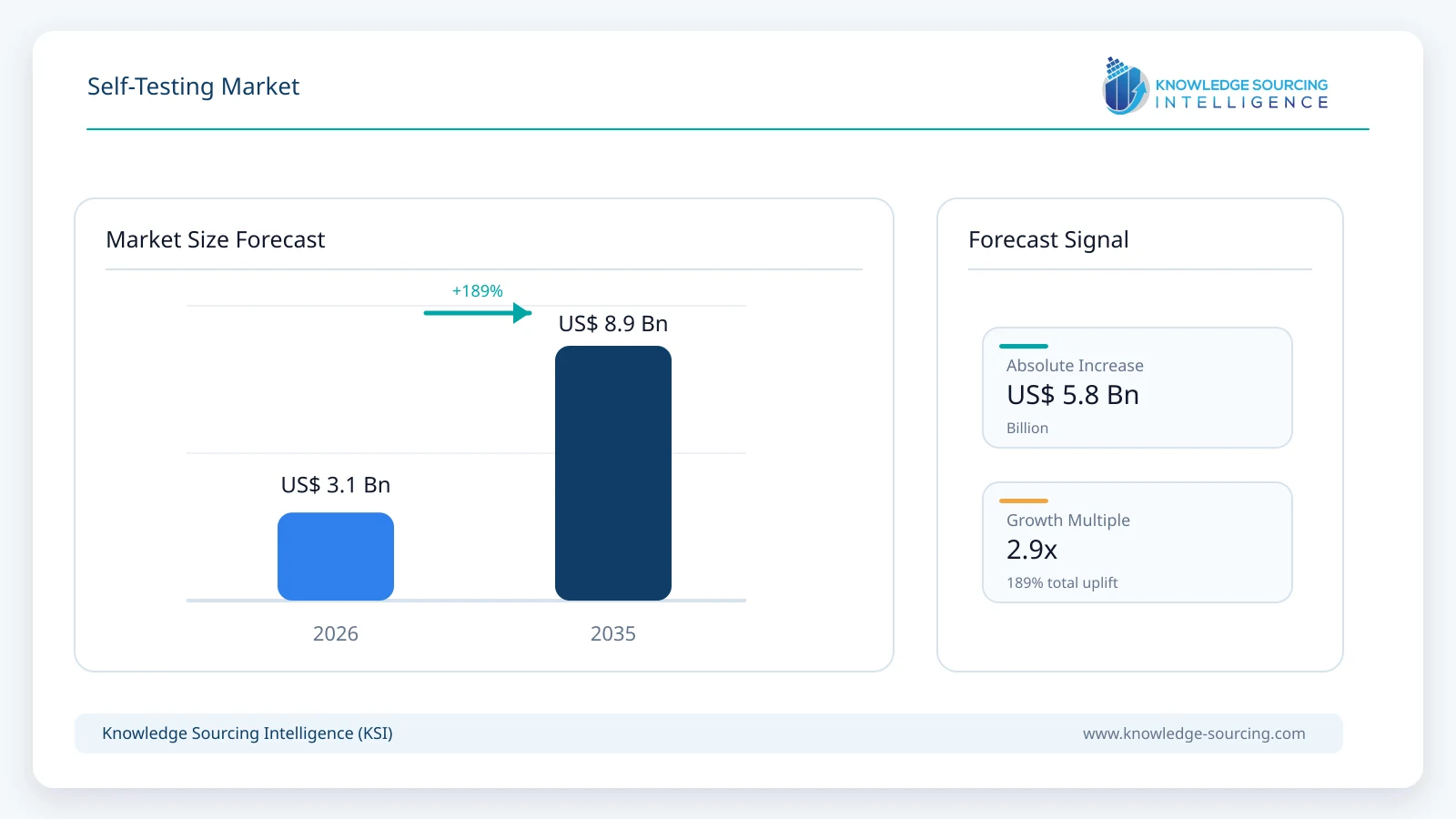
The self-testing market addresses the growing need for accessible diagnostic solutions that reduce dependence on healthcare facilities while supporting earlier disease detection and continuous health monitoring. Home-based testing improves patient convenience, minimizes unnecessary clinical visits, and facilitates rapid decision-making for individuals managing chronic conditions or infectious diseases.
Healthcare systems increasingly emphasize preventive care because early diagnosis reduces treatment complexity and supports improved health outcomes. This shift is driving demand for accurate consumer-operated diagnostic kits capable of delivering laboratory-comparable performance within minutes. Manufacturers are investing in enhanced assay chemistry, digital connectivity, and user-centered product design to improve reliability while minimizing operational errors.
Regulatory oversight continues to influence commercialization strategies because expanding over-the-counter access requires extensive validation of analytical performance and consumer usability. Companies therefore are incorporating human factors engineering, digital reporting capabilities, and quality management systems throughout product development to accelerate regulatory approvals while maintaining compliance across multiple geographic markets.
The market has become strategically important as healthcare systems continue decentralizing diagnostics beyond hospitals and laboratories. This structural transition supports broader public health surveillance, improves patient engagement, and creates sustainable demand for innovative self-testing technologies across developed and emerging healthcare markets.
Market Dynamics
Market Drivers
Rising Adoption of Preventive Healthcare and Consumer Health Awareness: Preventive healthcare increases the importance of early disease detection before symptoms become severe. Consumers are increasingly monitoring their health independently because greater health literacy and digital information access are encouraging proactive testing behaviors. This behavioral shift creates sustained demand for self-testing kits that deliver rapid results without requiring laboratory appointments. Manufacturers are expanding over-the-counter product portfolios to address growing consumer expectations for convenience, accuracy, and privacy. The market therefore strengthens its position as home-based diagnostics become an integral component of preventive healthcare strategies.
Expansion of Regulatory Approvals for Over-the-Counter Self-Tests: Regulatory agencies establish frameworks that improve consumer access while maintaining diagnostic reliability. Authorities are increasingly authorizing over-the-counter self-tests for infectious diseases and chronic condition monitoring because validated home diagnostics reduce pressure on healthcare facilities and improve testing accessibility. Strict analytical and usability requirements continue to preserve product quality despite broader market access. Manufacturers are investing in clinical validation, human-factor studies, and regulatory submissions to expand approved indications across multiple regions. This regulatory progression supports wider commercialization opportunities and accelerates adoption of consumer-operated diagnostic technologies.
Digital Health Integration Enhances Home Diagnostic Adoption: Digital connectivity improves the clinical value of self-testing by linking diagnostic results with healthcare providers and remote monitoring platforms. Consumers are increasingly preferring smartphone-enabled diagnostics because digital interpretation reduces user error and facilitates timely clinical consultation. Data privacy and interoperability requirements remain important considerations as connected diagnostics expand across healthcare systems. Companies are integrating mobile applications, cloud-based reporting, and telehealth capabilities into self-testing ecosystems to improve patient engagement and longitudinal disease monitoring. The market consequently evolves from standalone diagnostic devices toward digitally connected healthcare solutions.
Increasing Burden of Infectious and Chronic Diseases: Disease prevalence sustains long-term demand for accessible diagnostic solutions across diverse patient populations. Healthcare systems are promoting decentralized testing because infectious disease outbreaks and chronic disease management require timely diagnosis outside conventional clinical environments. Resource limitations and workforce shortages continue to constrain laboratory capacity in several healthcare settings. Manufacturers are introducing rapid, user-friendly diagnostic technologies that enable individuals to perform testing independently while maintaining high analytical performance.
Market Restraints
Variability in consumer test administration and result interpretation reduces diagnostic confidence because improper sample collection and procedural errors can affect analytical performance despite improvements in kit design.
Regulatory requirements for over-the-counter approval remain stringent because manufacturers must demonstrate analytical validity, clinical performance, and consumer usability across diverse populations, increasing development cost and commercialization timelines.
Limited reimbursement for many consumer self-tests restricts routine adoption because out-of-pocket purchasing remains the primary payment model in several countries, particularly for preventive and wellness-oriented diagnostics.
Market Opportunities
Expansion of Multiplex Self-Testing Platforms: Multiplex diagnostics increase clinical value by enabling detection of multiple pathogens or biomarkers from a single specimen. Healthcare providers and consumers are increasingly seeking comprehensive home-based testing because respiratory illnesses and other infectious diseases frequently present with overlapping symptoms. Maintaining laboratory-grade analytical performance across multiple analytes remains a technical challenge. Manufacturers are developing advanced immunoassay and molecular platforms capable of simultaneously identifying several disease markers while preserving ease of use. This evolution creates opportunities for premium diagnostic products that support faster clinical decision-making and improve patient convenience.
Growing Penetration of Digital and AI-Enabled Self-Testing Solutions: Artificial intelligence enhances self-testing by improving result interpretation, reducing user variability, and facilitating personalized healthcare recommendations. Consumers are increasingly adopting connected diagnostic solutions because mobile applications provide guided workflows, automated result analysis, and direct integration with telemedicine services. Data security and interoperability continue to influence technology deployment across healthcare ecosystems. Companies are incorporating AI-driven image recognition, cloud connectivity, and digital health platforms into self-testing products to strengthen consumer confidence and clinical utility. This integration expands opportunities for continuous health monitoring beyond episodic diagnostic testing.
Expansion Across Emerging Healthcare Markets: Emerging economies present substantial demand because healthcare access remains uneven across rural and underserved populations. Governments are increasingly strengthening primary healthcare infrastructure while encouraging decentralized diagnostics to improve disease surveillance and early intervention. Affordability and distribution efficiency continue to influence adoption in price-sensitive markets. Manufacturers are expanding regional manufacturing, strategic partnerships, and pharmacy distribution networks to improve accessibility while reducing supply chain complexity. These initiatives position self-testing as an important component of community-based healthcare delivery.
Development of Next-Generation Molecular Self-Testing: Advances in molecular diagnostics improve analytical sensitivity and specificity for home-based applications. Healthcare systems are increasingly recognizing the value of rapid molecular testing because earlier and more accurate diagnosis supports timely treatment decisions and infection control. Miniaturization of molecular technologies remains essential for widespread consumer adoption. Diagnostic developers are introducing compact nucleic acid amplification platforms with simplified workflows that require minimal user intervention while maintaining laboratory-quality performance. These innovations broaden the clinical applications of self-testing and strengthen long-term market expansion.
Disease & Epidemiology Analysis
The epidemiological burden of infectious diseases, diabetes, cardiovascular disorders, and reproductive health conditions establishes the fundamental demand for self-testing solutions. Healthcare systems are increasingly encouraging earlier disease identification because delayed diagnosis contributes to disease transmission, treatment complexity, and higher healthcare expenditure. Variations in disease prevalence across geographic regions continue to influence product development priorities and commercialization strategies. Manufacturers are expanding disease-specific testing portfolios to address diverse diagnostic requirements while improving accessibility outside conventional healthcare settings. This trend positions self-testing as a critical component of decentralized disease surveillance and preventive healthcare.
Respiratory infectious diseases remain a major application area because rapid diagnosis supports timely isolation, clinical intervention, and public health response. Seasonal respiratory infections are continuing to sustain consumer demand for home-based diagnostics that distinguish between multiple pathogens with minimal turnaround time. Viral mutation and evolving pathogen profiles require continuous assay optimization to preserve diagnostic accuracy. Diagnostic companies are developing multiplex molecular and antigen-based self-tests that improve detection capability while maintaining ease of use for non-professional users. This progression strengthens the contribution of self-testing to infectious disease management across community settings.
Chronic diseases also generate sustained demand because long-term patient management depends on frequent health monitoring. Cardiovascular risk factors are simultaneously increasing demand for cholesterol monitoring as preventive healthcare programs expand beyond hospitals. Manufacturers are improving analytical performance, digital connectivity, and user convenience to support continuous disease management.
Treatment Guidelines Landscape
Organization | Disease Area | Guideline Focus | Relevance to Self-Testing |
World Health Organization (WHO) | HIV | HIV self-testing recommendations | Supports supervised and unsupervised HIV self-testing as an entry point to diagnosis with linkage to confirmatory testing and care. |
World Health Organization (WHO) | COVID-19 | SARS-CoV-2 diagnostic guidance | Recognizes validated rapid antigen self-tests as part of community testing strategies where appropriate. |
American Diabetes Association (ADA) | Diabetes | Standards of Care in Diabetes | Recommends self-monitoring of blood glucose for appropriate patients to support individualized diabetes management. |
Centers for Disease Control and Prevention (CDC) | Respiratory Infectious Diseases | Home diagnostic guidance | Supports appropriate use of authorized home tests while emphasizing confirmatory testing in selected clinical situations. |
Market Segmentation
By Test Type
Infectious disease self-testing represents the largest demand segment because rapid diagnosis enables earlier treatment decisions while reducing unnecessary healthcare visits. Consumers are increasingly adopting home-based infectious disease tests as awareness of transmissible diseases and personal health monitoring continues to grow. Regulatory expectations for analytical accuracy remain stringent because false-positive and false-negative results directly influence public health outcomes. Manufacturers are expanding molecular and rapid antigen testing portfolios with improved sensitivity, multiplex capabilities, and smartphone-enabled interpretation. This segment continues to benefit from decentralized healthcare strategies that prioritize accessible and timely diagnosis.
By Sample Type
Blood remains the dominant sample type because glucose monitoring, cholesterol testing, and several biomarker-based diagnostics require high analytical reliability. Patients are increasingly performing routine blood-based self-testing to support long-term management of chronic diseases, particularly diabetes. User comfort and simplified specimen collection continue to influence purchasing decisions and product design. Manufacturers are introducing minimally invasive lancet technologies, compact analyzers, and digitally connected monitoring systems that improve usability while maintaining clinical accuracy. These developments reinforce blood-based testing as a cornerstone of consumer diagnostics.
By Distribution Channel
Online pharmacies and e-commerce platforms are becoming a major distribution channel because consumers increasingly prioritize convenience, product availability, and home delivery. Digital purchasing behavior is expanding as healthcare providers and manufacturers improve consumer awareness through online education and telehealth integration. Product authenticity and regulatory compliance remain essential to maintaining consumer confidence across digital marketplaces. Companies are strengthening direct-to-consumer sales strategies, digital marketing, and authorized online distribution partnerships to improve accessibility and brand visibility. This transformation supports broader adoption of self-testing products while accelerating market penetration across both developed and emerging economies.
Regional Analysis
North America Market Analysis
North America represents the most mature self-testing market because advanced healthcare infrastructure, strong consumer awareness, and supportive regulatory pathways facilitate widespread adoption of home diagnostics. Demand is increasing as patients seek convenient diagnostic solutions that reduce dependence on physician visits for routine screening and chronic disease monitoring. The high prevalence of diabetes, respiratory infections, and sexually transmitted infections continues to sustain recurring demand across multiple testing categories. Manufacturers are expanding over-the-counter product portfolios while integrating digital health applications, telemedicine connectivity, and cloud-based result management into consumer diagnostics. The U.S. Food and Drug Administration continues to authorize innovative over-the-counter diagnostic products through established regulatory pathways, supporting commercialization of new technologies.
Europe Market Analysis
Europe maintains a strong position because preventive healthcare policies, favorable reimbursement for selected diagnostics, and high healthcare awareness support sustained adoption of self-testing technologies. Demand is increasing as healthcare systems promote early diagnosis to improve patient outcomes while reducing pressure on hospitals and primary care facilities. The implementation of the In Vitro Diagnostic Regulation (IVDR) continues to reshape product development because manufacturers must satisfy enhanced clinical evidence and post-market surveillance requirements before commercialization. Companies are investing in regulatory compliance, product validation, and quality management systems to maintain market access throughout the European region. Countries including Germany, the United Kingdom, France, and the Nordic nations continue supporting decentralized diagnostic strategies through expanding pharmacy-based healthcare services and digital health initiatives.
Asia Pacific Market Analysis
Asia Pacific demonstrates the fastest structural expansion because healthcare access, rising disposable income, and increasing disease awareness continue transforming diagnostic practices. Demand is growing as governments strengthen primary healthcare systems while encouraging early disease detection through decentralized healthcare initiatives. Large patient populations and the increasing prevalence of diabetes, cardiovascular diseases, and infectious diseases continue supporting long-term utilization of self-testing products. Manufacturers are expanding regional manufacturing capacity, distribution partnerships, and localized product portfolios to improve affordability and accessibility across diverse healthcare systems. Countries including China, Japan, India, South Korea, and Australia continue investing in digital health infrastructure that complements connected self-testing solutions. E-commerce adoption and expanding retail pharmacy networks also are improving product availability beyond metropolitan healthcare centers.
Rest of the World
The Rest of the World market continues expanding because governments and international healthcare organizations increasingly recognize decentralized diagnostics as an important component of disease surveillance and preventive healthcare. Demand is increasing across Latin America, the Middle East, and Africa as healthcare systems improve diagnostic accessibility in underserved communities where laboratory infrastructure remains limited. Infectious disease control, maternal healthcare, and chronic disease management continue driving adoption of affordable home-based diagnostic products. Manufacturers are strengthening partnerships with public health agencies, distributors, and non-governmental organizations to improve product availability while supporting local healthcare priorities. Regulatory frameworks continue evolving across several countries to establish quality standards for over-the-counter diagnostics and imported medical devices.
Regulatory Landscape
The regulatory environment defines the commercialization pathway for self-testing products because consumer-operated diagnostics must demonstrate analytical accuracy, clinical validity, and ease of use before receiving market authorization. Regulatory agencies are increasingly supporting decentralized diagnostics while maintaining rigorous evidence requirements that minimize the risk of incorrect interpretation outside clinical settings. Human-factor validation, labeling clarity, and post-market surveillance continue to represent essential components of regulatory submissions. Manufacturers are incorporating consumer usability studies alongside analytical performance evaluations to accelerate approvals while maintaining compliance across multiple jurisdictions. This approach strengthens confidence among healthcare professionals, regulators, and consumers while supporting broader adoption of home-based diagnostics.
In the United States, the Food and Drug Administration (FDA) regulates over-the-counter self-tests through established in vitro diagnostic pathways that require demonstration of safety, effectiveness, and consumer usability. In Europe, the In Vitro Diagnostic Regulation (IVDR) (EU 2017/746) establishes enhanced requirements for clinical evidence, performance evaluation, quality management systems, and post-market surveillance before CE marking. Other major markets, including Japan, Australia, China, and Canada, continue refining regulatory frameworks to facilitate access to reliable consumer diagnostics while maintaining quality standards. Companies are therefore harmonizing clinical development, regulatory documentation, and quality systems to support simultaneous product launches across multiple international markets.
Pipeline Analysis
The self-testing pipeline is evolving from conventional rapid immunoassays toward digitally connected molecular diagnostics capable of delivering laboratory-quality performance in home settings. Developers are increasingly focusing on infectious disease detection because rapid diagnosis supports timely treatment decisions and public health surveillance. Miniaturization of nucleic acid amplification technologies remains a primary development objective since simplified workflows improve consumer usability without compromising analytical sensitivity. Manufacturers are advancing integrated diagnostic platforms that combine automated sample preparation, result interpretation, and smartphone connectivity to enhance the overall testing experience.
Clinical development activities continue emphasizing usability validation alongside analytical and clinical performance because regulatory agencies require evidence that non-professional users can correctly perform and interpret diagnostic tests. Sponsors are expanding studies across diverse demographic groups to demonstrate consistent performance under real-world conditions while reducing variability associated with home testing. Multiplex respiratory diagnostics, sexually transmitted infection self-tests, and next-generation chronic disease monitoring platforms continue progressing through product development pipelines as companies broaden decentralized diagnostic portfolios.
Sponsor strategies increasingly prioritize digital ecosystems rather than standalone diagnostic products because connected healthcare platforms improve patient engagement and enable seamless integration with telemedicine services. Companies are pursuing partnerships with software developers, healthcare providers, and pharmacy networks to strengthen commercialization while expanding recurring revenue opportunities through digital health services.
Reimbursement Landscape
Reimbursement policies continue influencing adoption because coverage determines the affordability of self-testing across different healthcare systems. Public and private payers are increasingly recognizing the clinical value of selected home diagnostics where early disease detection reduces downstream treatment costs and unnecessary healthcare utilization. Coverage remains inconsistent across disease areas, particularly for wellness-oriented and preventive screening tests that are frequently purchased directly by consumers. This variability continues to shape manufacturer pricing strategies and product positioning across regional markets.
Healthcare systems increasingly evaluate reimbursement based on demonstrated clinical utility, health economic outcomes, and reductions in overall healthcare expenditure. Manufacturers are generating real-world evidence and health economic data to support reimbursement negotiations while demonstrating that home-based diagnostics improve disease management and reduce pressure on hospitals and diagnostic laboratories. As value-based healthcare continues expanding, reimbursement frameworks are expected to increasingly support clinically validated self-testing technologies that contribute to earlier diagnosis and improved patient outcomes.
Competitive Landscape
Abbott Laboratories
Abbott Laboratories differentiates itself through one of the broadest global diagnostic portfolios spanning rapid diagnostics, molecular diagnostics, point-of-care testing, and chronic disease monitoring. The company is expanding its consumer-focused testing solutions by leveraging its expertise in lateral flow immunoassays, connected diabetes management technologies, and decentralized healthcare platforms.
F. Hoffmann-La Roche Ltd.
Roche maintains a strong competitive position through its leadership in molecular diagnostics, immunodiagnostics, and digital healthcare integration. The company is advancing decentralized diagnostic solutions by adapting laboratory-grade technologies for point-of-care and home-based applications while maintaining high analytical performance. Its extensive research capabilities, global regulatory expertise, and continuous investment in assay development support long-term innovation across infectious disease and chronic disease diagnostics.
Becton, Dickinson and Company
Becton, Dickinson and Company leverages its expertise in specimen collection, diagnostic systems, and medical technology to support decentralized testing environments. The company is expanding solutions that simplify sample collection and improve diagnostic workflow efficiency while maintaining compliance with evolving regulatory standards.
OraSure Technologies, Inc.
OraSure Technologies specializes in rapid diagnostic technologies with strong expertise in oral-fluid-based testing platforms. The company is expanding its infectious disease self-testing portfolio by developing convenient, non-invasive diagnostic solutions that improve patient accessibility and privacy. Continuous investment in product innovation, regulatory approvals, and strategic partnerships supports commercialization across domestic and international markets.
QuidelOrtho Corporation
QuidelOrtho combines expertise in rapid diagnostics, immunoassays, and clinical laboratory technologies to address growing demand for decentralized testing. The company is advancing rapid respiratory diagnostics and multiplex testing platforms that improve diagnostic efficiency across both professional and home settings. Its research activities continue emphasizing analytical sensitivity, simplified workflows, and digital connectivity to enhance consumer usability.
Johnson & Johnson
Johnson & Johnson benefits from its extensive global healthcare presence, strong consumer health expertise, and established brand recognition. The company is supporting preventive healthcare initiatives through investments in consumer-oriented health technologies, digital health solutions, and self-care products that complement decentralized healthcare delivery.
Key Developments
July 2026: PAHO and AIDS Healthcare Foundation announced a collaboration to expand early HIV diagnosis in Latin America and the Caribbean. The initiative aims to improve access to testing, strengthen linkage to care, and help reduce preventable AIDS-related deaths.
April 2026: Volition reported successful detection of nucleosomes in capillary blood using a lateral-flow finger-prick prototype, a step toward rapid sepsis testing. The company said the approach could expand use beyond centralized labs into bedside, emergency, and home-testing settings.
October 2025: BD announced a self-collection solution for HPV testing in markets outside the U.S., designed to simplify at-home sample collection and automate lab processing with the BD COR System. The platform is intended to reduce logistical barriers and broaden participation in cervical cancer screening.
Strategic Insights and Future Market Outlook
The self-testing market is transitioning from episodic home diagnostics toward integrated healthcare ecosystems that combine rapid testing, digital connectivity, and remote clinical support. Consumer expectations are increasingly extending beyond obtaining a diagnostic result because individuals seek guidance on treatment decisions, physician consultation, and longitudinal health monitoring through connected platforms. Standalone diagnostic products therefore provide limited competitive differentiation unless they integrate seamlessly with digital healthcare services. Manufacturers are expanding investments in software-enabled diagnostics, cloud connectivity, and artificial intelligence to improve result interpretation while strengthening patient engagement. This strategic transformation positions self-testing as a critical component of decentralized and value-based healthcare delivery.
Regulatory harmonization and technological innovation are reshaping competitive priorities across the industry. Companies are increasingly pursuing multiplex diagnostics, molecular self-testing technologies, and smartphone-enabled platforms because healthcare systems require more accurate and comprehensive home-based diagnostic capabilities. Clinical validation, cybersecurity, and interoperability continue influencing commercialization strategies as connected diagnostics become more prevalent. Sponsors are strengthening collaborations with healthcare providers, retail pharmacy chains, digital health companies, and public health organizations to accelerate adoption while expanding access to consumer-operated testing. These initiatives support recurring product utilization and reinforce long-term market sustainability.
The competitive environment is expected to increasingly favor manufacturers capable of combining scientific innovation with global regulatory expertise and scalable manufacturing infrastructure. Organizations that successfully integrate decentralized diagnostics with telemedicine, electronic health records, and digital disease management platforms are likely to strengthen their market position as healthcare delivery continues shifting toward community and home-based care. Continued investment in next-generation molecular diagnostics, artificial intelligence, and consumer-centric product design is expected to expand the clinical scope of self-testing while supporting earlier disease detection, improved patient outcomes, and more efficient healthcare resource utilization.
The self-testing market continues to evolve as healthcare systems prioritize accessible, preventive, and patient-centered diagnostic solutions. Ongoing advancements in rapid diagnostics, digital health integration, and regulatory support are strengthening the role of home-based testing across infectious diseases, chronic disease management, and preventive healthcare. As consumer confidence, technological capability, and regulatory acceptance continue advancing together, self-testing is expected to become an increasingly integral element of global healthcare delivery, supporting earlier diagnosis, greater patient empowerment, and more efficient use of healthcare resources.
Self-Testing Market Scope:
| Report Metric | Details |
|---|---|
| Total Market Size in 2026 | USD 3.08 billion |
| Total Market Size in 2035 | USD 8.91 billion |
| Forecast Unit | USD Billion |
| Growth Rate | 12.5% |
| Study Period | 2021 to 2035 |
| Historical Data | 2021 to 2024 |
| Base Year | 2025 |
| Forecast Period | 2026 – 2035 |
| Segmentation | Test Type, Sample Type, Technology, Distribution Channel, End User, Geography |
| Companies |
|
Market Segmentation
Test Type
Sample Type
Technology, Distribution Channel, End User
Geography
- North America
- South America
- Europe
- Middle East and Africa
- Asia Pacific
Table of Contents
1. EXECUTIVE SUMMARY
1.1 Market Snapshot
1.2 Key Findings
1.3 Analyst Insights
1.4 Strategic Recommendations
2. RESEARCH METHODOLOGY
2.1 Research Design
2.2 Data Collection Methodology
2.3 Market Size Estimation
2.4 Forecasting Model
2.5 Assumptions & Limitations
3. GLOBAL SELF-TESTING MARKET OVERVIEW, SIZE & FORECAST
3.1 Market Definition & Scope
3.2 Industry Overview
3.3 Industry Evolution
3.4 Key Market Trends
3.5 Historical Market Size Analysis (2021–2025)
3.6 Market Forecast (2026–2035)
3.7 Disease Burden and Demand for Self-Testing
3.8 Testing Volume Analysis
3.9 Consumer Adoption Analysis
3.10 Patient Journey and Decentralized Testing Trends
4. MARKET DYNAMICS
4.1 Market Drivers
4.2 Market Restraints
4.3 Market Opportunities
4.4 Market Challenges
5. INDUSTRY LANDSCAPE
5.1 Industry Value Chain Analysis
5.2 Pricing Analysis
5.3 Reimbursement Landscape
6. INNOVATION LANDSCAPE
6.1 Product Innovation
6.2 Emerging Self-Testing Technologies
6.3 Pipeline Analysis
6.4 Digital Health Integration
6.5 Artificial Intelligence Integration
7. REGULATORY LANDSCAPE
7.1 Regulatory Framework
7.2 Approval Pathways
7.3 Compliance Requirements
8. GLOBAL SELF-TESTING MARKET LANDSCAPE ANALYSIS
8.1 Analysis by Test Type
8.2 Analysis by Technology Platform
8.3 Analysis by Sample Type
8.4 Analysis by Clinical Application
8.5 Analysis by Testing Methodology
8.6 Analysis by Distribution Channel
9. GLOBAL SELF-TESTING MARKET SEGMENT ANALYSIS (2021–2035)
9.1 By Test Type
9.1.1 Infectious Disease Self-Testing
9.1.2 Pregnancy & Fertility Self-Testing
9.1.3 Blood Glucose Self-Testing
9.1.4 Cholesterol Self-Testing
9.1.5 Urinalysis Self-Testing
9.1.6 Drug Abuse Self-Testing
9.1.7 Other Self-Tests
9.2 By Sample Type
9.2.1 Blood
9.2.2 Urine
9.2.3 Saliva
9.2.4 Nasal Swab
9.2.5 Other Sample Types
9.3 By Technology
9.3.1 Lateral Flow Immunoassays
9.3.2 Molecular Diagnostics
9.3.3 Biosensor-Based Testing
9.3.4 Microfluidics-Based Testing
9.3.5 Others
9.4 By Distribution Channel
9.4.1 Retail Pharmacies
9.4.2 Hospital Pharmacies
9.4.3 Online Pharmacies & E-commerce
9.5 By End User
9.5.1 Homecare Users
9.5.2 Individuals with Chronic Diseases
9.5.3 Wellness & Preventive Care Users
10. GLOBAL SELF-TESTING MARKET GEOGRAPHICAL ANALYSIS (2021–2035)
10.1 North America
10.2 Europe
10.3 Asia-Pacific
10.4 South America
10.5 Middle East & Africa
11. GLOBAL SELF-TESTING MARKET COUNTRY ANALYSIS (2021–2035)
11.1 United States
11.2 Canada
11.3 Germany
11.4 United Kingdom
11.5 France
11.6 Italy
11.7 Spain
11.8 Japan
11.9 China
11.10 India
11.11 South Korea
11.12 Australia
11.13 Brazil
11.14 Mexico
11.15 Saudi Arabia
11.16 South Africa
12. COMPETITIVE LANDSCAPE
12.1 Market Share Analysis
12.2 Strategic Developments
12.3 Mergers & Acquisitions, Partnerships & Collaborations
12.4 Product Launches
13. COMPANY PROFILES
13.1 Abbott Laboratories
13.1.1 Company Overview
13.1.2 Financials
13.1.3 Product Portfolio
13.1.4 Recent Developments
13.2 F. Hoffmann-La Roche Ltd.
13.3 Becton, Dickinson and Company
13.4 OraSure Technologies, Inc.
13.5 Johnson & Johnson
13.6 Bio-Rad Laboratories
13.7 Cue Health Inc.
13.8 QuidelOrtho Corporation
13.9 GenBody Inc.
13.10 InBios International Inc.
14. GLOBAL SELF-TESTING MARKET COMMERCIAL FORECAST ANALYSIS
14.1 Infectious Disease Self-Testing
14.2 Blood Glucose Self-Testing
14.3 Pregnancy & Fertility Self-Testing
14.4 Cholesterol Self-Testing
14.5 Drug Abuse Self-Testing
14.6 Genetic & Genomic Self-Testing
14.7 Coagulation (INR) Self-Testing
14.8 Digital & Connected Self-Testing Solutions
15. INVESTMENT & FUNDING ANALYSIS
15.1 Venture Capital Trends
15.2 Government Funding
15.3 R&D Investments
16. FUTURE OUTLOOK
16.1 Key Growth Opportunities
16.2 Future Industry Trends
Navigate
Trusted by the world's leading organizations











