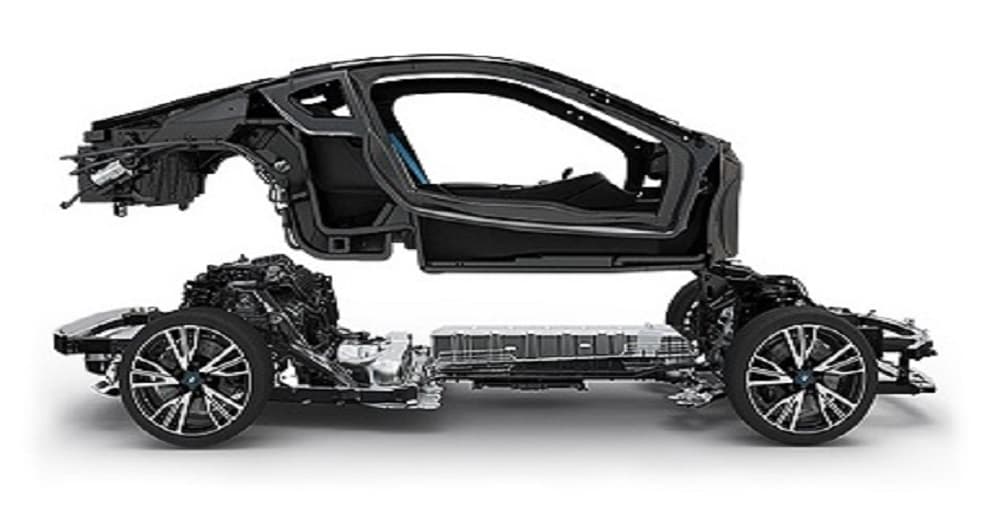
The automotive composites market is evaluated at US$7.317 billion for the year 2022 growing at a CAGR of 11.04% reaching the market size of US$15.231 billion by the year 2029....
The automotive composites market is evaluated at US$7.317 billion for the year 2022 growing at a CAGR of 11.04% reaching the market size of US$15.231 billion by the year 2029.
Composites are employed in various vehicle applications, including interior, exterior, structural, and other uses. Automotive composites have various features, including low coefficients of thermal expansion, form retention, ease of production, and corrosion resistance for performance in both dry and wet climates. The automotive composites market highly depends on the automobile industry, especially the revenue generated by the increasing number of electric vehicle sales. Due to the increasing production and sales of lightweight and electric vehicles, the market for automotive composites is expected to rise in the coming years. Furthermore, launching new products that give multiple operational benefits while adhering to existing emission criteria and other market laws will assist market companies in maintaining product differentiation and strengthening their position in the international automotive composites market.
With the existence of big companies with competence in modern production processes, the market for automotive composite has remained competitive. Therefore, product development is the primary growth strategy used by industry participants to ensure long-term viability in the global automotive composites market. For instance, Mitsubishi Chemical Co., Ltd. revealed the creation of a novel carbon fiber prepreg that may be employed as a component of an automotive engine in June 2021.
The rising automobile industry will surge the automotive composites marketThe growing market share is attributed to increased automobile sales and the global desire for lightweight cars. Rapid urbanization, rising disposable incomes, and changing lifestyles are all driving up demand for noise reduction devices in automobiles in developing nations. A huge number of cars now utilize traditional fuel technologies such as diesel and gasoline, which has increased demand for fuel-efficient automobiles. Car manufacturers are concentrating more on incorporating safety and convenience into their vehicles as demand for automobiles develops in emerging economies. Furthermore, the rising need for replacement car parts and soundproofing equipment is likely to drive product demand throughout the forecast period. The primary causes for this shift in growth rate are increased car manufacturing and stringent pollution control regulations, forcing manufacturers to use lightweight vehicle components.
Increased government regulationsMoreover, governments in the United States, the United Kingdom, and Germany have implemented tough emission-control legislation in response to growing air pollution and global warming. Environmental rules in Europe and the United States have required automobile makers to use composites in vehicle manufacturing. Regulations in Europe and throughout the world are requiring OEMs to minimize CO2 emissions from produced vehicles. The European Union approved Regulation (EU) 2019/631 in April 2019, which sets a goal of 95 g/km of average CO2 emissions for new passenger automobiles. As a result, automotive sales will positively influence the automotive composites market in the near future.
Major key developments and initiatives taken by companies and the government will impact the automotive composites marketDue to the rise of the automotive industry, several companies, and governments worldwide have taken initiatives that have majorly contributed to the market’s future growth. Therefore, these developments have boosted the automotive composites market. For instance,
- In February 2022, Teijin Automotive Technologies, the main firm of the Teijin Group's automotive composites sector, has begun commercial operation of a new composites production plant in Changzhou, Jiangsu province, China's Wujin National Hi-Tech Industrial Zone. The business recently announced the construction of its third factory in China, which will be in the Tiexi District of Shenyang, Liaoning region, and will begin operations in 2023.
- In April 2020, The Composites Institute and UKRI's Innovate UK launched seven research and development initiatives that have created novel composite materials that can boost component manufacturing in a variety of global industries, including automotive, aerospace, and renewable energy generation.
- In April 2019, Alpex, a global leader in tooling systems to produce aerospace and automotive composite components, announced its formal entry into the Chinese market. By establishing a plant in Changshu, Jiangsu Province, it supplies expert composite tooling services to adjacent Asian consumers. The development of the factory also means that Alpex's expert composite tooling services have officially covered the three most active areas of the composite sector, namely Europe, Northeast Asia, and North America.
- In July 2019, Teijin Limited announced that it has agreed to acquire Jet Investment's entire stake in Benet Automotive s.r.o. (Benet), a prominent automotive composite and components provider in the Czech Republic. Teijin leveraged Benet's capabilities in existing process projects and evolve the composition of innovations with Teijin and CSP's outstanding material and molding technologies and technical team members as part of its multi-material strategy to introduce new automotive composite solutions that meet customers' future needs. Teijin intends to sell around USD 2 billion in automotive composites by 2030.
The Asia Pacific is the largest and fastest-growing area due to the highest number of vehicles present, notably in China, Thailand, and India. Furthermore, these countries are expected to have the most automobiles on the road, as well as the biggest markets for four-wheelers, fuelling the market's growth. The growing sales of electric vehicles in the Asia Pacific region and the technological advancements made in this segment will highly influence the automotive composites market for this region. For instance, the Automotive Component Manufacturers Association of India (ACMA) is the governing organization for the Indian auto component industry. Its participation of over 850 firms accounts for more than 85% of the organized auto component industry's sales. According to the same source, the automobile sector in India saw two consecutive years of growth, with 14.6 percent in FY19-20 and 13.6 percent in FY20-21.
Automotive Composites Market Scope:
| Report Metric | Details |
| Market Size Value in 2022 | US$7.317 billion |
| Market Size Value in 2029 | US$15.231 billion |
| Growth Rate | CAGR of 11.04% from 2022 to 2029 |
| Base Year | 2022 |
| Forecast Period | 2024 – 2029 |
| Forecast Unit (Value) | USD Billion |
| Segments Covered |
|
| Companies Covered |
|
| Regions Covered | North America, South America, Europe, Middle East and Africa, Asia Pacific |
| Customization Scope | Free report customization with purchase |
| Subscribe Us |
Have questions?
More Blogs
Clinical Decision Support Diagnostic Systems Market: Why the U.S. Healthcare System Is Quietly Rebuilding Diagnosis Around Algorithms
The U.S. clinical decision support diagnostic systems market is rapidly evolving as hospitals adopt AI-driven tools to manage rising diagnostic complexity, workforce shortages, and operational pressures. Growth is fueled by demand for faster, accurate diagnoses, workflow efficiency, interoperability, and value-based care, while physician trust, cybersecurity, and regulatory compliance increasingly determine long-term market success.
Top U.S. Healthcare Industry Trends to Watch in 2026 for the Global Healthcare Market
The global healthcare industry in 2026 is shifting toward AI-driven efficiency, stronger cybersecurity, outpatient care expansion, and domestic pharmaceutical manufacturing. U.S. healthcare leaders are prioritizing workforce support, operational resilience, value-based care, and integrated digital systems to improve patient outcomes while controlling costs.
How AI Is Reshaping the American Healthcare Industry
The U.S. healthcare industry is rapidly integrating artificial intelligence across clinical, administrative, and pharmaceutical operations. AI is improving diagnostics, automating workflows, reducing clinician burden, accelerating drug discovery, and enhancing personalized care. With strong adoption by hospitals and tech companies, AI is transforming healthcare delivery while driving the U.S. AI healthcare market toward significant growth by 2031.