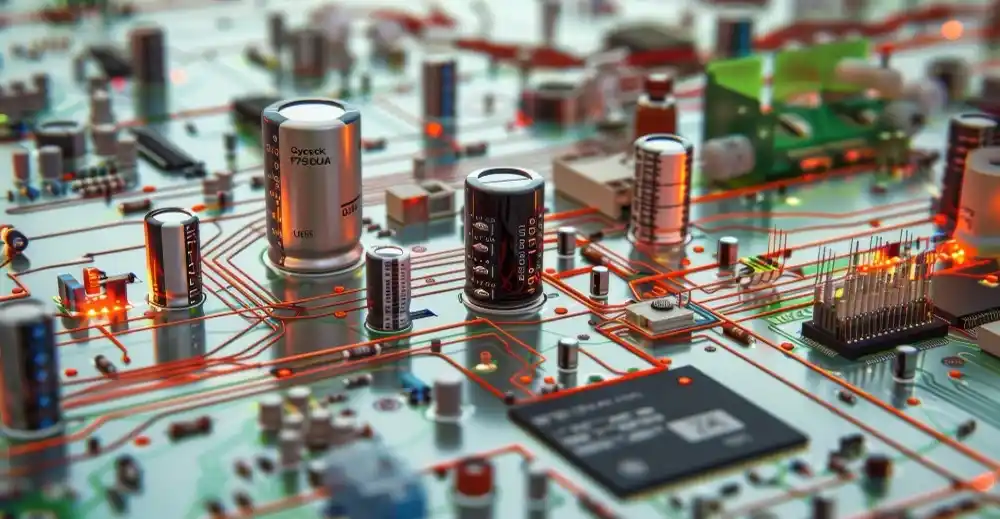
Introduction: The Rise of Silicon-Based Capacitors: Electronic circuits use basic capacitors as storage devices to handle three essential tasks including filtering, decoupling, and signal coupling. High-performance silicon capacitors h...
Introduction: The Rise of Silicon-Based Capacitors:
Electronic circuits use basic capacitors as storage devices to handle three essential tasks including filtering, decoupling, and signal coupling. High-performance silicon capacitors have established themselves as leading alternatives for the replacement of traditional Multi-Layer Ceramic Capacitors (MLCCs) among modern technological solutions.Key Advantages Driving Adoption:
Silicon capacitors offer several key advantages:- Superior High-Frequency Performance: Silicon capacitors deliver excellent high-frequency capabilities because they possess lower Equivalent Series Inductance (ESL) and Equivalent Series Resistance (ESR) which supports telecommunication and AI systems.
- Improved Reliability and Stability: They offer enhanced reliability over temperature fluctuations, voltage variations, and aging.
- Miniaturization and Integration Capabilities: Their petite dimensions coupled with reduced profiles enable proper integration since they can fit inside advanced packaging systems and SoC architectures. The thin size of Empower's E-CAP extends to less than 50 micrometers. Murata and Elohim also offer variants with excellent integration potential.
Top Companies Leading the Silicon Capacitor Revolution:
Several companies are at the forefront of innovation and development in silicon-based capacitor technology, each contributing unique advancements and catering to specific market needs.- Murata Manufacturing:
- Empower Semiconductor:
- Elohim Inc. (ELSPES):
- ROHM Semiconductor:
- Skyworks Solutions:
Conclusion: The Future Powered by Silicon Capacitors:
Silicon-based capacitors are playing an increasingly vital role in enabling the ongoing advancements in modern electronics, primarily due to their superior performance characteristics compared to traditional capacitor technologies. The leading companies profiled in this article Murata Manufacturing, Empower Semiconductor, Elohim Inc., ROHM Semiconductor, and Skyworks Solutions are making significant contributions to driving innovation and shaping the silicon capacitor market. The continued innovation and increasing adoption of silicon capacitors are likely to pave the way for further miniaturization of electronic devices, significant performance enhancements in various applications, and the emergence of new technological possibilities within the broader electronics industry. As technology continues its relentless march forward, the demands placed on electronic components will only intensify, creating even greater opportunities for silicon capacitors to potentially replace traditional technologies in an expanding array of applications. Find some of our related studies:Have questions?
More Blogs
Clinical Decision Support Diagnostic Systems Market: Why the U.S. Healthcare System Is Quietly Rebuilding Diagnosis Around Algorithms
The U.S. clinical decision support diagnostic systems market is rapidly evolving as hospitals adopt AI-driven tools to manage rising diagnostic complexity, workforce shortages, and operational pressures. Growth is fueled by demand for faster, accurate diagnoses, workflow efficiency, interoperability, and value-based care, while physician trust, cybersecurity, and regulatory compliance increasingly determine long-term market success.
Top U.S. Healthcare Industry Trends to Watch in 2026 for the Global Healthcare Market
The global healthcare industry in 2026 is shifting toward AI-driven efficiency, stronger cybersecurity, outpatient care expansion, and domestic pharmaceutical manufacturing. U.S. healthcare leaders are prioritizing workforce support, operational resilience, value-based care, and integrated digital systems to improve patient outcomes while controlling costs.
How AI Is Reshaping the American Healthcare Industry
The U.S. healthcare industry is rapidly integrating artificial intelligence across clinical, administrative, and pharmaceutical operations. AI is improving diagnostics, automating workflows, reducing clinician burden, accelerating drug discovery, and enhancing personalized care. With strong adoption by hospitals and tech companies, AI is transforming healthcare delivery while driving the U.S. AI healthcare market toward significant growth by 2031.