The ocular implants market is growing due to increasing cases of cataracts, glaucoma, and other eye disorders. Rising ageing populations, advancements in ophthalmic implant technologies, and expanding access to eye surgeries are supporting demand for intraocular lenses, corneal implants, and glaucoma drainage devices.
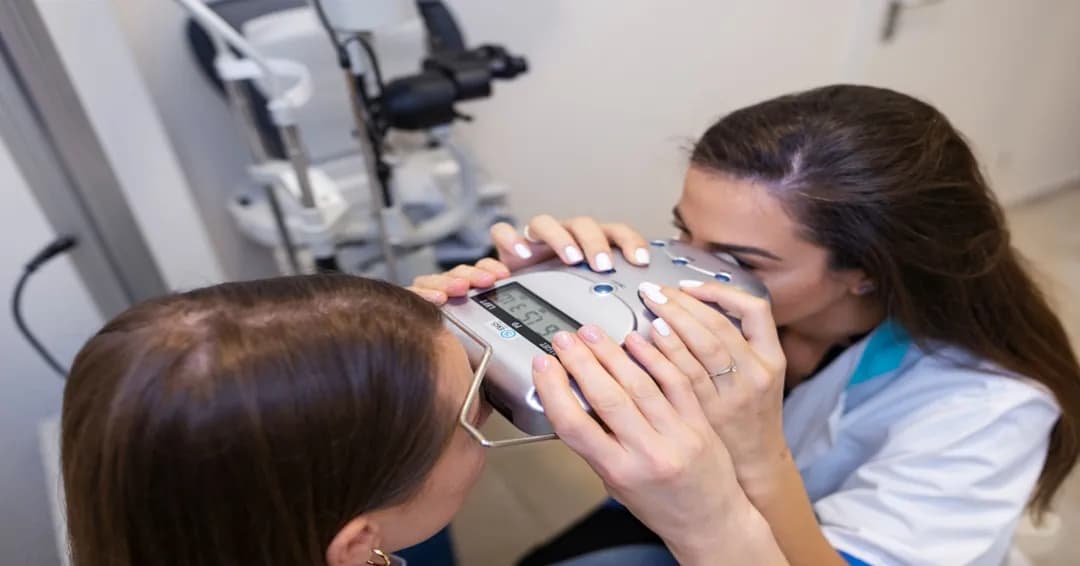
Ocular Implants Market Trends & Forecast
According to a research study published by Knowledge Sourcing Intelligence (KSI), the ocular implants market will expand from USD 20.7 billion in 2026 to USD 40.1 billion in 2031 at a CAGR of 14.1% during the forecast period.
The ocular implant market encompasses medical devices that are surgically implanted into people's eyes in order to restore sight, cure patients with ocular diseases or improve the appearance of their eyes after an injury or surgery. Examples of ocular implants include Artificial Intraocular Lenses, Glaucoma Implants, Corneal Implants, Orbital Implants and Retinal Prosthesis; they are produced and utilised when performing many different types of eye surgeries. Ocular implant use is essential for patients suffering from cataracts, glaucoma, macular degeneration and significant eye trauma. The ocular implant market is growing rapidly due to the increasing number of individuals worldwide with vision impairment today and a growing elderly population that is more susceptible to developing vision-related eye problems. There are billions of people worldwide who suffer from some type of vision impairment, according to the World Health Organisation (WHO) Global Health Estimates; this drives up demand for surgical interventions and implantable ocular devices.
Request a free sample copy or view the report summary: Ocular Implants Market Report
Ocular Implants Market Report Highlights
Ocular implants comprise the most prominent segment of the ocular implant market owing to extensive utilization of a variety of intraocular lenses (IOL) in cataract surgery since cataract surgery is one of the most common procedures performed to address vision loss worldwide. In terms of causing vision loss, cataracts rank among the most prevalent global causes of vision impairment; therefore, there are a large volume of admissions for which lens replacement will occur to resolve vision problems.
Today's modern IOLs, including mono-focal, multi-focal, toric, and accommodating lens versions, provide solutions for patients who need both distance and near vision correction following surgery. Furthermore, improvements in technology, including the development of foldable IOLs, preloaded delivery systems, and enhanced optical engineering/designs have enhanced the overall surgical outcome and patient satisfaction following cataract surgery. As the number of cataract surgeries performed globally continues to increase, the ability to provide advanced IOLs will continue to be a primary force driving the overall growth of the ocular implant market.
Technological innovations have transformed the ocular implants market through the development of advanced surgical instruments, the utilization of biomaterials, implanted drug delivery technology, and smart devices to monitor intraocular pressure and/or drug infusion after implantation. Other emerging technologies such as sensor-enabled implant devices and minimally invasive glaucoma surgery implants have been met with great enthusiasm from corneal surgeons. Other technologies, such as 3D printing/printing of orbital implants and hydrogel-based corneal implants, are expected to broaden the treatment of complex eye diseases. Overall, through the introduction of advanced methodologies/care protocols for treating patients with ocular implants, this production of advanced methods for treating patients will increase each hospital’s and each eye care center’s global adoption of ocular implant solutions.
Report Coverage:
Report Metric | Details |
|---|---|
Total Market Size in 2026 | USD 20.7 billion |
Total Market Size in 2031 | USD 40.1 billion |
Growth Rate | 14.1% |
Drivers |
|
Restraints |
|
Segmentation | Type, End-User, Geography |
Companies |
|
Ocular Implants Market Growth Drivers and Restraints
Growth Drivers:
Rising Prevalence of Eye Disorder: The growth in prevalence of ocular disorders such as cataracts and glaucoma, as well as age-related macular degeneration (AMD), is impacting the market for ocular implants. Older individuals are at higher risk for developing these ocular disorders; therefore, there is a greater need for surgical treatment with implants. Cataract surgery is one of the most frequently done surgical procedures globally, and the use of intraocular lenses is critical when recovering vision after the lens has been removed. Similarly, glaucoma implants help manage elevated intraocular pressure in patients who have poor responses to medications and/or laser treatments. The demand for advanced ocular implant technology is projected to grow in parallel with the increasing number of patients who have visual impairment globally.
Increasing Healthcare Investment and Surgical Infrastructure: Healthcare expenditure and the availability of improved ophthalmic surgical infrastructure are also contributing to the expansion of the ocular implants market. Both government and privately-owned healthcare systems are investing capital into advanced medical devices and specialised eye care facilities for the training of experienced ophthalmic surgeons. This investment will be readily apparent when looking at emerging economies where the population is rapidly receiving access to modern eye care technologies. The influx of funding for health care has enabled hospitals and clinics to adopt advanced implant technologies and perform an increasing number of surgical procedures. As awareness of the importance of eye health increases and becomes prevalent in our society, the number of patients seeking timely treatment has also grown, thus creating a greater need for ocular implant products internationally.
Restraints:
High Cost of Surgical Procedures: Ocular implant procedures often involve expensive surgical equipment, advanced implant devices, and specialized ophthalmic expertise. In many developing regions, limited reimbursement coverage and high treatment costs reduce patient accessibility to these procedures. As a result, adoption of premium implants and advanced technologies may remain restricted in cost-sensitive healthcare markets.
Regulatory and Safety Challenges: Ocular implants must meet strict regulatory standards related to safety, long-term durability, and biocompatibility. Obtaining approvals often requires extensive clinical testing and documentation, which increases development costs and delays product launches. These regulatory complexities can slow innovation and limit market entry for smaller medical device manufacturers.
Ocular Implants Market Key Development
February 2026: Ocular Therapeutix reported updated clinical milestones for AXPAXLI‚Ñ¢ (OTX-TKI) wet AMD Phase 3 SOL-1 trial, with topline data expected at the 49th Macula Society Annual Meeting.
Ocular Implants Market Segmentation
Knowledge Sourcing Intelligence has segmented the Ocular Implants Market based on type, end user, and region:
Ocular Implants Market, by Type
Intraocular lenses
Ocular Prostheses
Others
Ocular Implants Market by End User
Eye Hospitals
Ophthalmic Clinics
Eye Institutes
Ocular Implants Market, By Region
North America
USA
Canada
Mexico
Europe
Germany
France
UK
Spain
Others
Asia Pacific
China
Japan
India
South Korea
Others
South America
Brazil
Argentina
Others
Middle East and Africa (MEA)
Saudi Arabia
Israel
Others
Ocular Implants Market Key Players
SMR Ophthalmic Pvt. Ltd.
iSTAR Medical
Johnson & Johnson
STAAR Surgical
Alcon
Hoya Surgical Optics
ZEISS
Glaukos
OPHTEC
NanoVision
Need specialized data cuts or competitive intelligence?
Our analyst team provides bespoke market sizing, supplier audits, and country-level feasibility reports tailored to your enterprise roadmap.
Speak With an Industry Analyst →Ask an Industry Analyst
Have questions regarding this briefing or market projections? Inquire with our sector lead.
Related Press Releases
View All →
ADC Manufacturing & CDMO Market is expected to reach USD 10.49 billion by 2031
Aug 7, 2026
Lifestyle-Associated Cancer Epidemiology Market is expected to reach USD 13.12 billion by 2031
Aug 5, 2026
Psycho-Oncology Digital Health Market is anticipated to surpass USD 290.01 million in 2031 at a CAGR of 8.5%
Jul 30, 2026
Intratumoral Injection Therapy Market is expected to reach USD 630.39 million by 2031
Jul 24, 2026
Palliative Care in Oncology Market is expected to reach USD 244.1 billion by 2031
Jul 22, 2026More Press Releases
Oncology Drug Resistance Testing Market is projected to reach USD 3.41 billion in 2031 at a CAGR of 6.6 %
The oncology drug resistance testing market is expanding due to rising cancer prevalence, increasing drug resistance, and growing adoption of precision oncology. Advances in NGS-based testing, companion diagnostics, and targeted therapies, alongside FDA approvals and investments in personalized medicine, are accelerating demand for effective resistance monitoring across hospitals and clinical diagnostics worldwide.
TROP-2 Targeted Therapy Market is anticipated to surpass USD 3.29 billion in 2031 at a CAGR of 8.6 %
The TROP-2 Targeted Therapy market is expanding rapidly due to increasing precision oncology adoption, rising cancer prevalence, and growing use of antibody-drug conjugates. North America leads the market, while Asia Pacific shows the fastest growth. Continuous clinical trials, regulatory approvals, and strategic collaborations are accelerating innovation and commercial adoption worldwide.
Second Primary Cancer Prevention Market is expected to reach USD 24.7 billion by 2031
The Second primary cancer prevention refers to strategies aimed at reducing the risk of developing a new, unrelated cancer in individuals with a prior cancer diagnosis. Growing cancer survivorship, advances in treatment, and increasing awareness of long-term health outcomes have heightened the importance of prevention and surveillance programs. Key approaches include routine screening, genetic risk assessment, lifestyle modification, and long-term follow-up care. Government agencies and healthcare organisations increasingly emphasise survivorship care plans and evidence-based screening protocols to detect new malignancies at earlier stages. Continued investments in early detection technologies and personalised risk assessment are expected to support advancements in second primary cancer prevention.