The global market for multi-omics diagnostics integration platforms is robustly growing due to the ever-growing complexity of diseases and the demand for integrated, data-driven diagnostic platforms. Multi-omics approaches allow the integration of various biological data such as genomics, proteomics, transcriptomics, metabolomics and epigenomics to gain a comprehensive understanding of disease processes. They are used for detection, diagnosis and personalised therapies. Coupled with cutting-edge bioinformatics and data analytics techniques, multi-omics technologies can be used in cancer research, rare genetic diseases, neurology, immunology and precision medicine.
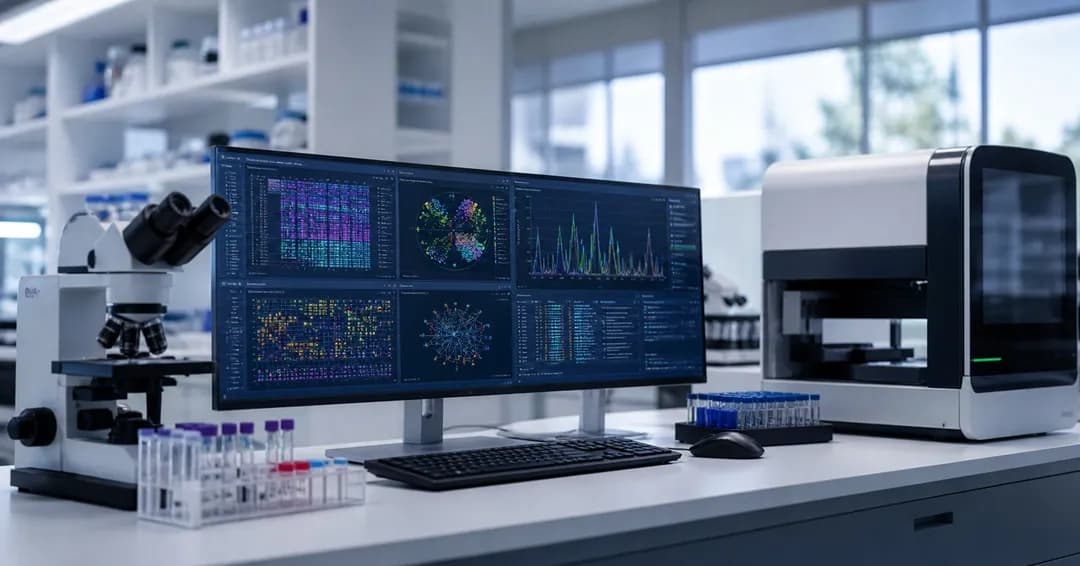
Multi-Omics Diagnostics Integration Platforms Market Trends & Forecast
According to a research study published by Knowledge Sourcing Intelligence (KSI), the multi-omics diagnostics integration platforms market will expand from USD 3.8 billion in 2026 to USD 9.1 billion in 2031 at a CAGR of 19.1% during the forecast period.
The market for multi-omics diagnostics integration platforms is quickly growing because of the demand for high-precision, multi-dimensional biological understanding and technological advances in omics technologies and computational biology. Multi-omics platforms support integration and analysis of high-throughput biological data, enabling early detection, precise diagnosis and identification of predictive biomarkers for therapeutic interventions. They are used in cancer, rare and genetic diseases, neurology, immunology, and precision medicine research, and are key enablers of next-generation diagnostics and translational medicine.
Request a free sample copy or view the report summary: Multi-Omics Diagnostics Integration Platforms Market Report
Multi-Omics Diagnostics Integration Platforms Market Report Highlights
By Component, the fastest growing segment of the multi-omics diagnostics integration platforms market will be Software. Software is in high demand as the demand for sophisticated software for data analysis and interpretation of complex multi-omics data grows. Data integration platforms are also in high growth as they allow for the integration and harmonisation of various biological data, while consulting, deployment and support services are also increasing due to the complexity involved in deploying and customising solutions.
By Omics Type, genomics has a large market share as it forms the basis for disease studies and diagnosis. But proteomics and transcriptomics is likely to experience the highest growth rate owing to their ability to deliver functional information on protein synthesis and gene expression. Further, metabolomics and epigenomics are emerging due to their potential to provide deeper insights into underlying biological processes and disease pathways, particularly in complex and multifaceted diseases.
By Application, the highest growth rate will be observed in oncology due to the rising incidence of cancer worldwide and the growing use of precision oncology. The synergism of omics layers is improving tumor profiling and biomarker identification, and is useful in treatment decision-making, driving the use of multi-omics platforms for the diagnosis of cancer.
Other fast-growing application areas include rare and genetic diseases, which benefit from the increased diagnostic accuracy and decreased time to diagnosis provided by multi-omics platforms. Other applications include neurology and immunology, where there is a demand for more detailed understanding of disease pathways.
By geographical region, the multi-omics diagnostics integration platforms market in North America is likely to hold the largest market share due to its sophisticated healthcare ecosystem, concentration of biotechnology and software firms, and usage of precision medicine technologies. Support from the regulatory environment, growing investment in omics research and clinical adoption of multi-omics solutions further drives the market in this region.
Multi-Omics Diagnostics Integration Platforms Market Growth Drivers and Restraints
Growth Drivers:
Rising Demand for Comprehensive Disease Insights: The increasing prevalence of complex diseases such as cancer, neurological disorders, and immune-related conditions is driving the need for integrated diagnostic approaches. Multi-omics platforms enable simultaneous analysis of multiple biological layers, offering more comprehensive and accurate insights compared to single-omics methods.
Shift Toward Precision Medicine: Healthcare systems are increasingly moving toward personalized treatment strategies based on individual biological profiles. Multi-omics integration platforms play a critical role in identifying actionable biomarkers and enabling tailored therapeutic approaches, thereby improving patient outcomes and treatment effectiveness.
Restraints:
High Cost and Implementation Complexity: The widespread adoption of multi-omics diagnostics integration platforms is limited by the high costs associated with software development, data storage, and computational infrastructure. Additionally, integrating and interpreting complex, multi-dimensional datasets requires specialized expertise in bioinformatics and data science, which can hinder adoption, particularly in resource-constrained settings.
Multi-Omics Diagnostics Integration Platforms Market Key Development
Innovation: In October 2025, Illumina, Inc. introduced its 5-base multi-omics sequencing solution, enabling researchers to capture both genomic variants and DNA methylation signals in a single workflow. This technology allows simultaneous high-resolution analysis of the genome and epigenome, streamlining multi-omics diagnostics by reducing assay complexity and turnaround time.
Multi-Omics Diagnostics Integration Platforms Market Segmentation
Knowledge Sourcing Intelligence has segmented the multi-omics diagnostics integration platforms by component, omics type, application, and geography:
Multi-Omics Diagnostics Integration Platforms Market, By Component
Software
Data Integration Platforms
Services
Multi-Omics Diagnostics Integration Platforms Market, By Omics Type
Genomics
Proteomics
Transcriptomics
Metabolomics
Epigenomics
Multi-Omics Diagnostics Integration Platforms Market, By Application
Oncology
Rare & Genetic Diseases
Neurology
Immunology
Precision Medicine Research
Multi-Omics Diagnostics Integration Platforms Market, By Geography
North America
USA
Canada
Mexico
Europe
United Kingdom
Germany
France
Spain
Others
Asia Pacific
China
India
Japan
South Korea
Indonesia
Thailand
Others
South America
Brazil
Argentina
Others
Middle East and Africa (MEA)
Saudi Arabia
UAE
Others
Multi-Omics Diagnostics Integration Platforms Market Key Players
Illumina
Thermo Fisher Scientific
Agilent Technologies
QIAGEN
Roche Diagnostics
Bruker Corporation
Waters Corporation
Bio-Rad Laboratories
Pacific Biosciences
BGI Genomics
Need specialized data cuts or competitive intelligence?
Our analyst team provides bespoke market sizing, supplier audits, and country-level feasibility reports tailored to your enterprise roadmap.
Speak With an Industry Analyst →Ask an Industry Analyst
Have questions regarding this briefing or market projections? Inquire with our sector lead.
Related Press Releases
View All →
ADC Manufacturing & CDMO Market is expected to reach USD 10.49 billion by 2031
Aug 7, 2026
Lifestyle-Associated Cancer Epidemiology Market is expected to reach USD 13.12 billion by 2031
Aug 5, 2026
Psycho-Oncology Digital Health Market is anticipated to surpass USD 290.01 million in 2031 at a CAGR of 8.5%
Jul 30, 2026
Intratumoral Injection Therapy Market is expected to reach USD 630.39 million by 2031
Jul 24, 2026
Palliative Care in Oncology Market is expected to reach USD 244.1 billion by 2031
Jul 22, 2026More Press Releases
Oncology Drug Resistance Testing Market is projected to reach USD 3.41 billion in 2031 at a CAGR of 6.6 %
The oncology drug resistance testing market is expanding due to rising cancer prevalence, increasing drug resistance, and growing adoption of precision oncology. Advances in NGS-based testing, companion diagnostics, and targeted therapies, alongside FDA approvals and investments in personalized medicine, are accelerating demand for effective resistance monitoring across hospitals and clinical diagnostics worldwide.
TROP-2 Targeted Therapy Market is anticipated to surpass USD 3.29 billion in 2031 at a CAGR of 8.6 %
The TROP-2 Targeted Therapy market is expanding rapidly due to increasing precision oncology adoption, rising cancer prevalence, and growing use of antibody-drug conjugates. North America leads the market, while Asia Pacific shows the fastest growth. Continuous clinical trials, regulatory approvals, and strategic collaborations are accelerating innovation and commercial adoption worldwide.
Second Primary Cancer Prevention Market is expected to reach USD 24.7 billion by 2031
The Second primary cancer prevention refers to strategies aimed at reducing the risk of developing a new, unrelated cancer in individuals with a prior cancer diagnosis. Growing cancer survivorship, advances in treatment, and increasing awareness of long-term health outcomes have heightened the importance of prevention and surveillance programs. Key approaches include routine screening, genetic risk assessment, lifestyle modification, and long-term follow-up care. Government agencies and healthcare organisations increasingly emphasise survivorship care plans and evidence-based screening protocols to detect new malignancies at earlier stages. Continued investments in early detection technologies and personalised risk assessment are expected to support advancements in second primary cancer prevention.