The touch screen switches market has evolved into a vital element of smart building infrastructure, driven by growing demand for connected, energy-efficient environments. Innovation in connectivity, HMI integration, and regulatory compliance continues shaping competitive dynamics and adoption globally.
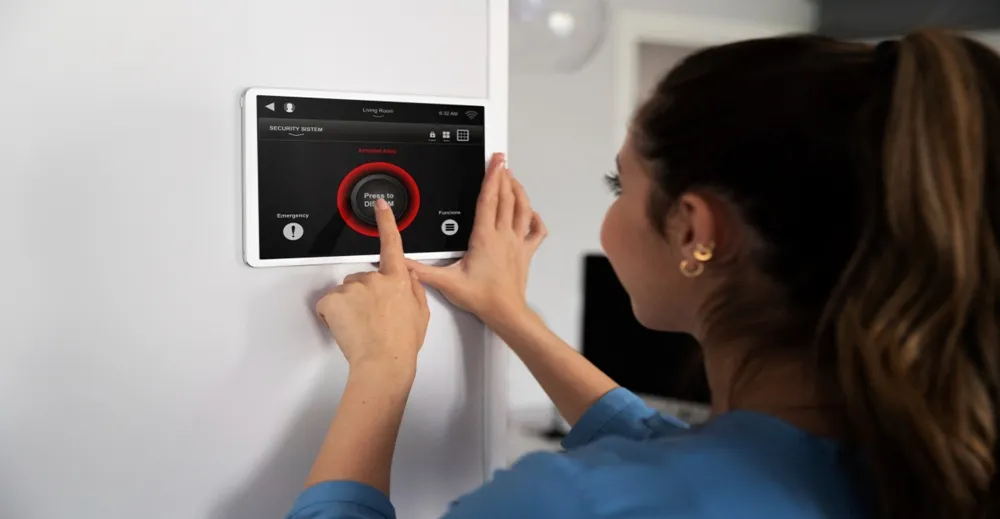
Global Touch Screen Switches Market Trends & Forecast
According to a research study published by Knowledge Sourcing Intelligence (KSI), the touch screen switches market will expand from USD 3.487 billion in 2025 to USD 5.098 billion in 2030 at a CAGR of 7.89% during the forecast period.
The touch screen switches market has changed, from being considered a commodity product to a key component of the automated and networked building infrastructure. The demand for elegant appearances, combined with the digital and electric building sectors’ push for sustainable, connected smart environments, continues to drive this transformation. The previous simple "on/off" function of a touch screen switch has evolved into a logical and visible element of the Human-Machine Interface (HMI) of BAS and IoT. Distributors are faced with a new competitive environment where product differentiation will rely on connectivity, usability, and compliance with a constantly changing and increasingly complex electric and digital safety regulations at the regional level.
Request a free sample copy or view the report summary: Touch Screen Switches Market Report
Global Touch Screen Switches Market Highlights
Capacitive touch screen switches work by measuring changes in the electrostatic field caused by conductive objects (like a finger). They are very durable, respond quickly, and have a sleek glass look, which makes them a popular choice for smartphones, tablets, and modern smart home controls.
Greater than 4 M modular size refers to large, multi-gang or combined touch panels, often used as central interface devices to consolidate many functions of a smart building or premium home into one convenient location (e,g., lighting, curtains, HVAC) on a single wall panel that is aesthetically pleasing and highly visible.
The iOS compatibility segment consists of switch products engineered to integrate with Apple's HomeKit system and other iOS devices. Through these advancements, users are able to integrate efficiently with the use of using iPhones, iPads, or Siri. This segment has a target audience of Apple's smart home customers.
In the Commercial segment, touch screen switches are often used in office buildings, hotels, hospitals, and retail spaces. Touch screen switches are imperatively used for building automation systems such as advanced lighting control, energy management, and scheduling conference rooms. They provide an advanced, energy-efficient, and modern user experience.
The US market for touch screen switches is characterised by high consumer purchasing power and a mature smart home ecosystem. Local factors impacting demand include the widespread adoption of specific high-bandwidth wireless protocols (Wi-Fi 6, Thread) and the fragmented nature of local building codes, where UL certification is a major factor for professional installation.
Global Touch Screen Switches Market Growth Drivers and Restraints
Growth Drivers:
The rapid growth of the smart home ecosystem and commercial BAS is driving demand for touch screen switches as a means of physical control. Touch screen switches will be the primary method of physical control for increasingly complex smart systems, including those integrated with Apple HomeKit, Google Home, and many proprietary BAS systems. Due to the requirements of seamless connectivity and integration (wireless communication modules (Wi-Fi, Zigbee, Z-Wave) and integrated microcontrollers) associated with these platforms, the complexity of these switches will rise, as well as the demand for switches with higher specifications and network compatibility will increase compared to basic touch-sensitive switches.
Government and corporate sustainability initiatives require improved energy management of building touch screen switches with integrated dimmers, timers, and energy-monitoring capabilities that efficiently support energy-saving objectives by providing precise control of lighting and HVAC systems based on occupancy or scheduled routines. They have also proven to be essential when it comes to commercial and upscaling residential construction projects.
Restraints:
Installation and Retrofitting Complexity: retrofitting of older buildings or the installation in new construction of touch screen switches can be time-consuming and costly due to the required neutral wire for constant power, which many older wiring systems do not provide. As a result, older building types have limited opportunities for retrofitting, while newer building types have many options for the installation of touch screen switches in large numbers.
Global Touch Screen Switches Market Key Development
October 2024, Honeywell launched a new generation of AI-capable mobile devices, the CT37, CK67, and CK62, designed to optimize workflows in demanding environments like warehouses and retail. Although not a stationary wall switch, this development is critical as it highlights Honeywell's ongoing commitment to developing user-friendly, AI-enabled touch-based devices, which will inevitably inform the feature set and integration capabilities of its future touch screen switch portfolio for the building technologies sector.
Global Touch Screen Switches Market Segmentation
Knowledge Sourcing Intelligence has segmented the Global Touch Screen Switches Market based on Application, End-Use Industry, Grade, Distribution Channel, and region:
By Type
Capacitive
Resistive
Piezo
Others
By Modular Size
Up to 2 M
2 to 4 M
Greater than 4 M
By Compatibility
Android
iOS
By Application
Residential
Commercial
Industrial
By Geography
North America
USA
Canada
Mexico
South America
Brazil
Argentina
Others
Europe
Germany
France
United Kingdom
Spain
Others
Middle East and Africa
Saudi Arabia
UAE
Others
Asia Pacific
China
Japan
India
South Korea
Thailand
Indonesia
Others
Global Touch Screen Switches Market Key Players
Legrand
Schneider Electric
Siemens AG
Honeywell International Inc.
Gira Giersiepen GmbH & Co. KG
Zennio Avance y Tecnología S.L.
Basalte BV
ABB Ltd.
Koninklijke Philips N.V.
Panasonic Corporation
OMRON Corporation
Clipsal (Schneider Electric SE)
Simon Electric Pvt. Ltd.
Livolo
Anchor Electricals Pvt. Ltd.
Ibestek
AVE s.p.a
Need specialized data cuts or competitive intelligence?
Our analyst team provides bespoke market sizing, supplier audits, and country-level feasibility reports tailored to your enterprise roadmap.
Speak With an Industry Analyst →Ask an Industry Analyst
Have questions regarding this briefing or market projections? Inquire with our sector lead.
Related Press Releases
View All →
ADC Manufacturing & CDMO Market is expected to reach USD 10.49 billion by 2031
Aug 7, 2026
Lifestyle-Associated Cancer Epidemiology Market is expected to reach USD 13.12 billion by 2031
Aug 5, 2026
Psycho-Oncology Digital Health Market is anticipated to surpass USD 290.01 million in 2031 at a CAGR of 8.5%
Jul 30, 2026
Intratumoral Injection Therapy Market is expected to reach USD 630.39 million by 2031
Jul 24, 2026
Palliative Care in Oncology Market is expected to reach USD 244.1 billion by 2031
Jul 22, 2026More Press Releases
Oncology Drug Resistance Testing Market is projected to reach USD 3.41 billion in 2031 at a CAGR of 6.6 %
The oncology drug resistance testing market is expanding due to rising cancer prevalence, increasing drug resistance, and growing adoption of precision oncology. Advances in NGS-based testing, companion diagnostics, and targeted therapies, alongside FDA approvals and investments in personalized medicine, are accelerating demand for effective resistance monitoring across hospitals and clinical diagnostics worldwide.
TROP-2 Targeted Therapy Market is anticipated to surpass USD 3.29 billion in 2031 at a CAGR of 8.6 %
The TROP-2 Targeted Therapy market is expanding rapidly due to increasing precision oncology adoption, rising cancer prevalence, and growing use of antibody-drug conjugates. North America leads the market, while Asia Pacific shows the fastest growth. Continuous clinical trials, regulatory approvals, and strategic collaborations are accelerating innovation and commercial adoption worldwide.
Second Primary Cancer Prevention Market is expected to reach USD 24.7 billion by 2031
The Second primary cancer prevention refers to strategies aimed at reducing the risk of developing a new, unrelated cancer in individuals with a prior cancer diagnosis. Growing cancer survivorship, advances in treatment, and increasing awareness of long-term health outcomes have heightened the importance of prevention and surveillance programs. Key approaches include routine screening, genetic risk assessment, lifestyle modification, and long-term follow-up care. Government agencies and healthcare organisations increasingly emphasise survivorship care plans and evidence-based screening protocols to detect new malignancies at earlier stages. Continued investments in early detection technologies and personalised risk assessment are expected to support advancements in second primary cancer prevention.