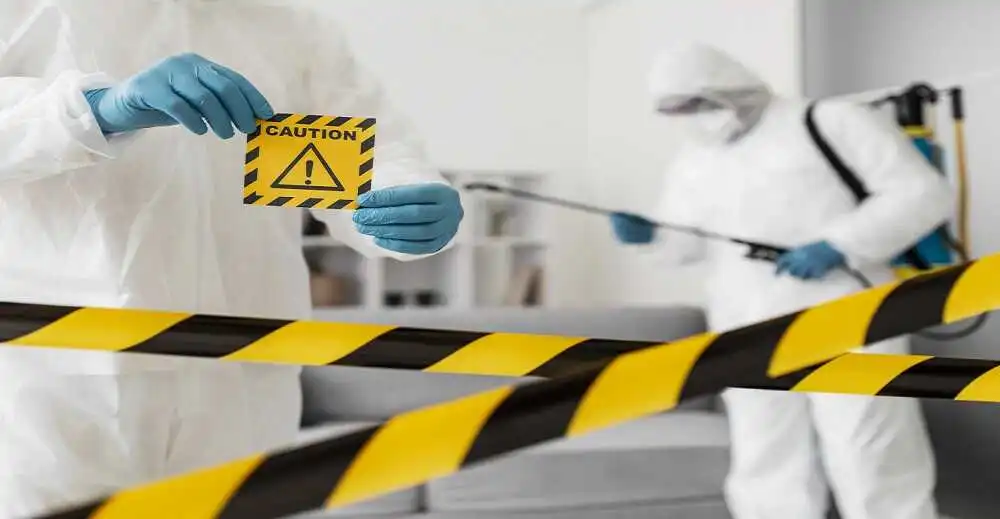
In electrical and safety engineering, hazardous places are defined as places where there is a chance of fire or explosion. Combustible substances like gases, vapors, dust, fibers, and flying objects can pose these risks. Because of electrical arcing or high temperatures, the electrical equipment connected to these locations may be a source of an outbreak. To locate these types of locations, classify the risks there, and set up equipment for safe use, policies and procedures are in place. Turning on or off a light switch can result in a small, harmless spark. In a normal home, this wouldn't be an issue, but if there's flammable material close by, the arc could start an explosion.
Such an atmosphere is a mutual, or at least widely possible, occurrence in many industrial, commercial, and scientific settings. It is important to protect against fire and explosion for the sake of consistency and the safety of the personnel. The chemical characteristics of various explosive atmospheres influence the probability and firmness of an explosion. Flame temperature, least burst energy, upper and lower explosive limits, and molecular weight are a few examples of these advantages. Limitations like the maximum rate of pressure rise, the explosion burden and time to peak pressure, the least igniting current (MIC) ratio, the spontaneous explosion temperature, and the extreme experimental safe gap (MESG) are all determined through empirical testing.
Further, the demand for hazardous area equipment has increased due to the increased focus on improving safety measures, particularly in the manufacturing and cooling industries. This marketplace foresees an enormous surge during the time specified. In places where hazardous zones are defined, equipment should be operated under conditions of an extremely explosive atmosphere created by volatile gases and insoluble air material.. The requirements for safe equipment design, operation, and management are outlined in several umbrella schemes. Nonetheless, different countries have approached the standardization and testing of equipment for hazardous areas in different ways. There can be differences in the language used to describe risks and countermeasures. Such an atmosphere is common, or at least tenable, in a wide range of commercial, scientific, and industrial contexts. Protection against fire and explosions is crucial for worker safety and reliability.
Global Trends
One of the main markets for equipment used in hazardous areas has been cable glands and accessories. End users are more concerned with workplace safety as a result of the widespread use of flame-proof cable glands in all industries. Furthermore, because eco-friendly cabling and equipment are becoming increasingly important in process-oriented industries, this product sector is anticipated to hold the largest market share over the forecast period.
Form Use Case
The oil and gas sector advances on two fronts about explosion-proofing: equipment must be produced as per the right standards, and in addition, they must be installed and maintained based on extra standards. Typically, employees in the oil and gas industry are confronted with dangerous settings. This becomes even more essential due to the presence of heavier volumes of ignitable liquids, gases or vapours, and also combustible dust. Such specifications will imply a higher future requirement for equipment for hazardous areas.
Moreover, various innovations are being launched into the market to ease customers’ everyday maintenance, storage, optimization, and improvement of their assets. Besides that, alternative electrical solutions are being offered to customers who operate in more hazardous situations. Moreover, there are anticipated growing demands for hazardous area tools not merely because of new finds as well as future monetary allocations to search for the aforementioned resources.. For example, according to International Energy Agency estimates global oil demand will grow by 6% between 2022 and 2028.
Market Dynamics and Drivers
In the
hazardous area equipment market, new technologies are emerging leading to better-performing devices that are safer, more reliable and durable than those seen in traditional types. This is particularly true for manufacturing where dangerous materials and machines are commonplace. For example, Pepperl+Fuchs provides Ex e junction boxes for hazardous areas, offering a creative way to ensure connections are safe and secure. The junction boxes have many features that make installation and maintenance simple, and they are built to resist harsh environments and high temperatures.
Moreover, the increasing demand for oil is also increasing the market demand due to increased risk in various industries, for instance, the demand for non-OECD oil is predicted to rise by a healthy 10.1 mb/d, peaking at 63.7 mb/d by 2028. Over the medium term, the OECD demand is expected to rise by 0.5 mb/d as well. Over the long run, it is anticipated that the world's oil consumption will rise by more than 16 mb/d, from 99.6 mb/d in 2022 to 116 mb/d in 2045. The demand for non-OECD oil is predicted to rise by nearly 26 mb/d between 2022 and 2045
Figure 1: Global Oil Demand, Million Barrels Per Day, 2022 to 2028*
 Source: OPEC
Key Developments
Source: OPEC
Key Developments
- In May 2023, to expedite the development of next-generation electrification solutions, ABB Ltd. announced the opening of its USD 3 million Robert M. Thomas Innovation Center in Memphis, Tennessee.
- In August 2023, Automation Expo 2023 will feature Eaton Corporation PLC's new industrial solutions for hazardous areas, the company announced. It will introduce Smart Universal Marshalling (MTL SUM5) for industries like oil and gas, chemical processing, and wastewater treatment, as well as Ethernet over Coax (EoC) CCTV solution and nHLL linear LED fixture used in Zone 2 and 21 and 22 hazardous areas.
Find some of our related studies: