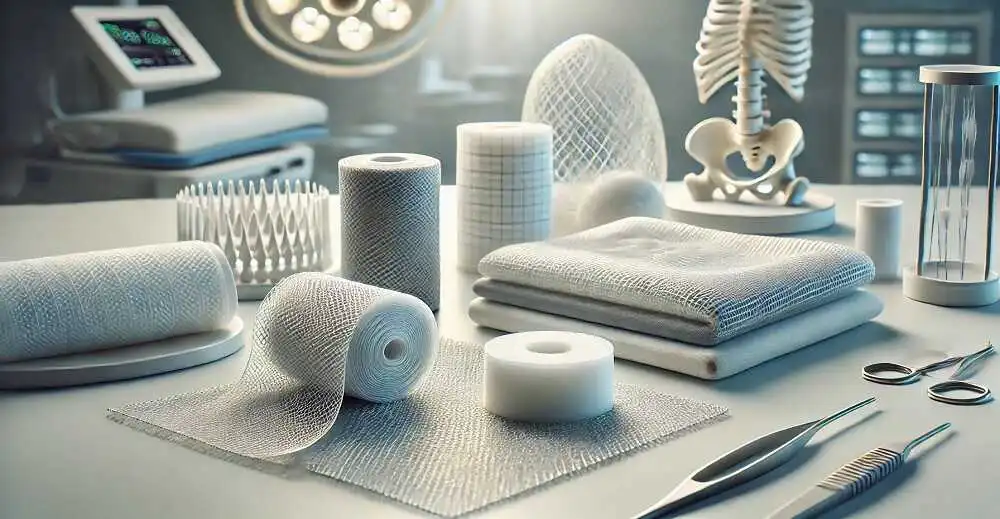
Biomedical textiles are adapted for many medical and surgical applications. The major use of biomedical textiles is medical apparel. The textiles in fiber and fabric form are used as implants, filters, and surgical dre...
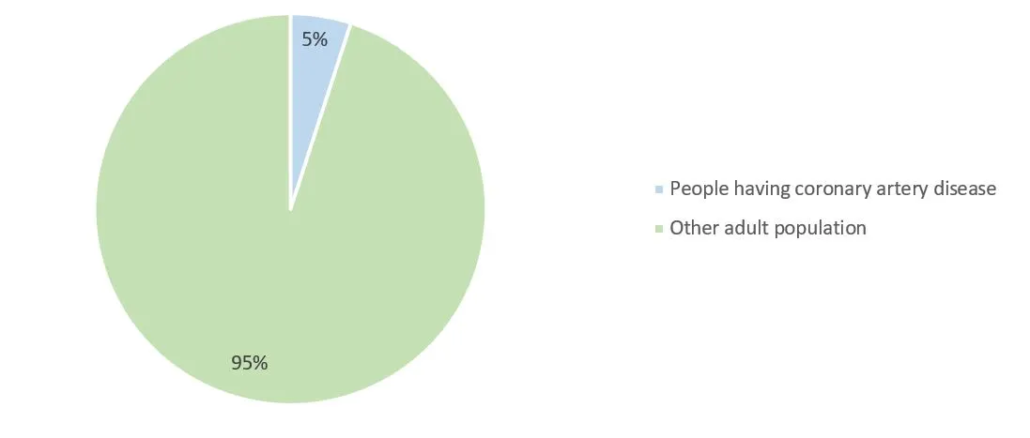 Source: CDC (Centre for Disease Control)
With increased numbers of patients and considerable diagnostic and technological advancements, vascular diseases are becoming important in general and clinical practices. The design and manufacturing of synthetic vascular prostheses have been challenging in research and development. The materials used need to meet all the requirements. The important aspects are porosity, compliance, and biodegradability.
The general application for the lower-profile devices and less invasive cardiovascular and endovascular procedures/applications included heart valve replacement, aortic arch reinforcement, stent graft covering, carotid artery repair fabric, tissue grafts, and others. The key benefits included the less invasive, lower profile, controlled density and porosity, flexibility, shape transformation, high tensile strength, and biocompatibility, among others.
DSM offers a biomaterial portfolio for cardiovascular applications, as shown in the following table.
Table 1.1: DSM Biomaterial Portfolio for Cardiovascular
Source: CDC (Centre for Disease Control)
With increased numbers of patients and considerable diagnostic and technological advancements, vascular diseases are becoming important in general and clinical practices. The design and manufacturing of synthetic vascular prostheses have been challenging in research and development. The materials used need to meet all the requirements. The important aspects are porosity, compliance, and biodegradability.
The general application for the lower-profile devices and less invasive cardiovascular and endovascular procedures/applications included heart valve replacement, aortic arch reinforcement, stent graft covering, carotid artery repair fabric, tissue grafts, and others. The key benefits included the less invasive, lower profile, controlled density and porosity, flexibility, shape transformation, high tensile strength, and biocompatibility, among others.
DSM offers a biomaterial portfolio for cardiovascular applications, as shown in the following table.
Table 1.1: DSM Biomaterial Portfolio for Cardiovascular
| Companies | Product |
| Structural Heart | Polyurethanes are a biocompatible material that improves the durability and overall effectiveness of structural heart solutions. These are included with catheter-based therapies like heart valve repair and replacement. Heart valve replacement (aortic, mitral, and tricuspid), LAAO (Left Atrial Appendage Occlusion), and mitral/tricuspid valve repair (through clips or annuloplasty) are also part of the solutions. |
| Vascular Closure | For the puncture sites, fast healing, vascular interventions, and fully resorbable collagen materials are ideal choices. Collagen are naturally derived biomaterials. It is used for access vessel sealing post-catheterization. This is to provide rapid hemostasis, thus lowering intraprocedural bleeding. DSM Biomedical is a trailblazer in this field. The company can give the collagen with a source available in multiple shapes and sizes, including a plug or patch. |
| Interventional Cardiology | They manufacture advanced biomaterials for catheter-based therapies. Both catheters and their various accessory devices use hydrophilic lubricious coatings. Balloon valvuloplasty, coronary and peripheral angioplasty and stenting, and cardiac catheterization are appropriate choices for these materials. |
| Cardiac Assist Devices | DSM offers a range of hemocompatible and durable biomaterials to create less invasive cardiac assist devices that optimize cardiac function. These medical-grade materials are ideal for multiple-component applications, such as LVADs and other ventricular assist devices. Further innovation would create medical polyurethanes, enabling precision molding and coating. |
| Companies | Product |
| Neurovascular Aneurysm Repair | Flow diverter components and Intra saccular flow disruption components |
| Ischemic Stroke Prevention & Treatment | Clot retrieval thrombectomy components and Embolic protection filter components |
| Materials | Cobalt-chromium, Nitinol, Platinum, and Specialty alloys |
| Medical Textile-forming Technologies | Braiding, Knitting, and Weaving |
| Companies | Description |
| Riverpoint Medical and DSM Biomedical | In March 2023, Riverpoint Medical announced they had the exclusive license of a proprietary Osteoconductive (OC) Coating Technology from DSM Biomedical. Osteoconduction is the technology of bone-forming cells to move across a scaffold and replace it with a new bone. Osteoconductive coatings are commonly used in orthopedic and dental implants but are not widely available in implantable textiles; by this, the company aspires to create an improved environment for enhanced bone attachment. The DSM Biomedical created the proprietary OC coating technology and further developed it into a full-scale production line by Riverpoint. |
| Thuasne and Corflex | In May 2024, Thuasne acquired US company Corflex, Inc. to expand its global product portfolio and strengthen its US market presence, which specializes in orthopedic bracing. This is significant in Thuasne's growth strategy, for its expansion in US and international markets. Both companies would leverage their brand recognition and market presence for further growth. |
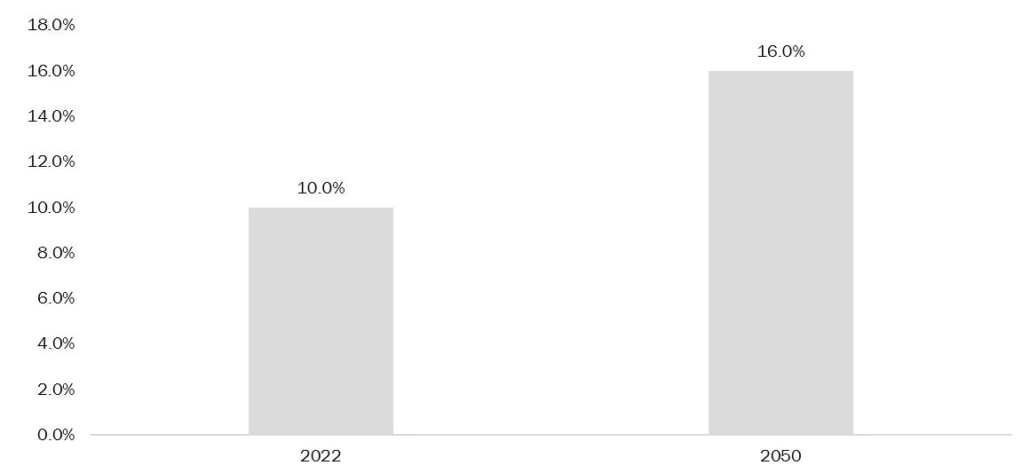 Source: United Nations
This increase in geriatric population is occurring at a significant pace in developing countries as well as developed countries. This is historically significant as the population requires adaptations to how societies are structured across all sectors. This includes healthcare needs, social care, innovation-related healthcare, etc.
Several major companies are taking steps in the expansion of the biomedical textiles industry. Cortland Biomedical is a major player that customizes designs and manufactures biomedical textile structures. They have years of experience in medical textile engineering methods, including knitting, braiding, and weaving. In January 2024, announced the expansion of its weaving capabilities by incorporating two additional Jacquard Looms. This strategic move would enhance the company’s capacities and advancements in medical textiles. Cortland Biomedical specializes in plain and narrow weave fabrics, including shuttle and rapier weaving. It excels in creating unique three-dimensional structures for applications like vascular grafts. These woven textiles are specifically designed for vascular and abdominal aortic aneurysm grafts and ensure limited blood flow.
In April 2022, Integer Holdings Corporation acquired Connemara Biomedical Holdings Teoranta. The acquisition also included operating subsidiaries Aran Biomedical and Proxy Biomedical. It was acquired for €120 million, with up to an additional €10 million of contingent consideration payable based on Aran’s achievement of 2022 revenue growth. Aran Biomedical specializes in the design, development, and manufacturing of solutions for medical devices, it generated sales of $17 million in 2021. These developments in the industry would lead to the overall growth of the application of biomedical textiles in wound care and surgical domain.
Source: United Nations
This increase in geriatric population is occurring at a significant pace in developing countries as well as developed countries. This is historically significant as the population requires adaptations to how societies are structured across all sectors. This includes healthcare needs, social care, innovation-related healthcare, etc.
Several major companies are taking steps in the expansion of the biomedical textiles industry. Cortland Biomedical is a major player that customizes designs and manufactures biomedical textile structures. They have years of experience in medical textile engineering methods, including knitting, braiding, and weaving. In January 2024, announced the expansion of its weaving capabilities by incorporating two additional Jacquard Looms. This strategic move would enhance the company’s capacities and advancements in medical textiles. Cortland Biomedical specializes in plain and narrow weave fabrics, including shuttle and rapier weaving. It excels in creating unique three-dimensional structures for applications like vascular grafts. These woven textiles are specifically designed for vascular and abdominal aortic aneurysm grafts and ensure limited blood flow.
In April 2022, Integer Holdings Corporation acquired Connemara Biomedical Holdings Teoranta. The acquisition also included operating subsidiaries Aran Biomedical and Proxy Biomedical. It was acquired for €120 million, with up to an additional €10 million of contingent consideration payable based on Aran’s achievement of 2022 revenue growth. Aran Biomedical specializes in the design, development, and manufacturing of solutions for medical devices, it generated sales of $17 million in 2021. These developments in the industry would lead to the overall growth of the application of biomedical textiles in wound care and surgical domain.Have questions?
More Thought Articles
How EV Charger Manufacturers Can Capitalize on India’s Home Charging Revolution
India’s residential EV charging opportunity is expanding as policy support, EV adoption, and private parking infrastructure develop. Manufacturers can capture value beyond AC chargers through installation, smart charging, load management, solar integration, software, and after-sales services. Housing societies, automakers, and property developers offer scalable routes to residential charging customers.
Second-Life EV Battery Market in India: What Is Driving Demand from Manufacturers?
India’s second-life EV battery market is gaining relevance as electric vehicle adoption expands and batteries retain useful capacity after automotive service. Growing stationary-storage demand, battery data, refurbishment capabilities, EPR obligations, and critical-mineral policies are encouraging manufacturers to extend battery value through reuse before eventual recycling within India’s emerging circular battery ecosystem.
The Rise of Locally Manufactured Battery Separators in India’s EV Ecosystem
India’s battery industry is progressing from pack assembly toward domestic cell and material manufacturing, creating opportunities for lithium-ion battery separators. Policy support, ACC capacity expansion and R&D initiatives are strengthening the ecosystem. However, technical complexity, manufacturing yields, qualification requirements and economics mean localisation will likely advance gradually through coatings, testing and finishing.