
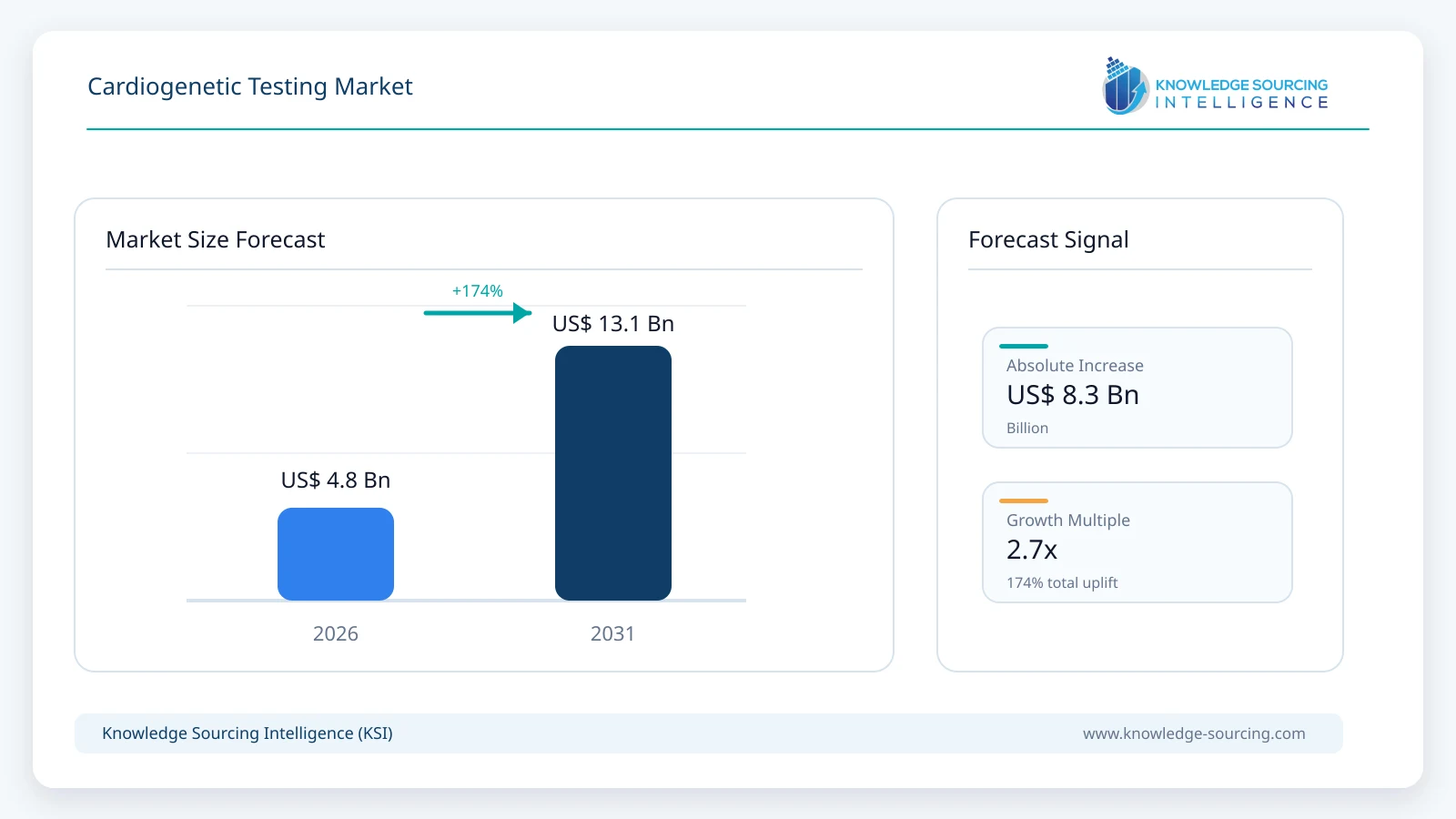
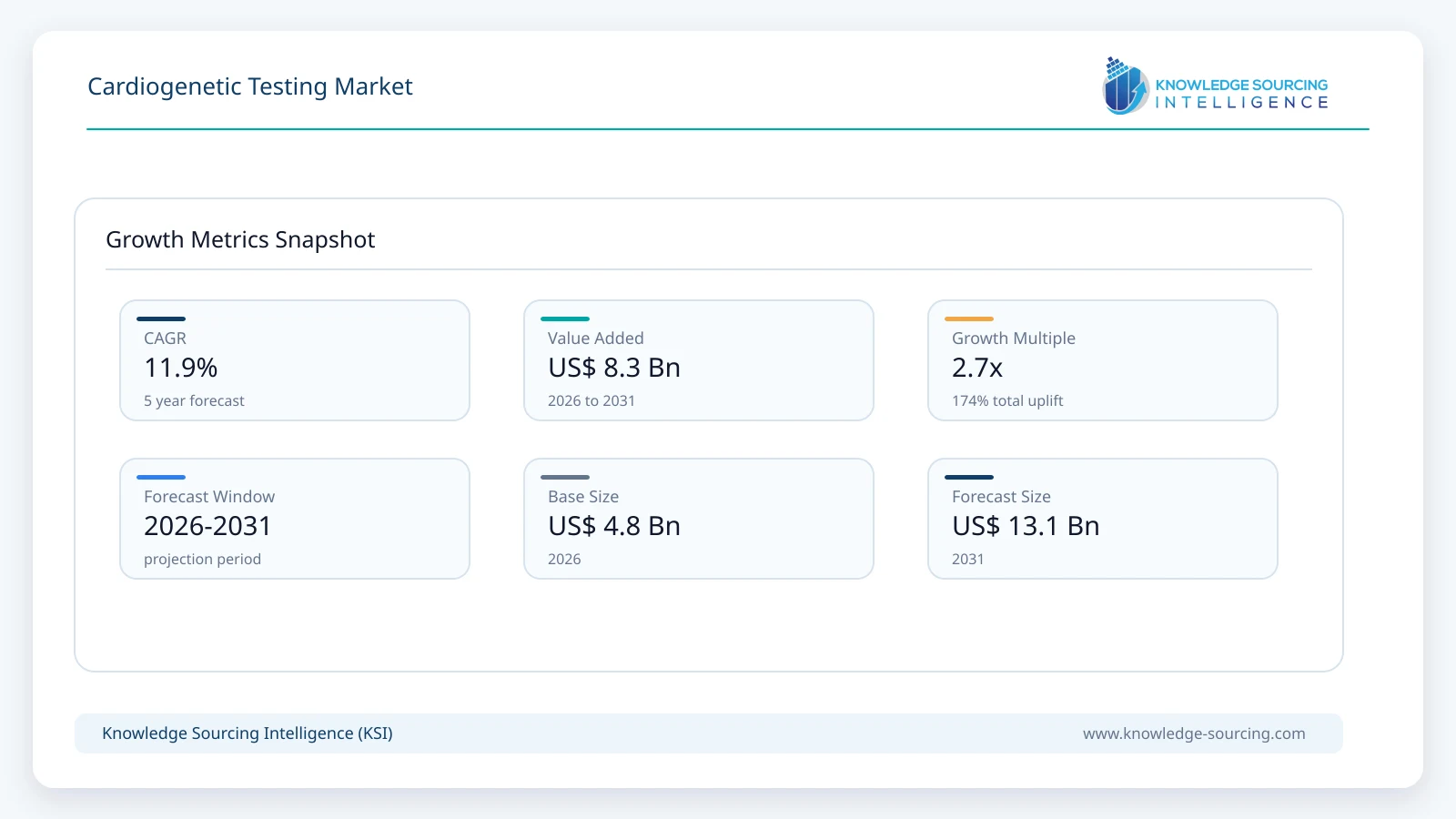
The Cardiogenetic Testing Market is forecast to grow at a CAGR of 11.9%, reaching USD 13.06 billion in 2031 from USD 4.76 billion in 2026.
Highlights:
- 1Increasing adoption of next-generation sequencing is improving diagnostic yield for inherited cardiovascular disorders, driving demand for comprehensive gene panel testing.
- 2Expanding clinical recommendations for genetic evaluation are encouraging hospitals and specialty cardiac centers to integrate cardiogenetic testing into routine patient management.
- 3Growing awareness of familial cardiovascular diseases is increasing demand for cascade testing, enabling earlier identification of at-risk family members.
- 4Advancements in bioinformatics and variant interpretation are improving clinical confidence, supporting wider utilization of genomic testing across cardiovascular specialties.
Cardiogenetic testing identifies pathogenic genetic variants associated with inherited cardiovascular diseases, including cardiomyopathies, inherited arrhythmia syndromes, familial hypercholesterolemia, and connective tissue disorders affecting the cardiovascular system. The market encompasses laboratory-developed tests, targeted gene panels, whole exome sequencing, whole genome sequencing, bioinformatics platforms, interpretation software, and genetic counseling services that collectively support clinical decision-making.
Demand is increasing because cardiovascular specialists are recognizing that phenotypic assessment alone frequently cannot distinguish hereditary disease from acquired cardiac disorders. Earlier molecular confirmation supports personalized monitoring strategies, guides therapeutic interventions, and enables family-based cascade testing. Regulatory agencies and professional medical societies continue emphasizing standardized laboratory quality, analytical validity, and evidence-based clinical reporting, reinforcing confidence in genomic diagnostics. Healthcare providers increasingly integrate multidisciplinary genetic counseling with cardiovascular care, allowing test results to translate into long-term disease management rather than isolated diagnostic findings. This evolution strengthens the strategic importance of cardiogenetic testing within precision medicine programs worldwide.
Market Dynamics
Market Drivers
Expanding Clinical Adoption of Precision Cardiology: Precision cardiology integrates genomic information with conventional cardiovascular assessment to improve diagnosis and treatment selection. Healthcare providers are increasingly adopting genetic testing because inherited cardiovascular disorders often present with overlapping clinical features that complicate conventional diagnosis. Earlier molecular confirmation reduces diagnostic uncertainty while supporting personalized surveillance and therapeutic planning. Diagnostic laboratories are expanding specialized cardiovascular testing portfolios to address this growing clinical demand. The increasing incorporation of genomics into cardiovascular practice strengthens long-term adoption across tertiary hospitals and specialized cardiac centers.
Rising Demand for Family-Based Cascade Screening: Inherited cardiovascular disorders frequently affect multiple generations within the same family. Healthcare providers recommend cascade genetic testing because identifying pathogenic variants among relatives enables preventive monitoring before symptoms develop. Clinical awareness is increasing as professional societies emphasize family-based risk assessment for inherited cardiac diseases. Diagnostic laboratories are developing streamlined testing workflows that facilitate screening of multiple family members. Earlier identification of genetically predisposed individuals reduces disease burden through proactive clinical management.
Continuous Advancements in Sequencing Technologies: Sequencing technologies continue improving analytical sensitivity, throughput, and cost efficiency. Laboratories are increasingly implementing next-generation sequencing platforms because they simultaneously evaluate numerous cardiovascular genes with greater efficiency than sequential testing approaches. Improved bioinformatics pipelines enhance variant interpretation and reduce reporting variability across laboratories. Technology developers continue introducing automation and artificial intelligence-assisted analytical tools that improve laboratory productivity. These innovations strengthen confidence among clinicians and expand the accessibility of comprehensive cardiogenetic testing.
Increasing Integration of Genetic Counseling into Cardiovascular Care: Effective interpretation of genetic findings requires specialized counseling before and after testing. Healthcare systems increasingly recognize that multidisciplinary care improves clinical utility and patient understanding of inherited cardiovascular risk. Hospitals are integrating genetic counselors within cardiovascular programs to support informed testing decisions and long-term family management. This coordinated care model enhances patient adherence while improving the clinical value of genetic information. The integration of counseling services strengthens adoption by reducing uncertainty surrounding complex genomic findings.
Market Restraints
Limited reimbursement coverage across several healthcare systems continues restricting patient access to comprehensive cardiogenetic testing despite expanding clinical evidence.
Interpretation of variants of uncertain significance remains challenging, creating clinical uncertainty that may delay treatment decisions and require additional genetic evaluation.
Shortages of trained clinical geneticists and genetic counselors limit testing capacity and reduce the efficiency of precision cardiovascular care delivery.
Market Opportunities
Expansion of Preventive Genomic Screening Programs: Healthcare systems increasingly emphasize preventive medicine to reduce long-term cardiovascular disease burden. Population risk assessment programs are incorporating genomic testing for selected high-risk individuals because early identification supports timely intervention before disease progression. Diagnostic providers are expanding preventive testing offerings that align with national precision medicine initiatives. This transition creates new opportunities for long-term market expansion.
Integration of Artificial Intelligence in Variant Interpretation: The growing complexity of genomic datasets requires advanced computational analysis. Artificial intelligence is improving variant classification by supporting rapid interpretation of sequencing results and integrating genomic evidence with clinical databases. Laboratories are investing in automated interpretation platforms that improve reporting consistency while reducing manual review time. Enhanced analytical efficiency supports broader implementation of cardiogenetic testing across clinical laboratories.
Growth of Personalized Cardiovascular Therapeutics: Targeted therapies increasingly depend on precise molecular characterization of inherited cardiovascular disorders. Pharmaceutical developers are expanding research into genetically defined patient populations because molecular stratification improves clinical trial design and therapeutic targeting. Diagnostic companies are strengthening partnerships with drug developers to support companion diagnostic strategies. This collaboration reinforces the strategic importance of cardiogenetic testing within precision medicine.
Expansion in Emerging Healthcare Markets: Healthcare infrastructure continues developing across emerging economies where genomic medicine previously remained limited. Governments and healthcare institutions are increasing investments in molecular diagnostics, laboratory infrastructure, and genomic research programs. International diagnostic companies are expanding regional partnerships to improve access to advanced cardiovascular genetic testing. These developments create opportunities for sustainable long-term market growth.
Supply Chain Analysis
The cardiogenetic testing supply chain begins with manufacturers of sequencing instruments, laboratory reagents, DNA extraction kits, sample collection devices, and quality control materials. These suppliers provide the foundational technologies required for molecular testing laboratories. Sequencing platform developers continue improving automation and analytical performance because laboratories require higher throughput with consistent quality standards.
Clinical laboratories receive biological samples from hospitals, specialty cardiology clinics, physician offices, and reference laboratories. Laboratory workflows are increasingly integrating automated sequencing, bioinformatics analysis, variant classification, and clinical reporting to reduce turnaround time while maintaining analytical accuracy. Certified genetic counselors and cardiovascular specialists interpret results within the patient's clinical context, ensuring appropriate medical management and family screening recommendations. This integrated supply chain supports reliable delivery of precision cardiovascular diagnostics while maintaining regulatory compliance and laboratory quality standards.
Treatment Guidelines Landscape
Region | Regulatory Authority | Regulatory Focus |
United States | U.S. Food and Drug Administration (FDA) | Oversight of in vitro diagnostic devices, quality systems, and regulatory pathways for genetic tests |
United States | Centers for Medicare & Medicaid Services (CMS) – CLIA | Laboratory quality standards and certification for clinical testing laboratories |
European Union | European Commission – In Vitro Diagnostic Regulation (IVDR) | Performance, safety, clinical evidence, and conformity assessment for in vitro diagnostic devices |
United Kingdom | Medicines and Healthcare products Regulatory Agency (MHRA) | Regulation of medical devices and in vitro diagnostics within the UK |
Market Segmentation
By Test Type
Diagnostic testing represents the largest application segment because it confirms the molecular basis of inherited cardiovascular disorders in symptomatic individuals. Healthcare providers are increasingly requesting comprehensive genetic evaluation when conventional clinical findings cannot distinguish between phenotypically similar diseases such as hypertrophic cardiomyopathy, dilated cardiomyopathy, and inherited arrhythmia syndromes. Clinical complexity reinforces the need for molecular confirmation before initiating long-term disease management. Diagnostic laboratories are expanding validated cardiovascular testing panels to improve diagnostic yield while reducing sequential testing. This segment remains fundamental because definitive genetic diagnosis supports treatment selection, family risk assessment, and lifelong clinical surveillance.
By Technology
Next-generation sequencing dominates the technology landscape because it enables simultaneous analysis of numerous cardiovascular genes with high analytical sensitivity. Laboratories are increasingly adopting NGS platforms as demand shifts toward comprehensive genomic evaluation rather than sequential single-gene testing. Complex inherited cardiac disorders require broad molecular coverage that conventional technologies often cannot provide efficiently. Technology developers continue improving sequencing throughput, automation, and data interpretation capabilities. NGS remains the technological foundation of modern cardiogenetic testing because it balances diagnostic performance with laboratory scalability.
By Disorder Type
Inherited cardiomyopathies constitute a major clinical application because they frequently result from pathogenic variants affecting cardiac muscle structure and function. Healthcare providers are increasingly requesting genetic testing to differentiate hereditary cardiomyopathies from acquired cardiac conditions. Early molecular diagnosis supports individualized surveillance while enabling screening of biological relatives. Specialized cardiovascular genetics clinics continue expanding multidisciplinary management programs that integrate genomic testing with imaging and clinical assessment. This disease category remains a primary driver of cardiogenetic testing demand because early diagnosis significantly influences long-term clinical outcomes.
Regional Analysis
North America
North America represents the largest cardiogenetic testing market because the region combines advanced genomic infrastructure with well-established cardiovascular specialty care. Hospitals and academic medical centers are increasingly integrating genetic testing into routine evaluation of inherited cardiomyopathies, familial hypercholesterolemia, and inherited arrhythmia syndromes. Strong adoption of next-generation sequencing supports comprehensive diagnostic workflows that improve molecular diagnosis and family screening. Regulatory oversight through the U.S. Food and Drug Administration and laboratory quality standards under the Clinical Laboratory Improvement Amendments reinforce confidence in clinical genetic testing. Professional organizations including the American College of Cardiology and the American Heart Association continue supporting evidence-based integration of genomics into cardiovascular medicine. Investment in precision medicine programs, expanding genetic counseling services, and ongoing research collaborations strengthen long-term market development. The presence of leading sequencing technology providers, reference laboratories, and biotechnology companies further accelerates innovation while improving access to advanced molecular diagnostics.
Europe
Europe maintains a mature cardiogenetic testing landscape supported by universal healthcare systems, established rare disease networks, and strong regulatory oversight. National healthcare providers are increasingly incorporating genetic testing into specialized cardiovascular referral centers because early molecular diagnosis improves long-term patient management. The implementation of the European Union's In Vitro Diagnostic Regulation (IVDR) continues strengthening quality standards for clinical diagnostic products while encouraging standardized laboratory practices. Collaborative genomic initiatives across European countries support data sharing, variant interpretation, and research into inherited cardiovascular diseases. Diagnostic laboratories are expanding comprehensive sequencing capabilities to meet increasing demand for precision medicine. Continued investment in genomic infrastructure, combined with strong academic research and cross-border collaboration, positions Europe as a major contributor to innovation in cardiogenetic testing.
Asia-Pacific
Asia-Pacific is experiencing the fastest expansion in cardiogenetic testing because healthcare systems are increasing investment in genomic medicine and molecular diagnostics. Countries including Japan, China, South Korea, Australia, and India are strengthening national precision medicine initiatives while expanding sequencing capacity across clinical laboratories. Rising awareness of inherited cardiovascular disorders is encouraging clinicians to incorporate genetic testing into specialized cardiology services. Healthcare institutions are collaborating with international diagnostic companies to improve access to advanced sequencing technologies and bioinformatics platforms. Differences in reimbursement, healthcare infrastructure, and workforce availability continue influencing adoption across individual countries. Continued improvements in laboratory capacity and genomic research are strengthening regional demand and supporting sustainable market growth.
Rest of the World
The Rest of the World, including Latin America, the Middle East, and Africa, represents an emerging market where access to cardiogenetic testing is gradually improving. Governments and healthcare organizations are expanding investments in molecular diagnostics to strengthen management of inherited diseases. International partnerships are supporting technology transfer, laboratory development, and professional training to improve genomic testing capabilities. Limited reimbursement, shortages of specialized genetic professionals, and unequal access to sequencing technologies continue constraining widespread clinical adoption. Healthcare providers are increasingly recognizing the value of family-based genetic screening for preventing severe cardiovascular outcomes. Continued infrastructure development and international collaboration are expected to improve long-term access to precision cardiovascular diagnostics across these regions.
Regulatory Landscape
The regulatory landscape for cardiogenetic testing emphasizes analytical accuracy, clinical validity, patient safety, and laboratory quality because genetic results directly influence lifelong clinical management and family screening decisions. Regulatory agencies continue strengthening oversight as next-generation sequencing becomes more widely integrated into routine cardiovascular care. Diagnostic developers are adapting validation processes to meet increasingly rigorous evidence requirements before introducing new testing solutions. These evolving standards improve confidence among clinicians while supporting broader adoption of precision cardiovascular diagnostics.
In the United States, laboratory-developed tests are primarily performed in Clinical Laboratory Improvement Amendments (CLIA)-certified laboratories regulated by the Centers for Medicare & Medicaid Services (CMS), while the U.S. Food and Drug Administration (FDA) oversees in vitro diagnostic devices marketed commercially. Professional organizations such as the American College of Medical Genetics and Genomics (ACMG) and the Association for Molecular Pathology (AMP) continue updating variant interpretation guidelines that laboratories incorporate into routine clinical reporting. This combination of regulatory oversight and professional standards promotes consistency in genetic interpretation while improving clinical decision-making.
Across Europe, the In Vitro Diagnostic Regulation (IVDR) is strengthening requirements for clinical evidence, performance evaluation, post-market surveillance, and quality management. Diagnostic manufacturers are expanding clinical validation activities to comply with these regulations before commercialization. Regulatory agencies throughout Asia-Pacific are also modernizing genomic medicine frameworks while investing in precision healthcare infrastructure. These regulatory developments encourage higher laboratory standards, improve international confidence in genetic testing, and support sustainable expansion of cardiogenetic testing services.
Competitive Landscape
F. Hoffmann-La Roche Ltd.
F. Hoffmann-La Roche Ltd. maintains a strong strategic position in cardiogenetic testing through its integrated diagnostics portfolio, sequencing technologies, and global molecular diagnostics infrastructure. The company combines in vitro diagnostics, sequencing solutions, bioinformatics, and digital healthcare capabilities, enabling laboratories to implement comprehensive genomic workflows for inherited disease testing. Roche continues investing in precision medicine because healthcare providers increasingly require accurate molecular characterization to support personalized clinical decisions. Its Roche Sequencing Solutions business strengthens capabilities across next-generation sequencing workflow development, sample preparation, sequencing reagents, and data analysis. The company's global commercial network, established regulatory expertise, and collaborations with healthcare institutions support broad adoption of genomic diagnostics across clinical laboratories. Roche also benefits from extensive experience in companion diagnostics and molecular pathology, allowing it to leverage scientific expertise across multiple therapeutic areas. Continuous investment in automation, workflow optimization, and clinical evidence generation enhances its long-term competitive position as precision cardiovascular medicine expands globally.
Illumina, Inc.
Illumina, Inc. remains the global leader in next-generation sequencing technologies and provides the foundational platforms used by numerous laboratories performing cardiogenetic testing. The company's sequencing instruments, consumables, and bioinformatics software enable comprehensive analysis of inherited cardiovascular disorders with high analytical accuracy and scalability. Illumina continues expanding sequencing throughput and reducing workflow complexity because clinical laboratories increasingly demand efficient genomic testing solutions. Its strong research collaborations, global customer base, and ongoing investment in sequencing innovation reinforce its leadership in precision medicine. The company's technology continues supporting diagnostic laboratories, academic medical centers, and biotechnology companies developing advanced cardiovascular genetic testing services.
Eurofins Scientific SE
Eurofins Scientific SE operates one of the world's largest laboratory networks and provides comprehensive genetic testing services across clinical, pharmaceutical, and research markets. The company leverages its extensive laboratory infrastructure and molecular diagnostic expertise to support hereditary disease testing, including inherited cardiovascular disorders. Eurofins continues expanding genomic capabilities because healthcare providers increasingly require standardized, high-quality molecular testing across multiple regions. Its international laboratory presence, quality management systems, and broad diagnostic portfolio strengthen its position in precision medicine while enabling efficient delivery of specialized cardiogenetic testing services.
Quest Diagnostics Incorporated
Quest Diagnostics Incorporated is a leading diagnostic information services provider with an extensive portfolio of molecular and hereditary disease testing services. The company integrates advanced genomic technologies with nationwide laboratory infrastructure, enabling broad access to cardiogenetic testing for hospitals and healthcare providers. Quest continues strengthening precision diagnostics through investment in next-generation sequencing, bioinformatics, and clinical interpretation capabilities. Its established relationships with physicians, healthcare systems, and insurers facilitate widespread adoption of hereditary cardiovascular testing while supporting comprehensive patient management and family risk assessment.
Laboratory Corporation of America Holdings (Labcorp)
Labcorp combines one of the largest clinical laboratory networks with advanced genomic diagnostics to support precision medicine across multiple disease areas. The company provides hereditary cardiovascular testing through comprehensive sequencing technologies, specialized laboratory services, and integrated clinical reporting. Labcorp continues expanding molecular diagnostic capabilities because healthcare systems increasingly demand scalable genomic testing supported by reliable turnaround times. Strategic investments in laboratory automation, digital pathology, and genomic medicine strengthen its competitive position while enabling broader access to cardiogenetic testing across global healthcare markets.
Invitae Corporation
Invitae Corporation has established a strong reputation in hereditary genetic testing by focusing on accessible, comprehensive genomic services. The company developed broad multi-gene testing panels covering inherited cardiovascular disorders, enabling clinicians to identify pathogenic variants associated with cardiomyopathies, arrhythmia syndromes, and familial hypercholesterolemia. Invitae emphasizes integrated genetic counseling, digital reporting tools, and clinical decision support to improve interpretation of complex genomic findings. Although the company has undergone financial restructuring, its testing portfolio and clinical expertise continue contributing significantly to hereditary cardiovascular diagnostics.
Natera, Inc.
Natera, Inc. applies advanced cell-free DNA analysis and molecular diagnostics expertise across multiple areas of precision medicine. While widely recognized for reproductive and oncology testing, the company continues expanding genomic capabilities relevant to hereditary disease assessment. Natera invests in advanced sequencing technologies and bioinformatics platforms that enhance analytical performance and support future expansion into broader precision medicine applications. Its focus on high-quality genomic analysis, laboratory automation, and data-driven diagnostics strengthens its long-term strategic position within the molecular diagnostics industry.
GeneDx Holdings Corp.
GeneDx Holdings Corp. specializes in rare disease and whole exome/genome sequencing diagnostics, making it a significant participant in inherited cardiovascular testing. The company differentiates itself through deep expertise in genomic interpretation, extensive variant databases, and advanced bioinformatics capabilities. GeneDx continues expanding exome and genome sequencing services because clinicians increasingly require comprehensive molecular analysis for genetically heterogeneous cardiovascular disorders. Its scientific collaborations, evidence-driven interpretation framework, and strong focus on rare genetic diseases position the company as an important provider of advanced cardiogenetic testing solutions.
Key Developments
In July 2026, Labcorp is launching the Marker by Labcorp Genetic Health Panel, a new direct-to-consumer genetic testing tool that analyzes 163 genes to determine patients’ risk of over 100 hereditary health conditions.
In June 2026, Merck, a leading global science and technology company, announced a strategic research-stage collaboration with Saturnus Bio, a Versant Ventures-founded biotech, aimed at establishing a foundational portfolio in the promising field of rare genetic cardiomyopathies.
In June 2026, Pathway Labs announced its public launch of EchoNext, the world’s first FDA-approved AI detection tool that reads standard 12-lead electrocardiograms (ECGs) to flag high risk structural heart diseases for patients.
Strategic Insights and Future Market Outlook
Cardiogenetic testing is becoming an integral component of precision cardiovascular medicine because healthcare providers increasingly recognize the limitations of phenotype-based diagnosis for inherited cardiac disorders. Broader adoption of next-generation sequencing, improved bioinformatics, and expanding clinical guidelines are supporting earlier molecular diagnosis and more effective family-based disease management. Healthcare systems are strengthening multidisciplinary care models that combine cardiology, molecular diagnostics, and genetic counseling, improving the clinical utility of genomic information while expanding demand for comprehensive testing services.
Technology developers continue improving sequencing efficiency, automation, and artificial intelligence-assisted variant interpretation as laboratories seek greater analytical accuracy and faster turnaround times. Diagnostic providers are expanding strategic collaborations with pharmaceutical companies, academic institutions, and healthcare organizations to support biomarker discovery and precision therapeutics. Continued investment in genomic research, laboratory infrastructure, and clinical evidence generation is expected to strengthen long-term adoption of cardiogenetic testing across both developed and emerging healthcare markets.
The market's future will depend on continued improvements in reimbursement policies, broader availability of specialized genetic counseling, harmonization of international regulatory standards, and increasing clinician confidence in genomic medicine. Organizations capable of integrating advanced sequencing technologies with robust clinical interpretation and scalable laboratory operations are expected to maintain a competitive advantage as precision cardiovascular care continues evolving.
Cardiogenetic testing is transitioning from a specialized diagnostic service toward a routine component of cardiovascular disease management. As genomic medicine becomes increasingly embedded within clinical practice, demand is expected to shift toward comprehensive testing strategies that support earlier diagnosis, preventive care, and personalized treatment pathways for patients and their families.
Cardiogenetic Testing Market Scope:
| Report Metric | Details |
|---|---|
| Total Market Size in 2026 | USD 4.76 billion |
| Total Market Size in 2031 | USD 13.06 billion |
| Forecast Unit | USD Billion |
| Growth Rate | 11.9% |
| Study Period | 2021 to 2031 |
| Historical Data | 2021 to 2024 |
| Base Year | 2025 |
| Forecast Period | 2026 – 2031 |
| Segmentation | Test Type, Technology, End User, Geography |
| Companies |
|
Market Segmentation
Test Type
Technology
End User
Geography
- North America
- South America
- Europe
- Middle East and Africa
- Asia Pacific
Table of Contents
1. EXECUTIVE SUMMARY
1.1 Market Snapshot
1.2 Key Findings
1.3 Analyst Insights
1.4 Strategic Recommendations
2. RESEARCH METHODOLOGY
2.1 Research Design
2.2 Data Collection Methodology
2.3 Market Size Estimation
2.4 Forecasting Model
2.5 Assumptions & Limitations
3. CARDIOGENETIC TESTING MARKET OVERVIEW, SIZE & FORECAST
3.1 Market Definition & Scope
3.2 Overview of Cardiogenetic Testing
3.3 Industry Evolution
3.4 Key Market Trends
3.5 Historical Market Size Analysis (2021–2025)
3.6 Market Forecast (2026–2035)
3.7 Cardiovascular Genetic Disorders Overview
3.8 Disease Burden & Unmet Clinical Needs
3.9 Epidemiology & Prevalence Analysis
3.10 Diagnosed Patient Population Analysis
3.11 Genetic Testing Adoption Analysis
3.12 Clinical Utility of Cardiogenetic Testing
3.13 Patient Journey Analysis
4. MARKET DYNAMICS
4.1 Market Drivers
4.2 Market Restraints
4.3 Market Opportunities
4.4 Market Challenges
5. INDUSTRY LANDSCAPE
5.1 Industry Value Chain Analysis
5.2 Pricing Analysis
5.3 Reimbursement Landscape
6. INNOVATION LANDSCAPE
6.1 Emerging Technologies
6.2 Product Innovation
6.3 Clinical Trial Analysis
6.4 Pipeline Analysis
6.5 AI Integration in Cardiogenetic Testing
6.6 Digital Health Integration
7. REGULATORY LANDSCAPE
7.1 Regulatory Framework
7.2 Approval Pathways
7.3 Compliance Requirements
8. CARDIOGENETIC TESTING MARKET LANDSCAPE ANALYSIS
8.1 Analysis by Technology Platform
8.2 Analysis by Testing Methodology
8.3 Analysis by Biomarker Type
8.4 Analysis by Sample Type
8.5 Analysis by Clinical Application
9. CARDIOGENETIC TESTING MARKET SEGMENT ANALYSIS (2021–2035)
9.1 By Test Type
9.1.1 Diagnostic Testing
9.1.2 Predictive & Presymptomatic Testing
9.1.3 Carrier Testing
9.1.4 Cascade Testing
9.1.5 Prenatal & Preimplantation Genetic Testing
9.2 By Technology
9.2.1 Next-Generation Sequencing (NGS)
9.2.2 Whole Exome Sequencing (WES)
9.2.3 Whole Genome Sequencing (WGS)
9.2.4 Targeted Gene Panel Testing
9.2.5 Sanger Sequencing
9.2.6 PCR-Based Testing
9.2.7 Chromosomal Microarray Analysis (CMA)
9.3 By Disorder Type
9.3.1 Inherited Cardiomyopathies
9.3.1.1 Hypertrophic Cardiomyopathy (HCM)
9.3.1.2 Dilated Cardiomyopathy (DCM)
9.3.1.3 Arrhythmogenic Cardiomyopathy (ACM/ARVC)
9.3.1.4 Restrictive Cardiomyopathy (RCM)
9.3.2 Inherited Arrhythmia Syndromes
9.3.2.1 Long QT Syndrome
9.3.2.2 Brugada Syndrome
9.3.2.3 Catecholaminergic Polymorphic Ventricular Tachycardia (CPVT)
9.3.2.4 Short QT Syndrome
9.3.3 Familial Aortopathies & Connective Tissue Disorders
9.3.3.1 Marfan Syndrome
9.3.3.2 Loeys-Dietz Syndrome
9.3.3.3 Vascular Ehlers-Danlos Syndrome
9.3.4 Familial Hypercholesterolemia
9.3.5 Other Inherited Cardiovascular Disorders
9.4 By Gene Panel Type
9.4.1 Single-Gene Testing
9.4.2 Multi-Gene Panel Testing
9.4.3 Whole Exome Sequencing
9.4.4 Whole Genome Sequencing
9.5 By Sample Type
9.5.1 Blood
9.5.2 Saliva/Buccal Swab
9.5.3 Tissue & Other Specimens
9.6 By End User
9.6.1 Hospitals
9.6.2 Specialty Cardiology Clinics
9.6.3 Diagnostic Laboratories
9.6.4 Academic & Research Institutes
10. CARDIOGENETIC TESTING MARKET GEOGRAPHICAL ANALYSIS (2021–2035)
10.1 North America
10.2 Europe
10.3 Asia-Pacific
10.4 South America
10.5 Middle East & Africa
11. CARDIOGENETIC TESTING MARKET COUNTRY ANALYSIS (2021–2035)
11.1 United States
11.2 Canada
11.3 Germany
11.4 United Kingdom
11.5 France
11.6 Italy
11.7 Spain
11.8 Netherlands
11.9 Japan
11.10 China
11.11 India
11.12 South Korea
11.13 Australia
11.14 Brazil
11.15 Saudi Arabia
12. COMPETITIVE LANDSCAPE
12.1 Market Share Analysis
12.2 Strategic Developments
12.3 Mergers & Acquisitions, Partnerships & Collaborations
12.4 Product Launches
13. COMPANY PROFILES
13.1 F. Hoffmann-La Roche Ltd.
13.2 Illumina, Inc.
13.3 Eurofins Scientific SE
13.4 Quest Diagnostics Incorporated
13.5 Laboratory Corporation of America Holdings (Labcorp)
13.6 Invitae Corporation
13.7 Natera, Inc.
13.8 GeneDx Holdings Corp.
13.9 Centogene N.V.
13.10 Blueprint Genetics Oy
13.11 Ambry Genetics Corporation
13.12 Fulgent Genetics, Inc.
13.13 Exact Sciences Corporation (PreventionGenetics)
13.14 3billion Inc.
13.15 Myriad Genetics, Inc.
14. CARDIOGENETIC TESTING MARKET COMMERCIAL FORECAST ANALYSIS
14.1 Multi-Gene Cardiovascular Panel Testing
14.2 Whole Exome Sequencing Services
14.3 Whole Genome Sequencing Services
14.4 Familial Hypercholesterolemia Genetic Testing
14.5 Hypertrophic Cardiomyopathy Genetic Testing
14.6 Inherited Arrhythmia Syndrome Genetic Testing
14.7 Comprehensive Hereditary Cardiovascular Disease Testing Services
15. INVESTMENT & FUNDING ANALYSIS
15.1 Venture Capital Trends
15.2 Government Funding
15.3 R&D Investments
16. FUTURE OUTLOOK
16.1 Key Growth Opportunities
16.2 Future Industry Trends
Navigate
Trusted by the world's leading organizations











