
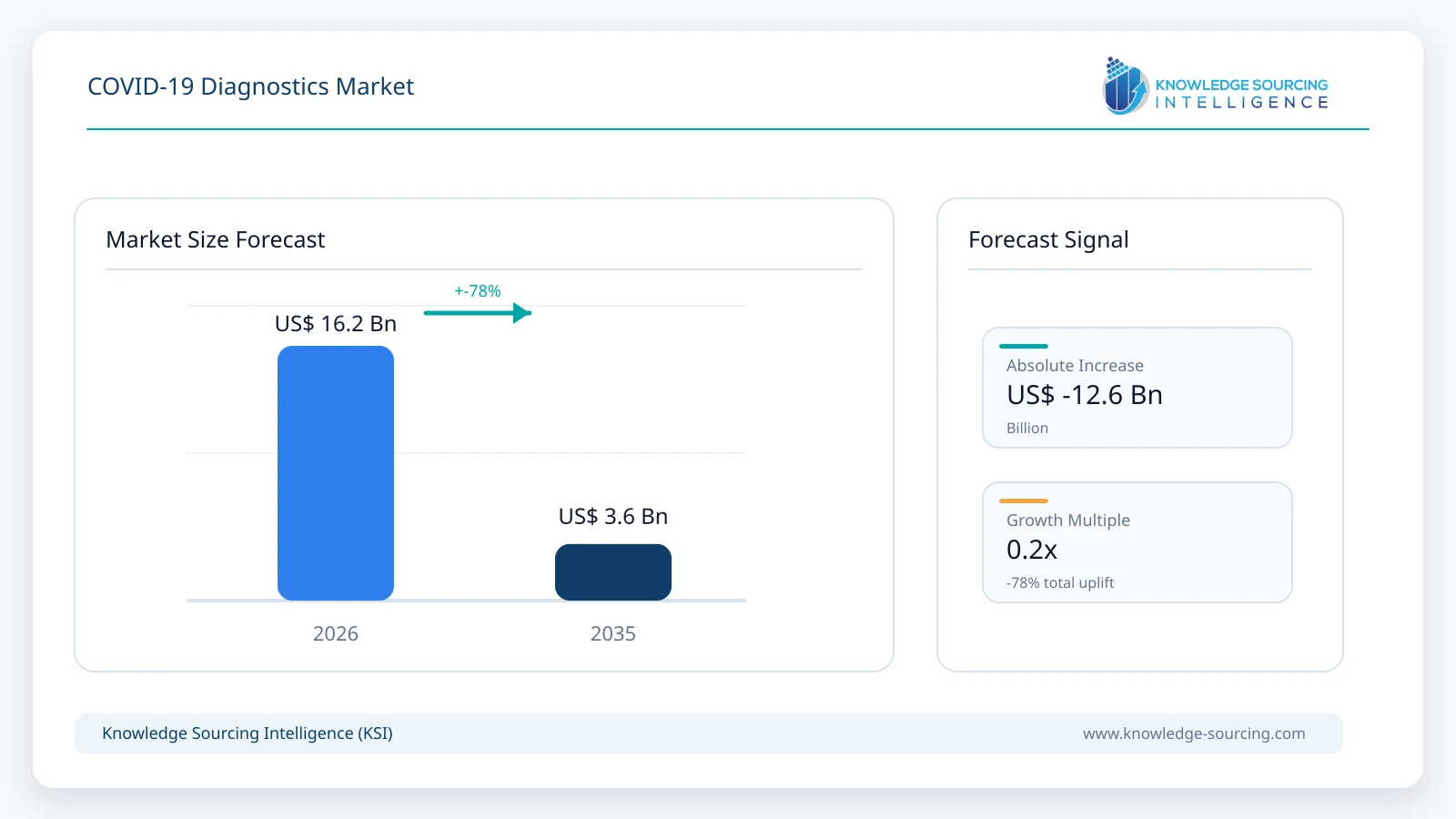
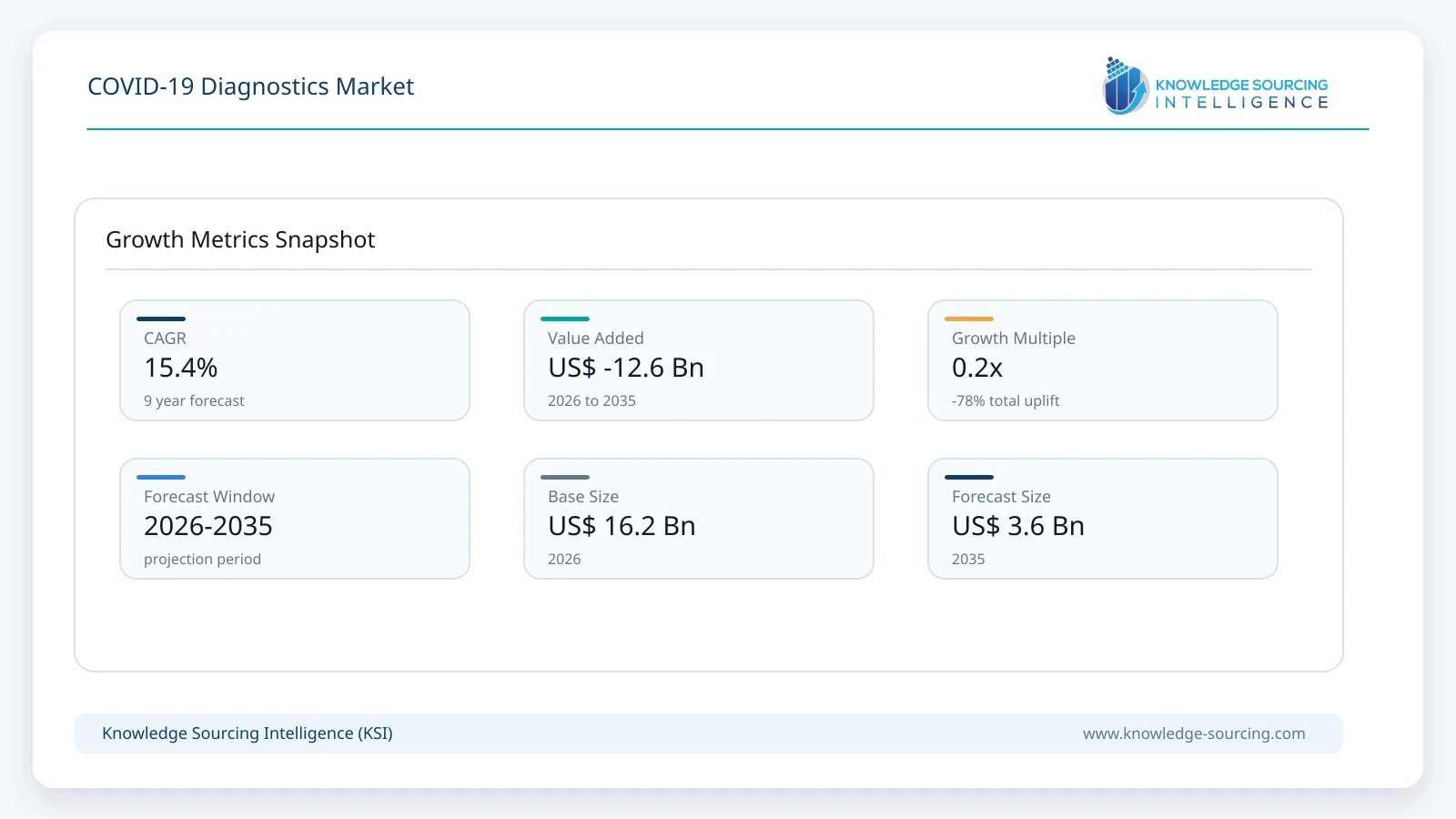
The COVID-19 Diagnostics Market is expected to grow at a CAGR of -15.4% from a market value of USD 16.2 billion in 2026 to USD 3.6 billion in 2035.
Highlights:
- 1The transition from pandemic response to endemic disease management is reducing routine testing demand while increasing utilization of multiplex respiratory diagnostic platforms.
- 2Laboratory automation is becoming a primary purchasing criterion because healthcare providers require higher efficiency despite declining specimen volumes.
- 3Molecular diagnostics continue representing the clinical reference standard, sustaining demand for high-sensitivity testing in hospitalized and high-risk patient populations.
- 4Point-of-care technologies are supporting decentralized respiratory disease management by enabling faster clinical decisions in outpatient and emergency care settings.
COVID-19 diagnostics encompass molecular, antigen, and serological tests that identify active infection or immune response following SARS-CoV-2 exposure. Molecular diagnostics remain the clinical reference standard because nucleic acid amplification directly detects viral genetic material with high analytical sensitivity. Healthcare providers continue relying on these platforms for hospitalized patients, immunocompromised populations, and cases requiring definitive clinical decision-making. This dependence is encouraging manufacturers to optimize laboratory automation while expanding respiratory testing menus that improve instrument utilization throughout seasonal respiratory outbreaks.
Routine screening demand is declining because widespread vaccination, naturally acquired immunity, and evolving clinical management have reduced the need for repeated population-wide testing. Healthcare providers are prioritizing diagnostic efficiency instead of testing volume, leading laboratories to consolidate instruments capable of detecting multiple respiratory pathogens through a single workflow. This operational shift is encouraging manufacturers to integrate COVID-19 assays with influenza A/B and RSV detection, allowing laboratories to maintain productivity while addressing broader respiratory disease management.
Government procurement strategies increasingly emphasize preparedness rather than emergency stockpiling because future outbreaks require scalable diagnostic capacity instead of continuous mass testing. National surveillance programs continue supporting molecular sequencing and laboratory surveillance to monitor viral evolution, emerging variants, and respiratory disease burden. Public health agencies therefore remain important purchasers of high-performance molecular platforms despite declining commercial demand for individual COVID-19 tests.
Regulatory frameworks are transitioning from emergency authorization toward conventional diagnostic approval pathways, increasing evidence requirements for clinical performance, manufacturing quality, and post-market surveillance. Diagnostic developers are responding by generating larger clinical datasets, strengthening quality management systems, and expanding global regulatory submissions. These developments favor manufacturers possessing diversified diagnostic portfolios, established regulatory expertise, and extensive laboratory relationships.
COVID-19 diagnostics remain strategically important because the installed molecular infrastructure established during the pandemic now supports broader infectious disease management. This installed base enables manufacturers to introduce new respiratory assays with lower implementation costs while allowing healthcare providers to maximize previous capital investments. Consequently, the market increasingly derives value from platform expansion rather than standalone COVID-19 test volumes.
Market Dynamics
Market Drivers
Expansion of Integrated Respiratory Disease Testing: Healthcare providers increasingly require comprehensive respiratory diagnostics because COVID-19 symptoms frequently overlap with influenza, RSV, and other viral infections. Laboratories are replacing single-pathogen workflows with multiplex molecular testing that delivers broader clinical information without increasing operational complexity. This diagnostic consolidation reduces laboratory turnaround times while improving treatment decisions for respiratory illnesses. Diagnostic manufacturers are expanding respiratory assay portfolios to maximize utilization of installed molecular instruments. These integrated testing capabilities strengthen long-term demand despite declining standalone COVID-19 testing volumes.
Public Health Surveillance Remains a Strategic Priority: National surveillance programs continuously monitor viral evolution because emerging variants influence disease transmission and healthcare preparedness. Molecular diagnostics remain central to surveillance systems due to their analytical sensitivity and compatibility with genomic sequencing. Governments are maintaining surveillance laboratories that support early outbreak detection while strengthening national preparedness strategies. Diagnostic suppliers are positioning molecular platforms as essential surveillance infrastructure instead of temporary pandemic assets. This strategic repositioning sustains institutional demand despite lower community testing volumes.
Laboratory Automation Improves Operational Efficiency: Clinical laboratories prioritize automation because workforce shortages and financial constraints continue affecting diagnostic operations. Automated molecular platforms reduce manual processing while improving workflow consistency and testing capacity. Healthcare institutions are consolidating diagnostic systems that support multiple infectious disease assays through standardized laboratory processes. Manufacturers are integrating sample preparation, nucleic acid extraction, amplification, and reporting into unified platforms that reduce operational complexity. Higher automation strengthens customer retention because laboratories prefer scalable diagnostic ecosystems over individual testing products.
Regulatory Transition Encourages High-Quality Diagnostic Platforms: Regulatory authorities require stronger clinical evidence as emergency authorization frameworks gradually expire. Diagnostic manufacturers increasingly invest in analytical validation, manufacturing quality, and post-market surveillance to satisfy conventional regulatory expectations. Companies possessing established regulatory expertise are strengthening competitive positions because smaller manufacturers often face greater compliance challenges. Improved regulatory standards increase confidence among healthcare providers while supporting sustainable diagnostic adoption beyond emergency pandemic conditions.
Market Restraints
Declining routine testing volumes are reducing procurement contracts for standalone COVID-19 diagnostic products.
Expiration of emergency regulatory pathways is increasing clinical validation costs and extending commercialization timelines for new diagnostic assays.
Consolidation of diagnostic purchasing is limiting opportunities for manufacturers that rely primarily on single-analyte COVID-19 testing portfolios.
Market Opportunities
Multiplex Molecular Diagnostics Are Expanding Commercial Lifecycles: Respiratory disease management increasingly requires simultaneous detection of multiple viral pathogens because overlapping symptoms complicate clinical diagnosis. Healthcare providers are adopting multiplex molecular panels that improve diagnostic efficiency while maximizing existing laboratory infrastructure. Manufacturers expanding respiratory menus are extending the commercial relevance of COVID-19 molecular platforms beyond pandemic-specific testing.
Digital Connectivity Is Strengthening Diagnostic Value: Healthcare systems increasingly integrate diagnostic instruments with electronic health records and surveillance databases because real-time reporting improves outbreak monitoring. Diagnostic manufacturers are incorporating cloud-enabled connectivity and automated reporting capabilities into laboratory platforms. These digital features improve workflow efficiency while supporting national disease surveillance initiatives.
Decentralized Testing Continues Supporting High-Risk Patient Management: Point-of-care diagnostics remain valuable because emergency departments, outpatient clinics, and long-term care facilities require rapid clinical decision-making. Manufacturers are refining portable molecular technologies that deliver laboratory-quality performance closer to patients. Improved accessibility expands diagnostic use in settings where centralized laboratory testing delays clinical intervention.
Pipeline Diversification Is Supporting Sustainable Revenue Generation: Diagnostic sponsors increasingly leverage established molecular platforms to introduce assays targeting influenza, RSV, sexually transmitted infections, antimicrobial resistance, and hospital-acquired infections. Existing laboratory customers are adopting additional assays because instrument familiarity reduces implementation barriers. Diversified testing menus increase recurring reagent demand while reducing dependence on COVID-19 testing alone.
Disease & Epidemiology Analysis
COVID-19 remains an infectious respiratory disease caused by severe acute respiratory syndrome coronavirus 2 (SARS-CoV-2), although its epidemiological profile has evolved substantially since the initial pandemic period. Endemic circulation now characterizes disease transmission across most regions because widespread immunity has reduced severe disease incidence while permitting continued viral evolution. Seasonal transmission patterns increasingly resemble those of other respiratory viruses, creating persistent demand for targeted diagnostic testing among symptomatic individuals, hospitalized patients, elderly populations, and patients with underlying medical conditions.
Continuous viral mutation sustains the clinical importance of accurate diagnostics because emerging variants may alter transmissibility, immune escape characteristics, and disease burden. Public health laboratories are maintaining genomic surveillance programs to identify epidemiologically significant variants while supporting evidence-based healthcare responses. Molecular diagnostics continue serving as the primary diagnostic technology because nucleic acid detection remains effective despite ongoing viral evolution. Antigen testing retains clinical utility for rapid community-based diagnosis, although confirmatory molecular testing remains important for high-risk patients and healthcare settings.
The epidemiological transition is reducing mass screening while increasing targeted diagnostic utilization in hospitals, long-term care facilities, transplant centers, oncology clinics, and respiratory disease surveillance programs. Healthcare providers increasingly require differentiation between COVID-19 and other respiratory infections because overlapping clinical presentations influence antiviral treatment decisions, infection control measures, and patient management. Multiplex respiratory diagnostics therefore are becoming integral components of routine infectious disease care rather than temporary pandemic response tools.
Treatment Guidelines Landscape
Organization | Patient Population | Diagnostic Recommendation |
World Health Organization (WHO) | Symptomatic individuals and high-risk populations | Recommends nucleic acid amplification tests (NAATs), including RT-PCR, as the reference method, while rapid antigen tests are recommended where molecular testing is unavailable or when rapid decisions are required. |
U.S. Centers for Disease Control and Prevention (CDC) | Community, healthcare, and long-term care settings | Recommends either molecular or antigen testing depending on clinical circumstances, with repeat antigen testing when initial results are negative but suspicion remains high. |
Infectious Diseases Society of America (IDSA) | Hospitalized and outpatient populations | Strongly supports molecular testing because of higher analytical sensitivity while recommending antigen tests in selected clinical settings |
Market Segmentation
By Test Type
Molecular diagnostics represent the largest value-generating segment because nucleic acid amplification directly identifies SARS-CoV-2 genetic material with superior analytical sensitivity. Clinical laboratories are increasingly utilizing RT-PCR and other molecular technologies for hospitalized patients, immunocompromised populations, and respiratory disease surveillance. High equipment costs limit adoption among smaller healthcare facilities, encouraging laboratories to maximize instrument utilization through broader respiratory testing menus. Manufacturers are integrating influenza, RSV, and additional respiratory pathogen assays into existing molecular platforms. This diversification preserves recurring reagent demand despite declining standalone COVID-19 testing volumes while extending the commercial lifespan of installed molecular systems.
By Sample Type
Saliva-based testing is becoming increasingly attractive because specimen collection is non-invasive, minimizes patient discomfort, and reduces dependence on trained healthcare personnel. Demand is expanding across community surveillance, pediatric testing, workplace screening, and decentralized healthcare environments where simplified collection improves patient compliance. Sample collection consistency remains a technical consideration because viral concentration may vary according to disease stage and collection procedures. Diagnostic developers are optimizing molecular assays specifically validated for saliva specimens while improving sample stabilization technologies that preserve RNA integrity during transportation. These improvements increase clinical confidence and broaden testing accessibility outside conventional healthcare facilities. Saliva testing consequently complements nasopharyngeal sampling rather than replacing it, particularly where repeated testing or self-collection supports surveillance objectives.
By Application
Laboratory-based testing remains the principal diagnostic setting because centralized laboratories provide high-throughput processing, standardized quality assurance, and advanced molecular capabilities. Declining community testing volumes are encouraging laboratories to consolidate respiratory diagnostics onto multifunctional molecular instruments that improve operational efficiency. Capacity optimization requires broader assay portfolios rather than additional COVID-19-specific instruments, leading manufacturers to expand syndromic respiratory panels compatible with existing laboratory infrastructure. These developments strengthen long-term relationships between diagnostic suppliers and institutional healthcare providers while improving return on previous laboratory investments.
Regional Analysis
North America Market Analysis
North America represents the most mature COVID-19 diagnostics market because the region established extensive molecular testing infrastructure during the pandemic and continues investing in respiratory disease surveillance. Healthcare systems increasingly prioritize integrated respiratory diagnostics as seasonal circulation of SARS-CoV-2, influenza, and RSV requires comprehensive clinical differentiation. This diagnostic transition reduces dependence on single-pathogen testing while increasing utilization of multiplex molecular platforms capable of supporting broader infectious disease management. Clinical laboratories continue consolidating workflows onto automated diagnostic systems because workforce shortages and operational cost pressures require higher laboratory efficiency. Diagnostic manufacturers are expanding assay portfolios to improve utilization of existing installed instruments rather than promoting entirely new testing platforms. Public health agencies maintain surveillance networks that support genomic monitoring of emerging SARS-CoV-2 variants, sustaining institutional demand for sequencing-compatible molecular diagnostics. Regulatory oversight by the U.S. Food and Drug Administration is increasing evidence expectations as emergency authorization pathways gradually give way to conventional approval processes.
Europe Market Analysis
Europe maintains a strong COVID-19 diagnostics market because national healthcare systems continue integrating SARS-CoV-2 testing into broader respiratory disease management programs. Public health authorities increasingly emphasize surveillance-driven diagnostics as endemic viral circulation requires continuous monitoring of variant evolution rather than emergency mass testing. This epidemiological transition encourages laboratories to expand multiplex respiratory testing capable of simultaneously detecting COVID-19, influenza, and RSV through a single diagnostic workflow. Healthcare providers continue optimizing laboratory capacity because financial pressures require improved efficiency without compromising diagnostic quality. Manufacturers are responding by introducing automation, digital connectivity, and expanded assay menus that maximize existing molecular infrastructure. Regulatory harmonization under the European Union In Vitro Diagnostic Regulation (IVDR) increases clinical evidence requirements while improving confidence in commercially available diagnostic products.
Asia Pacific Market Analysis
Asia Pacific is maintaining a strategically important position in the COVID-19 diagnostics market because governments continue strengthening infectious disease preparedness following the pandemic. National healthcare systems are integrating COVID-19 testing into broader respiratory disease surveillance as recurring outbreaks of respiratory viruses require sustained diagnostic capacity. This integration is reducing dependence on emergency procurement while increasing demand for flexible molecular platforms that support multiple infectious disease assays. Public health laboratories continue expanding genomic surveillance networks because monitoring SARS-CoV-2 variants remains essential for outbreak preparedness and vaccine strategy assessment. Diagnostic manufacturers are broadening assay portfolios to utilize the large installed base of molecular instruments established during the pandemic. Growing investments in domestic diagnostic manufacturing across China, Japan, South Korea, and India are increasing regional production capacity while reducing reliance on imported testing products.
Rest of the World
The Rest of the World market continues evolving from emergency response toward sustainable respiratory disease management because healthcare systems increasingly recognize the importance of long-term diagnostic preparedness. Countries in Latin America, the Middle East, and Africa are strengthening laboratory infrastructure established during the pandemic rather than dismantling testing capacity. This transition supports continued procurement of molecular platforms that can address multiple infectious diseases through shared laboratory resources. Budget constraints limit widespread replacement of diagnostic equipment, encouraging healthcare providers to maximize utilization of existing molecular systems by expanding respiratory testing menus. International health organizations continue supporting surveillance initiatives because early detection of emerging respiratory pathogens remains critical for regional outbreak response. Diagnostic manufacturers are adapting commercial strategies by offering scalable platforms suitable for laboratories with varying testing capacities.
Regulatory Landscape
The regulatory environment for COVID-19 diagnostics is transitioning from emergency authorization toward conventional in vitro diagnostic oversight because the acute public health emergency phase has ended in most jurisdictions. Standard regulatory pathways require comprehensive evidence demonstrating analytical validity, clinical performance, manufacturing quality, and post-market surveillance. This transition is increasing development costs and extending commercialization timelines while improving confidence in approved diagnostic products. Manufacturers possessing established regulatory infrastructure maintain competitive advantages as compliance requirements become more stringent.
The U.S. Food and Drug Administration (FDA) continues overseeing COVID-19 diagnostic products while gradually reducing reliance on Emergency Use Authorizations (EUAs). Manufacturers seeking continued commercialization are increasingly submitting products through traditional regulatory pathways that require more robust validation datasets. This regulatory evolution encourages long-term investment in quality management systems and clinical evidence generation.
Within Europe, the In Vitro Diagnostic Regulation (IVDR) (EU 2017/746) is reshaping market access by introducing stricter conformity assessment requirements, enhanced clinical evidence expectations, and greater involvement of notified bodies. Diagnostic companies are expanding regulatory resources to maintain uninterrupted access across European markets. These requirements favor companies with diversified product portfolios and established compliance capabilities.
Several Asia-Pacific regulatory authorities, including those in Japan, South Korea, Australia, and Singapore, are also strengthening post-pandemic oversight of molecular and rapid diagnostic tests. Harmonization with international quality standards is improving product consistency while facilitating broader international commercialization for manufacturers capable of meeting multiple regulatory frameworks.
Pipeline Analysis
Unlike therapeutic markets, the COVID-19 diagnostics pipeline is increasingly centered on next-generation diagnostic technologies rather than novel drug candidates. Manufacturers are focusing development programs on improving analytical sensitivity, reducing turnaround times, expanding multiplex capability, and integrating digital connectivity. Pipeline activity therefore reflects platform evolution instead of traditional pharmaceutical clinical development.
Molecular diagnostics continue representing the most active development area because laboratories require assays capable of simultaneously identifying SARS-CoV-2, influenza A/B, RSV, and additional respiratory pathogens. Roche, QIAGEN, Thermo Fisher Scientific, Danaher (Cepheid), Abbott, and Hologic are expanding respiratory assay menus compatible with existing molecular systems. These development strategies improve utilization of installed instruments while reducing customer dependence on single-disease testing.
Rapid molecular technologies are also progressing because emergency departments and outpatient settings increasingly require laboratory-quality diagnostic performance near the patient. Sponsors are optimizing cartridge-based nucleic acid amplification platforms that shorten turnaround times without compromising analytical accuracy. These technologies support earlier clinical intervention while improving antimicrobial stewardship through faster differentiation of viral respiratory infections.
CRISPR-based molecular diagnostics remain an emerging development area. Academic institutions and biotechnology companies continue evaluating CRISPR-mediated nucleic acid detection systems that combine molecular sensitivity with simplified workflows. Although commercial adoption remains limited, these technologies may reduce testing complexity and expand decentralized molecular diagnostics over the coming decade.
Reimbursement Landscape
COVID-19 diagnostic reimbursement has transitioned from emergency government-funded testing toward clinically justified reimbursement because routine population screening has substantially declined. Public and private payers increasingly reimburse testing performed for hospitalized patients, high-risk individuals, symptomatic patients, and institutional outbreak investigations. This reimbursement evolution is reducing demand for indiscriminate testing while preserving access for medically necessary diagnostic services.
Healthcare payers increasingly recognize multiplex respiratory testing because simultaneous detection of multiple respiratory pathogens improves diagnostic efficiency and may reduce unnecessary downstream healthcare utilization. Laboratories therefore are demonstrating greater clinical value through comprehensive respiratory diagnostics rather than standalone COVID-19 testing. Manufacturers are responding by emphasizing health-economic evidence supporting multiplex testing, workflow efficiency, and improved clinical decision-making during reimbursement negotiations.
The reimbursement environment increasingly favors diagnostic platforms that demonstrate measurable improvements in patient management, laboratory productivity, and healthcare resource utilization. Companies capable of generating robust clinical and economic evidence are strengthening their long-term commercial positioning as reimbursement policies become increasingly value based.
Competitive Landscape
Roche Holding AG
Roche is a global leader in molecular diagnostics, offering the cobas PCR platform and integrated laboratory automation solutions for respiratory disease testing. Its broad infectious disease portfolio and strong presence in clinical laboratories support long-term leadership in COVID-19 diagnostics.
Abbott Laboratories
Abbott provides rapid antigen testing through BinaxNOW and molecular testing through the ID NOW platform, serving hospitals, clinics, and decentralized healthcare settings. Its diversified diagnostics portfolio enables broad global access to respiratory testing.
Danaher Corporation
Danaher, through Cepheid, offers the GeneXpert molecular diagnostics platform for rapid PCR-based respiratory pathogen detection. Its automated cartridge-based systems are widely deployed across hospitals and public health laboratories.
Thermo Fisher Scientific Inc.
Thermo Fisher Scientific supplies PCR assays, laboratory instruments, reagents, and workflow solutions for infectious disease diagnostics worldwide. The company supports both clinical laboratories and research institutions with integrated molecular testing capabilities.
Siemens AG
Siemens Healthineers develops molecular and immunodiagnostic platforms, including the Atellica portfolio, for respiratory infectious disease detection. Its laboratory automation expertise strengthens diagnostic efficiency across healthcare systems.
Pfizer Inc.
Pfizer participates in the COVID-19 ecosystem primarily through vaccines and antiviral therapies while supporting collaborations that advance disease diagnosis and patient management. Its global healthcare presence complements comprehensive infectious disease strategies.
Key Developments
July 2026: Visby Medical received FDA clearance for the Visby Medical Flu and COVID-19 Test, the first at-home multi-viral PCR test for multiple respiratory viruses, marking Visby's second over-the-counter PCR test and expanding its portfolio of rapid molecular diagnostics designed for home use, enabling consumers to test for both influenza and COVID-19 simultaneously from home.
June 2026: Co-Diagnostics advanced its Latin American commercialization strategy for Co-Dx™ PCR Pro-R with a Mexico distributor agreement, establishing a partnership to distribute Co-Diagnostics' syndromic PCR testing platforms for respiratory infectious disease diagnostics across Latin American markets, enhancing access to comprehensive molecular testing for multiple pathogens.
December 2025: The World Health Organization prequalified the first two rapid antigen detection tests for SARS-CoV-2: the SD Biosensor STANDARD Q COVID-19 Ag Test and the ACON Biotech Flowflex SARS-CoV-2 Antigen Rapid Test (self-testing), marking the first time rapid antigen tests for SARS-CoV-2 have received WHO prequalification status for COVID-19 detection, building on earlier regulatory milestones when these products were listed under WHO's Emergency Use Listing.
Strategic Insights and Future Market Outlook
The COVID-19 diagnostics market is transitioning from emergency-driven demand to sustainable respiratory disease management as healthcare systems integrate SARS-CoV-2 testing into routine infectious disease workflows. This structural shift is reducing demand for standalone COVID-19 assays while increasing adoption of multiplex molecular diagnostics capable of simultaneously detecting multiple respiratory pathogens. Manufacturers are therefore repositioning existing platforms to improve long-term instrument utilization and recurring reagent revenue.
Competitive advantage is increasingly depending on platform versatility, automation, regulatory compliance, and digital connectivity rather than testing capacity alone. Leading sponsors are expanding respiratory disease menus, incorporating cloud-enabled reporting, and strengthening laboratory partnerships to increase customer retention. Companies possessing diversified molecular diagnostic portfolios and established regulatory expertise are expected to outperform manufacturers that relied primarily on pandemic-related testing revenues.
Future innovation is likely to concentrate on high-sensitivity point-of-care molecular diagnostics, CRISPR-based detection technologies, artificial intelligence-enabled laboratory workflows, and integrated respiratory surveillance platforms. These advancements are supporting faster clinical decision-making while improving public health preparedness for future infectious disease outbreaks.
COVID-19 Diagnostics Market Scope:
| Report Metric | Details |
|---|---|
| Total Market Size in 2026 | USD 16.2 billion |
| Total Market Size in 2035 | USD 3.6 billion |
| Forecast Unit | USD Billion |
| Growth Rate | -15.4% |
| Study Period | 2021 to 2035 |
| Historical Data | 2021 to 2024 |
| Base Year | 2025 |
| Forecast Period | 2026 – 2035 |
| Segmentation | Test Type, Technology Platform, End User, Geography |
| Companies |
|
Market Segmentation
Test Type
Technology Platform
End User
Geography
- North America
- South America
- Europe
- Middle East and Africa
- Asia Pacific
Table of Contents
1. EXECUTIVE SUMMARY
1.1 Market Snapshot
1.2 Key Findings
1.3 Analyst Insights
1.4 Strategic Recommendations
2. RESEARCH METHODOLOGY
2.1 Research Design
2.2 Data Collection Methodology
2.3 Market Size Estimation
2.4 Forecasting Model
2.5 Assumptions & Limitations
3. GLOBAL COVID-19 DIAGNOSTICS MARKET OVERVIEW, SIZE & FORECAST
3.1 Market Definition & Scope
3.2 COVID-19 Disease Overview
3.3 Industry Evolution
3.4 Key Market Trends
3.5 Historical Market Size Analysis (2021–2025)
3.6 Market Forecast (2026–2035)
3.7 Disease Burden and Diagnostic Needs Analysis
3.8 Testing Volume Analysis
3.9 Testing Landscape by Care Setting
3.10 Patient Testing Pathway Analysis
4. MARKET DYNAMICS
4.1 Market Drivers
4.2 Market Restraints
4.3 Market Opportunities
4.4 Market Challenges
5. INDUSTRY LANDSCAPE
5.1 Industry Value Chain Analysis
5.2 Pricing Analysis
5.3 Reimbursement Landscape
6. INNOVATION LANDSCAPE
6.1 Emerging Diagnostic Technologies
6.2 Product Innovation
6.3 Clinical Trial Analysis
6.4 Pipeline Analysis
6.5 AI Integration in COVID-19 Diagnostics
6.6 Digital Health Integration
7. REGULATORY LANDSCAPE
7.1 Regulatory Framework
7.2 Approval Pathways
7.3 Compliance Requirements
8. GLOBAL COVID-19 DIAGNOSTICS MARKET LANDSCAPE ANALYSIS
8.1 Analysis by Technology Platform
8.2 Analysis by Test Type
8.3 Analysis by Sample Type
8.4 Analysis by Clinical Application
8.5 Analysis by Testing Setting
9. GLOBAL COVID-19 DIAGNOSTICS MARKET SEGMENT ANALYSIS (2021–2035)
9.1 By Test Type
9.1.1 Molecular Diagnostics
9.1.1.1 RT-PCR
9.1.1.2 Isothermal Nucleic Acid Amplification Tests (NAAT)
9.1.1.3 CRISPR-Based Molecular Tests
9.1.2 Antigen Tests
9.1.3 Antibody (Serology) Tests
9.2 By Technology Platform
9.2.1 Polymerase Chain Reaction (PCR)
9.2.2 Isothermal Amplification
9.2.3 Lateral Flow Assays
9.2.4 Enzyme-Linked Immunosorbent Assay (ELISA)
9.2.5 Chemiluminescent Immunoassay (CLIA)
9.2.6 Next-Generation Sequencing (NGS)
9.3 By Sample Type
9.3.1 Nasopharyngeal Swab
9.3.2 Oropharyngeal Swab
9.3.3 Blood
9.3.4 Saliva
9.3.5 Others
9.4 By Testing Setting
9.4.1 Laboratory-based Testing
9.4.2 Point-of-Care (PoC) Testing
9.4.3 At-home/Self-testing
9.5 By End User
9.5.1 Hospitals & Clinics
9.5.2 Diagnostic Laboratories
9.5.3 Government & Public Health Laboratories
9.5.4 Others
10. GLOBAL COVID-19 DIAGNOSTICS MARKET GEOGRAPHICAL ANALYSIS (2021–2035)
10.1 North America
10.2 Europe
10.3 Asia-Pacific
10.4 South America
10.5 Middle East & Africa
11. GLOBAL COVID-19 DIAGNOSTICS MARKET COUNTRY ANALYSIS (2021–2035)
11.1 United States
11.2 Canada
11.3 Germany
11.4 United Kingdom
11.5 France
11.6 Italy
11.7 Spain
11.8 China
11.9 Japan
11.10 India
11.11 South Korea
11.12 Australia
11.13 Brazil
11.14 Mexico
11.15 Saudi Arabia
11.16 South Africa
12. COMPETITIVE LANDSCAPE
12.1 Market Share Analysis
12.2 Strategic Developments
12.3 Mergers & Acquisitions, Partnerships & Collaborations
12.4 Product Launches
13. COMPANY PROFILES
13.1 Roche Holding AG
13.1.1 Company Overview
13.1.2 Financials
13.1.3 Product Portfolio
13.1.4 Recent Developments
13.2 Abbott Laboratories
13.3 Danaher Corporation
13.4 Thermo Fisher Scientific Inc.
13.5 Siemens AG
13.6 Pfizer
13.7 QIAGEN N.V.
13.8 Becton, Dickinson and Company
13.9 QuidelOrtho Corporation
13.10 Hologic, Inc.
14. GLOBAL COVID-19 DIAGNOSTICS MARKET COMMERCIAL FORECAST ANALYSIS
14.1 Molecular Diagnostic Tests
14.2 Rapid Antigen Tests
14.3 Serology Tests
14.4 Point-of-Care Molecular Diagnostics
14.5 Home-Based COVID-19 Diagnostic Tests
15. INVESTMENT & FUNDING ANALYSIS
15.1 Venture Capital Trends
15.2 Government Funding
15.3 R&D Investments
16. FUTURE OUTLOOK
16.1 Key Growth Opportunities
16.2 Future Industry Trends
Navigate
Trusted by the world's leading organizations











