
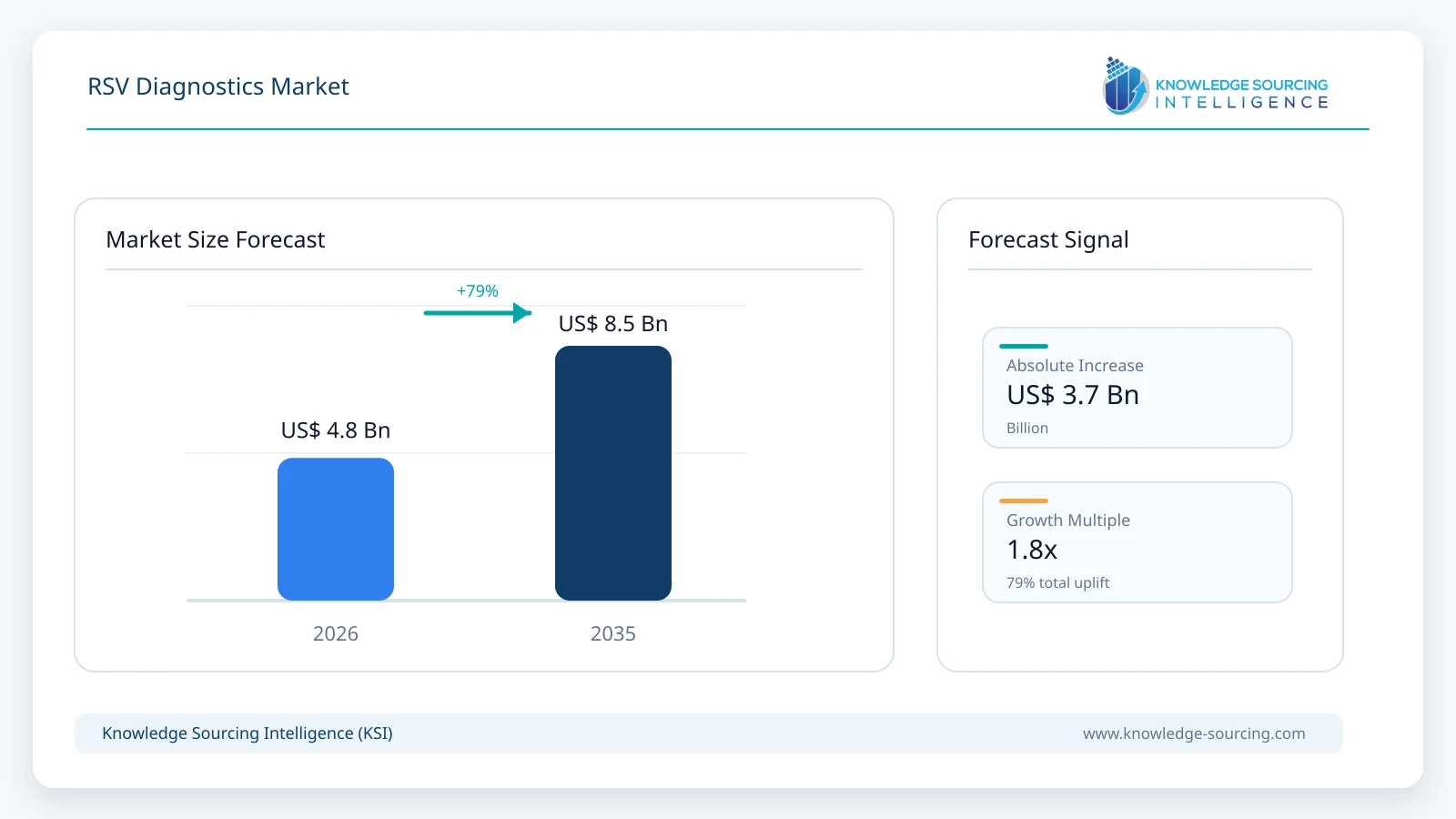
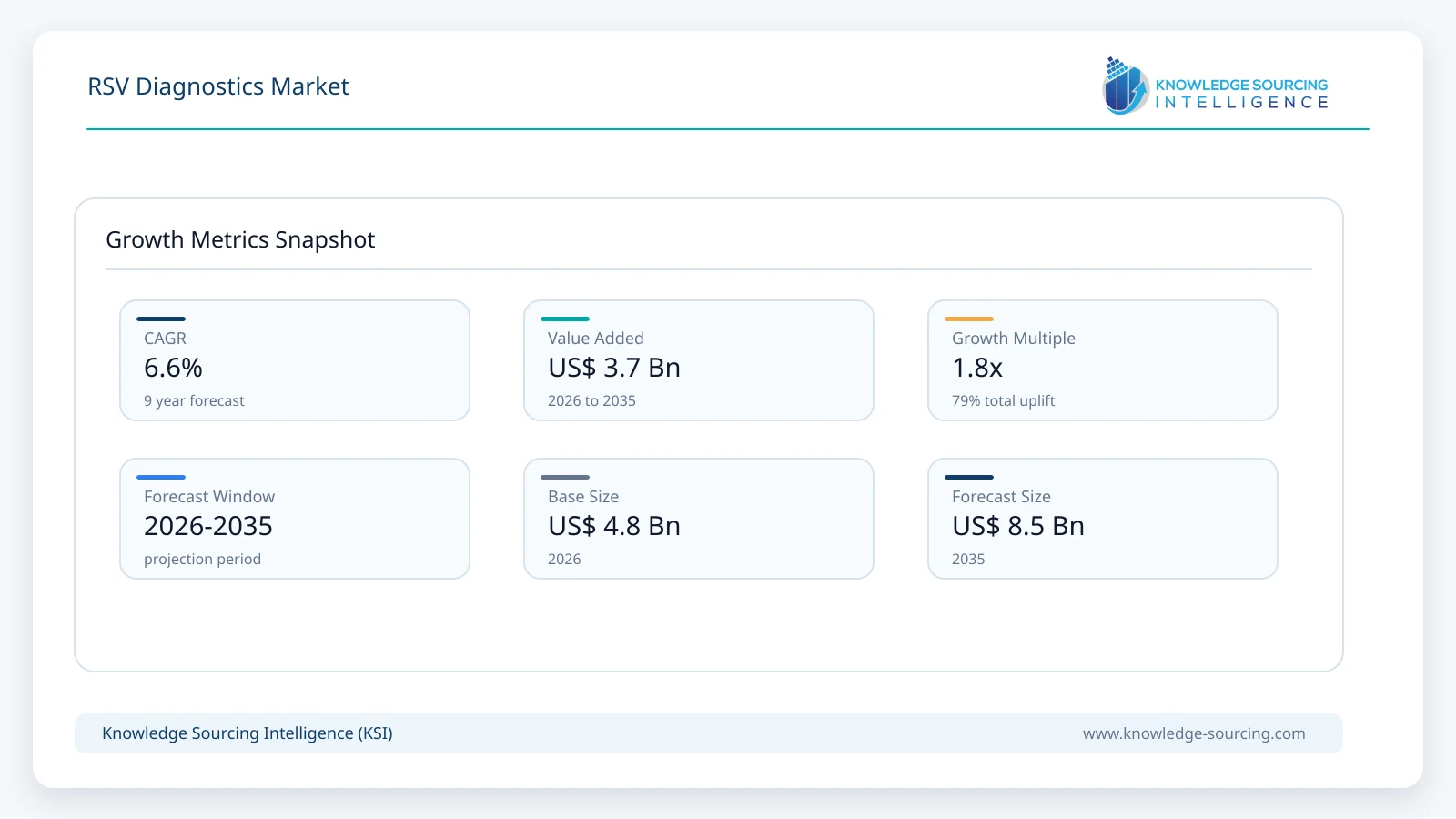
The RSV Diagnostics Market is expected to grow at a CAGR of 6.6% from a market value of USD 4.76 billion in 2026 to USD 8.50 billion in 2035.
Highlights:
- 1Increasing RSV vaccination and monoclonal antibody adoption are strengthening demand for laboratory-confirmed infection surveillance.
- 2Expansion of multiplex molecular diagnostics is enabling simultaneous detection of RSV, influenza, and SARS-CoV-2, improving clinical decision-making.
- 3Rising hospitalization among older adults is increasing diagnostic testing across hospitals and emergency departments.
- 4Public health surveillance programs are expanding respiratory virus monitoring, accelerating the adoption of standardized molecular diagnostic platforms.
The RSV diagnostics market enables laboratories and healthcare providers to detect Respiratory Syncytial Virus infections using antigen detection, nucleic acid amplification technologies, immunoassays, and multiplex molecular diagnostic systems. Diagnostic testing supports patient management by confirming viral infection, reducing unnecessary antibiotic prescribing, enabling infection prevention measures, and assisting respiratory surveillance programs.
Demand is increasing because RSV is affecting not only infants but also older adults, immunocompromised patients, and individuals with chronic respiratory or cardiovascular diseases. Healthcare systems are recognizing that rapid differentiation between respiratory pathogens improves patient triage and resource utilization during seasonal outbreaks. This requirement is encouraging healthcare providers to adopt highly sensitive molecular diagnostics capable of detecting multiple respiratory viruses simultaneously.
Regulatory agencies are strengthening respiratory surveillance following lessons learned during the COVID-19 pandemic. National public health authorities are expanding genomic monitoring and laboratory reporting networks, which increases dependence on standardized diagnostic platforms. Diagnostic manufacturers are responding by developing automated workflows, high-throughput analyzers, and point-of-care molecular systems that reduce turnaround time while maintaining analytical performance.
The introduction of RSV vaccines and long-acting monoclonal antibodies is also increasing the strategic importance of accurate laboratory confirmation. Healthcare providers require reliable diagnostics to monitor disease burden, evaluate vaccine effectiveness, support epidemiological surveillance, and identify high-risk patient populations. As preventive interventions continue expanding globally, diagnostic testing remains integral to public health decision-making and clinical management.
Market Dynamics
Market Drivers
Growing Respiratory Disease Surveillance Programs: Respiratory surveillance strengthens healthcare preparedness by providing continuous monitoring of circulating viral pathogens. Public health agencies are expanding RSV surveillance networks because comprehensive epidemiological data support outbreak prediction, healthcare resource planning, and vaccine policy decisions. Laboratory reporting requirements increase demand for standardized molecular diagnostic assays capable of generating accurate and comparable results across healthcare settings. Diagnostic manufacturers are introducing automated testing platforms that improve testing capacity while supporting national surveillance objectives. This integration of surveillance and diagnostics establishes sustained institutional demand beyond seasonal testing.
Expansion of RSV Vaccination and Preventive Immunization: Preventive immunization increases the need for accurate diagnostic confirmation because healthcare providers require evidence of breakthrough infections and changing disease patterns. RSV vaccination programs are expanding among older adults, while monoclonal antibody prophylaxis is increasing protection for infants. Clinical practice continues to require laboratory confirmation to distinguish RSV from other respiratory infections with overlapping symptoms. Healthcare institutions are strengthening diagnostic capacity to evaluate vaccine effectiveness, monitor circulating strains, and optimize patient management. This interaction between prevention and diagnostics reinforces long-term testing demand rather than reducing diagnostic utilization.
Increasing Adoption of Multiplex Molecular Diagnostics: Molecular diagnostics improve clinical confidence by identifying multiple respiratory pathogens within a single patient sample. Hospitals are replacing standalone viral assays with multiplex PCR panels because respiratory infections frequently present similar clinical symptoms. This transition reduces diagnostic uncertainty while supporting antimicrobial stewardship and infection control decisions. Diagnostic companies are expanding syndromic testing portfolios that integrate RSV detection with influenza, SARS-CoV-2, adenovirus, and other respiratory viruses.
Rising Hospitalization Among High-Risk Adult Populations: RSV causes substantial disease burden among elderly adults, immunocompromised patients, and individuals with chronic cardiopulmonary conditions. Healthcare providers are recognizing these populations as significant contributors to RSV-related hospital admissions. Hospitals are expanding routine respiratory testing because early diagnosis supports isolation measures, optimized supportive care, and improved patient flow during seasonal outbreaks. Diagnostic manufacturers are responding with high-throughput laboratory systems capable of processing increasing respiratory testing volumes.
Market Restraints
High molecular diagnostic instrument costs continue to limit adoption among smaller hospitals and resource-constrained laboratories.
Seasonal fluctuations in RSV circulation create uneven testing demand and reduce equipment utilization outside peak respiratory seasons.
Limited laboratory infrastructure and trained molecular diagnostic personnel restrict testing accessibility across many low- and middle-income healthcare systems.
Market Opportunities
Expansion of Point-of-Care Molecular Testing: Rapid point-of-care diagnostics shorten clinical decision timelines by delivering accurate results closer to patients. Emergency departments and outpatient clinics are adopting compact molecular platforms because respiratory disease management increasingly depends on immediate pathogen identification. Diagnostic manufacturers are developing portable systems with simplified workflows that reduce dependence on centralized laboratories. This decentralization expands testing accessibility while supporting earlier clinical intervention.
Integration of RSV Testing into Syndromic Respiratory Panels: Healthcare providers increasingly manage respiratory diseases through comprehensive pathogen identification rather than sequential testing. Laboratories are incorporating RSV into multiplex respiratory panels because simultaneous detection reduces repeat sampling and accelerates treatment decisions. Diagnostic developers are expanding assay menus that address evolving respiratory disease complexity. Integrated testing strengthens operational efficiency while supporting broader laboratory adoption.
Strengthening Pediatric and Maternal Healthcare Programs: Maternal immunization and infant prophylaxis increase the importance of monitoring RSV disease burden across newborn populations. Healthcare systems are strengthening neonatal surveillance because preventive interventions require continuous evaluation of clinical outcomes. Diagnostic manufacturers are supporting these initiatives through highly sensitive assays suitable for pediatric specimens. These developments increase opportunities for specialized diagnostic solutions across maternal and child healthcare networks.
Increasing Investment in Laboratory Automation: Clinical laboratories require higher throughput while managing workforce shortages and increasing respiratory testing volumes. Healthcare providers are investing in automated molecular diagnostic platforms that improve workflow consistency and reduce manual intervention. Manufacturers are integrating sample preparation, amplification, and result interpretation into consolidated systems. Automation enhances laboratory efficiency and supports sustained demand for advanced RSV diagnostic technologies.
Disease & Epidemiology Analysis
Respiratory Syncytial Virus remains one of the leading viral causes of lower respiratory tract infection across infants, older adults, and immunocompromised populations. The virus primarily spreads through respiratory droplets and direct contact, producing seasonal outbreaks that place substantial pressure on healthcare systems. Infants experience the highest rates of bronchiolitis and pneumonia because immature immune responses increase susceptibility to severe infection. Older adults also experience elevated hospitalization rates as aging immune function and chronic comorbidities reduce respiratory resilience.
Global epidemiological surveillance is improving because healthcare authorities are expanding laboratory-confirmed RSV reporting systems. Increased molecular testing is identifying a greater proportion of adult infections that historically remained underdiagnosed due to symptom overlap with influenza and other respiratory viruses. This improved disease recognition strengthens demand for sensitive diagnostic assays capable of distinguishing RSV from multiple respiratory pathogens.
The introduction of RSV vaccines for older adults and maternal immunization, together with long-acting monoclonal antibody prophylaxis for infants, is transforming disease monitoring priorities. Healthcare providers require laboratory-confirmed diagnoses to evaluate preventive intervention performance, identify breakthrough infections, and monitor circulating viral activity. These changing epidemiological requirements reinforce the long-term strategic role of RSV diagnostics within respiratory disease management.
Treatment Guidelines Landscape
Organization | Patient Population | Diagnostic Recommendation | Treatment Recommendation |
World Health Organization (WHO) | Infants and children | Laboratory testing supports surveillance and selected clinical scenarios | Primarily supportive care, including oxygen therapy and hydration |
American Academy of Pediatrics (AAP) | Pediatric patients | Routine laboratory testing is not recommended for uncomplicated outpatient bronchiolitis, but is appropriate when results influence infection control or clinical management. | Supportive care remains the standard treatment. |
Centers for Disease Control and Prevention (CDC) | All age groups | Molecular diagnostic testing is recommended where confirmation influences patient management and surveillance. | Supportive treatment, preventive vaccination, and monoclonal antibodies for eligible populations |
European Centre for Disease Prevention and Control (ECDC) | Public health surveillance | Laboratory-confirmed diagnosis supports surveillance and outbreak monitoring. | National clinical management guidelines with a supportive care focus |
Market Segmentation
By Product Type
Reagents and kits represent the operational foundation of RSV diagnostic testing because every patient sample requires assay-specific consumables regardless of laboratory infrastructure. Demand is increasing as hospitals and diagnostic laboratories are expanding routine respiratory virus testing beyond influenza to include RSV and SARS-CoV-2 within standardized clinical workflows. The recurring nature of reagent consumption creates sustained purchasing cycles that remain less dependent on capital expenditure than instrument procurement. Manufacturers are developing highly sensitive molecular reagents with improved analytical performance, shorter amplification times, and compatibility across automated platforms to increase laboratory efficiency. This recurring utilization model makes reagents and kits the principal revenue-generating component of the RSV diagnostics value chain while supporting continuous product innovation.
By Sample Type
Nasopharyngeal swabs remain the preferred specimen for RSV detection because they consistently provide high viral recovery during the early stages of infection. Clinical laboratories continue relying on this specimen type as molecular diagnostic sensitivity depends on adequate viral load collection from the upper respiratory tract. Healthcare providers are standardizing nasopharyngeal sampling protocols to improve diagnostic accuracy and reduce false-negative results across respiratory testing programs. Diagnostic manufacturers are validating new molecular assays using nasopharyngeal specimens because regulatory approval frequently requires well-established clinical performance benchmarks. This standardization maintains strong demand for compatible collection devices, transport media, and molecular assay kits throughout healthcare systems.
By End User
Hospitals constitute the largest end-user segment because severe RSV infections frequently require emergency evaluation, inpatient care, and intensive respiratory monitoring. Testing demand is increasing as clinicians are integrating RSV diagnostics into emergency department triage protocols for infants, older adults, and immunocompromised patients presenting with acute respiratory illness. Hospital laboratories require rapid molecular platforms that shorten turnaround time while supporting infection prevention measures, patient isolation, and optimized bed management during seasonal outbreaks. Diagnostic companies are expanding automated respiratory testing solutions that integrate seamlessly with hospital laboratory information systems and high-throughput analyzers. These investments strengthen hospitals as the primary purchasing centers for advanced RSV diagnostic technologies.
Regional Analysis
North America Market Analysis
North America represents the most mature RSV diagnostics market because healthcare systems maintain extensive laboratory infrastructure, strong reimbursement mechanisms, and comprehensive respiratory surveillance programs. Clinical practice increasingly recognizes RSV as a significant cause of hospitalization among older adults in addition to infants, expanding diagnostic demand across multiple patient populations. The introduction of RSV vaccines and monoclonal antibody prophylaxis is increasing the need for laboratory-confirmed surveillance to monitor disease trends, vaccine effectiveness, and breakthrough infections. Public health agencies continue strengthening respiratory surveillance networks that integrate RSV with influenza and SARS-CoV-2 monitoring, increasing dependence on standardized molecular diagnostics. Diagnostic manufacturers are expanding multiplex PCR platforms, point-of-care molecular systems, and automated laboratory workflows to support growing testing volumes. Regulatory pathways established by the U.S. Food and Drug Administration (FDA) continue to facilitate innovation through clear performance requirements and timely review processes.
Europe Market Analysis
Europe maintains a strong RSV diagnostics landscape because coordinated public health systems emphasize respiratory disease surveillance and evidence-based clinical management. National healthcare authorities increasingly recognize RSV as a priority pathogen following the introduction of preventive vaccines and monoclonal antibodies for vulnerable populations. Diagnostic demand is expanding because hospitals require reliable laboratory confirmation to support infection control, surveillance reporting, and optimized patient management during seasonal outbreaks. The European Centre for Disease Prevention and Control (ECDC) continues to encourage harmonized surveillance approaches that improve epidemiological comparability across member states. Diagnostic manufacturers are strengthening partnerships with reference laboratories to validate multiplex molecular assays and support regional respiratory surveillance initiatives.
Asia Pacific Market Analysis
Asia Pacific is experiencing rapid expansion in RSV diagnostic demand because healthcare expenditure, laboratory modernization, and respiratory disease awareness continue increasing across the region. Population growth, urbanization, and high pediatric disease burden create sustained clinical demand for accurate respiratory pathogen identification. Governments are strengthening infectious disease surveillance programs following lessons learned during the COVID-19 pandemic, encouraging greater investment in molecular diagnostic infrastructure. Hospitals are replacing conventional antigen testing with multiplex molecular platforms that improve sensitivity and differentiate RSV from influenza and other respiratory pathogens. International diagnostic manufacturers are expanding commercial operations while domestic companies are increasing local production of molecular reagents and automated diagnostic systems.
Rest of the World
The Rest of the World region presents substantial long-term growth potential because RSV disease burden remains significant while diagnostic accessibility continues improving. Countries across Latin America, the Middle East, and Africa are strengthening laboratory networks to improve respiratory disease surveillance and outbreak preparedness. Demand is increasing because healthcare authorities recognize laboratory-confirmed diagnosis as an essential component of national infectious disease monitoring programs. International organizations are supporting laboratory capacity building through technical assistance, training, and surveillance initiatives that improve diagnostic quality and reporting consistency. Diagnostic manufacturers are introducing simplified molecular platforms and portable testing systems that address infrastructure limitations outside major urban hospitals.
Regulatory Landscape
The regulatory framework governing RSV diagnostics is evolving as respiratory pathogen surveillance becomes a permanent public health priority rather than a pandemic-specific activity. Regulatory authorities require manufacturers to demonstrate analytical sensitivity, specificity, reproducibility, and clinical performance before commercialization because diagnostic accuracy directly influences patient management and surveillance quality. Manufacturers are increasingly pursuing regulatory approvals for multiplex respiratory assays that simultaneously detect RSV, influenza viruses, SARS-CoV-2, and additional respiratory pathogens. This integrated approach aligns with clinical demand for comprehensive respiratory diagnostics while reducing laboratory workflow complexity.
The U.S. Food and Drug Administration (FDA) regulates RSV diagnostic devices through in vitro diagnostic (IVD) pathways that evaluate analytical and clinical performance before market authorization. The European Union In Vitro Diagnostic Regulation (IVDR 2017/746) is strengthening evidence requirements for clinical performance, post-market surveillance, and quality management systems across diagnostic manufacturers. These evolving regulatory expectations are increasing development costs but also improving confidence in assay reliability and patient safety.
International organizations continue promoting standardized surveillance methodologies that depend on validated molecular diagnostics. The World Health Organization (WHO) supports global RSV surveillance expansion through standardized laboratory guidance and epidemiological reporting frameworks. National regulatory agencies are also encouraging broader respiratory pathogen monitoring following the introduction of RSV preventive interventions, reinforcing sustained demand for high-quality diagnostic technologies.
Pipeline Analysis
The RSV diagnostic pipeline is shifting from single-pathogen detection toward integrated respiratory testing platforms because clinicians increasingly require comprehensive diagnostic information from a single patient specimen. Diagnostic developers are prioritizing multiplex real-time polymerase chain reaction (RT-PCR) assays capable of simultaneously identifying RSV A, RSV B, influenza A/B, SARS-CoV-2, and additional respiratory viruses. This transition improves diagnostic efficiency while reducing specimen collection and laboratory turnaround time. Manufacturers are also incorporating automated sample preparation and digital workflow integration to minimize operator variability and improve testing throughput.
Diagnostic innovation is increasingly focusing on mechanisms that combine rapid nucleic acid amplification with simplified workflow design. Most pipeline candidates rely on real-time reverse transcription polymerase chain reaction (RT-PCR) as the analytical standard because it provides high sensitivity and specificity for detecting RSV RNA. Several developers are advancing isothermal amplification technologies, including loop-mediated isothermal amplification (LAMP), to enable faster point-of-care testing without conventional thermal cycling. Antigen detection technologies continue evolving through improved immunochromatographic assay design and enhanced signal amplification, particularly for decentralized healthcare settings where molecular infrastructure remains limited.
Clinical validation programs are expanding because manufacturers must demonstrate diagnostic performance across pediatric and adult populations before obtaining regulatory approval. Sponsors are conducting multicenter prospective clinical studies comparing investigational assays with established molecular reference standards to evaluate sensitivity, specificity, positive predictive value, and operational workflow performance. Large diagnostic companies such as Roche, Abbott, QIAGEN, Thermo Fisher Scientific, bioMérieux, and Danaher continue investing in respiratory testing portfolios that integrate RSV within broader syndromic diagnostic strategies rather than developing standalone assays. This sponsor strategy reflects increasing clinical preference for comprehensive respiratory diagnostics capable of supporting evolving surveillance and patient management requirements.
Reimbursement Landscape
Reimbursement for RSV diagnostic testing varies across healthcare systems but increasingly recognizes laboratory confirmation as an essential component of respiratory disease management. Public and private payers generally reimburse molecular RSV testing when clinical presentation, patient risk profile, or infection control considerations justify laboratory confirmation. Hospitals frequently incorporate RSV testing into broader respiratory pathogen panels because multiplex diagnostics improve clinical efficiency while supporting antimicrobial stewardship and patient isolation decisions.
The expansion of RSV vaccination and monoclonal antibody programs is increasing the importance of reimbursed diagnostic testing because healthcare systems require reliable surveillance data to evaluate preventive intervention outcomes. National health authorities are integrating RSV monitoring into seasonal respiratory surveillance initiatives, encouraging broader utilization of laboratory diagnostics within eligible patient populations. As healthcare systems continue emphasizing evidence-based respiratory management, reimbursement policies are expected to increasingly support high-performance molecular diagnostics that demonstrate clinical utility, operational efficiency, and improved patient care outcomes.
Competitive Landscape
F. Hoffmann-La Roche Ltd.
Roche differentiates itself through its high-performance cobas® molecular diagnostics portfolio, offering automated PCR-based respiratory panels with RSV detection for centralized laboratories. The company continues expanding integrated molecular testing solutions and automation to strengthen respiratory disease surveillance and high-throughput clinical diagnostics.
Abbott Laboratories
Abbott maintains a strong position with its ID NOW™ and Alinity diagnostic platforms, enabling rapid point-of-care and laboratory-based RSV detection. Its strategy focuses on decentralizing respiratory diagnostics while enhancing workflow efficiency across hospitals and outpatient settings.
Danaher Corporation
Through Cepheid and Beckman Coulter, Danaher provides rapid molecular RSV diagnostics on the GeneXpert® platform and supports laboratory automation. The company is expanding multiplex respiratory testing capabilities to address increasing demand for syndromic infectious disease diagnostics.
bioMérieux SA
bioMérieux specializes in syndromic molecular diagnostics through the BIOFIRE® Respiratory Panel, which includes highly sensitive RSV detection. The company emphasizes integrated infectious disease management by combining multiplex testing with advanced laboratory informatics.
QuidelOrtho Corporation
QuidelOrtho offers both rapid antigen and molecular RSV diagnostic solutions, including the Sofia® and Savanna® platforms. Its commercial strategy centers on expanding decentralized respiratory testing while strengthening point-of-care diagnostic capabilities.
DiaSorin S.p.A.
DiaSorin delivers RSV molecular testing through its LIAISON® MDX platform, focusing on high analytical accuracy and laboratory workflow optimization. The company is broadening its molecular infectious disease menu to support comprehensive respiratory pathogen detection.
Thermo Fisher Scientific Inc.
Thermo Fisher Scientific provides PCR reagents, instruments, and respiratory diagnostic assays that support clinical laboratories worldwide. The company continues investing in scalable molecular diagnostic technologies and laboratory automation to meet growing respiratory testing requirements.
Hologic, Inc.
Hologic strengthens its respiratory diagnostics portfolio through the Panther® molecular diagnostics system, enabling automated, high-throughput RSV testing. The company is expanding multiplex assay offerings to improve laboratory productivity and diagnostic accuracy.
Key Developments
June 2026: Enanta Pharmaceuticals announced advancement of its zelicapavir clinical development program for respiratory syncytial virus (RSV) treatment, including plans for a registrational Phase 2b/3 clinical trial in high-risk adults and a Phase 2b clinical trial in pediatric patients, following positive Phase 2b RSVHR study results showing zelicapavir effectively treats RSV as an N-protein inhibitor.
August 2025: Roche announced FDA 510(k) clearance for the cobas Respiratory 4-flex, the first respiratory test powered by TAGS (temperature-activated generation of signal) technology, simultaneously detecting SARS-CoV-2, influenza A, influenza B, and RSV in a single test, using multiplex PCR combined with color, temperature, and data processing to detect multiple targets within a single optical channel, integrating with Roche's cobas 5800, 6800, and 8800 molecular lab instruments, offering customizable testing menus and digital reflex capabilities for flexible laboratory workflows.
June 2025: The U.S. FDA approved Merck's Enflonsia (clesrovimab), the first and only preventive monoclonal antibody shot to protect infants up to one year of age from respiratory syncytial virus during their first RSV season, administered as a single 105 mg dose regardless of weight to healthy pre-term, full-term, and at-risk infants, protecting against both mild and severe RSV forms, reducing infection rate by 60% and hospitalizations by 84% compared to placebo over five months, with wholesale price set at $556 per dose.
May 2025: SEKISUI Diagnostics launched the OSOM RSV Test, a rapid immunochromatographic assay for qualitative detection of RSV nucleoprotein antigen in anterior nasal swab specimens, delivering results in 15 minutes, CLIA-waived for point-of-care use, and uniquely cleared for children 6 months to 6 years old and adults ages 60 and older targeting two high-risk groups for severe RSV infection, with QC Inside feature providing two extra tests per kit for external quality control.
Strategic Insights and Future Market Outlook
The RSV diagnostics market is transitioning from seasonal, single-pathogen testing toward comprehensive respiratory disease management. Growing adoption of RSV vaccines, maternal immunization, and monoclonal antibody prophylaxis is increasing demand for laboratory-confirmed surveillance, encouraging manufacturers to prioritize multiplex molecular assays, automation, and decentralized testing platforms.
Competition is expected to remain centered on improving assay sensitivity, reducing turnaround time, and integrating RSV detection with broader respiratory pathogen panels. Companies with scalable molecular platforms, strong regulatory approvals, and established hospital partnerships are likely to strengthen their market positions as healthcare systems continue investing in respiratory surveillance and precision infectious disease diagnostics.
The market outlook remains favorable as healthcare providers increasingly recognize RSV as a major respiratory pathogen across both pediatric and adult populations. Continued regulatory support, expanding surveillance programs, and technological innovation are expected to sustain demand for advanced RSV diagnostic solutions throughout the forecast period.
RSV Diagnostics Market Scope:
| Report Metric | Details |
|---|---|
| Total Market Size in 2026 | USD 4.76 billion |
| Total Market Size in 2035 | USD 8.50 billion |
| Forecast Unit | USD Billion |
| Growth Rate | 6.6% |
| Study Period | 2021 to 2035 |
| Historical Data | 2021 to 2024 |
| Base Year | 2025 |
| Forecast Period | 2026 – 2035 |
| Segmentation | Product Type, Diagnostic Technology, End User, Geography |
| Companies |
|
Market Segmentation
Product Type
Diagnostic Technology
End User
Geography
- North America
- South America
- Europe
- Middle East and Africa
- Asia Pacific
Table of Contents
1. EXECUTIVE SUMMARY
1.1 Market Snapshot
1.2 Key Findings
1.3 Analyst Insights
1.4 Strategic Recommendations
2. RESEARCH METHODOLOGY
2.1 Research Design
2.2 Data Collection Methodology
2.3 Market Size Estimation
2.4 Forecasting Model
2.5 Assumptions & Limitations
3. GLOBAL RSV DIAGNOSTICS MARKET OVERVIEW, SIZE & FORECAST
3.1 Market Definition & Scope
3.2 Respiratory Syncytial Virus (RSV): Disease Overview
3.3 Evolution of RSV Diagnostic Technologies
3.4 Key Market Trends
3.5 Historical Market Size Analysis (2021–2025)
3.6 Market Forecast (2026–2035)
3.7 RSV Disease Burden & Unmet Diagnostic Needs
3.8 Epidemiology and Prevalence Analysis
3.8.1 RSV Disease Prevalence
3.8.2 Diagnosed Patient Population
3.9 RSV Diagnostic Testing Volume Analysis
3.10 Testing Workflow and Patient Journey Analysis
4. MARKET DYNAMICS
4.1 Market Drivers
4.2 Market Restraints
4.3 Market Opportunities
4.4 Market Challenges
5. INDUSTRY LANDSCAPE
5.1 Industry Value Chain Analysis
5.2 Pricing Analysis
5.3 Reimbursement Landscape
6. INNOVATION LANDSCAPE
6.1 Emerging Diagnostic Technologies
6.2 Product Innovation
6.3 Clinical Trial Analysis
6.4 Pipeline Analysis
6.5 AI Integration in Respiratory Diagnostics
6.6 Digital Health Integration
7. REGULATORY LANDSCAPE
7.1 Regulatory Framework
7.2 Approval Pathways
7.3 Compliance Requirements
8. GLOBAL RSV DIAGNOSTICS MARKET LANDSCAPE ANALYSIS
8.1 Analysis by Technology Platform
8.2 Analysis by Sample Type
8.3 Analysis by Clinical Application
8.4 Analysis by Testing Methodology
9. GLOBAL RSV DIAGNOSTICS MARKET SEGMENT ANALYSIS (2021–2035)
9.1 By Product Type
9.1.1 Instruments & Analyzers
9.1.2 Reagents & Kits
9.1.3 Consumable & Accessories
9.1.4. Others
9.2 By Diagnostic Technology
9.2.1 Molecular Diagnostics
9.2.1.1 RT-PCR
9.2.1.2 Isothermal Amplification
9.2.1.3 Multiplex Molecular Panels
9.2.2 Antigen Detection Tests
9.2.2.1 Rapid Antigen Tests
9.2.2.2 Laboratory-based Immunoassays
9.2.3 Viral Culture
9.2.4 Others
9.3 By Sample Type
9.3.1 Nasopharyngeal Swab
9.3.2 Nasal Swab
9.3.3 Nasopharyngeal Aspirate
9.3.4 Bronchoalveolar Lavage
9.3.5 Others
9.4 By Testing Setting
9.4.1 Point-of-Care Testing
9.4.2 Central Laboratory Testing
9.5 By End User
9.5.1 Hospitals
9.5.2 Diagnostic Laboratories
9.5.3 Ambulatory Care Centers & Clinics
9.5.4 Others
10. GLOBAL RSV DIAGNOSTICS MARKET GEOGRAPHICAL ANALYSIS (2021–2035)
10.1 North America
10.2 Europe
10.3 Asia-Pacific
10.4 South America
10.5 Middle East & Africa
11. GLOBAL RSV DIAGNOSTICS MARKET COUNTRY ANALYSIS (2021–2035)
11.1 United States
11.2 Canada
11.3 Germany
11.4 United Kingdom
11.5 France
11.6 Italy
11.7 Spain
11.8 Japan
11.9 China
11.10 India
11.11 South Korea
11.12 Australia
11.13 Brazil
11.14 Mexico
11.15 Saudi Arabia
12. COMPETITIVE LANDSCAPE
12.1 Market Share Analysis
12.2 Strategic Developments
12.3 Mergers & Acquisitions, Partnerships & Collaborations
12.4 Product Launches
13. COMPANY PROFILES
13.1 F. Hoffmann-La Roche Ltd.
13.1.1 Company Overview
13.1.2 Financials
13.1.3 Product Portfolio
13.1.4 Recent Developments
13.2 Abbott Laboratories
13.3 Danaher Corporation
13.4 bioMérieux SA
13.5 QuidelOrtho Corporation
13.6 DiaSorin S.p.A.
13.7 Thermo Fisher Scientific Inc.
13.8 Hologic, Inc.
13.9 Becton, Dickinson and Company
13.10 QIAGEN N.V.
14. GLOBAL RSV DIAGNOSTICS MARKET COMMERCIAL FORECAST ANALYSIS
14.1 Molecular RSV Diagnostics
14.2 Rapid Antigen RSV Diagnostics
14.3 Multiplex Respiratory Panel Diagnostics
14.4 Point-of-Care RSV Diagnostic Systems
14.5 Laboratory-based RSV Diagnostic Systems
15. INVESTMENT & FUNDING ANALYSIS
15.1 Venture Capital Trends
15.2 Government Funding
15.3 R&D Investments
16. FUTURE OUTLOOK
16.1 Key Growth Opportunities
16.2 Future Industry Trends
Navigate
Trusted by the world's leading organizations











